Como adicionar um rico contexto digital a uma obra de arte física sem sobrecarregar a parede da galeria ou quebrar o encanto da peça? Essa tensão – entre informação e imersão – é exatamente o que os códigos QR em instalações de arte são projetados para resolver. Este guia aborda exemplos do mundo real, princípios de design e passos práticos para curadores e artistas que desejam construir camadas digitais escaneáveis em suas exposições.
Estudos de Caso: Como Museus e Artistas Estão Usando Códigos QR
Instalação de Arte com Código QR Mehendi
Este projeto temporário uniu a tradição da arte da henna com a praticidade dos códigos QR. Os visitantes podiam escanear os designs baseados em henna para completar transações digitais ou fazer doações. Como a henna desvanece naturalmente, a instalação tornou-se uma meditação sobre a impermanência, ao mesmo tempo que demonstrava como os códigos QR podem conectar tradições culturais a interações digitais modernas.
Integração Espacial de Códigos QR na Coleção Pinault
Na Coleção Pinault em Rennes, França, os curadores incorporaram códigos QR nos pisos dos museus e em espaços de transição, em vez de sobrecarregar as paredes das galerias com painéis de texto. Usando a plataforma MySmartJourney, os códigos entregavam conteúdo gamificado – tutoriais de pop-art e quebra-cabeças visuais – durante momentos que de outra forma seriam ociosos, como tempos de fila. O resultado foi um aumento do engajamento sem perturbar o fluxo visual da galeria, um modelo que vale a pena estudar para qualquer instituição que equilibre a entrega de informações com a integridade estética.
Experiência Estendida do Visitante do Museu Erarta
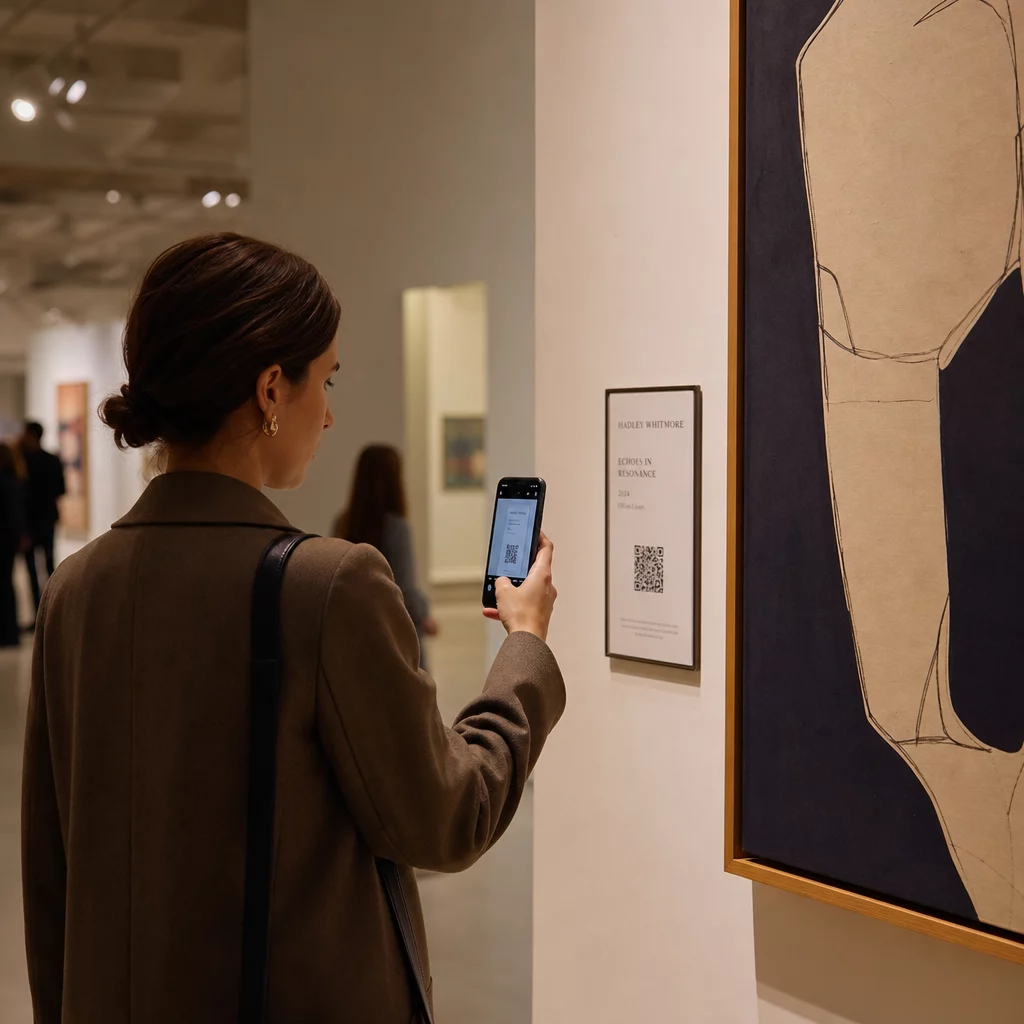
O Museu Erarta usou códigos QR para estender a visita para além da própria galeria. Códigos colocados perto das obras de arte permitiam aos visitantes explorar informações detalhadas da exposição, aprender sobre os artistas e adquirir reproduções de alta qualidade. Em vez de forçar cada visitante a passar pela mesma experiência linear, esta abordagem deu às pessoas a liberdade de aprofundar-se tanto quanto a sua curiosidade permitisse – uma interação mais personalizada do que qualquer etiqueta de parede fixa pode oferecer.
Códigos QR Inspirados na Bauhaus do Coletivo de Artistas Elkoy
O Coletivo de Artistas Elkoy reimaginou os códigos QR através da lente dos princípios da Bauhaus. Ao incorporar formas geométricas, cores vibrantes e design minimalista, eles transformaram os códigos padrão em preto e branco em elementos composicionais. Cada código estava ligado a ensaios que explicavam a relação entre os movimentos históricos do design e a tecnologia moderna. O seu trabalho é uma clara demonstração de que um código QR pode fazer parte da obra de arte, em vez de uma anotação sobre ela.
Lições da Adoção Precoce do Museu do Brooklyn
O Museu do Brooklyn foi um dos primeiros a adotar os códigos QR, mas os seus esforços iniciais encontraram verdadeira fricção – os visitantes precisavam de aplicações de terceiros para escanear, o que a maioria das pessoas não tinha. O engajamento só aumentou depois que a Apple e o Android integraram leitores de QR diretamente nas câmeras dos smartphones. A lição é prática: mesmo uma ideia bem concebida pode falhar sem a infraestrutura certa. O timing e a acessibilidade técnica importam tanto quanto a visão criativa.
Benefícios dos Códigos QR em Instalações de Arte
Engajamento Mais Profundo do Visitante
Os códigos QR transformam os visitantes de observadores passivos em participantes ativos. Em vez de absorver o que cabe numa etiqueta de parede, um visitante pode escanear e aceder a entrevistas com artistas, vídeos de bastidores, guias de áudio ou sobreposições de realidade aumentada que animam uma obra estática. Os museus também podem usar códigos para iniciar caças ao tesouro digitais ou questionários, que são especialmente eficazes para famílias e públicos mais jovens.
Códigos QR para museus também abrem melhorias significativas de acessibilidade. Guias de áudio multilíngues, legendas ocultas e vídeo com reprodução repetida para visitantes com dificuldades de aprendizagem tornam-se todos possíveis através de uma única leitura no dispositivo do próprio visitante. A pesquisa confirma que visitantes com dificuldades de aprendizagem valorizam particularmente a capacidade de assistir ou ouvir conteúdo várias vezes ao seu próprio ritmo.
Uma ressalva prática: nem todo visitante carrega um smartphone – grupos escolares são um exemplo frequentemente citado. Os códigos QR devem ser tratados como uma camada de aprimoramento, não como o único caminho para a informação. Sempre forneça uma forma alternativa de acessar o mesmo conteúdo, seja um URL próximo, um folheto impresso ou uma opção assistida por funcionários.
Adicione uma Camada Digital à Sua Próxima Exposição O Gerador de QR Code Dinâmico permite que você atualize o conteúdo vinculado a qualquer momento – sem necessidade de reimpressão – para que seus códigos permaneçam atualizados durante toda a duração de uma instalação.
Flexibilidade de Design e Integração Artística
Os códigos QR não precisam mais parecer códigos QR no sentido tradicional. Cores, formas, logotipos incorporados e padrões personalizados podem ser aplicados, preservando a capacidade de leitura, desde que o contraste e as zonas de silêncio sejam respeitados (mais sobre isso abaixo). Os códigos inspirados na Bauhaus do Elkoy Collective e os códigos embutidos no chão da Coleção Pinault mostram que o posicionamento cuidadoso e o design visual podem fazer com que um código pareça nativo de uma instalação, em vez de enxertado nela.
Um princípio orientador útil da prática curatorial: “O código QR deve ser projetado para ser discreto e elegante, complementando a exposição em vez de distrair dela.” Esse padrão se aplica quer o código apareça em uma pequena etiqueta ao lado de uma pintura ou seja integrado diretamente na superfície de uma obra escultural.
Análise e Insights de Visitantes em Tempo Real
Um dos argumentos mais práticos para os códigos QR em exposições são os dados que eles geram. Cada leitura é um sinal: quais obras estão atraindo interesse sustentado, quando ocorre o pico de engajamento, em quais zonas da galeria os visitantes permanecem e quais formatos de conteúdo – vídeo, áudio, texto – estão sendo mais consumidos.
| Ponto de Dados | Insight Fornecido |
|---|---|
| TOTAL DE ESCANEAMENTOS | Mede o interesse geral em uma peça ou zona específica |
| Digitalizações Únicas | Rastreia o engajamento individual do visitante |
| Tempo de Leitura | Identifica horários de pico e padrões de fluxo de visitantes |
| Sistema operacional | Oferece insights técnicos para otimização móvel |
| Localização da Leitura | Avalia a eficácia do posicionamento de códigos QR |
Os códigos QR dinâmicos tornam esses dados ainda mais acionáveis. Como o URL de destino pode ser alterado sem reimprimir o código físico, um curador pode responder aos dados de digitalização em tempo real – trocando um vídeo que não está a ressoar por um que está, ou adicionando conteúdo de acessibilidade a meio da exposição com base no feedback dos visitantes. Para uma imagem mais completa de como Códigos QR de RA transformam a narrativa dos museus, camadas de realidade aumentada podem ser adicionadas ou atualizadas da mesma forma.
O Que Ligar: Conteúdo Que Adiciona Valor
O conteúdo por trás do código importa tanto quanto o próprio código. Museus e artistas têm encontrado os seguintes tipos de conteúdo consistentemente úteis:
- Declarações e entrevistas de artistas – ouvir um artista descrever o seu processo nas suas próprias palavras cria uma conexão que nenhum texto de parede pode replicar; um Código QR do YouTube lida com isso de forma limpa
- Guias de áudio – descrições narradas ou paisagens sonoras ligadas através de um código QR MP3 funcionam particularmente bem para obras onde a experiência visual deve permanecer inalterada
- Conteúdo de catálogo estendido – proveniência detalhada, ensaios académicos ou catálogos de exposição entregues como um Código QR em PDF
- Galerias de imagens – processar fotografias, vistas de instalação ou obras comparativas acessíveis através de uma galeria de imagens com código QR
- Visitas virtuais – para visitantes que desejam explorar obras relacionadas ou instituições irmãs, um código QR que liga a um tour virtual estende a experiência para além do espaço físico
- Formulários de feedback do visitante – colocados em pontos de saída ou perto de obras principais para capturar respostas qualitativas
Mantenha o destino do link simples. URLs mais curtas codificam padrões menos densos, que digitalizam mais rápido e de forma mais fiável. Os códigos QR dinâmicos resolvem isso sistematicamente, codificando apenas um link de redirecionamento curto, independentemente da complexidade do destino.
Design e Colocação: Tornando os Códigos Escaneáveis e Discretos
Acertar na execução visual e física é onde muitas instalações falham. Os princípios abaixo são extraídos de orientações de acessibilidade e pesquisa sobre legibilidade de códigos QR.
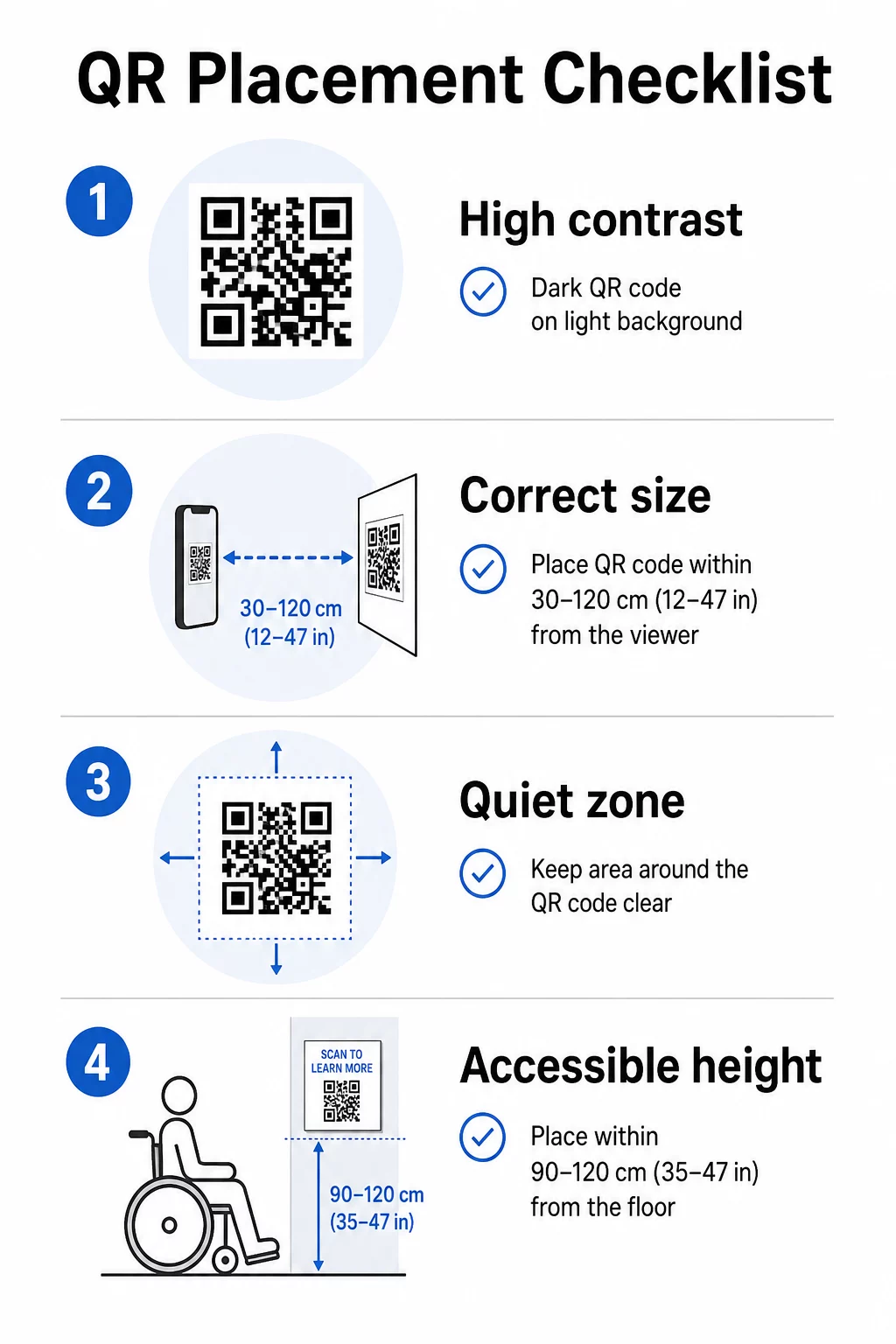
Contraste e cor
O primeiro plano do código deve ser escuro e o fundo claro – não o inverso. Códigos invertidos (padrão claro em fundo escuro) falham numa porção significativa das câmaras de smartphones. Para códigos com cores personalizadas, procure uma relação de contraste de pelo menos 3:1 entre os módulos do código e a superfície de fundo. Uma análise abrangente das regras de contraste está disponível em guia de melhores práticas de contraste de cores de códigos QR.
Gradientes e sombras introduzem tons médios que confundem os scanners. Se quiser um código estilizado que se adapte à paleta da instalação, use cores sólidas e teste exaustivamente.
Tamanho e Distância de Leitura
Uma regra fiável: o código deve ter aproximadamente um décimo do tamanho da distância de digitalização esperada. Um código destinado a ser digitalizado à distância de um braço (cerca de 10 polegadas) precisa de ter pelo menos 1 polegada quadrada. Para sinalização de instalação vista de mais longe, ajuste a escala de acordo. O mínimo absoluto para digitalização de perto é 2 × 2 cm (aproximadamente 0,8 × 0,8 polegadas). Mais detalhes sobre o dimensionamento estão disponíveis em Guia de posicionamento de código QR.
Zonas de Silêncio
Cada código QR requer uma margem clara – chamada zona de silêncio – de pelo menos quatro módulos em todos os lados. Nenhum texto, padrão ou elemento decorativo deve invadir este espaço. Se estiver a incorporar um código numa superfície padronizada ou na borda de uma obra de arte, esta é a restrição com maior probabilidade de causar falhas na digitalização.
Acessibilidade Física
A altura e a localização determinam quem pode realmente usar o código. A colocação deve ser acessível a visitantes em cadeiras de rodas ou com crescimento restrito – aproximadamente 2,5 a 4 pés do chão para acesso confortável. Evite colocar códigos em superfícies curvas, vidro refletor ou materiais que criem brilho sob a iluminação da galeria.
Cópia do Rótulo
Um rótulo próximo ao código deve explicar claramente o que o visitante encontrará após a leitura e como digitalizá-lo. Nem todo visitante está familiarizado com o processo, e mesmo scanners experientes se beneficiam de saber se estão prestes a ver um vídeo de três minutos ou um ensaio de catálogo de 12 páginas. Linguagem simples, frases curtas e tamanho de fonte adequado contribuem para a usabilidade. Mantenha os rótulos concisos – os visitantes leem rapidamente, e as informações mais essenciais devem aparecer primeiro.
Mantenha o Conteúdo da Exposição Atualizado Sem Reimprimir Galerias de arte podem usar o Gerador de QR Code Dinâmico para atualizar biografias de artistas, trocar guias de áudio ou adicionar novo conteúdo mesmo após a abertura de uma exposição – sem tocar na sinalização física.
Teste Antes de Instalar
Imprima o código no tamanho final e digitalize-o com pelo menos dois dispositivos – um iPhone e um telefone Android – sob as condições de iluminação que a instalação realmente usará. A iluminação da galeria é frequentemente quente e direcional, o que pode afetar o contraste de forma diferente da luz de escritório padrão. Acabamentos foscos reduzem o brilho e geralmente superam as superfícies brilhantes para uma digitalização confiável. Mais orientações de teste estão em guia de melhores práticas de legibilidade de código QR.
Usando Códigos QR Dinâmicos para Exposições em Evolução
Um código QR estático codifica um destino fixo. Uma vez impresso, a única maneira de mudar para onde ele aponta é reimprimi-lo. Os códigos QR dinâmicos funcionam de forma diferente: o próprio código aponta para um redirecionamento curto, e você pode mudar o destino do redirecionamento a qualquer momento a partir de um painel.
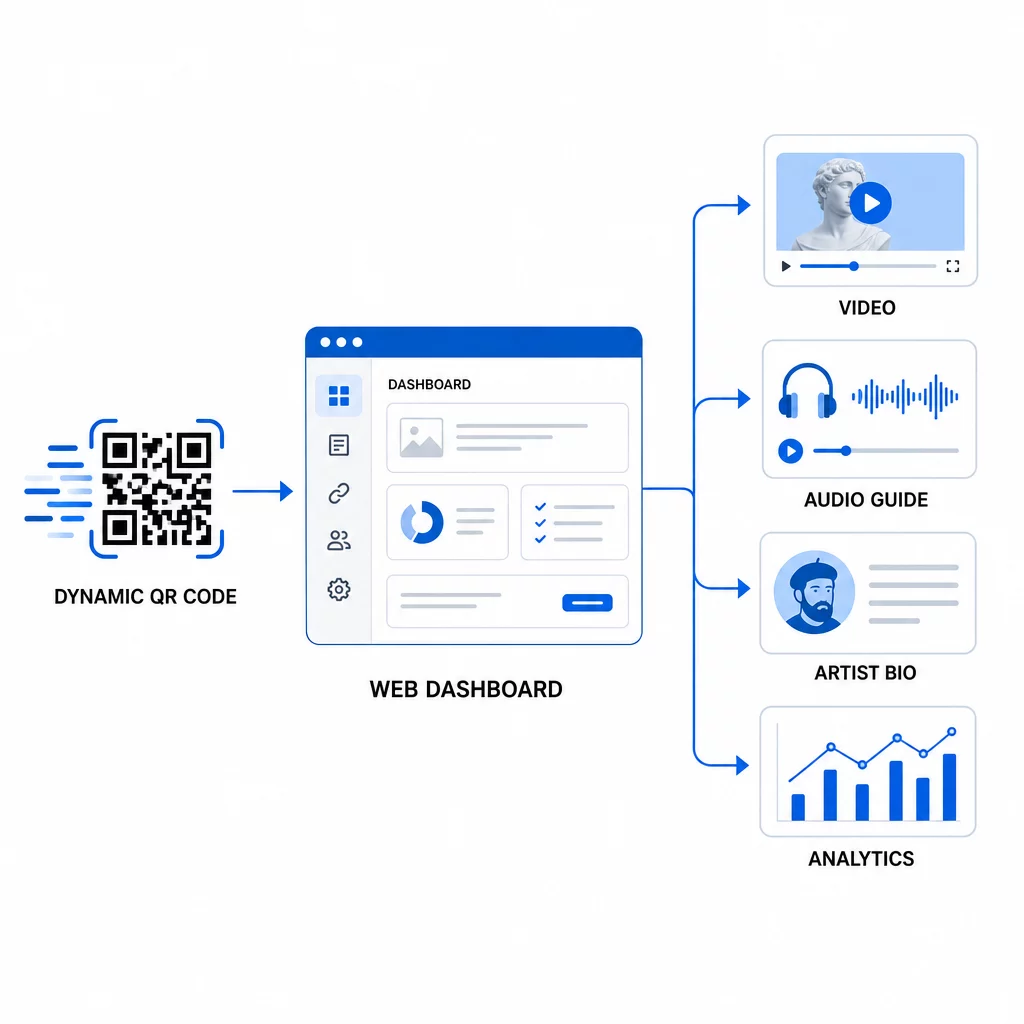
Para instalações de arte, esta distinção é significativa:
- Uma exposição que dura vários meses pode mudar seu conteúdo vinculado à medida que a mostra evolui – adicionando novos comentários de artistas, trocando um vídeo teaser por um documentário completo ou atualizando detalhes de proveniência à medida que a pesquisa se desenvolve
- Instalações temporárias podem reutilizar o mesmo código físico em vários eventos simplesmente atualizando o destino
- As análises permanecem vinculadas ao mesmo código, fornecendo um registro de desempenho contínuo em vez de dados fragmentados em reimpressões
O Smithsonian tem usado esta abordagem para gerenciar o acesso a grandes coleções digitais de forma eficiente, reduzindo tanto os custos quanto o desperdício ambiental de materiais reimpressos. Para curadores que gerenciam exposições em vários locais ou itinerantes, a capacidade de configurar um tour de arte virtual com códigos QR e atualizá-lo centralmente é uma vantagem operacional significativa.
Perguntas frequentes
Projete o código usando cores da paleta da obra de arte, mas mantenha um primeiro plano escuro em um fundo claro e vise uma taxa de contraste de pelo menos 3:1. Mantenha a zona de silêncio limpa em todos os lados e teste a versão impressa com vários dispositivos antes de instalar. Níveis mais altos de correção de erros (Q ou H) permitem mais personalização visual – incluindo logotipos incorporados – enquanto preservam a confiabilidade da leitura.
Os tipos de conteúdo mais eficazes são entrevistas com artistas ou declarações em vídeo, guias de áudio, ensaios de catálogo estendidos ou documentos de proveniência, imagens de processo e formulários de feedback de visitantes. Combine o formato com o público e a obra: o vídeo é adequado para peças com foco em processo ou baseadas em performance, enquanto o áudio funciona bem ao lado de peças onde a experiência visual deve permanecer ininterrupta.
Códigos QR dinâmicos com análises integradas registram dados agregados – total de leituras, leituras únicas, tempo de leitura, tipo de dispositivo e localização geográfica – sem capturar informações pessoais de visitantes individuais. Plataformas como o gerador de código QR dinâmico da Pageloot fornecem esses dados em uma visualização de painel, dando aos curadores insights acionáveis enquanto respeitam a privacidade do visitante.