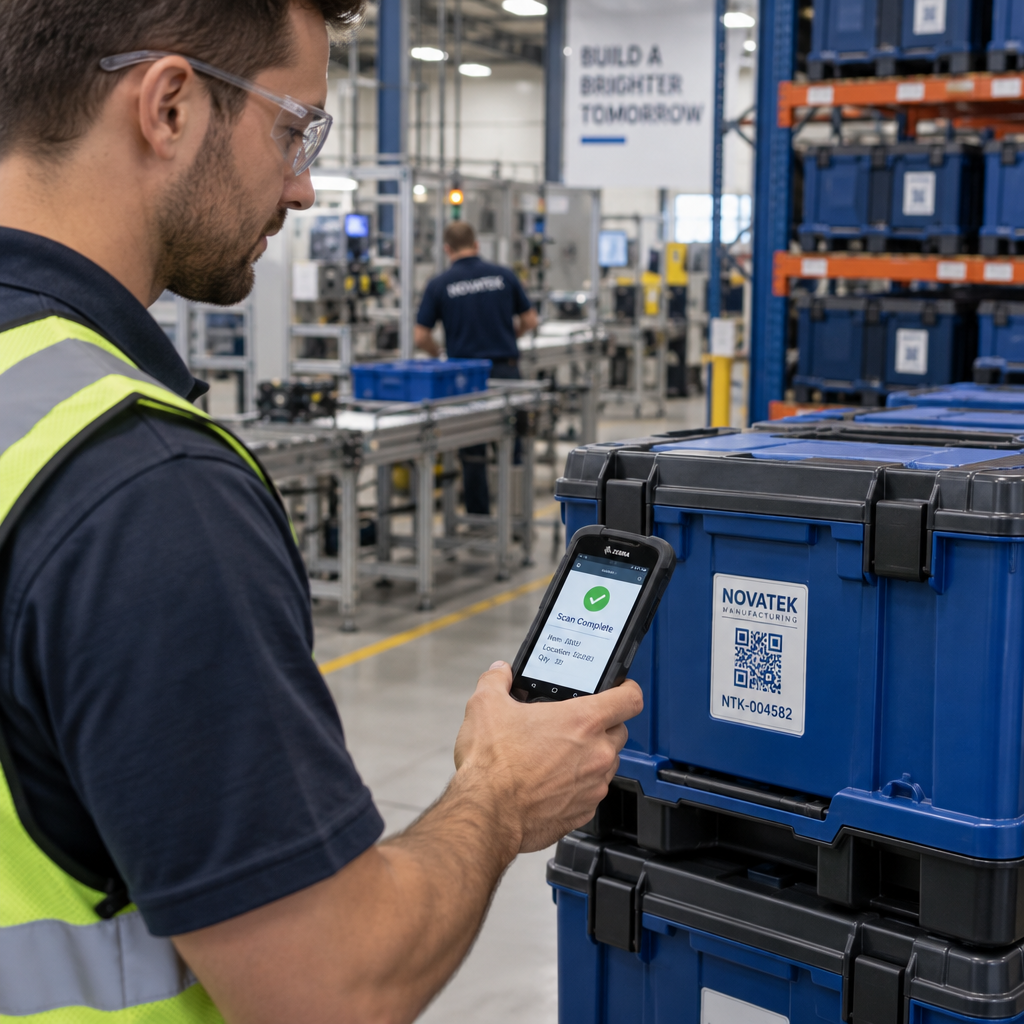
Adakah anda tidak pasti data peribadi apa yang sebenarnya didedahkan oleh kod QR anda – dan apa yang boleh anda lakukan mengenainya? Setiap imbasan melalui pelayan penjejakan yang merekodkan alamat IP, jenis peranti, cap masa, dan data lokasi, selalunya tanpa disedari oleh pengguna. Panduan ini menerangkan lima kaedah penganoniman yang terbukti yang mengurangkan risiko privasi sambil mengekalkan analitik anda berguna.
Apa yang Sebenarnya Didedahkan oleh Pengimbasan Kod QR
Sebelum memilih strategi penganoniman, adalah berguna untuk memahami data apa yang dikumpul pada mulanya.
Apabila seseorang mengimbas kod QR dinamik, permintaan mereka mula-mula melalui pelayan pengalihan platform sebelum mendarat di URL destinasi anda. Momen pengalihan itulah apabila data imbasan direkodkan. Bergantung pada platform dan konfigurasi, ini boleh termasuk:
- Alamat IP (digunakan untuk menganggarkan lokasi geografi)
- Jenis peranti, sistem pengendalian, dan pelayar
- Cap masa imbasan
- Kiraan imbasan (jumlah dan unik)
Laman web destinasi boleh mengumpul lebih banyak lagi – kuki, data rujukan, dan sebarang maklumat yang dimasukkan oleh pengguna. Kod QR statik memintas pengalihan ini sepenuhnya dan menghantar pengguna terus ke URL akhir tanpa merekodkan apa-apa, tetapi ia juga tidak menawarkan analitik.
Memahami aliran data ini adalah titik permulaan untuk menggunakan kaedah penganoniman yang betul. Anda juga boleh menyemak data apa yang dikumpul oleh kod QR dinamik untuk pecahan yang lebih mendalam sebelum memutuskan pendekatan.
Lihat Dengan Tepat Apa yang Dijejaki oleh Kod QR Anda Gunakan Pageloot’s papan pemuka analitik untuk menyemak data imbasan apa yang dikumpul dan mengkonfigurasi penjejakan anda agar sepadan dengan keperluan privasi anda.
5 Kaedah untuk Menganonimkan Data Kod QR
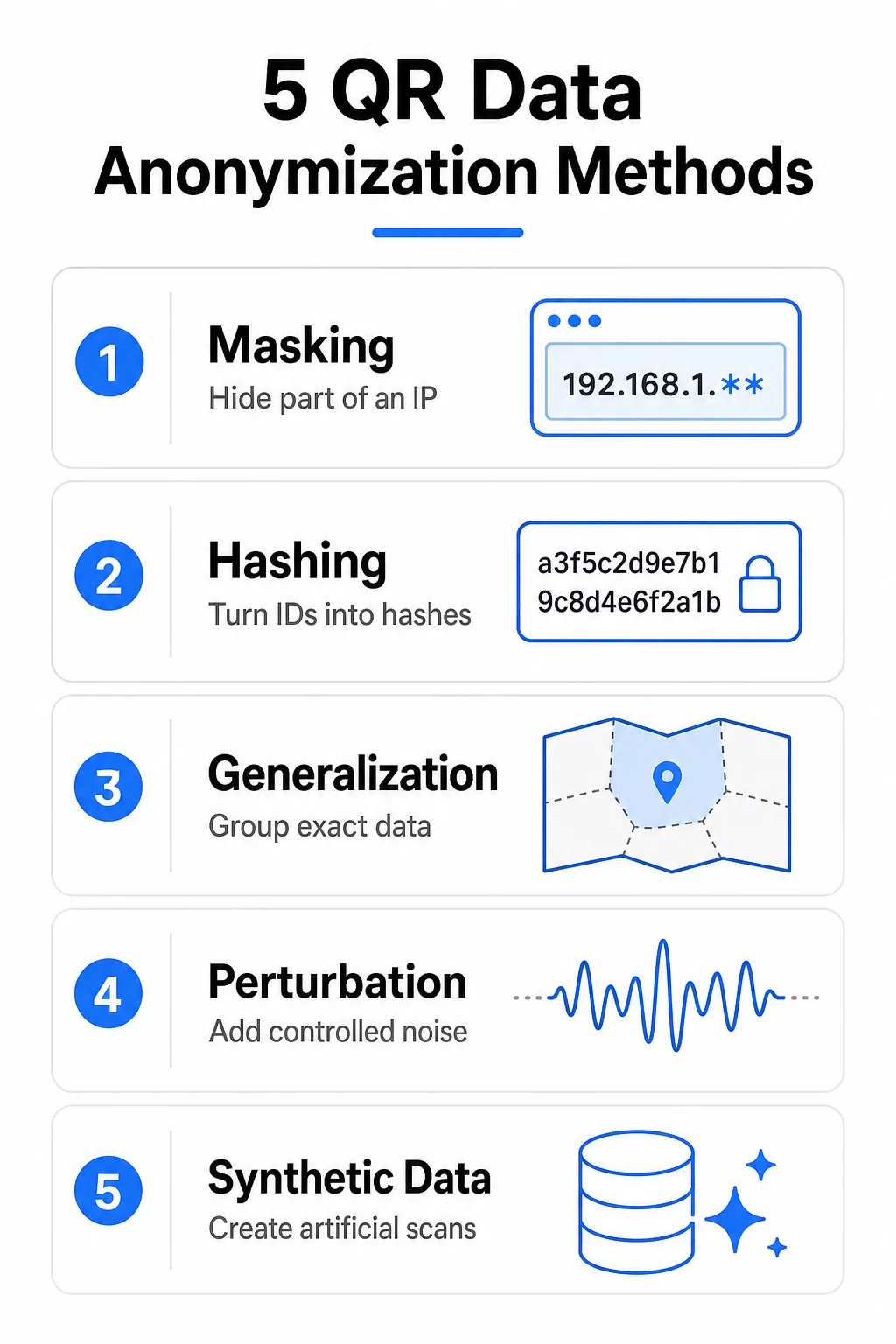
1. Penyamaran
Penyamaran mengaburkan atau menggantikan medan data sensitif supaya nilai asas tidak dapat dibaca, manakala data itu sendiri kekal boleh digunakan secara struktur. Dalam konteks kod QR, ini biasanya terpakai kepada data yang dikumpul di pelayan pengalihan atau disimpan dalam sistem analitik – contohnya, menggantikan oktet terakhir alamat IP dengan sifar sebelum ia ditulis ke pangkalan data.
Kekuatan privasi: Penyamaran menawarkan perlindungan sederhana. Ia menghalang pendedahan secara tidak sengaja tetapi kekal terdedah kepada serangan inferens jika konteks yang mencukupi tersedia. Ia paling baik digunakan sebagai satu lapisan dalam strategi privasi yang lebih luas dan bukannya penyelesaian kendiri.
Kegunaan data: Oleh kerana penyamaran mengekalkan struktur data, analisis agregat kekal berfungsi sepenuhnya. Anda masih boleh mengukur volum imbasan, trend serantau dan pengedaran peranti tanpa mengakses identiti individu.
Kerumitan pelaksanaan: Penyamaran adalah antara teknik termudah untuk digunakan. Ia melibatkan mengenal pasti medan mana yang memerlukan perlindungan dan menggunakan peraturan penggantian secara konsisten. Platform kod QR moden boleh menggunakan penyamaran IP secara automatik pada titik pengumpulan, sebelum sebarang nilai disimpan.
Pematuhan peraturan: Penyamaran sahaja tidak memenuhi keperluan penganoniman GDPR, kerana pengawal selia menganggap data yang disamarkan masih berpotensi untuk dikaitkan dengan individu. Walau bagaimanapun, ia menyokong pematuhan dengan mengurangkan pendedahan dan menunjukkan pengurangan data dengan niat baik – salah satu prinsip teras di bawah GDPR dan CCPA.
2. Hashing
Hashing menukar nilai sensitif kepada rentetan panjang tetap menggunakan algoritma kriptografi, menjadikannya mustahil untuk memulihkan input asal daripada output. Alamat e-mel pengguna atau pengecam peranti, contohnya, menjadi rentetan yang dikacau yang masih boleh digunakan untuk padanan atau penyahduplikasian dalam sistem.
Kekuatan privasi: Kuat pada prinsipnya, tetapi tidak mutlak. Nilai entropi rendah – iaitu yang mempunyai set input yang terhad – boleh terdedah kepada serangan kekerasan. Menambah garam (rentetan rawak yang ditambahkan sebelum hashing) dan memutar kunci secara kerap menjadikan serangan jauh lebih sukar.
Kegunaan data: Hashing sangat sesuai untuk penyahduplikasian dan pemeriksaan konsistensi, seperti mengenal pasti pengimbas berulang tanpa menyimpan pengecam. Ia kurang berguna untuk analitik tingkah laku terperinci atau integrasi yang memerlukan nilai asal.
Kerumitan pelaksanaan: Hashing asas adalah mudah dan disokong secara meluas dalam kebanyakan persekitaran pembangunan. Langkah-langkah tambahan seperti salting dan pengurusan kunci menambah kerumitan dan memerlukan sistem yang selamat untuk menyimpan dan memutar nilai-nilai tersebut.
Pematuhan peraturan: Suruhanjaya Perdagangan Persekutuan telah menyatakan bahawa hashing sahaja tidak membentuk penganoniman. Kumpulan Kerja Artikel 29 (kini Lembaga Perlindungan Data Eropah) juga telah menyatakan bahawa “hashing adalah langkah keselamatan yang berguna, tetapi bukan kaedah penganoniman.” Di bawah GDPR, data peribadi yang di-hash masih dianggap sebagai data peribadi. Di bawah CCPA, data yang di-hash mungkin layak sebagai dinyahkenal pasti jika kawalan teknikal dan dasar dalaman yang sesuai tersedia, tetapi perniagaan mesti menguatkuasakan dasar tersebut secara konsisten dan mendokumenkan penilaian risiko mereka.
3. Generalisasi
Generalisasi menggantikan nilai data tertentu dengan kategori atau julat yang lebih luas. Daripada menyimpan cap masa yang tepat, anda menyimpan jam atau hari. Daripada menyimpan bandar, anda menyimpan wilayah. Daripada umur yang tepat, anda menyimpan julat umur.
Untuk analitik kod QR, ini mungkin bermakna merekodkan bahawa imbasan berlaku “pada waktu petang pada hari bekerja” dan bukannya pada 2:17 PM pada hari Selasa, atau mengaitkan imbasan kepada “Pacific Northwest” dan bukannya kod ZIP tertentu.
Kekuatan privasi: Sederhana, dan bergantung pada sejauh mana nilai dikumpulkan secara meluas. Risiko pengenalpastian semula meningkat apabila beberapa medan yang digeneralisasi digabungkan. Kes pada tahun 2007 yang melibatkan set data Netflix menunjukkan bahawa penyelidik boleh mengenal pasti semula pengguna dengan menyilang rujuk data penilaian yang digeneralisasi dengan sumber luaran – satu amaran bahawa walaupun data agregat memerlukan reka bentuk yang teliti.
Kegunaan data: Generalisasi mengekalkan butiran yang mencukupi untuk analisis trend dan pengukuran kempen. Perniagaan yang menggunakan kod QR dalam peruncitan atau hospitaliti masih boleh mengenal pasti tempoh puncak, wilayah popular, dan pilihan peranti tanpa mendedahkan tingkah laku individu.
Kerumitan pelaksanaan: Generalisasi boleh dilaksanakan secara manual dengan menetapkan sempadan kategori, atau secara automatik menggunakan algoritma yang mengimbangi privasi dan resolusi data. Kedua-dua pendekatan memerlukan penetapan dasar yang jelas tentang tahap butiran yang sesuai untuk setiap medan data.
Pematuhan peraturan: Generalisasi selaras dengan prinsip minimalisasi data dalam GDPR dan CCPA, yang memerlukan pengumpulan hanya apa yang diperlukan untuk tujuan yang ditentukan. Ia tidak secara automatik memenuhi piawaian anonimisasi dengan sendirinya tetapi menyumbang secara bermakna kepada pendekatan berlapis. Mendokumentasikan keputusan generalisasi anda dan menyemaknya secara berkala menyokong kesediaan audit.
4. Gangguan Data
Gangguan data memperkenalkan sejumlah kecil hingar yang terkawal ke dalam data numerik atau geografi. Daripada merekodkan nilai yang tepat, sistem menyimpan versi yang sedikit diubah suai – cap masa yang dialihkan beberapa minit, koordinat yang dibundarkan ke kawasan yang lebih luas, atau kiraan yang diselaraskan dalam julat yang ditetapkan.
Pendekatan ini lazim dalam bidang di mana ketepatan statistik lebih penting daripada ketepatan untuk rekod individu. Hospital telah menggunakannya untuk berkongsi data pesakit dengan penyelidik sambil melindungi butiran perubatan peribadi; institusi kewangan menggunakannya pada data transaksi untuk mencegah pendedahan corak sensitif.
Kekuatan privasi: Gangguan mencapai keseimbangan antara menyembunyikan butiran tertentu dan mengekalkan corak analitikal. Tahap privasi yang diberikannya bergantung secara langsung pada berapa banyak hingar yang diperkenalkan. Terlalu sedikit, dan rekod individu kekal boleh dikenal pasti. Terlalu banyak, dan data kehilangan makna.
Kegunaan data: Berbeza dengan teknik yang sepenuhnya membuang nilai asal, gangguan mengekalkan hubungan statistik dalam set data. Analisis trend, pengenalpastian puncak, dan pengelompokan geografi semuanya kekal sah – cuma tanpa keupayaan untuk mengenal pasti individu yang tepat.
Kerumitan pelaksanaan: Gangguan memerlukan pertimbangan teknikal yang lebih daripada penyamaran atau generalisasi. Pilihan kaedah transformasi – hingar rawak, pertukaran nilai, atau transformasi matematik seperti kaedah wavelet atau Fourier – mempengaruhi kedua-dua prestasi dan hasil privasi. Transformasi wavelet, contohnya, beroperasi pada kerumitan masa O(n), menjadikannya lebih cepat daripada beberapa alternatif. Penentukuran yang teliti diperlukan untuk mengelakkan pengenalan bias sistematik.
Pematuhan peraturan: Gangguan menyokong keperluan minimalisasi data GDPR dan menyediakan perlindungan teknikal yang boleh dipertahankan. Ia tidak menjamin anonimisasi penuh tetapi menunjukkan usaha yang bermakna untuk mengehadkan kebolehkenalpastian, yang secara amnya dilihat positif oleh pengawal selia apabila digabungkan dengan kawalan lain.
5. Penjanaan Data Sintetik
Penjanaan data sintetik mencipta set data yang sepenuhnya tiruan yang mencerminkan sifat statistik data sebenar tanpa mengandungi sebarang maklumat pengguna sebenar. Daripada mengubah apa yang dikumpul, ia menggantikan data asal dengan rekod rekaan yang berkelakuan seperti data sebenar untuk tujuan analitikal.
Untuk analitik kod QR, ini bermakna menjana cap masa imbasan yang realistik, taburan geografi yang munasabah, dan campuran peranti yang representatif – tanpa sebarang rekod tersebut sepadan dengan imbasan sebenar oleh orang sebenar.
Kekuatan privasi: Data sintetik menawarkan perlindungan privasi terkuat daripada lima kaedah. Oleh kerana ia tidak mengandungi maklumat peribadi sebenar, tiada risiko pengenalpastian semula walaupun set data terdedah. Pelanggaran set data sintetik tidak mempunyai akibat privasi untuk individu.
Kegunaan data: Apabila dijana dengan baik, data sintetik mengekalkan hubungan statistik yang diperlukan untuk analisis trend, latihan model, dan ujian ciri. Ia juga membolehkan simulasi senario yang jarang berlaku dalam data sebenar – berguna untuk menguji tekanan sistem analitik atau melatih model pembelajaran mesin pada kes-kes pinggir.
Kerumitan pelaksanaan: Ini adalah kaedah yang paling intensif sumber. Menjana data sintetik berkualiti tinggi memerlukan alat khusus, sumber pengkomputeran yang signifikan, dan proses pengesahan untuk mengesahkan set data sintetik mewakili yang asal dengan tepat. Organisasi biasanya memerlukan kepakaran khusus atau platform pihak ketiga untuk melaksanakannya dengan boleh dipercayai.
Pematuhan peraturan: Oleh kerana data sintetik tidak mengandungi maklumat peribadi, ia secara semula jadi berada di luar skop GDPR, CCPA, dan kebanyakan peraturan privasi lain. Ini menjadikannya sangat berharga untuk industri dengan keperluan pematuhan yang ketat, seperti penjagaan kesihatan dan pendidikan. Ia menghapuskan risiko pengenalpastian semula yang perlu diuruskan secara aktif oleh kaedah lain.
Mula Mengumpul Analitik QR Mesra Privasi Pageloot Penjana dynamic QR code mengagregatkan data imbasan pada peringkat negara dan bandar, mengumpulkan peranti ke dalam kategori umum, dan tidak pernah mendedahkan identiti individu dalam analitiknya. Cubalah secara percuma selama 14 hari.
Perbandingan Kaedah
| Kaedah | Kekuatan Privasi | Kegunaan Data | Kerumitan Pelaksanaan | Pematuhan Peraturan |
|---|---|---|---|---|
| Penyamaran | Sederhana | tinggi | rendah | Separa – menyokong minimalisasi, bukan penganoniman penuh |
| Hashing | Sederhana–Tinggi | Sedang | Sedang | Separa – masih data peribadi di bawah GDPR |
| Generalisasi | Sederhana | Sederhana–Tinggi | Rendah–Sederhana | Separa – menyokong prinsip minimalisasi |
| Perturbasi Data | Sederhana | Sederhana–Tinggi | tinggi | Baik – perlindungan yang fleksibel, boleh dipertahankan |
| Data Sintetik | Sangat tinggi | tinggi | Sangat tinggi | Cemerlang – secara semula jadi di luar skop GDPR/CCPA |
Kaedah yang betul bergantung pada kes penggunaan anda. Penyamaran dan generalisasi adalah titik permulaan praktikal untuk kebanyakan platform analitik kod QR. Hashing berfungsi dengan baik untuk tugas deduplikasi di mana nilai tepat tidak diperlukan di hilir. Perturbasi sesuai untuk senario di mana ketepatan statistik adalah kritikal. Data sintetik adalah pilihan terkuat apabila risiko pematuhan tinggi atau apabila anda perlu berkongsi set data secara luaran.
Banyak organisasi menggunakan kaedah ini secara gabungan dan bukannya memilih hanya satu – contohnya, menggunakan penyamaran IP pada masa pengumpulan, menggeneralisasi data lokasi ke peringkat bandar, dan menjana set data sintetik untuk mana-mana rakan kongsi analitik luaran.
Bagaimana Pageloot Mendekati Privasi Data Kod QR
Analitik Pageloot dibina berdasarkan data agregat yang tidak boleh dikenal pasti secara peribadi. Data lokasi muncul pada peringkat negara atau bandar, maklumat peranti dikumpulkan ke dalam kategori umum seperti iOS atau Android, dan alamat IP tidak disimpan dalam bentuk yang mengenal pasti individu. Platform ini menyediakan pilihan pengekalan data yang fleksibel, dan pengguna perusahaan mempunyai akses kepada eksport CSV yang menyokong anonimisasi selanjutnya di hilir.
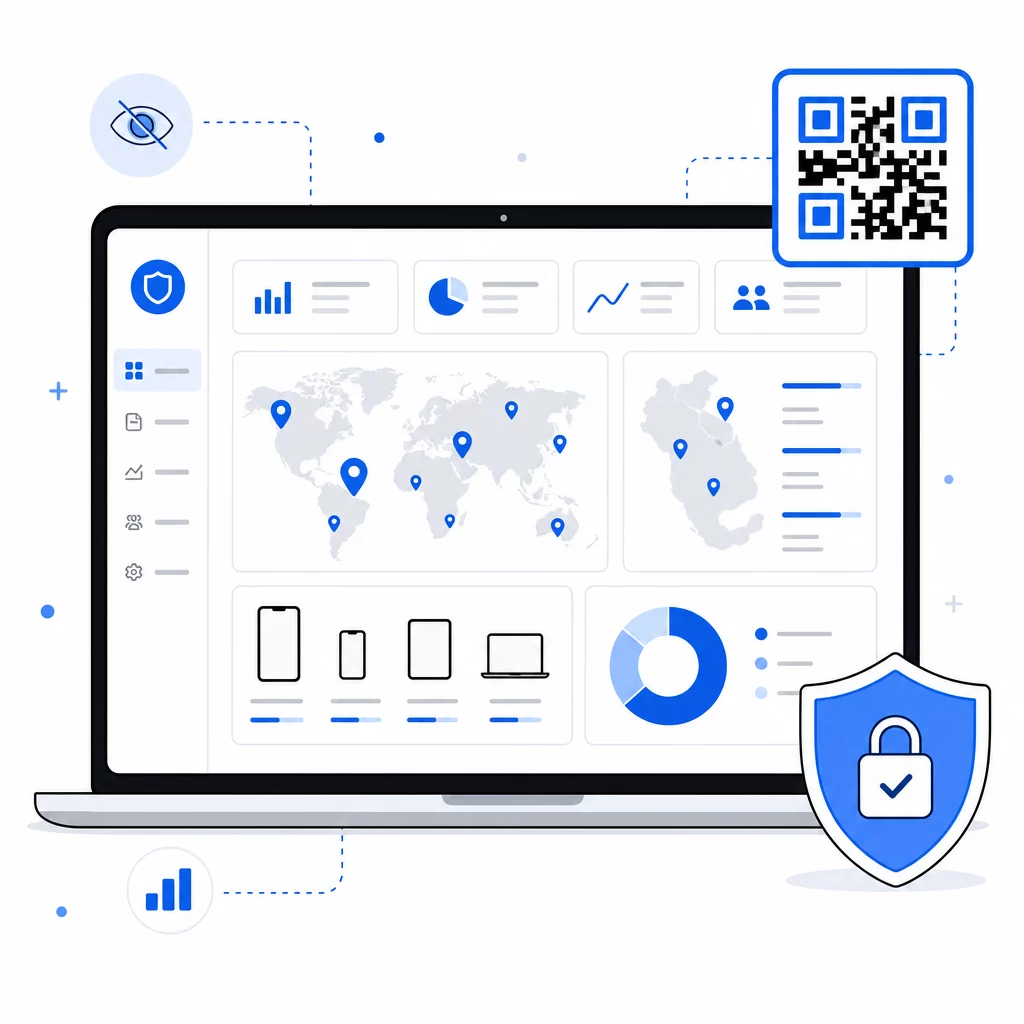
Untuk perniagaan yang menjalankan kempen merentasi pelbagai wilayah, ciri analitik membolehkan anda mengukur prestasi tanpa membina profil pada pengguna individu. Pageloot juga menyokong analitik kod QR yang mematuhi GDPR melalui pop-up persetujuan, alat pengurusan data, dan storan yang disulitkan dengan semakan keselamatan berkala.
Untuk konteks mengenai yang mana undang-undang privasi kod QR terpakai kepada situasi khusus anda – termasuk GDPR, CCPA, HIPAA, dan lain-lain – dan cara melaksanakan yang sesuai peraturan pengekalan data untuk analitik kod QR, pangkalan pengetahuan Pageloot merangkumi setiap peraturan dengan panduan praktikal.
Memilih Pendekatan yang Tepat untuk Perniagaan Anda
Tiada satu kaedah penganoniman pun yang sesuai untuk setiap situasi. Panduan FTC adalah jelas: kumpul hanya apa yang anda perlukan, simpan hanya selama yang diperlukan, dan lupuskan dengan betul apabila ia telah mencapai tujuannya. Prinsip itu terpakai tanpa mengira kaedah teknikal yang anda gunakan.
Bagi kebanyakan perniagaan yang menggunakan kod QR dalam pemasaran atau operasi, titik permulaan yang praktikal adalah untuk membolehkan penyamaran IP dan generalisasi lokasi di peringkat platform, semak data apa yang dikumpul oleh integrasi analitik anda, dan tetapkan had pengekalan yang ditetapkan. Bagi organisasi dalam industri terkawal atau mereka yang berkongsi data dengan pihak ketiga, kaedah yang lebih kukuh – perturbasi atau data sintetik – mungkin berbaloi dengan pelaburan pelaksanaan tambahan.
Matlamatnya bukanlah penganoniman sempurna dengan mengorbankan semua pandangan. Ia adalah mencari tahap perlindungan privasi yang sesuai dengan sensitiviti data yang anda kumpul, peraturan yang terpakai kepada perniagaan anda, dan kepercayaan yang ingin anda bina dengan pengguna anda.
Terokai Pageloot’s pelbagai ciri kod QR yang lengkap untuk melihat bagaimana kawalan privasi sesuai dengan platform yang lebih luas, atau semak risiko privasi kod QR dan cara mengelakkannya untuk melihat gambaran yang lebih luas tentang landskap ancaman.
Soalan lazim
Tidak. Kumpulan Kerja Artikel 29 telah menyatakan bahawa penghashan adalah langkah keselamatan, bukan kaedah penyamaran. Di bawah GDPR, data peribadi yang dihash masih diklasifikasikan sebagai data peribadi dan tertakluk kepada perlindungan yang sama seperti yang asal. Untuk layak sebagai anonim di bawah GDPR, data mesti dilucutkan secara tidak dapat dipulihkan daripada sebarang kaitan dengan individu yang boleh dikenal pasti.
Penyamaran menggantikan atau mengaburkan nilai medan tertentu – contohnya, menggantikan sebahagian alamat IP dengan sifar – sambil mengekalkan struktur yang utuh. Generalisasi menggantikan nilai tepat dengan kategori yang lebih luas, seperti menukar cap masa yang tepat kepada julat waktu dalam sehari atau bandar kepada wilayah. Penyamaran lebih baik untuk melindungi pengecam tertentu; generalisasi lebih baik untuk mengurangkan resolusi data merentasi pelbagai medan secara serentak.
Penjanaan data sintetik menyediakan kedudukan pematuhan yang paling kukuh kerana ia tidak mengandungi maklumat peribadi sebenar dan berada di luar skop kebanyakan peraturan privasi. Bagi perniagaan yang perlu mengekalkan data imbasan sebenar, gabungan penyamaran IP, generalisasi lokasi, dan had pengekalan yang ditetapkan menyediakan garis dasar yang boleh dipertahankan. Kaedah yang betul bergantung pada sensitiviti data anda, cara anda menggunakan analitik, dan sama ada anda berkongsi data dengan pihak ketiga.