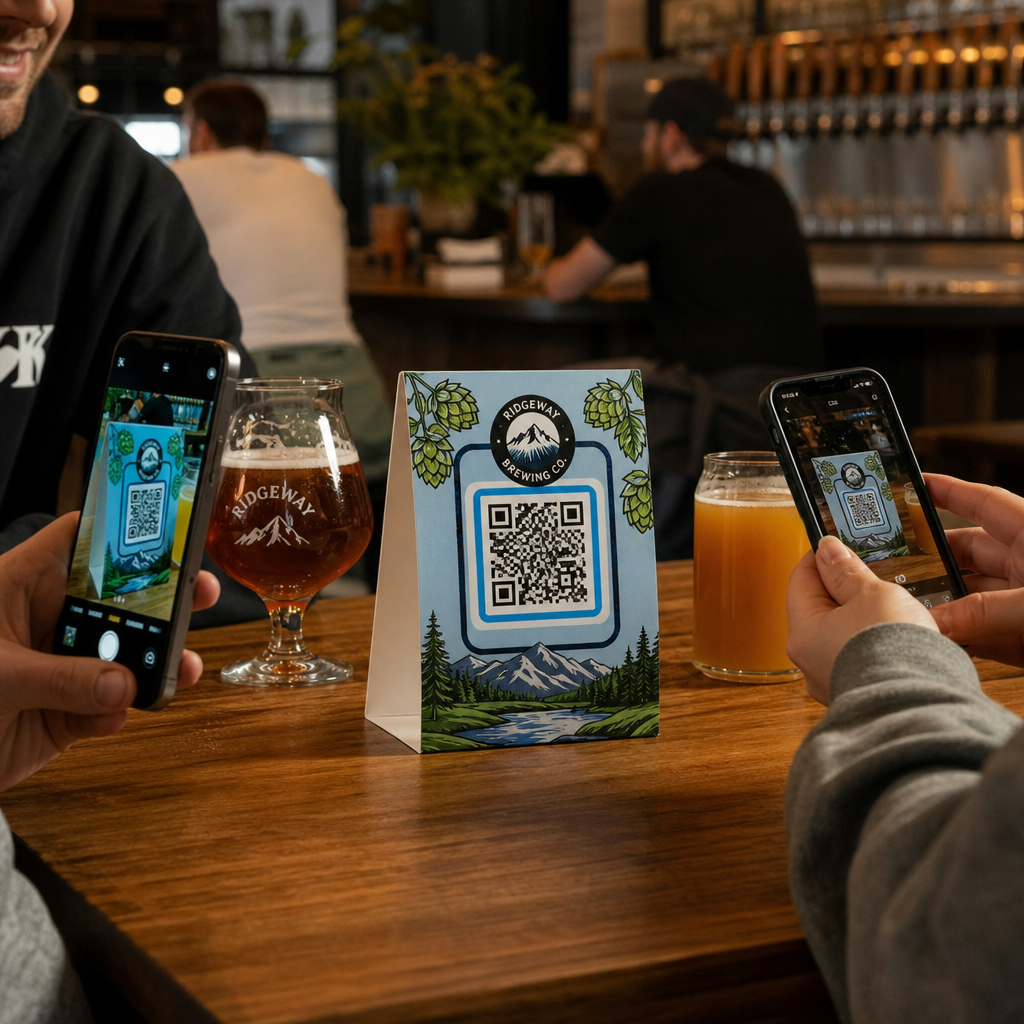
Er du usikker på, hvilke personlige data dine QR-koder faktisk afslører – og hvad du kan gøre ved det? Hver scanning passerer gennem sporingsservere, der logger IP-adresser, enhedstyper, tidsstempler og lokationsdata, ofte uden at brugerne er klar over det. Denne guide forklarer fem gennemprøvede anonymiseringsmetoder, der reducerer privatlivsrisikoen, samtidig med at din analyse forbliver nyttig.
Hvad QR-kodescanning faktisk afslører
Før du vælger en anonymiseringsstrategi, hjælper det at forstå, hvilke data der indsamles i første omgang.
Når nogen scanner en dynamisk QR-kode, passerer deres anmodning først gennem platformens omdirigeringsserver, før den lander på din destinations-URL. Dette omdirigeringsøjeblik er, når scanningsdata logges. Afhængigt af platformen og konfigurationen kan dette omfatte:
- IP-adresse (bruges til at estimere geografisk placering)
- Enhedstype, operativsystem og browser
- Tidsstempel for scanningen
- Antal scanninger (total og unik)
Destinationswebstedet kan indsamle endnu mere – cookies, referrer-data og enhver information, brugere indtaster. Statiske QR-koder omgår denne omdirigering fuldstændigt og videresender brugere direkte til den endelige URL uden at logge noget, men de tilbyder heller ingen analyse.
At forstå disse dataflows er udgangspunktet for at anvende den rigtige anonymiseringsmetode. Du kan også gennemgå hvilke data dynamiske QR-koder indsamler for en dybere gennemgang, før du beslutter dig for en tilgang.
Se præcis hvad dine QR-koder sporer Brug Pageloots analyse-dashboard for at gennemgå hvilke scanningsdata der indsamles, og konfigurere din sporing, så den matcher dine privatlivskrav.
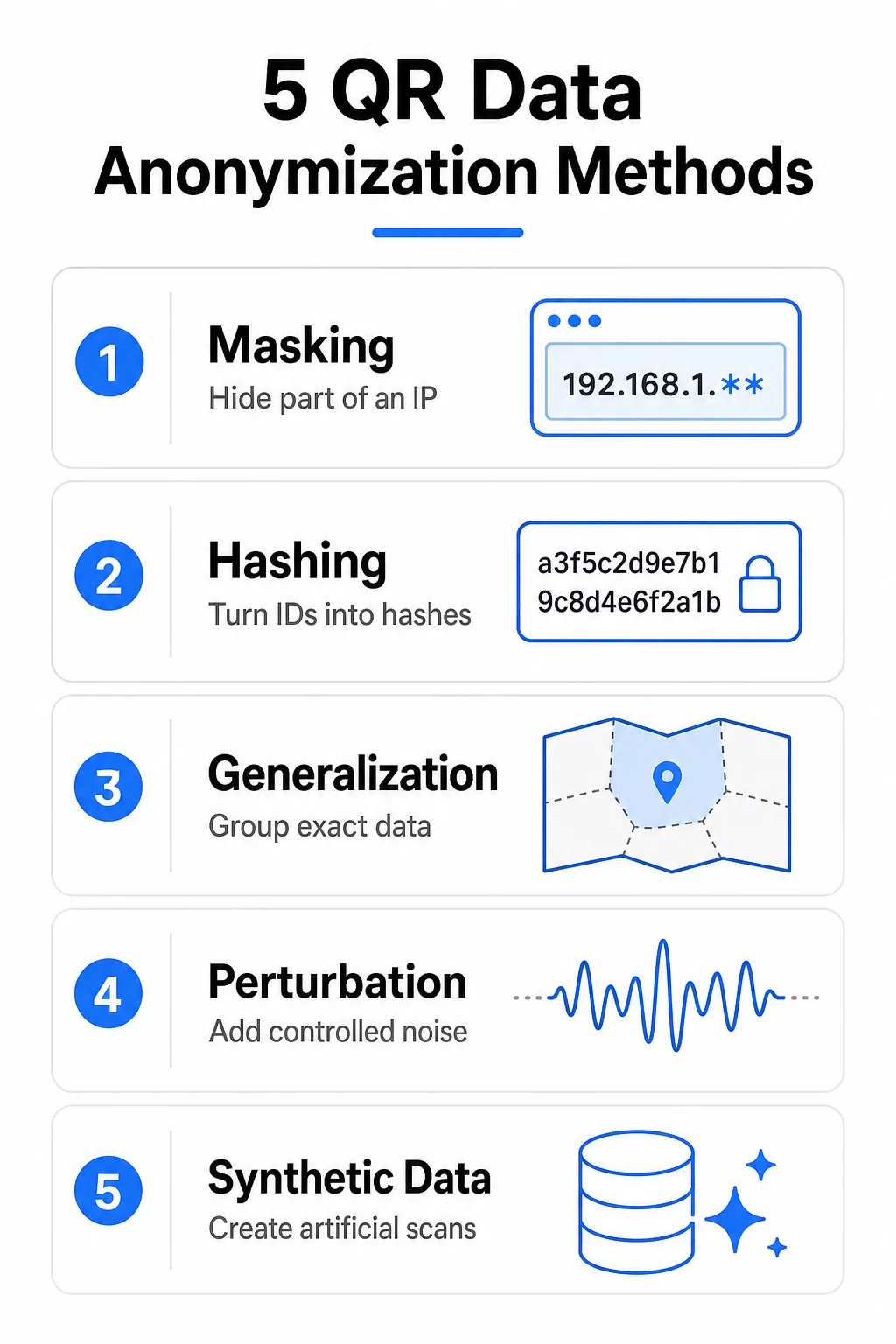
5 metoder til at anonymisere QR-kodedata
1. Maskering
Maskering tilslører eller erstatter følsomme datafelter, så de underliggende værdier ikke kan læses, mens dataene i sig selv forbliver strukturelt anvendelige. I en QR-kodekontekst gælder dette typisk for data indsamlet på omdirigeringsserveren eller gemt i analysesystemer – for eksempel ved at erstatte den sidste oktet af en IP-adresse med et nul, før den skrives til en database.
Beskyttelsesstyrke: Maskering tilbyder moderat beskyttelse. Det forhindrer utilsigtet eksponering, men forbliver sårbar over for inferensangreb, hvis der er tilstrækkelig kontekst tilgængelig. Det bruges bedst som et lag i en bredere privatlivsstrategi snarere end som en enkeltstående løsning.
Datanytte: Fordi maskering bevarer datastrukturen, forbliver aggregeret analyse fuldt funktionel. Du kan stadig måle scanningsvolumen, regionale tendenser og enhedsfordeling uden at få adgang til individuelle identiteter.
Implementeringskompleksitet: Maskering er blandt de nemmeste teknikker at implementere. Det involverer at identificere, hvilke felter der skal beskyttes, og konsekvent anvende substitutionsregler. Moderne QR-kodeplatforme kan automatisk anvende IP-maskering på indsamlingstidspunktet, før nogen værdi gemmes.
Overholdelse af lovgivning: Maskering alene opfylder ikke GDPR's anonymiseringskrav, fordi tilsynsmyndigheder behandler maskerede data som potentielt stadig linkbare til enkeltpersoner. Det understøtter dog overholdelse ved at reducere eksponering og demonstrere god tro i dataminimering – et af kerneprincipperne under både GDPR og CCPA.
2. Hashing
Hashing konverterer følsomme værdier til strenge af fast længde ved hjælp af en kryptografisk algoritme, hvilket gør det umuligt at gendanne den originale input fra outputtet. En brugers e-mailadresse eller enhedsidentifikator bliver for eksempel en krypteret streng, der stadig kan bruges til matchning eller deduplikering inden for et system.
Beskyttelsesstyrke: Stærk i princippet, men ikke absolut. Lav-entropi-værdier – dem med et begrænset sæt mulige inputs – kan være sårbare over for brute-force-angreb. Tilføjelse af et salt (en tilfældig streng tilføjet før hashing) og regelmæssig rotation af nøgler gør angreb betydeligt sværere.
Datanytte: Hashing er velegnet til deduplikering og konsistenskontrol, såsom at identificere gentagne scannere uden at gemme deres identifikatorer. Det er mindre nyttigt til detaljeret adfærdsanalyse eller integrationer, der kræver de originale værdier.
Implementeringskompleksitet: Grundlæggende hashing er ligetil og bredt understøttet i de fleste udviklingsmiljøer. De yderligere trin med salting og nøglehåndtering tilføjer kompleksitet og kræver et sikkert system til lagring og rotation af disse værdier.
Overholdelse af lovgivning: Federal Trade Commission har udtalt, at hashing alene ikke udgør anonymisering. Artikel 29-gruppen (nu Det Europæiske Databeskyttelsesråd) har tilsvarende bemærket, at “hashing er en nyttig sikkerhedsforanstaltning, men er ikke en anonymiseringsmetode.” Under GDPR behandles hashed personoplysninger stadig som personoplysninger. Under CCPA kan hashed data kvalificere som deidentificerede, hvis passende tekniske kontroller og interne politikker er på plads, men virksomheder skal håndhæve disse politikker konsekvent og dokumentere deres risikovurderinger.
3. Generalisering
Generalisering erstatter specifikke dataværdier med bredere kategorier eller intervaller. I stedet for at gemme et præcist tidsstempel, gemmer du timen eller dagen. I stedet for at gemme en by, gemmer du en region. I stedet for en præcis alder, gemmer du et aldersbånd.
For QR-kodeanalyse kan dette betyde at registrere, at en scanning fandt sted “om eftermiddagen på en hverdag” snarere end kl. 14:17 på en tirsdag, eller at tilskrive en scanning til “Pacific Northwest” snarere end et specifikt postnummer.
Beskyttelsesstyrke: Moderat og afhængig af, hvor bredt værdier er grupperet. Risikoen for re-identifikation vokser, når flere generaliserede felter kombineres. En sag fra 2007, der involverede et Netflix-datasæt, viste, at forskere kunne re-identificere brugere ved at krydsreferere generaliserede bedømmelsesdata med eksterne kilder – en advarsel om, at selv aggregerede data kræver omhyggelig design.
Datanytte: Generalisering bevarer tilstrækkeligt med detaljer til trendanalyse og kampagnemåling. Virksomheder, der bruger QR-koder i detailhandel eller gæstfrihed, kan stadig identificere spidsperioder, populære regioner og enhedspræferencer uden at afsløre individuel adfærd.
Implementeringskompleksitet: Generalisering kan implementeres manuelt ved at sætte kategorigrænser eller automatisk ved hjælp af algoritmer, der balancerer privatliv og dataopløsning. Begge tilgange kræver definition af klare politikker for, hvilket detaljeringsniveau der er passende for hvert datafelt.
Overholdelse af lovgivning: Generalisering stemmer overens med dataminimeringsprincipperne i GDPR og CCPA, som kræver indsamling af kun det, der er nødvendigt til et specificeret formål. Det opfylder ikke automatisk anonymiseringsstandarder alene, men bidrager meningsfuldt til en lagdelt tilgang. Dokumentation af dine generaliseringsbeslutninger og regelmæssig gennemgang af dem understøtter revisionsberedskab.
4. Dataperturbation
Dataperturbation introducerer små, kontrollerede mængder støj i numeriske eller geografiske data. I stedet for at registrere en nøjagtig værdi, gemmer systemet en let modificeret version – et tidsstempel forskudt med et par minutter, koordinater afrundet til et bredere område eller et antal justeret inden for et defineret interval.
Denne tilgang er almindelig inden for områder, hvor statistisk nøjagtighed betyder mere end præcision for individuelle optegnelser. Hospitaler har brugt det til at dele patientdata med forskere, samtidig med at private medicinske detaljer beskyttes; finansielle institutioner anvender det på transaktionsdata for at forhindre eksponering af følsomme mønstre.
Beskyttelsesstyrke: Perturbation skaber en balance mellem at maskere specifikke detaljer og bevare analytiske mønstre. Niveauet af privatliv, det giver, afhænger direkte af, hvor meget støj der introduceres. For lidt, og individuelle optegnelser forbliver identificerbare. For meget, og dataene mister mening.
Datanytte: I modsætning til teknikker, der fuldstændigt fjerner originale værdier, bevarer perturbation de statistiske relationer inden for et datasæt. Trendanalyse, spidsidentifikation og geografisk klyngedannelse forbliver alle gyldige – blot uden evnen til at udpege præcise individer.
Implementeringskompleksitet: Perturbation kræver mere teknisk vurdering end maskering eller generalisering. Valget af transformationsmetode – tilfældig støj, værdiudskiftning eller matematiske transformationer som wavelet- eller Fourier-metoder – påvirker både ydeevne og privatlivsresultater. Wavelet-transformationer opererer for eksempel med O(n) tidskompleksitet, hvilket gør dem hurtigere end nogle alternativer. Omhyggelig kalibrering er nødvendig for at undgå at introducere systematisk bias.
Overholdelse af lovgivning: Perturbation understøtter GDPR's krav om dataminimering og giver en forsvarlig teknisk sikkerhedsforanstaltning. Det garanterer ikke fuld anonymisering, men demonstrerer en meningsfuld indsats for at begrænse identificerbarhed, hvilket regulatorer generelt ser positivt på, når det kombineres med andre kontroller.
5. Syntetisk Datagenerering
Syntetisk datagenerering skaber helt kunstige datasæt, der afspejler de statistiske egenskaber af reelle data uden at indeholde nogen faktisk brugerinformation. I stedet for at ændre det, der blev indsamlet, erstatter det de originale data med fabrikerede optegnelser, der opfører sig som reelle til analytiske formål.
For QR-kodeanalyse betyder det at generere realistiske scanningstidspunkter, sandsynlige geografiske fordelinger og repræsentative enhedsmix – uden at nogen af disse registreringer svarer til reelle scanninger foretaget af rigtige mennesker.
Beskyttelsesstyrke: Syntetiske data tilbyder den stærkeste beskyttelse af privatlivets fred blandt de fem metoder. Fordi det ikke indeholder reelle personlige oplysninger, er der ingen risiko for genidentifikation, selv hvis datasættet bliver eksponeret. Et brud på et syntetisk datasæt har ingen konsekvenser for individers privatliv.
Datanytte: Når de er velgenererede, bevarer syntetiske data de statistiske relationer, der er nødvendige for trendanalyse, modeltræning og feature-test. Det gør det også muligt at simulere scenarier, der er sjældne i virkelige data – nyttigt til stresstest af analysesystemer eller træning af maskinlæringsmodeller på sjældne tilfælde (edge cases).
Implementeringskompleksitet: Dette er den mest ressourcekrævende metode. Generering af syntetiske data af høj kvalitet kræver specialiserede værktøjer, betydelige beregningsressourcer og valideringsprocesser for at bekræfte, at det syntetiske datasæt nøjagtigt repræsenterer originalen. Organisationer har typisk brug for dedikeret ekspertise eller tredjepartsplatforme for at implementere det pålideligt.
Overholdelse af lovgivning: Fordi syntetiske data ikke indeholder personlige oplysninger, falder det i sagens natur uden for anvendelsesområdet for GDPR, CCPA og de fleste andre privatlivsforordninger. Dette gør det særligt værdifuldt for brancher med strenge overholdelseskrav, såsom sundhedspleje og uddannelse. Det eliminerer risikoen for genidentifikation, som andre metoder aktivt skal håndtere.
Begynd at indsamle privatlivsvenlig QR-analyse Pageloots Dynamisk QR-kode generator aggregerer scanningsdata på lande- og byniveau, grupperer enheder i generelle kategorier og afslører aldrig individuelle identiteter i sin analyse. Prøv det gratis i 14 dage.
Metodesammenligning
| Metode | Styrke af privatlivsbeskyttelse | Datanytte | Implementeringskompleksitet | Overholdelse af lovgivning |
|---|---|---|---|---|
| Maskering | Moderat | Høj | Lav | Delvis – understøtter minimering, ikke fuld anonymisering |
| Hashing | Moderat–Høj | Medium | Medium | Delvis – stadig personoplysninger under GDPR |
| Generalisering | Moderat | Medium–Høj | Lav–Medium | Delvis – understøtter minimeringsprincipper |
| Dataforstyrrelse | Moderat | Medium–Høj | Høj | God – fleksibel, forsvarlig sikkerhedsforanstaltning |
| Syntetiske data | Meget høj | Høj | Meget høj | Fremragende – ligger i sagens natur uden for GDPR/CCPA's anvendelsesområde |
Den rette metode afhænger af dit brugsscenarie. Maskering og generalisering er praktiske udgangspunkter for de fleste QR-kodeanalyseplatforme. Hashing fungerer godt til deduplikationsopgaver, hvor præcise værdier ikke er nødvendige senere i processen. Forstyrrelse passer til scenarier, hvor statistisk nøjagtighed er afgørende. Syntetiske data er den stærkeste mulighed, når overholdelsesrisikoen er høj, eller når du skal dele datasæt eksternt.
Mange organisationer bruger disse metoder i kombination i stedet for at vælge kun én – for eksempel ved at anvende IP-maskering ved indsamlingstidspunktet, generalisere lokationsdata til byniveau og generere syntetiske datasæt til eventuelle eksterne analysepartnere.
Hvordan Pageloot Tilgår QR-kode Databeskyttelse
Pageloots analyser er bygget op omkring aggregerede, ikke-personligt identificerbare data. Lokationsdata vises på lande- eller byniveau, enhedsinformation er grupperet i generelle kategorier som iOS eller Android, og IP-adresser gemmes ikke i en form, der identificerer enkeltpersoner. Platformen tilbyder fleksible muligheder for datalagring, og virksomhedsbrugere har adgang til CSV-eksport, der understøtter yderligere anonymisering senere i processen.

For virksomheder, der kører kampagner på tværs af flere regioner, giver de analysefunktioner dig mulighed for at måle ydeevne uden at opbygge profiler på individuelle brugere. Pageloot understøtter også GDPR-kompatibel QR-kodeanalyse gennem samtykke-pop-ups, datastyringsværktøjer og krypteret lagring med regelmæssige sikkerhedsgennemgange.
For kontekst om hvilke QR-kode privatlivslovgivning gælder for din specifikke situation – herunder GDPR, CCPA, HIPAA og andre – og hvordan man implementerer passende regler for datalagring for QR-kodeanalyse, Pageloots vidensbase dækker hver regulering med praktisk vejledning.
Valg af den rette tilgang til din virksomhed
Ingen enkelt anonymiseringsmetode virker i enhver situation. FTC's vejledning er klar: indsaml kun det, du har brug for, opbevar det kun så længe det er nødvendigt, og bortskaf det korrekt, når det har tjent sit formål. Dette princip gælder uanset hvilken teknisk metode du bruger.
For de fleste virksomheder, der bruger QR-koder i marketing eller drift, er et praktisk udgangspunkt at aktivere IP-maskering og lokationsgeneralisering på platformsniveau, gennemgå hvilke data din analyseintegration indsamler, og fastsætte definerede opbevaringsgrænser. For organisationer i regulerede brancher eller dem, der deler data med tredjeparter, kan stærkere metoder – perturbation eller syntetiske data – være den ekstra implementeringsinvestering værd.
Målet er ikke perfekt anonymisering på bekostning af al indsigt. Det er at finde det niveau af privatlivsbeskyttelse, der passer til følsomheden af de data, du indsamler, de regler, der gælder for din virksomhed, og den tillid, du ønsker at opbygge med dine brugere.
Udforsk Pageloots fulde udvalg af QR-kodefunktioner for at se, hvordan privatlivskontroller passer ind i den bredere platform, eller gennemgå QR-kodens privatlivsrisici og hvordan man undgår dem for et bredere kig på trusselslandskabet.
Ofte stillede spørgsmål
Nej. Artikel 29-Arbejdsgruppen har udtalt, at hashing er en sikkerhedsforanstaltning, ikke en anonymiseringsmetode. Under GDPR klassificeres hashede personoplysninger stadig som personoplysninger og er underlagt de samme beskyttelser som originalen. For at kvalificere sig som anonyme under GDPR skal data irreversibelt fratages enhver forbindelse til en identificerbar person.
Maskering erstatter eller tilslører specifikke feltværdier – for eksempel ved at erstatte en del af en IP-adresse med nuller – samtidig med at strukturen bevares intakt. Generalisering erstatter præcise værdier med bredere kategorier, såsom at konvertere et præcist tidsstempel til et tidsinterval på dagen eller en by til en region. Maskering er bedre til at beskytte specifikke identifikatorer; generalisering er bedre til at reducere opløsningen af data på tværs af flere felter samtidigt.
Generering af syntetiske data giver den stærkeste compliance-position, fordi det ikke indeholder nogen ægte personlige oplysninger og falder uden for de fleste privatlivsforordningers anvendelsesområde. For virksomheder, der har brug for at opbevare ægte scanningsdata, giver en kombination af IP-maskering, lokationsgeneralisering og definerede opbevaringsgrænser et forsvarligt udgangspunkt. Den rette metode afhænger af din datas følsomhed, hvordan du bruger analyserne, og om du deler data med tredjeparter.