QR kodlarınızın aslında hangi kişisel verileri ifşa ettiğinden ve bu konuda ne yapabileceğinizden emin değil misiniz? Her tarama, kullanıcılar çoğu zaman farkında olmadan IP adreslerini, cihaz türlerini, zaman damgalarını ve konum verilerini kaydeden izleme sunucularından geçer. Bu kılavuz, analizlerinizi kullanışlı tutarken gizlilik riskini azaltan beş kanıtlanmış anonimleştirme yöntemini açıklamaktadır.
QR Kodu Taraması Gerçekte Neleri Ortaya Çıkarır
Anonimleştirme stratejisi seçmeden önce, ilk etapta hangi verilerin toplandığını anlamak faydalıdır.
Biri bir şeyi taradığında dinamik QR kodu, istekleri hedef URL'nize ulaşmadan önce platformun yönlendirme sunucusundan geçer. Tarama verilerinin kaydedildiği an, bu yönlendirme anıdır. Platforma ve yapılandırmaya bağlı olarak bu şunları içerebilir:
- IP adresi (coğrafi konumu yaklaşık olarak belirlemek için kullanılır)
- Cihaz türü, işletim sistemi ve tarayıcı
- Taramanın zaman damgası
- Tarama sayısı (toplam ve benzersiz)
Hedef web sitesi daha da fazlasını toplayabilir – çerezler, yönlendiren verileri ve kullanıcıların girdiği her türlü bilgi. Statik QR kodları bu yönlendirmeyi tamamen atlar ve kullanıcıları hiçbir şey kaydetmeden doğrudan nihai URL'ye yönlendirir, ancak aynı zamanda analiz de sunmazlar.
Bu veri akışlarını anlamak, doğru anonimleştirme yöntemini uygulamak için başlangıç noktasıdır. Ayrıca şunları da inceleyebilirsiniz: dinamik QR kodlarının hangi verileri topladığını bir yaklaşıma karar vermeden önce daha derinlemesine bir analiz için.
QR Kodlarınızın Tam Olarak Neleri İzlediğini Görün Pageloot'un analiz paneli sunar hangi tarama verilerinin toplandığını incelemek ve izlemenizi gizlilik gereksinimlerinize uyacak şekilde yapılandırmak için.
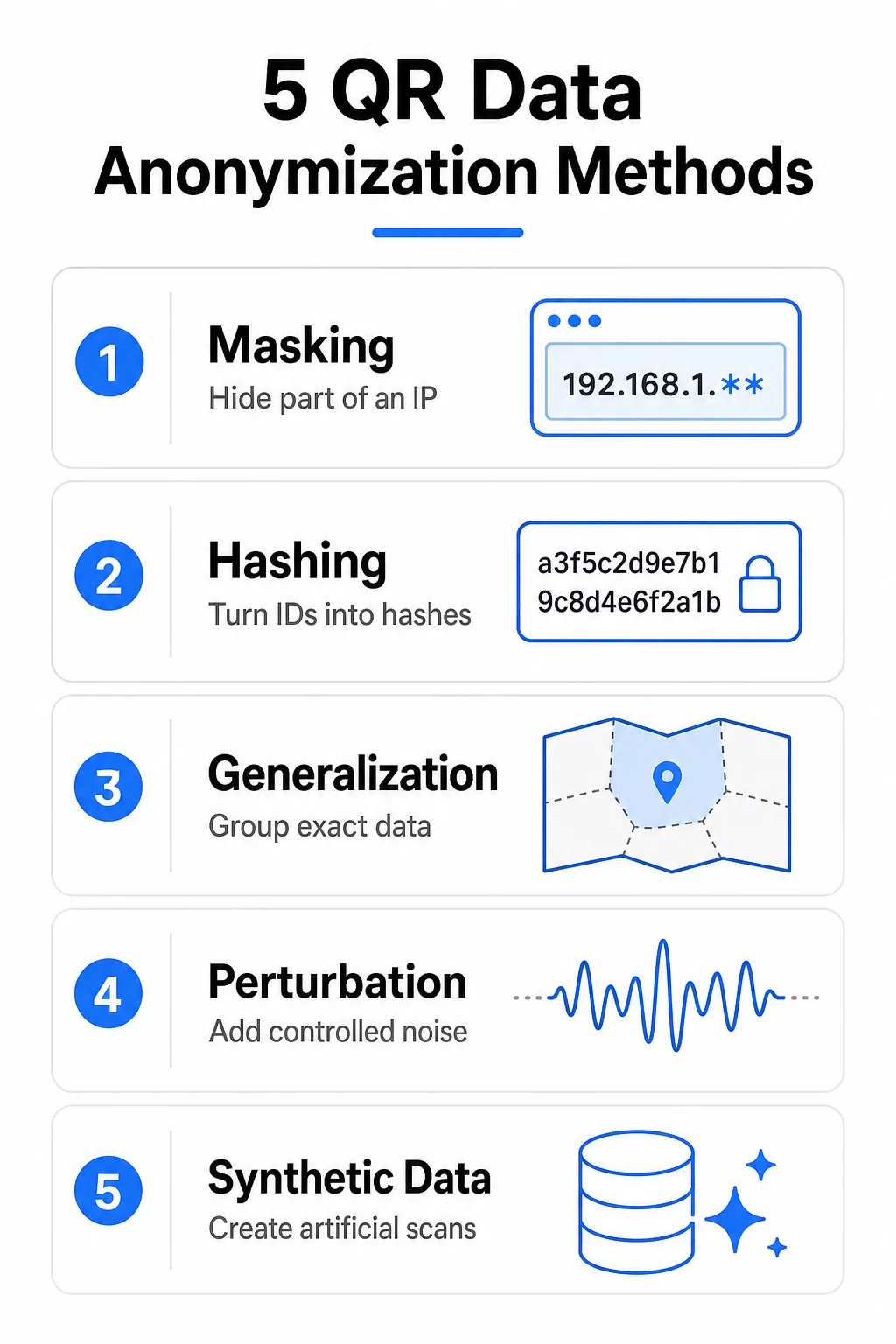
QR Kodu Verilerini Anonimleştirmek İçin 5 Yöntem
1. Maskeleme
Maskeleme, hassas veri alanlarını gizler veya değiştirir, böylece temel değerler okunamazken, verinin kendisi yapısal olarak kullanılabilir kalır. Bir QR kodu bağlamında, bu genellikle yönlendirme sunucusunda toplanan veya analiz sistemlerinde depolanan verilere uygulanır – örneğin, bir IP adresinin son sekizlisini bir veritabanına yazılmadan önce sıfırla değiştirmek.
Gizlilik gücü: Maskeleme orta düzeyde koruma sağlar. Rastgele maruz kalmayı önler ancak yeterli bağlam mevcutsa çıkarım saldırılarına karşı savunmasız kalır. Bağımsız bir çözümden ziyade daha geniş bir gizlilik stratejisinin bir katmanı olarak kullanılması en iyisidir.
Veri kullanışlılığı: Maskeleme verinin yapısını koruduğu için, toplu analiz tamamen işlevsel kalır. Bireysel kimliklere erişmeden tarama hacmini, bölgesel eğilimleri ve cihaz dağılımını hala ölçebilirsiniz.
Uygulama karmaşıklığı: Maskeleme, uygulanması en kolay teknikler arasındadır. Hangi alanların korunmaya ihtiyacı olduğunu belirlemeyi ve ikame kurallarını tutarlı bir şekilde uygulamayı içerir. Modern QR kodu platformları, herhangi bir değer depolanmadan önce, toplama noktasında IP maskelemesini otomatik olarak uygulayabilir.
Yasal uyumluluk: Maskeleme tek başına GDPR anonimleştirme gereksinimlerini karşılamaz, çünkü düzenleyiciler maskelenmiş verileri hala bireylere bağlanabilir olarak kabul eder. Ancak, maruz kalmayı azaltarak ve iyi niyetli veri minimizasyonunu (hem GDPR hem de CCPA kapsamındaki temel ilkelerden biri) göstererek uyumluluğu destekler.
2. Karma İşlem (Hashing)
Karma işlem (hashing), hassas değerleri kriptografik bir algoritma kullanarak sabit uzunluklu dizelere dönüştürür, bu da çıktıdan orijinal girdiyi kurtarmayı imkansız hale getirir. Örneğin, bir kullanıcının e-posta adresi veya cihaz tanımlayıcısı, bir sistem içinde eşleştirme veya tekilleştirme için hala kullanılabilecek karmaşık bir dize haline gelir.
Gizlilik gücü: Prensipte güçlüdür, ancak mutlak değildir. Düşük entropili değerler – yani sınırlı sayıda olası girdiye sahip olanlar – kaba kuvvet saldırılarına karşı savunmasız olabilir. Bir tuz (karma işlemden önce eklenen rastgele bir dize) eklemek ve anahtarları düzenli olarak döndürmek saldırıları önemli ölçüde zorlaştırır.
Veri kullanışlılığı: Karma işlem, tanımlayıcılarını depolamadan tekrar eden tarayıcıları belirlemek gibi tekilleştirme ve tutarlılık kontrolleri için çok uygundur. Ayrıntılı davranışsal analizler veya orijinal değerleri gerektiren entegrasyonlar için daha az kullanışlıdır.
Uygulama karmaşıklığı: Temel karma işlem basittir ve çoğu geliştirme ortamında yaygın olarak desteklenir. Tuzlama ve anahtar yönetimi gibi ek adımlar karmaşıklık katar ve bu değerleri depolamak ve döndürmek için güvenli bir sistem gerektirir.
Yasal uyumluluk: Federal Ticaret Komisyonu, tek başına karma işlemin anonimleştirme teşkil etmediğini belirtmiştir. Madde 29 Çalışma Grubu (şimdiki Avrupa Veri Koruma Kurulu) da benzer şekilde “karma işlemin faydalı bir güvenlik önlemi olduğunu, ancak bir anonimleştirme yöntemi olmadığını” belirtmiştir. GDPR kapsamında, karma işlemden geçirilmiş kişisel veriler hala kişisel veri olarak kabul edilir. CCPA kapsamında, uygun teknik kontroller ve dahili politikalar mevcutsa karma işlemden geçirilmiş veriler kimliksizleştirilmiş olarak nitelendirilebilir, ancak işletmeler bu politikaları tutarlı bir şekilde uygulamalı ve risk değerlendirmelerini belgelemelidir.
3. Genelleştirme
Genelleştirme, belirli veri değerlerini daha geniş kategoriler veya aralıklarla değiştirir. Hassas bir zaman damgası saklamak yerine, saati veya günü saklarsınız. Bir şehir saklamak yerine, bir bölge saklarsınız. Tam bir yaş yerine, bir yaş aralığı saklarsınız.
QR kodu analizi için bu, bir taramanın Salı günü saat 14:17 yerine “bir hafta içi öğleden sonra” gerçekleştiğini kaydetmek veya belirli bir posta kodu yerine “Pasifik Kuzeybatı”ya bir tarama atfetmek anlamına gelebilir.
Gizlilik gücü: Orta düzeyde ve değerlerin ne kadar geniş gruplandığına bağlıdır. Birden fazla genelleştirilmiş alan birleştirildiğinde yeniden tanımlama riski artar. Netflix veri setini içeren 2007 tarihli bir vaka, araştırmacıların genelleştirilmiş derecelendirme verilerini harici kaynaklarla çapraz referanslayarak kullanıcıları yeniden tanımlayabildiğini gösterdi – bu, toplu verilerin bile dikkatli bir tasarıma ihtiyaç duyduğuna dair bir uyarıdır.
Veri kullanışlılığı: Genelleştirme, trend analizi ve kampanya ölçümü için yeterli ayrıntıyı korur. Perakende veya konaklama sektöründe QR kodları kullanan işletmeler, bireysel davranışları ifşa etmeden zirve dönemleri, popüler bölgeleri ve cihaz tercihlerini hala belirleyebilir.
Uygulama karmaşıklığı: Genelleştirme, kategori sınırları belirlenerek manuel olarak veya gizlilik ve veri çözünürlüğünü dengeleyen algoritmalar kullanılarak otomatik olarak uygulanabilir. Her iki yaklaşım da her veri alanı için hangi ayrıntı düzeyinin uygun olduğuna dair net politikalar tanımlamayı gerektirir.
Yasal uyumluluk: Genelleştirme, GDPR ve CCPA'daki veri minimizasyonu ilkeleriyle uyumludur; bu ilkeler, belirli bir amaç için yalnızca gerekli olanın toplanmasını gerektirir. Kendi başına anonimleştirme standartlarını otomatik olarak karşılamaz ancak katmanlı bir yaklaşıma anlamlı bir katkıda bulunur. Genelleştirme kararlarınızı belgelemek ve düzenli olarak gözden geçirmek denetim hazırlığını destekler.
4. Veri Bozma (Pertürbasyon)
Veri bozma, sayısal veya coğrafi verilere küçük, kontrollü miktarlarda gürültü ekler. Sistem, tam bir değer kaydetmek yerine, hafifçe değiştirilmiş bir sürümünü saklar – birkaç dakika kaydırılmış bir zaman damgası, daha geniş bir alana yuvarlanmış koordinatlar veya tanımlanmış bir aralıkta ayarlanmış bir sayım.
Bu yaklaşım, bireysel kayıtlar için hassasiyetten çok istatistiksel doğruluğun önemli olduğu alanlarda yaygındır. Hastaneler, özel tıbbi detayları korurken hasta verilerini araştırmacılarla paylaşmak için bunu kullanmıştır; finans kurumları, hassas kalıpların açığa çıkmasını önlemek için işlem verilerine uygular.
Gizlilik gücü: Bozma, belirli ayrıntıları maskeleme ile analitik kalıpları koruma arasında bir denge kurar. Sağladığı gizlilik düzeyi, ne kadar gürültü eklendiğine doğrudan bağlıdır. Çok az olursa, bireysel kayıtlar tanımlanabilir kalır. Çok fazla olursa, veri anlamını kaybeder.
Veri kullanışlılığı: Orijinal değerleri tamamen kaldıran tekniklerin aksine, bozma bir veri kümesindeki istatistiksel ilişkileri korur. Trend analizi, zirve tanımlama ve coğrafi kümeleme hepsi geçerliliğini korur – sadece tam bireyleri belirleme yeteneği olmadan.
Uygulama karmaşıklığı: Bozma, maskeleme veya genelleştirmeden daha fazla teknik yargı gerektirir. Dönüşüm yönteminin seçimi – rastgele gürültü, değer takası veya dalgacık veya Fourier yöntemleri gibi matematiksel dönüşümler – hem performansı hem de gizlilik sonuçlarını etkiler. Örneğin, dalgacık dönüşümleri O(n) zaman karmaşıklığında çalışır ve bu da onları bazı alternatiflerden daha hızlı yapar. Sistematik yanlılık oluşturmaktan kaçınmak için dikkatli kalibrasyon gereklidir.
Yasal uyumluluk: Bozma, GDPR'ın veri minimizasyon gereksinimlerini destekler ve savunulabilir bir teknik koruma sağlar. Tam anonimleştirmeyi garanti etmez ancak tanımlanabilirliği sınırlamak için anlamlı bir çaba gösterir; bu, düzenleyiciler tarafından genellikle diğer kontrollerle birleştirildiğinde olumlu karşılanır.
5. Sentetik Veri Üretimi
Sentetik veri üretimi, gerçek kullanıcı bilgisi içermeyen, ancak gerçek verilerin istatistiksel özelliklerini yansıtan tamamen yapay veri kümeleri oluşturur. Toplananları değiştirmek yerine, orijinal verileri analitik amaçlar için gerçek gibi davranan uydurma kayıtlarla değiştirir.
QR kod analizi için bu, gerçekçi tarama zaman damgaları, makul coğrafi dağılımlar ve temsili cihaz karışımları oluşturmak anlamına gelir – bu kayıtların hiçbiri gerçek kişiler tarafından yapılan gerçek taramalara karşılık gelmez.
Gizlilik gücü: Sentetik veri, beş yöntem arasında en güçlü gizlilik korumasını sunar. Gerçek kişisel bilgi içermediği için, veri kümesi ifşa edilse bile yeniden tanımlama riski yoktur. Sentetik bir veri kümesinin ihlali, bireyler için gizlilik sonuçları doğurmaz.
Veri kullanışlılığı: İyi oluşturulduğunda, sentetik veri trend analizi, model eğitimi ve özellik testi için gerekli istatistiksel ilişkileri korur. Ayrıca, gerçek verilerde nadir görülen senaryoları simüle etmeyi mümkün kılar – analitik sistemleri stres testinden geçirmek veya makine öğrenimi modellerini uç durumlarda eğitmek için kullanışlıdır.
Uygulama karmaşıklığı: Bu, en kaynak yoğun yöntemdir. Yüksek kaliteli sentetik veri oluşturmak, özel araçlar, önemli hesaplama kaynakları ve sentetik veri kümesinin orijinali doğru bir şekilde temsil ettiğini doğrulamak için doğrulama süreçleri gerektirir. Kuruluşlar genellikle bunu güvenilir bir şekilde uygulamak için özel uzmanlığa veya üçüncü taraf platformlara ihtiyaç duyar.
Yasal uyumluluk: Sentetik veri kişisel bilgi içermediği için, doğası gereği GDPR, CCPA ve diğer çoğu gizlilik düzenlemesinin kapsamı dışındadır. Bu, sağlık ve eğitim gibi katı uyumluluk gereksinimleri olan sektörler için özellikle değerli kılar. Diğer yöntemlerin aktif olarak yönetmesi gereken yeniden tanımlama riskini ortadan kaldırır.
Gizlilik Dostu QR Analizleri Toplamaya Başlayın Pageloot'un Dinamik QR Kod Oluşturucu tarama verilerini ülke ve şehir düzeyinde toplar, cihazları genel kategorilere ayırır ve analizlerinde bireysel kimlikleri asla ifşa etmez. 14 gün ücretsiz deneyin.
Yöntem Karşılaştırması
| Yöntem | Gizlilik Gücü | Veri Kullanışlılığı | Uygulama Karmaşıklığı | Yasal Uyumluluk |
|---|---|---|---|---|
| Maskeleme | Orta düzeyde | Yüksek | Düşük | Kısmi – tam anonimleştirmeyi değil, minimizasyonu destekler |
| Karma | Orta–Yüksek | Orta | Orta | Kısmi – GDPR kapsamında hala kişisel veri |
| Genelleme | Orta düzeyde | Orta–Yüksek | Düşük–Orta | Kısmi – minimizasyon ilkelerini destekler |
| Veri Bozma | Orta düzeyde | Orta–Yüksek | Yüksek | İyi – esnek, savunulabilir bir koruma |
| Sentetik Veri | Çok Yüksek | Yüksek | Çok Yüksek | Mükemmel – doğası gereği GDPR/CCPA kapsamı dışında |
Doğru yöntem kullanım durumunuza bağlıdır. Maskeleme ve genelleme, çoğu QR kodu analiz platformu için pratik başlangıç noktalarıdır. Hashing, tam değerlerin aşağı akışta gerekli olmadığı tekilleştirme görevleri için iyi çalışır. Bozma, istatistiksel doğruluğun kritik olduğu senaryolara uygundur. Sentetik veri, uyumluluk riskinin yüksek olduğu veya veri kümelerini harici olarak paylaşmanız gerektiği durumlarda en güçlü seçenektir.
Birçok kuruluş, sadece birini seçmek yerine bu yöntemleri bir arada kullanır – örneğin, toplama anında IP maskeleme uygulamak, konum verilerini şehir düzeyine genellemek ve harici analiz ortakları için sentetik veri kümeleri oluşturmak.
Pageloot QR Kodu Veri Gizliliğine Nasıl Yaklaşıyor
Pageloot'un analizleri, toplu, kişisel olarak tanımlanamayan veriler etrafında inşa edilmiştir. Konum verileri ülke veya şehir düzeyinde görünür, cihaz bilgileri iOS veya Android gibi genel kategorilerde gruplandırılır ve IP adresleri bireyleri tanımlayan bir biçimde saklanmaz. Platform esnek veri saklama seçenekleri sunar ve kurumsal kullanıcılar, aşağı akışta daha fazla anonimleştirmeyi destekleyen CSV dışa aktarımlarına erişebilir.
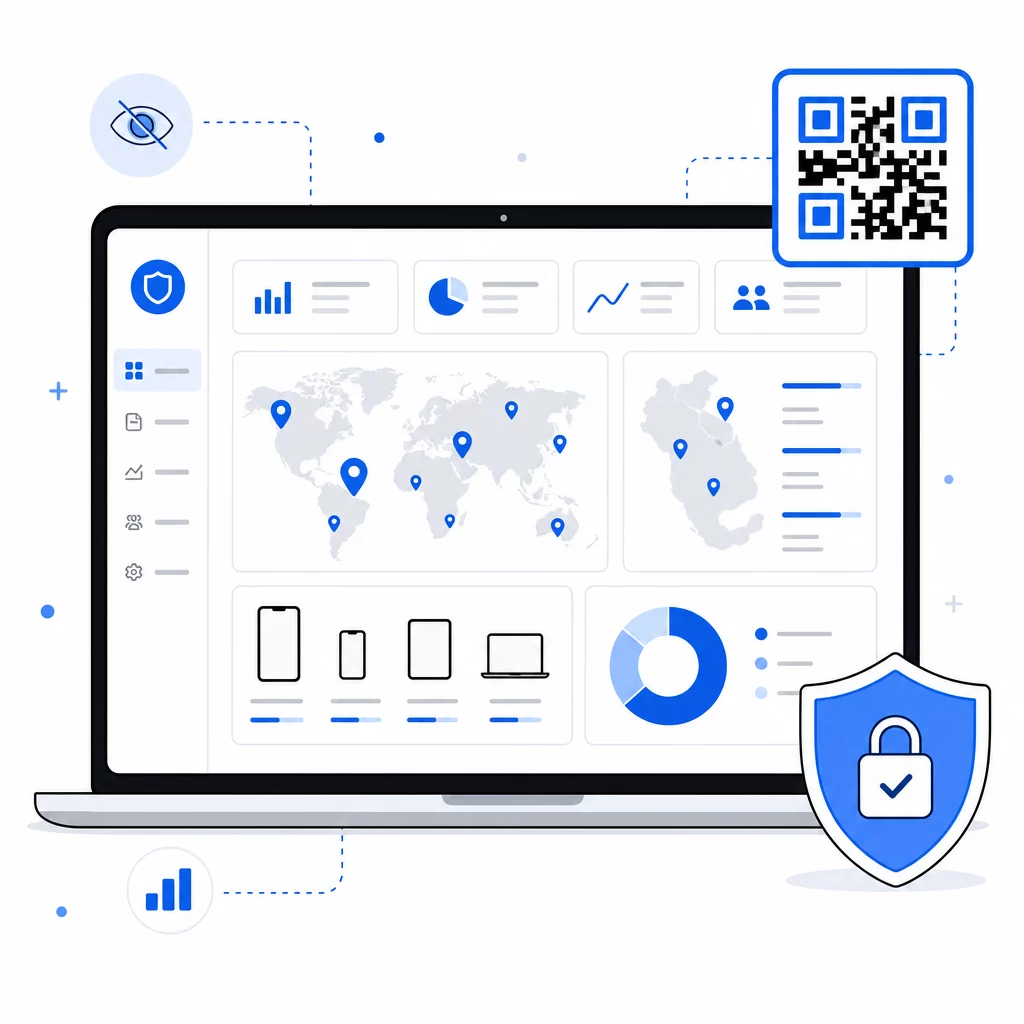
Birden fazla bölgede kampanya yürüten işletmeler için, analiz özellikleri bireysel kullanıcılar üzerinde profiller oluşturmadan performansı ölçmenizi sağlar. Pageloot ayrıca destekler GDPR uyumlu QR kodu analizlerini onay açılır pencereleri, veri yönetim araçları ve düzenli güvenlik incelemeleriyle şifrelenmiş depolama aracılığıyla.
Hangi konuda bağlam için QR kodu gizlilik yasaları GDPR, CCPA, HIPAA ve diğerleri dahil olmak üzere özel durumunuza uygulanır – ve uygun olanı nasıl uygulayacağınız QR kodu analizi için veri saklama kuralları, Pageloot'un bilgi tabanı, her düzenlemeyi pratik rehberlikle kapsar.
İşletmeniz İçin Doğru Yaklaşımı Seçmek
Her durum için tek bir anonimleştirme yöntemi işe yaramaz. FTC'nin rehberliği açık: yalnızca ihtiyacınız olanı toplayın, yalnızca gerektiği kadar saklayın ve amacına hizmet ettiğinde uygun şekilde imha edin. Bu ilke, hangi teknik yöntemi kullanırsanız kullanın geçerlidir.
Pazarlama veya operasyonlarda QR kodları kullanan çoğu işletme için pratik bir başlangıç noktası, platform düzeyinde IP maskeleme ve konum genelleştirmeyi etkinleştirmek, analiz entegrasyonunuzun hangi verileri topladığını gözden geçirmek ve tanımlanmış saklama limitleri belirlemektir. Düzenlenmiş sektörlerdeki kuruluşlar veya verileri üçüncü taraflarla paylaşanlar için, daha güçlü yöntemler – pertürbasyon veya sentetik veri – ek uygulama yatırımına değebilir.
Amaç, tüm içgörüler pahasına mükemmel anonimleştirme değildir. Topladığınız verilerin hassasiyetine, işletmenize uygulanan düzenlemelere ve kullanıcılarınızla kurmak istediğiniz güvene uygun gizlilik koruma düzeyini bulmaktır.
Pageloot'un tüm QR kodu özelliklerini keşfedin gizlilik kontrollerinin daha geniş platforma nasıl uyduğunu görmek için veya inceleyin QR kodu gizlilik riskleri ve bunlardan nasıl kaçınılacağı tehdit ortamına daha geniş bir bakış için.
Sıkça sorulan sorular
Hayır. Madde 29 Çalışma Grubu, karma (hashing) işleminin bir güvenlik önlemi olduğunu, bir anonimleştirme yöntemi olmadığını belirtmiştir. GDPR kapsamında, karmalanmış kişisel veriler hala kişisel veri olarak sınıflandırılır ve orijinaliyle aynı korumalara tabidir. GDPR kapsamında anonim olarak nitelendirilebilmek için, verilerin tanımlanabilir bir bireyle olan herhangi bir bağlantıdan geri döndürülemez bir şekilde ayrıştırılması gerekir.
Maskeleme, belirli alan değerlerini ikame eder veya gizler – örneğin, bir IP adresinin bir kısmını sıfırlarla değiştirmek gibi – yapıyı bozulmadan korurken. Genelleme, kesin değerleri daha geniş kategorilerle değiştirir; örneğin, kesin bir zaman damgasını günün bir saat aralığına veya bir şehri bir bölgeye dönüştürmek gibi. Maskeleme, belirli tanımlayıcıları korumak için daha iyidir; genelleme ise verilerin çözünürlüğünü birden çok alanda eş zamanlı olarak azaltmak için daha iyidir.
Sentetik veri üretimi, gerçek kişisel bilgi içermediği ve çoğu gizlilik düzenlemesinin kapsamı dışında kaldığı için en güçlü uyumluluk duruşunu sağlar. Gerçek tarama verilerini saklaması gereken işletmeler için IP maskeleme, konum genelleme ve tanımlanmış saklama limitlerinin birleşimi savunulabilir bir temel sağlar. Doğru yöntem, veri hassasiyetinize, analizi nasıl kullandığınıza ve verileri üçüncü taraflarla paylaşıp paylaşmadığınıza bağlıdır.