האם אינך בטוח אילו נתונים אישיים קודי ה-QR שלך חושפים בפועל – ומה אתה יכול לעשות בנידון? כל סריקה עוברת דרך שרתי מעקב שמתעדים כתובות IP, סוגי מכשירים, חותמות זמן ונתוני מיקום, לעיתים קרובות מבלי שהמשתמשים יבינו זאת. מדריך זה מסביר חמש שיטות אנונימיזציה מוכחות המפחיתות את סיכון הפרטיות תוך שמירה על שימושיות הניתוחים שלך.
מה סריקת קוד QR חושפת בפועל
לפני בחירת אסטרטגיית אנונימיזציה, כדאי להבין אילו נתונים נאספים מלכתחילה.
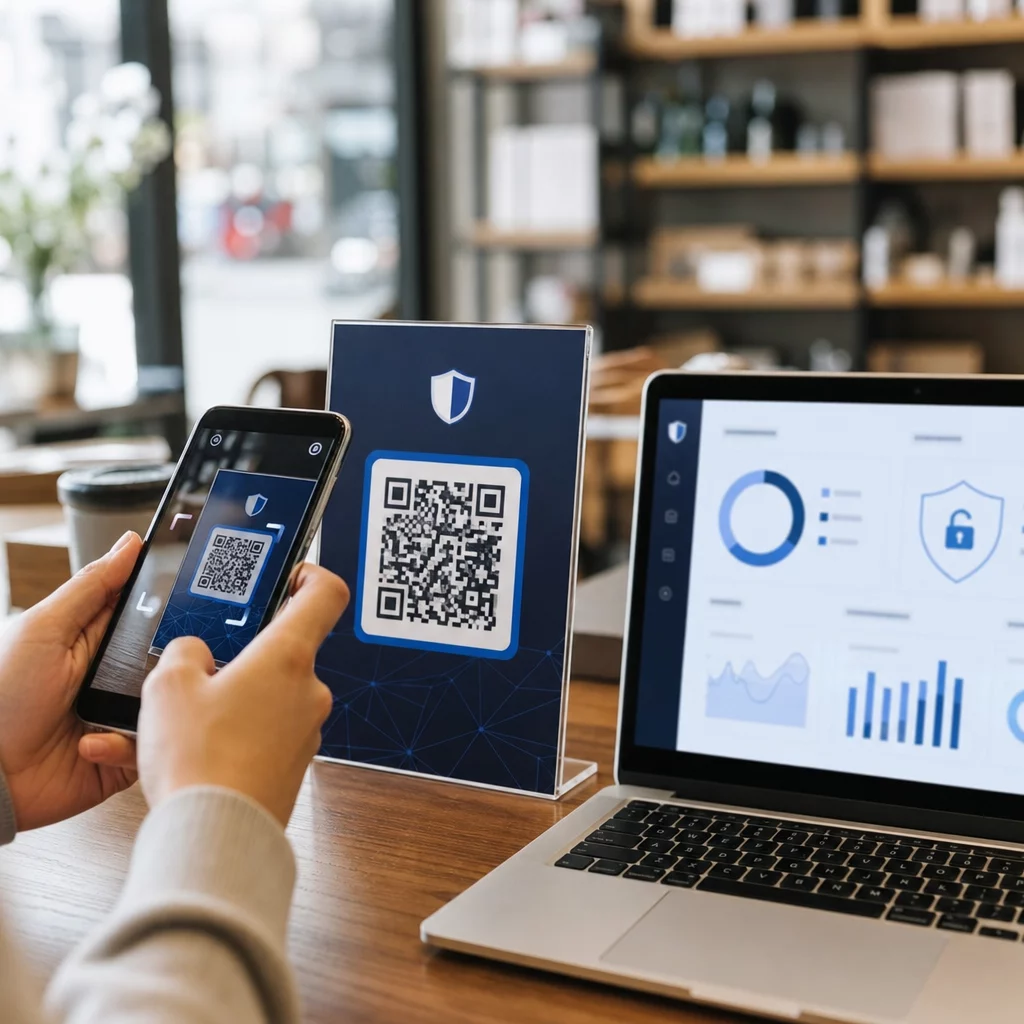
כאשר מישהו סורק קוד QR דינמי, בקשתו עוברת תחילה דרך שרת ההפניה של הפלטפורמה לפני שהיא נוחתת בכתובת ה-URL היעד שלך. רגע ההפניה הזה הוא הרגע שבו נתוני הסריקה נרשמים. בהתאם לפלטפורמה ולתצורה, זה יכול לכלול:
- כתובת IP (משמשת לקירוב מיקום גיאוגרפי)
- סוג מכשיר, מערכת הפעלה ודפדפן
- חותמת זמן של הסריקה
- ספירת סריקות (סה"כ וייחודיות)
אתר היעד יכול לאסוף אפילו יותר – קובצי Cookie, נתוני הפניה וכל מידע שהמשתמשים מזינים. קודי QR סטטיים עוקפים הפניה זו לחלוטין ומעבירים משתמשים ישירות לכתובת ה-URL הסופית מבלי לתעד דבר, אך הם גם אינם מציעים ניתוחים.
הבנת זרימות נתונים אלו היא נקודת המוצא ליישום שיטת האנונימיזציה הנכונה. תוכל גם לעיין ב- אילו נתונים אוספים קודי QR דינמיים לפירוט מעמיק יותר לפני שתחליט על גישה.
ראה בדיוק מה קודי ה-QR שלך עוקבים השתמשו ב-Pageloot’s לוח מחוונים אנליטי כדי לבדוק אילו נתוני סריקה נאספים ולהגדיר את המעקב שלך כך שיתאים לדרישות הפרטיות שלך.
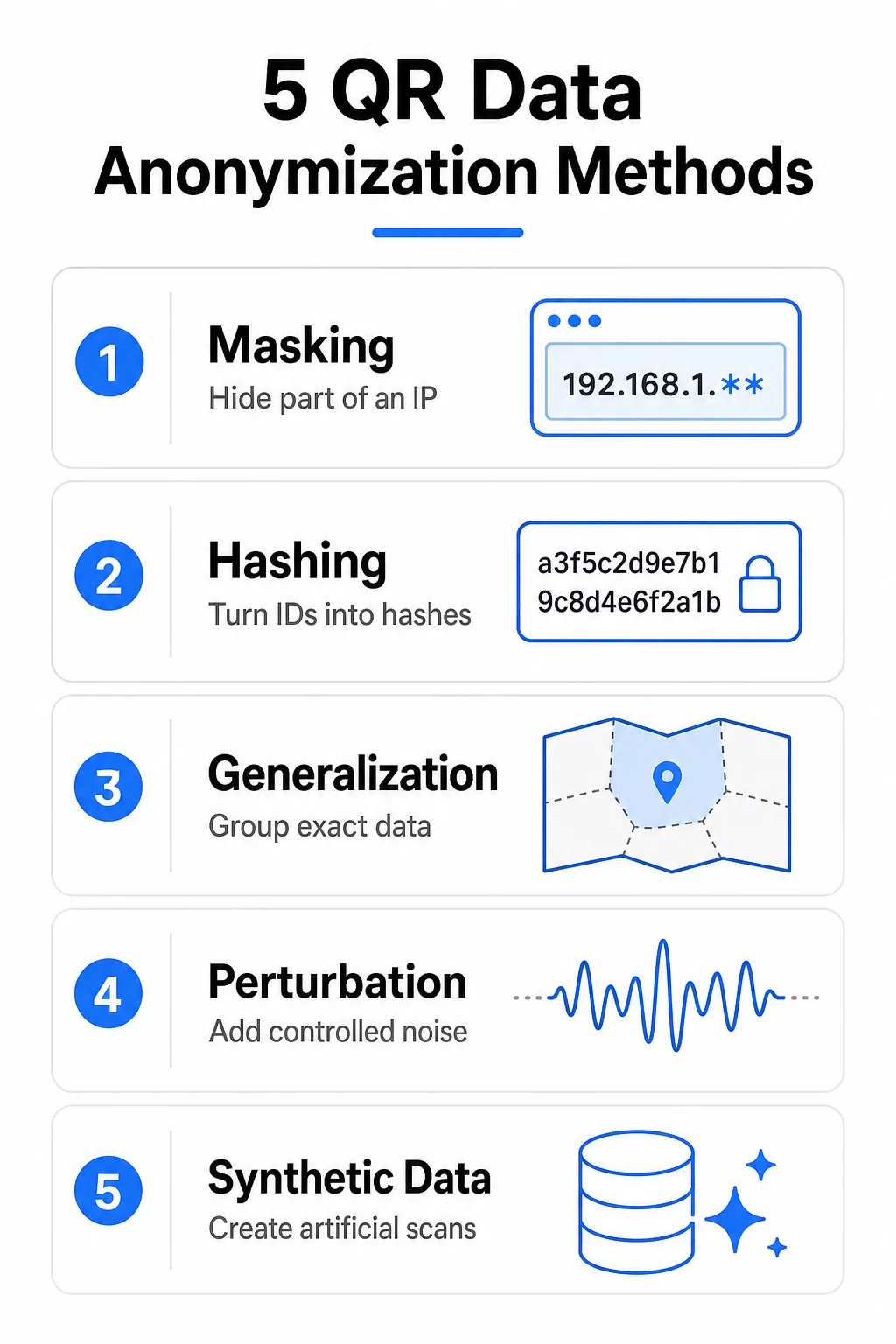
5 שיטות לאנונימיזציה של נתוני קוד QR
1. מיסוך
מיסוך מטשטש או מחליף שדות נתונים רגישים כך שלא ניתן לקרוא את הערכים הבסיסיים, בעוד שהנתונים עצמם נשארים שמישים מבחינה מבנית. בהקשר של קוד QR, זה חל בדרך כלל על נתונים שנאספים בשרת ההפניה מחדש או מאוחסנים במערכות אנליטיקה – לדוגמה, החלפת האוקטט האחרון של כתובת IP באפס לפני שהוא נכתב למסד נתונים.
חוזק פרטיות: מיסוך מציע הגנה בינונית. הוא מונע חשיפה מקרית אך נשאר פגיע להתקפות הסקה אם קיים מספיק הקשר. עדיף להשתמש בו כשכבה אחת באסטרטגיית פרטיות רחבה יותר ולא כפתרון עצמאי.
שימושיות נתונים: מכיוון שמיסוך שומר על מבנה הנתונים, ניתוח מצטבר נשאר פונקציונלי לחלוטין. עדיין ניתן למדוד נפח סריקות, מגמות אזוריות והפצת מכשירים מבלי לגשת לזהויות פרטניות.
מורכבות יישום: מיסוך הוא בין הטכניקות הקלות ביותר ליישום. הוא כרוך בזיהוי אילו שדות זקוקים להגנה ויישום עקבי של כללי החלפה. פלטפורמות קוד QR מודרניות יכולות ליישם מיסוך IP באופן אוטומטי בנקודת האיסוף, לפני שערך כלשהו נשמר.
ציות רגולטורי: מיסוך לבדו אינו עומד בדרישות האנונימיזציה של GDPR, מכיוון שרגולטורים מתייחסים לנתונים ממוסכים ככאלה שעדיין ניתנים לקישור לאנשים פרטיים. עם זאת, הוא תומך בציות על ידי הפחתת חשיפה והדגמת מזעור נתונים בתום לב – אחד מעקרונות הליבה הן תחת GDPR והן תחת CCPA.
2. גיבוב
גיבוב ממיר ערכים רגישים למחרוזות באורך קבוע באמצעות אלגוריתם קריפטוגרפי, מה שהופך את שחזור הקלט המקורי מהפלט לבלתי אפשרי. כתובת דוא"ל של משתמש או מזהה מכשיר, לדוגמה, הופכים למחרוזת מקושקשת שעדיין יכולה לשמש להתאמה או הסרת כפילויות בתוך מערכת.
חוזק פרטיות: חזק עקרונית, אך לא מוחלט. ערכים בעלי אנטרופיה נמוכה – אלה עם קבוצה מוגבלת של קלטים אפשריים – יכולים להיות פגיעים להתקפות כוח גס. הוספת מלח (מחרוזת אקראית המצורפת לפני הגיבוב) וסיבוב מפתחות באופן קבוע מקשים משמעותית על התקפות.
שימושיות נתונים: גיבוב מתאים היטב להסרת כפילויות ובדיקות עקביות, כגון זיהוי סורקים חוזרים מבלי לאחסן את המזהים שלהם. הוא פחות שימושי עבור ניתוח התנהגותי מפורט או אינטגרציות הדורשות את הערכים המקוריים.
מורכבות יישום: גיבוב בסיסי הוא פשוט ונתמך באופן נרחב ברוב סביבות הפיתוח. השלבים הנוספים של המלחה וניהול מפתחות מוסיפים מורכבות ודורשים מערכת מאובטחת לאחסון וסיבוב ערכים אלה.
ציות רגולטורי: הנציבות הפדרלית לסחר הצהירה כי גיבוב לבדו אינו מהווה אנונימיזציה. קבוצת העבודה של סעיף 29 (כיום המועצה האירופית להגנת נתונים) ציינה באופן דומה כי “גיבוב הוא אמצעי אבטחה שימושי, אך אינו שיטת אנונימיזציה.” תחת GDPR, נתונים אישיים מגובבים עדיין נחשבים לנתונים אישיים. תחת CCPA, נתונים מגובבים עשויים להיחשב כנתונים מפורקים מזהות אם קיימות בקרות טכניות ומדיניות פנימית מתאימות, אך עסקים חייבים לאכוף מדיניות זו באופן עקבי ולתעד את הערכות הסיכונים שלהם.
3. הכללה
הכללה מחליפה ערכי נתונים ספציפיים בקטגוריות או טווחים רחבים יותר. במקום לאחסן חותמת זמן מדויקת, מאחסנים את השעה או היום. במקום לאחסן עיר, מאחסנים אזור. במקום גיל מדויק, מאחסנים טווח גילאים.
עבור ניתוח קודי QR, הדבר עשוי להיות תיעוד של סריקה שהתרחשה “אחר הצהריים ביום חול” במקום בשעה 14:17 ביום שלישי, או ייחוס סריקה ל“צפון-מערב האוקיינוס השקט” במקום למיקוד ספציפי.
חוזק פרטיות: בינוני, ותלוי במידת הקיבוץ הרחבה של הערכים. הסיכון לזיהוי מחדש גדל כאשר משלבים מספר שדות מוכללים. מקרה משנת 2007 שכלל מערך נתונים של נטפליקס הראה שחוקרים יכלו לזהות מחדש משתמשים על ידי הצלבת נתוני דירוגים מוכללים עם מקורות חיצוניים – אזהרה שאפילו נתונים מצטברים דורשים תכנון קפדני.
שימושיות נתונים: הכללה שומרת על מספיק פרטים לניתוח מגמות ומדידת קמפיינים. עסקים המשתמשים בקודי QR בקמעונאות או באירוח עדיין יכולים לזהות תקופות שיא, אזורים פופולריים והעדפות מכשירים מבלי לחשוף התנהגות אינדיבידואלית.
מורכבות יישום: ניתן ליישם הכללה באופן ידני על ידי קביעת גבולות קטגוריות, או באופן אוטומטי באמצעות אלגוריתמים המאזנים בין פרטיות לרזולוציית נתונים. כל אחת מהגישות דורשת הגדרת מדיניות ברורה לגבי רמת הפירוט המתאימה לכל שדה נתונים.
ציות רגולטורי: הכללה מתיישרת עם עקרונות מזעור הנתונים ב-GDPR וב-CCPA, הדורשים איסוף רק מה שנחוץ למטרה מוגדרת. היא אינה עומדת באופן אוטומטי בתקני אנונימיזציה בפני עצמה, אך תורמת באופן משמעותי לגישה רב-שכבתית. תיעוד החלטות ההכללה שלך ובדיקתן באופן קבוע תומך במוכנות לביקורת.
4. שיבוש נתונים
שיבוש נתונים מציג כמויות קטנות ומבוקרות של רעש לנתונים מספריים או גיאוגרפיים. במקום לתעד ערך מדויק, המערכת מאחסנת גרסה מעט שונה – חותמת זמן שהוזזה בכמה דקות, קואורדינטות שעוגלו לאזור רחב יותר, או ספירה שהותאמה בטווח מוגדר.
גישה זו נפוצה בתחומים שבהם דיוק סטטיסטי חשוב יותר מדיוק עבור רשומות בודדות. בתי חולים השתמשו בה כדי לשתף נתוני מטופלים עם חוקרים תוך הגנה על פרטים רפואיים פרטיים; מוסדות פיננסיים מיישמים אותה על נתוני עסקאות כדי למנוע חשיפה של דפוסים רגישים.
חוזק פרטיות: שיבוש משיג איזון בין הסתרת פרטים ספציפיים לבין שימור דפוסים אנליטיים. רמת הפרטיות שהוא מספק תלויה ישירות בכמות הרעש המוכנסת. מעט מדי, ורשומות בודדות נשארות ניתנות לזיהוי. יותר מדי, והנתונים מאבדים משמעות.
שימושיות נתונים: בניגוד לטכניקות המסירות לחלוטין ערכים מקוריים, שיבוש שומר על היחסים הסטטיסטיים בתוך מערך נתונים. ניתוח מגמות, זיהוי שיאים ואשכולות גיאוגרפיים נשארים כולם תקפים – רק ללא היכולת לאתר יחידים מדויקים.
מורכבות יישום: שיבוש דורש שיקול דעת טכני רב יותר מאשר מיסוך או הכללה. בחירת שיטת הטרנספורמציה – רעש אקראי, החלפת ערכים, או טרנספורמציות מתמטיות כגון שיטות גלונים (wavelet) או פורייה – משפיעה הן על הביצועים והן על תוצאות הפרטיות. טרנספורמציות גלונים, לדוגמה, פועלות במורכבות זמן של O(n), מה שהופך אותן למהירות יותר מחלופות מסוימות. נדרשת כיול קפדני כדי למנוע הכנסת הטיה שיטתית.
ציות רגולטורי: שיבוש תומך בדרישות מזעור הנתונים של GDPR ומספק אמצעי הגנה טכני שניתן להגן עליו. הוא אינו מבטיח אנונימיזציה מלאה אך מדגים מאמץ משמעותי להגביל את יכולת הזיהוי, דבר שרגולטורים רואים בדרך כלל בעין יפה בשילוב עם בקרות אחרות.
5. יצירת נתונים סינתטיים
יצירת נתונים סינתטיים יוצרת מערכי נתונים מלאכותיים לחלוטין המשקפים את התכונות הסטטיסטיות של נתונים אמיתיים מבלי להכיל מידע משתמשים בפועל. במקום לשנות את מה שנאסף, היא מחליפה את הנתונים המקוריים ברשומות מפוברקות המתנהגות כמו אמיתיות למטרות אנליטיות.
עבור ניתוח קודי QR, משמעות הדבר היא יצירת חותמות זמן סריקה ריאליסטיות, התפלגויות גיאוגרפיות סבירות, ותמהילי מכשירים מייצגים – מבלי שאף אחד מהרשומות הללו יתאים לסריקות אמיתיות של אנשים אמיתיים.
חוזק פרטיות: נתונים סינתטיים מציעים את הגנת הפרטיות החזקה ביותר מבין חמש השיטות. מכיוון שהם אינם מכילים מידע אישי אמיתי, אין סיכון לזיהוי מחדש גם אם מערך הנתונים נחשף. הפרה של מערך נתונים סינתטי אינה גוררת השלכות פרטיות עבור יחידים.
שימושיות נתונים: כאשר הם נוצרים היטב, נתונים סינתטיים שומרים על הקשרים הסטטיסטיים הדרושים לניתוח מגמות, אימון מודלים ובדיקת תכונות. הם גם מאפשרים לדמות תרחישים נדירים בנתונים אמיתיים – שימושי לבדיקת עומס של מערכות אנליטיקה או לאימון מודלי למידת מכונה על מקרי קצה.
מורכבות יישום: זוהי השיטה עתירת המשאבים ביותר. יצירת נתונים סינתטיים באיכות גבוהה דורשת כלים מיוחדים, משאבי מחשוב משמעותיים, ותהליכי אימות כדי לוודא שמערך הנתונים הסינתטי מייצג במדויק את המקור. ארגונים בדרך כלל זקוקים למומחיות ייעודית או לפלטפורמות צד שלישי כדי ליישם זאת באופן אמין.
ציות רגולטורי: מכיוון שנתונים סינתטיים אינם מכילים מידע אישי, הם נופלים באופן טבעי מחוץ לתחום ה-GDPR, ה-CCPA ורוב תקנות הפרטיות האחרות. זה הופך אותם לבעלי ערך במיוחד עבור תעשיות עם דרישות ציות מחמירות, כגון שירותי בריאות וחינוך. הם מבטלים את הסיכון לזיהוי מחדש ששיטות אחרות חייבות לנהל באופן פעיל.
התחל לאסוף ניתוחי QR ידידותיים לפרטיות של Pageloot מחולל QR דינמי צובר נתוני סריקה ברמת המדינה והעיר, מקבץ מכשירים לקטגוריות כלליות, ולעולם אינו חושף זהויות פרטיות בניתוחיו. נסה זאת בחינם למשך 14 יום.
השוואת שיטות
| שיטה | עוצמת פרטיות | שימושיות נתונים | מורכבות יישום | עמידה בתקנות |
|---|---|---|---|---|
| מיסוך | לְמַתֵן | גָבוֹהַ | נָמוּך | חלקי – תומך במינימיזציה, לא באנונימיזציה מלאה |
| גיבוב | בינוני-גבוה | בינוני | בינוני | חלקי – עדיין נתונים אישיים תחת GDPR |
| הכללה | לְמַתֵן | בינוני–גבוה | נמוך–בינוני | חלקי – תומך בעקרונות מזעור |
| שיבוש נתונים | לְמַתֵן | בינוני–גבוה | גָבוֹהַ | טוב – אמצעי הגנה גמיש וניתן להגנה |
| נתונים סינתטיים | גבוה מאוד | גָבוֹהַ | גבוה מאוד | מצוין – מחוץ לתחום ה-GDPR/CCPA באופן מובנה |
השיטה הנכונה תלויה במקרה השימוש שלך. מיסוך והכללה הם נקודות התחלה מעשיות עבור רוב פלטפורמות ניתוח קודי ה-QR. גיבוב (Hashing) עובד היטב למשימות הסרת כפילויות כאשר אין צורך בערכים מדויקים בהמשך הדרך. שיבוש נתונים מתאים לתרחישים שבהם דיוק סטטיסטי הוא קריטי. נתונים סינתטיים הם האפשרות החזקה ביותר כאשר סיכון הציות גבוה או כאשר אתה צריך לשתף מערכי נתונים חיצונית.
ארגונים רבים משתמשים בשיטות אלו בשילוב ולא בוחרים רק אחת – לדוגמה, יישום מיסוך IP בזמן האיסוף, הכללת נתוני מיקום לרמת העיר, ויצירת מערכי נתונים סינתטיים עבור כל שותפי ניתוח חיצוניים.
כיצד Pageloot ניגשת לפרטיות נתוני קודי QR
הניתוחים של Pageloot בנויים סביב נתונים מצטברים שאינם ניתנים לזיהוי אישי. נתוני מיקום מופיעים ברמת המדינה או העיר, מידע על מכשירים מקובץ לקטגוריות כלליות כמו iOS או Android, וכתובות IP אינן נשמרות בצורה המזהה אנשים פרטיים. הפלטפורמה מספקת אפשרויות גמישות לשמירת נתונים, ולמשתמשי ארגונים יש גישה לייצוא CSV התומך באנונימיזציה נוספת בהמשך הדרך.
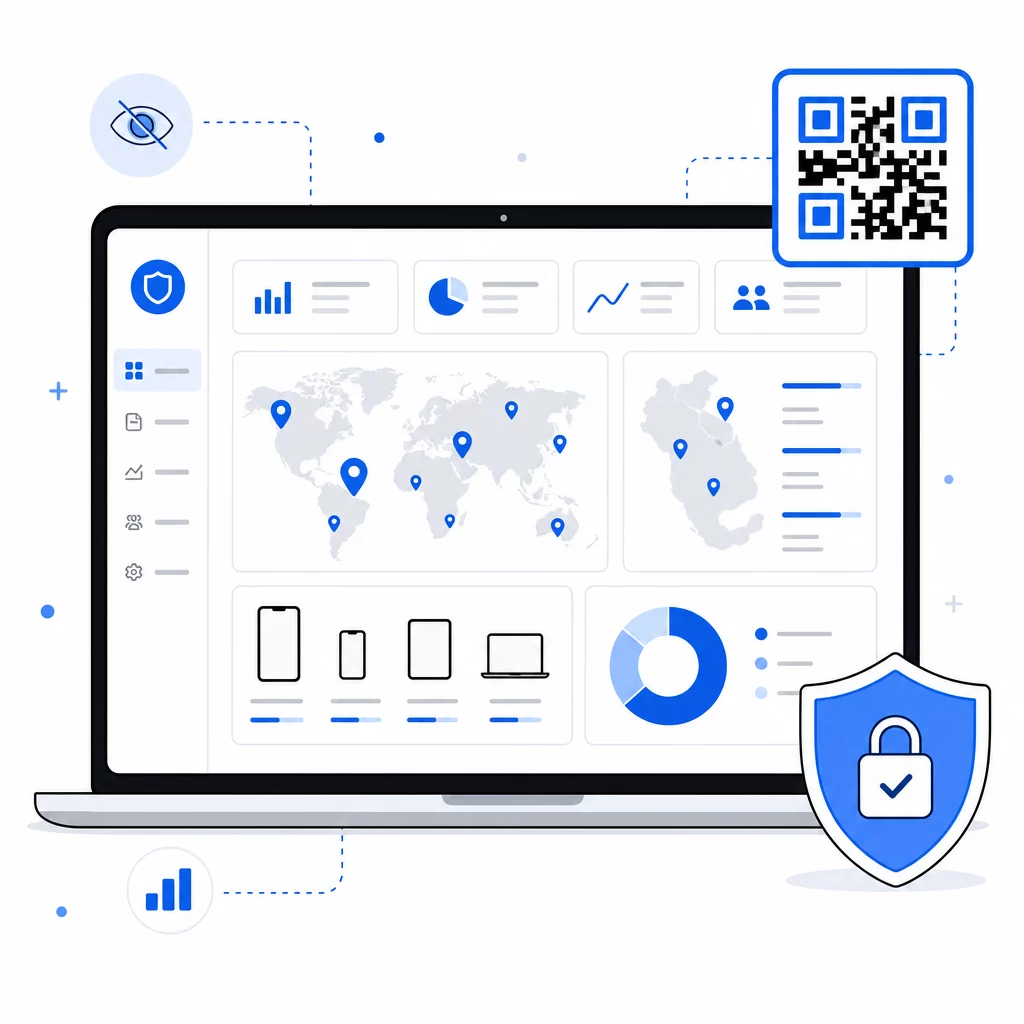
עבור עסקים המנהלים קמפיינים במספר אזורים, ה- תכונות ניתוח מאפשרות לך למדוד ביצועים מבלי לבנות פרופילים על משתמשים בודדים. Pageloot תומכת גם ב- ניתוח קודי QR תואם GDPR באמצעות חלונות קופצים להסכמה, כלי ניהול נתונים, ואחסון מוצפן עם סקירות אבטחה קבועות.
להקשר לגבי אילו חוקי פרטיות של קודי QR חלים על המצב הספציפי שלך – כולל GDPR, CCPA, HIPAA, ואחרים – וכיצד ליישם כללי שמירת נתונים מתאימים עבור ניתוח קודי QR, בסיס הידע של Pageloot מכסה כל תקנה עם הנחיות מעשיות.
בחירת הגישה הנכונה עבור העסק שלך
אין שיטת אנונימיזציה אחת שמתאימה לכל מצב. ההנחיה של ה-FTC ברורה: אסוף רק את מה שאתה צריך, שמור אותו רק כל עוד הוא נחוץ, והיפטר ממנו כראוי כאשר הוא מילא את מטרתו. עיקרון זה חל ללא קשר לשיטה הטכנית שבה אתה משתמש.
עבור רוב העסקים המשתמשים בקודי QR בשיווק או בתפעול, נקודת התחלה מעשית היא לאפשר מיסוך IP והכללת מיקום ברמת הפלטפורמה, לבדוק אילו נתונים אוסף שילוב הניתוח שלך, ולהגדיר מגבלות שמירה מוגדרות. עבור ארגונים בתעשיות מפוקחות או כאלה המשתפים נתונים עם צדדים שלישיים, שיטות חזקות יותר – הפרעה או נתונים סינתטיים – עשויות להיות שוות את ההשקעה הנוספת ביישום.
המטרה אינה אנונימיזציה מושלמת במחיר של כל תובנה. אלא מציאת רמת הגנת הפרטיות המתאימה לרגישות הנתונים שאתה אוסף, לתקנות החלות על העסק שלך, ולאמון שאתה רוצה לבנות עם המשתמשים שלך.
חקור את Pageloot’s מגוון המלא של תכונות קוד QR כדי לראות כיצד בקרות פרטיות משתלבות בפלטפורמה הרחבה יותר, או סקור סיכוני פרטיות של קוד QR וכיצד להימנע מהם למבט רחב יותר על נוף האיומים.
שאלות נפוצות
לא. קבוצת העבודה של סעיף 29 קבעה כי גיבוב (hashing) הוא אמצעי אבטחה, ולא שיטת אנונימיזציה. על פי ה-GDPR, נתונים אישיים מגובבים עדיין מסווגים כנתונים אישיים וכפופים לאותן הגנות כמו המקור. כדי להיחשב אנונימיים על פי ה-GDPR, יש להסיר מהנתונים באופן בלתי הפיך כל קשר לאדם מזוהה.
מיסוך מחליף או מטשטש ערכי שדות ספציפיים – לדוגמה, החלפת חלק מכתובת IP באפסים – תוך שמירה על המבנה בשלמותו. הכללה מחליפה ערכים מדויקים בקטגוריות רחבות יותר, כגון המרת חותמת זמן מדויקת לטווח שעות ביום או עיר לאזור. מיסוך עדיף להגנה על מזהים ספציפיים; הכללה עדיפה להפחתת רזולוציית הנתונים על פני מספר שדות בו-זמנית.
יצירת נתונים סינתטיים מספקת את עמדת הציות החזקה ביותר מכיוון שהיא אינה מכילה מידע אישי אמיתי וחורגת מתחולתן של רוב תקנות הפרטיות. עבור עסקים שצריכים לשמור נתוני סריקה אמיתיים, שילוב של מיסוך כתובות IP, הכללת מיקום ומגבלות שמירה מוגדרות מספק בסיס הגנתי. השיטה הנכונה תלויה ברגישות הנתונים שלך, באופן שבו אתה משתמש בניתוחים, ובשאלה אם אתה משתף נתונים עם צדדים שלישיים.