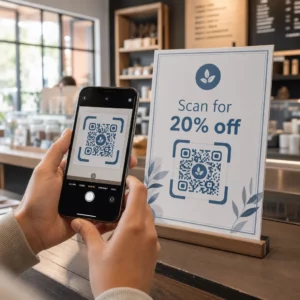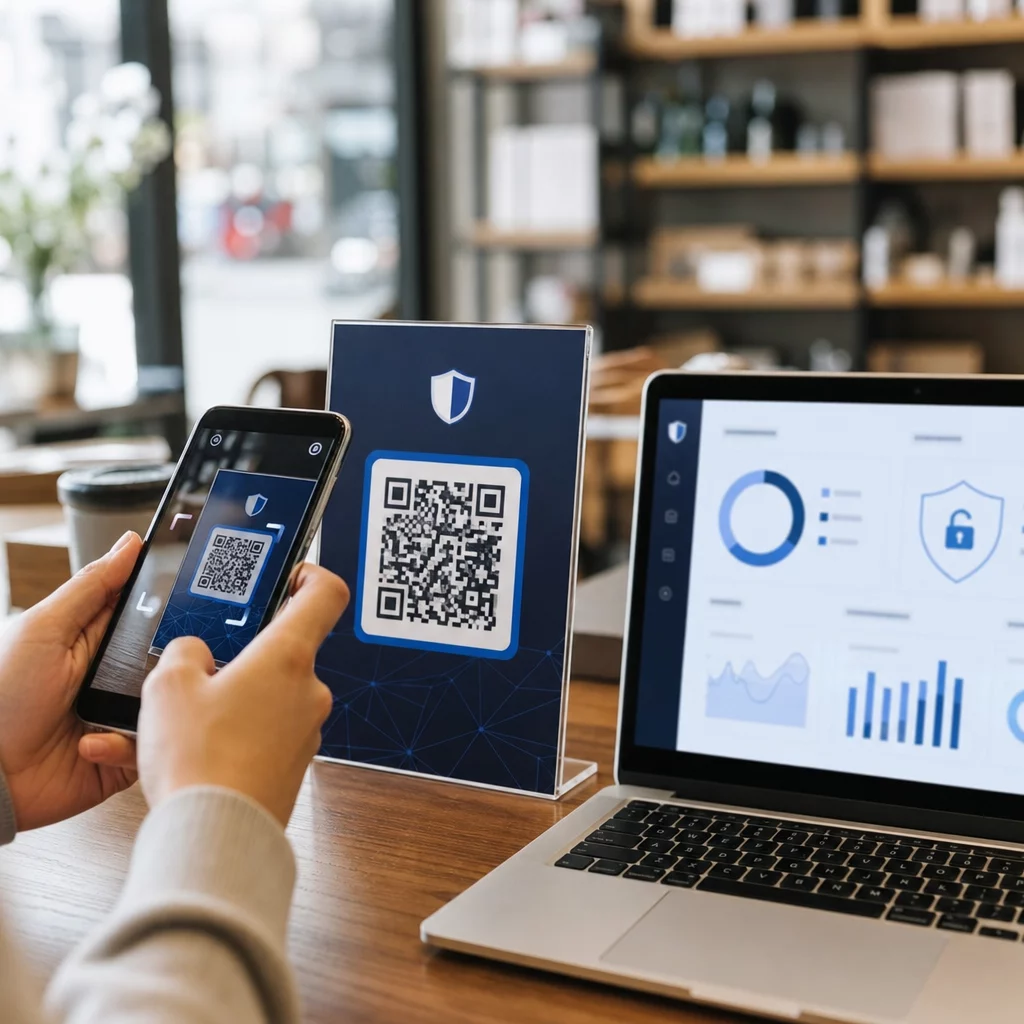
¿No está seguro de qué datos personales exponen realmente sus códigos QR y qué puede hacer al respecto? Cada escaneo pasa por servidores de seguimiento que registran direcciones IP, tipos de dispositivos, marcas de tiempo y datos de ubicación, a menudo sin que los usuarios se den cuenta. Esta guía explica cinco métodos de anonimización probados que reducen el riesgo de privacidad mientras mantienen sus análisis útiles.
Qué expone realmente el escaneo de códigos QR
Antes de elegir una estrategia de anonimización, es útil comprender qué datos se recopilan en primer lugar.
Cuando alguien escanea un código QR dinámico, su solicitud primero pasa por el servidor de redirección de la plataforma antes de llegar a su URL de destino. Ese momento de redirección es cuando se registran los datos de escaneo. Dependiendo de la plataforma y la configuración, esto puede incluir:
- Dirección IP (utilizada para aproximar la ubicación geográfica)
- Tipo de dispositivo, sistema operativo y navegador
- Marca de tiempo del escaneo
- Recuento de escaneos (total y únicos)
El sitio web de destino puede recopilar aún más: cookies, datos de referencia y cualquier información que los usuarios ingresen. Códigos QR estáticos omiten este redireccionamiento por completo y reenvían a los usuarios directamente a la URL final sin registrar nada, pero tampoco ofrecen análisis.
Comprender estos flujos de datos es el punto de partida para aplicar el método de anonimización correcto. También puede revisar qué datos recopilan los códigos QR dinámicos para un desglose más profundo antes de decidir un enfoque.
Vea exactamente lo que rastrean sus códigos QR Utilice el de Pageloot panel de análisis integrado para revisar qué datos de escaneo se recopilan y configurar su seguimiento para que coincida con sus requisitos de privacidad.
5 métodos para anonimizar datos de códigos QR
1. Enmascaramiento
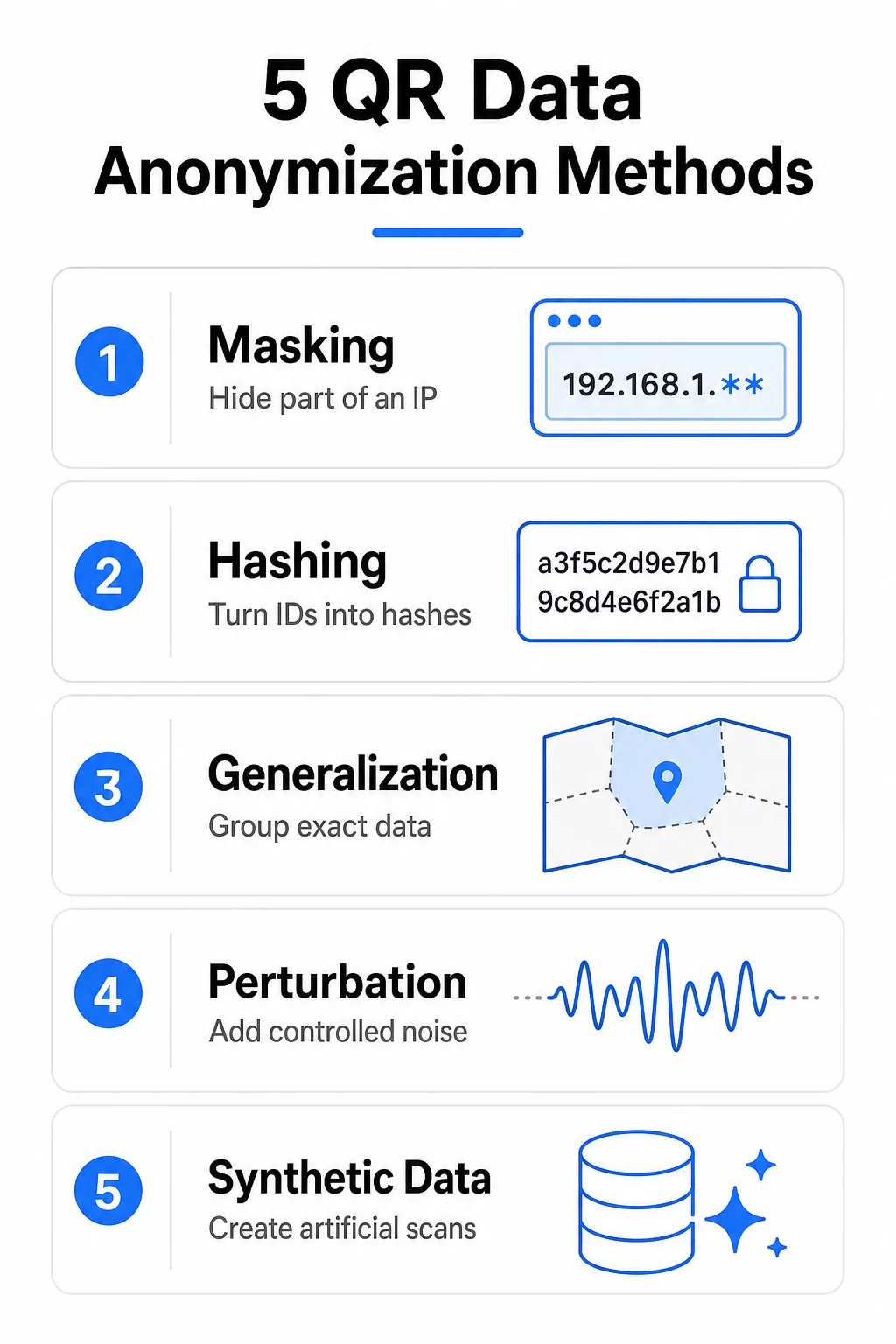
El enmascaramiento oculta o sustituye campos de datos sensibles para que los valores subyacentes no puedan leerse, mientras que los datos en sí mismos siguen siendo estructuralmente utilizables. En el contexto de un código QR, esto se aplica típicamente a los datos recopilados en el servidor de redirección o almacenados en sistemas de análisis – por ejemplo, reemplazando el último octeto de una dirección IP con un cero antes de que se escriba en una base de datos.
Fuerza de privacidad: El enmascaramiento ofrece una protección moderada. Previene la exposición casual, pero sigue siendo vulnerable a ataques de inferencia si se dispone de suficiente contexto. Se utiliza mejor como una capa en una estrategia de privacidad más amplia en lugar de una solución independiente.
Utilidad de los datos: Dado que el enmascaramiento preserva la estructura de los datos, el análisis agregado sigue siendo completamente funcional. Todavía se puede medir el volumen de escaneos, las tendencias regionales y la distribución de dispositivos sin acceder a identidades individuales.
Complejidad de implementación: El enmascaramiento es una de las técnicas más fáciles de implementar. Implica identificar qué campos necesitan protección y aplicar reglas de sustitución de manera consistente. Las plataformas modernas de códigos QR pueden aplicar el enmascaramiento de IP automáticamente en el punto de recopilación, antes de que se almacene cualquier valor.
Cumplimiento normativo: El enmascaramiento por sí solo no satisface los requisitos de anonimización del GDPR, porque los reguladores tratan los datos enmascarados como potencialmente vinculables a individuos. Sin embargo, sí apoya el cumplimiento al reducir la exposición y demostrar una minimización de datos de buena fe – uno de los principios fundamentales tanto del GDPR como de la CCPA.
2. Hashing
El hashing convierte valores sensibles en cadenas de longitud fija utilizando un algoritmo criptográfico, lo que hace imposible recuperar la entrada original a partir de la salida. La dirección de correo electrónico o el identificador de dispositivo de un usuario, por ejemplo, se convierte en una cadena codificada que aún puede utilizarse para la coincidencia o la deduplicación dentro de un sistema.
Fuerza de privacidad: Fuerte en principio, pero no absoluto. Los valores de baja entropía – aquellos con un conjunto limitado de posibles entradas – pueden ser vulnerables a ataques de fuerza bruta. Añadir un "salt" (una cadena aleatoria añadida antes del hashing) y rotar las claves regularmente hace que los ataques sean significativamente más difíciles.
Utilidad de los datos: El hashing es muy adecuado para la deduplicación y las comprobaciones de consistencia, como la identificación de escáneres repetidos sin almacenar sus identificadores. Es menos útil para análisis de comportamiento detallados o integraciones que requieren los valores originales.
Complejidad de implementación: El hashing básico es sencillo y ampliamente compatible en la mayoría de los entornos de desarrollo. Los pasos adicionales de salting y gestión de claves añaden complejidad y requieren un sistema seguro para almacenar y rotar esos valores.
Cumplimiento normativo: La Comisión Federal de Comercio ha declarado que el hashing por sí solo no constituye anonimización. El Grupo de Trabajo del Artículo 29 (ahora el Comité Europeo de Protección de Datos) ha señalado de manera similar que “el hashing es una medida de seguridad útil, pero no es un método de anonimización”. Bajo el GDPR, los datos personales con hash siguen siendo tratados como datos personales. Bajo la CCPA, los datos con hash pueden calificarse como desidentificados si existen controles técnicos y políticas internas apropiadas, pero las empresas deben aplicar esas políticas de manera consistente y documentar sus evaluaciones de riesgo.
1. 3. Generalización
La generalización reemplaza los valores de datos específicos con categorías o rangos más amplios. En lugar de almacenar una marca de tiempo precisa, se almacena la hora o el día. En lugar de almacenar una ciudad, se almacena una región. En lugar de una edad exacta, se almacena una franja de edad.
Para el análisis de códigos QR, esto podría significar registrar que un escaneo ocurrió “por la tarde en un día laborable” en lugar de a las 2:17 PM de un martes, o atribuir un escaneo al “Noroeste del Pacífico” en lugar de a un código postal específico.
Fuerza de privacidad: Moderado, y dependiente de cuán ampliamente se agrupen los valores. El riesgo de reidentificación aumenta cuando se combinan múltiples campos generalizados. Un caso de 2007 que involucró un conjunto de datos de Netflix mostró que los investigadores podían reidentificar a los usuarios al cruzar datos de calificaciones generalizadas con fuentes externas, una advertencia de que incluso los datos agregados necesitan un diseño cuidadoso.
Utilidad de los datos: La generalización conserva suficientes detalles para el análisis de tendencias y la medición de campañas. Las empresas que utilizan códigos QR en el comercio minorista o la hostelería aún pueden identificar períodos pico, regiones populares y preferencias de dispositivos sin exponer el comportamiento individual.
Complejidad de implementación: La generalización puede implementarse manualmente estableciendo límites de categoría, o automáticamente utilizando algoritmos que equilibran la privacidad y la resolución de datos. Cualquiera de los enfoques requiere definir políticas claras sobre qué nivel de detalle es apropiado para cada campo de datos.
Cumplimiento normativo: La generalización se alinea con los principios de minimización de datos del GDPR y la CCPA, que requieren recopilar solo lo necesario para un propósito específico. No satisface automáticamente los estándares de anonimización por sí sola, pero contribuye significativamente a un enfoque por capas. Documentar sus decisiones de generalización y revisarlas regularmente apoya la preparación para auditorías.
8. 4. Perturbación de Datos
La perturbación de datos introduce pequeñas cantidades controladas de ruido en datos numéricos o geográficos. En lugar de registrar un valor exacto, el sistema almacena una versión ligeramente modificada: una marca de tiempo desplazada unos minutos, coordenadas redondeadas a un área más amplia o un recuento ajustado dentro de un rango definido.
Este enfoque es común en campos donde la precisión estadística importa más que la exactitud para los registros individuales. Los hospitales lo han utilizado para compartir datos de pacientes con investigadores mientras protegen detalles médicos privados; las instituciones financieras lo aplican a los datos de transacciones para evitar la exposición de patrones sensibles.
Fuerza de privacidad: La perturbación logra un equilibrio entre enmascarar detalles específicos y preservar patrones analíticos. El nivel de privacidad que proporciona depende directamente de la cantidad de ruido introducido. Demasiado poco, y los registros individuales siguen siendo identificables. Demasiado, y los datos pierden significado.
Utilidad de los datos: A diferencia de las técnicas que eliminan completamente los valores originales, la perturbación conserva las relaciones estadísticas dentro de un conjunto de datos. El análisis de tendencias, la identificación de picos y la agrupación geográfica siguen siendo válidos, solo que sin la capacidad de identificar individuos exactos.
Complejidad de implementación: La perturbación requiere un juicio técnico mayor que el enmascaramiento o la generalización. La elección del método de transformación (ruido aleatorio, intercambio de valores o transformaciones matemáticas como los métodos de wavelet o Fourier) afecta tanto el rendimiento como los resultados de privacidad. Las transformaciones de wavelet, por ejemplo, operan con una complejidad temporal de O(n), lo que las hace más rápidas que algunas alternativas. Se necesita una calibración cuidadosa para evitar introducir sesgos sistemáticos.
Cumplimiento normativo: La perturbación apoya los requisitos de minimización de datos del GDPR y proporciona una salvaguarda técnica defendible. No garantiza la anonimización completa, pero demuestra un esfuerzo significativo para limitar la identificabilidad, lo que los reguladores generalmente ven con buenos ojos cuando se combina con otros controles.
15. 5. Generación de Datos Sintéticos
La generación de datos sintéticos crea conjuntos de datos completamente artificiales que reflejan las propiedades estadísticas de los datos reales sin contener ninguna información de usuario real. En lugar de alterar lo que se recopiló, reemplaza los datos originales con registros fabricados que se comportan como los reales para fines analíticos.
Para el análisis de códigos QR, esto significa generar marcas de tiempo de escaneo realistas, distribuciones geográficas plausibles y mezclas de dispositivos representativas, sin que ninguno de esos registros corresponda a escaneos reales de personas reales.
Fuerza de privacidad: Los datos sintéticos ofrecen la protección de privacidad más sólida de los cinco métodos. Debido a que no contienen información personal real, no hay riesgo de reidentificación incluso si el conjunto de datos se expone. Una violación de un conjunto de datos sintéticos no tiene consecuencias de privacidad para los individuos.
Utilidad de los datos: Cuando se generan bien, los datos sintéticos preservan las relaciones estadísticas necesarias para el análisis de tendencias, el entrenamiento de modelos y las pruebas de características. También permite simular escenarios que son raros en los datos reales, útil para probar sistemas de análisis bajo estrés o entrenar modelos de aprendizaje automático en casos extremos.
Complejidad de implementación: Este es el método que más recursos consume. La generación de datos sintéticos de alta calidad requiere herramientas especializadas, importantes recursos computacionales y procesos de validación para confirmar que el conjunto de datos sintéticos representa con precisión el original. Las organizaciones suelen necesitar experiencia dedicada o plataformas de terceros para implementarlo de forma fiable.
Cumplimiento normativo: Dado que los datos sintéticos no contienen información personal, inherentemente quedan fuera del alcance del GDPR, CCPA y la mayoría de las demás regulaciones de privacidad. Esto lo hace particularmente valioso para industrias con estrictos requisitos de cumplimiento, como la atención médica y la educación. Elimina el riesgo de reidentificación que otros métodos deben gestionar activamente.
Empiece a Recopilar Análisis de QR Respetuosos con la Privacidad De Pageloot Generador de códigos QR dinámicos agrega datos de escaneo a nivel de país y ciudad, agrupa dispositivos en categorías generales y nunca expone identidades individuales en sus análisis. Pruébelo gratis durante 14 días.
Comparación de Métodos
| Método | Fuerza de la Privacidad | Utilidad de los Datos | Complejidad de Implementación | Cumplimiento normativo |
|---|---|---|---|---|
| Enmascaramiento | Moderado | Alta | Baja | Parcial – soporta la minimización, no la anonimización completa |
| Hashing | Moderado-Alto | Medio | Medio | Parcial – sigue siendo datos personales bajo el GDPR |
| Generalización | Moderado | Medio–Alto | Bajo–Medio | Parcial – apoya los principios de minimización |
| Perturbación de Datos | Moderado | Medio–Alto | Alta | Bueno – salvaguarda flexible y defendible |
| Datos Sintéticos | Muy alta | Alta | Muy alta | Excelente – inherentemente fuera del alcance de GDPR/CCPA |
El método correcto depende de su caso de uso. El enmascaramiento y la generalización son puntos de partida prácticos para la mayoría de las plataformas de análisis de códigos QR. El hashing funciona bien para tareas de deduplicación donde no se necesitan valores exactos en etapas posteriores. La perturbación se adapta a escenarios donde la precisión estadística es crítica. Los datos sintéticos son la opción más sólida cuando el riesgo de cumplimiento es alto o cuando necesita compartir conjuntos de datos externamente.
Muchas organizaciones utilizan estos métodos en combinación en lugar de elegir solo uno – por ejemplo, aplicando el enmascaramiento de IP en el momento de la recopilación, generalizando los datos de ubicación a nivel de ciudad y generando conjuntos de datos sintéticos para cualquier socio de análisis externo.
Cómo Pageloot Aborda la Privacidad de Datos de Códigos QR
Los análisis de Pageloot se basan en datos agregados y no identificables personalmente. Los datos de ubicación aparecen a nivel de país o ciudad, la información del dispositivo se agrupa en categorías generales como iOS o Android, y las direcciones IP no se almacenan de una forma que identifique a individuos. La plataforma ofrece opciones flexibles de retención de datos, y los usuarios empresariales tienen acceso a exportaciones CSV que permiten una mayor anonimización en etapas posteriores.
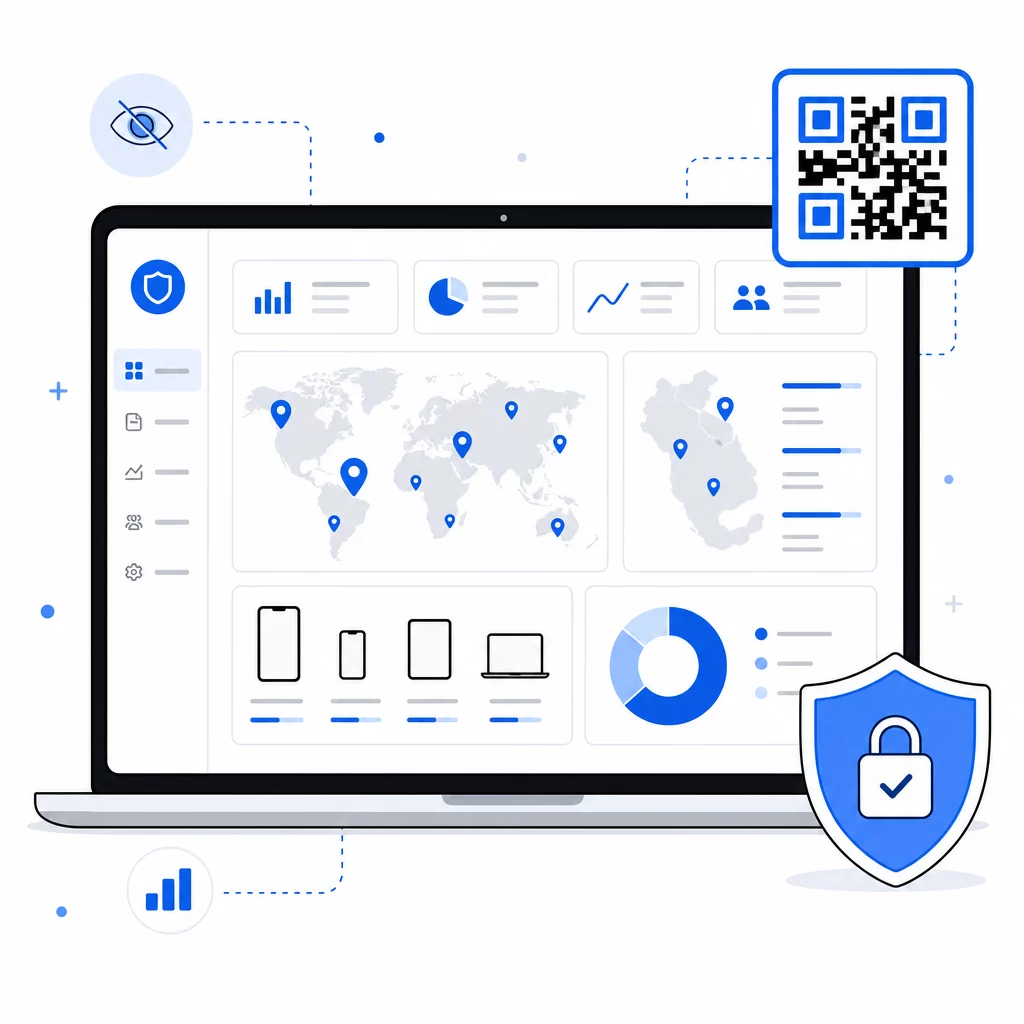
Para empresas que ejecutan campañas en múltiples regiones, las funciones de análisis le permiten medir el rendimiento sin crear perfiles de usuarios individuales. Pageloot también es compatible con análisis de códigos QR compatibles con GDPR a través de ventanas emergentes de consentimiento, herramientas de gestión de datos y almacenamiento cifrado con revisiones de seguridad periódicas.
Para el contexto sobre cuáles leyes de privacidad de códigos QR se aplican a su situación específica – incluyendo GDPR, CCPA, HIPAA y otros – y cómo implementar las apropiadas reglas de retención de datos para el análisis de códigos QR, la base de conocimientos de Pageloot cubre cada regulación con orientación práctica.
Elegir el Enfoque Correcto para Su Negocio
Ningún método de anonimización único funciona para cada situación. La guía de la FTC es clara: recopile solo lo que necesita, consérvelo solo el tiempo necesario y deséchelo adecuadamente cuando haya cumplido su propósito. Ese principio se aplica independientemente del método técnico que utilice.
Para la mayoría de las empresas que utilizan códigos QR en marketing u operaciones, un punto de partida práctico es habilitar el enmascaramiento de IP y la generalización de la ubicación a nivel de plataforma, revisar qué datos recopila su integración de análisis y establecer límites de retención definidos. Para las organizaciones en industrias reguladas o aquellas que comparten datos con terceros, métodos más sólidos – perturbación o datos sintéticos – pueden valer la inversión adicional en implementación.
El objetivo no es una anonimización perfecta a costa de toda la información. Es encontrar el nivel de protección de la privacidad apropiado para la sensibilidad de los datos que recopila, las regulaciones que se aplican a su negocio y la confianza que desea construir con sus usuarios.
Explore la de Pageloot gama completa de funciones de códigos QR para ver cómo los controles de privacidad encajan en la plataforma más amplia, o revise riesgos de privacidad de los códigos QR y cómo evitarlos para una visión más amplia del panorama de amenazas.
Preguntas frecuentes
No. El Grupo de Trabajo del Artículo 29 ha declarado que el hashing es una medida de seguridad, no un método de anonimización. Según el RGPD, los datos personales con hash siguen clasificándose como datos personales y están sujetos a las mismas protecciones que los originales. Para calificarse como anónimos según el RGPD, los datos deben ser despojados irreversiblemente de cualquier conexión con un individuo identificable.
El enmascaramiento sustituye u oculta valores de campo específicos – por ejemplo, reemplazando parte de una dirección IP con ceros – mientras mantiene la estructura intacta. La generalización reemplaza valores precisos con categorías más amplias, como convertir una marca de tiempo exacta en un rango horario o una ciudad en una región. El enmascaramiento es mejor para proteger identificadores específicos; la generalización es mejor para reducir la resolución de los datos en múltiples campos simultáneamente.
La generación de datos sintéticos proporciona la postura de cumplimiento más sólida porque no contiene información personal real y queda fuera del alcance de la mayoría de las regulaciones de privacidad. Para las empresas que necesitan retener datos de escaneo reales, una combinación de enmascaramiento de IP, generalización de ubicación y límites de retención definidos proporciona una base defendible. El método adecuado depende de la sensibilidad de sus datos, cómo utiliza los análisis y si comparte datos con terceros.