Vai neesat pārliecināts, kādus personas datus jūsu QR kodi patiesībā atklāj – un ko jūs varat darīt lietas labā? Katra skenēšana notiek caur izsekošanas serveriem, kas reģistrē IP adreses, ierīču tipus, laika zīmogus un atrašanās vietas datus, bieži vien lietotājiem to neapzinoties. Šajā ceļvedī ir izskaidrotas piecas pārbaudītas anonimizācijas metodes, kas samazina privātuma risku, vienlaikus saglabājot jūsu analītikas noderīgumu.
Ko patiesībā atklāj QR koda skenēšana
Pirms anonimizācijas stratēģijas izvēles ir noderīgi saprast, kādi dati vispār tiek vākti.
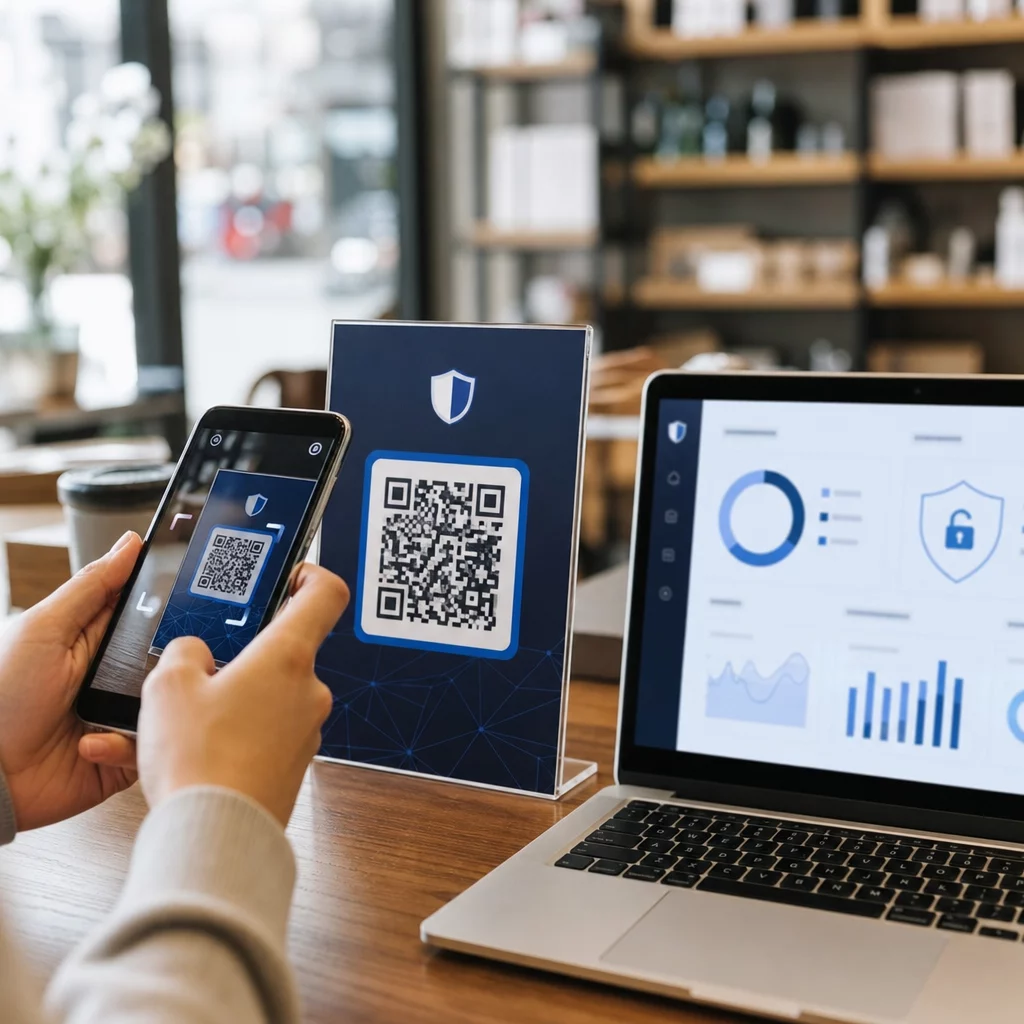
Kad kāds skenē dinamiskais QR kods, viņu pieprasījums vispirms iziet cauri platformas novirzīšanas serverim, pirms nonāk jūsu galamērķa URL. Šis novirzīšanas brīdis ir tas, kad tiek reģistrēti skenēšanas dati. Atkarībā no platformas un konfigurācijas tas var ietvert:
- IP adrese (izmanto, lai aptuveni noteiktu ģeogrāfisko atrašanās vietu)
- Ierīces tips, operētājsistēma un pārlūkprogramma
- Skenēšanas laika zīmogs
- Skenēšanas skaits (kopējais un unikālais)
Galamērķa vietne var vākt vēl vairāk – sīkfailus, novirzītāja datus un jebkādu informāciju, ko lietotāji ievada. Statiskie QR kodi pilnībā apiet šo novirzīšanu un novirza lietotājus tieši uz galīgo URL, neko nereģistrējot, taču tie arī nepiedāvā nekādu analītiku.
Šo datu plūsmu izpratne ir sākumpunkts pareizās anonimizācijas metodes piemērošanai. Varat arī pārskatīt kādus datus vāc dinamiskie QR kodi lai iegūtu dziļāku analīzi pirms pieejas izvēles.
Skatiet, ko tieši izseko jūsu QR kodi Izmantojiet Pageloot analītikas informācijas paneli lai pārskatītu, kādi skenēšanas dati tiek vākti, un konfigurētu izsekošanu atbilstoši jūsu privātuma prasībām.
5 metodes QR koda datu anonimizēšanai
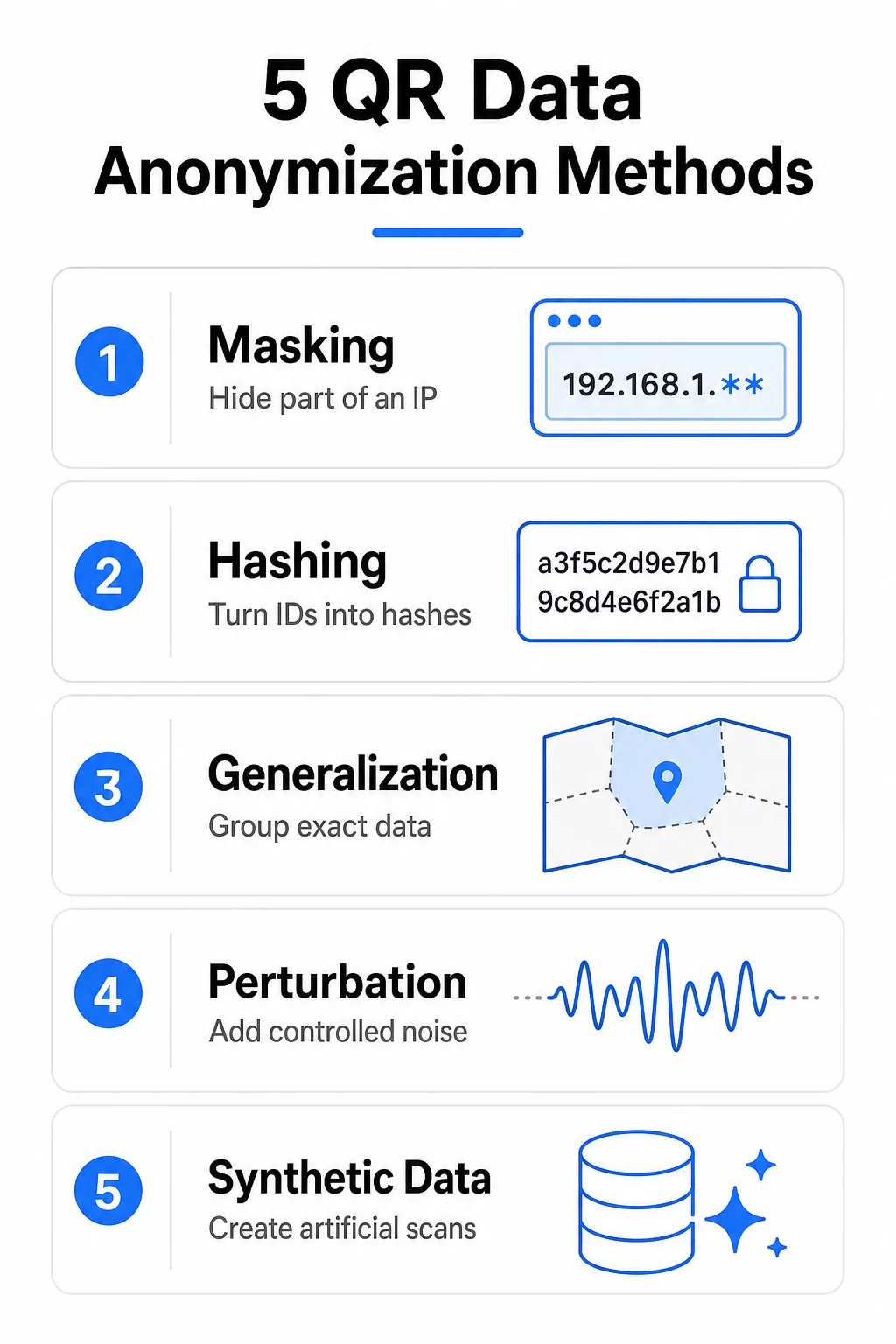
1. Maskēšana
Maskēšana aizsedz vai aizstāj sensitīvus datu laukus tā, lai pamatā esošās vērtības nevarētu nolasīt, kamēr paši dati paliek strukturāli izmantojami. QR koda kontekstā tas parasti attiecas uz datiem, kas savākti novirzīšanas serverī vai glabāti analītikas sistēmās – piemēram, aizstājot IP adreses pēdējo oktetu ar nulli, pirms tas tiek ierakstīts datu bāzē.
Privātuma stiprums: Maskēšana piedāvā mērenu aizsardzību. Tā novērš nejaušu atklāšanu, bet paliek neaizsargāta pret secinājumu uzbrukumiem, ja ir pieejams pietiekami daudz konteksta. To vislabāk izmantot kā vienu slāni plašākā privātuma stratēģijā, nevis kā atsevišķu risinājumu.
Datu lietderība: Tā kā maskēšana saglabā datu struktūru, apkopotā analīze paliek pilnībā funkcionāla. Jūs joprojām varat mērīt skenēšanas apjomu, reģionālās tendences un ierīču izplatību, nepiekļūstot individuālām identitātēm.
Ieviešanas sarežģītība: Maskēšana ir viena no vieglākajām tehnikām, ko ieviest. Tā ietver to lauku identificēšanu, kuriem nepieciešama aizsardzība, un aizstāšanas noteikumu konsekventu piemērošanu. Mūsdienu QR kodu platformas var automātiski piemērot IP maskēšanu savākšanas brīdī, pirms jebkāda vērtība tiek saglabāta.
Normatīvo aktu atbilstība: Maskēšana viena pati neatbilst GDPR anonimizācijas prasībām, jo regulatori uzskata maskētus datus par joprojām potenciāli saistāmiem ar indivīdiem. Tomēr tā atbalsta atbilstību, samazinot atklāšanu un demonstrējot labticīgu datu minimizēšanu – vienu no pamatprincipiem gan saskaņā ar GDPR, gan CCPA.
2. Jaukšana
Jaukšana pārvērš sensitīvas vērtības fiksēta garuma virknēs, izmantojot kriptogrāfisku algoritmu, padarot neiespējamu atgūt sākotnējo ievadi no izvades. Piemēram, lietotāja e-pasta adrese vai ierīces identifikators kļūst par sajauktu virkni, ko joprojām var izmantot saskaņošanai vai dublikātu novēršanai sistēmā.
Privātuma stiprums: Principā spēcīga, bet ne absolūta. Zemas entropijas vērtības – tās, kurām ir ierobežots iespējamo ievadu kopums – var būt neaizsargātas pret brutālu spēku uzbrukumiem. Sāls pievienošana (nejauša virkne, kas pievienota pirms jaukšanas) un regulāra atslēgu rotācija ievērojami apgrūtina uzbrukumus.
Datu lietderība: Jaukšana ir labi piemērota dublikātu novēršanai un konsekvences pārbaudēm, piemēram, atkārtotu skeneru identificēšanai, neglabājot to identifikatorus. Tā ir mazāk noderīga detalizētai uzvedības analīzei vai integrācijām, kas prasa sākotnējās vērtības.
Ieviešanas sarežģītība: Pamata jaukšana ir vienkārša un plaši atbalstīta lielākajā daļā izstrādes vides. Papildu soļi, piemēram, sāls pievienošana un atslēgu pārvaldība, palielina sarežģītību un prasa drošu sistēmu šo vērtību glabāšanai un rotācijai.
Normatīvo aktu atbilstība: Federālā tirdzniecības komisija ir paziņojusi, ka jaukšana viena pati nav anonimizācija. 29. panta darba grupa (tagad Eiropas Datu aizsardzības padome) līdzīgi ir atzīmējusi, ka “jaukšana ir noderīgs drošības pasākums, bet nav anonimizācijas metode.” Saskaņā ar GDPR, jaukti personas dati joprojām tiek uzskatīti par personas datiem. Saskaņā ar CCPA, jaukti dati var tikt kvalificēti kā deidentificēti, ja ir ieviestas atbilstošas tehniskās kontroles un iekšējās politikas, taču uzņēmumiem ir konsekventi jāīsteno šīs politikas un jādokumentē savi riska novērtējumi.
3. Vispārināšana
Vispārināšana aizstāj specifiskas datu vērtības ar plašākām kategorijām vai diapazoniem. Tā vietā, lai saglabātu precīzu laika zīmogu, jūs saglabājat stundu vai dienu. Tā vietā, lai saglabātu pilsētu, jūs saglabājat reģionu. Tā vietā, lai saglabātu precīzu vecumu, jūs saglabājat vecuma grupu.
QR kodu analīzei tas varētu nozīmēt ierakstīšanu, ka skenēšana notika “pēcpusdienā darba dienā”, nevis pulksten 14:17 otrdienā, vai skenēšanas attiecināšanu uz “Klusā okeāna ziemeļrietumiem”, nevis uz konkrētu pasta indeksu.
Privātuma stiprums: Mērena un atkarīga no tā, cik plaši vērtības tiek grupētas. Atkārtotas identifikācijas risks pieaug, ja tiek apvienoti vairāki vispārināti lauki. 2007. gada gadījums, kas saistīts ar Netflix datu kopu, parādīja, ka pētnieki varēja atkārtoti identificēt lietotājus, salīdzinot vispārinātos vērtējumu datus ar ārējiem avotiem – brīdinājums, ka pat apkopotiem datiem ir nepieciešams rūpīgs dizains.
Datu lietderība: Vispārināšana saglabā pietiekami daudz detaļu tendenču analīzei un kampaņu mērīšanai. Uzņēmumi, kas izmanto QR kodus mazumtirdzniecībā vai viesmīlībā, joprojām var identificēt pīķa periodus, populārus reģionus un ierīču preferences, neatklājot individuālu uzvedību.
Ieviešanas sarežģītība: Vispārināšanu var ieviest manuāli, nosakot kategoriju robežas, vai automātiski, izmantojot algoritmus, kas līdzsvaro privātumu un datu izšķirtspēju. Abas pieejas prasa skaidru politiku definēšanu par to, kāds detalizācijas līmenis ir piemērots katram datu laukam.
Normatīvo aktu atbilstība: Vispārināšana atbilst GDPR un CCPA datu minimizēšanas principiem, kas prasa vākt tikai to, kas ir nepieciešams noteiktam mērķim. Tā pati par sevi automātiski neatbilst anonimizācijas standartiem, bet būtiski veicina daudzslāņu pieeju. Jūsu vispārināšanas lēmumu dokumentēšana un regulāra pārskatīšana atbalsta gatavību auditam.
4. Datu traucējumi
Datu traucējumi ievieš nelielu, kontrolētu trokšņa daudzumu skaitliskos vai ģeogrāfiskos datos. Tā vietā, lai ierakstītu precīzu vērtību, sistēma saglabā nedaudz modificētu versiju – laika zīmogu, kas pārbīdīts par dažām minūtēm, koordinātes, kas noapaļotas līdz plašākai teritorijai, vai skaitu, kas pielāgots noteiktā diapazonā.
Šī pieeja ir izplatīta jomās, kur statistiskā precizitāte ir svarīgāka par precizitāti atsevišķiem ierakstiem. Slimnīcas to ir izmantojušas, lai kopīgotu pacientu datus ar pētniekiem, vienlaikus aizsargājot privātas medicīniskās detaļas; finanšu iestādes to piemēro darījumu datiem, lai novērstu sensitīvu modeļu atklāšanu.
Privātuma stiprums: Traucējumi panāk līdzsvaru starp specifisku detaļu maskēšanu un analītisko modeļu saglabāšanu. Tās nodrošinātais privātuma līmenis ir tieši atkarīgs no tā, cik daudz trokšņa tiek ieviests. Pārāk maz, un atsevišķi ieraksti paliek identificējami. Pārāk daudz, un dati zaudē jēgu.
Datu lietderība: Atšķirībā no metodēm, kas pilnībā noņem sākotnējās vērtības, traucējumi saglabā statistiskās attiecības datu kopā. Tendenču analīze, pīķa identifikācija un ģeogrāfiskā grupēšana joprojām ir derīgas – tikai bez spējas precīzi noteikt konkrētas personas.
Ieviešanas sarežģītība: Traucējumi prasa lielāku tehnisko spriedumu nekā maskēšana vai vispārināšana. Transformācijas metodes izvēle – nejaušs troksnis, vērtību apmaiņa vai matemātiskās transformācijas, piemēram, viļņu vai Furjē metodes – ietekmē gan veiktspēju, gan privātuma rezultātus. Viļņu transformācijas, piemēram, darbojas ar O(n) laika sarežģītību, padarot tās ātrākas par dažām alternatīvām. Nepieciešama rūpīga kalibrēšana, lai izvairītos no sistemātiskas novirzes ieviešanas.
Normatīvo aktu atbilstība: Traucējumi atbalsta GDPR datu minimizēšanas prasības un nodrošina aizsargājamu tehnisko drošības pasākumu. Tas negarantē pilnīgu anonimizāciju, bet demonstrē jēgpilnus centienus ierobežot identificējamību, ko regulatori parasti vērtē labvēlīgi, ja to apvieno ar citiem kontroles pasākumiem.
5. Sintētisko datu ģenerēšana
Sintētisko datu ģenerēšana rada pilnīgi mākslīgas datu kopas, kas atspoguļo reālo datu statistiskās īpašības, nesaturot nekādu faktisko lietotāja informāciju. Tā vietā, lai mainītu savākto informāciju, tā aizstāj sākotnējos datus ar izdomātiem ierakstiem, kas analītiskiem mērķiem uzvedas kā reāli.
QR kodu analīzei tas nozīmē ģenerēt reālistiskus skenēšanas laika zīmogus, ticamus ģeogrāfiskos sadalījumus un reprezentatīvus ierīču sajaukumus – bez jebkādiem ierakstiem, kas atbilstu reālām cilvēku veiktām skenēšanām.
Privātuma stiprums: Sintētiskie dati piedāvā spēcīgāko privātuma aizsardzību no piecām metodēm. Tā kā tie nesatur reālu personisku informāciju, nav atkārtotas identifikācijas riska pat tad, ja datu kopa tiek atklāta. Sintētiskās datu kopas pārkāpumam nav privātuma seku indivīdiem.
Datu lietderība: Ja tie ir labi ģenerēti, sintētiskie dati saglabā statistiskās attiecības, kas nepieciešamas tendenču analīzei, modeļu apmācībai un funkciju testēšanai. Tie arī ļauj simulēt scenārijus, kas ir reti sastopami reālos datos – noderīgi analītikas sistēmu stresa testēšanai vai mašīnmācīšanās modeļu apmācībai retu gadījumu scenārijos.
Ieviešanas sarežģītība: Šī ir visresursietilpīgākā metode. Augstas kvalitātes sintētisko datu ģenerēšanai nepieciešami specializēti rīki, ievērojami skaitļošanas resursi un validācijas procesi, lai apstiprinātu, ka sintētiskā datu kopa precīzi atspoguļo oriģinālu. Organizācijām parasti nepieciešama īpaša ekspertīze vai trešo pušu platformas, lai to uzticami ieviestu.
Normatīvo aktu atbilstība: Tā kā sintētiskie dati nesatur personisku informāciju, tie pēc būtības neietilpst GDPR, CCPA un vairuma citu privātuma regulu darbības jomā. Tas padara tos īpaši vērtīgus nozarēm ar stingrām atbilstības prasībām, piemēram, veselības aprūpei un izglītībai. Tas novērš atkārtotas identifikācijas risku, kas citām metodēm ir aktīvi jāpārvalda.
Sāciet vākt privātumam draudzīgu QR analītiku Pageloot Dinamisks QR kodu ģenerators apkopo skenēšanas datus valsts un pilsētas līmenī, grupē ierīces vispārīgās kategorijās un nekad neatklāj individuālas identitātes savā analītikā. Izmēģiniet bez maksas 14 dienas.
Metodes salīdzinājums
| Metode | Privātuma stiprums | Datu lietderība | Ieviešanas sarežģītība | Normatīvo aktu atbilstība |
|---|---|---|---|---|
| Maskēšana | Mērens | Augsts | Zema | Daļēja – atbalsta minimizēšanu, nevis pilnīgu anonimizāciju |
| Jaukšana | Vidēja–Augsta | Vidēja | Vidēja | Daļēja – joprojām ir personas dati saskaņā ar GDPR |
| Vispārināšana | Mērens | Vidēji augsts | Zems–Vidējs | Daļējs – atbalsta minimizēšanas principus |
| Datu traucējumi | Mērens | Vidēji augsts | Augsts | Labs – elastīgs, aizstāvams drošības pasākums |
| Sintētiskie dati | Ļoti augsts | Augsts | Ļoti augsts | Lielisks – pēc būtības ārpus GDPR/CCPA darbības jomas |
Pareizā metode ir atkarīga no jūsu lietošanas gadījuma. Maskēšana un vispārināšana ir praktiski sākumpunkti lielākajai daļai QR kodu analītikas platformu. Jaukšana labi darbojas deduplikācijas uzdevumiem, kur precīzas vērtības nav nepieciešamas tālāk. Perturbācija ir piemērota scenārijiem, kur statistiskā precizitāte ir kritiska. Sintētiskie dati ir spēcīgākā iespēja, ja atbilstības risks ir augsts vai ja jums ir nepieciešams koplietot datu kopas ārēji.
Daudzas organizācijas izmanto šīs metodes kombinācijā, nevis izvēlas tikai vienu – piemēram, piemērojot IP maskēšanu datu vākšanas laikā, vispārinot atrašanās vietas datus līdz pilsētas līmenim un ģenerējot sintētiskas datu kopas jebkuriem ārējiem analītikas partneriem.
Kā Pageloot pieiet QR kodu datu privātumam
Pageloot analītika ir veidota ap apkopotiem, personiski neidentificējamiem datiem. Atrašanās vietas dati tiek parādīti valsts vai pilsētas līmenī, ierīces informācija ir sagrupēta vispārīgās kategorijās, piemēram, iOS vai Android, un IP adreses netiek glabātas veidā, kas identificētu personas. Platforma nodrošina elastīgas datu saglabāšanas iespējas, un uzņēmuma lietotājiem ir piekļuve CSV eksportiem, kas atbalsta turpmāku anonimizāciju.
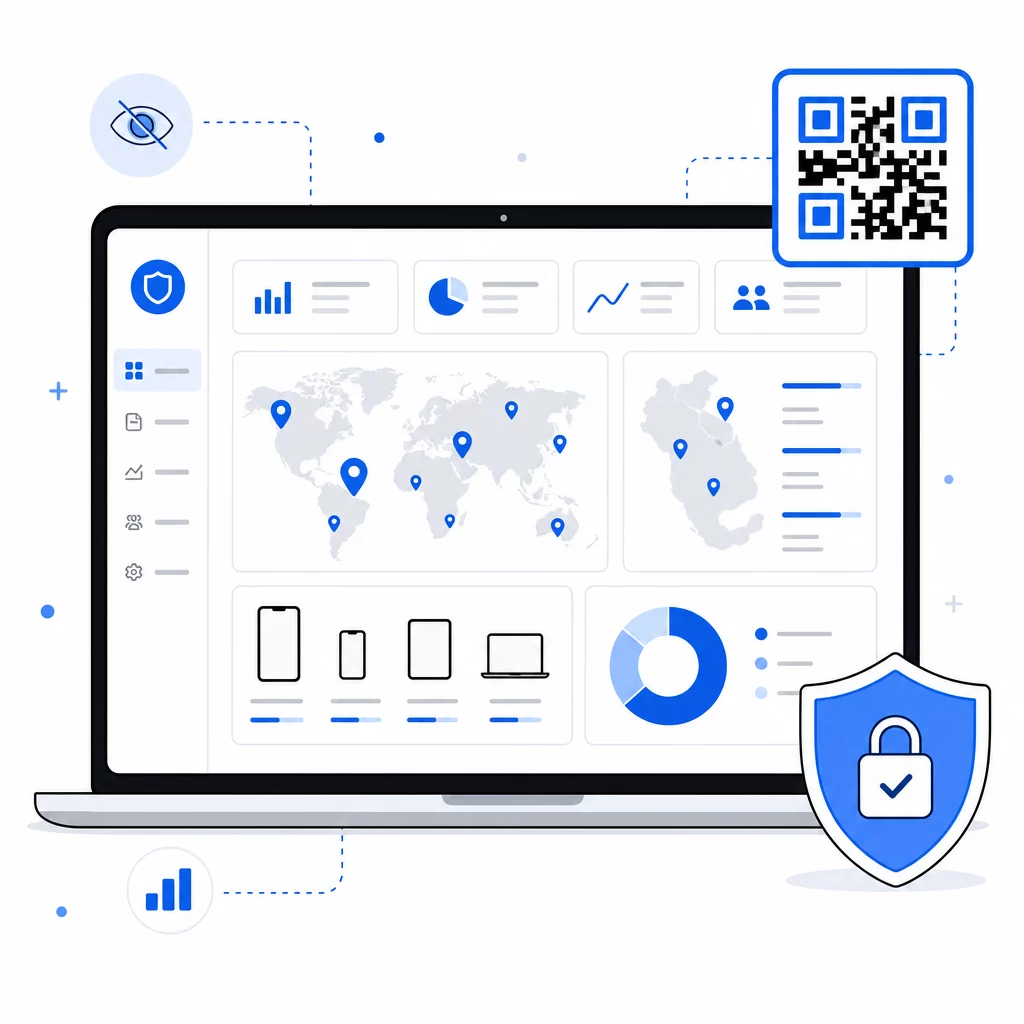
Uzņēmumiem, kas veic kampaņas vairākos reģionos, analītikas funkcijas ļauj jums mērīt veiktspēju, neveidojot profilus par atsevišķiem lietotājiem. Pageloot atbalsta arī GDPR prasībām atbilstošu QR kodu analītiku izmantojot piekrišanas uznirstošos logus, datu pārvaldības rīkus un šifrētu glabāšanu ar regulārām drošības pārbaudēm.
Lai iegūtu kontekstu par to, kuras QR kodu privātuma likumiem attiecas uz jūsu konkrēto situāciju – tostarp GDPR, CCPA, HIPAA un citi – un kā ieviest atbilstošus datu saglabāšanas noteikumus QR kodu analīzei, Pageloot zināšanu bāze aptver katru regulu ar praktiskiem norādījumiem.
Pareizās pieejas izvēle jūsu uzņēmumam
Neviena anonimizācijas metode nav piemērota visām situācijām. FTC norādījumi ir skaidri: vāciet tikai to, kas jums nepieciešams, glabājiet to tikai tik ilgi, cik nepieciešams, un atbrīvojieties no tā pareizi, kad tas ir izpildījis savu mērķi. Šis princips ir spēkā neatkarīgi no tā, kādu tehnisko metodi izmantojat.
Lielākajai daļai uzņēmumu, kas izmanto QR kodus mārketingā vai darbībā, praktisks sākumpunkts ir IP maskēšanas un atrašanās vietas vispārināšanas iespējošana platformas līmenī, pārskatīt, kādus datus vāc jūsu analītikas integrācija, un noteikt definētus saglabāšanas ierobežojumus. Organizācijām regulētās nozarēs vai tām, kas koplieto datus ar trešajām pusēm, spēcīgākas metodes – traucējumi vai sintētiskie dati – var būt papildu ieviešanas ieguldījuma vērtas.
Mērķis nav perfekta anonimizācija uz visu ieskatu rēķina. Tas ir atrast privātuma aizsardzības līmeni, kas atbilst vākto datu jutīgumam, noteikumiem, kas attiecas uz jūsu uzņēmumu, un uzticībai, ko vēlaties veidot ar saviem lietotājiem.
Izpētiet Pageloot pilnu QR kodu funkciju klāstu lai redzētu, kā privātuma kontroles iekļaujas plašākā platformā, vai pārskatiet QR kodu privātuma riskiem un to, kā no tiem izvairīties lai plašāk aplūkotu draudu ainavu.
Biežāk uzdotie jautājumi
Nē. 29. panta darba grupa ir norādījusi, ka jaukšana ir drošības pasākums, nevis anonimizācijas metode. Saskaņā ar VDAR jaukti personas dati joprojām tiek klasificēti kā personas dati un uz tiem attiecas tāda pati aizsardzība kā uz oriģinālajiem. Lai saskaņā ar VDAR kvalificētos kā anonīmi, datiem jābūt neatgriezeniski atdalītiem no jebkādas saiknes ar identificējamu personu.
Maskēšana aizstāj vai aizklāj konkrētas lauku vērtības – piemēram, aizstājot daļu IP adreses ar nullēm – saglabājot struktūru neskartu. Vispārināšana aizstāj precīzas vērtības ar plašākām kategorijām, piemēram, pārvēršot precīzu laika zīmogu diennakts laika diapazonā vai pilsētu reģionā. Maskēšana ir labāka konkrētu identifikatoru aizsardzībai; vispārināšana ir labāka datu izšķirtspējas samazināšanai vairākos laukos vienlaicīgi.
Sintētisko datu ģenerēšana nodrošina visspēcīgāko atbilstības pozīciju, jo tajā nav reālas personas informācijas un tā neietilpst lielākās daļas privātuma regulu darbības jomā. Uzņēmumiem, kuriem nepieciešams saglabāt reālus skenēšanas datus, IP maskēšanas, atrašanās vietas vispārināšanas un noteiktu saglabāšanas ierobežojumu kombinācija nodrošina aizstājamu pamatu. Pareizā metode ir atkarīga no jūsu datu jutīguma, tā, kā jūs izmantojat analītiku, un no tā, vai jūs kopīgojat datus ar trešajām pusēm.