Ești nesigur ce date personale expun de fapt codurile tale QR – și ce poți face în privința asta? Fiecare scanare trece prin servere de urmărire care înregistrează adrese IP, tipuri de dispozitive, marcaje temporale și date de locație, adesea fără ca utilizatorii să-și dea seama. Acest ghid explică cinci metode dovedite de anonimizare care reduc riscul de confidențialitate, menținând în același timp analizele tale utile.
Ce expune de fapt scanarea codurilor QR
Înainte de a alege o strategie de anonimizare, este util să înțelegi ce date sunt colectate în primul rând.
Când cineva scanează un cod QR dinamic, cererea lor trece mai întâi prin serverul de redirecționare al platformei înainte de a ajunge la URL-ul tău de destinație. Acel moment de redirecționare este cel în care datele de scanare sunt înregistrate. În funcție de platformă și configurație, aceasta poate include:
- Adresa IP (utilizată pentru a aproxima locația geografică)
- Tipul dispozitivului, sistemul de operare și browserul
- Marcajul temporal al scanării
- Numărul de scanări (total și unice)
Site-ul de destinație poate colecta chiar mai multe – cookie-uri, date de referință și orice informații introduse de utilizatori. Coduri QR statice ocolesc complet această redirecționare și direcționează utilizatorii direct către URL-ul final fără a înregistra nimic, dar nu oferă niciun fel de analize.
Înțelegerea acestor fluxuri de date este punctul de plecare pentru aplicarea metodei corecte de anonimizare. Poți, de asemenea, să revizuiești ce date colectează codurile QR dinamice pentru o analiză mai detaliată înainte de a decide o abordare.
Vezi exact ce urmăresc codurile tale QR Folosește Pageloot’s tablou de bord de analiză pentru a revizui ce date de scanare sunt colectate și a-ți configura urmărirea pentru a corespunde cerințelor tale de confidențialitate.
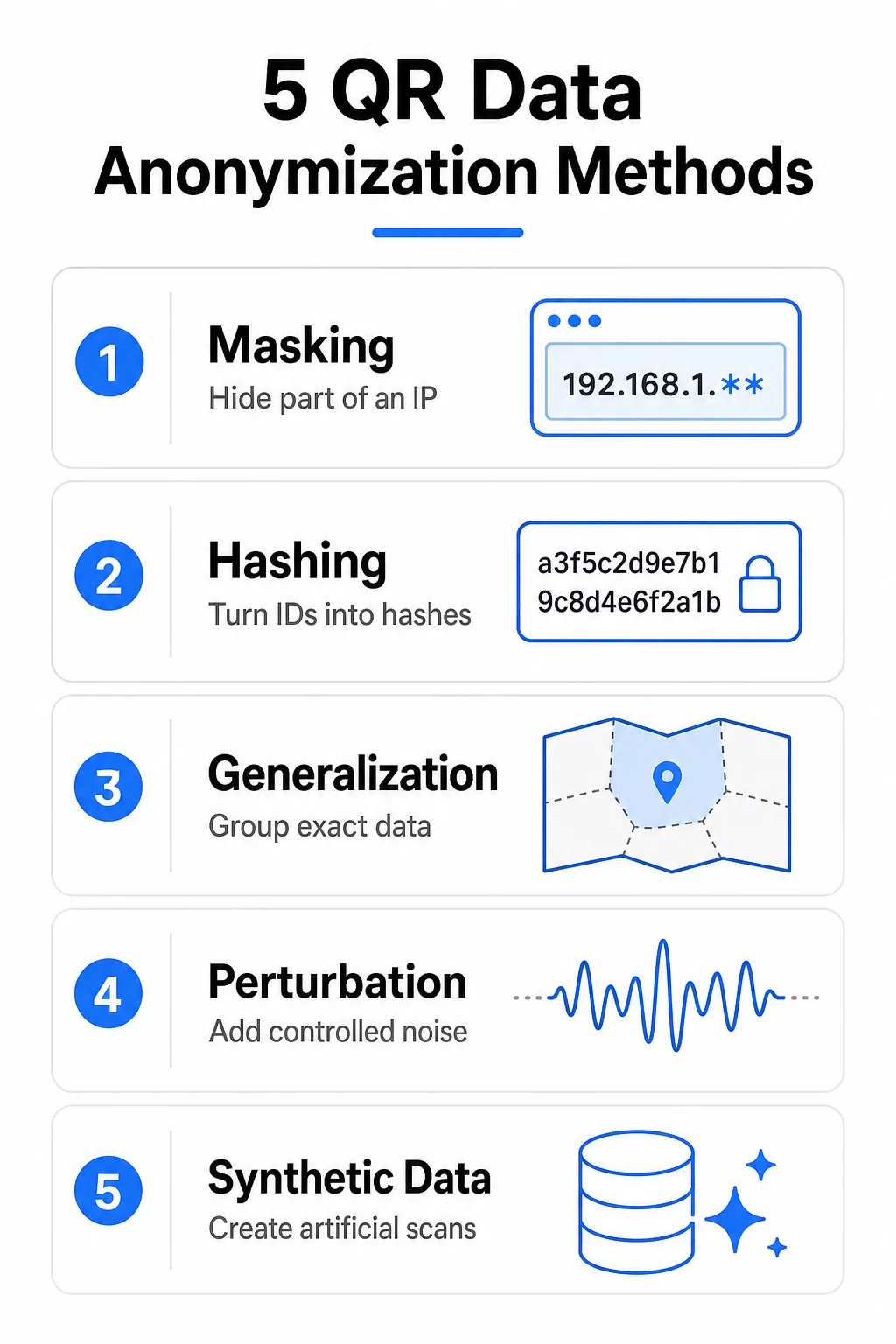
5 metode de anonimizare a datelor codurilor QR
1. Mascare
Mascare ascunde sau substituie câmpuri de date sensibile astfel încât valorile subiacente să nu poată fi citite, în timp ce datele în sine rămân utilizabile structural. Într-un context de cod QR, acest lucru se aplică de obicei datelor colectate la serverul de redirecționare sau stocate în sistemele de analiză – de exemplu, înlocuirea ultimului octet al unei adrese IP cu un zero înainte de a fi scrisă într-o bază de date.
Puterea confidențialității: Mascare oferă protecție moderată. Previne expunerea accidentală, dar rămâne vulnerabilă la atacuri de inferență dacă este disponibil suficient context. Este cel mai bine utilizată ca un strat într-o strategie de confidențialitate mai amplă, mai degrabă decât ca o soluție independentă.
Utilitatea datelor: Deoarece mascare păstrează structura datelor, analiza agregată rămâne pe deplin funcțională. Puteți măsura în continuare volumul de scanări, tendințele regionale și distribuția dispozitivelor fără a accesa identități individuale.
Complexitatea implementării: Mascare este printre cele mai ușoare tehnici de implementat. Implică identificarea câmpurilor care necesită protecție și aplicarea consecventă a regulilor de substituție. Platformele moderne de coduri QR pot aplica mascare IP automat la punctul de colectare, înainte ca orice valoare să fie stocată.
Conformitatea cu reglementările: Mascare singură nu satisface cerințele de anonimizare GDPR, deoarece autoritățile de reglementare tratează datele mascate ca fiind încă potențial legabile de persoane fizice. Cu toate acestea, sprijină conformitatea prin reducerea expunerii și demonstrarea minimizării datelor de bună-credință – unul dintre principiile fundamentale atât în cadrul GDPR, cât și al CCPA.
2. Hashing
Hashing-ul convertește valorile sensibile în șiruri de caractere de lungime fixă folosind un algoritm criptografic, făcând imposibilă recuperarea intrării originale din ieșire. Adresa de e-mail a unui utilizator sau identificatorul dispozitivului, de exemplu, devine un șir amestecat care poate fi încă utilizat pentru potrivire sau deduplicare într-un sistem.
Puterea confidențialității: Puternic în principiu, dar nu absolut. Valorile cu entropie scăzută – cele cu un set limitat de intrări posibile – pot fi vulnerabile la atacuri de forță brută. Adăugarea unui "salt" (un șir aleatoriu adăugat înainte de hashing) și rotirea regulată a cheilor face atacurile semnificativ mai dificile.
Utilitatea datelor: Hashing-ul este bine adaptat pentru deduplicare și verificări de consistență, cum ar fi identificarea scanerelor repetate fără a le stoca identificatorii. Este mai puțin util pentru analize comportamentale detaliate sau integrări care necesită valorile originale.
Complexitatea implementării: Hashing-ul de bază este simplu și larg acceptat în majoritatea mediilor de dezvoltare. Pașii suplimentari de "salting" și gestionare a cheilor adaugă complexitate și necesită un sistem securizat pentru stocarea și rotirea acestor valori.
Conformitatea cu reglementările: Comisia Federală pentru Comerț a declarat că hashing-ul singur nu constituie anonimizare. Grupul de lucru Articolul 29 (acum Comitetul European pentru Protecția Datelor) a remarcat în mod similar că “hashing-ul este o măsură de securitate utilă, dar nu este o metodă de anonimizare.” Conform GDPR, datele personale hash-uite sunt încă tratate ca date personale. Conform CCPA, datele hash-uite se pot califica drept deidentificate dacă există controale tehnice și politici interne adecvate, dar companiile trebuie să aplice aceste politici în mod consecvent și să documenteze evaluările lor de risc.
3. Generalizare
Generalizarea înlocuiește valorile specifice ale datelor cu categorii sau intervale mai largi. În loc să stocați o marcă temporală precisă, stocați ora sau ziua. În loc să stocați un oraș, stocați o regiune. În loc de o vârstă exactă, stocați o bandă de vârstă.
Pentru analiza codurilor QR, acest lucru ar putea însemna înregistrarea faptului că o scanare a avut loc “după-amiaza într-o zi lucrătoare” în loc de ora 14:17 într-o marți, sau atribuirea unei scanări “Pacificului de Nord-Vest” în loc de un cod poștal specific.
Puterea confidențialității: Moderată și dependentă de cât de larg sunt grupate valorile. Riscul de re-identificare crește atunci când sunt combinate mai multe câmpuri generalizate. Un caz din 2007 care a implicat un set de date Netflix a arătat că cercetătorii puteau re-identifica utilizatorii prin corelarea datelor de evaluare generalizate cu surse externe – un avertisment că chiar și datele agregate necesită o proiectare atentă.
Utilitatea datelor: Generalizarea păstrează suficiente detalii pentru analiza tendințelor și măsurarea campaniilor. Afacerile care utilizează coduri QR în comerțul cu amănuntul sau în ospitalitate pot identifica în continuare perioadele de vârf, regiunile populare și preferințele dispozitivelor fără a expune comportamentul individual.
Complexitatea implementării: Generalizarea poate fi implementată manual prin stabilirea limitelor categoriilor sau automat folosind algoritmi care echilibrează confidențialitatea și rezoluția datelor. Ambele abordări necesită definirea unor politici clare privind nivelul de detaliu adecvat pentru fiecare câmp de date.
Conformitatea cu reglementările: Generalizarea se aliniază cu principiile de minimizare a datelor din GDPR și CCPA, care impun colectarea doar a ceea ce este necesar pentru un scop specificat. Nu satisface automat standardele de anonimizare de la sine, dar contribuie semnificativ la o abordare stratificată. Documentarea deciziilor de generalizare și revizuirea lor regulată sprijină pregătirea pentru audit.
4. Perturbarea Datelor
Perturbarea datelor introduce cantități mici și controlate de zgomot în datele numerice sau geografice. În loc să înregistreze o valoare exactă, sistemul stochează o versiune ușor modificată – o marcă temporală decalată cu câteva minute, coordonate rotunjite la o zonă mai largă sau o numărătoare ajustată într-un interval definit.
Această abordare este comună în domenii în care acuratețea statistică contează mai mult decât precizia pentru înregistrările individuale. Spitalele au folosit-o pentru a partaja datele pacienților cu cercetătorii, protejând în același timp detaliile medicale private; instituțiile financiare o aplică datelor tranzacționale pentru a preveni expunerea modelelor sensibile.
Puterea confidențialității: Perturbarea realizează un echilibru între mascarea detaliilor specifice și păstrarea modelelor analitice. Nivelul de confidențialitate pe care îl oferă depinde direct de cât de mult zgomot este introdus. Prea puțin, și înregistrările individuale rămân identificabile. Prea mult, și datele își pierd sensul.
Utilitatea datelor: Spre deosebire de tehnicile care elimină complet valorile originale, perturbarea reține relațiile statistice dintr-un set de date. Analiza tendințelor, identificarea vârfurilor și gruparea geografică rămân toate valide – doar fără capacitatea de a identifica indivizi exacți.
Complexitatea implementării: Perturbarea necesită o judecată tehnică mai mare decât mascarea sau generalizarea. Alegerea metodei de transformare – zgomot aleatoriu, schimb de valori sau transformări matematice precum metodele wavelet sau Fourier – afectează atât performanța, cât și rezultatele privind confidențialitatea. Transformările wavelet, de exemplu, operează la o complexitate temporală O(n), făcându-le mai rapide decât unele alternative. Este necesară o calibrare atentă pentru a evita introducerea unei erori sistematice.
Conformitatea cu reglementările: Perturbarea susține cerințele GDPR privind minimizarea datelor și oferă o măsură de siguranță tehnică defensibilă. Nu garantează anonimizarea completă, dar demonstrează un efort semnificativ de a limita identificabilitatea, pe care autoritățile de reglementare o privesc în general favorabil atunci când este combinată cu alte controale.
5. Generarea de Date Sintetice
Generarea de date sintetice creează seturi de date complet artificiale care reflectă proprietățile statistice ale datelor reale fără a conține informații reale despre utilizatori. În loc să modifice ceea ce a fost colectat, înlocuiește datele originale cu înregistrări fabricate care se comportă ca cele reale în scopuri analitice.
Pentru analiza codurilor QR, aceasta înseamnă generarea de marcaje temporale de scanare realiste, distribuții geografice plauzibile și mixuri reprezentative de dispozitive – fără ca niciuna dintre aceste înregistrări să corespundă scanărilor reale efectuate de persoane reale.
Puterea confidențialității: Datele sintetice oferă cea mai puternică protecție a confidențialității dintre cele cinci metode. Deoarece nu conțin informații personale reale, nu există niciun risc de reidentificare chiar dacă setul de date este expus. O încălcare a unui set de date sintetic nu are consecințe asupra confidențialității pentru indivizi.
Utilitatea datelor: Atunci când sunt generate corect, datele sintetice păstrează relațiile statistice necesare pentru analiza tendințelor, antrenarea modelelor și testarea caracteristicilor. De asemenea, fac posibilă simularea scenariilor rare în datele reale – util pentru testarea la stres a sistemelor de analiză sau antrenarea modelelor de învățare automată pe cazuri limită.
Complexitatea implementării: Aceasta este cea mai intensivă metodă din punct de vedere al resurselor. Generarea de date sintetice de înaltă calitate necesită instrumente specializate, resurse computaționale semnificative și procese de validare pentru a confirma că setul de date sintetic reprezintă cu exactitate originalul. Organizațiile au, de obicei, nevoie de expertiză dedicată sau de platforme terțe pentru a o implementa în mod fiabil.
Conformitatea cu reglementările: Deoarece datele sintetice nu conțin informații personale, ele se încadrează în mod inerent în afara domeniului de aplicare al GDPR, CCPA și al majorității celorlalte reglementări privind confidențialitatea. Acest lucru le face deosebit de valoroase pentru industriile cu cerințe stricte de conformitate, cum ar fi sănătatea și educația. Elimină riscul de reidentificare pe care alte metode trebuie să-l gestioneze activ.
Începeți să colectați analize QR prietenoase cu confidențialitatea Pageloot Generator cod QR dinamic agregă datele de scanare la nivel de țară și oraș, grupează dispozitivele în categorii generale și nu expune niciodată identitățile individuale în analizele sale. Încercați gratuit timp de 14 zile.
Comparație metode
| Metoda | Puterea confidențialității | Utilitatea datelor | Complexitatea implementării | Conformitate reglementară |
|---|---|---|---|---|
| Mascare | Moderat | Mare | Scăzut | Parțial – susține minimizarea, nu anonimizarea completă |
| Hashing | Moderat–Ridicat | Mediu | Mediu | Parțial – încă date personale conform GDPR |
| Generalizare | Moderat | Mediu–Ridicat | Scăzut–Mediu | Parțial – susține principiile de minimizare |
| Perturbarea Datelor | Moderat | Mediu–Ridicat | Mare | Bun – salvgardare flexibilă, defensibilă |
| Date Sintetice | Foarte ridicat | Mare | Foarte ridicat | Excelent – inerent în afara domeniului de aplicare GDPR/CCPA |
Metoda potrivită depinde de cazul dumneavoastră de utilizare. Mascarea și generalizarea sunt puncte de plecare practice pentru majoritatea platformelor de analiză a codurilor QR. Hashing-ul funcționează bine pentru sarcinile de deduplicare unde valorile exacte nu sunt necesare ulterior. Perturbarea se potrivește scenariilor în care acuratețea statistică este critică. Datele sintetice sunt cea mai puternică opțiune atunci când riscul de conformitate este ridicat sau când trebuie să partajați seturi de date extern.
Multe organizații utilizează aceste metode în combinație, mai degrabă decât să aleagă doar una – de exemplu, aplicarea mascării IP la momentul colectării, generalizarea datelor de locație la nivel de oraș și generarea de seturi de date sintetice pentru orice parteneri externi de analiză.
Cum abordează Pageloot confidențialitatea datelor codurilor QR
Analizele Pageloot sunt construite în jurul datelor agregate, neidentificabile personal. Datele de locație apar la nivel de țară sau oraș, informațiile despre dispozitiv sunt grupate în categorii generale precum iOS sau Android, iar adresele IP nu sunt stocate într-o formă care identifică indivizi. Platforma oferă opțiuni flexibile de păstrare a datelor, iar utilizatorii enterprise au acces la exporturi CSV care susțin anonimizarea ulterioară.
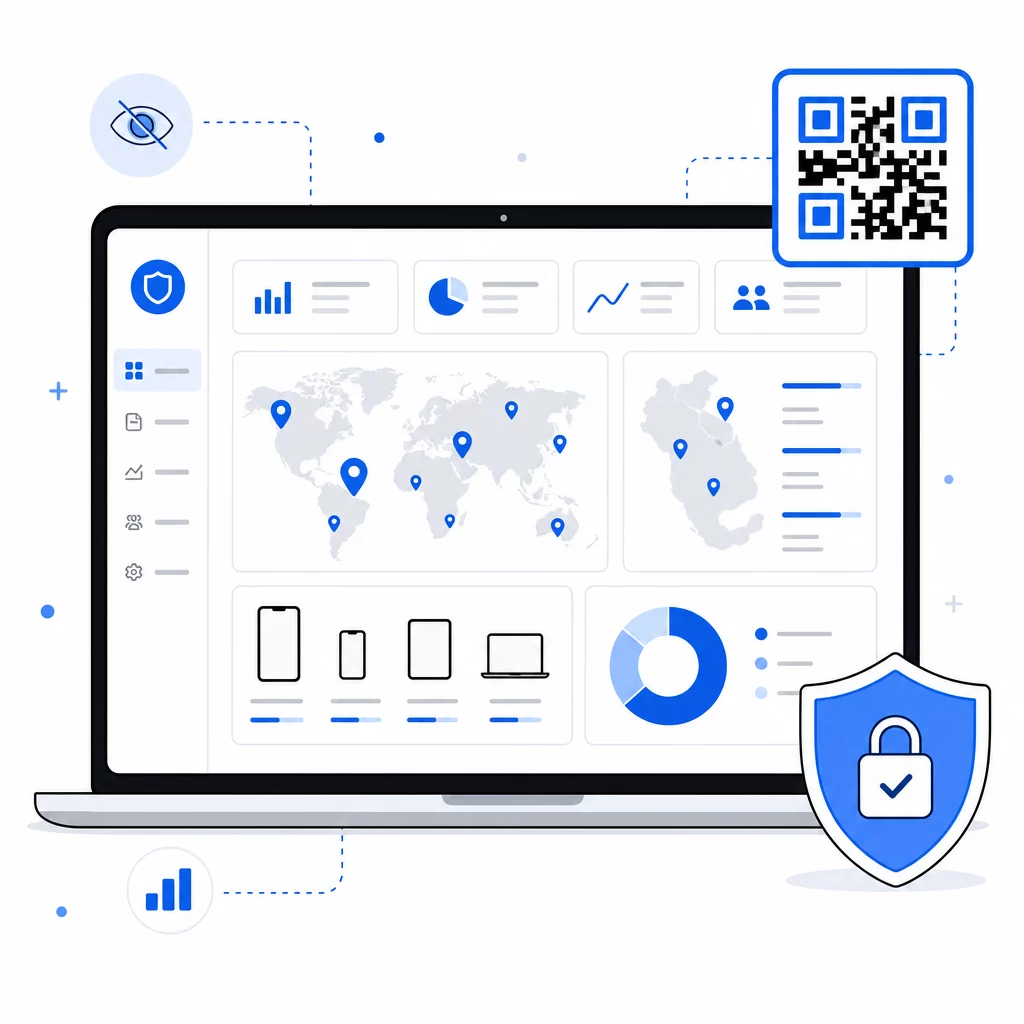
Pentru afacerile care derulează campanii în mai multe regiuni, funcționalitățile de analiză vă permit să măsurați performanța fără a construi profiluri pe utilizatori individuali. Pageloot suportă, de asemenea, analize de coduri QR conforme cu GDPR prin ferestre pop-up de consimțământ, instrumente de gestionare a datelor și stocare criptată cu revizuiri regulate de securitate.
Pentru contextul privind care legilor privind confidențialitatea codurilor QR se aplică situației dumneavoastră specifice – inclusiv GDPR, CCPA, HIPAA și altele – și cum să implementați reguli adecvate reguli de păstrare a datelor pentru analiza codurilor QR, baza de cunoștințe Pageloot acoperă fiecare reglementare cu îndrumări practice.
Alegerea abordării corecte pentru afacerea dumneavoastră
Nicio metodă unică de anonimizare nu funcționează pentru fiecare situație. Îndrumările FTC sunt clare: colectați doar ceea ce aveți nevoie, păstrați-le doar atât timp cât este necesar și eliminați-le corespunzător atunci când și-au îndeplinit scopul. Acest principiu se aplică indiferent de metoda tehnică pe care o utilizați.
Pentru majoritatea afacerilor care utilizează coduri QR în marketing sau operațiuni, un punct de plecare practic este să activați mascarea IP și generalizarea locației la nivel de platformă, să revizuiți ce date colectează integrarea dumneavoastră de analiză și să stabiliți limite definite de păstrare. Pentru organizațiile din industrii reglementate sau cele care partajează date cu terți, metode mai puternice – perturbarea sau datele sintetice – ar putea merita investiția suplimentară de implementare.
Scopul nu este anonimizarea perfectă cu prețul tuturor informațiilor. Este găsirea nivelului de protecție a confidențialității adecvat sensibilității datelor pe care le colectați, reglementărilor care se aplică afacerii dumneavoastră și încrederii pe care doriți să o construiți cu utilizatorii dumneavoastră.
Explorați gama completă de funcționalități ale codurilor QR de la Pageloot pentru a vedea cum se integrează controalele de confidențialitate în platforma mai largă, sau revizuiți riscuri de confidențialitate ale codurilor QR și cum să le eviți pentru o privire mai amplă asupra peisajului amenințărilor.
Întrebări frecvente
Nu. Grupul de lucru Articolul 29 a declarat că hashing-ul este o măsură de securitate, nu o metodă de anonimizare. Conform GDPR, datele personale hash-uite sunt încă clasificate ca date personale și sunt supuse acelorași protecții ca și cele originale. Pentru a se califica drept anonime conform GDPR, datele trebuie să fie eliminate ireversibil de orice legătură cu o persoană fizică identificabilă.
Mascarea înlocuiește sau ascunde valori specifice ale câmpurilor – de exemplu, înlocuind o parte dintr-o adresă IP cu zerouri – menținând structura intactă. Generalizarea înlocuiește valorile precise cu categorii mai largi, cum ar fi conversia unui marcaj temporal exact într-un interval orar al zilei sau a unui oraș într-o regiune. Mascarea este mai bună pentru protejarea identificatorilor specifici; generalizarea este mai bună pentru reducerea rezoluției datelor pe mai multe câmpuri simultan.
Generarea de date sintetice oferă cea mai puternică poziție de conformitate deoarece nu conține informații personale reale și se încadrează în afara domeniului de aplicare al majorității reglementărilor privind confidențialitatea. Pentru companiile care trebuie să rețină date de scanare reale, o combinație de mascare IP, generalizare a locației și limite de retenție definite oferă o bază defensibilă. Metoda potrivită depinde de sensibilitatea datelor dumneavoastră, de modul în care utilizați analizele și de dacă partajați date cu terțe părți.