Führen Ihre Marketingbemühungen zu Traffic, aber nicht zu Verkäufen? Die Lücke zwischen der Entdeckung Ihres Produkts durch einen Kunden und dem Abschluss eines Kaufs ist der Punkt, an dem der größte Teil des E-Commerce-Umsatzes verloren geht. QR-Codes schließen diese Lücke, indem sie physische Berührungspunkte direkt mit digitalen Kauferlebnissen verbinden – und sie sind auf jedem Schritt messbar.
Warum QR-Codes in Ihre E-Commerce-Strategie gehören
Die Akzeptanz von QR-Codes durch Verbraucher hat einen Punkt erreicht, an dem die Reibung beim Scannen minimal ist. Laut Branchendaten scannten 64 % der Käufer einen QR-Code auf einem Produkt beim Einkauf in Geschäften, und 42 % gaben an, dass QR-Codes ihr Einkaufserlebnis vor Ort erheblich verbessert haben. Diese Verhaltensänderung schafft eine echte Chance für E-Commerce-Marken, Kunden dort abzuholen, wo sie bereits sind.
Für Online-Verkäufer erfüllen QR-Codes einen doppelten Zweck: Sie beschleunigen den Kaufprozess, indem sie zusätzliche Schritte eliminieren, und sie generieren Scan-Daten, die Ihnen helfen, genau zu verstehen, wie Ihre Kampagnen funktionieren. A dynamischer QR-Code geht noch weiter – es ermöglicht Ihnen, die Ziel-URL jederzeit ohne Neudruck zu aktualisieren, was bedeutet, dass ein Code auf der Produktverpackung heute auf eine saisonale Aktion und nächsten Monat auf ein Produkttutorial verweisen kann.
Die Kernvorteile für E-Commerce-Unternehmen umfassen:
- Reduzierte Kaufreibung – Kunden scannen und landen direkt auf einer Produktseite oder im Checkout-Prozess, wodurch die Suche vollständig umgangen wird
- Kanalübergreifende Kontinuität – Physische Verpackungen, gedruckte Anzeigen und E-Mail-Materialien verbinden sich nahtlos mit Ihrem digitalen Shop
- Messbares Engagement – Scan-Analysen zeigen, welche Platzierungen den meisten Traffic generieren und welche konvertieren
- Flexibler Inhalt – Dynamische Codes ermöglichen es Ihnen, Ziele zu ändern, ohne gedruckte Materialien neu herauszugeben
- Engagement nach dem Kauf – Verpackungsbeilagen und Versandmaterialien werden zu aktiven Marketingkanälen
Wichtige Anwendungsfälle für E-Commerce QR-Codes
Zu verstehen, wo QR-Codes den größten Mehrwert liefern, hilft Ihnen, Prioritäten für den Start zu setzen. Jeder der unten aufgeführten Anwendungsfälle adressiert einen spezifischen Reibungspunkt in der Customer Journey.
Physische Produkte mit Online-Shops verknüpfen
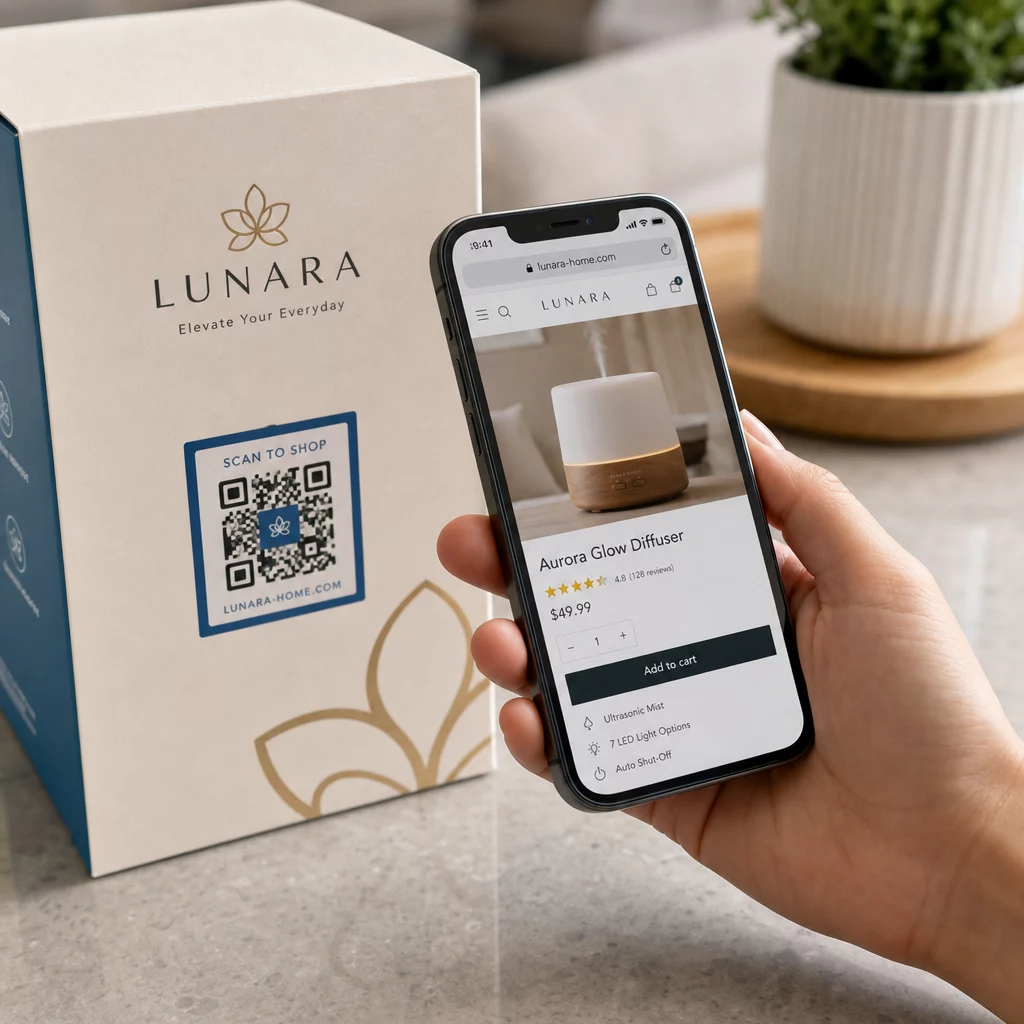
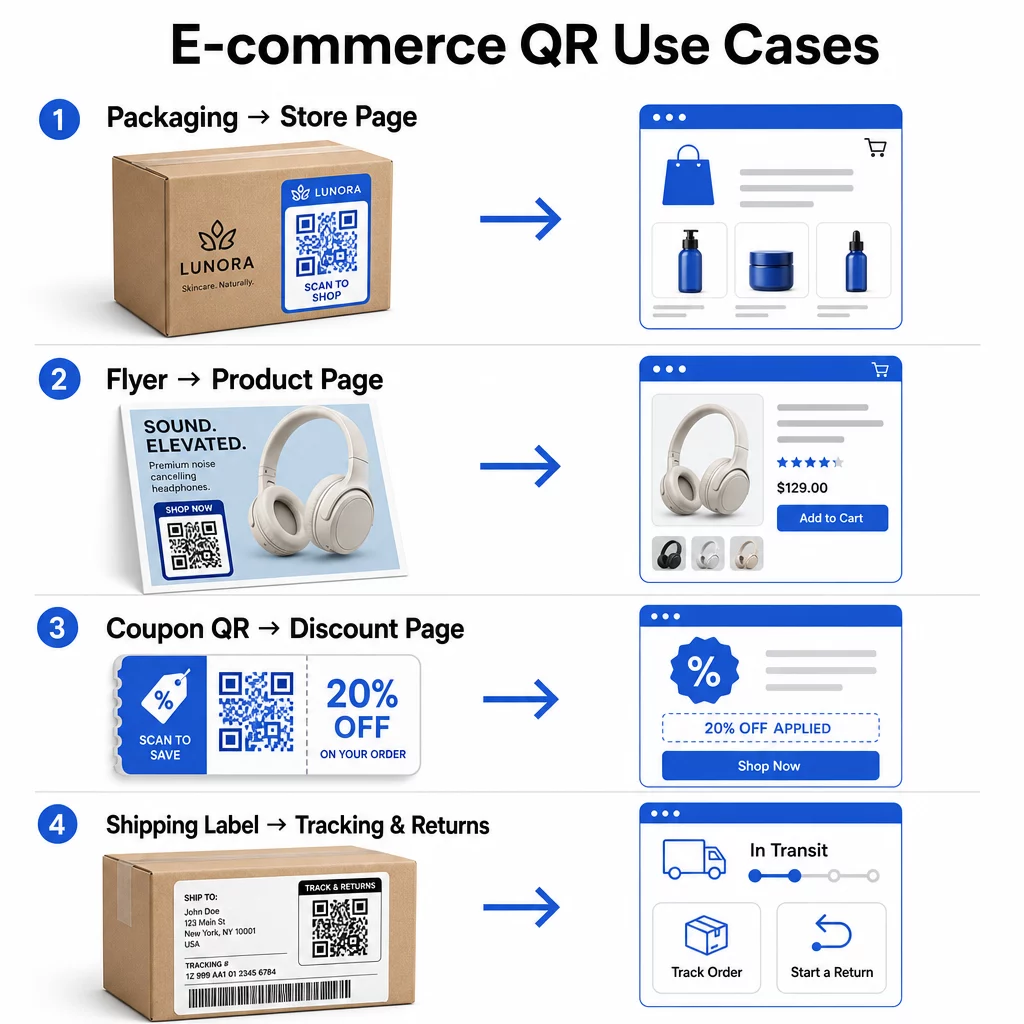
Produktverpackungen sind die direkteste Brücke zwischen einem physischen Artikel und Ihrem digitalen Schaufenster. Ein QR-Code auf der Verpackung oder dem Etikett kann Kunden zur vollständigen Produktseite, zu passendem Zubehör, zu Anleitungsvideos oder zu einem Nachbestellungslink führen. Ein Pageloot-Kunde platzierte QR-Codes in seinen Verpackungen und berichtete innerhalb von zwei Wochen über einen Anstieg der wiederholten Besuche in seinem Shopify-Shop um 27%.
Dieser Ansatz ist besonders wertvoll für Produkte mit mehr Details, als auf ein Etikett passen – Inhaltsstoffe, Zertifizierungen, Tutorials und Garantieinformationen können alle hinter einem einzigen scannbaren Code liegen. Erfahren Sie mehr über QR-Codes auf Verpackungen und wie sie dem Einzelhandel nützen.
Umsatz steigern mit Shoppable QR-Codes
Wenn ein Kunde Ihr Produkt in einer Printanzeige, einem Katalog oder einer In-Store-Präsentation sieht, eliminiert ein QR-Code die Schritte zwischen Interesse und Kauf. Anstatt nach Ihrem Produkt zu suchen oder eine URL einzugeben, scannen sie und landen direkt auf der Produktseite oder einer kuratierten Kollektion.
Verwenden Sie eine Link-QR-Code-Generator um jeden Code auf eine bestimmte URL zu verweisen. Mit dynamischen Codes können Sie dieses Ziel aktualisieren, um die Lagerverfügbarkeit, saisonale Preise oder ein zeitlich begrenztes Bundle widerzuspiegeln, ohne Materialien neu drucken zu müssen.
Gutscheine und zeitlich begrenzte Aktionen anbieten
QR-Codes sind besonders effektiv für die Bereitstellung von Rabattcodes und Werbeangeboten, da das Erlebnis sofort und reibungslos ist. Ein Kunde scannt, sieht eine Coupon-Landingpage und kann das Angebot sofort einlösen, anstatt seinen Posteingang nach einem Promo-Code zu durchsuchen.
Platzieren Sie Aktionscodes auf Produktverpackungen, gedruckten Quittungen, Direktwerbung und physischen Beschilderungen, um sowohl Erstkäufe als auch Nachbestellungen zu fördern. Der Gutschein QR-Code Generator ermöglicht es Ihnen, eine dedizierte Landingpage mit mehreren Angeboten und einem klaren Call-to-Action zu erstellen.
Coupon-QR-Codes für Ihren Shop erstellen Zeigen Sie zeitlich begrenzte Angebote, Promo-Codes und exklusive Angebote auf einer gebrandeten Landingpage an, die Ihre Kunden mit einem Scan erreichen. Verwenden Sie den Gutschein QR-Code Generator um loszulegen.
QR-Code-Zahlungen ermöglichen
Kontaktloses Bezahlen ist eine wachsende Erwartung, insbesondere im Einzelhandel und in hybriden Handelsumgebungen, wo Kunden bezahlen möchten, ohne an einer Kasse anstehen oder Kartendaten manuell eingeben zu müssen. QR-Code-Zahlungen funktionieren, indem sie den Kunden auf eine gehostete Zahlungsseite leiten – sie scannen, bestätigen den Betrag und bezahlen mit einer gespeicherten Karte oder einem mobilen Wallet wie Apple Pay oder Google Pay.
Statische QR-Codes Link zu einer generischen Zahlungsseite, auf der Kunden den Betrag selbst eingeben. Dynamische QR-Codes kann mit transaktionsspezifischen Daten generiert werden, sodass der Kunde nur noch bestätigen und autorisieren muss. Für Unternehmen, die wiederkehrende Zahlungen oder variable Beträge abwickeln, reduzieren dynamische Zahlungscodes Eingabefehler und beschleunigen den Checkout-Prozess.
Sicherheit ist hier ein entscheidender Faktor. Jeder Zahlungs-QR-Code sollte ein verifiziertes, HTTPS-gesichertes Ziel verwenden. Verwenden Sie nach Möglichkeit dynamische Codes, da diese bei Manipulation deaktiviert oder aktualisiert werden können. Die PayPal QR-Code Generator bietet eine einfache Möglichkeit, Zahlungscodes zu erstellen, die Kunden zu Ihrem Zahlungsfluss leiten. Sie können auch überprüfen Barrierefreie QR-Code-Zahlungen: Best Practices um sicherzustellen, dass Ihre Implementierung sowohl sicher als auch inklusiv ist.
Google-Bewertungen und Kundenfeedback sammeln
Social Proof ist eines der wirkungsvollsten Assets, die ein E-Commerce-Unternehmen besitzt. Die Herausforderung besteht darin, dass die meisten zufriedenen Kunden keine Bewertungen hinterlassen, es sei denn, der Prozess ist reibungslos. Ein QR-Code auf einer Verpackungsbeilage, einem Versandkarton oder einer Quittung reduziert diese Reibung auf einen einzigen Scan.
Leiten Sie den Code direkt auf Ihre Google-Bewertungsseite, damit Kunden genau dort landen, wo Sie sie brauchen. Die QR-Code für Google Bewertung erstellen ermöglicht es Ihnen, Bewertungscodes zu erstellen und anzupassen, die Sie in Ihren physischen Materialien einbetten können. Für eine breitere Feedback-Erfassung können QR-Codes auch auf Umfragen nach dem Kauf verlinken, sodass Sie strukturierte Einblicke in das Kauferlebnis gewinnen können. Lesen Sie mehr darüber, wie QR-Codes den E-Commerce-Kundenservice unterstützen.
Liefer- und Retourenlogistik verbessern
Versandetiketten und Bestellbestätigungs-E-Mails sind untergenutzte Marketing- und Servicekanäle. Ein QR-Code auf dem Versandetikett kann Kunden sofortigen Zugriff auf Echtzeit-Tracking-Updates ermöglichen, ohne dass sie eine Sendungsverfolgungsnummer finden und manuell eingeben müssen.
Bei Retouren beseitigt ein QR-Code, der direkt zu einem Retourenantragsformular verlinkt, den frustrierendsten Teil des Kauferlebnisses nach dem Kauf. Marken wie IKEA haben dieses Modell übernommen – sie senden QR-Codes per E-Mail oder SMS, nachdem ein Kunde eine Retoure registriert hat – um die Retourenlogistik zu optimieren und Supportkontakte zu reduzieren. Erfahren Sie, wie QR-Codes das E-Commerce-Liefererlebnis verbessern im Detail.
Zielgruppen in sozialen Medien vergrößern
Jede physische Verpackung ist ein potenzieller Kanal, um Ihre soziale Fangemeinde zu vergrößern. Ein QR-Code, der direkt mit Ihrem Instagram-, TikTok- oder YouTube-Profil verknüpft ist, kann einen Erstkäufer ohne zusätzliche Werbeausgaben in einen langfristigen Follower verwandeln.
Dies funktioniert besonders gut bei Unboxing-Momenten, in denen die Aufmerksamkeit der Kunden hoch und die Begeisterung für das Produkt am größten ist.
So verfolgen Sie die Leistung von QR-Code-Kampagnen
Das Generieren eines QR-Codes ist nur die halbe Miete – zu verstehen, wie er funktioniert, unterscheidet ein taktisches Experiment von einer skalierbaren Strategie.
Dynamische QR-Codes und integrierte Analysen
Dynamische QR-Codes bieten die umfassendste Nachverfolgung, da sie Scans über eine verwaltete Weiterleitung leiten, die Metriken in Echtzeit protokolliert. Eine QR-Code-Management-Plattform wie Pageloot erfasst:
- Gesamtzahl der Scans und eindeutige Scans
- Uhrzeit und Datum jedes Scans
- Geografischer Standort des Scans
- Gerätetyp und Betriebssystem
Diese Daten zeigen Ihnen, welche Platzierungen das größte Engagement hervorrufen, wann Kunden am ehesten scannen und wo sich die geografische Nachfrage konzentriert. Für einen tieferen Einblick in die Funktionsweise der Nachverfolgung siehe den Leitfaden zur Nachverfolgung von QR-Code-Scans und Analysen.
Überwachen Sie Ihre Kampagne in Echtzeit Möchten Sie genau sehen, wo und wann Ihre Kunden Ihre Materialien scannen? Nutzen Sie die Dynamischer QR-Code Generator um verfolgbare Codes zu erstellen und noch heute auf ein vollständiges Leistungs-Dashboard zuzugreifen.
UTM-Parameter für die Attribution in Google Analytics
Für Kampagnen, bei denen Sie die Leistung des QR-Codes neben anderen Kanaldaten in Google Analytics anzeigen müssen, fügen Sie der Ziel-URL UTM-Parameter hinzu, bevor Sie den Code generieren. UTM-Parameter sind kurze Schnipsel, die an eine URL angehängt werden und Ihrer Analyseplattform die Quelle, das Medium und den Kampagnennamen mitteilen, die mit einem Besuch verbunden sind.
Eine grundlegende UTM-getaggte URL für einen QR-Code auf Produktverpackungen könnte so aussehen:
“`
https://yourstore.com/product?utmsource=packaging&utmmedium=qrCode&utmcampaign=spring_launch
“`
Die fünf Standard-UTM-Parameter sind:
- utm_source – Woher der Traffic stammt (z.B. `Verpackung`, `Flyer`, `Kassenbon`)
- utmmedium – Der Marketingkanal (z.B. `QRCode`)
- utmcampaign – Der spezifische Kampagnenname (z.B. `FrühlingLaunch`)
- utm_term – Keywords, typischerweise für bezahlte Suchkampagnen
- utm_content – Zur Unterscheidung ähnlicher Links oder kreativer Varianten
Nach dem Tagging kürzen Sie die URL und generieren Ihren QR-Code aus dem gekürzten Link. Scans werden dann als eigenständige Traffic-Quelle in Ihren Analyseberichten angezeigt, sodass Sie Konversionsraten, Umsatz und das Verhalten spezifisch für QR-gesteuerten Traffic messen können.
Best Practices für das QR-Code-Design im E-Commerce
Ein QR-Code, den Kunden nicht scannen können oder wollen, liefert keinen Wert. Diese Designprinzipien stellen sicher, dass Ihre Codes zuverlässig an allen Platzierungen funktionieren:
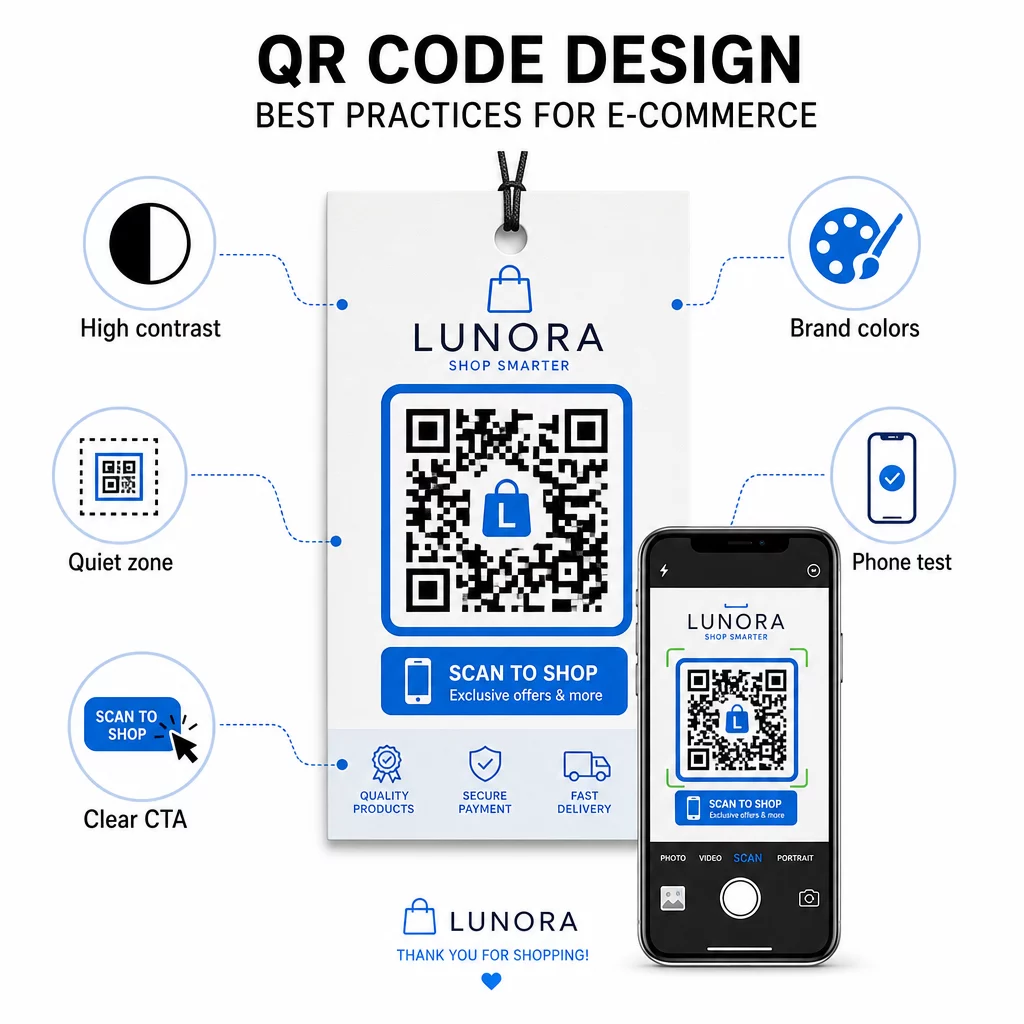
- Verwenden Sie dunkle Module auf hellem Hintergrund – Schwarz auf Weiß bietet den stärksten Kontrast für die Kameraerkennung und ist für Benutzer bei schlechten Lichtverhältnissen besser zugänglich
- Halten Sie eine Ruhezone ein – Halten Sie mindestens vier Module leeren Raum um den Code herum, damit umgebende Grafiken das Scannen nicht stören
- Beachten Sie die Mindestgrößenrichtlinien – Mindestens 1 Zoll × 1 Zoll für gedruckte Materialien; größer für Beschilderungen, wobei die Faustregel besagt, dass der maximale Scanabstand etwa das Zehnfache der Breite des Codes betragen sollte
- Fügen Sie einen klaren Call-to-Action hinzu – Beschriften Sie den Code mit einer kurzen Anweisung wie “Scannen für 10% Rabatt” oder “Scannen, um Ihre Bestellung zu verfolgen”, um Zögern zu reduzieren und die Scanraten zu erhöhen
- Vor dem Druck testen – Überprüfen Sie, ob der Code in der endgültigen Druckgröße, aus den erwarteten Entfernungen, bei realistischer Beleuchtung und mit verschiedenen Telefonmodellen korrekt scannt
Für mobile Landingpages, die von Ihren QR-Codes verlinkt sind, sind Ladegeschwindigkeit und Mobile-First-Layout entscheidend. Seiten sollten in weniger als drei Sekunden geladen werden, und Schaltflächen sollten groß genug sein, um sie leicht antippen zu können. Siehe Best Practices für mobile QR-Code-Landingpages für eine detaillierte Checkliste.
So erstellen Sie einen QR-Code für Ihren E-Commerce-Shop
Der Einstieg in QR-Codes für Ihren Shop erfolgt in drei Schritten:
- Generieren Sie den Code – Verwenden Sie den Pageloot QR-Code-Generator um einen dynamischen QR-Code zu erstellen, der mit einer Produktseite, einem Zahlungsfluss, einem Bewertungsformular oder einem anderen Ziel verknüpft ist. Wählen Sie dynamisch statt statisch, wenn Sie das Ziel später aktualisieren oder die Leistung verfolgen möchten.
- Anpassen und branden – Fügen Sie Ihr Logo hinzu, passen Sie Ihre Markenfarben an und fügen Sie einen Rahmen mit einem Call-to-Action-Label ein. Gebrandete Codes schaffen Wiedererkennung und generieren tendenziell mehr Scans als einfache Schwarz-Weiß-Codes.
- Bereitstellen und überwachen – Platzieren Sie den Code auf Verpackungen, in E-Mails, auf gedruckten Materialien oder in der Ladenbeschilderung. Verwenden Sie das Analyse-Dashboard, um die Scan-Leistung zu überprüfen und Kampagnen basierend auf dem, was funktioniert, anzupassen.
Für branchenspezifische Implementierungsideen, die Seite mit E-Commerce-QR-Code-Lösungen behandelt Anwendungsfälle über Shopify, WooCommerce und andere Plattformen hinweg. Sie können auch stöbern QR-Code-Lösungen nach Branche um Kontext zu erhalten, wie andere Sektoren ähnliche Herausforderungen angehen.
Ergebnisse aus der Praxis zeigen das Ausmaß des Möglichen: Fallstudien führender E-Commerce-Marken zeigen Ergebnisse wie eine Steigerung der Online-Verkäufe um 130 % und eine Steigerung der App-Interaktion um 239 % durch gezielte QR-Code-Implementierungen. Die E-Commerce-QR-Code-Fallstudien Seite behandelt diese Beispiele im Detail.
QR-Codes funktionieren am besten, wenn sie ein spezifisches Problem für den Kunden lösen – Informationen schneller erhalten, einfacher bezahlen oder eine Rücksendung problemlos abschließen. Beginnen Sie mit ein oder zwei hochwertigen Touchpoints, messen Sie die Ergebnisse und erweitern Sie von dort aus.
Häufig gestellte Fragen
Ein statischer QR-Code kodiert die Ziel-URL direkt in das Muster und kann nach der Erstellung nicht mehr geändert werden. Ein dynamischer QR-Code verweist auf einen kurzen Weiterleitungslink, der jederzeit aktualisiert werden kann, selbst nachdem der Code gedruckt wurde. Für den E-Commerce sind dynamische Codes im Allgemeinen vorzuziehen, da sie Echtzeit-Analysen unterstützen, Zielaktualisierungen ermöglichen, wenn sich Werbeaktionen ändern, und ein saubereres visuelles Muster erzeugen, das schneller gescannt werden kann. Erfahren Sie mehr auf der Seite über statische vs. dynamische QR-Codes.
Die zuverlässigste Methode kombiniert zwei Ansätze. Erstens, verwenden Sie dynamische QR-Codes über eine Verwaltungsplattform wie Pageloot, die Scan-Zahlen, Zeitstempel, Gerätetypen und geografische Standorte automatisch protokolliert. Zweitens, fügen Sie UTM-Parameter zu Ihren Ziel-URLs hinzu, damit Scans als eine eigenständige Traffic-Quelle in Google Analytics erscheinen, wo Sie Konversionsraten und den jedem Code zugeschriebenen Umsatz messen können. Siehe den Leitfaden zur QR-Code-Verfolgung für Schritt-für-Schritt-Anweisungen.
Die Platzierungen mit der höchsten Interaktion im E-Commerce sind Produktverpackungen, Versandkartons, Verpackungsbeilagen und Bestellbestätigungs-E-Mails. Diese Kontaktpunkte erreichen Kunden in Momenten hoher Kaufabsicht – direkt nach dem Kauf oder während des Auspackerlebnisses – was sie ideal macht, um Bewertungen, Wiederholungskäufe und Social-Media-Follower zu fördern. Materialien nach dem Kauf wie Quittungen und Rücksendeanweisungen sind ebenfalls effektiv, da Kunden in diesem Moment aktiv mit Ihrer Marke interagieren.