> 블로그 > QR 코드가 인쇄 광고 참여를 추적하는 방법
QR print tracking

QR 코드가 인쇄 광고 참여를 추적하는 방법

Turn every print placement into a trackable digital touchpoint. Learn how to use dynamic QR codes and UTM parameters to measure engagement and campaign ROI.
Updated on 6월 10, 2026
목차

How do you know if your print ads are actually working? Without a way to measure responses, you’re guessing – and wasted ad spend adds up fast. QR codes solve this by turning every print placement into a trackable digital touchpoint, giving you concrete data on who engaged, when, and what they did next.

Why Print Ads Are Hard to Measure Without QR Codes

Traditional print advertising – magazines, direct mail, posters, flyers – has always suffered from an attribution gap. You can estimate reach based on circulation numbers, but there’s no native way to know how many readers actually responded to a specific ad, let alone what they did afterward.

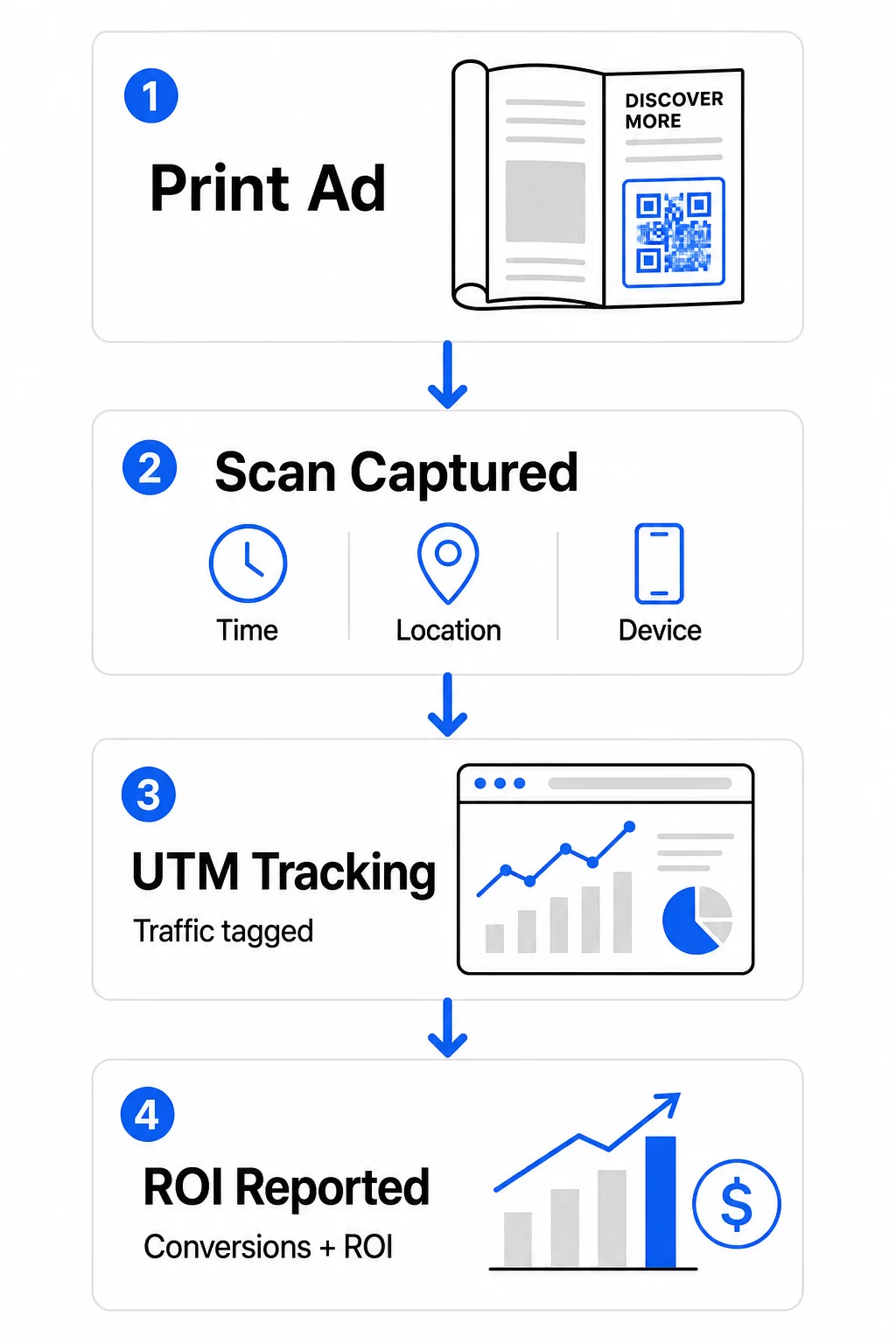
QR codes close that gap. When a reader scans a code in your print material, that action is logged digitally. You capture the scan event, the location, the device type, and the time – and if the destination URL includes UTM parameters, you can follow that user all the way through to a purchase, sign-up, or download. The offline impression becomes a measurable digital conversion.

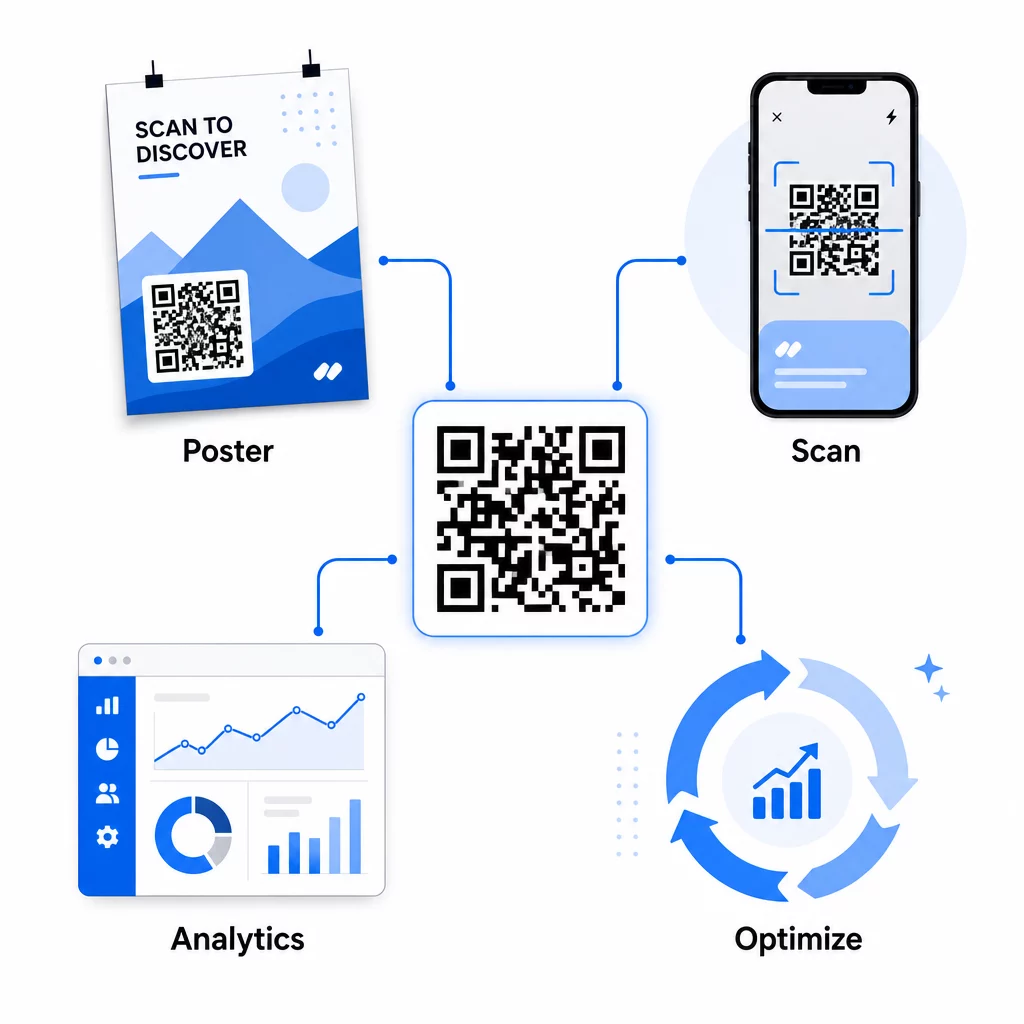
This is why QR codes have become a standard tool for print campaign attribution. By using unique QR codes across different placements – one for each magazine, one for each direct mail batch, one per billboard location – you can compare performance across channels the same way you’d compare paid digital campaigns.

Turn Print Placements Into Measurable Campaigns 사용 동적 QR 코드 생성기 to create unique, trackable codes for every print placement and start capturing real engagement data.

Static vs. Dynamic QR Codes for Tracking

Not all QR codes support tracking. Understanding the difference between static and dynamic codes is the foundation of any print measurement strategy.

정적 QR 코드 encode the destination URL directly into the code pattern. Once printed, the destination cannot be changed, and there is no mechanism to log scan events. They work fine for linking to permanent content, but they offer no analytics.

동적 QR 코드 encode a short redirect URL instead. When scanned, the redirect resolves to your chosen destination – and the platform logs the scan event with timestamp, location, and device data. Because the redirect URL stays fixed while the destination can change, you can update the linked content at any time without reprinting your materials.

For print ad tracking, 동적 QR 코드 are the only practical option. They give you the scan data you need to measure campaign performance and the flexibility to adjust landing pages based on what the data shows.

Setting Up QR Codes for Print Campaign Tracking

Create Unique Codes for Each Placement

The most important rule for print tracking is one QR code per placement. If you run the same ad in three different magazines using one shared QR code, you’ll see aggregate scan counts but won’t know which publication drove results.

Assign a separate QR code to each:

  • Publication or channel (e.g., each magazine title)
  • Geographic distribution area (e.g., Northeast vs. West Coast mailers)
  • Ad format or size (e.g., full-page vs. half-page)
  • Campaign flight or time period

This approach lets you compare performance across placements directly and allocate future spend toward what works. Pageloot’s campaign management tools let you organize codes by campaign, assign them to sub-accounts for different teams, and manage all placements from a single dashboard.

Add UTM Parameters to Your Destination URLs

Scan data from your QR code platform tells you how many people engaged with your print ad. UTM parameters tell you what those people did after scanning. Together, they give you the full attribution picture.

UTM parameters are tags appended to your destination URL that identify the traffic source in Google Analytics. A properly tagged URL for a print campaign might look like:

`https://yourwebsite.com/landing-page?utmsource=voguemagazine&utm매체=qrcode&utmcampaign=falllaunch_2025`

With this setup, every session that originates from that QR code scan appears in Google Analytics tagged to that specific placement. You can then measure downstream actions – purchases, form completions, content downloads – and attribute them to the print ad that generated the scan.

For a full walkthrough of naming conventions and GA4 reporting, the guide on QR 코드용 UTM 매개변수 covers setup in detail.

Connect Print Scans to Google Analytics 페이지루트의 analytics features let you add UTM parameters during QR code creation so every scan is automatically attributed in GA4.

Design Codes That Actually Get Scanned

Tracking only works if people scan your codes. A few technical requirements apply specifically to print materials:

  • 최소 크기: 0.8 × 0.8 inches for standard print materials like business cards or flyers; scale up proportionally for posters and signage using the 10:1 rule – at least one inch of QR code width for every ten inches of expected scanning distance
  • 대비: High contrast between the dark modules and the light background is essential; avoid low-contrast pairings like light gray on white, and never invert the colors
  • 놓기: Eye level is ideal for posters and signage, typically between 3.5 and 5.5 feet from the ground; avoid curved surfaces like bottle labels or magazine folds where distortion can prevent scanning
  • 파일 형식: Use vector formats (EPS or SVG) for large-format printing; PNG or JPEG is sufficient for smaller materials

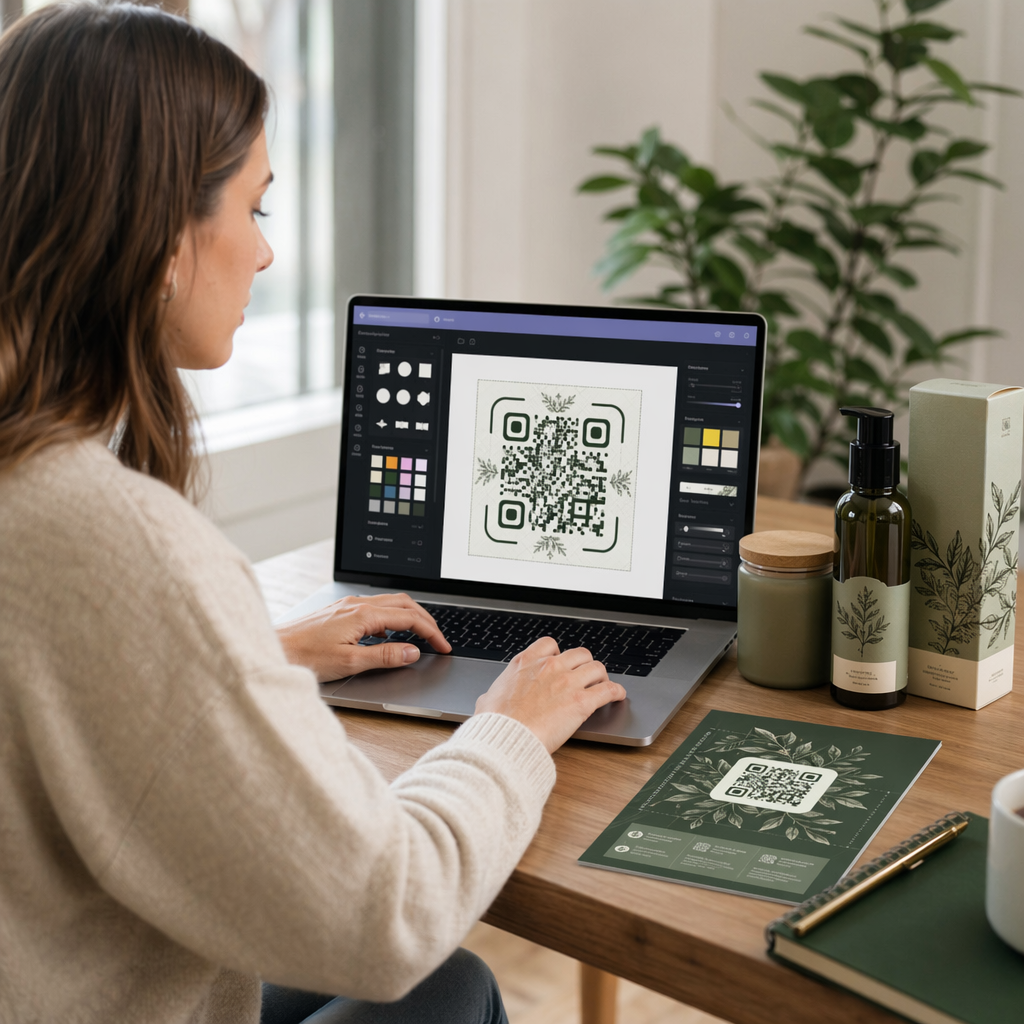
Adding a call-to-action frame – “Scan for Exclusive Offer” or “Get Instant Access” – near the code gives readers a clear reason to engage. Branded QR codes that incorporate your logo and colors also build recognition and trust. You can find detailed sizing and placement guidelines in the guide to using QR codes in print media.

The Metrics That Matter for Print Ad Attribution

Once your codes are live, the data you collect falls into two categories: engagement metrics that measure how many people responded to your print ad, and conversion metrics that measure what those people did next.

Print ad metrics

Here’s a breakdown of the key metrics to monitor:

지표 What It Measures 중요한 이유
Total scans Every scan event, including repeat scans Shows overall campaign reach
Unique scans Individual devices that scanned Reflects actual audience size
Scan-through rate Scans relative to estimated ad exposure Evaluates creative and placement effectiveness
Scan location Geographic distribution of scans Identifies high-performing regions
Device type iOS, Android, desktop Guides mobile optimization for landing pages
Peak scan times When scans occur during the day or week Informs timing strategy for future campaigns
Conversion rate Actions taken after scanning (purchases, sign-ups) Measures real business impact

Total scans vs. unique scans is an important distinction. Total scans count every time a code is triggered, including multiple scans by the same person. Unique scans use device-level identification to count individual users, giving you a more accurate picture of actual audience reach. For print campaigns, unique scans are typically the more meaningful number.

그만큼 scan-through rate is the print equivalent of click-through rate – it tells you what percentage of people who were exposed to your ad actually responded. You can estimate this by dividing unique scans by the print run or estimated readership for that placement.

For a deeper look at enterprise-level analytics, the article on key QR code analytics metrics covers how to move beyond scan counts to measure genuine business impact.

Using Real-Time Analytics to Optimize Campaigns Mid-Flight

One significant advantage of dynamic QR codes over traditional print measurement is the ability to act on data while a campaign is still running. With real-time analytics, you’re not waiting until a campaign ends to learn what worked.

실시간 분석

Practical mid-campaign optimizations include:

  • Updating the destination URL if the original landing page isn’t converting well – without reprinting any materials
  • Adjusting spend allocation by pausing placements with low scan rates and increasing investment in high-performing channels
  • A/B testing landing pages by routing traffic from the same QR code to different destinations at different times
  • Identifying geographic patterns in scan data and tailoring follow-up messaging for high-response regions

Pageloot’s real-time analytics dashboard integrates with Google Analytics, so you can view QR-driven traffic alongside your other digital channels. This gives you a complete view of how your print campaigns contribute to the overall customer journey – from the moment someone sees the ad to the final conversion.

캠페인을 실시간으로 모니터링하세요 Want to see exactly where and when your customers are scanning your print materials? Use Pageloot’s QR code analytics tools to access a full performance dashboard and optimize campaigns while they’re still running.

Dynamic QR Codes for Flexible, Ongoing Campaigns

For campaigns that run across multiple placements or time periods, dynamic QR codes provide a level of flexibility that static codes can’t match. You can test seasonal offers, update destination pages to reflect current promotions, and redirect traffic without touching the printed materials.

This flexibility is especially valuable for:

  • Long-running print campaigns where offers change (e.g., seasonal promotions on packaging or signage)
  • Multi-location campaigns where regional landing pages need to vary
  • Budget optimization where you want to redirect traffic from underperforming placements to stronger ones

Because the QR code itself never changes – only the destination it points to – your printed materials remain valid indefinitely. This eliminates reprinting costs while keeping your campaign content current.

Connecting QR codes with marketing automation tools extends this further. When a scan triggers an entry into an email sequence or CRM workflow, every print ad interaction can initiate a structured customer journey – not just a one-time website visit. Pageloot supports integrations with platforms like HubSpot and Zapier to enable these automated workflows.

Proving ROI from Print Campaigns

The ultimate goal of QR code tracking in print is proving return on investment. With the right setup, you can calculate this directly.

If you know your print campaign cost and you can attribute conversions – purchases, leads, sign-ups – back to specific QR code scans via UTM parameters and Google Analytics, you can calculate cost per acquisition for each placement. This gives you the same accountability you’d expect from digital advertising applied to offline media.

The key steps to make this work:

  • Use unique QR codes for each placement so attribution is clean
  • Tag destination URLs with UTM parameters so GA4 captures the full conversion path
  • Set up conversion goals in GA4 for the actions that matter to your business
  • Use Pageloot’s analytics dashboard to cross-reference scan data with conversion data

For teams managing multiple clients or campaigns simultaneously, the marketing agency tools in Pageloot allow you to track performance across campaigns in one place and present clean attribution reports to stakeholders. QR codes don’t just make print ads interactive – they make them measurable. By combining dynamic QR codes, UTM-tagged destination URLs, and a platform with real-time analytics, you can attribute offline print engagement to digital outcomes with the same precision you’d apply to any digital channel. Start by creating unique codes for each of your current print placements and see which ones are actually driving results.

Get started with the 무료 QR 코드 생성기 or explore dynamic QR code tracking to see the full capabilities available for your print campaigns.

자주 묻는 질문

Can I track print ad performance without reprinting materials if I change my campaign?

Yes, if you use dynamic QR codes. Dynamic codes point to a redirect URL that you control. You can update the destination – whether that’s a new landing page, a seasonal offer, or a revised UTM-tagged URL – without changing the printed QR code. The physical materials stay valid and your tracking continues uninterrupted.

What’s the difference between total scans and unique scans, and which should I focus on?

Total scans count every time the code is triggered, including multiple scans by the same person. Unique scans count individual devices, giving you a clearer picture of how many distinct people responded to your ad. For measuring print ad reach and calculating scan-through rates, unique scans are typically more meaningful.

How do I connect QR code scans to actual conversions like purchases or sign-ups?

Add UTM parameters to the destination URL embedded in your QR code. When someone scans the code and lands on your website, Google Analytics records the session with those UTM tags. If you’ve set up conversion goals in GA4 – purchases, form submissions, downloads – you can see exactly how many conversions originated from each print placement. This is the core of offline-to-digital attribution for print campaigns.

작성자 정보

시임 코스타비는 페이지루트의 콘텐츠 책임자입니다. 그는 페이지루트의 혁신적인 QR 코드 생성 서비스에 대한 글을 쓰고 있습니다. 5년 이상 QR 코드 분야에서 쌓아온 깊이 있는 전문 지식을 바탕으로, 시임은 이 분야의 전문가로 인정받고 있습니다. 그는 QR 기술을 활용하여 디지털 상호작용을 간소화하고 향상시키는 데 크게 기여하고 있습니다.

범주
에 대해 자세히 알아보기
배송 라벨 인쇄
배송 라벨 바코드

온라인으로 QR 코드를 생성해야하는 경우 QR 코드 만들기 무료로 여기!
Pageloot는 #1 Go-To 솔루션 QR 코드를 만들고 스캔합니다.

BL-0012

블로그 세대

20,000개 이상의 브랜드로부터 신뢰를 받아 더 많은 매출, 리뷰, 팔로워를 확보했습니다.

클라이언트 로고
최고 브랜드의 신뢰
5 중 4.8 평가

4.86 / 5 별점

휴고 로랑
휴고 로랑
레스토랑 주인
가장 쉽고 안정적인 QR 코드 생성기. PDF 파일을 즉시 업로드할 수 있습니다. 이제 레스토랑 메뉴가 디지털화되었습니다.
루카스 얀센
루카스 얀센
부동산 개발사
이것은 훌륭한 도구이며 QR 코드를 사용하면 원하는 곳으로 이동할 수 있습니다. 우리는 위치 QR 코드만 사용하지만 유용한 기능이 너무 많습니다.
엠마 모레티
엠마 모레티
소매 제품
사용하기 쉽고 빠릅니다. 그것은 훌륭하게 작동하고 완벽한 이미지를 생성하므로 직원들이 내 vCard를 다운로드할 수 있습니다.
휴고 로랑
휴고 로랑
레스토랑 주인
가장 쉽고 안정적인 QR 코드 생성기. PDF 파일을 즉시 업로드할 수 있습니다. 이제 레스토랑 메뉴가 디지털화되었습니다.
루카스 얀센
루카스 얀센
부동산 개발사
이것은 훌륭한 도구이며 QR 코드를 사용하면 원하는 곳으로 이동할 수 있습니다. 우리는 위치 QR 코드만 사용하지만 유용한 기능이 너무 많습니다.
엠마 모레티
엠마 모레티
소매 제품
사용하기 쉽고 빠릅니다. 그것은 훌륭하게 작동하고 완벽한 이미지를 생성하므로 직원들이 내 vCard를 다운로드할 수 있습니다.
더 많은 QR 코드보기
Gym QR code scan
적합 QR 코드
QR 코드 마케팅
QR 코드 이용
무엇이든 디지털 경험으로 전환하세요 3분 이내에.

14일 무료 체험.

신용카드는 필요 없습니다.

첫 구매 시 30% 할인

코드를 사용하세요:

MP3 파일 공유

PDF QR 코드를 생성하려면 가입하세요

필요한 모든 것을 업로드하고 표시합니다.

  • 오디오 파일
  • 팟캐스트
  • 음악

가입 시 14일 무료 체험.
체험 기간 후 QR 코드 만료.

오디오 mp3 QR 코드를 생성하려면 가입하세요

프레임으로 더 많은 스캔 확보

QR 코드에 더 많은 프레임을 추가하려면 가입하세요

클릭 유도 문안 프레임은 고객이 QR 코드와 쉽게 상호 작용할 수 있도록 도와줍니다. 사용해 보세요!

가입 시 14일 무료 체험.
체험 기간 후 QR 코드 만료.

QR 코드에 더 많은 프레임을 추가하려면 가입하세요

도형으로 더 많은 스타일 추가

더 많은 도형을 만들려면 가입하세요

QR 코드는 정사각형일 필요가 없습니다. 브랜드 이미지에 맞게 전환해 보세요.

가입 시 14일 무료 체험.
체험 기간 후 QR 코드 만료.

더 많은 도형을 만들려면 가입하세요

QR 코드에 로고 추가

QR 코드에 로고를 추가하려면 가입하세요

로고와 브랜드를 추가하여 QR 코드를 돋보이게 만드세요.

가입 시 14일 무료 체험.
체험 기간 후 QR 코드 만료.

QR 코드에 로고를 추가하려면 가입하세요

스마트 앱 스토어 리디렉션

앱 스토어 QR 코드를 생성하려면 가입하세요

스마트 앱 스토어 QR 코드에 앱 링크를 추가하세요. 사용자는 장치에 따라 리디렉션됩니다.

가입 시 14일 무료 체험.
체험 기간 후 QR 코드 만료.

앱 스토어 QR 코드를 생성하려면 가입하세요

QR 코드에 이미지 업로드

이미지 QR 코드를 생성하려면 가입하세요

이미지를 쉽게 공유하세요. 몇 초 안에 동적으로 이미지를 변경하십시오.

가입 시 14일 무료 체험.
체험 기간 후 QR 코드 만료.

이미지 QR 코드를 생성하려면 가입하세요

PDF 파일 공유

PDF QR 코드를 생성하려면 가입하세요

필요한 모든 것을 업로드하고 표시합니다.

  • 메뉴 및 가격표
  • 명령
  • 모든 문서

가입 시 14일 무료 체험.
체험 기간 후 QR 코드 만료.

PDF QR 코드를 생성하려면 가입하세요

인쇄 없이 나중에 편집

다시 인쇄하지 않고 QR 코드를 편집하려면 가입하세요

동적 QR 코드를 사용하면 새 QR 코드를 인쇄하지 않고도 QR 코드의 내용을 변경할 수 있습니다.

가입 시 14일 무료 체험.
체험 기간 후 QR 코드 만료.

다시 인쇄하지 않고 QR 코드를 편집하려면 가입하세요

언제? 어디서? QR 코드 스캔 추적

QR 코드를 추적하려면 가입하세요

어떤 QR 코드가 가장 많이 스캔되고 무엇이 고객을 가장 흥분시키는지 알아보십시오.

가입 시 14일 무료 체험.
체험 기간 후 QR 코드 만료.

QR 코드를 추적하려면 가입하세요

인쇄 준비 파일 제공

PDF 및 SVG와 같은 벡터 QR 코드를 생성하려면 가입하세요.

.EPS, .PDF, .SVG

HD 해상도로 QR 코드를 다운로드하고 싶으신가요? 인쇄할 준비가 된 벡터 또는 픽셀 형식을 가져옵니다.

가입 시 14일 무료 체험.
체험 기간 후 QR 코드 만료.

PDF 및 SVG와 같은 벡터 QR 코드를 생성하려면 가입하세요.

기다리세요. 귀하의 QR 코드는 로드 중... 로드 중...

나만의 것으로 만들기

나중을 위해 QR 코드를 저장하려면 가입하세요.

다양한 색상, 로고 및 클릭 유도문안 프레임으로 멋진 QR 코드를 만들어 더 많은 스캔을 받으세요.

가입 시 14일 무료 체험.
체험 기간 후 QR 코드 만료.

나중을 위해 QR 코드를 저장하려면 가입하세요.