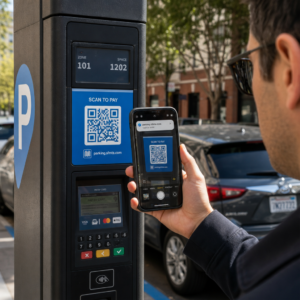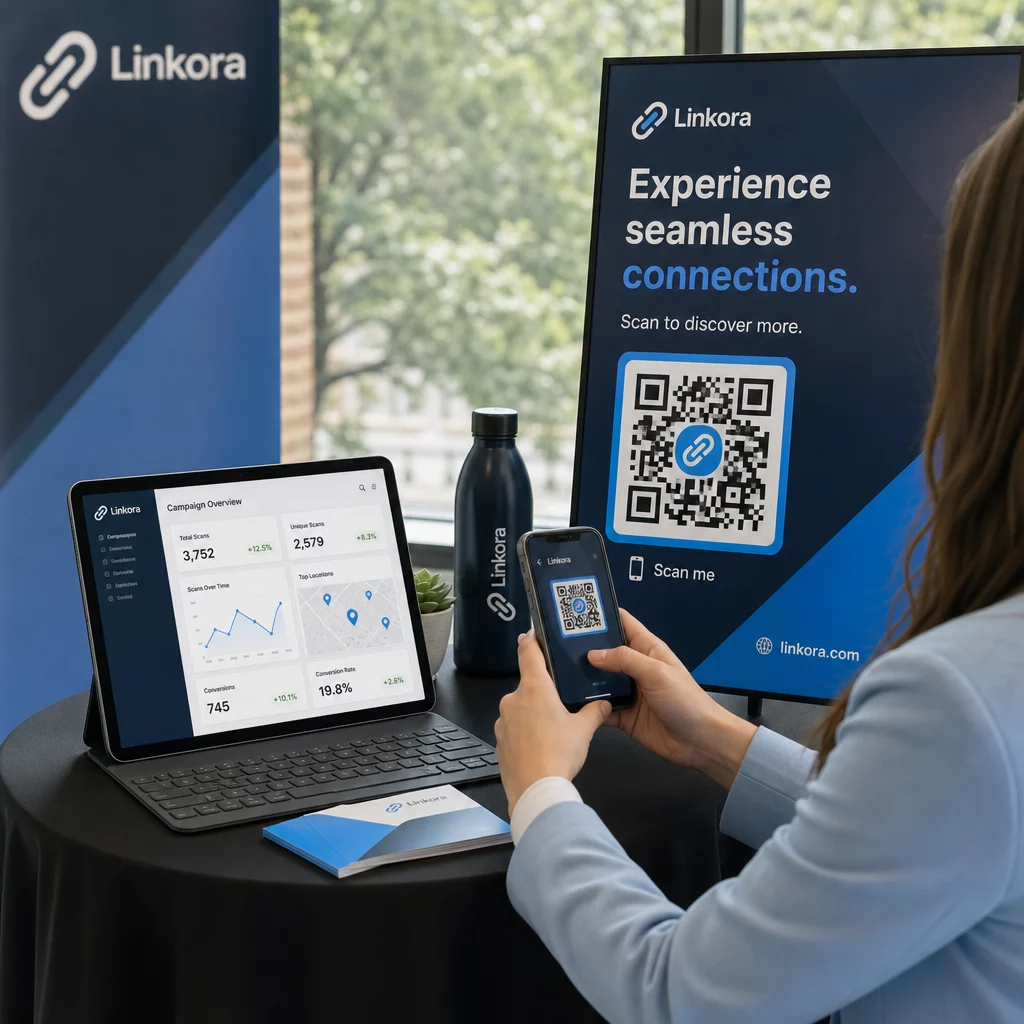
Comment savoir si votre campagne QR basée sur la localisation fonctionne réellement ? Sans les bonnes métriques, vous dépensez de l'argent sur des supports imprimés sans aucun moyen de prouver leur impact. Ce guide détaille les sept métriques qui vous donnent une image claire et basée sur les données de la performance de la campagne – du premier scan à la conversion finale.
Ce qui rend les campagnes QR basées sur la localisation mesurables
Les campagnes de codes QR basées sur la localisation connectent les placements hors ligne – affiches, emballages, présentoirs en magasin, supports événementiels – à des expériences numériques. Contrairement au trafic de site web, ces interactions commencent dans le monde physique, ce qui crée un défi d'attribution : comment lier un scan à Austin à un achat sur votre plateforme e-commerce ?
La réponse est les codes QR dynamiques. Contrairement aux codes statiques, les codes QR dynamiques acheminent les scans via un serveur de redirection qui enregistre les données avant d'envoyer l'utilisateur vers la destination. Cette étape intermédiaire est ce qui rend le suivi possible. Vous pouvez capturer quand, où et comment un scan s'est produit – et mettre à jour l'URL de destination sans réimprimer un seul support.
Suivi du code QR fonctionne en attribuant à chaque code un lien de redirection unique lié à votre campagne. Chaque scan génère un événement de données que votre plateforme d'analyse enregistre. Associez cela à des paramètres UTM intégrés dans l'URL de destination et vous pouvez pousser les données de scan directement dans Google Analytics 4, votre CRM ou un outil d'automatisation du marketing.
Avec cette base en place, voici les sept métriques qui méritent d'être suivies.
1. Scans totaux
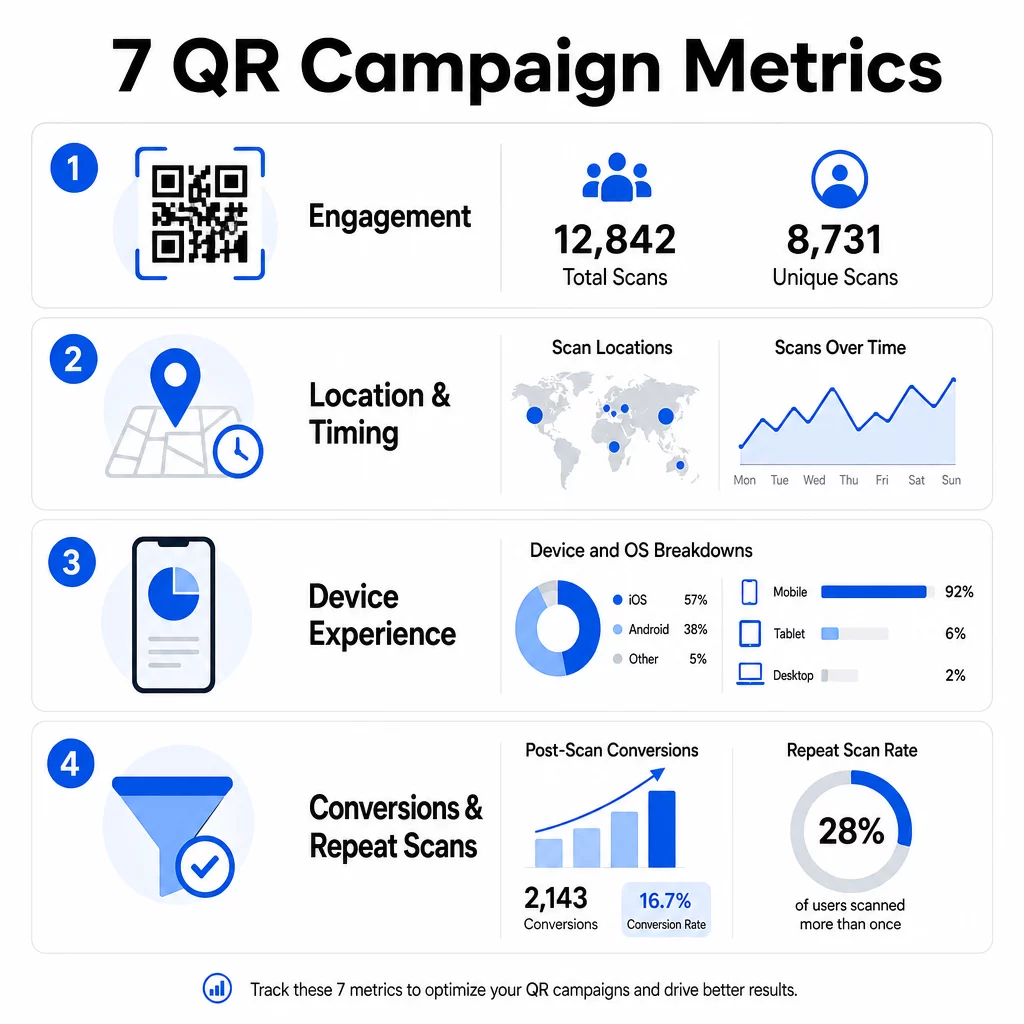
Les scans totaux comptent chaque interaction avec votre code QR, y compris plusieurs scans par la même personne. C'est votre métrique d'engagement de base – elle vous indique si votre placement est suffisamment visible et attrayant pour inciter à l'action.
Les taux de scan varient considérablement selon le contexte :
- Les publicités imprimées affichent généralement des taux de scan de 1 à 3 %
- Les emballages de produits ont tendance à performer à 2–5 %
- Les présentoirs en magasin génèrent souvent 5–10 %
- Les supports événementiels peuvent atteindre 10–20 %
Un pic de scans totaux après le lancement d'une campagne est un signal positif, mais il est important de noter que 70 % des scans à vie se produisent généralement dans les 30 premiers jours. Un lancement solide est important. Un appel à l'action clair comme “ Scannez pour 10 % de réduction ” génère significativement plus de scans précoces qu'un code placé sans contexte.
Pour le placement, positionnez les codes QR à hauteur des yeux – environ 1,2 à 1,5 mètre de haut – et assurez-vous qu'ils mesurent au moins 2,5 cm pour un scan fiable. Les scans totaux vous donnent la portée ; les métriques ci-dessous vous disent quoi en faire.
Suivez vos campagnes QR en temps réel Voyez le nombre total de scans, les visiteurs uniques et les tendances géographiques au fur et à mesure qu'ils se produisent. Explorez les fonctionnalités d'analyse et de suivi des codes QR pour commencer à mesurer ce qui compte.
2. Scans uniques
Les scans uniques filtrent les interactions répétées, ne comptant que les appareils ou utilisateurs distincts. L'écart entre le nombre total de scans et les scans uniques est l'un des ratios les plus informatifs de vos analyses.
Si vous avez 10 000 scans au total et 8 000 scans uniques, 20 % de vos interactions sont des visites répétées. Que ce soit bon ou mauvais dépend de votre objectif. Pour un programme de fidélité ou un menu numérique, les scans répétés sont l'objectif. Pour une campagne de sensibilisation conçue pour atteindre de nouvelles personnes, un faible nombre de scans uniques indique que vous n'élargissez pas votre audience.
Les codes QR dynamiques sont nécessaires pour le suivi des scans uniques. Les plateformes utilisent des identifiants au niveau de l'appareil ou des signaux basés sur l'IP pour distinguer les utilisateurs individuels tout en gardant les données anonymes. Cette distinction est également importante sur le plan opérationnel – si vous synchronisez les données de scan avec un CRM, les scans uniques évitent les enregistrements en double et les nombres de leads gonflés.
Un signal pratique : les utilisateurs qui scannent le même code deux fois en 48 heures montrent souvent une intention d'achat plus élevée, ce qui en fait un segment utile pour le ciblage de suivi ou la notation des leads.
3. Lieux de scan
Les données de scan géographiques vous montrent exactement où vos codes sont consultés, généralement jusqu'au niveau de la ville. C'est là que les campagnes basées sur la localisation tirent leur nom – et où les décisions budgétaires deviennent beaucoup plus faciles à justifier.
La plupart des tableaux de bord d'analyse QR affichent les données de localisation sous forme de cartes thermiques ou de ventilations par ville, vous permettant d'identifier quels emplacements génèrent des résultats et quelles régions sous-performent par rapport à l'investissement. Pour une campagne nationale avec une distribution uniforme, les données de localisation révèlent souvent une concentration surprenante. Une campagne de flyers à travers plusieurs États pourrait générer 500 scans dans une ville de taille moyenne et moins de 100 dans les grands marchés – une information qui serait invisible sans le suivi de la localisation.
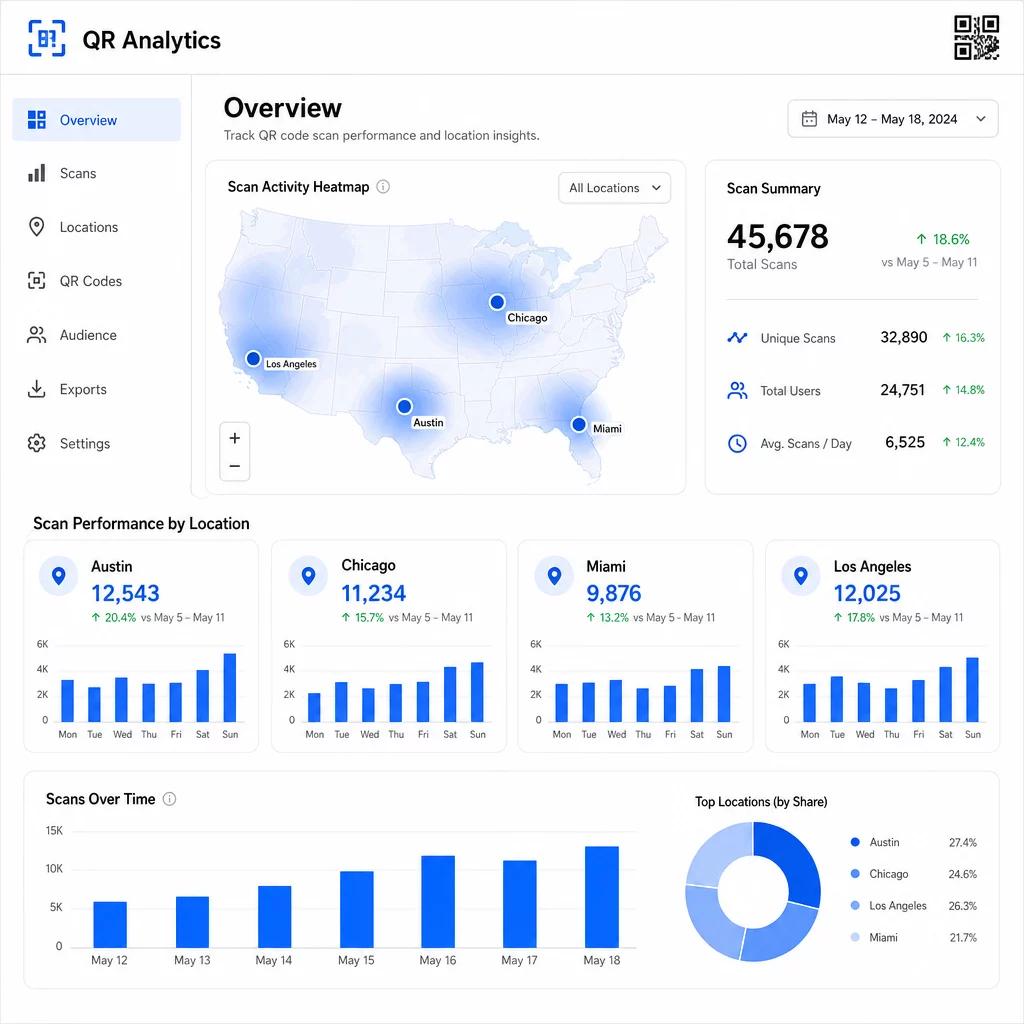
L'attribution de codes QR uniques à chaque emplacement est le moyen le plus fiable d'isoler la performance de la localisation. Un seul code sur plusieurs emplacements vous donne des données agrégées ; les codes uniques vous donnent une comparaison directe.
Les données de localisation permettent également la personnalisation. Codes QR géociblés peuvent rediriger les utilisateurs vers différentes pages de destination en fonction de leur lieu de scan – une chaîne d'épiceries, par exemple, peut promouvoir des boissons chaudes dans les régions plus froides et des boissons froides là où les températures sont plus élevées, sans imprimer de supports séparés.
Une note sur la confidentialité : En vertu du California Consumer Privacy Act, les données de géolocalisation précises – définies comme une localisation dans un rayon d'environ 1 850 pieds – sont classées comme informations personnelles sensibles. Le suivi basé sur l'IP au niveau de la ville se situe généralement en dehors de ce seuil, mais le suivi basé sur le GPS nécessite le consentement explicite de l'utilisateur. Examinez les pratiques de données de votre plateforme et obtenez le consentement approprié avant de collecter des données de localisation granulaires.
4. Scans au fil du temps
Les données de timing révèlent des schémas sur la manière dont votre audience s'engage – et quand. L'examen du volume de scans par heure, jour et semaine vous aide à comprendre non seulement combien de personnes scannent, mais aussi quand elles sont le plus susceptibles d'agir.
Les schémas généraux varient selon le type de campagne :
- Les campagnes B2B ont tendance à atteindre leur pic du mardi au jeudi, entre 12h00 et 14h00
- Les campagnes B2C connaissent généralement le plus d'activité du vendredi au dimanche, entre 18h00 et 20h00
Mais les conditions locales importent plus que les repères généraux. Un affichage de café pourrait voir des pics à 8h00 ; un code QR de lieu d'événement pourrait atteindre son maximum dans les 30 minutes avant l'ouverture des portes. Le suivi de la vélocité des scans – le taux de scans par heure – vous aide à repérer ces schémas et à détecter les premiers signes de déclin de la campagne, lorsque l'intérêt commence à diminuer après la période de lancement initiale.
Les données de timing deviennent exploitables lorsque vous les combinez avec le contrôle du contenu. Codes QR dynamiques vous permettent de mettre à jour les URL de destination en temps réel, afin que vous puissiez organiser des ventes flash ou des promotions à durée limitée qui s'alignent sur les périodes de pic d'engagement sans réimprimer de matériel. La planification de publications sur les réseaux sociaux ou d'envois d'e-mails juste avant vos heures de pic de scans peut amplifier l'effet.
Pour les placements continus, examinez les données de timing mensuellement. Pour les campagnes actives, des examens hebdomadaires sont souvent suffisants pour détecter des changements significatifs.
5. Répartitions par appareil et OS
Les données sur les appareils vous indiquent ce que votre audience utilise pour scanner – et si votre page de destination fonctionne réellement pour eux. D'ici 2025, les appareils mobiles représenteront environ 96 % de tous les scans de codes QR, iOS et Android se partageant la majorité de ce trafic.
Cette répartition a des implications techniques directes. Une page de destination qui se charge proprement sur Safari/iOS peut se comporter différemment sur Chrome/Android, en particulier si elle inclut des vidéos, des éléments de formulaire ou des invites de téléchargement d'applications. Les données sur les appareils vous permettent de détecter ces problèmes avant qu'ils ne vous coûtent des conversions.
Un exemple pratique : une campagne promouvant une application mobile pourrait diriger les utilisateurs iOS directement vers l'Apple App Store et les utilisateurs Android vers Google Play. Ce type de routage intelligent – basé sur le type d'appareil détecté – élimine les frictions et améliore les taux d'installation. Tableau de bord analytique de Pageloot affiche les répartitions par appareil et OS ainsi que les données de scan, afin que vous puissiez effectuer ces optimisations sans tâtonnements.
Il est également à noter : 78 % des utilisateurs scannent désormais les codes QR en utilisant l'application appareil photo native de leur téléphone plutôt qu'un scanner dédié. Votre contenu doit fonctionner de manière transparente avec les applications appareil photo intégrées sur toutes les plateformes, et pas seulement avec les applications tierces.
Si vous remarquez des taux de rebond élevés pour un type d'appareil spécifique, recherchez d'abord les problèmes de performance – les images volumineuses, les vidéos non optimisées ou les formulaires qui ne s'affichent pas correctement sur certaines tailles d'écran sont des coupables courants.
6. Conversions après le scan
Les conversions après le scan sont le point où l'engagement se transforme en revenus. Chaque métrique avant celle-ci mesure l'attention ; celle-ci mesure les résultats – achats, inscriptions, téléchargements d'applications, ou toute autre action que votre campagne est conçue pour générer.
Référentiels de conversion courants par type d'action :
- Abonnements sociaux : 20–30%
- Inscriptions par e-mail : 15–25%
- Téléchargements d'applications : 10–15%
- Achats : 2–5%
Si vos chiffres sont significativement inférieurs à ces fourchettes, le problème se situe généralement dans l'expérience post-scan : une page à chargement lent, un formulaire trop complexe ou une destination qui ne correspond pas à ce que le code QR avait promis.
Mise en place du suivi des conversions nécessite deux éléments fonctionnant ensemble. Premièrement, ajoutez des paramètres UTM à vos URL de destination – par exemple, `utmsource=storedisplay&utmmoyen=qrcode&utmcampaign=springpromo` – afin que Google Analytics 4 puisse attribuer le trafic à votre campagne QR. Deuxièmement, configurez le suivi des événements GA4 pour enregistrer les actions spécifiques qui vous intéressent : clics sur les boutons, soumissions de formulaires, visionnages de vidéos complets ou achats. Le guide des paramètres UTM pour les codes QR décrit cette configuration en détail.
Pour une attribution plus approfondie, liez vos données de scan QR à un CRM ou à une plateforme d'automatisation du marketing. Cela vous permet d'envoyer des suivis personnalisés basés sur le comportement de scan et de suivre les conversions sur plusieurs sessions, et pas seulement dans la fenêtre post-scan immédiate.
Calcul du ROI une fois que vous avez les données de conversion est simple : soustrayez les coûts totaux de la campagne (conception, impression, frais de plateforme) des revenus générés, divisez par les coûts et multipliez par 100. Une campagne qui coûte 500 $ et génère 2 000 $ de ventes rapporte 300 %.
Connecter les scans de QR aux conversions en aval Utilisez Suivi du code QR avec des paramètres UTM pour lier chaque scan à une campagne et mesurer ce qui se passe après le scan.
7. Taux de scans répétés
Le taux de scans répétés mesure la fréquence à laquelle les utilisateurs reviennent scanner un code après leur première interaction. C'est un indicateur de la valeur du contenu – si les utilisateurs reviennent, l'expérience offre quelque chose qui vaut la peine d'être revisitée.
Le bon taux de scans répétés dépend entièrement de ce que vous exécutez. Les programmes de fidélité, les menus numériques et les manuels de produits sont conçus pour des interactions répétées. Les campagnes de sensibilisation et les promotions ponctuelles visent généralement une large portée unique plutôt qu'un engagement répété. Comparer votre taux de répétition à votre type de campagne vous indique si le comportement est attendu ou un signe de problème.
| Taux de scans répétés | Ce que cela signale | Action suggérée |
|---|---|---|
| Haut | Le contenu est précieux ; les utilisateurs reviennent intentionnellement | Développez vers des emplacements similaires ; ajoutez des récompenses de fidélité ; reciblez les utilisateurs engagés |
| Faible | Le contenu suscite un intérêt ponctuel mais manque d'attrait pour le suivi | Améliorez le contenu de la page de destination ; simplifiez le parcours utilisateur ; testez de nouveaux CTA |
| Total élevé / unique faible | Audience petite mais très engagée | Concentrez-vous sur la création d'une audience de niche ; offrez des offres personnalisées aux meilleurs utilisateurs |
Surveillez les anomalies : des scans répétés extrêmement rapides – plusieurs clics en quelques secondes – peuvent indiquer une activité de bot plutôt qu'un comportement d'utilisateur authentique. Si votre taux de répétition est élevé mais que les conversions sont faibles, le contenu est engageant mais le chemin de conversion présente des frictions.
Associez les horodatages des scans répétés à vos données de timing pour identifier vos utilisateurs les plus engagés. Quelqu'un qui scanne deux fois en 48 heures exprime une forte intention – un déclencheur utile pour un suivi basé sur le CRM ou une approche personnalisée.
Comparaison des performances entre les emplacements
L'une des utilisations les plus pratiques de l'analyse QR est la comparaison côte à côte des emplacements. En attribuant des codes uniques à chaque emplacement, vous pouvez directement attribuer les performances – et non pas simplement deviner quel magasin ou quelle ville fonctionne.
Voici un exemple de ce à quoi cette comparaison pourrait ressembler :
| Lieu de Scan | TOTAL DES SCANS | Scans uniques | Taux de conversion | Action suggérée |
|---|---|---|---|---|
| Austin, TX | 500 | 420 | 12% | Augmenter les dépenses publicitaires locales ; renforcer l'offre actuelle |
| Chicago, IL | 95 | 80 | 3% | Réévaluer le placement ; tester un CTA plus fort |
| Miami, FL | 88 | 75 | 2.5% | Déplacer le budget vers des régions plus performantes |
| Los Angeles, CA | 450 | 390 | 10% | Maintenir la stratégie ; utiliser comme référence pour d'autres marchés urbains |
Un volume de scans élevé avec de faibles conversions indique souvent un problème d'expérience post-scan. Un faible nombre de scans dans les zones à fort trafic indique généralement un problème de visibilité ou de placement – essayez d'agrandir le code, de le repositionner à hauteur des yeux ou de rendre le CTA plus proéminent.
L'examen régulier de cette comparaison transforme les chiffres bruts en décisions budgétaires. Pour un examen plus approfondi de la façon de lire les tendances de scan géographiques, le Guide du tableau de bord d'analyse des codes QR couvre la configuration et l'interprétation en détail.
Tout mettre en œuvre
Le suivi de ces sept métriques transforme les campagnes QR basées sur la localisation d'une tactique d'impression et d'espoir en un système mesurable et optimisable. Les scans totaux et uniques vous informent sur la portée. Les données de localisation et de temps vous indiquent où et quand vous concentrer. Les ventilations par appareil garantissent que votre contenu fonctionne réellement. Les conversions relient les scans aux revenus. Et le taux de scans répétés vous indique si les utilisateurs trouvent suffisamment de valeur pour revenir.
La base de tout cela est l'utilisation de codes QR dynamiques – sans eux, la plupart de ces métriques ne sont tout simplement pas disponibles. Les campagnes qui suivent ces données de manière cohérente peuvent identifier plus rapidement les emplacements performants, corriger ceux qui sont sous-performants avant qu'ils ne gaspillent le budget, et construire une image plus claire du ROI hors ligne que la plupart des canaux médiatiques traditionnels ne le permettent.
Commencez à suivre votre campagne basée sur la localisation Créez des codes QR dynamiques, surveillez les données de scan en temps réel et comparez les performances par emplacement – le tout depuis un seul tableau de bord. Essayez le Générateur de QR code dynamique gratuitement pendant 14 jours.
Questions fréquentes
Les scans totaux comptent chaque interaction avec votre code QR, y compris plusieurs scans par la même personne. Les scans uniques ne comptent que les appareils ou utilisateurs distincts, vous donnant une image plus claire du nombre de personnes individuelles qui ont interagi avec votre campagne. L'écart entre les deux vous indique le niveau d'engagement répété que vous générez.
Oui. Les codes QR statiques intègrent une URL fixe et ne génèrent aucune donnée analytique. Les codes QR dynamiques acheminent les scans via un serveur de redirection qui enregistre l'heure du scan, l'emplacement, le type d'appareil et d'autres métadonnées. Sans codes dynamiques, des métriques comme les scans uniques, les données de localisation et le timing des scans ne sont pas disponibles.
Ajoutez des paramètres UTM à votre URL de destination – par exemple, `utmsource=storedisplay&utmmedium=qrcode&utmcampaign=campaignname` – afin que GA4 puisse attribuer le trafic entrant à votre code QR. Ensuite, configurez le suivi des événements GA4 pour enregistrer les actions spécifiques que vous souhaitez mesurer, telles que les soumissions de formulaires ou les achats. Les codes QR dynamiques facilitent cela car vous pouvez mettre à jour ou corriger les paramètres UTM sans réimprimer vos supports.