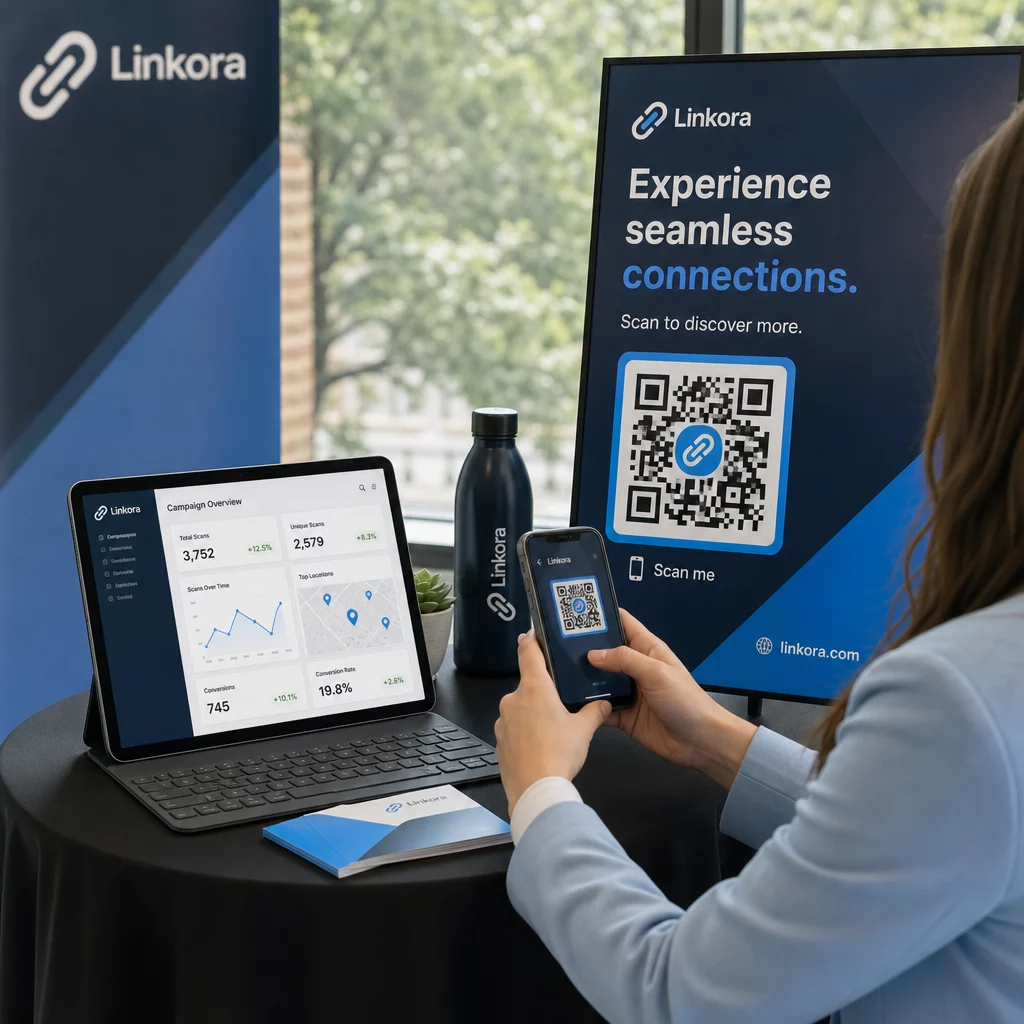
Come fai a sapere se la tua campagna QR basata sulla posizione sta effettivamente funzionando? Senza le metriche giuste, stai spendendo soldi in materiali stampati senza alcun modo per dimostrarne l'impatto. Questa guida analizza le sette metriche che ti danno un quadro chiaro e basato sui dati delle prestazioni della campagna – dalla prima scansione alla conversione finale.
Cosa rende misurabili le campagne QR basate sulla posizione
Le campagne con codici QR basati sulla posizione collegano posizionamenti offline – poster, imballaggi, display in-store, materiali per eventi – a esperienze digitali. A differenza del traffico del sito web, queste interazioni iniziano nel mondo fisico, il che crea una sfida di attribuzione: come si collega una scansione ad Austin a un acquisto sulla tua piattaforma di e-commerce?
La risposta è i codici QR dinamici. A differenza dei codici statici, i codici QR dinamici instradano le scansioni attraverso un server di reindirizzamento che registra i dati prima di inviare l'utente alla destinazione. Questo passaggio intermedio è ciò che rende possibile il tracciamento. Puoi catturare quando, dove e come è avvenuta una scansione – e aggiornare l'URL di destinazione senza ristampare un singolo materiale.
Tracciamento del codice QR funziona assegnando a ogni codice un link di reindirizzamento unico legato alla tua campagna. Ogni scansione genera un evento dati che la tua piattaforma di analisi registra. Abbina questo ai parametri UTM incorporati nell'URL di destinazione e potrai inviare i dati di scansione direttamente a Google Analytics 4, al tuo CRM o a uno strumento di automazione del marketing.
Con queste basi, ecco le sette metriche che vale la pena monitorare.
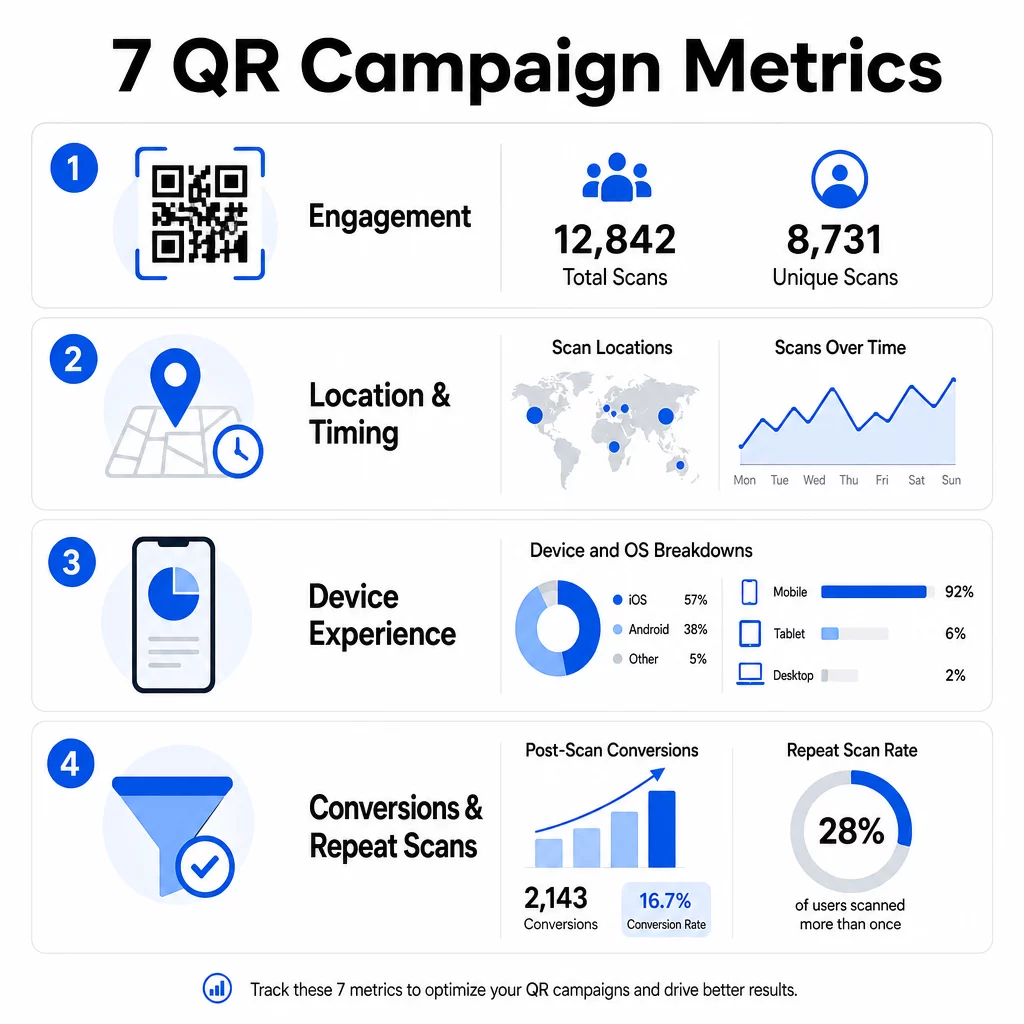
1. Scansioni Totali
Le scansioni totali contano ogni interazione con il tuo codice QR, incluse più scansioni da parte della stessa persona. Questa è la tua metrica di engagement di base – ti dice se il tuo posizionamento è visibile e abbastanza convincente da spingere all'azione.
I tassi di scansione variano significativamente in base al contesto:
- Gli annunci stampati registrano tipicamente tassi di scansione dell'1–3%
- L'imballaggio dei prodotti tende a raggiungere il 2–5%
- I display in-store generano spesso il 5–10%
- I materiali per eventi possono raggiungere il 10–20%
Un picco nelle scansioni totali dopo il lancio di una campagna è un segnale positivo, ma è importante notare che il 70% delle scansioni totali avviene tipicamente entro i primi 30 giorni. Un lancio efficace è importante. Una chiara call-to-action come “Scansiona per il 10% di sconto” genera significativamente più scansioni iniziali rispetto a un codice posizionato senza contesto.
Per il posizionamento, posiziona i codici QR all'altezza degli occhi – circa 4 a 5 piedi di altezza – e assicurati che siano di almeno 1 pollice di dimensione per una scansione affidabile. Le scansioni totali ti danno la portata; le metriche seguenti ti dicono cosa farne.
Monitora le tue campagne QR in tempo reale Vedi il totale delle scansioni, i visitatori unici e le tendenze geografiche in tempo reale. Esplora le funzionalità di analisi e tracciamento dei codici QR per iniziare a misurare ciò che conta.
2. Scansioni Uniche
Le scansioni uniche filtrano le interazioni ripetute, contando solo dispositivi o utenti distinti. Il divario tra scansioni totali e uniche è uno dei rapporti più informativi nelle tue analisi.
Se hai 10.000 scansioni totali e 8.000 scansioni uniche, il 20% delle tue interazioni sono visite di ritorno. Se questo sia un bene o un male dipende dal tuo obiettivo. Per un programma fedeltà o un menu digitale, le scansioni ripetute sono il punto. Per una campagna di sensibilizzazione progettata per raggiungere nuove persone, un basso numero di scansioni uniche segnala che non stai espandendo il tuo pubblico.
I codici QR dinamici sono necessari per il tracciamento delle scansioni uniche. Le piattaforme utilizzano identificatori a livello di dispositivo o segnali basati su IP per distinguere i singoli utenti mantenendo i dati anonimi. Questa distinzione è importante anche a livello operativo: se stai sincronizzando i dati delle scansioni con un CRM, le scansioni uniche prevengono record duplicati e conteggi gonfiati di lead.
Un segnale pratico: gli utenti che scansionano lo stesso codice due volte entro 48 ore spesso mostrano una maggiore intenzione di acquisto, rendendoli un segmento utile per il targeting di follow-up o il lead scoring.
3. Posizioni delle Scansioni
I dati geografici delle scansioni ti mostrano esattamente dove vengono acceduti i tuoi codici, tipicamente a livello di città. È qui che le campagne basate sulla posizione guadagnano il loro nome – e dove le decisioni di budget diventano molto più facili da giustificare.
La maggior parte delle dashboard di analisi QR visualizza i dati sulla posizione come mappe di calore o suddivisioni a livello di città, permettendoti di identificare quali posizionamenti stanno generando risultati e quali regioni stanno sottoperformando rispetto all'investimento. Per una campagna nazionale con distribuzione uniforme, i dati sulla posizione spesso rivelano una sorprendente concentrazione. Una campagna di volantini in più stati potrebbe generare 500 scansioni in una città di medie dimensioni e meno di 100 nei mercati principali – un'intuizione che sarebbe invisibile senza il tracciamento della posizione.
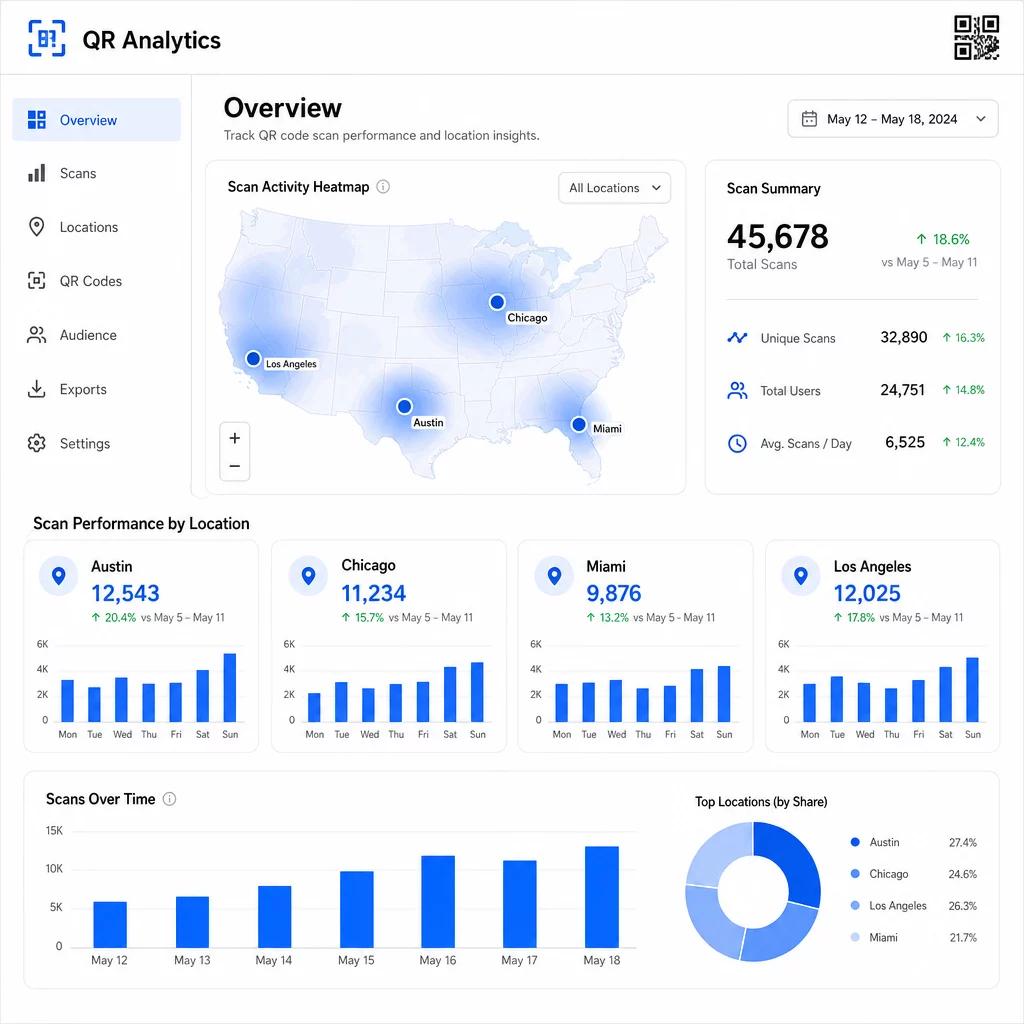
Assegnare codici QR unici a ogni posizionamento è il modo più affidabile per isolare le prestazioni della posizione. Un singolo codice in più posizioni ti fornisce dati aggregati; i codici unici ti danno un confronto diretto.
I dati sulla posizione consentono anche la personalizzazione. Codici QR geotargetizzati possono reindirizzare gli utenti a diverse landing page in base alla loro posizione di scansione – una catena di supermercati, ad esempio, può promuovere bevande calde nelle regioni più fredde e bevande fredde dove le temperature sono più alte, senza stampare materiali separati.
Una nota sulla privacy: Sotto il California Consumer Privacy Act, i dati di geolocalizzazione precisi – definiti come posizione entro un raggio di circa 1.850 piedi – sono classificati come informazioni personali sensibili. Il tracciamento basato su IP a livello di città rientra tipicamente al di fuori di tale soglia, ma il tracciamento basato su GPS richiede il consenso esplicito dell'utente. Rivedi le pratiche sui dati della tua piattaforma e ottieni il consenso appropriato prima di raccogliere dati di localizzazione granulari.
4. Scansioni nel tempo
I dati di temporizzazione rivelano schemi su come il tuo pubblico si impegna – e quando. L'analisi del volume di scansioni per ora, giorno e settimana ti aiuta a capire non solo quante persone stanno scansionando, ma anche quando sono più propense ad agire.
I modelli generali variano in base al tipo di campagna:
- Le campagne B2B tendono a raggiungere il picco dal martedì al giovedì, tra le 12:00 e le 14:00
- Le campagne B2C registrano tipicamente la maggiore attività dal venerdì alla domenica, tra le 18:00 e le 20:00
Ma le condizioni locali contano più dei benchmark generali. Un display in una caffetteria potrebbe registrare picchi alle 8:00; un codice QR in una sede di eventi potrebbe raggiungere il picco nei 30 minuti prima dell'apertura delle porte. Il monitoraggio della velocità di scansione – il tasso di scansioni per ora – ti aiuta a individuare questi schemi e a cogliere i primi segnali di declino della campagna, quando l'interesse inizia a diminuire dopo il periodo di lancio iniziale.
I dati di temporizzazione diventano utilizzabili quando li combini con il controllo dei contenuti. Codici QR dinamici ti consentono di aggiornare gli URL di destinazione in tempo reale, in modo da poter eseguire vendite flash o promozioni a tempo che si allineano con le finestre di massimo coinvolgimento senza ristampare materiali. La programmazione di push sui social o via email poco prima delle ore di punta di scansione può amplificare l'effetto.
Per i posizionamenti in corso, rivedi i dati di temporizzazione mensilmente. Per le campagne attive, le revisioni settimanali sono spesso sufficienti per cogliere cambiamenti significativi.
5. Ripartizioni per dispositivo e sistema operativo
I dati sui dispositivi ti dicono cosa sta usando il tuo pubblico per scansionare – e se la tua landing page funziona effettivamente per loro. Entro il 2025, i dispositivi mobili rappresenteranno circa il 96% di tutte le scansioni di codici QR, con iOS e Android che si divideranno la maggior parte di quel traffico.
Questa ripartizione ha implicazioni tecniche dirette. Una landing page che si carica correttamente su Safari/iOS potrebbe comportarsi diversamente su Chrome/Android, in particolare se include video, elementi di modulo o prompt di download di app. I dati sui dispositivi ti consentono di individuare questi problemi prima che ti costino conversioni.
Un esempio pratico: una campagna che promuove un'app mobile potrebbe indirizzare gli utenti iOS direttamente all'Apple App Store e gli utenti Android a Google Play. Questo tipo di routing intelligente – basato sul tipo di dispositivo rilevato – elimina l'attrito e migliora i tassi di installazione. Il dashboard di analisi di Pageloot mostra le ripartizioni per dispositivo e sistema operativo insieme ai dati di scansione, in modo da poter effettuare queste ottimizzazioni senza congetture.
Da notare anche: il 78% degli utenti ora scansiona i codici QR utilizzando l'app fotocamera nativa del proprio telefono anziché uno scanner dedicato. I tuoi contenuti devono funzionare senza problemi con le app fotocamera integrate su tutte le piattaforme, non solo con le app di terze parti.
Se noti tassi di rimbalzo elevati da un tipo di dispositivo specifico, cerca prima problemi di prestazioni – immagini grandi, video non ottimizzati o moduli che non vengono visualizzati correttamente su determinate dimensioni dello schermo sono i colpevoli comuni.
6. Conversioni Post-Scansione
Le conversioni post-scansione sono il punto in cui l'engagement si trasforma in entrate. Ogni metrica precedente a questa misura l'attenzione; questa misura i risultati – acquisti, iscrizioni, download di app o qualsiasi azione la tua campagna sia progettata per promuovere.
Benchmark di conversione comuni per tipo di azione:
- Follower social: 20–30%
- Iscrizioni email: 15–25%
- Download di app: 10–15%
- Acquisti: 2–5%
Se i tuoi numeri scendono significativamente al di sotto di questi intervalli, il problema è solitamente nell'esperienza post-scansione: una pagina a caricamento lento, un modulo eccessivamente complesso o una destinazione che non corrisponde a quanto promesso dal codice QR.
Impostazione del tracciamento delle conversioni richiede due cose che lavorano insieme. Innanzitutto, aggiungi i parametri UTM ai tuoi URL di destinazione – ad esempio, `utmsource=storedisplay&utmmedium=qrcode&utmcampaign=springpromo` – in modo che Google Analytics 4 possa attribuire il traffico alla tua campagna QR. In secondo luogo, configura il tracciamento degli eventi di GA4 per registrare le azioni specifiche che ti interessano: clic sui pulsanti, invii di moduli, completamenti di video o acquisti. Il guida ai parametri UTM per i codici QR illustra questa configurazione in dettaglio.
Per un'attribuzione più approfondita, collega i dati di scansione del tuo QR a un CRM o a una piattaforma di automazione del marketing. Questo ti consente di inviare follow-up personalizzati basati sul comportamento di scansione e di tracciare le conversioni tra le sessioni, non solo nella finestra immediata post-scansione.
Calcolo del ROI una volta che si hanno i dati di conversione è semplice: sottrai i costi totali della campagna (design, stampa, commissioni della piattaforma) dai ricavi generati, dividi per i costi e moltiplica per 100. Una campagna che costa $500 e genera $2.000 in vendite restituisce il 300%.
Collega le Scansioni QR alle Conversioni Successive Usa Tracciamento del codice QR con parametri UTM per collegare ogni scansione a una campagna e misurare cosa succede dopo la scansione.
7. Tasso di Scansione Ripetuta
Il tasso di scansione ripetuta misura la frequenza con cui gli utenti tornano a scansionare un codice dopo la loro prima interazione. È un segnale del valore del contenuto – se gli utenti tornano, l'esperienza sta offrendo qualcosa per cui vale la pena tornare.
Il tasso di scansione ripetuta giusto dipende interamente da ciò che stai gestendo. Programmi fedeltà, menu digitali e manuali di prodotto sono progettati per interazioni ripetute. Le campagne di sensibilizzazione e le promozioni una tantum mirano tipicamente a una vasta portata unica piuttosto che a un coinvolgimento ripetuto. Confrontare il tuo tasso di ripetizione con il tipo di campagna ti dice se il comportamento è previsto o un segno di un problema.
| Tasso di Scansione Ripetuta | Cosa Segnala | Azione Suggerita |
|---|---|---|
| Alto | Il contenuto è prezioso; gli utenti tornano intenzionalmente | Espandi a posizioni simili; aggiungi premi fedeltà; retargetizza gli utenti coinvolti |
| Basso | Il contenuto suscita interesse una tantum ma manca di attrattiva per il follow-up | Migliora il contenuto della landing page; semplifica il percorso dell'utente; testa nuove CTA |
| Totale alto / unico basso | Pubblico piccolo ma molto coinvolto | Concentrati sulla costruzione di un pubblico di nicchia; offri offerte personalizzate agli utenti migliori |
Cerca anomalie: scansioni ripetute estremamente rapide – più accessi in pochi secondi – potrebbero indicare attività di bot piuttosto che un comportamento utente genuino. Se il tuo tasso di ripetizione è alto ma le conversioni sono basse, il contenuto è coinvolgente ma il percorso di conversione presenta attriti.
Abbina i timestamp delle scansioni ripetute ai tuoi dati di temporizzazione per identificare i tuoi utenti più coinvolti. Qualcuno che scansiona due volte entro 48 ore sta esprimendo una forte intenzione – un utile trigger per un follow-up basato su CRM o un contatto personalizzato.
Confronto delle prestazioni tra le località
Uno degli usi più pratici dell'analisi dei QR è un confronto affiancato dei posizionamenti. Assegnando codici unici a ciascuna località, puoi attribuire direttamente le prestazioni – non solo indovinare quale vetrina o città sta funzionando.
Ecco un esempio di come potrebbe apparire quel confronto:
| Posizione Scansione | SCANSIONI TOTALI | Scansioni Uniche | Tasso di Conversione | Azione Suggerita |
|---|---|---|---|---|
| Austin, TX | 500 | 420 | 12% | Aumentare la spesa pubblicitaria locale; rafforzare l'offerta attuale |
| Chicago, IL | 95 | 80 | 3% | Rivalutare il posizionamento; testare una CTA più forte |
| Miami, FL | 88 | 75 | 2.5% | Spostare il budget verso regioni con prestazioni migliori |
| Los Angeles, CA | 450 | 390 | 10% | Mantenere la strategia; usare come punto di riferimento per altri mercati urbani |
Un alto volume di scansioni con basse conversioni spesso indica un problema nell'esperienza post-scansione. Scansioni basse in aree ad alto traffico di solito indicano un problema di visibilità o posizionamento – prova a ingrandire il codice, riposizionarlo all'altezza degli occhi o rendere la CTA più prominente.
Esaminare regolarmente questo confronto trasforma i numeri grezzi in decisioni di budget. Per uno sguardo più approfondito su come leggere le tendenze di scansione geografiche, il Guida alla dashboard di analisi dei codici QR copre la configurazione e l'interpretazione in dettaglio.
Mettere tutto insieme
Il monitoraggio di queste sette metriche trasforma le campagne QR basate sulla posizione da una tattica di stampa e speranza in un sistema misurabile e ottimizzabile. Le scansioni totali e uniche ti informano sulla portata. I dati sulla posizione e sull'orario ti dicono dove e quando concentrarti. Le ripartizioni dei dispositivi assicurano che il tuo contenuto funzioni effettivamente. Le conversioni collegano le scansioni alle entrate. E il tasso di scansione ripetuta ti dice se gli utenti trovano abbastanza valore per tornare.
La base di tutto questo è l'utilizzo di codici QR dinamici – senza di essi, la maggior parte di queste metriche semplicemente non sono disponibili. Le campagne che monitorano questi dati in modo coerente possono identificare più rapidamente i posizionamenti ad alte prestazioni, correggere quelli con prestazioni insufficienti prima che sprechino budget e costruire un quadro più chiaro del ROI offline rispetto a quanto consentito dalla maggior parte dei canali media tradizionali.
Inizia a monitorare la tua campagna basata sulla posizione Crea codici QR dinamici, monitora i dati di scansione in tempo reale e confronta le prestazioni per posizione – tutto da un'unica dashboard. Prova il Generatore di QR code dinamici gratis per 14 giorni.
Domande frequenti
Le scansioni totali contano ogni interazione con il tuo codice QR, incluse più scansioni della stessa persona. Le scansioni uniche contano solo dispositivi o utenti distinti, fornendoti un quadro più chiaro di quante persone individuali hanno interagito con la tua campagna. Il divario tra i due ti dice quanto coinvolgimento ripetuto stai generando.
Sì. I codici QR statici incorporano un URL fisso e non generano dati analitici. I codici QR dinamici instradano le scansioni attraverso un server di reindirizzamento che registra l'ora della scansione, la posizione, il tipo di dispositivo e altri metadati. Senza codici dinamici, metriche come scansioni uniche, dati sulla posizione e tempistica delle scansioni non sono disponibili.
Aggiungi parametri UTM al tuo URL di destinazione – ad esempio, `utmsource=storedisplay&utmmedium=qrcode&utmcampaign=campaignname` – in modo che GA4 possa attribuire il traffico in entrata al tuo codice QR. Quindi configura il tracciamento degli eventi di GA4 per registrare le azioni specifiche che desideri misurare, come l'invio di moduli o gli acquisti. I codici QR dinamici rendono tutto questo più semplice perché puoi aggiornare o correggere i parametri UTM senza ristampare i tuoi materiali.