Kako znate da li vaša QR kampanja zasnovana na lokaciji zaista funkcioniše? Bez pravih metrika, trošite novac na štampane materijale bez načina da dokažete njihov uticaj. Ovaj vodič objašnjava sedam metrika koje vam daju jasnu, podacima vođenu sliku performansi kampanje – od prvog skeniranja do konačne konverzije.
Šta čini QR kampanje zasnovane na lokaciji merljivim
QR kampanje zasnovane na lokaciji povezuju oflajn plasmane – postere, ambalažu, izložbene prostore u prodavnicama, materijale za događaje – sa digitalnim iskustvima. Za razliku od saobraćaja na veb-sajtu, ove interakcije počinju u fizičkom svetu, što stvara izazov atribucije: kako povezati skeniranje u Ostinu sa kupovinom na vašoj platformi za e-trgovinu?
Odgovor je dinamički QR kodovi. Za razliku od statičkih kodova, dinamički QR kodovi usmeravaju skeniranja kroz server za preusmeravanje koji beleži podatke pre nego što pošalje korisnika na odredište. Ovaj međukorak je ono što omogućava praćenje. Možete zabeležiti kada, gde i kako se skeniranje dogodilo – i ažurirati odredišni URL bez ponovnog štampanja ijednog materijala.
Праћење КР кода funkcioniše tako što svakom kodu dodeljuje jedinstveni link za preusmeravanje povezan sa vašom kampanjom. Svako skeniranje generiše događaj podataka koji vaša analitička platforma beleži. Uparite to sa UTM parametrima ugrađenim u odredišni URL i možete direktno preneti podatke o skeniranju u Google Analytics 4, vaš CRM ili alat za automatizaciju marketinga.
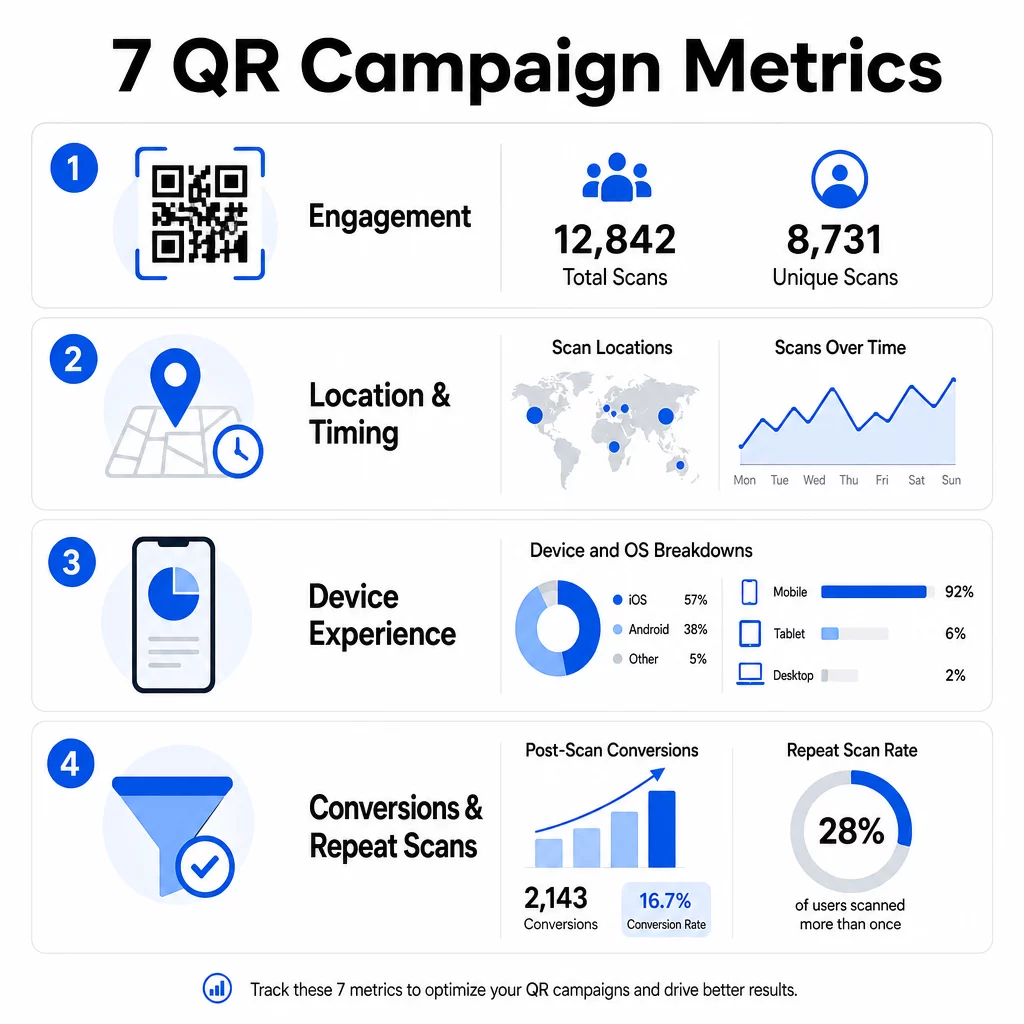
Sa tim temeljima, evo sedam metrika koje vredi pratiti.
1. Ukupan broj skeniranja
Ukupan broj skeniranja broji svaku interakciju sa vašim QR kodom, uključujući višestruka skeniranja iste osobe. Ovo je vaša osnovna metrika angažovanja – govori vam da li je vaš plasman dovoljno vidljiv i privlačan da podstakne akciju.
Stope skeniranja značajno variraju u zavisnosti od konteksta:
- Štampani oglasi obično beleže stope skeniranja od 1–3%
- Ambalaža proizvoda obično postiže 2–5%
- Izložbeni prostori u prodavnicama često generišu 5–10%
- Materijali za događaje mogu dostići 10–20%
Skok u ukupnom broju skeniranja nakon pokretanja kampanje je pozitivan signal, ali vredi napomenuti da se 70% ukupnih skeniranja obično dešava u prvih 30 dana. Snažno lansiranje je važno. Jasan poziv na akciju poput “Skenirajte za 10% popusta” generiše značajno više ranih skeniranja nego kod postavljen bez konteksta.
Za plasman, postavite QR kodove u visini očiju – otprilike 4 do 5 stopa visine – i osigurajte da su veličine najmanje 1 inč za pouzdano skeniranje. Ukupan broj skeniranja vam daje doseg; metrike ispod vam govore šta da radite sa tim.
Pratite svoje QR kampanje u realnom vremenu Pogledajte ukupan broj skeniranja, jedinstvene posetioce i geografske trendove kako se dešavaju. Istražite funkcije analitike i praćenja QR kodova da počnete da merite ono što je važno.
2. Jedinstvena skeniranja
Jedinstvena skeniranja filtriraju ponovljene interakcije, brojeći samo različite uređaje ili korisnike. Razlika između ukupnog i jedinstvenog broja skeniranja je jedan od najinformativnijih odnosa u vašoj analitici.
Ako imate 10.000 ukupnih skeniranja i 8.000 jedinstvenih skeniranja, 20% vaših interakcija su ponovne posete. Da li je to dobro ili loše zavisi od vašeg cilja. Za program lojalnosti ili digitalni meni, ponovljena skeniranja su suština. Za kampanju podizanja svesti osmišljenu da dopre do novih ljudi, mali broj jedinstvenih skeniranja signalizira da ne proširujete svoju publiku.
Dinamički QR kodovi su potrebni za praćenje jedinstvenih skeniranja. Platforme koriste identifikatore na nivou uređaja ili signale zasnovane na IP adresi kako bi razlikovale pojedinačne korisnike, istovremeno čuvajući podatke anonimnim. Ova razlika je takođe važna operativno – ako sinhronizujete podatke o skeniranju sa CRM-om, jedinstvena skeniranja sprečavaju duplirane zapise i naduvane brojeve potencijalnih klijenata.
Praktičan signal: korisnici koji skeniraju isti kod dva puta u roku od 48 sati često pokazuju veću nameru kupovine, što ih čini korisnim segmentom za naknadno ciljanje ili bodovanje potencijalnih klijenata.
3. Lokacije skeniranja
Geografski podaci o skeniranju pokazuju vam tačno gde se pristupaju vašim kodovima, obično do nivoa grada. Ovde kampanje zasnovane na lokaciji dobijaju svoje ime – i gde odluke o budžetu postaju mnogo lakše za opravdavanje.
Većina analitičkih kontrolnih tabli za QR kodove prikazuje podatke o lokaciji kao toplotne mape ili raščlane po gradovima, omogućavajući vam da identifikujete koja mesta donose rezultate, a koji regioni su ispod očekivanja u odnosu na investiciju. Za nacionalnu kampanju sa ravnomernom distribucijom, podaci o lokaciji često otkrivaju iznenađujuću koncentraciju. Kampanja letaka širom više država može generisati 500 skeniranja u jednom srednje velikom gradu i manje od 100 na velikim tržištima – uvid koji bi bio nevidljiv bez praćenja lokacije.
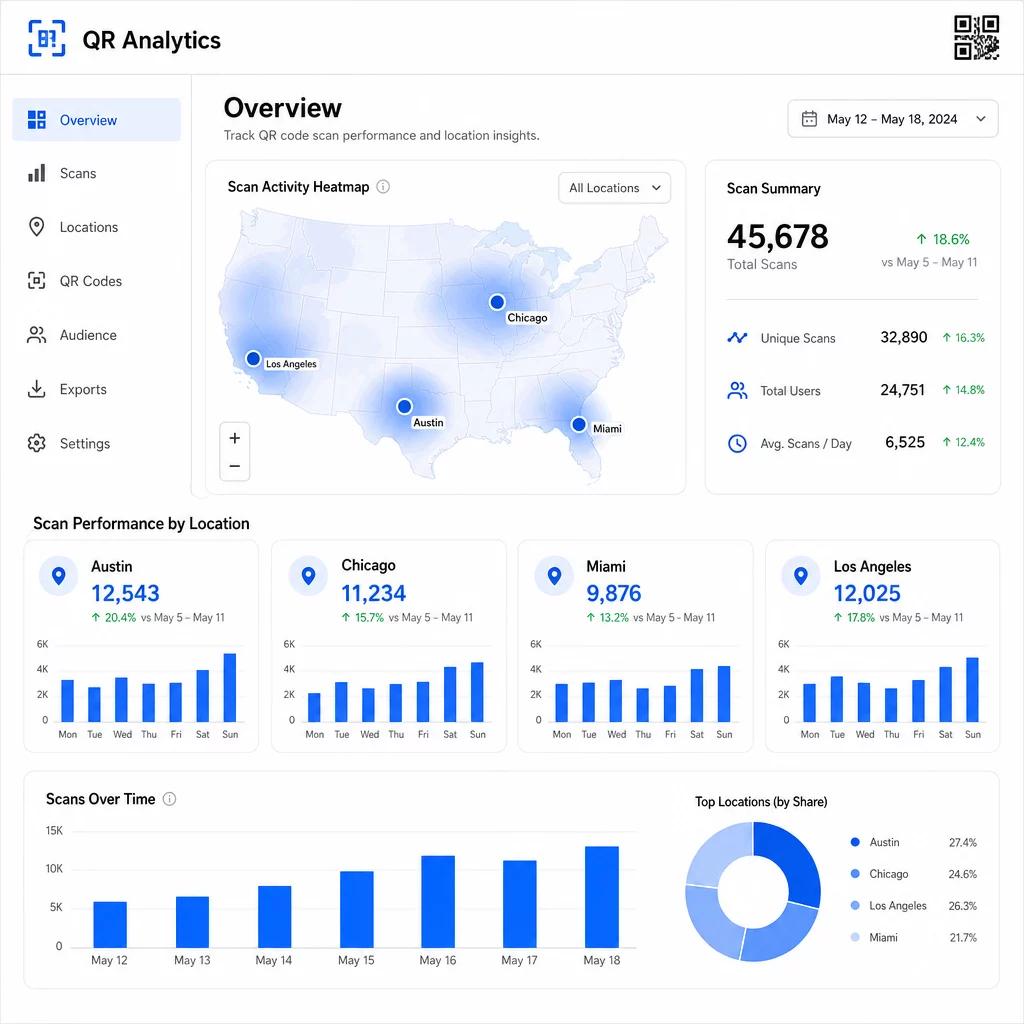
Dodela jedinstvenih QR kodova svakom mestu je najpouzdaniji način da se izoluje učinak lokacije. Jedan kod na više lokacija daje vam agregirane podatke; jedinstveni kodovi vam daju direktno poređenje.
Podaci o lokaciji takođe omogućavaju personalizaciju. Geotargetirani QR kodovi mogu preusmeriti korisnike na različite odredišne stranice na osnovu njihove lokacije skeniranja – lanac supermarketa, na primer, može promovisati tople napitke u hladnijim regionima i hladna pića tamo gde su temperature više, bez štampanja posebnih materijala.
Napomena o privatnosti: Prema Kalifornijskom zakonu o privatnosti potrošača, precizni podaci o geolokaciji – definisani kao lokacija unutar približno 1.850 stopa radijusa – klasifikovani su kao osetljivi lični podaci. Praćenje zasnovano na IP adresi na nivou grada obično spada izvan tog praga, ali praćenje zasnovano na GPS-u zahteva izričitu saglasnost korisnika. Pregledajte prakse prikupljanja podataka vaše platforme i pribavite odgovarajuću saglasnost pre prikupljanja detaljnih podataka o lokaciji.
4. Skeniranja tokom vremena
Podaci o vremenu otkrivaju obrasce u tome kako se vaša publika angažuje – i kada. Gledanje obima skeniranja po satu, danu i nedelji pomaže vam da razumete ne samo koliko ljudi skenira, već i kada su najverovatnije da će delovati.
Opšti obrasci variraju u zavisnosti od tipa kampanje:
- B2B kampanje obično dostižu vrhunac od utorka do četvrtka, između 12:00 i 14:00 časova
- B2C kampanje obično beleže najviše aktivnosti od petka do nedelje, između 18:00 i 20:00 časova
Ali lokalni uslovi su važniji od opštih merila. Izlog kafića može zabeležiti skokove u 8:00 ujutru; QR kod na mestu događaja može dostići vrhunac 30 minuta pre otvaranja vrata. Praćenje brzine skeniranja – stope skeniranja po satu – pomaže vam da uočite ove obrasce i uhvatite rane znakove opadanja kampanje, kada interesovanje počinje da opada nakon početnog perioda lansiranja.
Podaci o vremenu postaju primenljivi kada ih kombinujete sa kontrolom sadržaja. Динамички КР кодови omogućavaju vam da ažurirate odredišne URL adrese u realnom vremenu, tako da možete pokrenuti brze rasprodaje ili vremenski ograničene promocije koje se poklapaju sa periodima najvećeg angažovanja bez ponovnog štampanja materijala. Zakazivanje objava na društvenim mrežama ili slanje e-pošte neposredno pre vaših sati najvećeg skeniranja može pojačati efekat.
Za stalna postavljanja, pregledajte podatke o vremenu mesečno. Za aktivne kampanje, nedeljni pregledi su često dovoljni da se uhvate značajne promene.
5. Podaci o uređajima i operativnim sistemima
Podaci o uređajima govore vam šta vaša publika koristi za skeniranje – i da li vaša odredišna stranica zaista radi za njih. Do 2025. godine, mobilni uređaji čine približno 96% svih skeniranja QR kodova, pri čemu iOS i Android dele većinu tog saobraćaja.
Ova podela ima direktne tehničke implikacije. Odredišna stranica koja se čisto učitava na Safari/iOS-u može se ponašati drugačije na Chrome/Android-u, posebno ako uključuje video, elemente forme ili pozive za preuzimanje aplikacija. Podaci o uređajima vam omogućavaju da uhvatite ove probleme pre nego što vas koštaju konverzija.
Praktičan primer: kampanja koja promoviše mobilnu aplikaciju može usmeriti korisnike iOS-a direktno na Apple App Store, a korisnike Android-a na Google Play. Takvo pametno rutiranje – zasnovano na detektovanom tipu uređaja – uklanja trenje i poboljšava stope instalacije. Pageloot-ova analitička kontrolna tabla prikazuje podatke o uređajima i operativnim sistemima zajedno sa podacima o skeniranju, tako da možete izvršiti ove optimizacije bez nagađanja.
Takođe vredi napomenuti: 78% korisnika sada skenira QR kodove koristeći izvornu aplikaciju kamere svog telefona, a ne namenski skener. Vaš sadržaj mora besprekorno raditi sa ugrađenim aplikacijama kamere na svim platformama, a ne samo sa aplikacijama trećih strana.
Ako primetite visoke stope napuštanja stranice sa određenog tipa uređaja, prvo potražite probleme sa performansama – velike slike, neoptimizovani video snimci ili obrasci koji se ne prikazuju ispravno na određenim veličinama ekrana su česti krivci.
6. Konverzije nakon skeniranja
Konverzije nakon skeniranja su mesto gde angažovanje postaje prihod. Svaka metrika pre ove meri pažnju; ova meri ishode – kupovine, prijave, preuzimanja aplikacija ili bilo koju radnju koju vaša kampanja treba da podstakne.
Uobičajeni reperi konverzije po tipu akcije:
- Praćenja na društvenim mrežama: 20–30%
- Prijave za e-poštu: 15–25%
- Preuzimanja aplikacija: 10–15%
- Kupovine: 2–5%
Ako vaši brojevi značajno padaju ispod ovih raspona, problem je obično u iskustvu nakon skeniranja: stranica koja se sporo učitava, previše složen obrazac ili odredište koje se ne podudara sa onim što je QR kod obećao.
Podešavanje praćenja konverzija zahteva dve stvari koje rade zajedno. Prvo, dodajte UTM parametre svojim odredišnim URL-ovima – na primer, `utmsource=prodavnicadisplay&utmmedium=qrkod&utmcampaign=springpromo` – tako da Google Analytics 4 može pripisati saobraćaj vašoj QR kampanji. Drugo, konfigurišite GA4 praćenje događaja da biste zabeležili specifične radnje do kojih vam je stalo: klikove na dugmad, slanja obrazaca, završetke video snimaka ili kupovine. The vodič za UTM parametre za QR kodove detaljno objašnjava ovo podešavanje.
Za dublje pripisivanje, povežite podatke o skeniranju QR koda sa CRM-om ili platformom za automatizaciju marketinga. Ovo vam omogućava da šaljete personalizovane naknadne poruke na osnovu ponašanja pri skeniranju i pratite konverzije kroz sesije, a ne samo u neposrednom prozoru nakon skeniranja.
Izračunavanje ROI-a kada imate podatke o konverzijama je jednostavno: od prihoda oduzmite ukupne troškove kampanje (dizajn, štampa, naknade za platformu), podelite sa troškovima i pomnožite sa 100. Kampanja koja košta $500 i generiše $2,000 u prodaji vraća 300%.
Povežite skeniranja QR kodova sa naknadnim konverzijama Користите Праћење КР кода sa UTM parametrima kako biste svako skeniranje povezali sa kampanjom i izmerili šta se dešava nakon skeniranja.
7. Stopa ponovnog skeniranja
Stopa ponovnog skeniranja meri koliko često se korisnici vraćaju da skeniraju kod nakon prve interakcije. To je signal vrednosti sadržaja – ako se korisnici vraćaju, iskustvo pruža nešto zbog čega se vredi vratiti.
Prava stopa ponovnog skeniranja u potpunosti zavisi od toga šta pokrećete. Programi lojalnosti, digitalni meniji i uputstva za proizvode su dizajnirani za ponovnu interakciju. Kampanje za podizanje svesti i jednokratne promocije obično teže širokom jedinstvenom dosegu, a ne ponovnom angažovanju. Upoređivanje vaše stope ponovnog skeniranja sa tipom kampanje govori vam da li je ponašanje očekivano ili znak problema.
| Stopa ponovnog skeniranja | Šta signalizira | Predložena akcija |
|---|---|---|
| Високо | Sadržaj je vredan; korisnici se vraćaju namerno | Proširite na slične lokacije; dodajte nagrade za lojalnost; retargetirajte angažovane korisnike |
| Ниско | Sadržaj izaziva jednokratno interesovanje, ali mu nedostaje privlačnost za nastavak | Poboljšajte sadržaj odredišne stranice; pojednostavite korisničko putovanje; testirajte nove pozive na akciju (CTA) |
| Visok ukupan / nizak jedinstven | Mala, ali visoko angažovana publika | Fokusirajte se na izgradnju nišne publike; ponudite personalizovane ponude najboljim korisnicima |
Pazite na anomalije: izuzetno brza ponovljena skeniranja – više pogodaka u roku od nekoliko sekundi – mogu ukazivati na aktivnost bota, a ne na stvarno ponašanje korisnika. Ako je vaša stopa ponavljanja visoka, ali su konverzije niske, sadržaj je privlačan, ali put konverzije ima trenje.
Uparite vremenske oznake ponovljenih skeniranja sa vašim podacima o vremenu kako biste identifikovali vaše najangažovanije korisnike. Neko ko skenira dva puta u roku od 48 sati izražava snažnu nameru – koristan okidač za praćenje zasnovano na CRM-u ili personalizovani pristup.
Upoređivanje performansi na različitim lokacijama
Jedna od najpraktičnijih upotreba QR analitike je uporedna analiza postavljanja. Dodjeljivanjem jedinstvenih kodova svakoj lokaciji, možete direktno pripisati performanse – a ne samo nagađati koja prodavnica ili grad funkcioniše.
Evo primera kako bi to poređenje moglo izgledati:
| Lokacija skeniranja | UKUPNO SKENIRANJA | Jedinstvena skeniranja | Stopa konverzije | Predložena akcija |
|---|---|---|---|---|
| Ostin, TX | 500 | 420 | 12% | Povećajte lokalnu potrošnju na oglase; pojačajte trenutnu ponudu |
| Čikago, IL | 95 | 80 | 3% | Ponovo procenite postavljanje; testirajte jači poziv na akciju |
| Majami, FL | 88 | 75 | 2.5% | Prebacite budžet na regione sa boljim performansama |
| Los Anđeles, CA | 450 | 390 | 10% | Održavajte strategiju; koristite kao merilo za druga urbana tržišta |
Veliki broj skeniranja sa niskim konverzijama često ukazuje na problem sa iskustvom nakon skeniranja. Mali broj skeniranja u područjima sa velikim prometom obično ukazuje na problem vidljivosti ili postavljanja – pokušajte da uvećate kod, premestite ga u visinu očiju ili učinite poziv na akciju istaknutijim.
Redovno pregledanje ovog poređenja pretvara sirove brojeve u budžetske odluke. Za dublji uvid u to kako čitati geografske trendove skeniranja, the Vodič za kontrolnu tablu analitike QR kodova detaljno pokriva podešavanje i tumačenje.
Sastavljanje svega
Praćenje ovih sedam metrika transformiše QR kampanje zasnovane na lokaciji iz taktike „štampaj i nadaj se“ u merljiv, optimizovan sistem. Ukupna i jedinstvena skeniranja govore vam o dosegu. Podaci o lokaciji i vremenu govore vam gde i kada da se fokusirate. Analiza uređaja osigurava da vaš sadržaj zaista funkcioniše. Konverzije povezuju skeniranja sa prihodima. A stopa ponovnog skeniranja govori vam da li korisnici pronalaze dovoljno vrednosti da se vrate.
Osnova svega ovoga je korišćenje dinamičkih QR kodova – bez njih, većina ovih metrika jednostavno nije dostupna. Kampanje koje dosledno prate ove podatke mogu brže identifikovati visoko-performantne lokacije, popraviti one koje ne rade dobro pre nego što potroše budžet i izgraditi jasniju sliku offline ROI-ja nego što to dozvoljava većina tradicionalnih medijskih kanala.
Započnite praćenje vaše kampanje zasnovane na lokaciji Kreirajte dinamičke QR kodove, pratite podatke o skeniranju u realnom vremenu i uporedite performanse po lokaciji – sve sa jedne kontrolne table. Isprobajte Dinamički QR kod generator besplatno 14 dana.
Često postavljana pitanja
Ukupna skeniranja broje svaku interakciju sa vašim QR kodom, uključujući višestruka skeniranja iste osobe. Jedinstvena skeniranja broje samo različite uređaje ili korisnike, dajući vam jasniju sliku o tome koliko se pojedinačnih ljudi angažovalo u vašoj kampanji. Razlika između ova dva podatka govori vam koliko ponovnog angažovanja generišete.
Da. Statički QR kodovi ugrađuju fiksni URL i ne generišu nikakve analitičke podatke. Dinamički QR kodovi usmeravaju skeniranja preko servera za preusmeravanje koji beleži vreme skeniranja, lokaciju, tip uređaja i druge metapodatke. Bez dinamičkih kodova, metrike poput jedinstvenih skeniranja, podataka o lokaciji i vremena skeniranja nisu dostupne.
Dodajte UTM parametre vašem odredišnom URL-u – na primer, `utmsource=storedisplay&utmmedium=qrcode&utmcampaign=campaignname` – tako da GA4 može pripisati dolazni saobraćaj vašem QR kodu. Zatim konfigurišite GA4 praćenje događaja da biste zabeležili specifične radnje koje želite da merite, kao što su slanje obrazaca ili kupovine. Dinamički QR kodovi ovo olakšavaju jer možete ažurirati ili ispraviti UTM parametre bez ponovnog štampanja materijala.