Want to make your gift cards easier to redeem and harder to ignore? A poorly designed redemption process frustrates customers and leads to unredeemed balances sitting idle. This guide explains how to add QR codes to physical and digital gift cards, what they unlock for your business, and how to set them up correctly.
Why QR Codes Belong on Gift Cards
Gift cards are a significant purchase category. Recent survey data shows that 76% of U.S. consumers purchased a gift card in the past year, with 40% of those purchases being digital. Yet redemption behavior varies widely – consumers spend digital gift cards in an average of 16.8 days, compared to 35.3 days for physical cards. That gap represents real revenue sitting on the shelf.
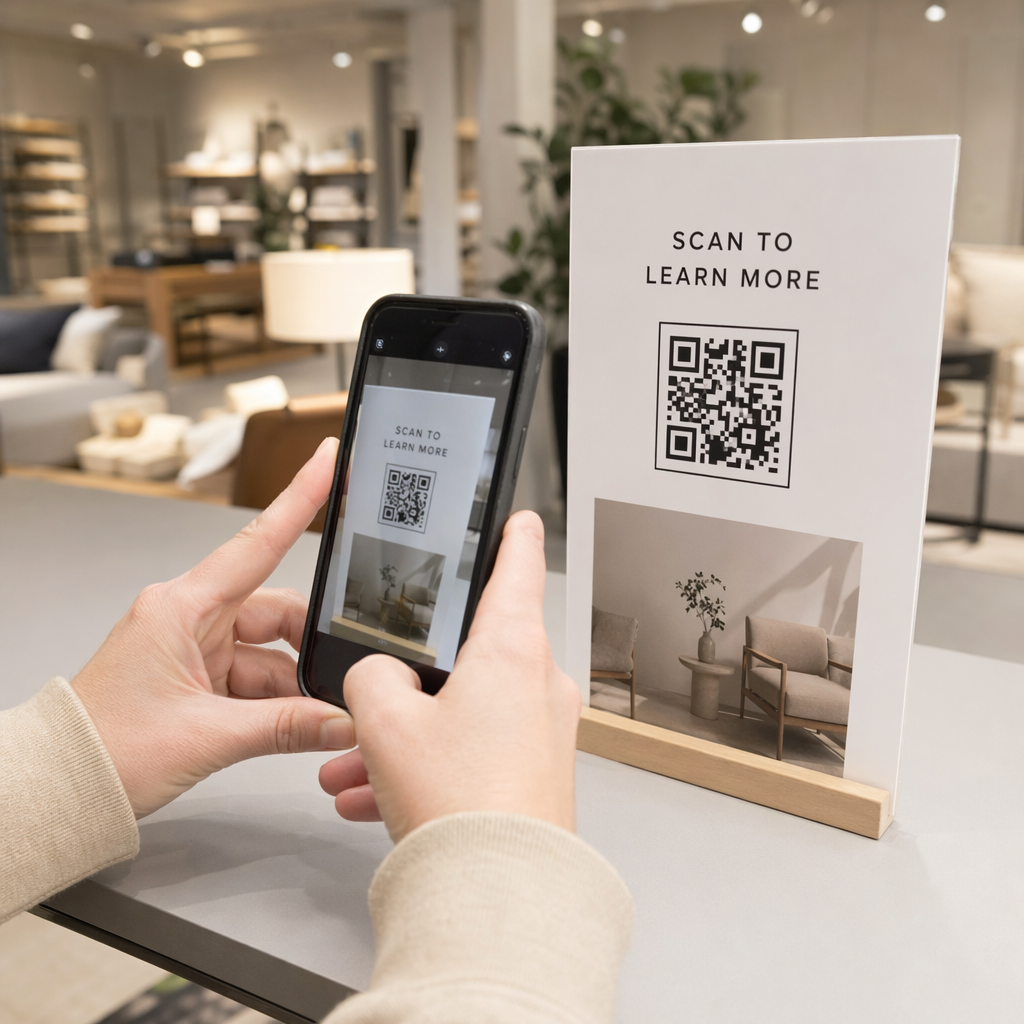
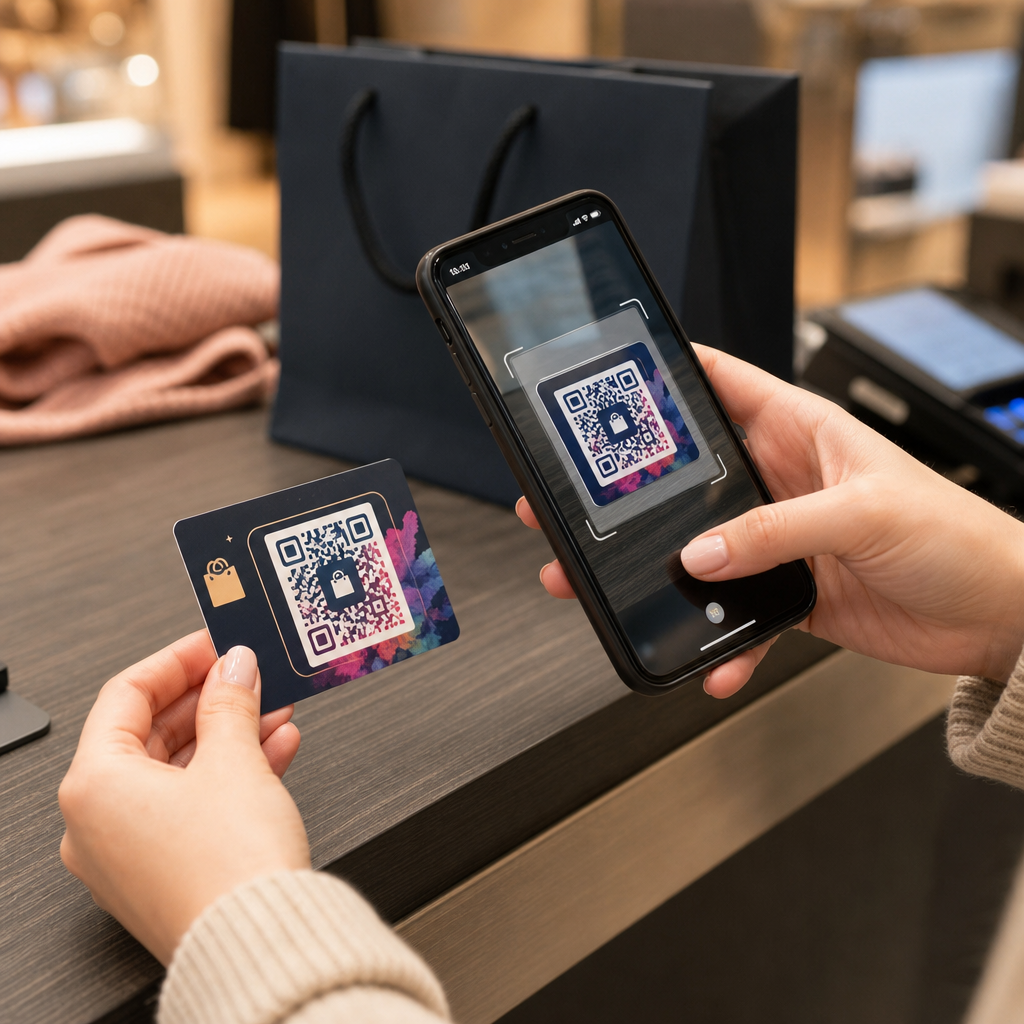
A QR code on a gift card removes friction from the redemption process. Instead of asking a customer to type in a long card number or navigate a multi-step checkout, a single scan takes them directly to a payment page, balance lookup, or online store. That reduction in effort translates directly into faster redemptions and fewer abandoned balances.
Beyond convenience, QR codes give you something traditional gift cards cannot: data. You can track when and where cards are scanned, which card designs perform better, and whether customers complete the redemption after scanning.
Physical Gift Cards: Adding a QR Code That Works
A physical gift card has limited real estate, so every design decision matters. Adding a QR code is straightforward, but a few technical standards determine whether it actually scans reliably in the real world.
Minimum Size and Quiet Zone
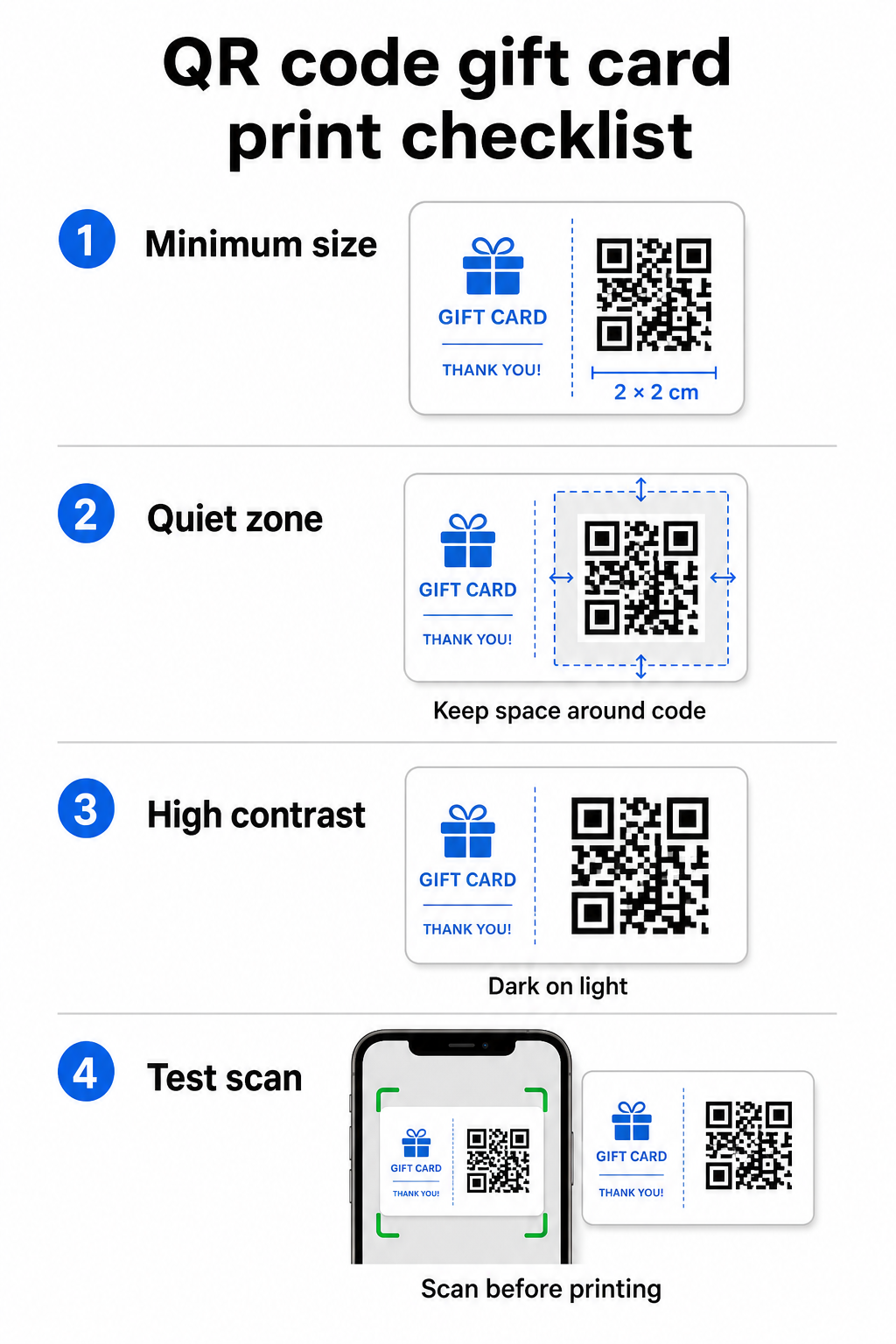
For reliable scanning on printed materials, your QR code should be at least 2 × 2 cm. Around the code itself, leave a blank margin – called the ήσυχη ζώνη – of at least four modules on all sides. If each module in your QR code is 2 mm wide, that means an 8 mm margin all around. Crowding the code with text or design elements in this zone is one of the most common reasons codes fail to scan.
Contrast Requirements
Use a dark foreground color on a light background. The minimum recommended contrast ratio is 4:1, though black on white (21:1) remains the most reliable combination. Avoid reversed color schemes (light pattern on dark background), gradients, and shadows – all of these create inconsistent contrast that confuses camera scanners. For detailed guidance, see βέλτιστες πρακτικές αντίθεσης χρωμάτων κωδικών QR.
Placement on the Card
Place the QR code on the back of the card, away from the magnetic stripe and scratch-off PIN area. The front of the card is for brand recognition; the back is where functional elements like card numbers and QR codes belong. Include a short call-to-action next to the code – such as “Scan to check your balance” or “Scan to redeem online” – so customers understand what happens when they scan.
Use Dynamic QR Codes for Flexibility
If you print physical cards in bulk, a static QR code locks you into a single destination URL. A δυναμικός κωδικός QR lets you update the destination at any time without reprinting the card. This matters when you redesign your redemption portal, run a seasonal promotion, or migrate to a new payment system. You can create and manage dynamic QR codes through Pageloot’s QR code generator, which also gives you scan analytics from a centralized dashboard.
Keep Your Gift Card Campaigns Flexible Need to update where your gift card QR codes point without reprinting thousands of cards? Use the Γεννήτρια Κωδικών QR Συνδέσμων to create dynamic codes that you can redirect anytime, with full scan tracking included.
Digital Gift Cards: QR Codes in Email and Wallet Formats
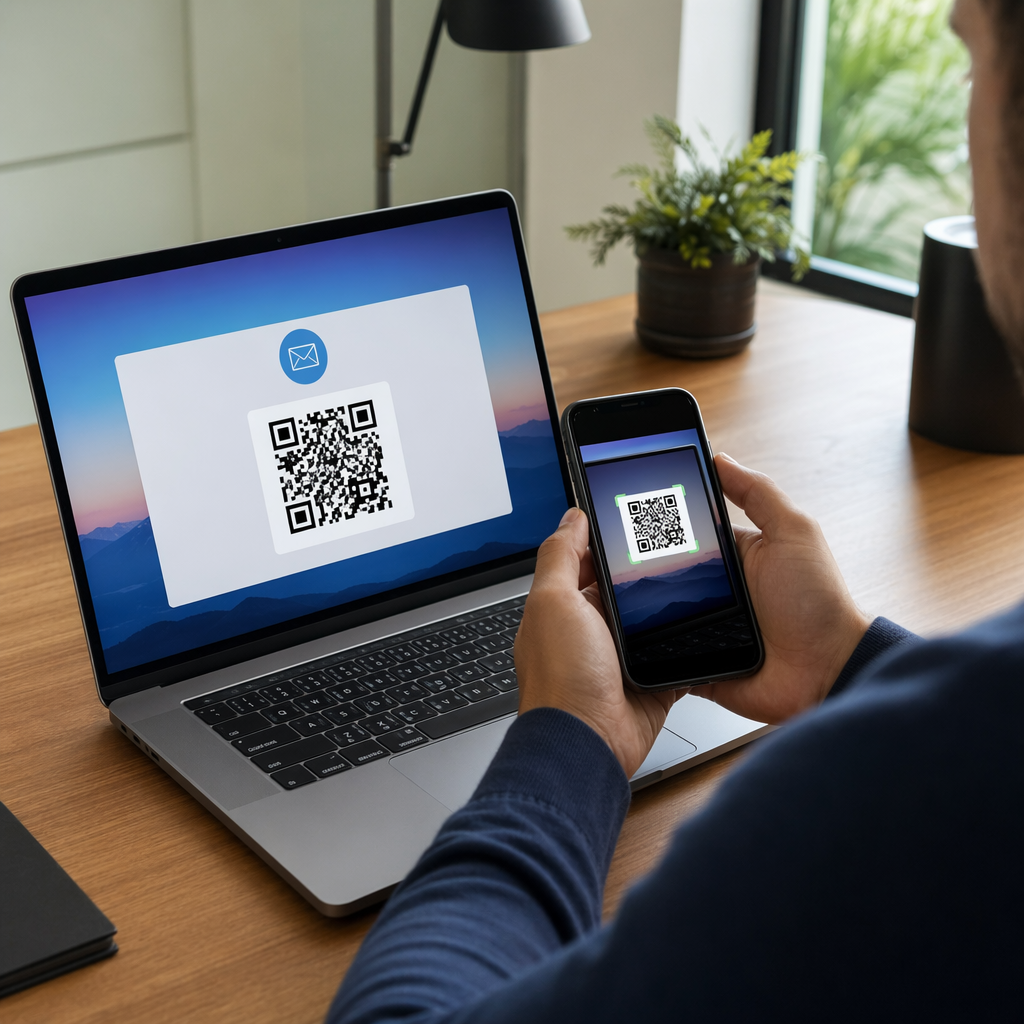
A digital gift card – delivered by email, SMS, or stored in a mobile wallet – can carry a QR code just as effectively as a physical one. In this context, the QR code serves as the redemption mechanism itself.
When a customer receives a digital gift card, the QR code embedded in the email or image file can link directly to a checkout page pre-loaded with the card’s value, a coupon landing page with redemption instructions, or a payment processor like PayPal or Stripe. The customer scans the code at checkout – in-store or online – and the value is applied automatically.
This approach works particularly well for businesses that operate both physical and online stores. A customer who receives a digital gift card by email can walk into your store, open the email, and let the cashier scan the QR code from their phone screen – no card number required.
For the payment flow specifically, Pageloot’s Γεννήτρια κωδικών QR PayPal lets you create a code that links directly to a payment page, making it straightforward to build a scan-to-pay redemption experience into your digital gift card design.
What to Link Your Gift Card QR Code To
The destination you choose determines the customer experience after the scan. Here are the most common and effective options:
| Προορισμός | Καλύτερη περίπτωση χρήσης |
|---|---|
| Online store or checkout page | Full e-commerce redemption; card value applied at checkout |
| Balance lookup page | Lets recipients check remaining value before spending |
| Coupon or offer landing page | Paired promotions alongside the gift card value |
| Payment link (PayPal, Stripe) | Direct payment at physical point of sale |
| Brand welcome page | New customer onboarding; links to loyalty program signup |
If you want to run promotions alongside your gift card program – offering bonus discounts to recipients who scan within a set timeframe, for example – Pageloot’s γεννήτρια κωδικών QR κουπονιών lets you build a landing page that displays multiple offers, tracks which locations collect the most redemptions, and updates those offers without generating a new code.
For a broader look at how QR-based promotions compare to traditional discount methods, see QR codes vs. traditional coupons: which works better.
Tracking Redemptions and Campaign Performance
One of the clearest advantages of using QR codes on gift cards – over traditional card numbers alone – is the layer of analytics they add. With a platform like Pageloot, each scan is logged with a timestamp, device type, and location data. This tells you:
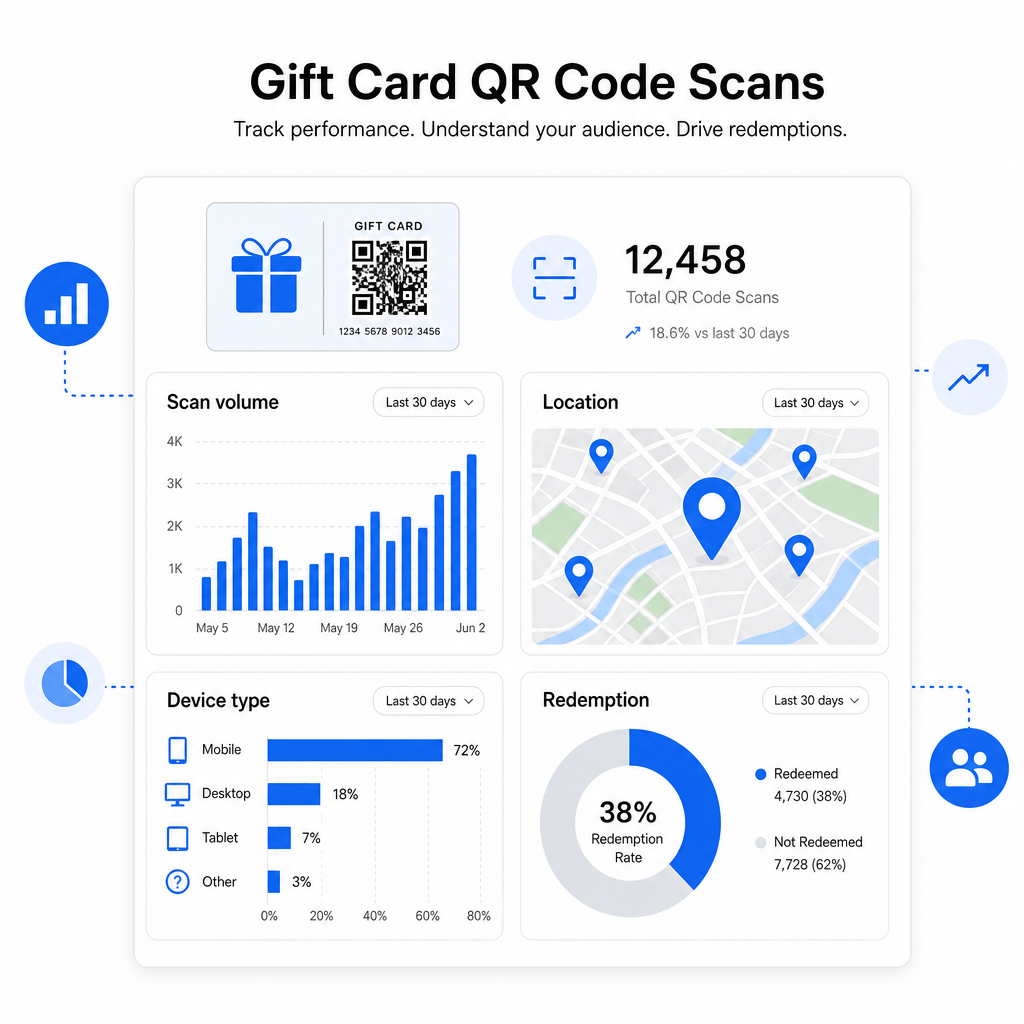
- Which card designs or promotional batches are being scanned most
- Whether customers scan but don’t complete the redemption, indicating a landing page problem
- Geographic distribution of redemptions, useful for multi-location retailers
- Peak redemption times, which can inform future promotional timing
This data is especially valuable for retail businesses running gift card campaigns around holidays or seasonal events. For more on how QR codes support retail payment and engagement strategies, see Κωδικοί QR για λιανική πώληση και how QR codes simplify retail payments.
See Which Gift Card Campaigns Are Driving Redemptions Track scan volume, device types, and locations for every QR code on your gift cards. Get started with the Δημιουργία κώδικα Pageloot QR and access your analytics dashboard from day one.
Legal Considerations for Gift Cards in the U.S.
If you issue gift cards in the United States, federal law governs how they work. Under the CARD Act and Regulation E (12 C.F.R. § 1005.20), covered gift cards – including store gift cards and general-use prepaid cards – cannot expire in less than five years from the date of issuance, and inactivity fees can only be charged after 12 consecutive months of no activity, with no more than one such fee per month. All fees and expiration terms must be disclosed clearly to the customer.
Adding a QR code to your gift card does not change these obligations, but it does give you a practical tool to communicate them more clearly. Your QR code landing page can display remaining balance, expiration date, applicable fees, and full terms in a format that is far easier to read than the fine print on a physical card.
Note that some prepaid products are exempt from these federal rules – including reloadable cards not marketed as gift cards and promotional reward cards – but state laws may impose additional requirements. Always review both federal and applicable state rules before launching a gift card program.
Design Checklist Before You Print or Send
Before finalizing your gift card QR codes, run through these checks:
- Μέγεθος: At least 2 × 2 cm for physical cards; scalable for email or wallet display
- Ήσυχη ζώνη: Minimum four modules of blank space on all four sides
- Αντίθεση: Dark foreground on light background, at least 4:1 ratio
- Destination: Test the link on multiple devices and confirm it loads correctly on mobile
- Call-to-action: Include a short instruction next to the code explaining what the scan does
- Dynamic vs. static: Use a dynamic code if the destination may change or if you want scan analytics
- Error correction: Use level Q or H if adding a logo to the QR code, to maintain scannability
For a full walkthrough of QR code design standards, see βέλτιστες πρακτικές για την αναγνωσιμότητα των κωδικών QR.
QR codes turn a passive gift card into an active customer touchpoint. When designed correctly and linked to a well-built redemption experience, they reduce friction, increase redemption rates, and give you measurable data on how your gift card program is actually performing. Start with a dynamic code so you retain control over the destination, and use your scan analytics to keep improving the experience over time.
Create Your Gift Card QR Code Today Build a branded, trackable QR code for your gift card program in minutes. Try the Δημιουργία κώδικα Pageloot QR free for 14 days – no credit card required.
Συχνές Ερωτήσεις
If you use a dynamic QR code, you can update the destination link at any time without changing the code itself. This means you can print the QR code once and redirect it to a new payment page, seasonal offer, or updated portal later. However, if you need to change the physical design of the card, you will need to reprint.
The most effective destination is a mobile-optimized page where the customer can complete a redemption, check their balance, or make a payment. Options include a checkout page pre-loaded with the card’s value, a PayPal or Stripe payment link, or a coupon landing page with current offers. The key is that the page loads quickly on mobile and makes the next step obvious.
Use a QR code platform that includes built-in analytics, such as Pageloot. Each scan is recorded with the time, device type, and location, so you can see how many cards are being scanned, when redemption activity peaks, and whether customers are dropping off before completing the redemption. This data helps you identify and fix weak points in your redemption flow.