首页 > 行业 > QR Codes for E-Commerce: A Practical Implementation Guide
扫描产品二维码

QR Codes for E-Commerce: A Practical Implementation Guide

Learn how QR codes drive e-commerce growth by connecting packaging to digital sales. This guide covers shoppable codes, payments, reviews, and scan analytics.
Updated on 6 月 10, 2026
目录

Are your marketing efforts driving traffic but not converting it into sales? The gap between a customer discovering your product and completing a purchase is where most e-commerce revenue is lost. QR codes close that gap by connecting physical touchpoints directly to digital buying experiences – and they’re measurable every step of the way.

Why QR Codes Belong in Your E-Commerce Strategy

Consumer adoption of QR codes has reached a point where friction to scanning is minimal. According to industry data, 64% of shoppers scanned a QR code on a product while shopping in stores, and 42% said QR codes have significantly improved their in-person shopping experience. That behavioral shift creates a real opportunity for e-commerce brands to meet customers where they already are.

For online sellers, QR codes serve a dual purpose: they accelerate the path to purchase by removing extra steps, and they generate scan-level data that helps you understand exactly how your campaigns perform. A 动态二维码 goes further – it lets you update the destination URL at any time without reprinting, which means a code on product packaging can point to a seasonal promotion today and a product tutorial next month.

The core benefits for e-commerce businesses include:

  • Reduced purchase friction – Customers scan and land directly on a product page or checkout flow, bypassing search entirely
  • Cross-channel continuity – Physical packaging, printed ads, and email materials all connect seamlessly to your digital store
  • Measurable engagement – Scan analytics reveal which placements drive the most traffic and which convert
  • Flexible content – Dynamic codes let you change destinations without reissuing printed materials
  • Post-purchase engagement – Packaging inserts and shipping materials become active marketing channels

Key Use Cases for E-Commerce QR Codes

Understanding where QR codes deliver the most value helps you prioritize where to start. Each use case below addresses a specific friction point in the customer journey.

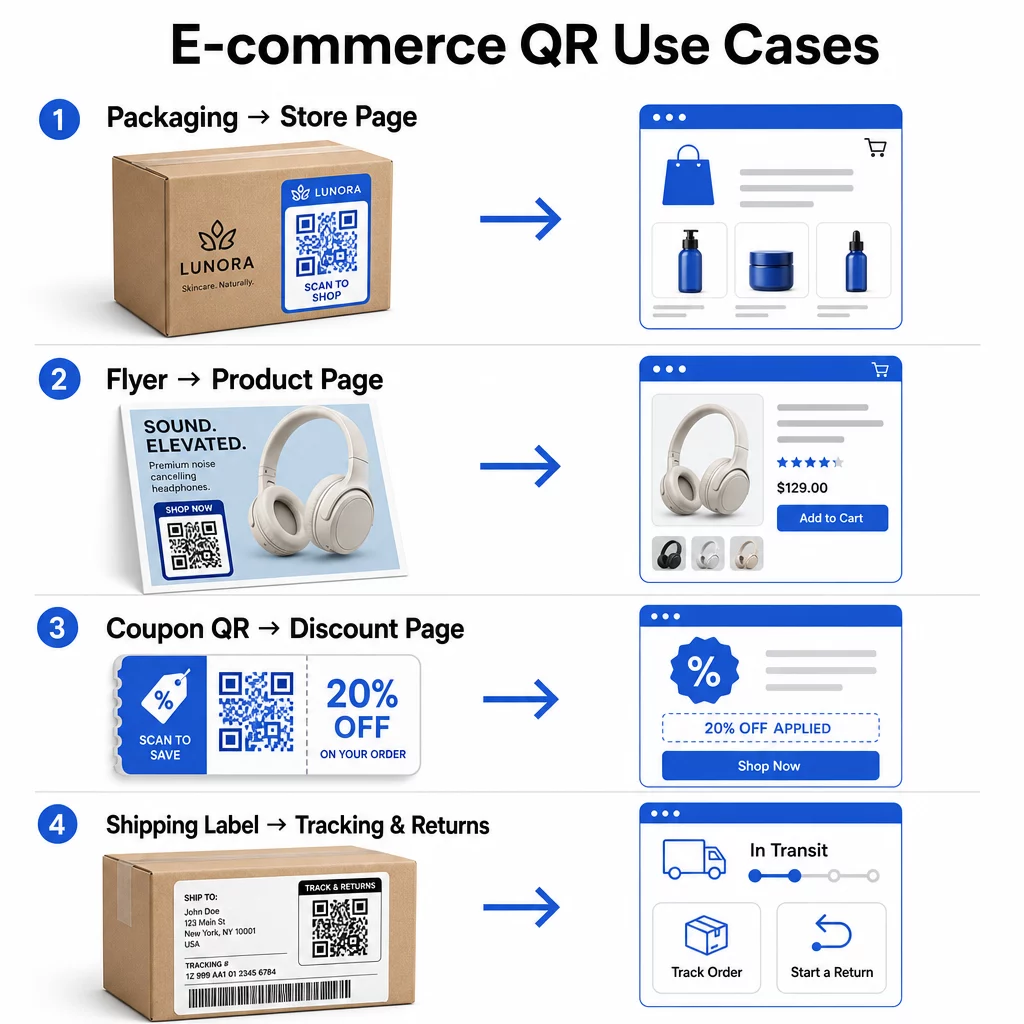
E-commerce QR use cases

Link Physical Products to Online Stores

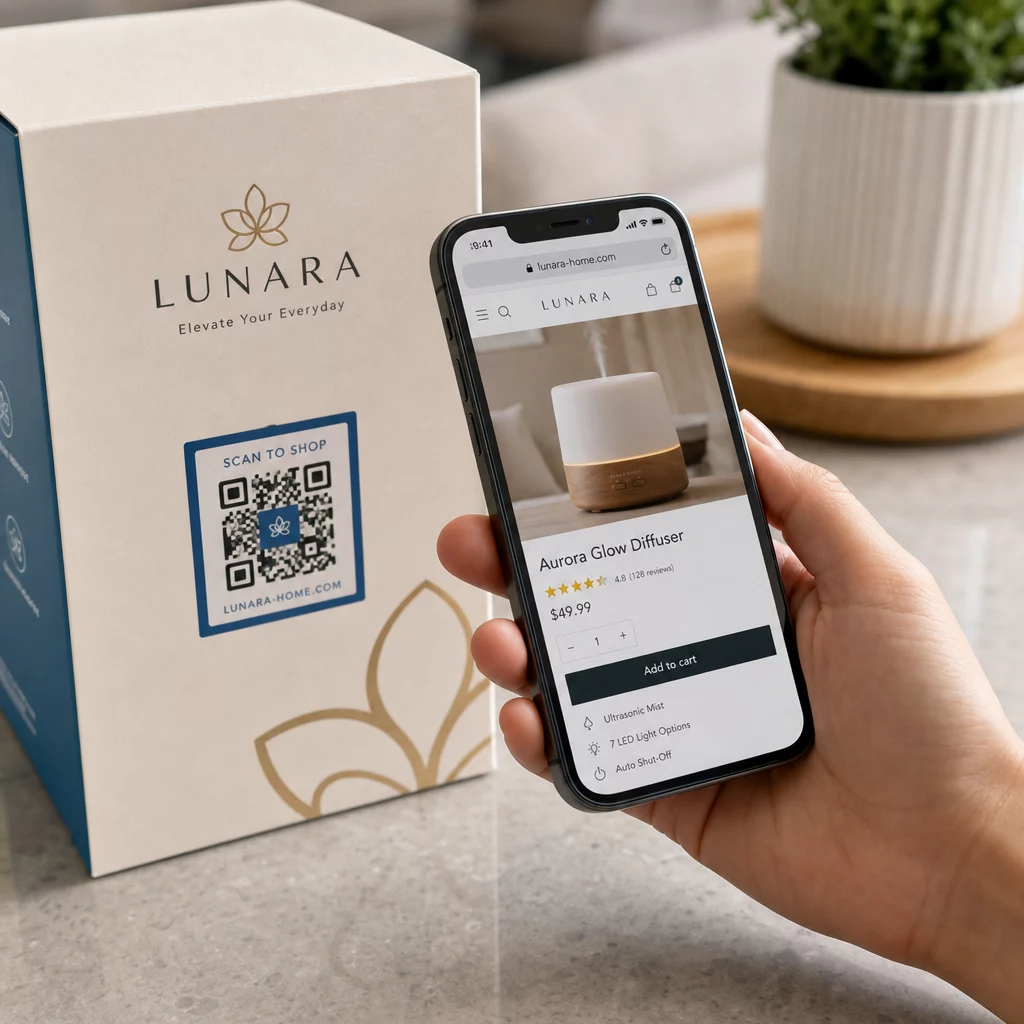
Product packaging is the most direct bridge between a physical item and your digital storefront. A QR code on the box or label can send customers to the full product page, related accessories, instructional videos, or a reorder link. One Pageloot customer placed QR codes inside their packaging and reported a 27% increase in repeat visits to their Shopify store within two weeks.

This approach is especially valuable for products with more detail than fits on a label – ingredients, certifications, tutorials, and warranty information can all live behind a single scannable code. Learn more about QR codes on packaging and how they benefit retail.

Drive Sales with Shoppable QR Codes

When a customer sees your product in a print ad, a catalog, or an in-store display, a QR code eliminates the steps between interest and purchase. Rather than searching for your product or typing in a URL, they scan and land directly on the product page or a curated collection.

使用一个 链接二维码生成器 to point each code at a specific URL. With dynamic codes, you can update that destination to reflect stock availability, seasonal pricing, or a limited-time bundle without reprinting any materials.

Offer Coupons and Time-Sensitive Promotions

QR codes are particularly effective for delivering discount codes and promotional offers because the experience is instant and frictionless. A customer scans, sees a coupon landing page, and can redeem the offer immediately rather than searching their inbox for a promo code.

Place promotion codes on product packaging, printed receipts, direct mail, and physical signage to encourage both first purchases and repeat orders. The 优惠券二维码生成器 lets you build a dedicated landing page with multiple offers and a clear call to action.

Create Coupon QR Codes for Your Store Display time-sensitive deals, promo codes, and exclusive offers on a branded landing page your customers reach with one scan. Use the 优惠券二维码生成器 开始。

Enable QR Code Payments

Contactless checkout is a growing expectation, particularly in retail and hybrid commerce environments where customers want to pay without queuing at a register or entering card details manually. QR code payments work by directing the customer to a hosted payment page – they scan, confirm the amount, and pay using a stored card or mobile wallet like Apple Pay or Google Pay.

静态二维码 link to a generic payment page where customers enter the amount themselves. 动态 QR 码 can be generated with transaction-specific data so the customer only needs to confirm and authorize. For businesses handling recurring payments or variable amounts, dynamic payment codes reduce input errors and speed up checkout.

Security is a critical consideration here. Each payment QR code should use a verified, HTTPS-secured destination. Use dynamic codes where possible, as they can be deactivated or updated if tampered with. The PayPal 二维码生成器 provides a straightforward way to create payment codes that route customers to your payment flow. You can also review best practices for accessible QR code payments to ensure your implementation is both secure and inclusive.

Collect Google Reviews and Customer Feedback

Social proof is one of the highest-leverage assets an e-commerce business has. The challenge is that most satisfied customers don’t leave reviews unless the process is frictionless. A QR code on a packaging insert, shipping box, or receipt reduces that friction to a single scan.

Point the code directly to your Google review submission page so customers land exactly where you need them. The Google 评论二维码生成器 lets you create and customize review codes you can embed across your physical materials. For broader feedback collection, QR codes can also link to post-purchase surveys, allowing you to gather structured insights about the buying experience. Read more about how QR codes support e-commerce customer service.

Improve Delivery and Returns Logistics

Shipping labels and order confirmation emails are underused marketing and service channels. A QR code on the shipping label can give customers instant access to real-time tracking updates without them needing to find a tracking number and enter it manually.

For returns, a QR code linking directly to a return request form removes the most frustrating part of the post-purchase experience. Brands like IKEA have adopted this model – sending QR codes via email or SMS after a customer registers a return – to streamline reverse logistics and reduce support contacts. Explore how QR codes improve e-commerce delivery experiences in more detail.

Grow Social Media Audiences

Every piece of physical packaging is a potential channel for growing your social following. A QR code that links directly to your Instagram, TikTok, or YouTube profile can turn a first-time buyer into a long-term follower without any additional ad spend.

This works especially well in unboxing moments, where customer attention is high and enthusiasm about the product is at its peak.

How to Track QR Code Campaign Performance

Generating a QR code is only half the work – understanding how it performs is what separates a tactical experiment from a scalable strategy.

Dynamic QR Codes and Built-In Analytics

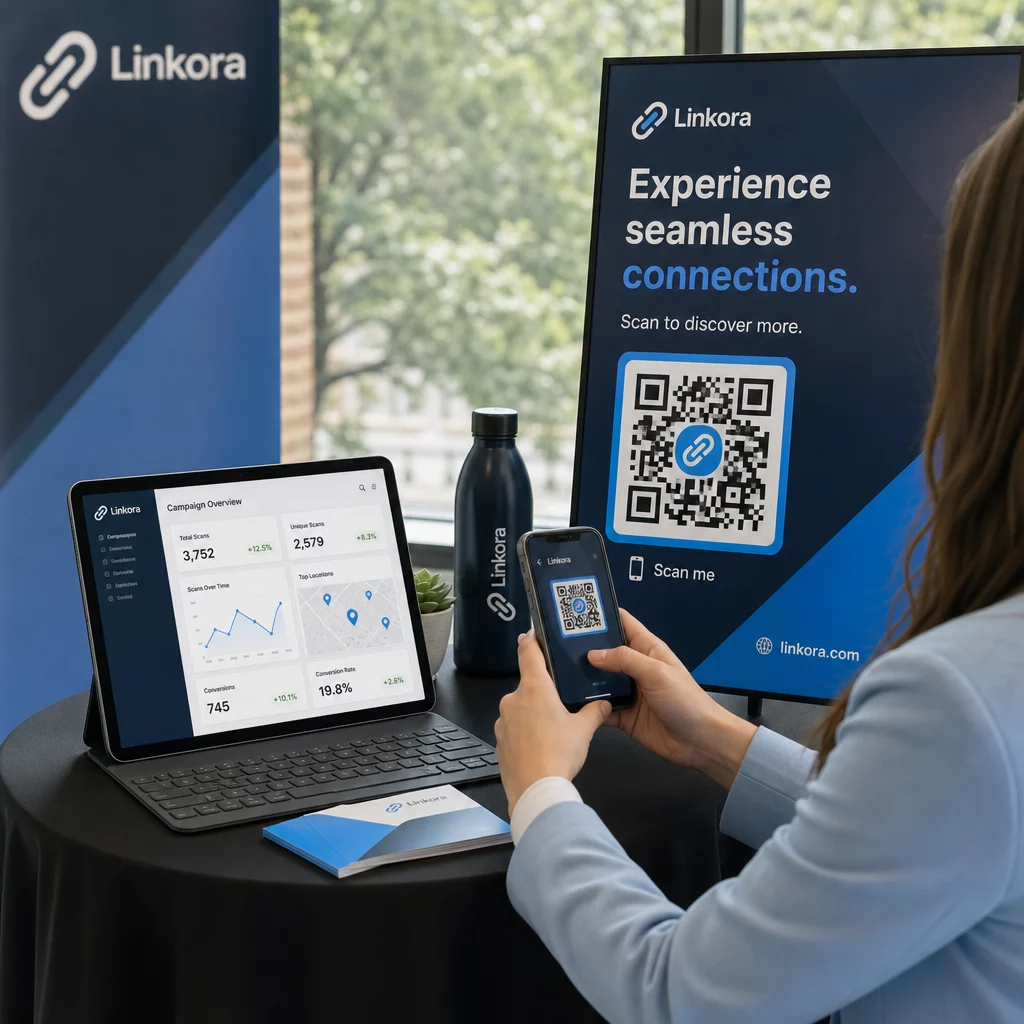
动态 QR 码 provide the most comprehensive tracking because they route scans through a managed redirect that logs metrics in real time. A QR code management platform like Pageloot captures:

  • Total scans and unique scans
  • Time and date of each scan
  • Geographic location of the scan
  • Device type and operating system

This data tells you which placements drive the most engagement, when customers are most likely to scan, and where geographic demand is concentrated. For a deeper look at how tracking works, see the guide to tracking QR code scans and analytics.

实时监测您的营销活动 想知道您的客户在何时何地扫描您的材料吗?使用 动态二维码生成器 创建可追踪的二维码并立即访问完整的性能仪表板。.

UTM Parameters for Attribution in Google Analytics

For campaigns where you need QR code performance to appear alongside other channel data in Google Analytics, add UTM parameters to the destination URL before generating the code. UTM parameters are short snippets appended to a URL that tell your analytics platform the source, medium, and campaign name associated with a visit.

A basic UTM-tagged URL for a QR code on product packaging might look like:

“`

https://yourstore.com/product?utmsource=packaging&utm媒介=二维码code&utmcampaign=spring_launch

“`

The five standard UTM parameters are:

  • utm_source – Where the traffic originates (e.g., `packaging`, `flyer`, `receipt`)
  • utmmedium – The marketing channel (e.g., `qrcode`)
  • utmcampaign – The specific campaign name (e.g., `springlaunch`)
  • utm_term – Keywords, typically for paid search campaigns
  • utm_content – To differentiate similar links or creative variants

Once tagged, shorten the URL and generate your QR code from the shortened link. Scans will then appear as a distinct traffic source in your analytics reports, letting you measure conversion rates, revenue, and behavior specific to QR-driven traffic.

QR Code Design Best Practices for E-Commerce

A QR code that customers can’t or won’t scan delivers no value. These design principles ensure your codes work reliably across all placements:

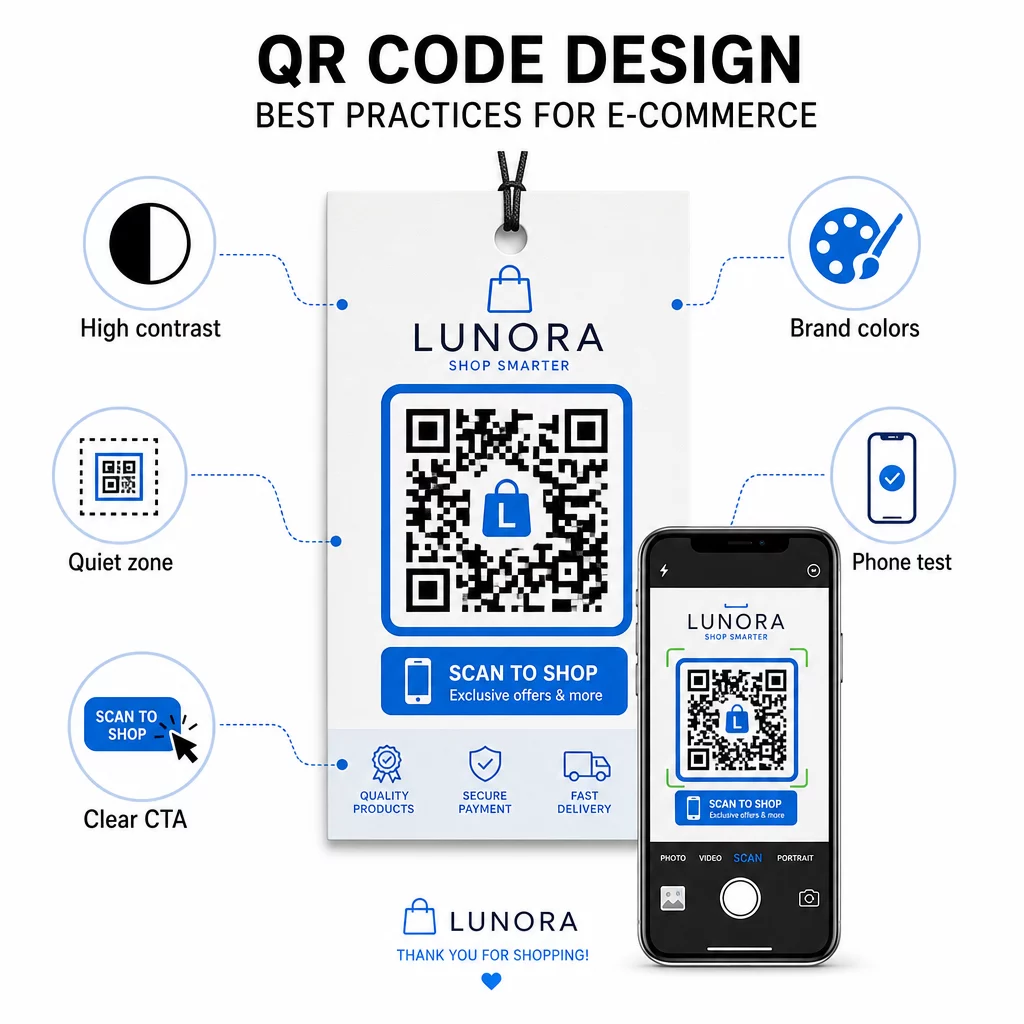
二维码设计技巧
  • Use dark modules on a light background – Black on white provides the strongest contrast for camera recognition and is more accessible for users in low-light conditions
  • Maintain a quiet zone – Keep at least four modules of empty space around the code so surrounding graphics don’t interfere with scanning
  • Follow minimum size guidelines – At least 1 inch × 1 inch for printed materials; larger for signage, where the rule of thumb is that maximum scanning distance should be roughly ten times the code’s width
  • Include a clear call to action – Label the code with a brief instruction such as “Scan for 10% off” or “Scan to track your order” to reduce hesitation and increase scan rates
  • Test before you print – Verify the code scans correctly at the final printed size, from expected distances, in realistic lighting, and across multiple phone models

For mobile landing pages linked from your QR codes, load speed and mobile-first layout are critical. Pages should load in under three seconds, and buttons should be large enough to tap easily. See 移动二维码着陆页最佳实践 for a detailed checklist.

How to Create a QR Code for Your E-Commerce Store

Getting started with QR codes for your store takes three steps:

  • Generate the code – Use the Pageloot 二维码生成器 to create a dynamic QR code linked to a product page, payment flow, review form, or any other destination. Choose dynamic over static if you want to update the destination later or track performance.
  • Customize and brand it – Add your logo, match your brand colors, and include a frame with a call-to-action label. Branded codes build recognition and tend to generate more scans than plain black-and-white codes.
  • Deploy and monitor – Place the code on packaging, emails, printed materials, or in-store signage. Use the analytics dashboard to review scan performance and adjust campaigns based on what’s working.

For industry-specific implementation ideas, the e-commerce QR code solutions page covers use cases across Shopify, WooCommerce, and other platforms. You can also browse QR code solutions by industry for context on how other sectors approach similar challenges.

Real-world results demonstrate the scale of what’s possible: case studies of leading e-commerce brands show outcomes like a 130% increase in online sales and a 239% increase in app engagement from targeted QR code deployments. The e-commerce QR code case studies page covers these examples in detail.

QR codes work best when they solve a specific problem for the customer – getting information faster, paying more easily, or completing a return without hassle. Start with one or two high-value touchpoints, measure the results, and expand from there.

常见问题

What is the difference between a static and dynamic QR code for e-commerce?

A static QR code encodes the destination URL directly into the pattern and cannot be changed after creation. A dynamic QR code points to a short redirect link that can be updated at any time, even after the code has been printed. For e-commerce, dynamic codes are generally preferable because they support real-time analytics, allow destination updates when promotions change, and produce a cleaner visual pattern that scans faster. Learn more on the static vs. dynamic QR codes page.

How do I track which QR codes are driving sales?

The most reliable method combines two approaches. First, use dynamic QR codes through a management platform like Pageloot, which logs scan counts, timestamps, device types, and geographic locations automatically. Second, add UTM parameters to your destination URLs so scans appear as a distinct traffic source in Google Analytics, where you can measure conversion rates and revenue attributed to each code. See the QR code tracking guide for step-by-step instructions.

Where should I place QR codes to get the most scans in e-commerce?

The placements with the highest engagement in e-commerce are product packaging, shipping boxes, packaging inserts, and order confirmation emails. These touchpoints reach customers at moments of high intent – right after purchase or during the unboxing experience – making them ideal for driving reviews, repeat purchases, and social follows. Post-purchase materials like receipts and return instructions are also effective because customers are actively engaged with your brand at that moment.

关于作者

Siim Kostabi 是 Pageloot 的内容主管,负责撰写关于我们创新型二维码生成器服务的文章。凭借五年多来在二维码领域积累的深厚专业知识,Siim 是该领域的专家。他致力于利用二维码技术简化和增强数字交互,并取得了显著的成果。.

类别
了解更多关于

如果您需要在线创建QR码,则可以 制作二维码 就在这里免费!
Pageloot是 #1转到解决方案 创建和扫描QR码。

QF-02

博客生成器

受到超过 20,000 个品牌的信赖,可获得更多销售、评论和关注者。

客户徽标
受到顶级品牌的信赖
评分为 4.8(共 5)

4.86 / 5 星评级

雨果·劳伦特
雨果·劳伦特
餐馆老板
有史以来最容易和最可靠的QR码生成器。PDF文件可以立即上传。我们的餐厅菜单现在是数字化的。
卢卡斯-詹森
卢卡斯-詹森
房地产开发商
这是一个很好的工具,二维码带你到你想要的地方。我们只使用位置二维码,但有许多有用的功能。
艾玛-莫雷蒂
艾玛-莫雷蒂
零售产品
易于使用和快速。它工作得很好,创造了一个完美的图像,所以员工可以下载我的vCard。
雨果·劳伦特
雨果·劳伦特
餐馆老板
有史以来最容易和最可靠的QR码生成器。PDF文件可以立即上传。我们的餐厅菜单现在是数字化的。
卢卡斯-詹森
卢卡斯-詹森
房地产开发商
这是一个很好的工具,二维码带你到你想要的地方。我们只使用位置二维码,但有许多有用的功能。
艾玛-莫雷蒂
艾玛-莫雷蒂
零售产品
易于使用和快速。它工作得很好,创造了一个完美的图像,所以员工可以下载我的vCard。
查看更多QR码
扫描 Telegram 二维码
制作二维码 电报组
Students scanning QR codes
的QR码 学校教育
将一切转化为数字体验 不到3分钟。

免费试用 14 天。

无需信用卡。

首次购买可享受 30% 折扣

使用代码:

分享您的 MP3 文件

注册以创建 PDF QR 码

上传和显示你需要的一切。

  • 音频文件
  • 播客
  • 音乐

注册即可享 14 天免费试用。.
试用期结束后,二维码将失效。.

注册以创建音频 mp3 二维码

使用边框获得更多扫描

注册以向您的二维码添加更多框架

呼叫行动框架帮助您的客户与QR码轻松互动。试试吧!

注册即可享 14 天免费试用。.
试用期结束后,二维码将失效。.

注册以向您的二维码添加更多框架

使用形状添加更多样式

注册以创建更多形状

二维码不一定是方形的。试着改变它以适应你的品牌形象。

注册即可享 14 天免费试用。.
试用期结束后,二维码将失效。.

注册以创建更多形状

为您的二维码添加徽标

注册以将您的徽标添加到二维码中

通过在二维码上添加你的标志和品牌,使你的二维码脱颖而出。

注册即可享 14 天免费试用。.
试用期结束后,二维码将失效。.

注册以将您的徽标添加到二维码中

智能应用商店重定向

注册以创建应用商店二维码

将您的应用程序链接添加到我们的智能应用程序商店QR码。用户会根据他们的设备被重新定向。

注册即可享 14 天免费试用。.
试用期结束后,二维码将失效。.

注册以创建应用商店二维码

将图片上传到二维码

注册以创建图像二维码

轻松分享你的图像。在几秒钟内动态地改变任何图像。

注册即可享 14 天免费试用。.
试用期结束后,二维码将失效。.

注册以创建图像二维码

分享您的 PDF 文件

注册以创建 PDF QR 码

上传和显示你需要的一切。

  • 菜单和价格表
  • 使用说明
  • 任何文件

注册即可享 14 天免费试用。.
试用期结束后,二维码将失效。.

注册以创建 PDF QR 码

稍后编辑,无需打印

注册即可编辑您的二维码,无需再次打印

动态QR码让你改变你的QR码的内容,而不需要打印新的QR码。

注册即可享 14 天免费试用。.
试用期结束后,二维码将失效。.

注册即可编辑您的二维码,无需再次打印

何时?何地?追踪您的二维码扫描

注册以追踪您的二维码

发现你的哪些二维码收到了最多的扫描,以及什么最能让你的客户兴奋。

注册即可享 14 天免费试用。.
试用期结束后,二维码将失效。.

注册以追踪您的二维码

提供可打印文件

注册以创建 PDF 和 SVG 等矢量二维码

.EPS, .PDF, .SVG

想下载高清分辨率的QR码吗?获得矢量或像素格式,可随时打印。

注册即可享 14 天免费试用。.
试用期结束后,二维码将失效。.

注册以创建 PDF 和 SVG 等矢量二维码

请等待。您的二维码是 正在加载... 正在加载...

打造专属

注册以保存您的二维码以供日后使用

通过创建具有不同颜色、标识和行动呼吁框架的出色的QR码,获得更多的扫描。

注册即可享 14 天免费试用。.
试用期结束后,二维码将失效。.

注册以保存您的二维码以供日后使用