¿No estás seguro de si necesitas un código QR estándar o geolocalizado? La elección incorrecta puede significar entregar el mismo contenido genérico a cada cliente, independientemente de dónde se encuentren, desperdiciando el presupuesto de la campaña y perdiendo oportunidades de personalización. Esta guía explica cómo funcionan ambos tipos, en qué se diferencian técnicamente y cuál se adapta a tu situación.
Qué hacen realmente los códigos QR estándar
Los códigos QR estándar codifican datos – una URL, información de contacto, credenciales de Wi-Fi, texto sin formato – directamente en el patrón del código. Cuando alguien escanea el código, su dispositivo lee esos datos codificados y actúa en consecuencia. El destino es fijo; cada escaneo desde cada ubicación va al mismo lugar.
Los códigos QR estándar se presentan en dos formas: estático y Dinámico.
Un código QR estático incrusta permanentemente sus datos en el propio patrón. Una vez impreso, el destino no se puede cambiar sin generar y reimprimir un código completamente nuevo. Un código QR dinámico, por el contrario, codifica una URL de redirección corta que apunta a tu destino real. Debido a que la URL final reside en un servidor en lugar de dentro del patrón del código, puedes actualizar a dónde redirige el código en cualquier momento – sin tocar el código impreso.
Esta distinción importa más de lo que parece a primera vista. Los códigos estáticos también producen patrones más densos y complejos cuando almacenan URL largas o datos de contacto detallados, lo que puede dificultar su escaneo de forma fiable. Los códigos dinámicos se mantienen limpios y simples porque solo necesitan codificar un enlace de redirección corto.
Qué hacen bien los códigos QR estándar
- Accesibilidad universal: Cualquier smartphone con cámara puede escanearlos – no se requiere ninguna aplicación especial ni permisos.
- Bajo costo: Los códigos estáticos son gratuitos de generar y no tienen tarifas continuas, lo que los convierte en una opción práctica para usos simples y únicos.
- Fiables y consistentes: El mismo código funciona en todos los dispositivos, sistemas operativos y aplicaciones de escaneo.
- Funcionalidad sin conexión: Los códigos estáticos no dependen de un servidor, por lo que funcionan para información sin conexión como contraseñas de Wi-Fi o texto sin formato.
Donde los códigos QR estándar se quedan cortos
La limitación principal es que los códigos QR estándar tratan a cada usuario de forma idéntica. Una cadena minorista no puede mostrar horarios específicos de la tienda o promociones locales. Una marca de hostelería no puede ofrecer recomendaciones relevantes para la ubicación. Un código, un destino, para todos.
Los códigos QR estáticos tampoco producen ningún dato de seguimiento. Debido a que no se enrutan a través de un servidor de redirección, no hay un mecanismo para registrar un evento de escaneo. Los códigos QR dinámicos permiten el seguimiento; los códigos QR estáticos no lo hacen. Incluso con códigos estándar dinámicos, los análisis se limitan a métricas básicas como el total de escaneos, las marcas de tiempo y los tipos de dispositivos; no hay un mecanismo para servir contenido diferente a diferentes usuarios según su ubicación.
Cómo funcionan de manera diferente los códigos QR geodirigidos
Un código QR geodirigido es un tipo especializado de código QR dinámico. Visualmente, se ve igual que cualquier otro código QR. Lo que es diferente es lo que sucede entre el escaneo y el destino.
Cuando alguien escanea un código geodirigido, el servidor de redirección intercepta la solicitud antes de enviar al usuario a cualquier lugar. El servidor determina la ubicación aproximada del usuario –típicamente a través de geolocalización IP, que puede resolver la ubicación a nivel de ciudad– y luego dirige al usuario al contenido configurado para esa ubicación. Un código físico puede ofrecer una experiencia completamente diferente según dónde se escanee.
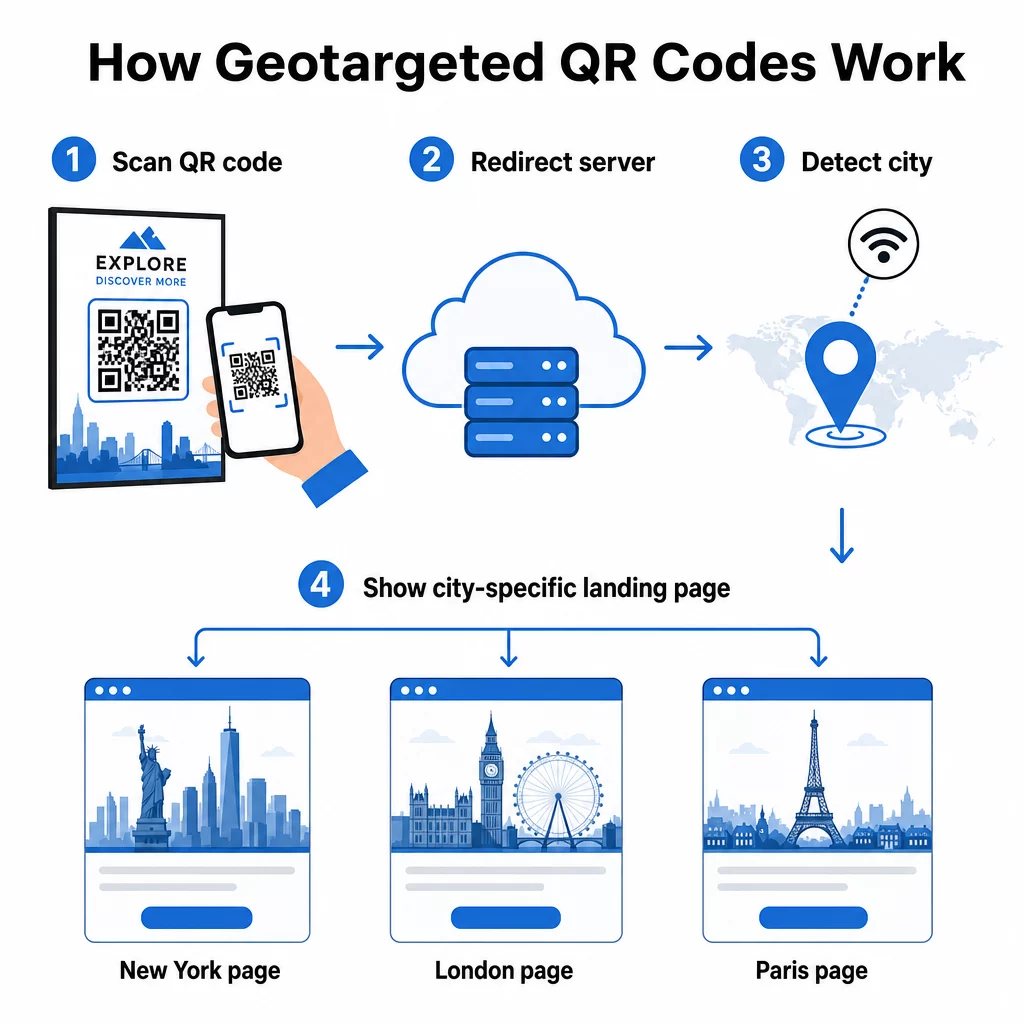
Vale la pena entender cómo funciona la detección de ubicación en la práctica. geolocalización basada en IP es el método más común: el servidor busca la dirección IP del escáner en una base de datos de geolocalización e infiere su ciudad o región. Este enfoque funciona sin ninguna acción por parte del usuario, pero la precisión varía. La precisión a nivel de ciudad generalmente oscila entre aproximadamente el 50% y el 75%, con mejores resultados en grandes áreas urbanas y en redes residenciales. Las redes móviles, las VPN y los servidores proxy pueden cambiar la ubicación aparente.
Seguimiento GPS basado en navegador ofrece datos de ubicación más precisos, pero requiere que el usuario otorgue explícitamente acceso a la ubicación cuando su dispositivo se lo solicite. Este método es más preciso pero menos automático: los usuarios pueden rechazar la solicitud.
Ver redirecciones basadas en ubicación en acción ¿Quiere entregar contenido diferente a clientes en diferentes ciudades usando un solo código? Use el Generador de códigos QR dinámicos para construir códigos QR con reconocimiento de ubicación y análisis completos de escaneo.
Lo que añaden los códigos QR geodirigidos
Más allá de las redirecciones basadas en la ubicación, los códigos QR geodirigidos desbloquean capacidades que los códigos dinámicos estándar no pueden proporcionar por sí solos:
- Entrega de contenido específico por ubicación: Un solo código puede mostrar diferentes promociones, idiomas, precios o páginas de destino según el lugar donde se realice el escaneo.
- Análisis avanzados: Además del número de escaneos y los tipos de dispositivos, obtienes datos de interacción geográfica: qué ciudades o regiones están generando la mayor cantidad de escaneos y cómo difiere el comportamiento entre ubicaciones.
- Gestión centralizada de campañas: Un solo código cubre todas las ubicaciones, simplificando la logística para empresas con múltiples ubicaciones que de otro modo necesitarían códigos separados para cada sitio.
- Actualizaciones dinámicas: Dado que los códigos geodirigidos son una forma de código QR dinámico, puedes actualizar las reglas, destinos o contenido en cualquier momento, sin necesidad de reimprimir.
Para una mirada más profunda a cómo seguimiento de escaneos de códigos QR y análisis funciona, incluyendo qué datos se capturan realmente en el momento de un escaneo, esa guía cubre la mecánica técnica en su totalidad.
Comparación lado a lado
| FUNCIÓN | Códigos QR Estándar | Códigos QR Geodirigidos |
|---|---|---|
| Entrega de contenido | Estático – el mismo para cada escaneo | Dinámico – varía según la ubicación |
| Editables después de la impresión | Solo con códigos dinámicos | Sí (siempre dinámico) |
| Seguimiento | Ninguno (estático) / Básico (dinámico) | Avanzado, incluyendo datos de ubicación |
| Redirecciones basadas en la ubicación | ❌ | ✅ |
| Complejidad de la configuración | Sencillo | Moderada – requiere mapeo de ubicación |
| Coste | Bajo a gratuito | Mayor – necesita una plataforma dinámica |
| Mejor para | Mensajes simples y consistentes | Campañas multisede y regionales |
| Profundidad de los análisis | Recuentos de escaneos, marcas de tiempo, tipo de dispositivo | Desgloses geográficos, tendencias regionales |
| Gestión de campañas | Manual, por código | Centralizado, un código para todas las ubicaciones |
Elegir el tipo adecuado para su situación
La respuesta honesta es que la mayoría de las empresas no empiezan con códigos QR geolocalizados, y no lo necesitan. Si está compartiendo un menú, una página de destino o información de contacto, un código QR dinámico estándar le da la flexibilidad de actualizar el contenido y rastrear los escaneos sin la complejidad añadida.
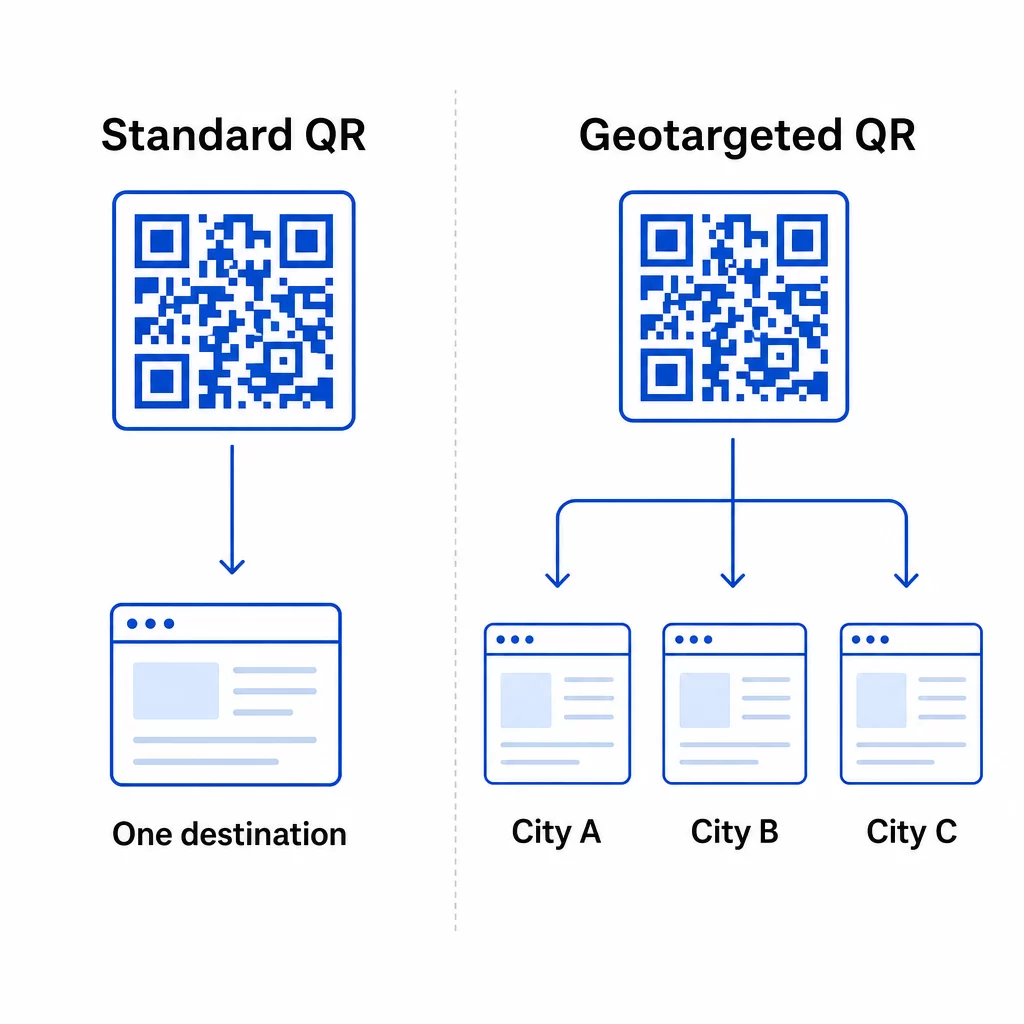
Los códigos QR geolocalizados tienen más sentido cuando la ubicación es una variable significativa en su campaña. Situaciones prácticas donde esto importa:
- Comercio minorista o hostelería con múltiples ubicaciones: Muestre horarios, inventario o promociones específicos de la tienda sin imprimir códigos separados para cada ubicación.
- Campañas de marketing regional: Adapte mensajes, idioma u ofertas para diferentes ciudades o mercados desde un único código colocado en materiales nacionales.
- Gestión de eventos: Dirija a los asistentes a mapas del lugar, horarios de sesiones o servicios cercanos según la parte de un gran recinto en la que se encuentren.
- Redes de franquicias o socios: Mantener la coherencia de la marca a nivel de código, permitiendo contenido específico de la ubicación debajo.
Si estás ejecutando campañas que abarcan múltiples regiones y quieres medir la participación por geografía, emparejar códigos geodirigidos con parámetros UTM para códigos QR en Google Analytics crea una imagen completa de dónde se origina el tráfico y cómo se convierte.
Para empresas nuevas en campañas QR basadas en la ubicación, la guía de campañas de códigos QR con geocercado cubre los pasos prácticos de configuración, la estrategia de colocación y cómo medir los resultados.
Consideraciones de seguridad y privacidad
Los códigos QR geodirigidos recopilan datos más sensibles que los códigos estándar: información de ubicación y direcciones IP, además de métricas básicas de escaneo. Esto crea responsabilidades que los códigos estándar no tienen.
La transparencia importa. Los usuarios deben saber, a través de un aviso de privacidad claro, que se están recopilando datos de ubicación y cómo se utilizarán. Se requiere consentimiento explícito antes de recopilar datos GPS precisos. La geolocalización implícita basada en IP se encuentra en un área más gris, pero una divulgación clara sigue siendo la mejor práctica.
Vale la pena implementar algunas salvaguardas técnicas independientemente del tipo de código, pero son especialmente importantes para las campañas con conciencia de ubicación:
- Límites de escaneo: Limitar cuántas veces se puede usar un código para evitar el uso indebido de ofertas basadas en la ubicación.
- Fechas de caducidad: Deshabilitar automáticamente los códigos después de que finalice una campaña para que los materiales obsoletos no se conviertan en riesgos de seguridad.
- Protección con contraseña: Para códigos que enlazan a contenido sensible o exclusivo, se requiere autenticación antes de conceder el acceso.
- Monitoreo en tiempo real: Esté atento a anomalías en los escaneos – picos inusuales en el volumen o patrones geográficos inesperados – para que pueda responder rápidamente.
Aplicaciones Industriales
El valor práctico de los códigos QR geodirigidos se manifiesta de manera diferente en distintos sectores:
- Venta minorista y comercio electrónico: Una marca de moda puede usar un código QR en el empaque nacional, pero mostrar promociones específicas de la región, inventario de temporada o precios localizados, dependiendo de dónde se realice el escaneo.
- Hostelería: Los hoteles pueden dirigir a los huéspedes a recomendaciones de atracciones locales, sugerencias de actividades apropiadas para el clima o servicios específicos de la sucursal, todo a través de un único código en el vestíbulo.
- Salud: Una red hospitalaria puede dirigir a los pacientes al sistema de reservas de la instalación más cercana, completo con servicios y disponibilidad específicos de la ubicación.
- Educación: Las universidades pueden colocar códigos en materiales impresos que dirigen a los estudiantes a recursos específicos del edificio, horarios de clases o navegación del campus, según dónde escaneen.
- Bienes raíces: Los listados de propiedades pueden mostrar datos específicos del vecindario – calificaciones escolares, servicios locales, información de transporte – para compradores potenciales que escanean desde diferentes áreas.
Los códigos QR dinámicos estándar sirven bien a estas mismas industrias para contenido que no necesita cambiar por ubicación. La lista completa de características de los códigos QR cubre casos de uso adicionales en diferentes tipos de contenido e industrias.
Empiece a Rastrear de Dónde Provienen Sus Escaneos Ya sea que necesite un código dinámico estándar o redirecciones basadas en la ubicación, el Generador de códigos QR le permite construir, personalizar y analizar el rendimiento de los códigos QR desde un único panel de control. La elección correcta se reduce a si la ubicación es una variable que importa para su campaña. Si cada cliente debe ver el mismo contenido, un código QR dinámico estándar le brinda flexibilidad y seguimiento sin complejidad adicional. Si el lugar donde alguien escanea cambia lo que debería ver, los códigos QR geodirigidos resuelven ese problema de manera eficiente: un código, enrutado inteligentemente, con los análisis para comprender cómo se están involucrando las diferentes regiones.
Empiece con el tipo que mejor se adapte a sus necesidades actuales y avance hacia la segmentación basada en la ubicación a medida que sus campañas crezcan y sus datos de audiencia maduren.
Preguntas frecuentes
Sí. Un único código QR geolocalizado puede redirigir a los usuarios a contenido diferente dependiendo de dónde escaneen. Para un negocio con diez ubicaciones, esto significa un código en lugar de diez – con análisis centralizados que muestran el rendimiento de cada región.
La mayoría de los sistemas de geolocalización utilizan la geolocalización basada en IP, que normalmente identifica la ciudad de un usuario con una precisión de aproximadamente 50-75%. La precisión es mejor en grandes ciudades y en redes residenciales, y menor cuando los usuarios están en redes móviles, VPN o conexiones proxy. El GPS basado en navegador ofrece mayor precisión, pero requiere que el usuario otorgue permiso explícito de ubicación.
Los códigos QR estáticos no admiten ningún tipo de seguimiento – no se enrutan a través de un servidor de redirección, por lo que no hay ningún mecanismo para registrar un escaneo. Los códigos QR dinámicos (incluidos los geolocalizados) sí admiten el seguimiento, capturando métricas como el total de escaneos, marcas de tiempo, tipos de dispositivos y datos de ubicación geográfica.