Come dare agli spettatori più di quanto possa stare su un cartello – senza ingombrare l'opera d'arte stessa? Le etichette statiche non possono contenere interviste con artisti, storie orali o esperienze di realtà aumentata, e questa lacuna lascia il pubblico disconnesso dalla storia completa dietro l'opera. Questa guida copre strategie pratiche per integrare i codici QR nell'arte pubblica e nei murales, dal design e posizionamento ai tipi di contenuto e all'analisi.
Perché i codici QR funzionano negli ambienti di arte pubblica
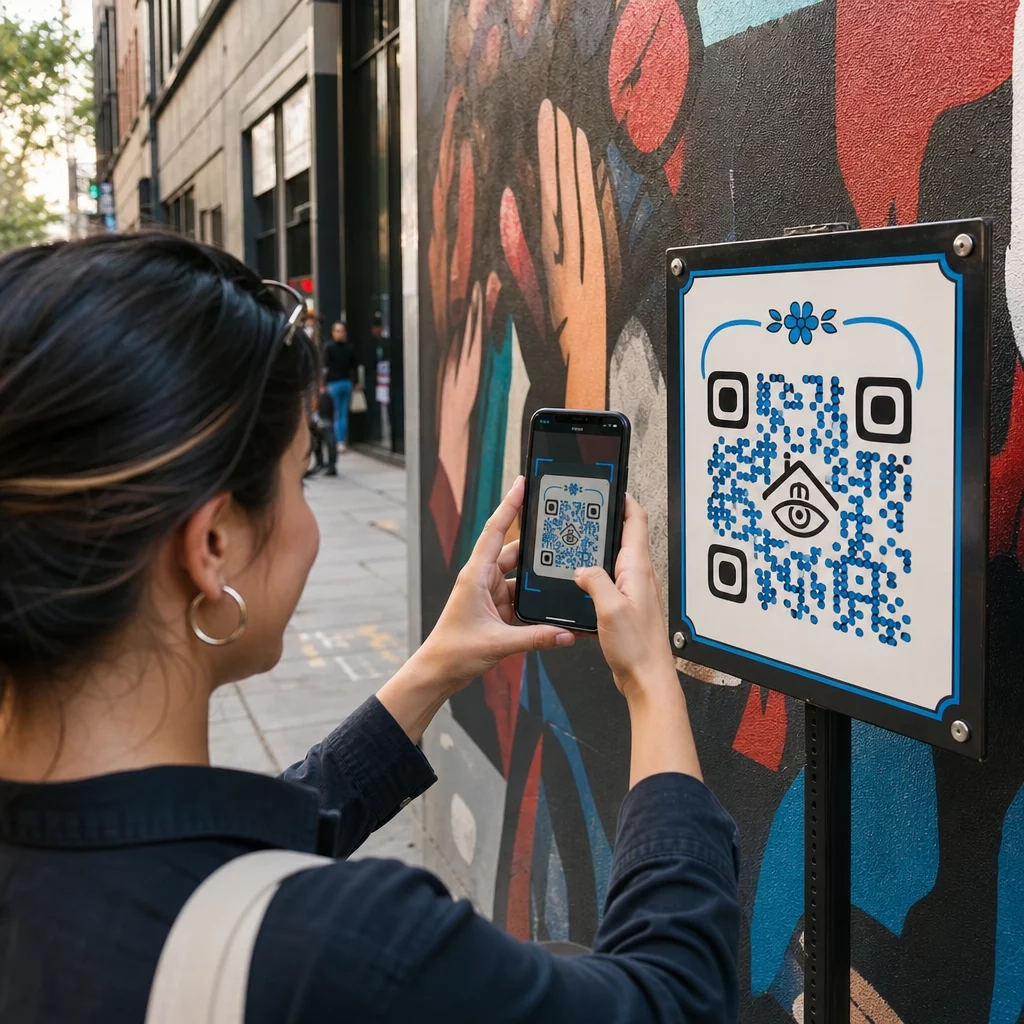
Un codice QR posizionato accanto – o intessuto – in un murale funge da ponte tra l'opera fisica e una ricchezza di contenuti digitali. Gli spettatori con smartphone possono scansionare istantaneamente, senza scaricare un'app separata, e essere indirizzati a audioguide, video interviste, pagine di donazione o esperienze AR interattive.
Diversi programmi di arte pubblica hanno dimostrato il modello:
- A Raleigh, Carolina del Nord, il Q-Art Code Project ha posizionato codici smart QR con opere d'arte pubbliche in tutta la città in modo che i membri della comunità potessero accedere istantaneamente alle informazioni su ogni opera e sul suo creatore.
- Nel quartiere Wynwood di Miami, l'artista Ruben Ubiera ha incorporato un codice QR direttamente in un murale che raffigura otto immigrati, collegando ogni volto a una storia orale registrata – inclusi racconti di separazione familiare e deportazione.
- Nel centro di Syracuse, il S.Alt City murale è costruito interamente con tessere di codice QR, con ogni tessera che si collega a una diversa organizzazione artistica contemporanea nella regione, trasformando efficacemente il muro in una directory scansionabile.
- A Punta Gorda, Florida, una società murale locale ha montato cartelli con codici QR su muri di murales storici in modo che i visitatori possano auto-guidarsi attraverso la collezione fuori stagione, accedendo a brevi lezioni di storia dai loro telefoni.
Questi progetti condividono un principio comune: il codice QR non sostituisce l'arte – la estende.
Collega la tua arte pubblica ai contenuti digitali Utilizzare il Generatore di codici QR per link per creare un codice scansionabile che indirizzi gli spettatori a biografie di artisti, audioguide, video interviste o qualsiasi destinazione web tu scelga.
Quali contenuti collegare dai codici QR dell'arte pubblica
Il valore di una scansione dipende interamente da ciò che offre. Scegliere il formato di contenuto giusto per il contesto fa la differenza tra un tocco curioso e un'interazione significativa.
Informazioni e contesto sull'artista
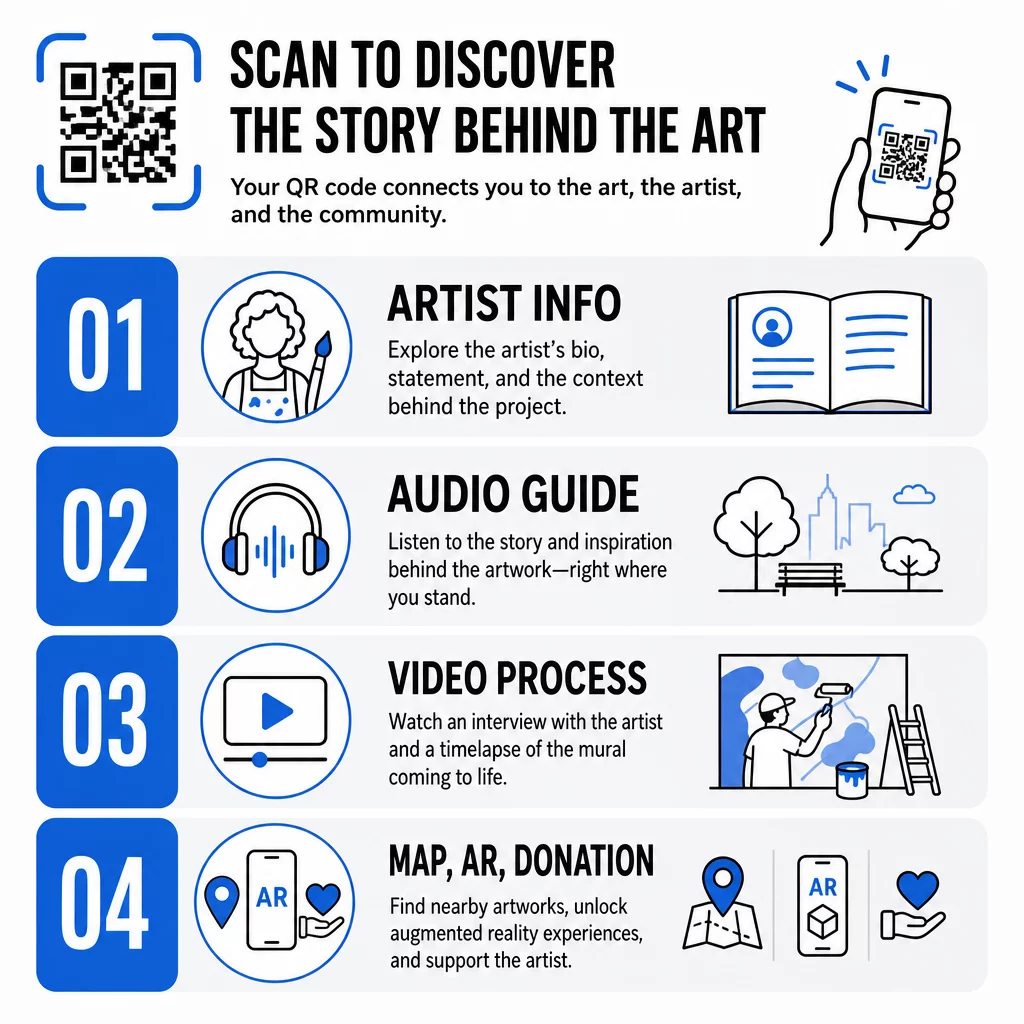
Collegamento a una breve biografia, una dichiarazione sull'opera o una cronologia che mostri lo sviluppo del progetto. Questo è particolarmente prezioso per le installazioni temporanee dove lo spazio sulle pareti è limitato.
Audioguide
La narrazione parlata funziona bene all'aperto, dove i visitatori potrebbero essere in movimento o in ambienti rumorosi. È possibile ospitare file audio direttamente utilizzando un codice QR MP3 che riproduce su qualsiasi smartphone.
Interviste video e documentazione del processo
Collegarsi a un'intervista con l'artista o a un time-lapse del murale in fase di pittura offre agli spettatori una prospettiva dietro le quinte che approfondisce l'apprezzamento dell'opera finita.
Guide PDF e mappe dei tour
Per le installazioni che fanno parte di un percorso o di un distretto più ampio, un Codice PDF QR può fornire una mappa scaricabile per un tour a piedi o l'equivalente di una guida stampata – senza costi di stampa.
Posizione e orientamento
Per le collezioni d'arte pubblica multi-sito, un Codice QR di Google Maps consente ai visitatori di navigare da un'opera all'altra senza dover cercare manualmente.
Esperienze di realtà aumentata
I codici QR collegati alla realtà aumentata consentono agli spettatori di sbloccare animazioni, sovrapposizioni 3D o narrazioni in evoluzione stratificate sull'opera fisica. Musei come lo Smithsonian e luoghi interattivi come la Convergence Station di Meow Wolf a Denver hanno utilizzato questo approccio per trasformare esposizioni statiche in esperienze partecipative. Per uno sguardo più approfondito su come la realtà aumentata cambia la narrazione negli spazi artistici, vedi come i codici QR AR trasformano la narrazione museale.
Link per donazioni e supporto
L'artista di strada francese Pascal “PBOY” Boyart ha incorporato codici QR Bitcoin nei suoi murales, permettendo agli spettatori di inviare donazioni in criptovaluta tramite scansione. I codici sono stati progettati come elementi integrali dell'opera d'arte, non come ripensamenti, e hanno portato a un supporto diretto della comunità per la sua pratica.
Progettare codici QR che si integrino nell'arte
Un codice QR che si scontra visivamente con l'opera circostante interrompe l'immersione dello spettatore. Un design attento mantiene il codice funzionale pur rispettando il contesto artistico.
Il contrasto non è negoziabile
Motivi scuri su uno sfondo chiaro vengono scansionati in modo affidabile. Schemi di colori invertiti – chiaro su scuro – sono più difficili da rilevare per la maggior parte dei lettori. Qualunque palette di colori tu scelga, dai priorità a un contrasto sufficiente tra il primo piano e lo sfondo del codice.
Mantenere libera la zona di silenzio
Lasciare almeno quattro moduli di spazio vuoto attorno al bordo esterno del codice. Testo, immagini ed elementi decorativi che invadono questo bordo interferiscono con la scansione.
Utilizzare un'elevata correzione degli errori quando si aggiungono loghi
Incorporare un logo o un simbolo al centro di un codice QR è un modo comune per integrare il branding o la firma dell'artista. Impostare la correzione degli errori al Livello H prima di aggiungere qualsiasi sovrapposizione – questo livello può recuperare fino al 30% dei dati danneggiati, il che compensa la porzione del codice oscurata dal logo.
Dimensionare per la distanza di visione
La regola generale è che il codice dovrebbe essere circa un decimo della larghezza della distanza di scansione prevista. Un visitatore che si trova a 10 piedi da un murale necessita di un codice largo almeno 12 pollici per scansionare comodamente. Per la segnaletica a distanza ravvicinata, si applica un minimo di 1 × 1 pollice. Per murales di grandi dimensioni, prevedere codici larghi da 1 a 1,5 piedi.
Scegliere materiali durevoli per uso esterno
Inchiostri resistenti ai raggi UV, metallo o plastica incisi e laminati resistenti alle intemperie prolungano tutti la vita funzionale dei codici esterni. Le finiture lucide creano riflessi; i substrati opachi si comportano meglio in condizioni di illuminazione variabili. Testare il codice in diversi momenti della giornata e nelle condizioni di illuminazione che l'installazione dovrà effettivamente affrontare.
Esportare in formato vettoriale per la stampa
Scarica il tuo codice QR come file SVG, EPS o PDF anziché come immagine raster a bassa risoluzione. I formati vettoriali si scalano in modo pulito a qualsiasi dimensione senza pixelizzazione, il che è essenziale per applicazioni esterne di grandi dimensioni.
Per una ripartizione completa dei rapporti di contrasto, delle zone di silenzio e dei livelli di correzione degli errori, vedere le migliori pratiche di usabilità dei codici QR e le migliori pratiche per la leggibilità dei codici QR.
Dove posizionare i codici QR su murales e installazioni
Anche un codice perfettamente progettato non verrà scansionato se si trova nel posto sbagliato. Le decisioni di posizionamento influenzano sia la scopribilità che la facilità d'uso.
All'altezza degli occhi e raggiungibile
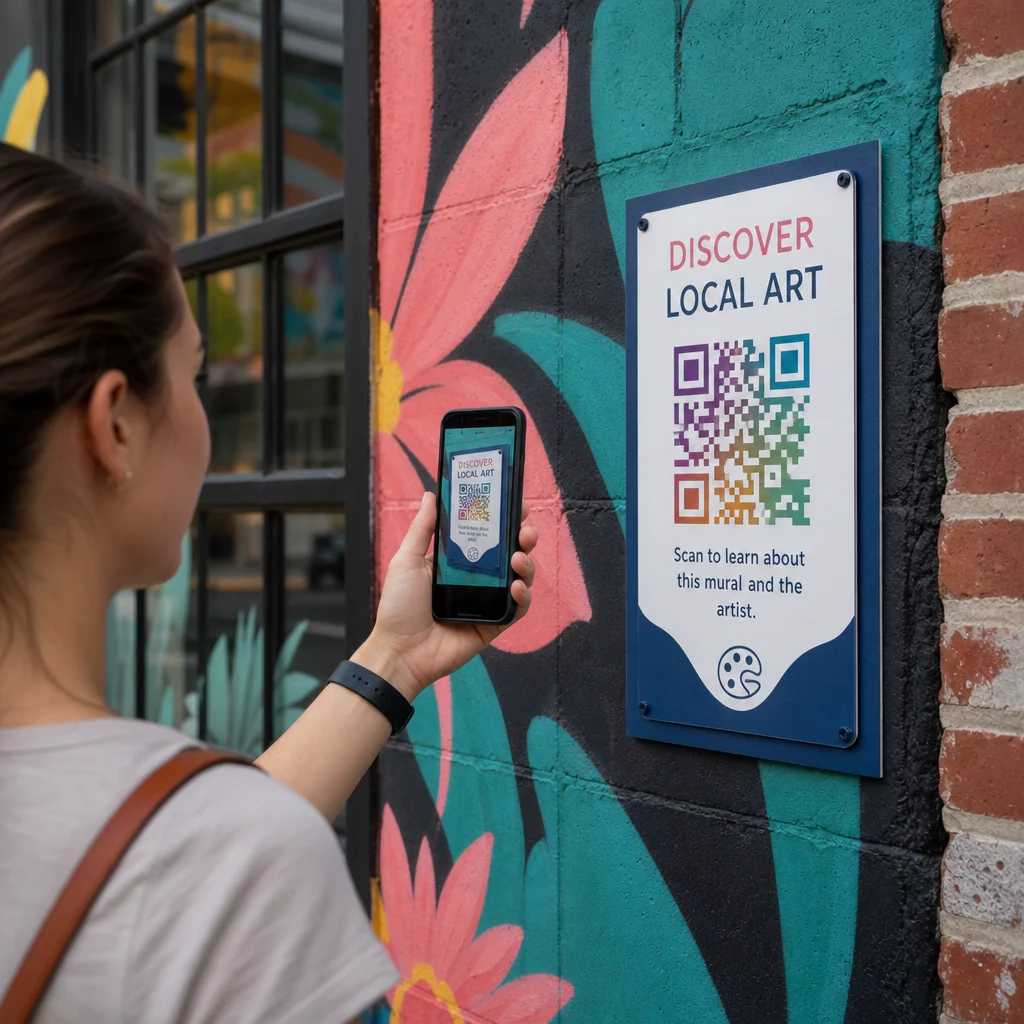
Posizionare i codici a circa 1,20-1,50 metri da terra – la posizione di scansione naturale per la maggior parte degli adulti. I codici posizionati troppo in alto richiedono agli spettatori di alzare i loro telefoni in modo scomodo; i codici posizionati a livello del suolo sono facili da perdere.
Dove le persone si fermano già
Gli spettatori che sono fermi sono molto più propensi a scansionare rispetto agli spettatori che passano. Identificare i punti di sosta naturali – aree salotto, punti ombreggiati, angoli dove le persone si raggruppano – e posizionare i codici lì piuttosto che in posizioni a metà passo lungo un passaggio pedonale affollato.
Superfici piane e stabili
Le superfici piane offrono agli scanner una lettura pulita e non distorta. Superfici leggermente curve o texturizzate possono funzionare se il codice è abbastanza grande, ma aumentano la possibilità di fallimento della scansione. Evitare superfici altamente riflettenti che generano abbagliamento.
Indicazioni chiare
Aggiungere una breve call-to-action vicino al codice: “Scansiona per ascoltare la storia dell'artista” o “Scansiona per la guida completa.” Gli spettatori che non riconoscono immediatamente cosa fa il codice sono meno propensi a provare. Per consigli su come scrivere CTA efficaci, vedi Migliori pratiche per il posizionamento dei codici QR.
Utilizzo di codici QR dinamici per gestire e tracciare l'arte pubblica
I codici QR statici codificano una destinazione fissa. Una volta stampato o installato, il contenuto collegato non può essere modificato senza sostituire il codice fisico. Per installazioni d'arte pubblica a lungo termine – o progetti in cui il contenuto si evolve – questo crea un vero problema di manutenzione.
Codici QR dinamici risolvere questo problema puntando a un URL di reindirizzamento breve che controlli. Il codice fisico rimane lo stesso, ma puoi aggiornare la destinazione in qualsiasi momento da una dashboard. Se il sito web di un artista cambia, un video viene ri-ospitato, o una guida turistica stagionale ne sostituisce una più vecchia, l'aggiornamento avviene nella piattaforma senza toccare il codice installato.
I codici dinamici forniscono anche analisi. Puoi tracciare quante volte un codice è stato scansionato, quando avvengono le scansioni e dove si trovano gli scanner nel mondo. Per curatori e organizzatori di mostre, questi dati rivelano quali opere in una collezione generano il maggior coinvolgimento, quali orari del giorno vedono picchi di attività e se determinate posizioni superano altre. Queste intuizioni supportano migliori decisioni di posizionamento e aggiornamenti di contenuto più pertinenti nel tempo.
Per gli artisti che gestiscono installazioni temporanee o progetti in evoluzione, la capacità di stratificare i contenuti – fornendo informazioni di base alla prima scansione e sbloccando materiale più approfondito con visite ripetute – incoraggia un coinvolgimento continuo con la stessa opera.
Tieni traccia di ogni scansione nella tua collezione d'arte pubblica Il sito Generatore di QR code dinamici ti consente di aggiornare i contenuti collegati senza ristampare e fornisce una dashboard di analisi completa per monitorare l'engagement in ogni installazione.
Codici QR nei Musei e nelle Istituzioni Culturali
I luoghi culturali al coperto operano con vincoli diversi rispetto ai murales all'aperto, ma si applicano gli stessi principi. I musei hanno adottato i codici QR per estendere ciò che le etichette delle mostre possono comunicare, offrire contenuti multilingue ai visitatori internazionali e sostituire le brochure stampate con alternative digitali aggiornabili.
I casi d'uso in contesti museali includono:
- Audioguide interattive e tour autoguidati
- Mappe digitali dello spazio espositivo
- Esperienze AR che animano manufatti o rivelano strati nascosti di dipinti
- Programmi di workshop, iscrizioni a conferenze e promozioni di eventi
- Moduli di feedback per i visitatori collegati alle uscite o in tutta la galleria
Il museo M+ di Hong Kong ha registrato 148.000 interazioni con i visitatori tramite codici QR, dimostrando una forte disponibilità del pubblico all'engagement basato su smartphone negli spazi artistici. Musea Brugge ha utilizzato i codici QR Pageloot specificamente per arricchire l'engagement dei visitatori e semplificare l'accesso alle informazioni sulle mostre.
Per uno sguardo più ampio su come le istituzioni stanno applicando questa tecnologia, vedi Codici QR per i musei, Codici QR per gallerie d'arte: migliori pratiche, e casi di studio sui codici QR nelle installazioni d'arte moderna.
Sicurezza, Privacy e Manutenzione a Lungo Termine
I codici QR pubblici sono accessibili a tutte le ore e a tutti i pubblici, il che rende essenziale la manutenzione continua. Un link interrotto o una destinazione obsoleta mina la fiducia dello spettatore e spreca l'opportunità creata dalla scansione.
Pratiche chiave per una distribuzione responsabile a lungo termine:
- Testa regolarmente su più dispositivi e in diverse condizioni di illuminazione per confermare che i codici rimangano scansionabili e i link attivi.
- Utilizza destinazioni HTTPS per segnalare legittimità e proteggere i visitatori da reindirizzamenti non sicuri.
- Affiggi segnaletica chiara su quali dati, se del caso, vengono raccolti quando gli spettatori scansionano, e rispetta le normative sulla privacy applicabili.
- Utilizza materiali fisici durevoli appropriati per l'ambiente esterno – inchiostri resistenti ai raggi UV, laminati impermeabili o schermi digitali protetti per installazioni permanenti.
- Controlla periodicamente i contenuti collegati per assicurarti che video, PDF e pagine degli artisti rimangano aggiornati e accessibili.
I codici QR dinamici riducono significativamente l'onere di manutenzione, poiché gli aggiornamenti dei contenuti e le modifiche dei link avvengono sulla piattaforma anziché richiedere la sostituzione fisica dei codici installati. Quando i codici QR sono progettati con la stessa cura dell'opera d'arte che accompagnano – della giusta dimensione, adeguatamente contrastati, posizionati con attenzione e collegati a contenuti di genuino valore – estendono la vita e la portata dell'arte pubblica ben oltre ciò che una singola visione può offrire. Che tu stia documentando un murale stradale, costruendo un percorso di sculture interattive o digitalizzando una collezione museale, gli strumenti per codici QR per l'arte disponibili tramite Pageloot ti offrono un percorso diretto dall'installazione fisica all'engagement digitale misurabile.
Domande frequenti
La dimensione dipende dalla distanza di scansione. Una regola pratica è quella di rendere il codice largo almeno un decimo della distanza da cui ci si aspetta che gli spettatori scansionino. Per qualcuno che si trova a 10 piedi di distanza, il codice dovrebbe essere largo almeno 12 pollici. Per la segnaletica a distanza ravvicinata, è sufficiente un minimo di 1 × 1 pollice. I murales di grandi dimensioni richiedono tipicamente codici larghi tra 1 e 1,5 piedi per rimanere scansionabili da una distanza confortevole.
I codici QR nell'arte pubblica possono collegarsi a quasi qualsiasi contenuto digitale: biografie di artisti, audioguide, video interviste, esperienze AR, guide turistiche PDF, pagine di donazione, navigazione Google Maps, profili di social media o moduli di feedback. Il tipo di contenuto giusto dipende dal contesto dell'opera d'arte – i murales esterni spesso beneficiano di audio o brevi video, mentre le installazioni museali possono supportare guide multimediali più dettagliate.
Un codice QR statico codifica una destinazione fissa che non può essere modificata dopo che il codice è stato stampato o installato. Un codice QR dinamico punta a un URL di reindirizzamento che puoi aggiornare in qualsiasi momento da una dashboard di gestione, così il codice fisico rimane al suo posto mentre il contenuto collegato si evolve. I codici dinamici forniscono anche analisi – conteggi delle scansioni, tempistiche e dati geografici – che aiutano i curatori a capire quali installazioni stanno generando il maggior coinvolgimento e a perfezionare il loro approccio nel tempo.