Como você dá aos espectadores mais do que cabe em uma placa – sem poluir a própria obra de arte? Rótulos estáticos não podem conter entrevistas com artistas, histórias orais ou experiências de realidade aumentada, e essa lacuna deixa o público desconectado da história completa por trás da obra. Este guia aborda estratégias práticas para integrar códigos QR em arte pública e murais, desde o design e posicionamento até os tipos de conteúdo e análises.
Por que os Códigos QR Funcionam em Ambientes de Arte Pública
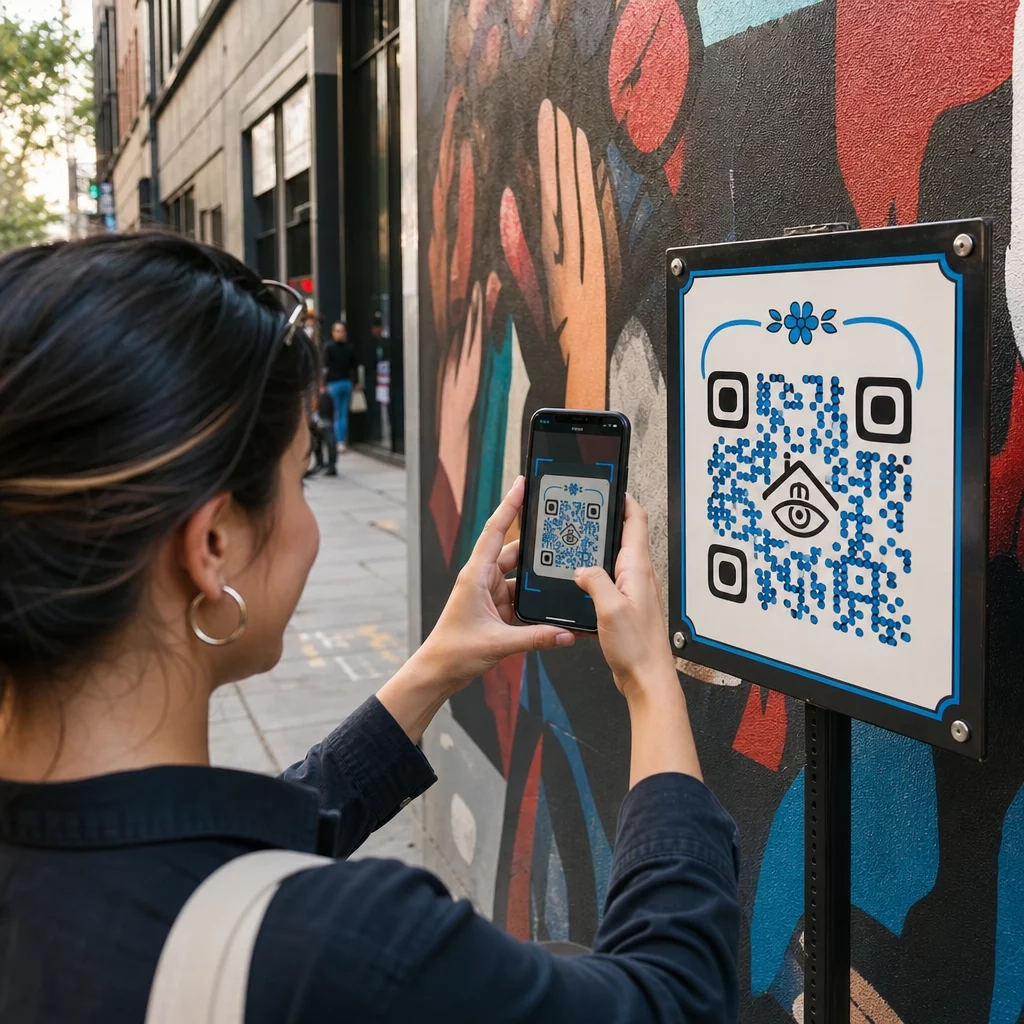
Um código QR colocado ao lado – ou entrelaçado – de um mural atua como uma ponte entre a peça física e uma riqueza de conteúdo digital. Espectadores com smartphones podem escanear instantaneamente, sem baixar um aplicativo separado, e ser levados a guias de áudio, entrevistas em vídeo, páginas de doação ou experiências interativas de RA.
Vários programas de arte pública demonstraram o modelo:
- Em Raleigh, Carolina do Norte, o Q-Art Code Project colocou códigos QR inteligentes com obras de arte públicas por toda a cidade para que os membros da comunidade pudessem acessar instantaneamente informações sobre cada peça e seu criador.
- No bairro de Wynwood, em Miami, o artista Ruben Ubiera incorporou um código QR diretamente em um mural que retrata oito imigrantes, ligando cada rosto a uma história oral gravada – incluindo relatos de separação familiar e deportação.
- No centro de Syracuse, o S.Alt City mural é construído inteiramente a partir de ladrilhos de código QR, com cada ladrilho ligando a uma organização de artes contemporâneas diferente na região, transformando efetivamente a parede em um diretório escaneável.
- Em Punta Gorda, Flórida, uma sociedade de murais local montou placas de código QR em paredes de murais históricos para que os visitantes possam se guiar pela coleção fora da temporada, acessando breves lições de história de seus telefones.
Esses projetos compartilham um princípio comum: o código QR não substitui a arte – ele a estende.
Conecte Sua Arte Pública ao Conteúdo Digital Use o Gerador de Código QR de Link para criar um código escaneável que direcione os espectadores para biografias de artistas, guias de áudio, entrevistas em vídeo ou qualquer destino da web que você escolher.
Que Conteúdo Vincular a Partir de Códigos QR de Arte Pública
O valor de uma leitura depende inteiramente do que ela entrega. Escolher o formato de conteúdo certo para o contexto faz a diferença entre um toque curioso e uma interação significativa.
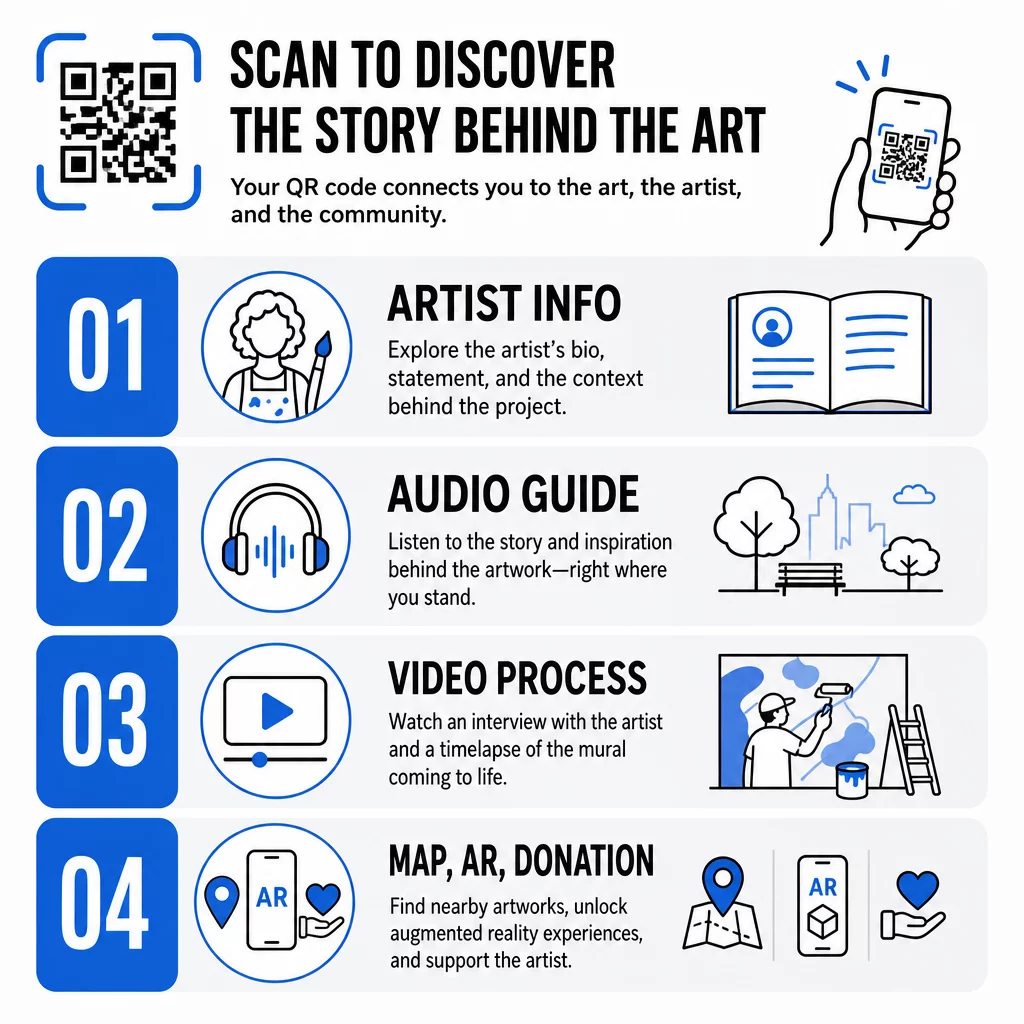
Informações e contexto do artista
Link para uma breve biografia, uma declaração sobre a obra ou uma linha do tempo mostrando o desenvolvimento do projeto. Isso é especialmente valioso para instalações temporárias onde o espaço na parede é limitado.
Guias de áudio
A narração falada funciona bem ao ar livre, onde os visitantes podem estar em movimento ou em ambientes barulhentos. Você pode hospedar arquivos de áudio diretamente usando um código QR MP3 que reproduz em qualquer smartphone.
Entrevistas em vídeo e documentação do processo
Ligar a uma entrevista com o artista ou a um time-lapse do mural sendo pintado dá aos espectadores uma perspectiva dos bastidores que aprofunda a apreciação da obra finalizada.
Guias em PDF e mapas de tour
Para instalações que fazem parte de um percurso ou distrito maior, um Código QR em PDF pode entregar um mapa de tour a pé para download ou o equivalente a um guia impresso – sem custos de impressão.
Localização e orientação
Para coleções de arte pública em vários locais, um Código QR do Google Maps permite que os visitantes naveguem de uma peça para a próxima sem ter que pesquisar manualmente.
Experiências de realidade aumentada
Códigos QR ligados a AR permitem que os espectadores desbloqueiem animações, sobreposições 3D ou narrativas em evolução sobrepostas à obra física. Museus como o Smithsonian e locais interativos como a Convergence Station de Meow Wolf em Denver têm usado esta abordagem para transformar exposições estáticas em experiências participativas. Para uma análise mais aprofundada de como a AR muda a narrativa em espaços de arte, veja como os códigos QR de AR transformam a narrativa em museus.
Links para doação e suporte
O artista de rua francês Pascal “PBOY” Boyart incorporou códigos QR de Bitcoin em seus murais, permitindo que os espectadores enviassem doações de criptomoedas por meio da leitura. Os códigos foram projetados como elementos integrantes da obra de arte, não como algo secundário, e resultaram em apoio direto da comunidade para sua prática.
Projetando Códigos QR Que Pertencem à Arte
Um código QR que entra em conflito visualmente com a obra circundante quebra a imersão do espectador. Um design cuidadoso mantém o código funcional, respeitando o contexto artístico.
O contraste não é negociável
Padrões escuros em um fundo claro são lidos de forma confiável. Esquemas de cores invertidos – claro sobre escuro – são mais difíceis de detectar para a maioria dos leitores. Seja qual for a paleta de cores que você escolher, priorize contraste suficiente entre o primeiro plano e o fundo do código.
Mantenha a zona de silêncio limpa
Deixe pelo menos quatro módulos de espaço em branco ao redor da borda externa do código. Texto, imagens e elementos decorativos que invadem essa borda interferem na leitura.
Use alta correção de erro ao adicionar logotipos
Incorporar um logotipo ou símbolo no centro de um código QR é uma forma comum de integrar branding ou a assinatura do artista. Defina a correção de erro para o Nível H antes de adicionar qualquer sobreposição – este nível pode recuperar até 30% dos dados danificados, o que compensa a porção do código obscurecida pelo logotipo.
Tamanho para a distância de visualização
A regra geral é que o código deve ter aproximadamente um décimo da largura da distância de leitura esperada. Um visitante a 10 pés de um mural precisa de um código de pelo menos 12 polegadas de largura para escanear confortavelmente. Para sinalização de curto alcance, aplica-se um mínimo de 1 × 1 polegada. Para murais de grande escala, planeje códigos de 1 a 1,5 pés de largura.
Escolha materiais duráveis para uso externo
Tintas resistentes a UV, metal ou plástico gravado e laminados à prova de intempéries prolongam a vida útil funcional dos códigos externos. Acabamentos brilhantes criam reflexos; substratos foscos têm melhor desempenho em iluminação variada. Teste o código em diferentes horários do dia e sob as condições de iluminação que a instalação realmente enfrentará.
Exporte em formato vetorial para impressão
Baixe seu código QR como um arquivo SVG, EPS ou PDF, em vez de uma imagem raster de baixa resolução. Formatos vetoriais escalam de forma limpa para qualquer tamanho sem pixelização, o que é essencial para grandes aplicações externas.
Para uma análise completa das taxas de contraste, zonas de silêncio e níveis de correção de erro, consulte melhores práticas de usabilidade de códigos QR e melhores práticas para legibilidade de códigos QR.
Onde Colocar Códigos QR em Murais e Instalações
Mesmo um código perfeitamente desenhado não será escaneado se estiver no local errado. As decisões de posicionamento afetam tanto a descoberta quanto a facilidade de uso.
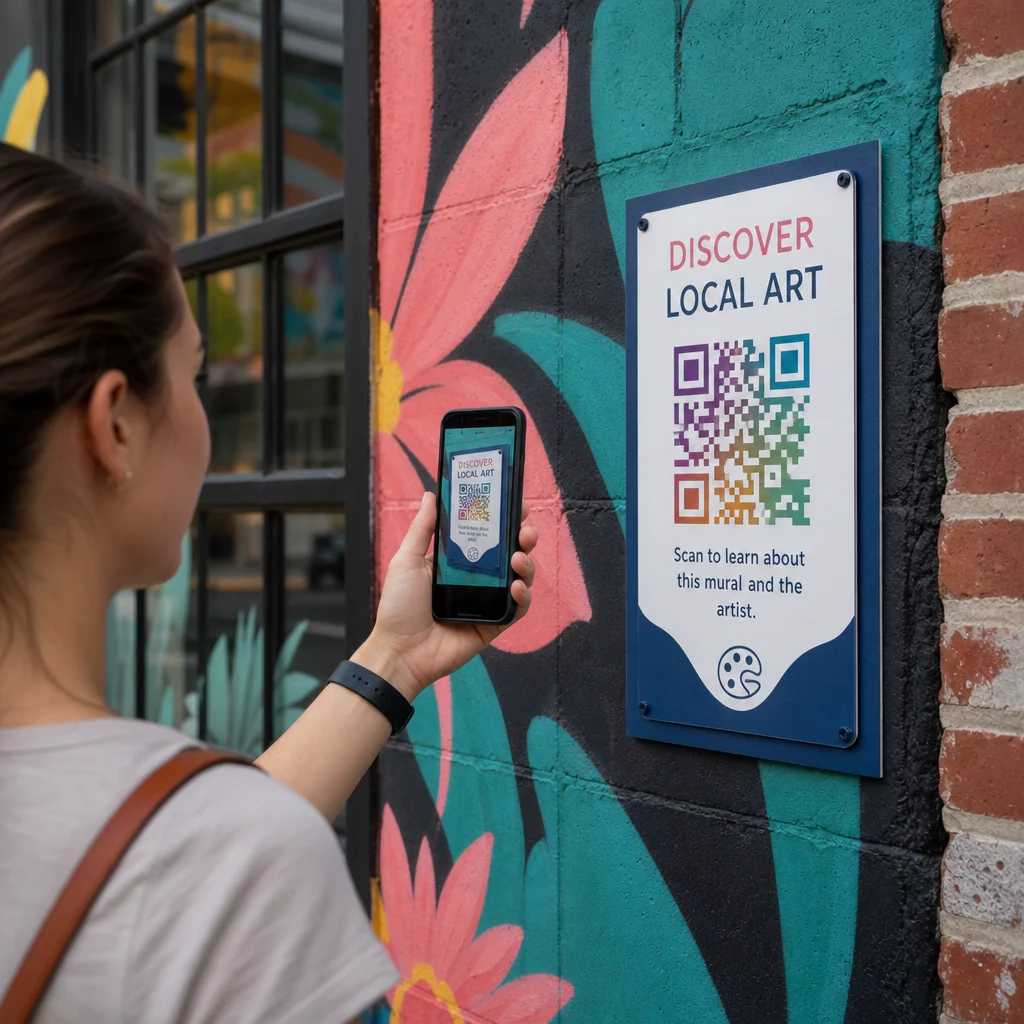
Nível dos olhos e acessível
Posicione os códigos a aproximadamente 1,2 a 1,5 metros do chão – a posição de escaneamento natural para a maioria dos adultos. Códigos colocados muito altos exigem que os espectadores levantem seus telefones de forma desajeitada; códigos colocados ao nível do chão são fáceis de perder.
Onde as pessoas já param
Espectadores que estão parados são muito mais propensos a escanear do que espectadores que estão passando. Identifique pontos de parada naturais – áreas de estar, locais sombrios, cantos onde as pessoas se agrupam – e coloque os códigos lá, em vez de em posições de meio-passo ao longo de uma passarela movimentada.
Superfícies planas e estáveis
Superfícies planas proporcionam aos scanners uma leitura limpa e sem distorções. Superfícies ligeiramente curvas ou texturizadas podem funcionar se o código for grande o suficiente, mas aumentam a chance de falha na leitura. Evite superfícies altamente reflexivas que geram brilho.
Sinais claros
Adicione uma breve chamada para ação perto do código: “Escaneie para ouvir a história do artista” ou “Escaneie para o guia completo.” Espectadores que não reconhecem imediatamente o que o código faz são menos propensos a tentar. Para orientação sobre como escrever CTAs eficazes, consulte Melhores práticas de posicionamento de códigos QR.
Usando Códigos QR Dinâmicos para Gerenciar e Rastrear Arte Pública
Códigos QR estáticos codificam um destino fixo. Uma vez impressos ou instalados, o conteúdo vinculado não pode ser alterado sem substituir o código físico. Para instalações de arte pública de longo prazo – ou projetos onde o conteúdo evolui – isso cria um problema real de manutenção.
Códigos QR dinâmicos resolva isso apontando para um URL de redirecionamento curto que você controla. O código físico permanece o mesmo, mas você pode atualizar o destino a qualquer momento a partir de um painel. Se o site de um artista mudar, um vídeo for re-hospedado, ou um guia turístico sazonal substituir um mais antigo, a atualização acontece na plataforma sem tocar no código instalado.
Códigos dinâmicos também fornecem análises. Você pode rastrear quantas vezes um código foi escaneado, quando os escaneamentos acontecem e onde no mundo os scanners estão localizados. Para curadores e organizadores de exposições, esses dados revelam quais peças em uma coleção estão gerando mais engajamento, quais horários do dia veem pico de atividade e se certas localizações superam outras. Esses insights apoiam melhores decisões de posicionamento e atualizações de conteúdo mais relevantes ao longo do tempo.
Para artistas que gerenciam instalações temporárias ou projetos em evolução, a capacidade de sobrepor conteúdo – fornecendo informações básicas no primeiro escaneamento e desbloqueando material mais aprofundado com visitas repetidas – incentiva o engajamento contínuo com a mesma peça.
Rastreie Cada Leitura em Sua Coleção de Arte Pública O Gerador de QR Code Dinâmico permite-lhe atualizar o conteúdo ligado sem reimprimir e fornece um painel de análise completo para monitorizar o envolvimento em cada instalação.
Códigos QR em Museus e Instituições Culturais
Espaços culturais interiores operam sob diferentes restrições do que murais exteriores, mas os mesmos princípios se aplicam. Museus têm adotado códigos QR para expandir o que as etiquetas de exposição podem comunicar, oferecer conteúdo multilingue a visitantes internacionais e substituir brochuras impressas por alternativas digitais atualizáveis.
Casos de uso em ambientes de museu incluem:
- Guias de áudio interativos e visitas autoguiadas
- Mapas digitais do espaço de exposição
- Experiências de RA que animam artefactos ou revelam camadas ocultas de pinturas
- Horários de workshops, inscrições para palestras e promoções de eventos
- Formulários de feedback de visitantes ligados nas saídas ou por toda a galeria
O museu M+ em Hong Kong registou 148.000 interações de visitantes via códigos QR, demonstrando uma forte prontidão do público para o envolvimento baseado em smartphones em espaços de arte. O Musea Brugge utilizou códigos QR Pageloot especificamente para enriquecer o envolvimento dos visitantes e otimizar o acesso à informação da exposição.
Para uma visão mais ampla de como as instituições estão a aplicar esta tecnologia, veja Códigos QR para museus, Códigos QR para galerias de arte: melhores práticase estudos de caso sobre códigos QR em instalações de arte moderna.
Segurança, Privacidade e Manutenção a Longo Prazo
Os códigos QR públicos são acessíveis a todas as horas e a todos os públicos, o que torna a manutenção contínua essencial. Um link quebrado ou um destino desatualizado mina a confiança do espectador e desperdiça a oportunidade que a leitura criou.
Práticas essenciais para implantação responsável a longo prazo:
- Teste regularmente em vários dispositivos e sob diferentes condições de iluminação para confirmar que os códigos permanecem escaneáveis e os links estão ativos.
- Use destinos HTTPS para sinalizar legitimidade e proteger os visitantes de redirecionamentos inseguros.
- Exiba sinalização clara sobre quais dados, se houver, são coletados quando os espectadores escaneiam, e cumpra as regulamentações de privacidade aplicáveis.
- Use materiais físicos duráveis apropriados para o ambiente externo – tintas resistentes a UV, laminados à prova de intempéries ou telas digitais protegidas para instalações permanentes.
- Audite o conteúdo vinculado periodicamente para garantir que vídeos, PDFs e páginas de artistas permaneçam atuais e acessíveis.
Os códigos QR dinâmicos reduzem significativamente a carga de manutenção, uma vez que as atualizações de conteúdo e as alterações de link acontecem na plataforma, em vez de exigir a substituição física dos códigos instalados. Quando os códigos QR são projetados com o mesmo cuidado que a obra de arte que acompanham – tamanho adequado, contraste correto, posicionamento cuidadoso e vinculados a conteúdo genuinamente valioso – eles estendem a vida útil e o alcance da arte pública muito além do que uma única visualização pode oferecer. Seja você documentando um mural de rua, construindo uma trilha de esculturas interativas ou digitalizando uma coleção de museu, as ferramentas de código QR para arte disponíveis através da Pageloot oferecem um caminho direto da instalação física ao engajamento digital mensurável.
Perguntas frequentes
O tamanho depende da distância de digitalização. Uma regra prática é fazer o código ter pelo menos um décimo da largura da distância da qual você espera que os espectadores digitalizem. Para alguém a 10 pés de distância, o código deve ter pelo menos 12 polegadas de largura. Para sinalização de curto alcance, um mínimo de 1 × 1 polegada é suficiente. Murais de grande escala geralmente exigem códigos entre 1 e 1,5 pés de largura para permanecerem digitalizáveis a uma distância confortável.
Os códigos QR na arte pública podem vincular a quase qualquer conteúdo digital: biografias de artistas, guias de áudio, entrevistas em vídeo, experiências de RA, guias de passeio em PDF, páginas de doação, navegação no Google Maps, perfis de mídia social ou formulários de feedback. O tipo de conteúdo certo depende do contexto da obra de arte – murais externos geralmente se beneficiam de áudio ou vídeo curto, enquanto instalações de museus podem suportar guias multimídia mais detalhados.
Um código QR estático codifica um destino fixo que não pode ser alterado depois que o código é impresso ou instalado. Um código QR dinâmico aponta para um URL de redirecionamento que você pode atualizar a qualquer momento a partir de um painel de gerenciamento, de modo que o código físico permanece no lugar enquanto o conteúdo vinculado evolui. Os códigos dinâmicos também fornecem análises – contagens de digitalizações, tempo e dados geográficos – que ajudam os curadores a entender quais instalações estão gerando mais engajamento e a refinar sua abordagem ao longo do tempo.