Are you tired of searching through unmarked storage boxes just to locate a single item? Digging blindly through stacked containers wastes valuable time and creates endless operational headaches. Using QR code inventory labels allows you to track, locate, and manage stored items instantly with a simple smartphone scan.
How QR Code Storage Tracking Works
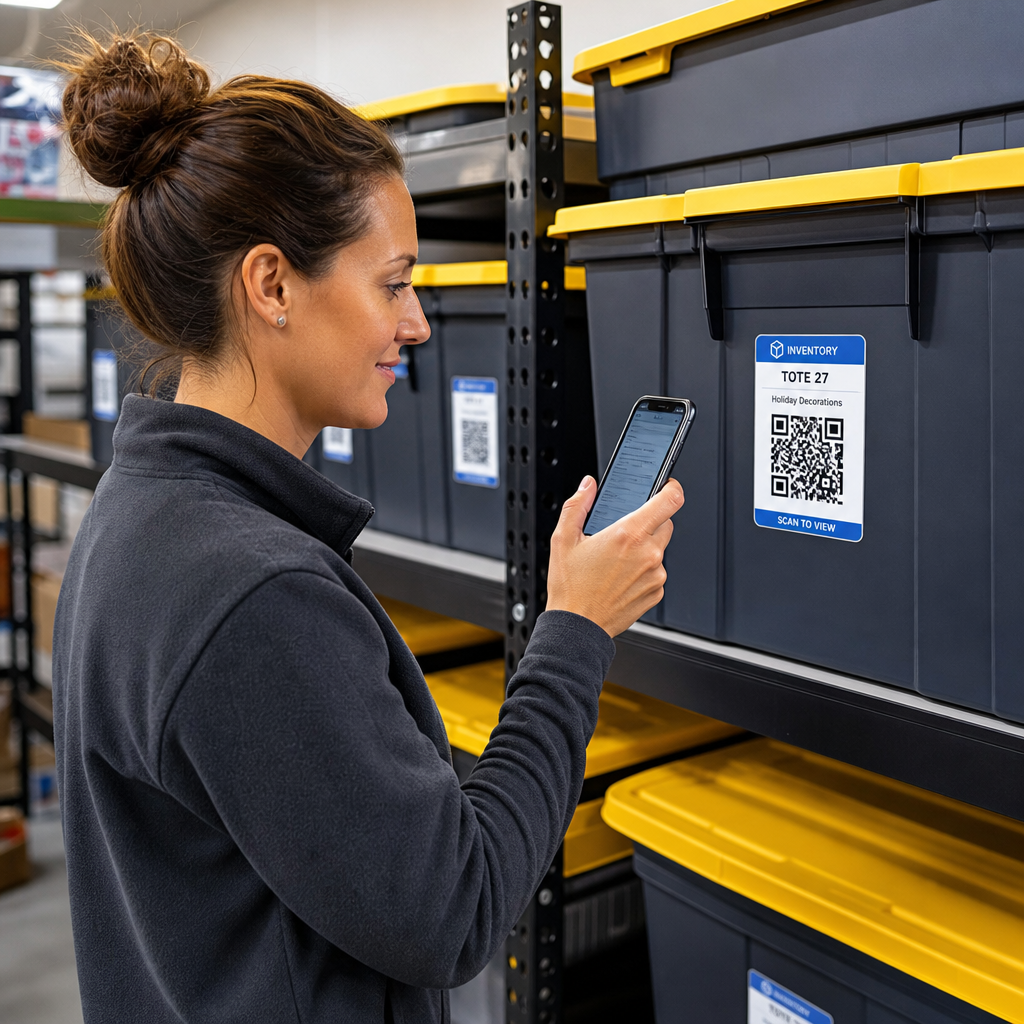
A QR code storage system connects physical containers, shelves, or facility units to digital records. When you scan a label attached to a tote or rack, your device reads the encoded pattern and opens a linked document, web page, or database entry displaying the contents stored inside.
Depending on your operational requirements, you can select between two primary types of QR codes:
- Staattiset QR-koodit: These encode plain text directly into the physical pattern. By using a text QR code generator, you can create simple, offline labels that display basic item details. However, static codes cannot be modified after printing.
- Dynaamiset QR-koodit: These store a short redirect URL pointing to an online spreadsheet, cloud folder, or database entry. By using a dynaaminen QR-koodigeneraattorimme, you can update box lists, add content photos, or edit item quantities at any time without reprinting the physical sticker.
Adopting digital labels creates a reliable framework to track inventory in real time, giving you complete visibility into stored stock across home garages, commercial warehouses, or self-storage units.
Steps to Set Up a Storage Inventory System
Building an organized storage layout requires systematic logging, durable label creation, and standardized scanning routines.
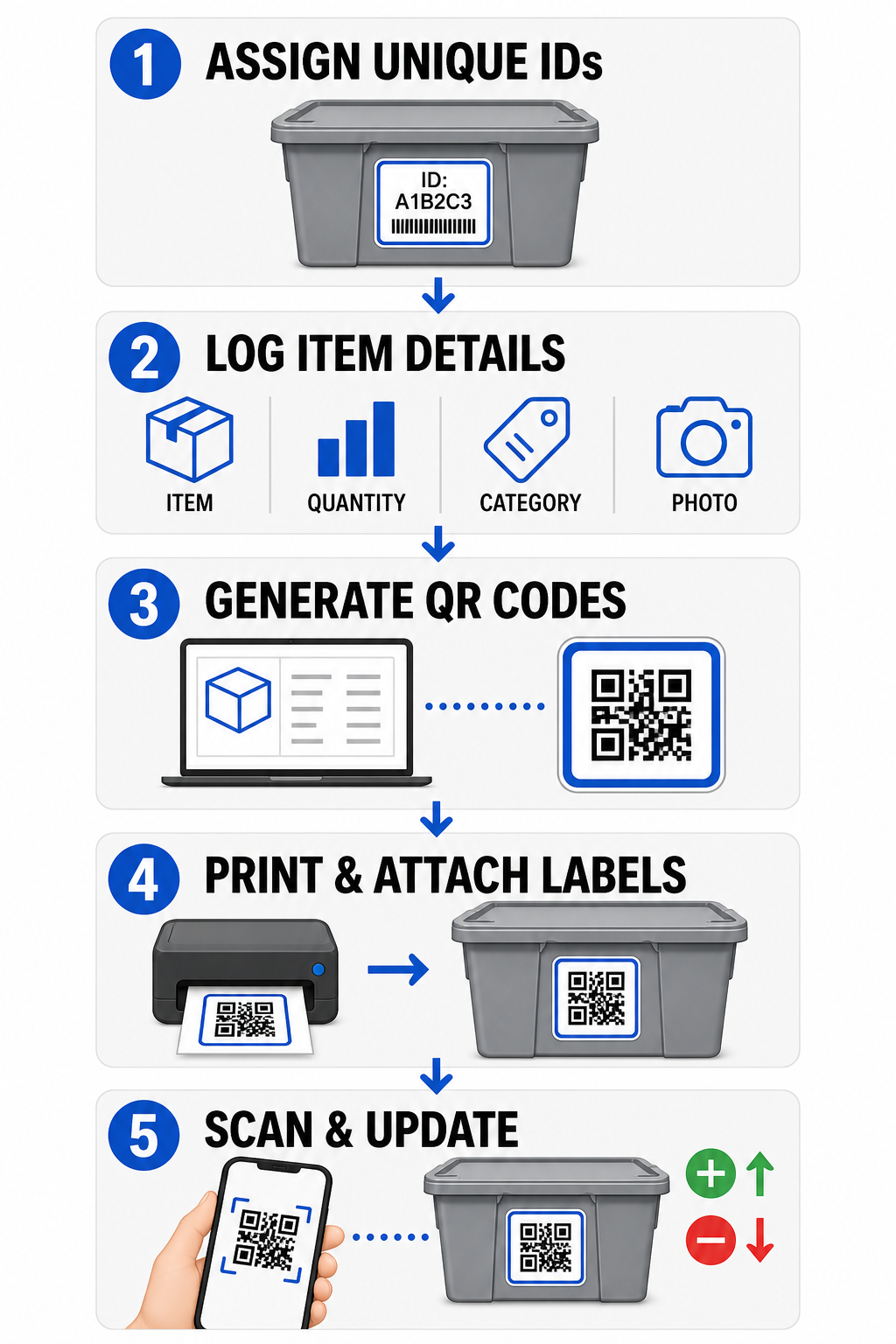
- Assign unique identifiers: Create a clear naming format or stock keeping unit (SKU) structure for every bin, box, shelf, or storage locker.
- Compile item records: Input details such as item names, quantities, categories, and photographs into a centralized database or digital document.
- Generate scannable codes: Enter your digital record links into an online generator to luoda QR-koodeja tuotevarastoon. You can also connect a Google Form QR-koodigeneraattori to a tracking spreadsheet to simplify intake data entry.
- Print and attach labels: Apply printed labels to the front or top of containers where workers can scan them without moving heavy stacks.
- Scan and update routinely: Use a web-based QR-koodinlukija or standard smartphone camera to update the live record whenever items are added, removed, or relocated.
Streamline Your Storage Management Need flexible labels that let you update stored box details without reprinting stickers? Use the Dynaamisen QR-koodin generaattorimme to build editable inventory tags with built-in scan tracking today.
Label Design and Placement Guidelines
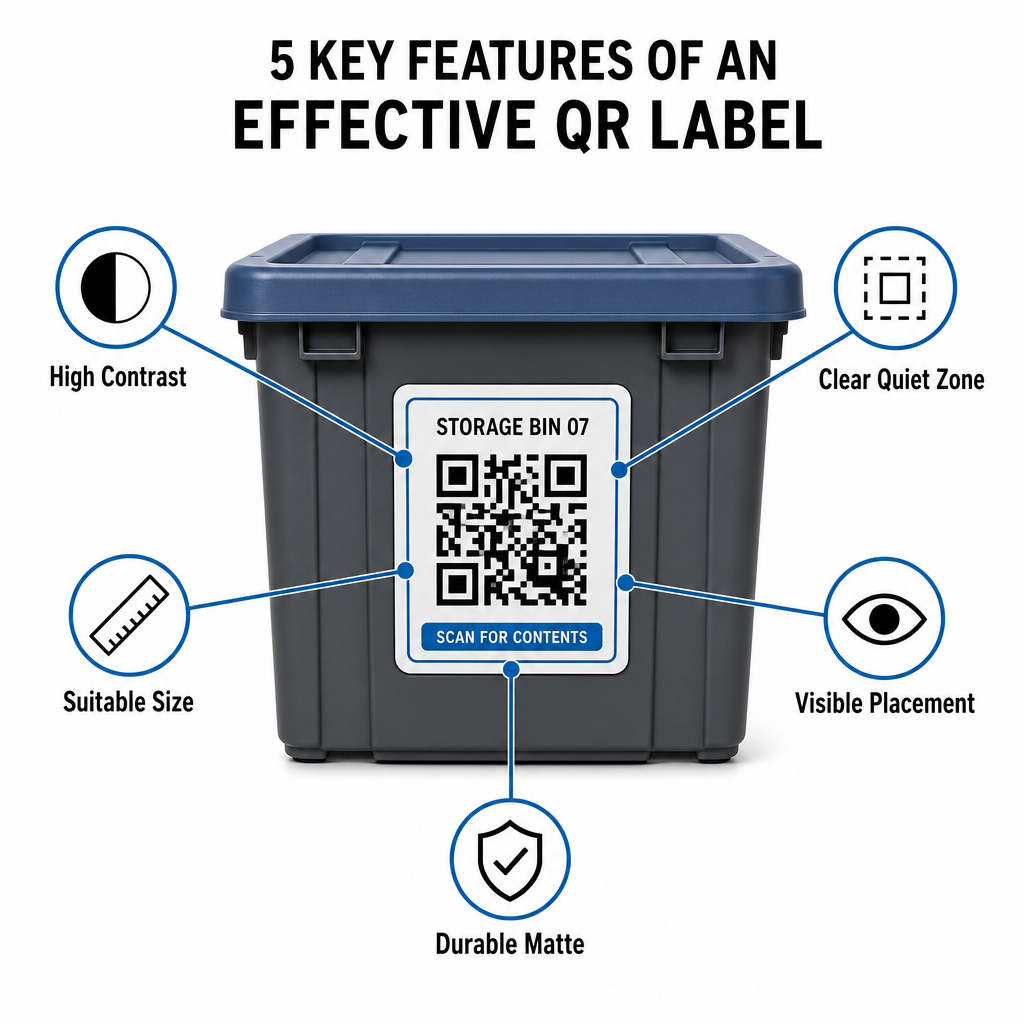
To guarantee fast scans in dim facilities or crowded storage lockers, your printed labels must follow established scannability standards.
Size and Distance Rules
- Minimum label size: Print close-range codes no smaller than 2 x 2 cm (0.8 x 0.8 inches) for handheld totes or archive boxes.
- Distance ratio: Follow a 10:1 distance-to-size rule for high shelving or facility signage, meaning a code scanned from 10 feet away must measure at least 1 foot wide.
Contrast and Margin Requirements
- High contrast: Use dark patterns on light backgrounds. Standard black-on-white provides a 21:1 contrast ratio for maximum optical readability, while maintaining a contrast ratio of at least 12:1 ensures consistent scanning.
- Quiet zone border: Leave an unobstructed margin around the QR code measuring at least four times the width of a single module square.
- Avoid visual clutter: Eliminate background shadows, low-contrast color combinations, or heavy gradients that degrade camera sensor detection.
Printing and Environmental Protection
- High print resolution: Export artwork in vector formats like SVG or PDF, or save raster files at 300 DPI or higher to avoid blurry edges.
- Durable materials: Use weather-resistant, matte vinyl labels for industrial units or outdoor racks. Position exterior tags on less sun-exposed surfaces, such as the north-facing side of equipment, to prevent UV degradation over time.
| Design Parameter | Standard Requirement | Practical Reason |
|---|---|---|
| Minimum Close-Range Size | 2 x 2 cm (0,8 x 0,8 tuumaa). | Guarantees smartphone camera focal legibility. |
| Scanning Distance Ratio | 10:1 (Distance : Width) | Ensures high-shelf tags scan clearly from floor level. |
| Color Contrast Ratio | 12:1 minimum (21:1 ideal) | Helps optical sensors distinguish data patterns easily. |
| Quiet Zone Margin | 4 module widths on all sides | Prevents adjacent text or border lines from distorting scans. |
| Print Resolution | 300 DPI or SVG/PDF export | Prevents smudged or blurry pixels during printing. |
Practical Applications for Operators and Customers
Storage facility managers and personal storage customers use QR codes to address distinct organizational needs.
Self-Storage Facility Operators
Operators place scannable tags across their properties to improve asset tracking and daily maintenance workflows:
- Unit status monitoring: Tag unit doors so facility staff can scan during walk-throughs to log lock checks, maintenance requests, or availability updates.
- Equipment checkouts: Label facility hand trucks, tools, and forklift equipment to log custody during daily operation routines.
- Fulfillment efficiency: Facilities supporting third-party logistics use scannable tags to streamline order fulfillment and incoming receiving processes.
Personal and Business Storage Customers
Individuals and commercial renters organize home garages, archive rooms, or rental units through structured digital indexing:
- Seasonal container indexing: Label holiday decorations, sports gear, and seasonal wardrobe totes to review box contents without opening sealed lids.
- Business archive tracking: Categorize tax documentation, legal files, and client records by linking physical box tags to secure online folders.
- Cross-sector flexibility: From retail merchandise to specialized tools across various industries, custom tags built with a versatile QR-koodigeneraattori keep stored stock organized and easy to retrieve.
Take Control of Your Stored Inventory
Implementing QR code storage labels eliminates guesswork, speeds up inventory audits, and prevents misplaced stock across personal storage units and commercial warehouses. By selecting dynamic labels, printing high-contrast patterns, and applying clear placement rules, you maintain total visibility over every stored asset.
Start digitizing your storage workflows today by generating print-ready inventory labels with Pageloot.
Usein kysytyt kysymykset
The minimum size for close-range scanning on containers or boxes is 2 x 2 cm (0.8 x 0.8 inches). For labels placed on high shelving or facility doors scanned from a distance, follow a 10:1 ratio where the code’s width is one-tenth of the total scanning distance.
Yes, provided you use dynamic QR codes. Dynamic QR codes point to an editable short link, allowing you to update item lists, upload photos, or adjust quantities in your digital database while keeping the exact same physical label on your box.
Facility operators place QR code labels on unit doors, aisle locations, and shared equipment. Scanning these codes allows staff to complete cycle counts, record unit maintenance history, confirm occupancy, and manage asset checkouts in real time.