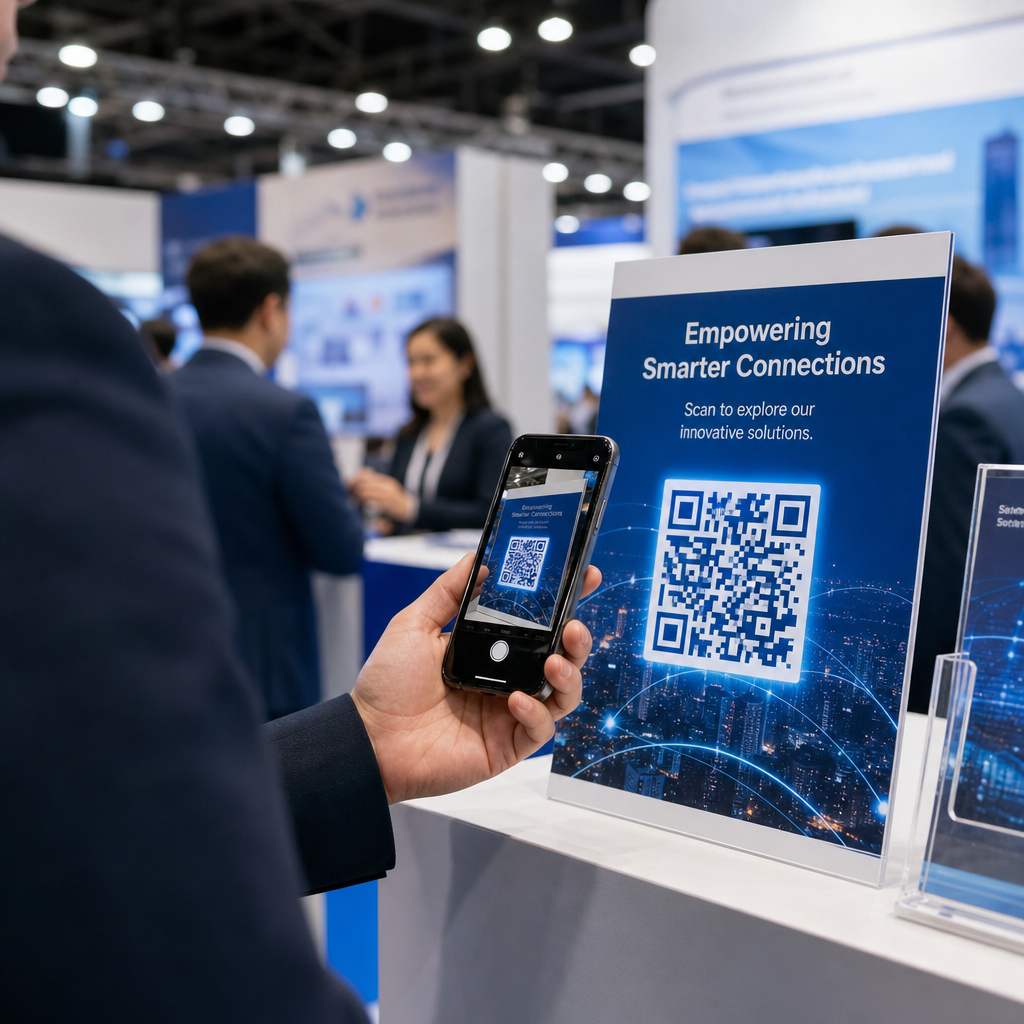
Are you leaving the trade show floor with a stack of business cards and no clear way to follow up? Nearly 80% of trade show leads are never followed up on, turning expensive booth investments into missed opportunities. This guide walks you through practical, proven ways to use QR codes at your next trade show to capture better leads, engage attendees, and convert booth conversations into actual pipeline.
Why QR Codes Belong at Every Trade Show Booth
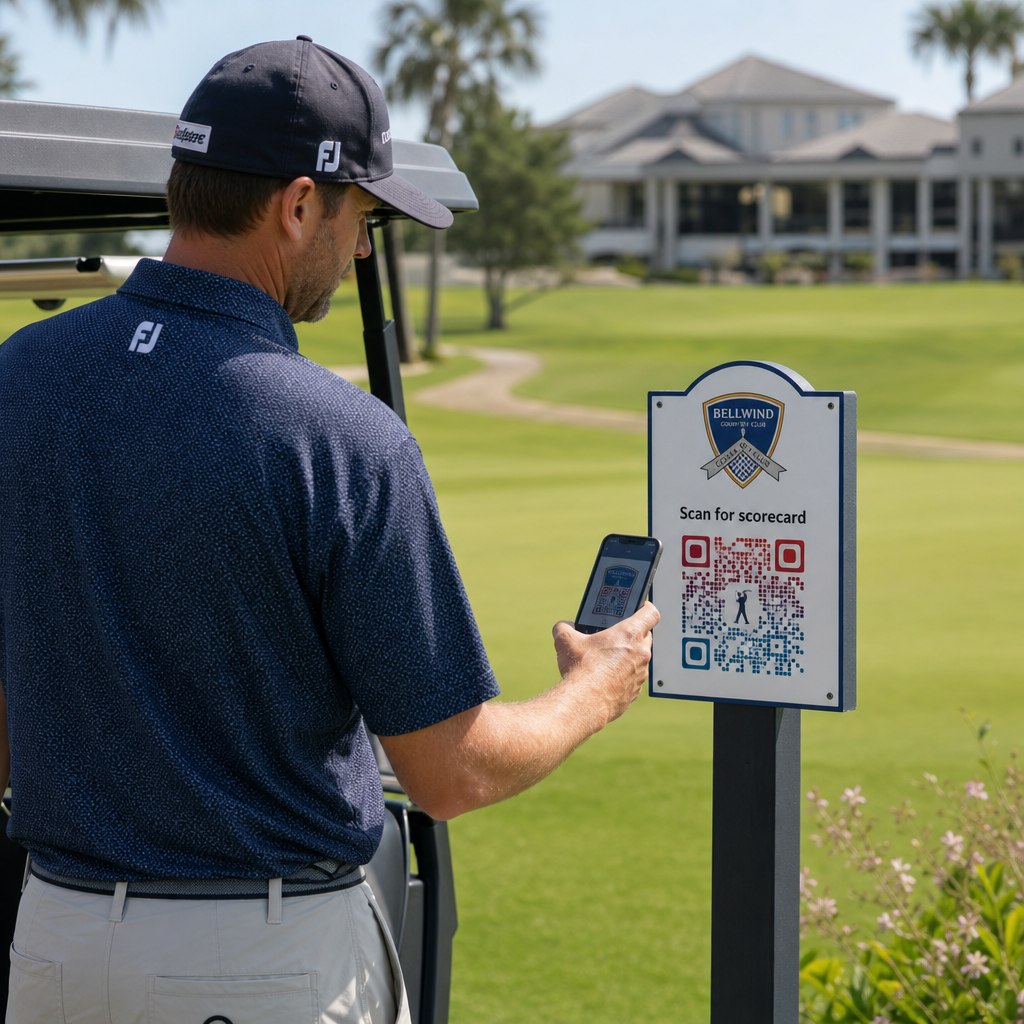
Trade shows are high-friction environments. Attendees are moving fast, your staff is juggling multiple conversations, and paper forms get lost or abandoned. QR codes remove that friction by connecting a physical moment – someone standing at your booth – to a digital action that happens instantly on their phone.
The numbers support this shift. About 99.5 million U.S. smartphone users scanned QR codes in 2025, up 19% from 2022. Attendees already know how to use them. Your job is to deploy them strategically so every scan serves a purpose.
QR codes at trade shows can:
- Route visitors to a lead capture form without requiring staff intervention
- Share product specs, catalogs, or demo videos instantly
- Replace paper business cards with a scannable digital contact
- Register attendees for post-show demos or consultations
- Track which booth touchpoints generate the most engagement
The key distinction to understand before you start is динамическими и статическими QR-кодами. A static QR code embeds a fixed URL directly into the pattern – once printed, it cannot be changed. A dynamic QR code uses a short redirect URL that you can update at any time without reprinting the physical material. For a trade show, where booth messaging may shift between show days or where a last-minute landing page change is always possible, dynamic codes are the practical choice.
Start Building Your Trade Show QR Codes Create dynamic QR codes you can update on the fly, track in real time, and customize to match your booth branding. Try the Генератор QR-кодов to get started free.
How to Use QR Codes for Lead Capture at Your Booth
The biggest ROI use case for trade show QR codes is lead capture. When trade show leads are followed up within 7–10 days, about 20–30% convert into sales opportunities – but that only works if you actually captured the lead with enough context to follow up effectively.
Link Directly to a Lead Capture Form
Place a QR code prominently at your booth that links to a short, mobile-optimized form. Keep the form to five to seven fields maximum, ordered in a natural conversational flow – name, company, email, primary interest, and a qualifying question or two. Multiple-choice answers work better than open text on a phone screen.
A QR-код формы Google is a fast way to build this without custom development. Create your form, copy the share link, generate the QR code, and you’re live. For teams that want captured data flowing directly into a CRM, pairing a dynamic QR code with a webhook or automation tool can route each submission automatically. The guide on QR code scanning workflow automation covers a step-by-step approach to setting this up.
Replace Paper Business Cards with Digital Contact Sharing
Handing out paper cards at a trade show is a gamble – many end up in a coat pocket and are never seen again. A vCard QR-код lets a prospect scan your code and save your contact details directly to their phone’s address book in seconds, with no manual entry and no transcription errors.
For a more complete networking tool, a QR-код визитная карточка can include your name, title, company, phone, email, and website. You can display it on a badge, a table sign, or a dedicated card that you hand out during conversations. The scan handles the data transfer, and you can track how many people actually saved your information. For a broader look at how QR codes support event networking, the guide on turning event handshakes into leads walks through the full funnel from first scan to CRM entry.
Turn Every Handshake into a Captured Lead Generate a vCard QR code that lets attendees save your contact instantly. Use the Генератор QR-кодов vCard to create yours in minutes.
Share Product Materials On Demand
Printed brochures are expensive and often end up in the trash. A PDF QR-код lets you link a product catalog, spec sheet, or case study directly to a scannable code. Attendees get the content on their phone immediately, and you save on printing costs.
Because the underlying PDF is hosted dynamically, you can update the document between show days – swap in a revised price sheet or updated product brochure – without touching the printed QR code on your banner.
Drive Event Registration from the Booth
If you’re hosting a post-show webinar, product demo, or follow-up consultation, your booth is the right place to capture registrations. An event QR code linking directly to your registration landing page lets staff point interested visitors to a scan rather than collecting email addresses manually mid-conversation.
For more on integrating QR codes with your event registration workflow, the guide on building dynamic QR codes for CRM check-ins covers how to pre-populate CRM fields from a scan so follow-up is personalized from the first touch.
Qualifying Leads at the Show, Not Just Capturing Them
Capturing a name and email is a starting point, not a finished lead. Sales teams need context – what product the prospect was interested in, how urgent their need is, and where they are in a buying cycle – to follow up effectively.
A few practices that improve lead quality at the point of capture:
- Define your qualification questions in advance and map them to your ideal customer profile. Decide which fields are required for sales and build them into your form before the show opens.
- Use a simple rating system (A, B, C or high, medium, low interest) so booth staff can tag each lead’s urgency at the time of the conversation. Add this as a dropdown in your form or capture it in a notes field.
- Add a notes field to the lead form where staff can record specifics about the conversation – the challenge the prospect mentioned, the product they asked about, or the timeline they gave. This context is what makes follow-up feel personal rather than generic.
- Practice before the show. Run through the lead capture process with booth staff in a role-play so the workflow is natural and data entry doesn’t interrupt the conversation.
Defining this structure in advance, rather than trying to sort it out during the show, is what separates a list of names from a qualified pipeline.
Placing QR Codes Across Your Booth for Maximum Reach
A single QR code in one corner of your booth misses most of your traffic. Distribute codes across multiple touchpoints so attendees encounter them naturally at different moments in their visit.
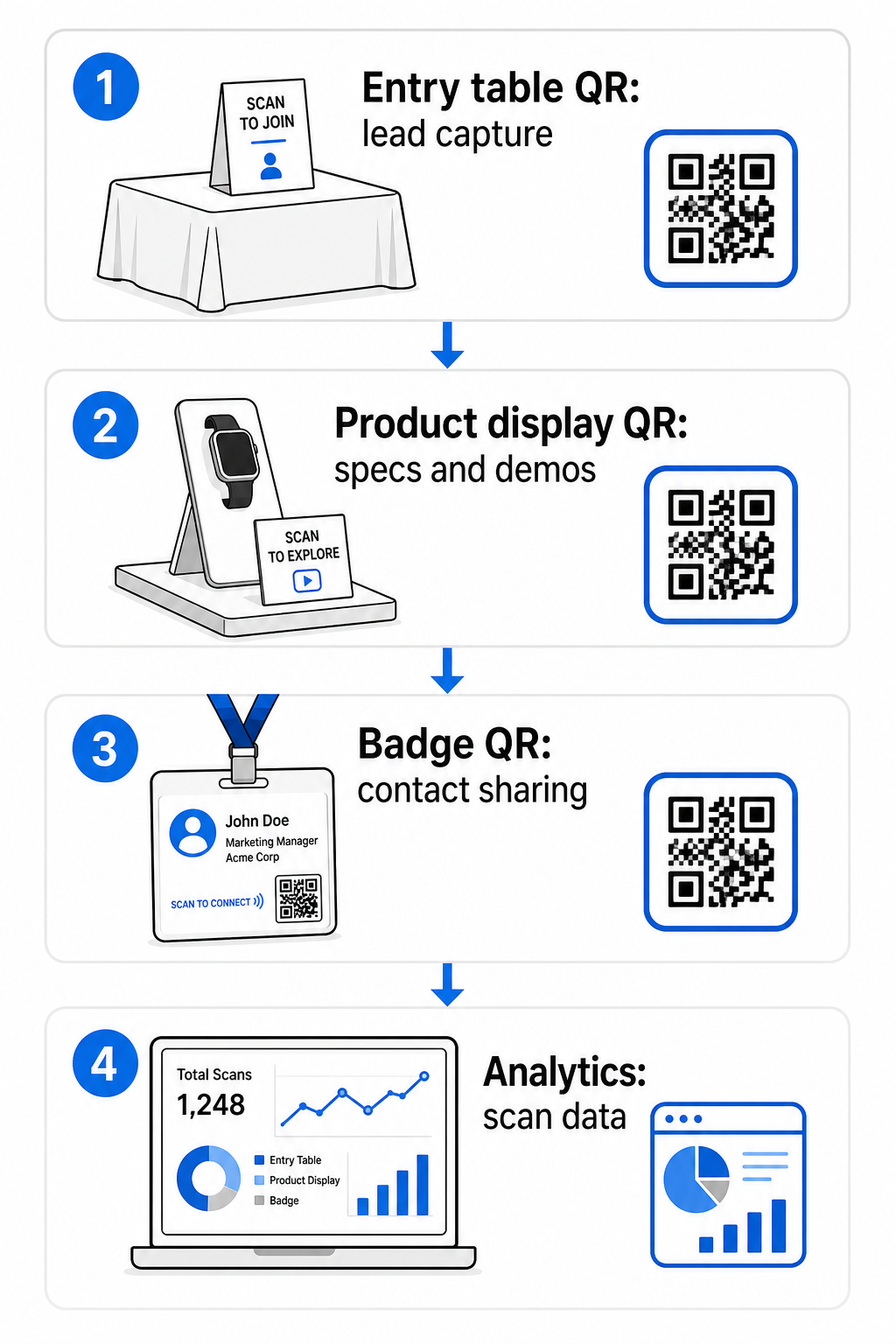
Effective placement locations include:
- Reception or entry table: a lead capture form or contact card code as the first interaction
- Product displays: links to spec sheets, demo videos, or case studies relevant to each product
- Table signage: a QR code linking to your portfolio, contact page, or a special show offer
- Handouts and giveaways: a code on any printed material that carries the attendee back to your digital presence after the show
- Badge or name tag: a personal vCard code for one-on-one networking conversations
For each placement, follow the 10:1 size-to-scanning-distance rule: the code’s width should be approximately one-tenth of the expected scanning distance. A code on a tabletop sign viewed from two feet away needs to be at least 2–3 inches wide. A banner viewed from six feet needs a proportionally larger code. Print at 300 DPI or higher using vector formats (SVG, EPS, or PDF) to keep the pattern sharp.
Additional placement guidelines that affect scan reliability in a busy trade show environment:
- Position codes at eye level or slightly below, in locations where attendees naturally pause
- Используйте flat, matte, non-reflective surfaces to avoid glare from booth lighting
- Maintain a тихой зоны – a clear margin of at least four modules wide – around each code so scanners can distinguish it from surrounding graphics
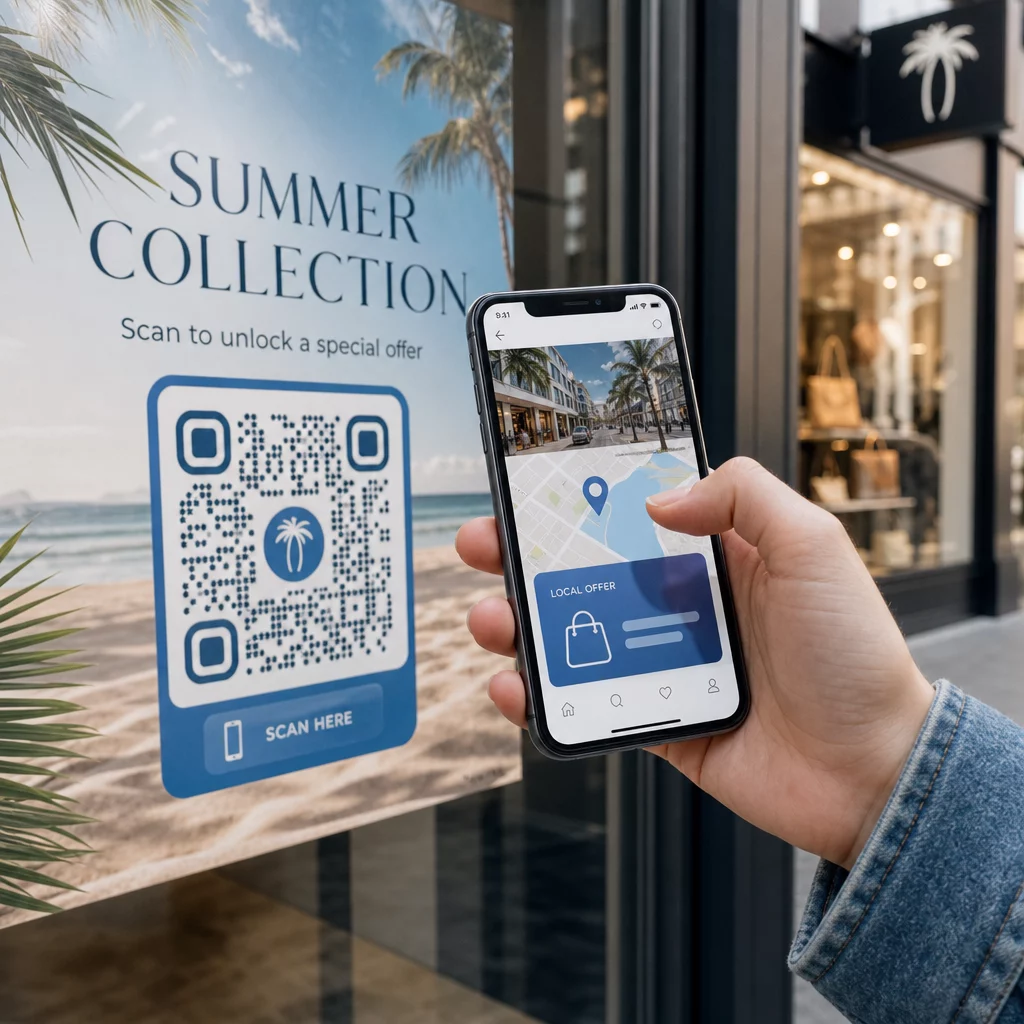
- Добавить brief call-to-action next to every code (“Scan to download our product guide” or “Scan to enter our giveaway”) so attendees know exactly what they’re getting before they scan
For more detail on print and design standards, the guide on лучшим практикам читаемости QR-кодов covers contrast ratios, resolution requirements, and surface considerations in full.
Tracking Booth Performance with QR Code Analytics
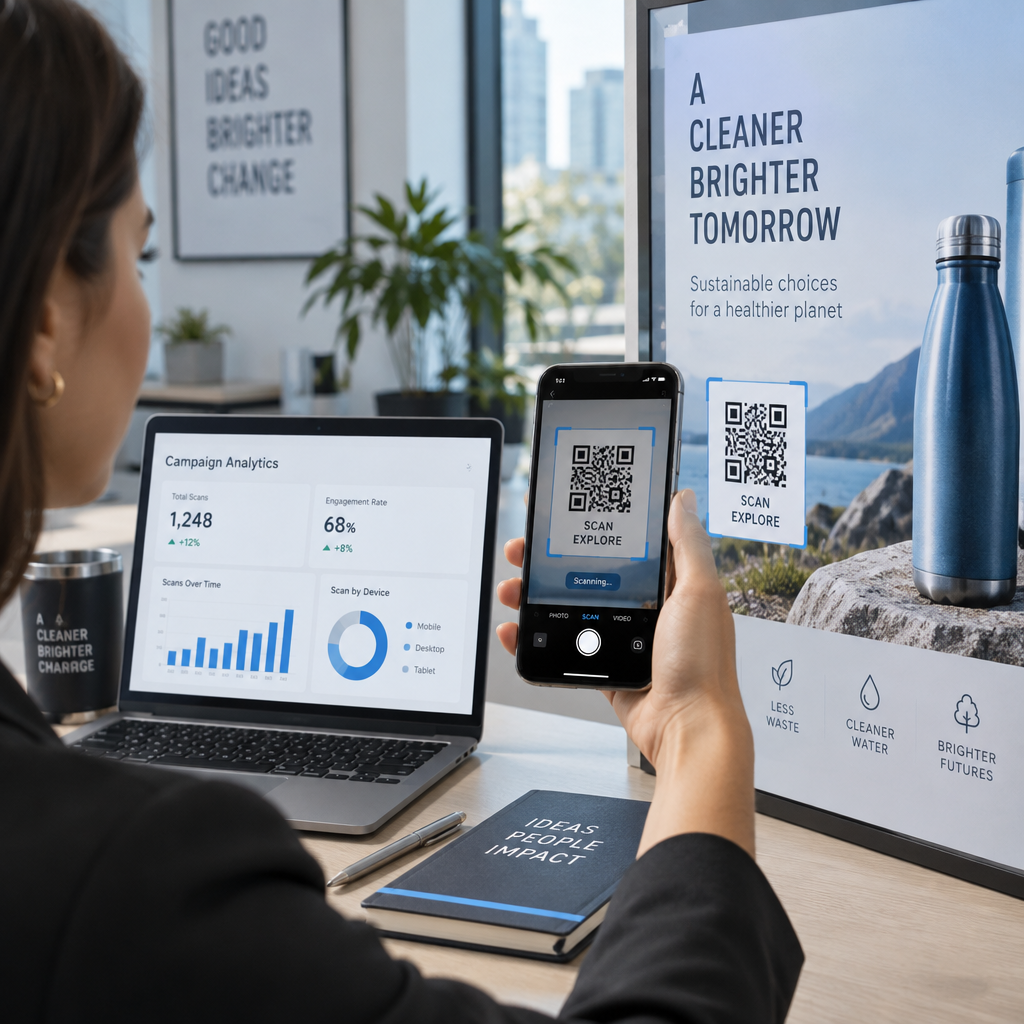
One of the most underused advantages of dynamic QR codes at trade shows is the performance data they generate. Every scan creates a data point: when it happened, on what device, from which geographic location. Across a multi-day show, this data tells you which booth touchpoints are working and which aren’t.
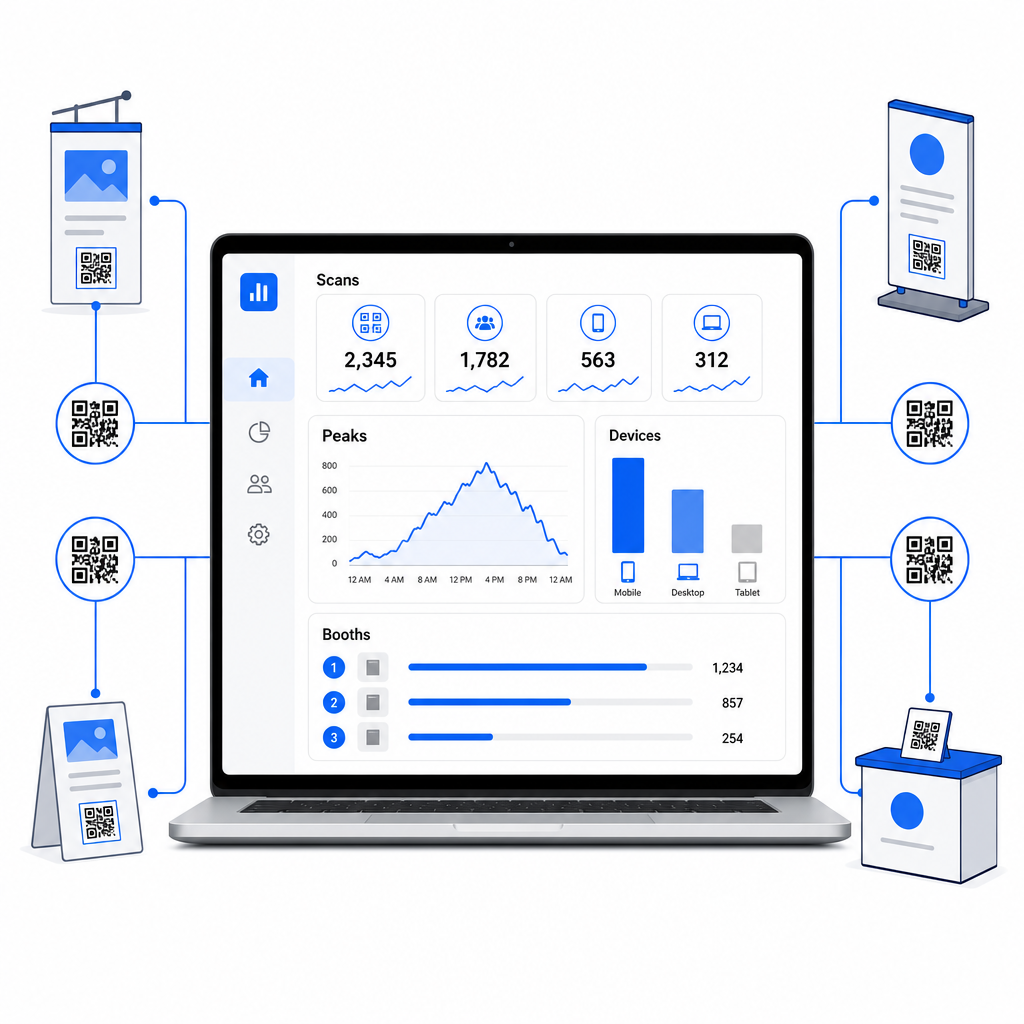
With Pageloot’s analytics dashboard, you can monitor:
- Scan counts by code: which materials or displays are generating the most interest
- Time of scans: when during the show day attendees are most engaged
- Device types: whether your mobile landing pages are optimized for the right audience
- Geographic data: useful for multi-venue or multi-show campaigns
This is the difference between knowing you had 300 booth visitors and knowing that 220 of them scanned your product demo code, 80 scanned your contact card, and traffic peaked in the first two hours of each show day. That level of insight directly improves how you allocate staff and prioritize follow-up. For a deeper look at what these tools surface and how to act on the data, the guide on QR code tools for event tracking covers the key metrics worth watching.
See Which Booth Touchpoints Are Actually Working Track scans by location, time, and device across all your trade show QR codes. Use the Генератор QR-кодов для ссылок to create trackable codes with built-in analytics.
Following Up Before Leads Go Cold
47% of trade show attendees are more likely to buy from exhibitors they meet at a show, and 51% request a follow-up visit from a sales representative. The opportunity is real – but it’s time-sensitive.
Start follow-up within 24–48 hours while the event is still fresh. A simple confirmation email or thank-you message keeps your company top of mind before the attendee moves on to the next show on their calendar.
From there, segment your leads by interest level and by specific product or solution interest. The notes your booth staff captured during conversations become the raw material for personalized outreach – referencing the specific challenge the prospect mentioned, the product they asked about, or the next step they said they were considering.
Effective post-show follow-up typically includes:
- A personalized initial email within 48 hours referencing the show and the conversation
- A specific call to action – scheduling a demo, joining a webinar, reviewing a relevant resource – rather than a generic “let’s stay in touch”
- Assigned ownership for each lead so promising prospects don’t fall through the cracks between teams
- A follow-up sequence for warm and cold leads that continues engagement over two to four weeks
If you captured leads through a QR-linked form integrated with your CRM, much of this sequencing can be automated from the moment the form is submitted. The guide on QR code scanning workflow automation explains how to set that up end to end.
Post-show QR codes also have a role here. A QR code in your follow-up email or on post-event materials can link to a feedback form, a special offer, or a booking page – extending the digital engagement beyond the show floor.
Branding Your Trade Show QR Codes
A plain black-and-white QR code blends into the background of a busy booth. A branded code – using your company colors, incorporating your logo, and styled to match your booth aesthetic – draws attention and signals professionalism. Branded QR codes with logos can boost scan rates by 30% to 70% compared to generic ones.
To maintain scan reliability when adding visual elements:
- Keep any embedded logo small and away from the three corner finder patterns in the code’s corners
- Используйте high error correction (Level H, up to 30%) so the code remains scannable even with a logo overlay
- Maintain a minimum 4:1 contrast ratio between the code’s foreground and background colors – dark modules on a light background is the most reliable combination
- Test the finished code on multiple devices and scanner apps, in the actual lighting conditions of your booth space, before the show opens
For more design guidance, the branded QR code examples article shows how to integrate QR codes into your visual identity without sacrificing scannability. You can also browse QR code solutions by industry to see how other sectors approach booth and event applications.
Your Trade Show QR Code Checklist
Before the show opens, work through these steps to make sure your QR code setup is solid:
| Task | Details |
|---|---|
| Define lead capture goals | Decide what data you need and build your form fields accordingly |
| Создавай динамические QR-коды | Use dynamic codes so destinations can be updated without reprinting |
| Set up landing pages | Ensure every destination is mobile-optimized and loads quickly |
| Brand your codes | Add logo, colors, and a call-to-action frame to each code |
| Place codes strategically | Entry table, product displays, handouts, signage, and badges |
| Size codes correctly | Apply the 10:1 ratio; minimum 2–3 inches for booth signage |
| Test before the show | Scan on multiple devices, in the booth’s actual lighting conditions |
| Brief your team | Walk staff through the lead capture workflow and qualification process |
| Monitor analytics during the show | Check scan data each day and adjust placement or messaging as needed |
| Launch follow-up within 48 hours | Send personalized outreach while conversations are still fresh |
Часто задаваемые вопросы
Dynamic QR codes are the better choice for trade shows. They allow you to update the destination URL without reprinting any materials, which is useful if a landing page changes between show days or if you want to swap out content after the event. Dynamic codes also provide scan analytics – counts, times, locations, and device types – that static codes cannot. You can create dynamic codes using the QR Code Generator.
Three factors drive scan rates at trade shows: placement, design, and context. Place codes at eye level in locations where attendees naturally pause. Use branded, high-contrast codes that stand out visually. And always include a brief call-to-action next to the code – “Scan to download our spec sheet” or “Scan to enter our giveaway” – so attendees know exactly what they’ll get before they scan. A clear value exchange is the most reliable way to increase engagement.
Start by capturing leads through a QR-linked form that feeds data directly into your CRM, including any notes your staff recorded during the conversation. This gives your sales team the context they need for personalized outreach. After the show, include QR codes in follow-up emails linking to a booking page, demo registration, or relevant resource. For automating the handoff from scan to CRM entry, the guide on QR code scanning workflow automation walks through the technical setup step by step.
The gap between a busy booth and measurable revenue comes down to how systematically you capture, qualify, and follow up on every conversation. QR codes give you a lightweight, scalable way to do all three – without adding complexity to your team’s workflow on the show floor. Set up your dynamic codes before the next show, track what works, and let the data guide your follow-up strategy.
Build Your Complete Trade Show QR Code Setup Create, brand, and manage all your trade show QR codes from a single dashboard – with analytics included. Get started with the Генератор QR-кодов сегодня.