Czy Twoje kampanie z kodami QR dostarczają tę samą ogólną treść każdemu klientowi, niezależnie od tego, gdzie się znajduje? To rozłączenie kosztuje Cię konwersje. Ten przewodnik wyjaśnia, jak działają kody QR z geolokalizacją, dlaczego treści specyficzne dla lokalizacji napędzają wyższą sprzedaż oraz praktyczne strategie, których możesz użyć do budowania kampanii, które reagują na to, gdzie faktycznie znajdują się Twoi klienci.
Czym są kody QR z geolokalizacją i jak działają
Kod QR z geolokalizacją to dynamiczny kod QR który dostarcza różne treści w zależności od miejsca zeskanowania. W przeciwieństwie do statycznych kodów QR, które zawsze prowadzą do tego samego stałego miejsca docelowego, dynamiczne kody QR najpierw kierują skany przez serwer platformy. Ten serwer może zastosować reguły oparte na lokalizacji przed przekierowaniem użytkownika do odpowiedniej strony docelowej, oferty lub treści.
Na przykład, kod QR na ulotce restauracji może wyświetlać promocje obiadowe osobie skanującej w centrum Chicago, podczas gdy ten sam fizyczny kod promuje oferty posiłków rodzinnych osobie skanującej w dzielnicy podmiejskiej. Jeden wydrukowany zasób, wiele zlokalizowanych doświadczeń.
Działa to za pomocą dwóch głównych metod wykrywania lokalizacji:
- Śledzenie oparte na adresie IP – Automatycznie identyfikuje przybliżoną lokalizację użytkownika na podstawie adresu IP jego urządzenia. Zgoda użytkownika nie jest wymagana, a zapewnia dokładność na poziomie miasta w około 50–70%. Jest to najczęstsze podejście do targetowania kampanii regionalnych.
- Śledzenie oparte na GPS – Identyfikuje precyzyjną lokalizację skanowania z dokładnością do kilku metrów. Ta metoda wymaga wyraźnej zgody użytkownika i jest lepiej przystosowana do kampanii geofencingowych, gdzie liczy się hiperlokalna dokładność.
Aby uzyskać głębsze spojrzenie na porównanie tych dwóch metod, zobacz Analiza geolokalizacyjna dla kodów QR: Jak to działa.
Zacznij tworzyć kody QR świadome lokalizacji Gotowy do tworzenia dynamicznych kodów QR, które dostosowują treści do lokalizacji? Użyj Generator dynamicznych kodów QR aby rozpocząć bezpłatną 14-dniową wersję próbną.
Dlaczego treści oparte na lokalizacji napędzają wyższe konwersje
Geotargetowanie działa, ponieważ dopasowuje to, co widzi klient, do miejsca, w którym się znajduje i tego, czego prawdopodobnie potrzebuje w danym momencie. Marketing generyczny prosi klientów o samodzielne filtrowanie pod kątem trafności. Marketing specyficzny dla lokalizacji wykonuje to filtrowanie za nich.
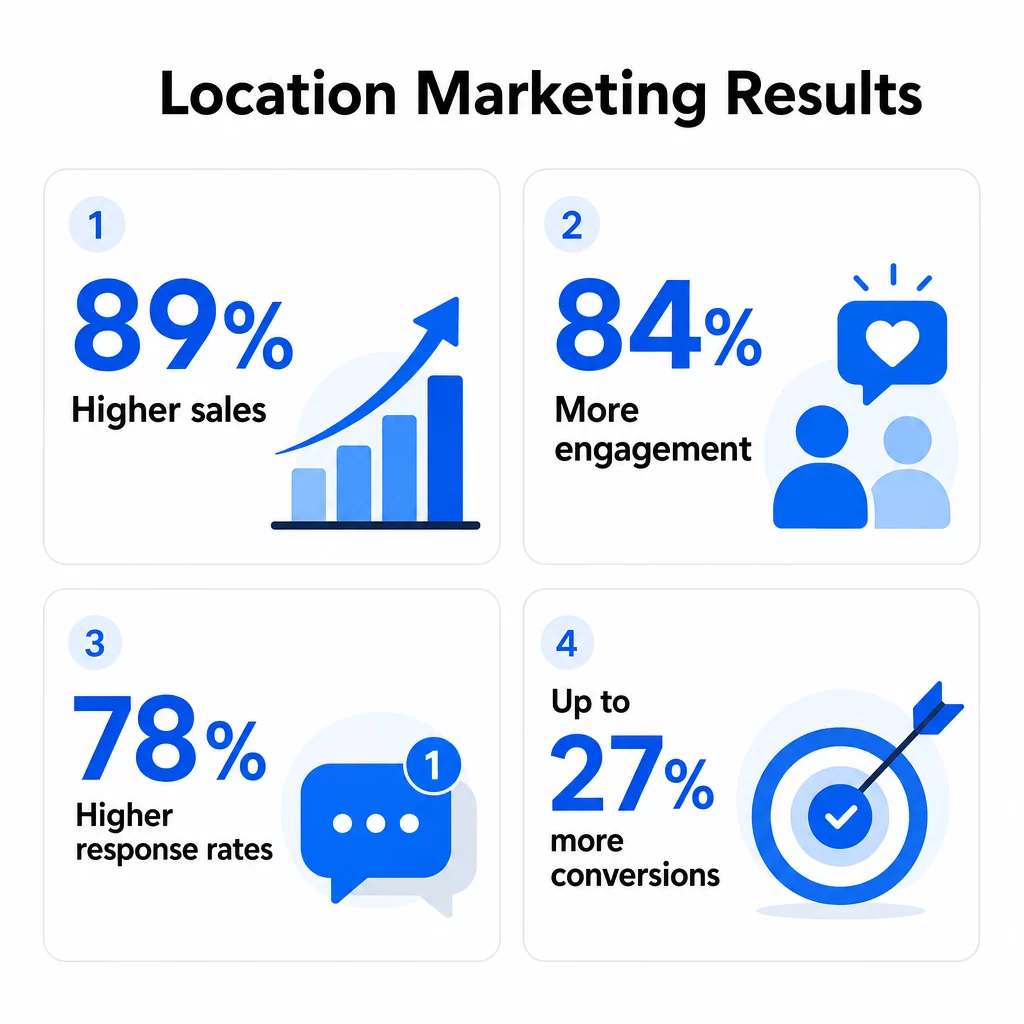
Liczby to potwierdzają. Badania pokazują, że 89% marketerów zgłosiło wyższą sprzedaż po przyjęciu taktyk marketingowych opartych na lokalizacji, 84% odnotowało zwiększone zaangażowanie klientów, a 78% doświadczyło wzrostu wskaźników odpowiedzi. Oddzielnie, kampanie oparte na lokalizacji wykazały wzrost konwersji nawet o 27% w porównaniu z wiadomościami niepersonalizowanymi pod kątem lokalizacji.
Trzy czynniki wyjaśniają, dlaczego tak się dzieje:
Personalizacja zwiększa postrzeganą trafność. Kiedy ktoś skanuje kod QR i natychmiast widzi treści związane z jego obszarem – lokalny asortyment, promocje w okolicy lub ceny specyficzne dla regionu – doświadczenie wydaje się spersonalizowane, a nie ogólne. Konsumenci znacznie częściej reagują na treści, które postrzegają jako bezpośrednio dla nich istotne.
Czas i kontekst tworzą poczucie pilności. Kod QR na witrynie sklepu, który wyświetla aktualne promocje w godzinach otwarcia, a następnie przełącza się na dane kontaktowe i godziny po zamknięciu, jest przydatny w obu przypadkach. Połączenie lokalizacji z kontekstem w czasie rzeczywistym – takim jak warunki pogodowe, lokalne wydarzenia czy pora dnia – zamienia pasywne skanowanie w moment do działania.
Zmniejszone tarcie zwiększa konwersje. Wysyłanie użytkownika na ogólną stronę główną po zeskanowaniu kodu w sklepie marnuje jego intencje. Przekierowanie go na stronę pokazującą dostępność lokalnego asortymentu, mapę pobliskiego sklepu lub ofertę specyficzną dla lokalizacji eliminuje kroki między zainteresowaniem a zakupem.
Rola dynamicznych kodów QR w kampaniach geotargetowanych
Dynamiczne kody QR są techniczną podstawą każdej strategii geotargetowanej. Bez nich personalizacja oparta na lokalizacji nie jest możliwa na dużą skalę.
Oto jak statyczne i dynamiczne kody QR porównują się pod kątem zastosowania w kampaniach:
| FUNKCJA | Statyczne kody QR | Dynamiczne kody QR |
|---|---|---|
| Śledzenie skanowania | Brak | Dane w czasie rzeczywistym, szczegółowe |
| Analityka lokalizacji | Niedostępne | Śledzenie geograficzne według miasta lub regionu |
| Aktualizacje treści | Stałe po wydrukowaniu | Natychmiastowe aktualizacje bez ponownego drukowania |
| Testy A/B | Wymaga wielu kodów | Jeden kod z różnymi wariantami treści |
| Pomiar ROI | Trudne | Szczegółowe śledzenie konwersji |
| Optymalizacja kampanii | Podręcznik | Oparte na danych |
Ponieważ dynamiczne kody QR wskazują na krótki adres URL przekierowania, zamiast bezpośrednio kodować ostateczne miejsce docelowe, możesz aktualizować treści, które obsługują, w dowolnym momencie – bez ponownego drukowania ani jednego materiału. To sprawia, że są one niezbędne do:
- Rotacji sezonowych promocji w różnych lokalizacjach
- Przeprowadzania testów A/B w celu porównania skuteczności ofert według regionu
- Korygowania lub aktualizowania treści specyficznych dla lokalizacji po uruchomieniu
- Dostosowywania kampanii do lokalnych wydarzeń, pogody lub zmian w zapasach
Możesz dowiedz się, jak przekierowywać skany kodów QR według lokalizacji aby zrozumieć konfigurację techniczną stojącą za regułami przekierowania opartymi na lokalizacji.
Twórz edytowalne kody QR uwzględniające lokalizację Plik Generator dynamicznych kodów QR pozwala aktualizować miejsca docelowe i treści w dowolnym momencie, śledzić skany według regionu i zarządzać wszystkimi kodami z jednego pulpitu nawigacyjnego.
Strategie wykorzystania kodów QR z geolokalizacją do zwiększania sprzedaży
Promocje specyficzne dla dzielnicy
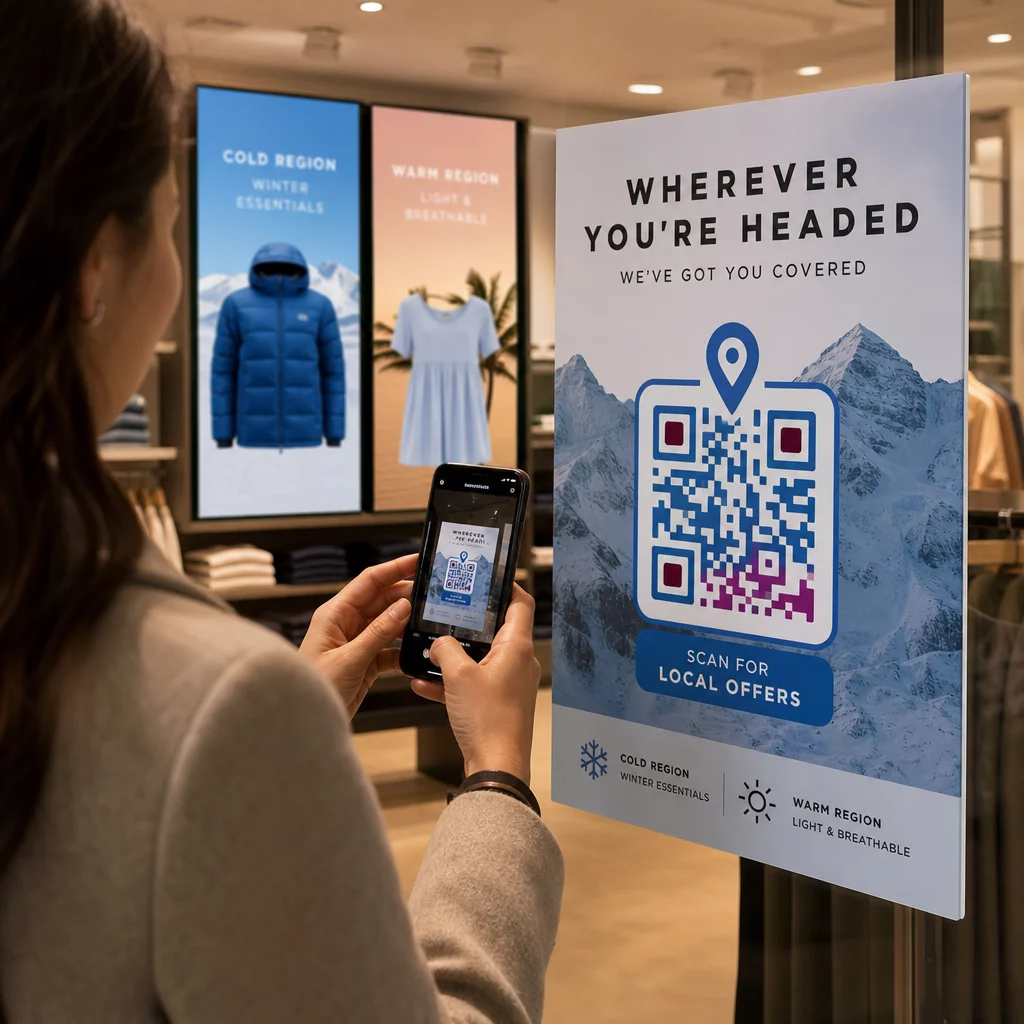
Kody QR umieszczone na ulotkach, szyldach okiennych lub ekspozycjach produktów mogą dostarczać różne treści promocyjne w zależności od miejsca skanowania. Sprzedawca odzieży może pokazywać płaszcze zimowe klientom w chłodniejszych regionach, jednocześnie prezentując lżejszą odzież tym w cieplejszych obszarach – używając jednego projektu kodu QR na wszystkich rynkach.
Kawiarnie i kawiarnie wykorzystują to podejście, aby oferować ekskluzywne zniżki dla mieszkańców dzielnicy na napoje premium, jednocześnie promując zestawy rodzinne w obszarach mieszkalnych. Ten sam materiał drukowany generuje różne konwersje w zależności od lokalnych preferencji klientów.
Najlepsze praktyki geofencingu mogą to rozszerzyć, definiując wirtualny obwód wokół określonej lokalizacji – takiej jak sklep lub strona konkurenta – i uruchamiając bardzo trafne treści dla użytkowników znajdujących się wewnątrz tej granicy.
Strony docelowe specyficzne dla lokalizacji
Zamiast kierować cały ruch ze skanowania na tę samą stronę główną, kody QR z geolokalizacją mogą kierować użytkowników na strony docelowe zbudowane wokół ich fizycznego kontekstu. Agenci nieruchomości używają kodów QR na tablicach nieruchomości, aby ładować strony pokazujące dane dotyczące dzielnicy, oceny lokalnych szkół i pobliskie udogodnienia specyficzne dla obszaru tej oferty.
Sprzedawcy detaliczni mogą tworzyć strony, które wyświetlają pobliski asortyment sklepu, dostępność zapasów w czasie rzeczywistym lub opcje click-and-collect w oparciu o wykrytą lokalizację użytkownika. Takie podejście dopasowuje doświadczenie po skanowaniu do fizycznego punktu styku, który wywołał skanowanie, zmniejszając wskaźnik rezygnacji i zwiększając konwersję. Aby dowiedzieć się więcej, zobacz Geotargetowane kody QR: dotarcie do lokalnych odbiorców.
Treści uwzględniające czas i kontekst
Dynamiczne kody QR obsługują reguły treści, które wykraczają poza geografię. Jeden kod może wyświetlać różne treści w zależności od pory dnia, dnia tygodnia lub lokalnych warunków. Kod QR restauracji może wyświetlać aktualne menu z czasami oczekiwania w godzinach pracy, a następnie przełączać się na link do rezerwacji i dane kontaktowe poza nimi.
Sprzedawcy detaliczni prowadzący kampanie sezonowe mogą programować swoje kody tak, aby aktualizowały się automatycznie po zmianie promocji, zapewniając klientom zawsze dokładne i aktualne oferty, niezależnie od tego, kiedy skanują.
Interakcje bezdotykowe i odprawy na wydarzenia
Organizatorzy wydarzeń używają kodów QR uwzględniających lokalizację na biletach i materiałach promocyjnych, aby usprawnić odprawę. Po zeskanowaniu kod wykrywa lokalizację uczestnika i kieruje go do odpowiedniej bramki wejściowej, sali sesyjnej lub strony informacyjnej – skracając czas oczekiwania i jednocześnie zbierając dane o frekwencji.
W handlu detalicznym i hotelarstwie, kody QR z geolokalizacją umożliwiają klientom składanie zamówień na odbiór w sklepie lub dostawę lokalną w oparciu o ich bliskość do konkretnego oddziału, bez konieczności ręcznego wybierania lokalizacji.
A Kod QR Map Google jest praktycznym uzupełnieniem – pomagającym klientom znaleźć Twoją fizyczną lokalizację za pomocą jednego skanu i otwierającym adres bezpośrednio w ich aplikacji nawigacyjnej.
Analityka: Pomiar i optymalizacja wydajności kampanii
Kampanie QR z geolokalizacją generują dane przy każdym skanowaniu. Wykorzystanie tych danych do udoskonalenia podejścia to coś, co odróżnia kampanie, które dobrze działają raz, od tych, które stale się poprawiają.
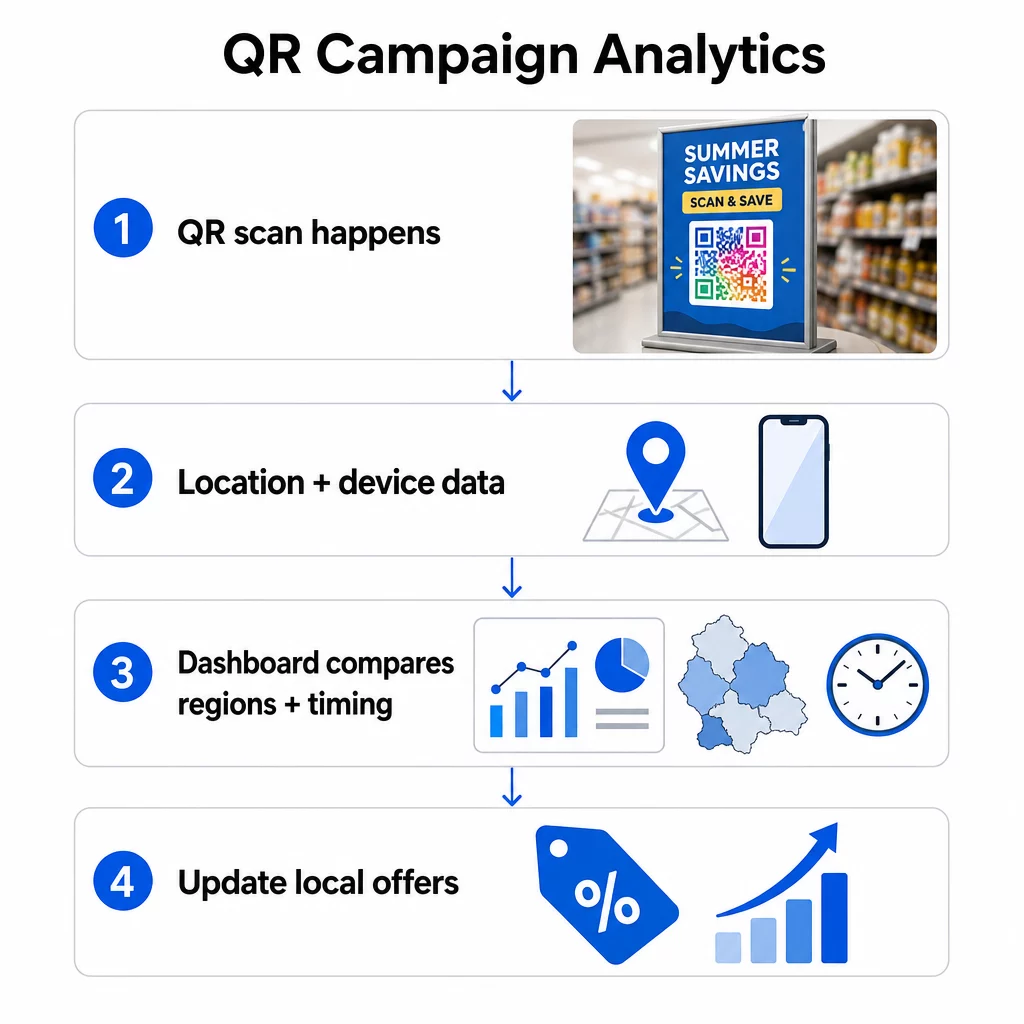
Kluczowe wskaźniki do śledzenia to:
- Całkowita liczba skanów vs. unikalne skany – Całkowita liczba skanów pokazuje ogólną aktywność; unikalne skany ujawniają, ilu różnych użytkowników zaangażowało się, dając jaśniejszy obraz rzeczywistego zasięgu.
- Lokalizacja skanowania – Identyfikuje, które obszary geograficzne generują największe zaangażowanie, pomagając skupić dystrybucję i udoskonalić rozmieszczenie.
- Czas skanowania – Ujawnia, kiedy klienci najczęściej skanują, co pozwala dopasować promocje do okresów największego zaangażowania.
- Typ urządzenia – Wiedza o tym, czy użytkownicy korzystają z iOS czy Androida, pomaga zoptymalizować projekt strony docelowej dla większości odbiorców.
- Współczynnik konwersji – Śledzi, które regiony faktycznie podejmują działania po zeskanowaniu, a nie tylko przeglądają. To tutaj dane o lokalizacji przekładają się na dane o przychodach.
- Współczynnik powtarzalnych skanów – Mierzy, jak często użytkownicy wracają, aby zeskanować ten sam kod, wskazując na trwałe zaangażowanie lub treści, które nagradzają powtarzające się interakcje.
Tworzenie oddzielnych kodów QR z geolokalizacją dla każdego regionu lub kampanii ułatwia porównywanie wydajności na różnych rynkach. W połączeniu z parametrami UTM pozwala to precyzyjnie segmentować dane skanowania w platformie analitycznej i identyfikować, które lokalizacje najlepiej reagują na konkretne oferty.
Aby uzyskać szczegółową analizę, zobacz kluczowe wskaźniki dla kampanii z kodami QR opartych na lokalizacji oraz przewodnik dotyczący śledzenia kampanii z kodami QR według regionu.
Wykorzystanie danych do ciągłego doskonalenia
Analityka jest użyteczna tylko wtedy, gdy prowadzi do działania. Praktyczne sposoby na zamknięcie tej pętli to:
- Testy A/B – Uruchom dwie różne oferty w podobnych dzielnicach i wykorzystaj dane ze skanów i konwersji, aby zidentyfikować, która działa lepiej, a następnie zastosuj zwycięskie podejście na porównywalnych rynkach.
- Korekty sezonowe – Historyczne dane ze skanów pokazują, kiedy zaangażowanie osiąga szczyt w zależności od lokalizacji, co pozwala przewidzieć okresy wzmożonego ruchu i z wyprzedzeniem przygotować kampanie.
- Uczenie się między kampaniami – Jeśli dany typ treści lub strategia czasowa sprawdza się w jednym mieście, przetestuj ją na podobnych rynkach, zanim wprowadzisz ją na szeroką skalę.
Aby uzyskać wskazówki dotyczące dalszego wykorzystania danych ze skanów do personalizacji kampanii, zobacz Kody QR dla personalizacji opartej na danych.
Śledź każdy skan, według lokalizacji Użyj narzędzia Pageloot Narzędzia do śledzenia kodów QR aby monitorować lokalizacje skanów, typy urządzeń i współczynniki konwersji we wszystkich kampaniach geotargetowanych w jednym panelu.
Zastosowania branżowe: Gdzie geotargetowane kody QR przynoszą rezultaty
Sprzedaż detaliczna – Sieci wykorzystujące geotargetowane kody QR na ulotkach sklepowych mogą kierować klientów do asortymentu i promocji specyficznych dla danej lokalizacji, zamiast do ogólnego katalogu produktów. Takie podejście zwiększa wskaźniki zakupów w sklepie i zachęca do rejestracji w programach lojalnościowych, sprawiając, że oferta wydaje się istotna dla konkretnego sklepu, który odwiedza klient.
Restauracje – Podkreślanie specjałów specyficznych dla danej lokalizacji w kodach QR menu – zamiast ustandaryzowanego menu krajowego – zwiększa średnią wartość zamówienia. Lokalizacja w obszarze o dużym natężeniu ruchu turystycznego może promować inne pozycje niż ta w dzielnicy mieszkalnej, w oparciu o to, co generuje najwięcej konwersji w każdym miejscu.
Wydarzenia – Kody QR na biletach na wydarzenia, które dostosowują się w zależności od miejsca skanowania, zmniejszają tarcie w punktach wejścia i mogą dostarczać informacje specyficzne dla lokalizacji, takie jak wskazówki dotyczące parkowania, pobliskie restauracje lub aktualizacje sesji – wszystko to poprawia doświadczenie uczestników i przyczynia się do silniejszej sprzedaży biletów z wyprzedzeniem.
Nieruchomości – Agenci wykorzystujący kody QR na oznakowaniu nieruchomości mogą dostarczać potencjalnym nabywcom dane specyficzne dla okolicy w momencie skanowania, poprawiając jakość leadów i skracając czas podejmowania decyzji.
Opieka zdrowotna – Dostawcy wykorzystujący kody QR oparte na lokalizacji do planowania wizyt i odprawy zmniejszają tarcie administracyjne, wyświetlając informacje o odpowiednim obiekcie na podstawie miejsca skanowania przez pacjenta.
Kwestie prywatności i zgodności
Gromadzenie danych o lokalizacji za pośrednictwem kodów QR wiąże się z obowiązkami prawnymi, które różnią się w zależności od jurysdykcji. W Stanach Zjednoczonych przepisy takie jak California Consumer Privacy Act (CCPA) i Virginia Consumer Data Protection Act wymagają od firm jasnego ujawniania, jakie dane są gromadzone, w jaki sposób będą wykorzystywane i czy będą udostępniane stronom trzecim.
Ponieważ platformy kodów QR mogą automatycznie zbierać dane – w tym adresy IP, identyfikatory urządzeń, znaczniki czasu i precyzyjne dane o lokalizacji – zanim użytkownicy w pełni zrozumieją, co się dzieje, istnieje ryzyko braku przejrzystości wbudowane w samo medium.
Praktyczne kroki w celu zachowania zgodności:
- Wyświetl wyraźne powiadomienie w pobliżu kodu QR, wyjaśniające, że skanowanie może zbierać dane o lokalizacji
- Zapewnij mechanizm zgody (opt-in) przed aktywacją śledzenia opartego na GPS
- Ogranicz zbieranie danych do tego, co jest niezbędne dla określonego celu kampanii
- Użyj zaufanej platformy QR, która wspiera zgodność z wymogami RODO i CCPA
- Przejrzyj swoje praktyki dotyczące danych pod kątem obowiązujących stanowych przepisów o ochronie prywatności, nawet tam, gdzie nie istnieją przepisy specyficzne dla kodów QR
Aby uzyskać bardziej szczegółowy przegląd obowiązujących przepisów, zobacz przewodnik Pageloot dotyczący przepisów o ochronie prywatności kodów QR i zgodności.
Kluczowe wnioski
Kody QR z geolokalizacją zwiększają sprzedaż, zastępując ogólne treści doświadczeniami specyficznymi dla lokalizacji, które odpowiadają potrzebom klientów w momencie skanowania. Połączenie dynamicznych kodów QR, aktualizacji treści w czasie rzeczywistym i optymalizacji opartej na analizie tworzy pętlę sprzężenia zwrotnego, w której każda kampania działa lepiej niż poprzednia.
Podstawy są proste: używaj dynamicznych kodów, aby móc aktualizować treści bez ponownego drukowania, segmentuj swoje kampanie według regionów, aby mierzyć, co działa gdzie, personalizuj strony docelowe, aby pasowały do fizycznego kontekstu skanowania, i wykorzystuj dane ze skanowania do ciągłego udoskonalania czasu, umiejscowienia i ofert.
Zbuduj swoją pierwszą kampanię z geolokalizacją Twórz dynamiczne kody QR z regułami treści opartymi na lokalizacji, analizami w czasie rzeczywistym i pełnym zarządzaniem kampanią, używając Pageloot Generator kodów QR. Bezpłatny 14-dniowy okres próbny, karta kredytowa nie jest wymagana.
Najczęściej zadawane pytania
Kody QR z geolokalizacją wykorzystują jedną z dwóch metod do wykrywania lokalizacji skanowania. Śledzenie oparte na adresie IP automatycznie identyfikuje przybliżoną lokalizację użytkownika na podstawie adresu IP jego urządzenia i nie wymaga zgody – zapewnia ono dokładność na poziomie miasta. Śledzenie oparte na GPS jest bardziej precyzyjne, identyfikując lokalizację z dokładnością do kilku metrów, ale wymaga od użytkownika wyraźnego udzielenia pozwolenia na dostęp do lokalizacji. Większość kampanii marketingowych opiera się na śledzeniu opartym na adresie IP w celu targetowania regionalnego, podczas gdy śledzenie oparte na GPS jest używane w aplikacjach geofencingowych, gdzie precyzyjna lokalizacja ma znaczenie.
Dynamiczne kody QR są wymagane, ponieważ kierują skany przez serwer platformy, zanim przekierują użytkowników, co umożliwia stosowanie reguł opartych na lokalizacji. Statyczne kody QR kodują docelowe miejsce bezpośrednio, więc zawsze prowadzą do tego samego adresu URL niezależnie od tego, gdzie i kiedy są skanowane. Kody dynamiczne pozwalają również na aktualizację treści, ofert lub reguł przekierowania po wydrukowaniu, co oznacza, że możesz dostosować swoją kampanię bez ponownego drukowania materiałów fizycznych.
W Stanach Zjednoczonych, prawa takie jak California Consumer Privacy Act (CCPA) wymagają od firm ujawnienia, jakie dane są zbierane, dlaczego są zbierane i czy będą udostępniane. Ponieważ platformy kodów QR mogą automatycznie zbierać adresy IP, identyfikatory urządzeń i dane o lokalizacji w momencie skanowania, firmy muszą umieszczać wyraźne powiadomienia w pobliżu kodu QR i oferować mechanizmy rezygnacji. W przypadku śledzenia opartego na GPS wymagana jest wyraźna zgoda użytkownika. Obecnie w USA nie ma federalnych przepisów specyficznych dla kodów QR, więc zgodność z przepisami zależy od obowiązujących stanowych przepisów dotyczących prywatności i ogólnych standardów ochrony konsumentów.