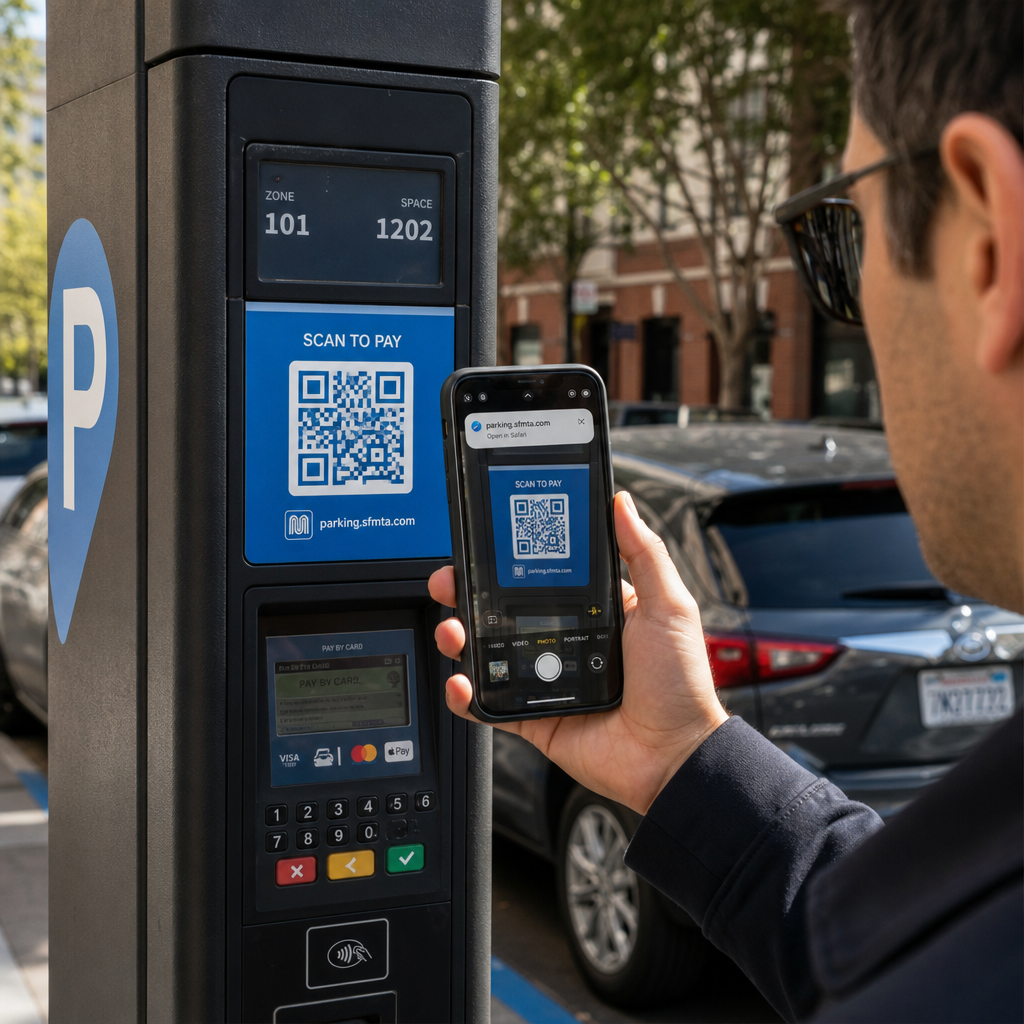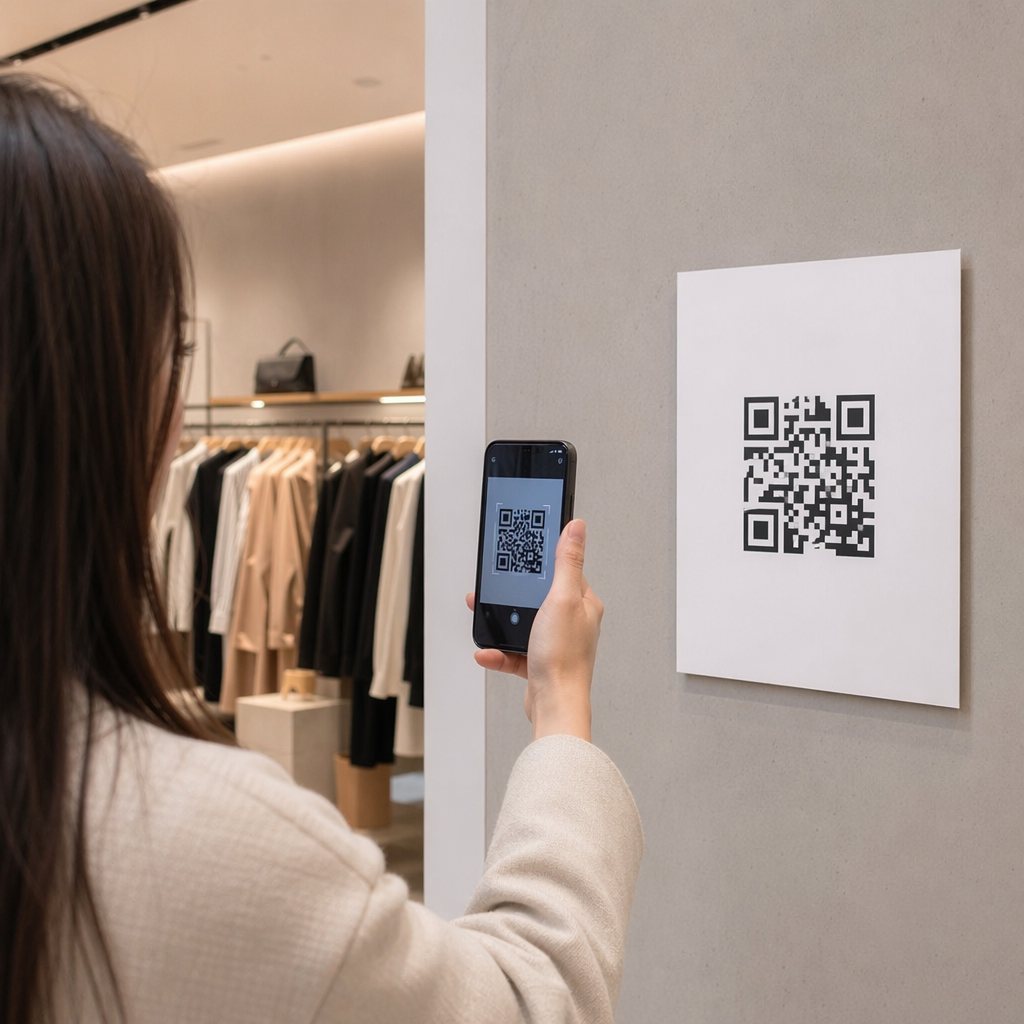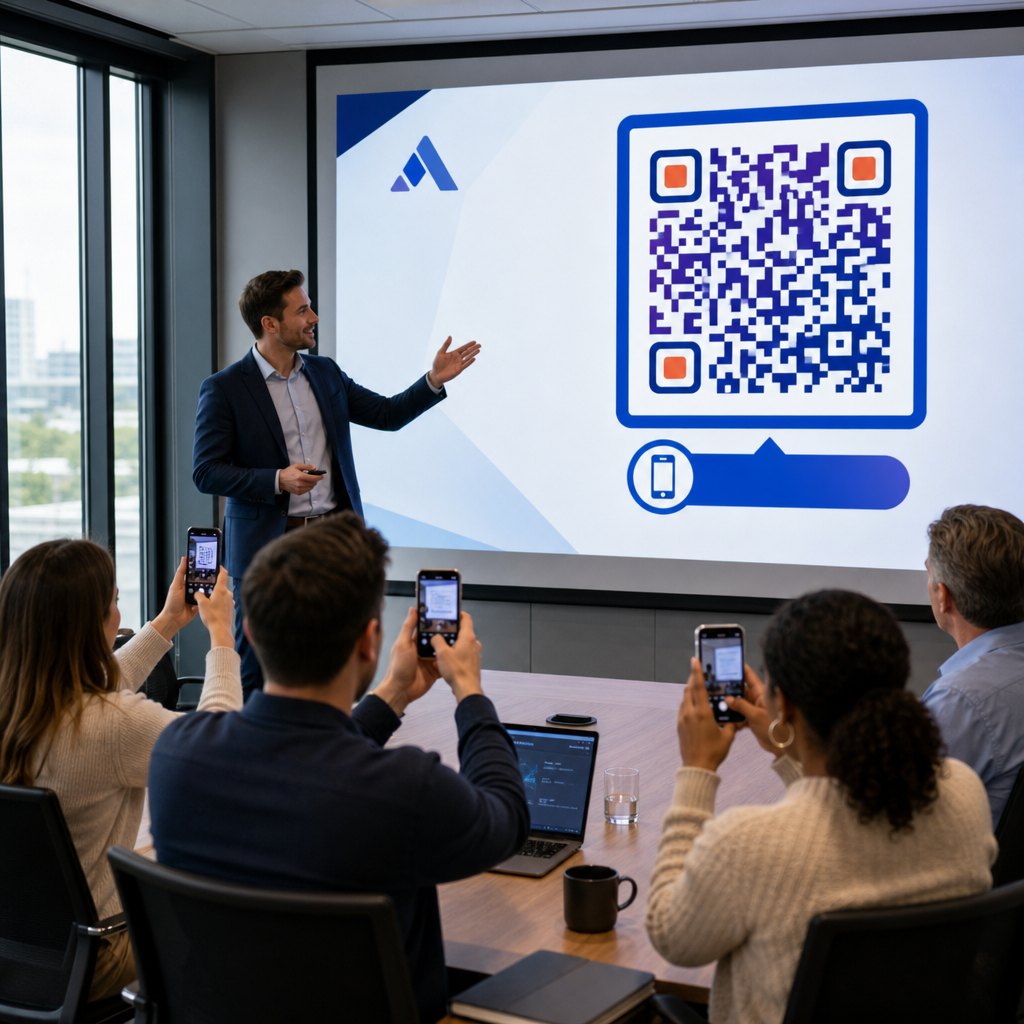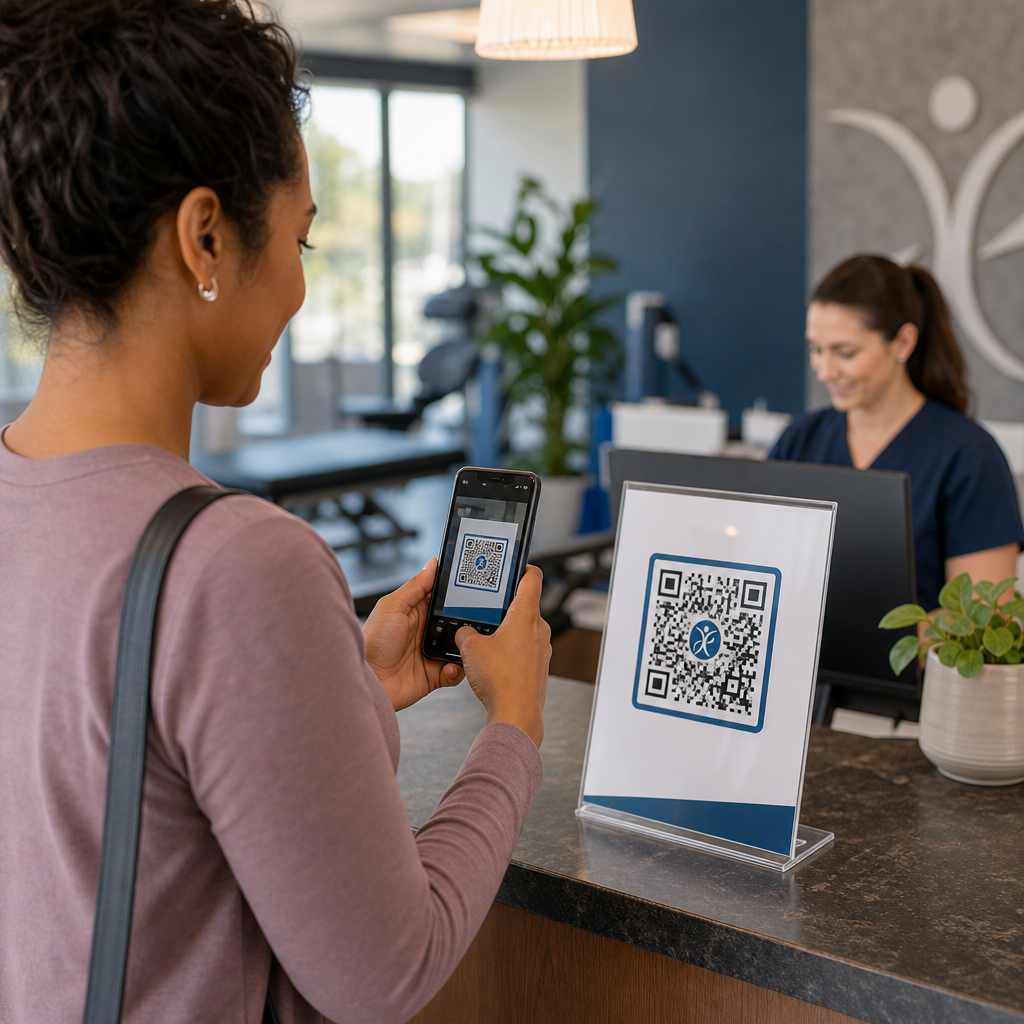
Are manual clipboard check-ins and misplaced paper exercise handouts slowing down your physical therapy practice? Lost paperwork delays care, creates front-desk bottlenecks, and lowers patient exercise compliance. Using scannable QR codes across your clinic modernizes patient intake, simplifies exercise delivery, and streamlines daily operations.
Modernize Digital Patient Intake and Registration
Manual paper intake packets require front-desk staff to retype patient data into your Electronic Medical Records (EMR) system. This manual entry creates administrative bottlenecks, delays treatment start times, and introduces data entry errors into patient charts. Placing scannable QR codes on reception desk signage or acrylic table tents allows patients to complete check-in forms directly on their smartphones while waiting in the lobby.
- Accelerate check-in times: Launch registration forms, medical history updates, and liability waivers instantly when patients scan upon arrival.
- Reduce administrative overhead: Lower front-desk workload by eliminating manual retyping of demographic and insurance details.
- Gather direct feedback: Collect post-appointment evaluations and symptom logs by creating customized digital forms with a Penjana kod QR Borang Google.
When collecting Protected Health Information (PHI), your clinic must maintain administrative, physical, and technical safeguards. Reviewing standards for perkongsian data kesihatan selamat dengan kod QR ensures patient privacy remains protected. For broader operational insights, explore our detailed guide to healthcare QR codes.
Deliver Interactive Home Exercise Programs
Physical therapy outcomes rely heavily on patient compliance with Home Exercise Programs (HEPs). Traditional paper exercise handouts are easily misplaced, and static diagrams rarely illustrate proper movement mechanics, which can lead to incorrect form or dropped compliance. Research indicates that adding digital interventions to home exercise routines improves short-term adherence compared to standard paper handouts.
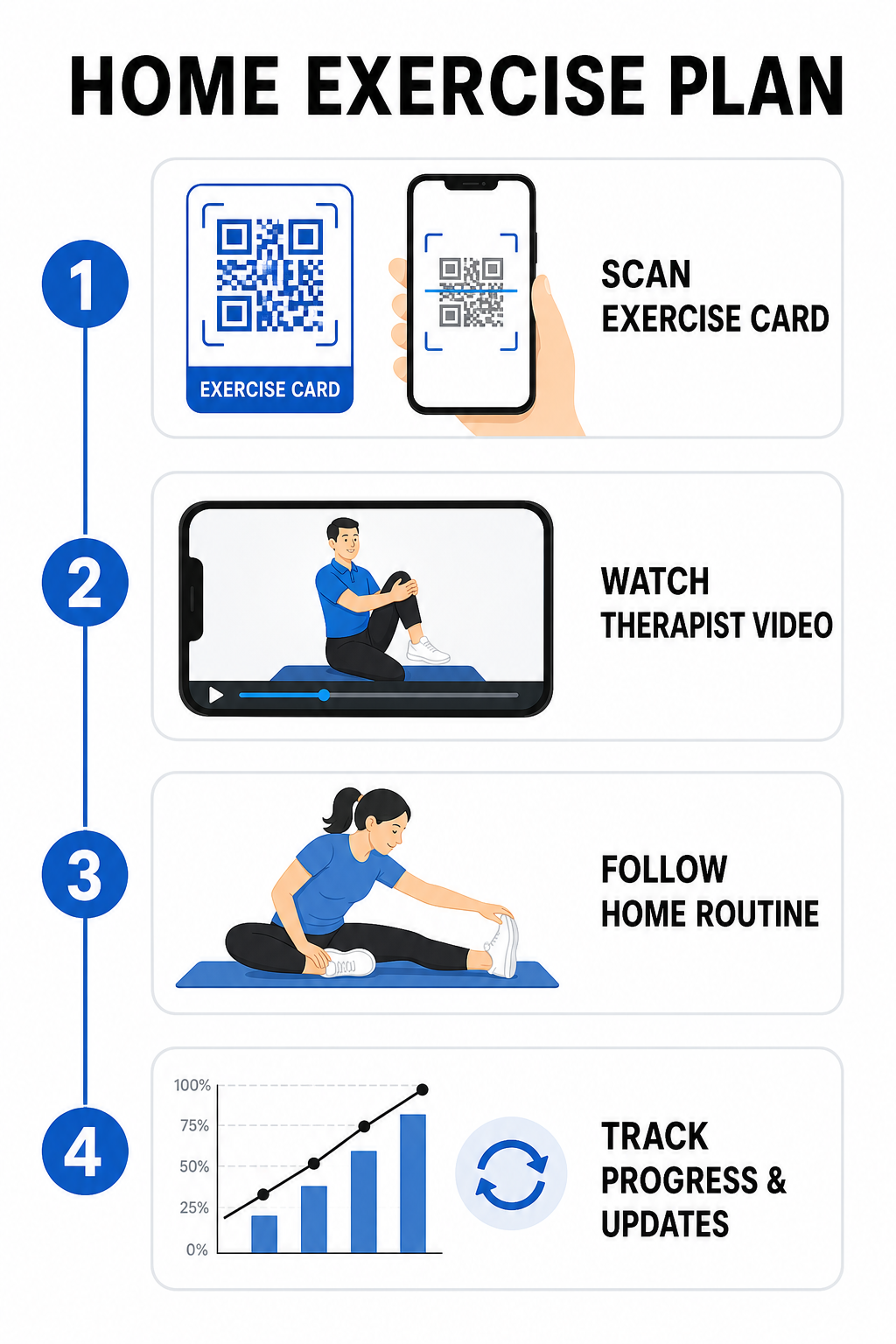
Embedding QR codes into printed discharge sheets or exercise cards gives patients immediate access to interactive media:
- Link directly to video tutorials: Connect patients to clear video demonstrations showing correct movement mechanics, posture, and equipment setup.
- Provide downloadable instructional guides: Host printable, high-resolution routine guides and care instructions using a Penjana kod QR PDF.
- Create centralized resource hubs: Build a mobile-friendly portal using custom landing pages to bundle multiple exercise links, stretch routines, and educational articles under a single scan.
Simplify Home Exercise Access for Patients Want to share video guides and PDF exercise plans with your patients? Use the Penjana Kod QR PDF to attach digital instructional documents directly to printed care sheets.
Build Local Search Visibility with Online Reviews
Positive online reviews build patient trust and drive local search rankings for physical therapy practices. Satisfied patients often intend to leave feedback after completing treatment, but complex manual search steps prevent them from following through. Placing direct review codes on checkout counter signs, discharge folders, or business cards gives patients an immediate path to share their experience.
- Eliminate manual search steps: Direct patients straight to your verified review screen in one scan using a penjana kod QR Ulasan Google.
- Capture feedback at discharge: Prompt patients to share their experience during final check-outs when clinical outcomes are top of mind.
- Maintain policy compliance: Collect honest ratings without offering financial incentives or selectively filtering feedback to comply with search engine guidelines.
Similar to strategies used in chiropractic clinics dan dental offices, making review submission simple helps your practice outpace local competitors in search visibility.
Streamline Payments and Patient Scheduling
Handling co-pays, self-pay billing, and follow-up scheduling at the counter often leads to lobby congestion during peak clinical hours. QR codes digitize these transactions so patients can manage payments and appointments independently on their own devices.
- Simplify counter co-pays: Display payment codes at the front desk using a Penjana kod QR PayPal to process self-pay balances quickly.
- Enable instant rescheduling: Connect appointment reminder cards directly to online scheduling portals using a Link QR code generator.
- Update destinations dynamically: Modify linked landing pages or payment links behind the scenes without reprinting physical clinic signage. Explore options across various industry solutions and core platform features.
Best Practices for QR Code Design in Physical Therapy Practices
To ensure every patient can scan your codes quickly regardless of device or age, follow these practical design standards:
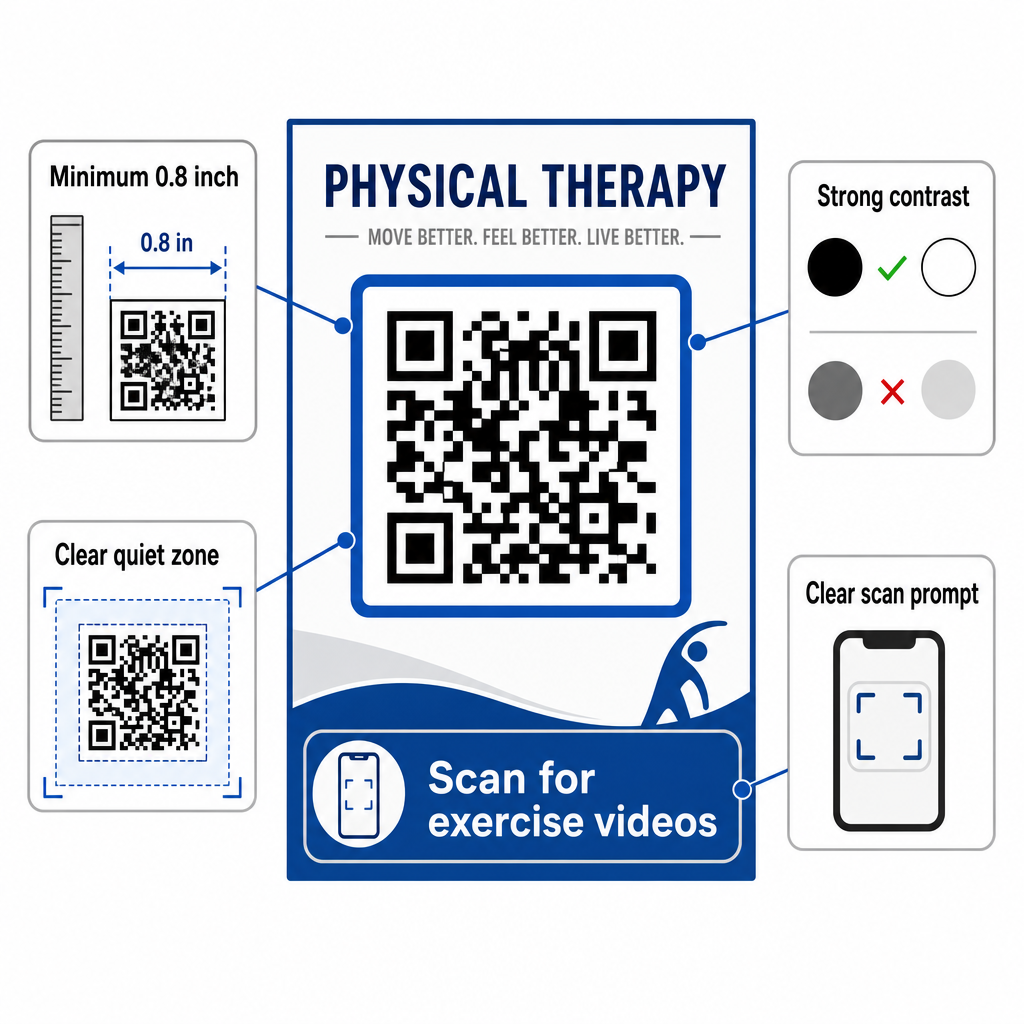
| Design Element | Recommended Standard | Operational Benefit |
|---|---|---|
| Saiz Minimum | At least 0.8 × 0.8 inches (2 × 2 cm) | Ensures reliable scanning from comfortable holding distances |
| Visual Contrast | Dark code modules over a solid light background | Helps smartphone cameras focus quickly in varied clinic lighting |
| Zon Tenang | Margin space of at least 4 modules around the border | Prevents surrounding background graphics from interfering with scans |
| File Export | High-resolution SVG vectors or 300 DPI PNG files | Maintains sharp edges on large wall signs, acrylic stands, and posters |
| Call-to-Action | Clear text frame (e.g., “Scan for Exercise Videos”) | Tells patients exactly what benefit they receive upon scanning |
Modernizing your physical therapy clinic with scannable touchpoints eliminates paperwork delays, keeps patients engaged with home recovery plans, and streamlines administrative tasks for front-desk staff. Replacing clipboards and paper handouts with scannable links lets your team spend less time managing files and more time delivering care.
Start updating your clinic workflows today by creating custom, trackable codes with Pageloot.
Soalan Lazim
Yes. Provided the QR code links to a secure, encrypted web form hosted by a software provider that meets HIPAA compliance requirements and executes a Business Associate Agreement (BAA) to protect Protected Health Information (PHI).
Printed QR codes should be at least 0.8 × 0.8 inches (2 × 2 cm) with strong visual contrast and a clear call-to-action frame so patients can scan easily using any smartphone camera.
Dynamic QR codes allow clinic staff to edit the destination web page, video URL, or PDF document at any time without reprinting physical signs, posture cards, or exercise sheets.