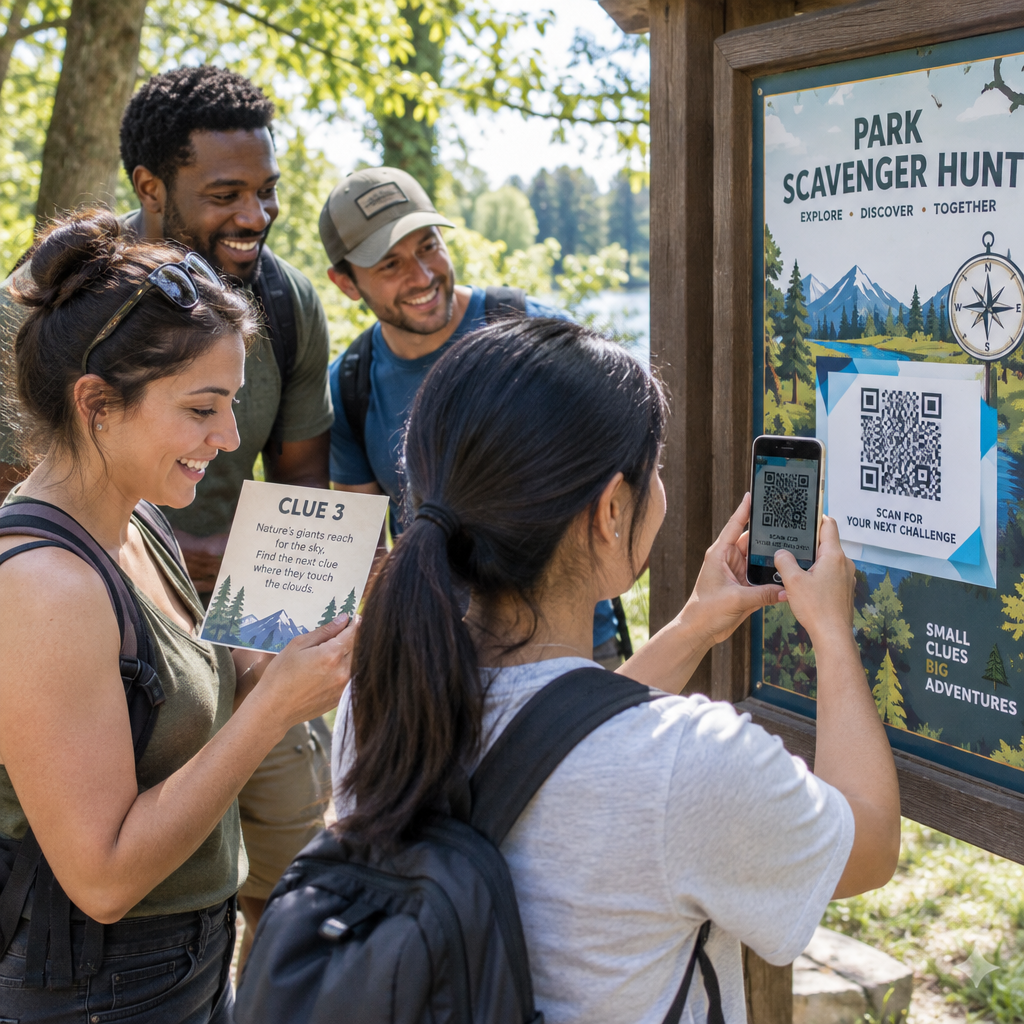
Are you struggling to decide between a digital QR hunt and a classic paper game for your next event? Choosing the wrong format leads to logistical bottlenecks, ruined clues, and frustrated participants. Here is how both options compare across setup, gameplay, costs, and player engagement so you can pick the right experience.
Logistical Differences in Setup and Management
Traditional scavenger hunts demand extensive manual preparation and ongoing supervision. Organizers must write riddles, print physical clues, and hide tangible objects or paper slips across the venue. This setup presents clear vulnerabilities: weather can destroy paper hints, curious bystanders might move items, and early teams can accidentally take or misplace clues intended for subsequent groups. Because traditional routes often follow linear, staff-monitored paths, you need several facilitators positioned across stations to verify progress and replace missing items.
Transitioning to a hybrid format using printed codes significantly reduces physical labor. Instead of managing bundles of paper, you produce durable digital markers and place them at designated checkpoints. Creating your assets with an online QR kodu ģenerators allows you to link physical spots to interactive puzzles, Google Forms, or video clues. Digital clue delivery protects the hunt from physical tampering, since scanning a code displays information without consuming a physical item. Consequently, a single coordinator can manage a large group across a sprawling footprint without constant physical maintenance.
Uzraugiet savu kampaņu reāllaikā Vai vēlaties precīzi redzēt, kur un kad jūsu klienti skenē jūsu materiālus? Izmantojiet Dinamisks QR kodu ģenerators lai izveidotu izsekojamus kodus un piekļūtu pilnam veiktspējas informācijas panelim jau šodien.
Clue Delivery, Interactivity, and Participant Gameplay
Clue delivery dictates how players experience the activity and how fast they move through challenges. Traditional hunts rely on physical media:
- Reading static text printed on paper index cards.
- Finding hidden physical objects hidden within a defined boundary.
- Waiting for station monitors to manually inspect written answers before handing over the next clue.
These physical constraints frequently cause bottlenecks at popular stations, forcing faster teams to idle while waiting for others to finish.
Digital hunts turn the participant’s smartphone into an active game console. Players scan a marker to access rich media, multiple-choice quizzes, or audio hints. If you want teams to navigate to specific physical coordinates, integrating a Google Maps QR kodu ģenerators allows you to load pinpoint locations directly into their navigation apps. In high-engagement formats like augmented reality games, codes serve as interactive visual triggers, as demonstrated in our case study on QR codes in AR treasure hunts. This digital flow enables teams to solve riddles, submit answers asynchronously, and continue moving without waiting on staff.
Direct Comparison of Game Formats
The table below outlines how traditional hunts and QR-enabled hunts differ across key operational factors.
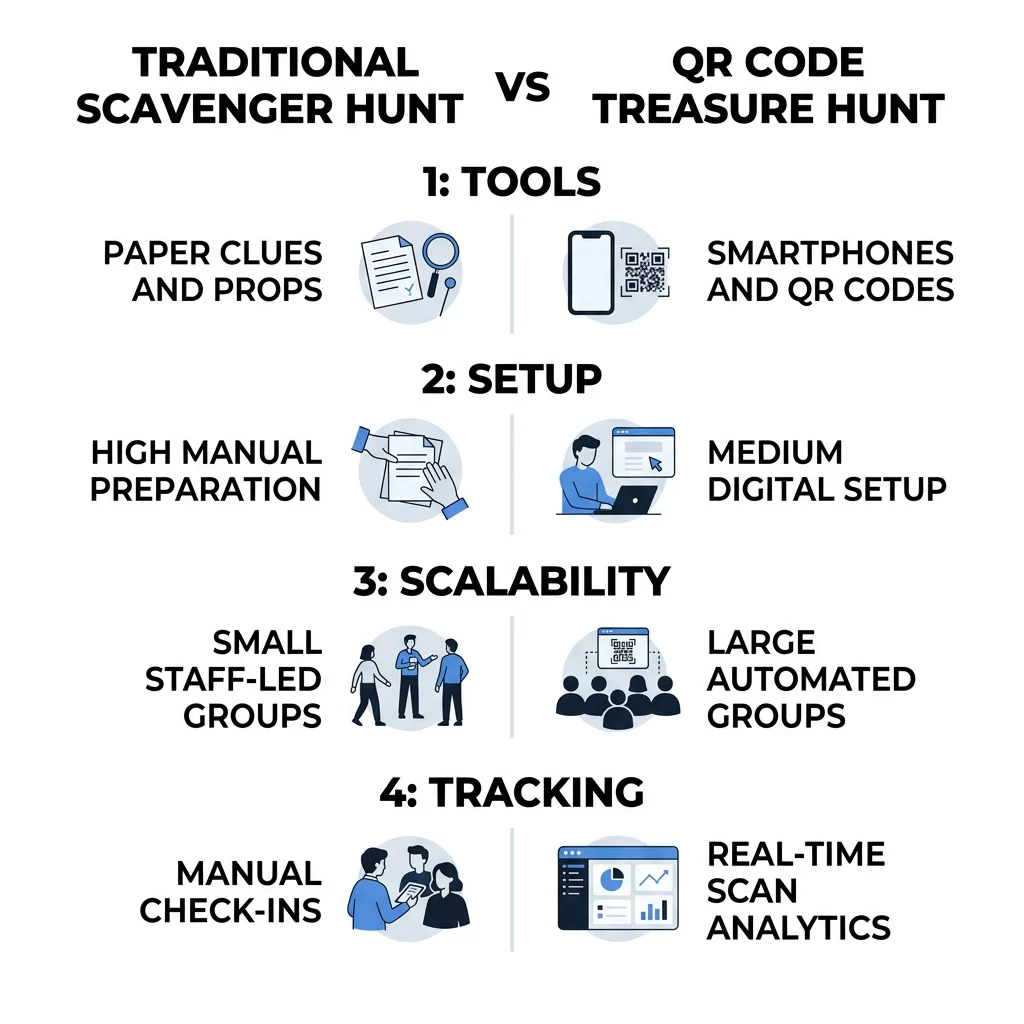
| FUNKCIJA | Tradicionālās dārgumu medības | QR koda dārgumu medības |
|---|---|---|
| Galvenie rīki | Paper slips, pens, physical envelopes, and props | Smartphones, digital forms, and printed QR markers |
| Preparation Effort | High; manual clue printing, stuffing, and hiding | Moderate; digital challenge setup and marker placement |
| Mērogojamība | Limited; large groups crowd physical clue locations | High; unlimited concurrent scans across checkpoints |
| Participant Technology | None required | Smartphone with a functioning camera |
| Connectivity Need | None; completely offline | Varies; offline text codes or online mobile data |
| Izsekošanas iespējas | Manual scorecards and staff checkpoint logs | Scan timestamps, locations, and automated form tracking |
| Mid-Game Flexibility | None; physical clues cannot change once hidden | High; digital destinations can update remotely |
Scannability and Technical Considerations
Operating a digital event requires planning for hardware, connectivity, and environmental conditions. Most players use their native smartphone camera to scan codes, but poor printing or bad lighting can interrupt the experience. Following labāko praksi QR kodu lasāmībā ensures your codes scan reliably:
- Maintain a high color contrast, favoring dark patterns against a crisp white background.
- Keep a 10:1 scanning ratio so players do not have to stand awkwardly close to scan.
- Leave an uninterrupted quiet zone around the border of each printed marker.
- Select matte, weather-resistant laminates to prevent outdoor sun glare from blinding the camera.
Connectivity is another key factor. While rich media and live scoring require cell service or local Wi-Fi, you can deploy a Izveidot QR kodu no teksta to encode plain text clues directly into the pattern. These plain text codes decode locally on the device without requiring any internet connection, serving as a dependable fallback for remote or basement venues.
Tracking Analytics and Live Scalability
A significant limitation of traditional paper hunts is the lack of operational visibility. Organizers rarely know where teams struggle until the game concludes and scorecards are tallied. In corporate team-building exercises, training sessions, or brand activations across different nozares lietojumprogrammās, measuring engagement matters just as much as declaring a winner.
Digital hunts resolve this visibility gap through automated data collection. By reviewing QR kodu izsekošana, organizers can view real-time metrics including scan volume, exact timestamps, and device types. If fifty participants scan clue three but only ten make it to clue four within an hour, coordinators instantly identify a riddle that is too difficult or a physical marker that has been obscured. This insight allows event managers to assist teams in real time rather than discovering issues after the event has ended.
Selecting the Right Format for Your Audience
Matching your activity structure to your audience profile prevents frustration and ensures maximum participation.
Educational Settings and Campus Activities
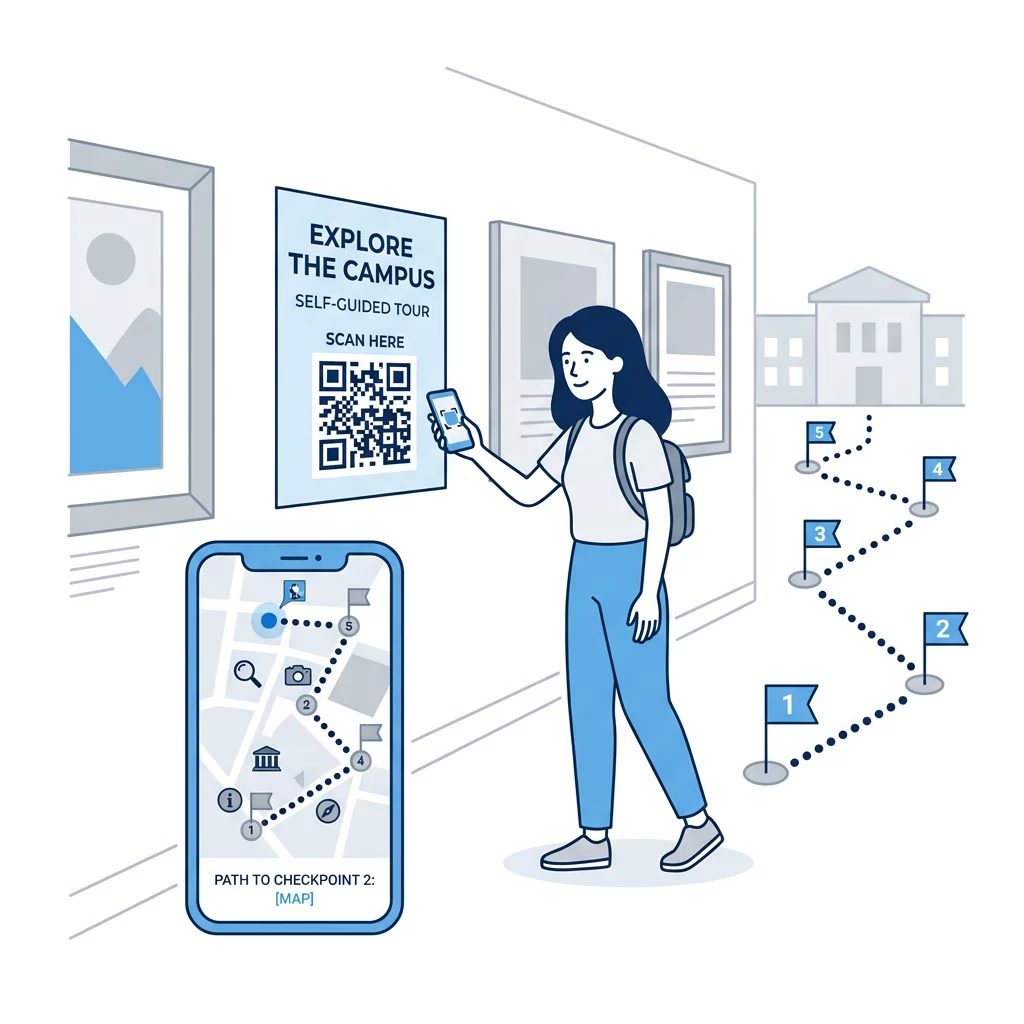
Interactive hunts are widely used in academic environments. Applying QR kodus skolai un izglītībai allows teachers to create self-directed discovery exercises across libraries, science labs, and sports fields. Learning how to use QR codes in classroom spaces helps educators turn static review sheets into collaborative review trails, encouraging movement while keeping students engaged with curriculum materials.
Community Festivals and Public Tours
Municipal events, public parks, and neighborhood tours benefit heavily from digital checkpoints. Spreading dynamic codes across public squares enables hundreds of visitors to explore landmarks independently. Because digital codes do not require on-site monitors, organizers can keep community exploration games open for weeks rather than limiting them to a single afternoon.
Young Children or Low-Tech Environments
Traditional paper hunts remain the superior choice when working with young children who lack personal devices. They are also preferable in secured corporate facilities where cameras are banned, or in outdoor locations where internet access is unavailable and printing plain text codes is impractical. Evaluating participant access to smartphones is the single most important prerequisite before committing to a digital build.
Choosing the Ideal Structure for Your Event
Selecting between a traditional hunt and a QR code treasure hunt comes down to your group size, venue logistics, and technology access. Traditional paper hunts offer tactile charm for small parties and young children, but they demand high staffing overhead and lack flexibility. Digital hunts eliminate paper clutter, prevent station bottlenecks, provide comprehensive scan tracking, and let you update clues on the fly.
To build an engaging, automated hunt for your next event, create your game assets with Pageloot. Generate custom codes, attach interactive clues, and manage your entire participant experience from a centralized dashboard.
Biežāk uzdotie jautājumi
Most modern smartphones do not need a dedicated application. Players simply open their native camera app and point it at the code to display the encoded clue or destination page immediately.
Using dynamic QR codes allows you to change destination links, hints, or instructions from your dashboard without having to retrieve and reprint the physical tags at your checkpoints.
Yes, hunts using static text QR codes store the message directly inside the code pattern and display it offline. However, interactive web forms, dynamic links, and online map locations require cellular data or Wi-Fi.