首页 > 条码 > Are Barcodes Dead? The Shift from 1D to 2D Codes Explained
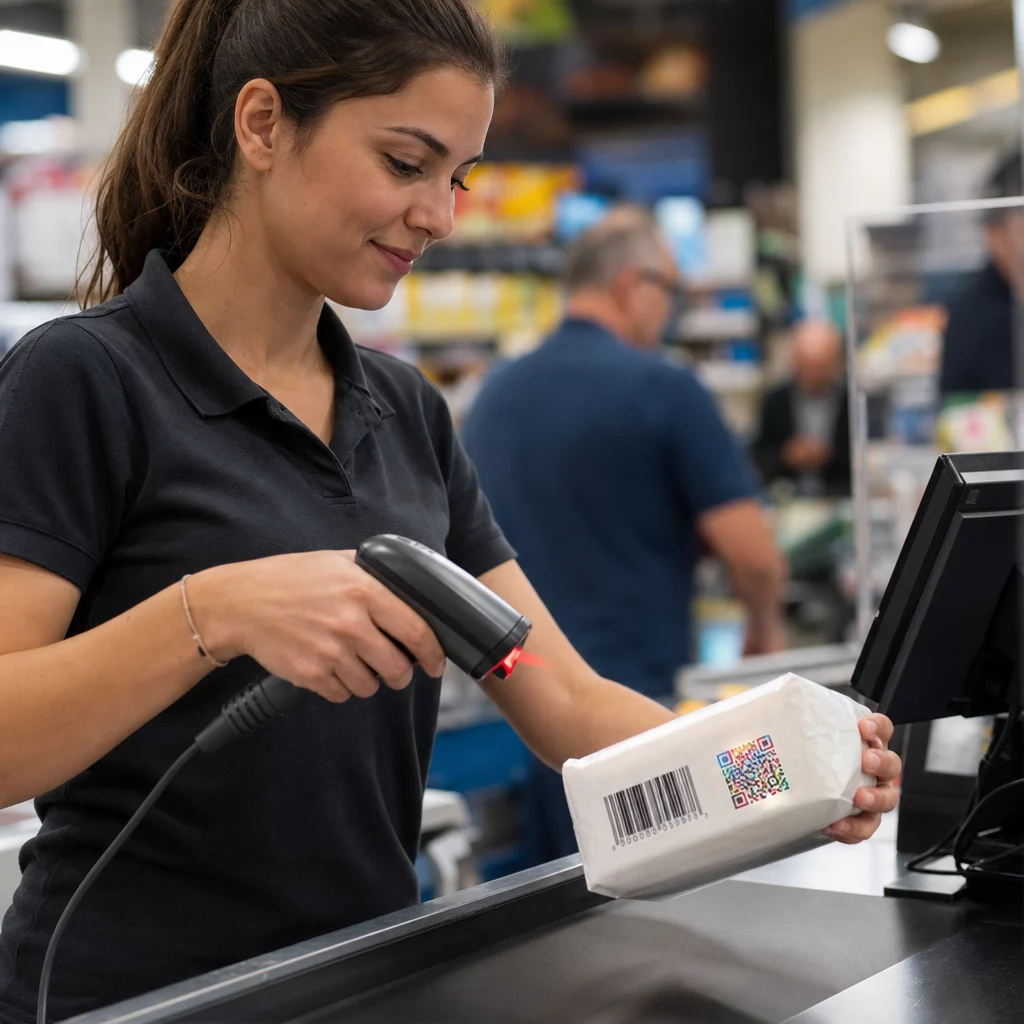
Modern barcode scanning

Are Barcodes Dead? The Shift from 1D to 2D Codes Explained

Are barcodes dead? Explore the retail shift from 1D to 2D barcodes. Learn about GS1 Sunrise 2027, why QR codes are taking over, and how it impacts your
Updated on 6 月 10, 2026
目录

Are traditional barcodes becoming obsolete? With the retail industry actively planning to replace them, many businesses need to understand what’s changing and what it means for their operations. This article breaks down the shift from 1D barcodes to 2D codes, what’s driving it, and where things stand today.

The Short Answer: Barcodes Are Not Dead Yet

The classic 1D barcode – the kind you see on every cereal box and supermarket product – has been in use since the early 1970s. It remains deeply embedded in global retail and supply chain infrastructure. Tens of billions of products carry UPC or EAN codes, and most retail point-of-sale (POS) systems are built around scanning them.

But “not dead” is not the same as “here to stay unchanged.” The industry is actively moving away from 1D barcodes, with a clear deadline in sight.

What Is GS1 Sunrise 2027?

GS1 – the international standards body that governs barcodes and product identification – has established a global initiative called Sunrise 2027. The goal is straightforward: by the end of 2027, every retail POS system worldwide should be capable of scanning and processing 2D barcodes.

GS1 US describes the shift as an effort to give retailers greater transparency, stronger traceability, and richer data across the supply chain. This isn’t a fringe movement. According to GS1 UK, 82% of retailers and 92% of brand owners support transitioning from linear barcodes to 2D codes within the next five years.

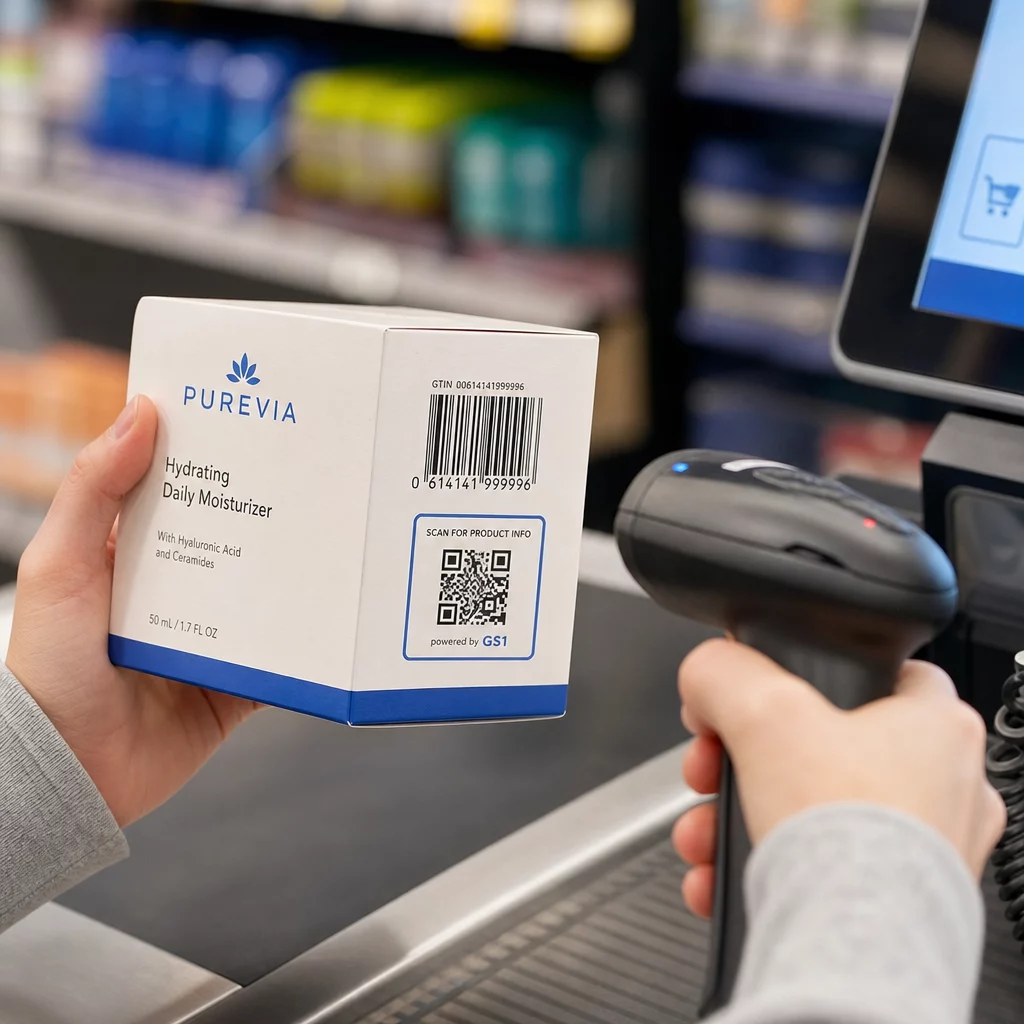
During the transition, 1D and 2D barcodes are expected to coexist on product packaging. GS1 guidance specifically recommends that brand owners place 2D codes alongside their existing linear barcodes to ensure a reliable backup scanning option at POS systems that haven’t yet been upgraded.

For a deeper look at how GS1 Digital Link QR codes work in practice, see how to implement GS1 Digital Link QR codes effectively.

Why 2D Barcodes Are Replacing 1D Codes

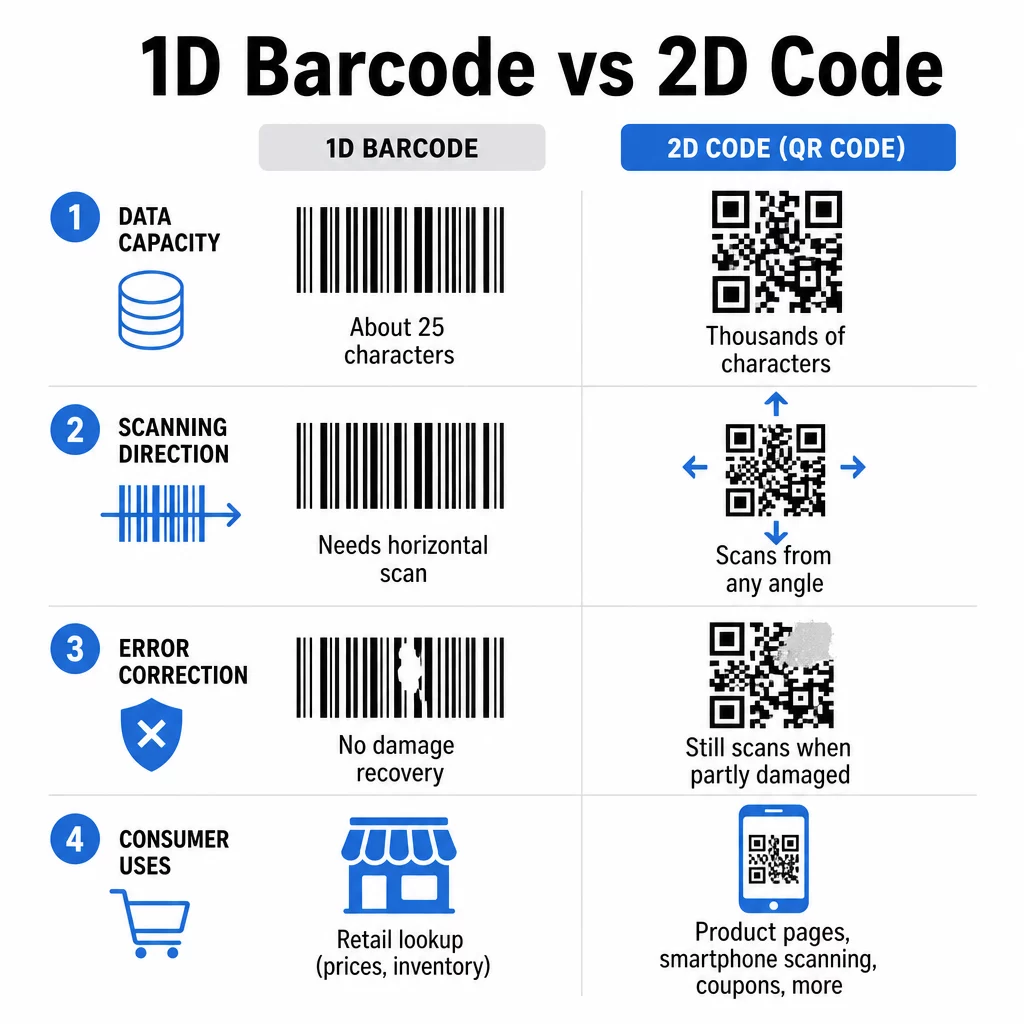
The core limitation of a traditional 1D barcode is its data capacity. A standard UPC or EAN code can hold roughly 20–25 characters – just enough to encode a product identifier number. Everything else, such as price, description, and inventory data, has to be retrieved from a connected database.

Barcode vs QR

A 2D barcode changes that equation entirely. Here’s what a 2D code can encode directly in the symbol itself:

  • Global Trade Item Number (GTIN)
  • Batch and lot numbers
  • Serial numbers
  • Expiration dates
  • Weight and price
  • URLs linking to product information pages

This has practical consequences across the entire supply chain. Because 2D barcodes carry detailed product and production data within the symbol itself, they reduce reliance on constant database connectivity. That makes traceability, auditing, and product recalls faster and more reliable – you don’t need to look up a database record to know a product’s batch number or expiration date.

2D barcodes also support omnidirectional scanning, meaning they can be read from any angle. They include built-in error correction, so they remain scannable even if the code is partially damaged or printed on uneven surfaces. A standard laser scanner can only read 1D barcodes in a single horizontal pass; reading a 2D code requires an image-based scanner, which is part of why POS system upgrades are a necessary step in the Sunrise 2027 transition.

Common Types of 2D Barcodes

Not all 2D barcodes are the same. The two most widely used formats are QR codes and Data Matrix codes, and they serve different purposes.

QR码 were designed for fast readability and consumer interaction. They support large data capacity and are easily scanned by smartphone cameras, making them popular for marketing, payments, and product information. In the GS1 context, QR codes powered by GS1 Digital Link can simultaneously serve retail checkout and consumer engagement from a single code on the package.

数据矩阵代码 are optimized for small-item marking with very high data density. They’re commonly used in aerospace, electronics, healthcare, and pharmaceutical industries where space is limited and industrial scanners are the norm. For a detailed comparison, see Data Matrix vs QR Code – what’s the difference.

Where 1D Barcodes Still Make Sense

Despite the momentum behind 2D codes, traditional barcodes aren’t disappearing overnight. Several practical realities keep them in use:

  • Legacy infrastructure: Most retail POS systems today still read 1D barcodes. The Sunrise 2027 deadline exists precisely because upgrading those systems takes time and investment.
  • Simplicity for basic use cases: For internal asset tracking or simple inventory management where data capacity isn’t a constraint, 1D barcodes remain a cost-effective option.
  • Transition period coexistence: GS1 guidance explicitly acknowledges that by December 2027, not all retailers will be able to read 2D barcodes, which is why co-location of both code types is recommended during the transition.

The three barcode types most commonly used in retail today are still the UPC (used primarily in the US, UK, Australia, and New Zealand), the EAN (used in Europe and internationally), and the ITF (used for global shipping on cardboard packaging, with up to 14 numeric digits and higher error tolerance). These aren’t going away immediately – they’re being supplemented and eventually replaced.

You can learn more about barcode types and how to create scannable codes for your specific use case.

Barcodes vs. QR Codes: A Practical Comparison

功能 1D Barcode (UPC/EAN) 2D Barcode / QR Code
Data capacity ~20–25 characters Up to 7,000+ characters
Scanning direction Single horizontal pass Omnidirectional
Error correction Yes (up to ~30% damage tolerance)
Consumer scanning Requires dedicated scanner Works with smartphone cameras
Dynamic/editable 没有 Yes (with dynamic QR codes)
Consumer engagement 有限公司 URLs, product pages, promotions
POS readiness (2025) 通用 Expanding with Sunrise 2027

For a full breakdown of the tradeoffs, see barcode vs QR code – what’s better for your business.

What This Means for Your Business

If you’re currently using 1D barcodes for retail products, the Sunrise 2027 timeline is relevant. Adding a 2D code – specifically a GS1 Digital Link QR code – alongside your existing barcode prepares your packaging for a world where POS systems can read and process the richer data 2D codes provide.

Scanning product codes

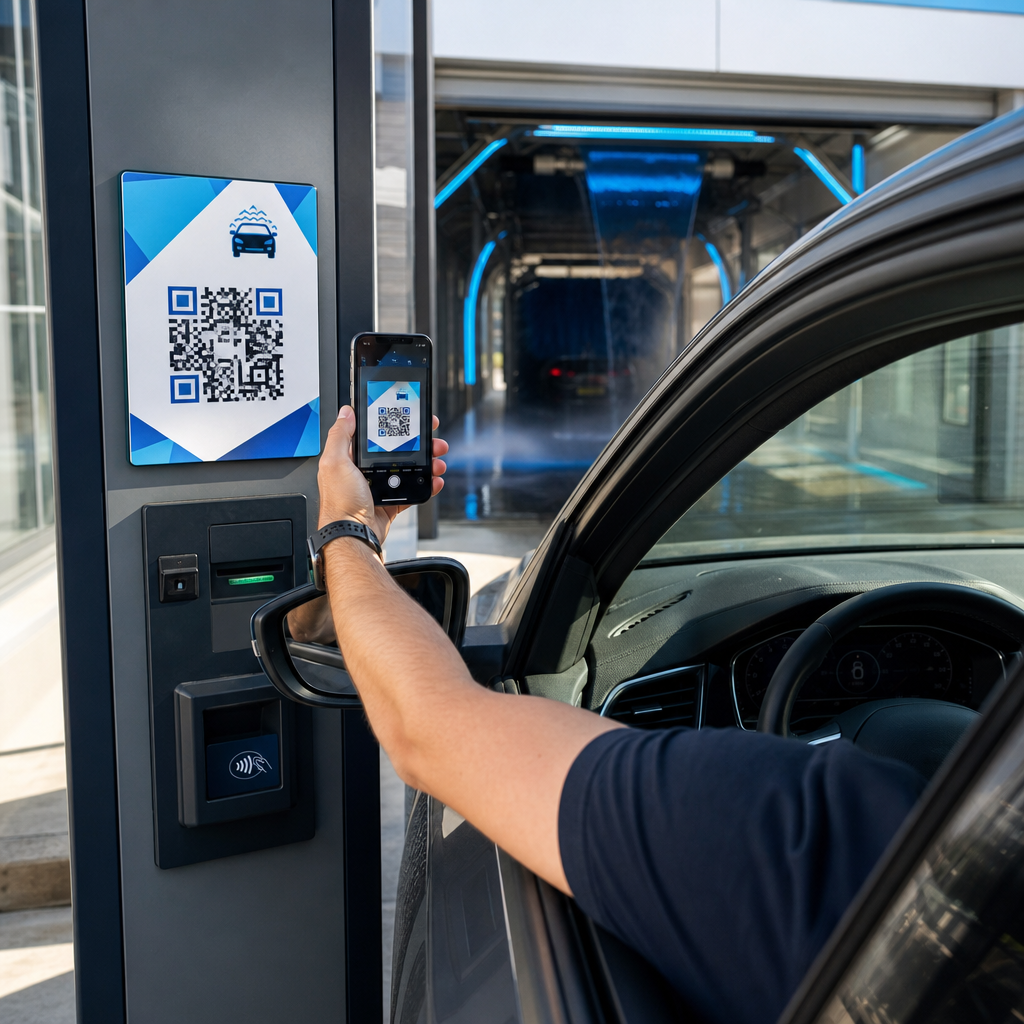
If you’re using barcodes for consumer-facing engagement – driving people to product pages, manuals, or promotions – QR codes are already the more capable option. Unlike a static 1D barcode, a dynamic QR code lets you update the destination URL after printing, so you can point the same code on existing packaging to new content without a reprint.

QR codes on packaging can link customers to nutritional information, how-to videos, reviews, promotions, and subscription options. For practical guidance on placement and design, see how to use QR codes on product packaging.

You can also scan barcodes and QR codes online using a camera or uploaded image if you need to verify how your codes read before printing.

Update Your Product Codes Without Reprinting If you need to point existing packaging to new content, the 动态二维码生成器 lets you change the linked destination at any time and track scan performance from a central dashboard.

常见问题

Will 1D barcodes stop working after 2027?

Not immediately. GS1 Sunrise 2027 sets a target for all retail POS systems to be capable of scanning 2D barcodes, not a deadline for removing 1D codes. During the transition period, both code types are expected to coexist on product packaging. However, the long-term direction is clear: 2D codes will become the standard.

Do QR codes work as barcodes at retail checkout?

Yes, when structured as GS1 Digital Link QR codes, they can be scanned at retail POS the same way a UPC or EAN barcode is today – extracting the GTIN for price lookup – while also carrying additional data like batch numbers and expiration dates. Retailers need imaging scanners with GS1 Digital Link support to take advantage of this.

静态二维码和动态二维码有什么区别?

A static QR code has its destination encoded permanently – you cannot change where it points after it’s generated. A dynamic QR code points to a short redirect URL that can be updated at any time, letting you change the linked content without reprinting the code. Dynamic codes also support scan tracking and analytics.

关于作者

Siim Kostabi 是 Pageloot 的内容主管,负责撰写关于我们创新型二维码生成器服务的文章。凭借五年多来在二维码领域积累的深厚专业知识,Siim 是该领域的专家。他致力于利用二维码技术简化和增强数字交互,并取得了显著的成果。.

类别
了解更多关于

如果您需要在线创建QR码,则可以 制作二维码 就在这里免费!
Pageloot是 #1转到解决方案 创建和扫描QR码。

BC-008

博客

受到超过 20,000 个品牌的信赖,可获得更多销售、评论和关注者。

客户徽标
受到顶级品牌的信赖
评分为 4.8(共 5)

4.86 / 5 星评级

雨果·劳伦特
雨果·劳伦特
餐馆老板
有史以来最容易和最可靠的QR码生成器。PDF文件可以立即上传。我们的餐厅菜单现在是数字化的。
卢卡斯-詹森
卢卡斯-詹森
房地产开发商
这是一个很好的工具,二维码带你到你想要的地方。我们只使用位置二维码,但有许多有用的功能。
艾玛-莫雷蒂
艾玛-莫雷蒂
零售产品
易于使用和快速。它工作得很好,创造了一个完美的图像,所以员工可以下载我的vCard。
雨果·劳伦特
雨果·劳伦特
餐馆老板
有史以来最容易和最可靠的QR码生成器。PDF文件可以立即上传。我们的餐厅菜单现在是数字化的。
卢卡斯-詹森
卢卡斯-詹森
房地产开发商
这是一个很好的工具,二维码带你到你想要的地方。我们只使用位置二维码,但有许多有用的功能。
艾玛-莫雷蒂
艾玛-莫雷蒂
零售产品
易于使用和快速。它工作得很好,创造了一个完美的图像,所以员工可以下载我的vCard。
查看更多QR码
手机扫描二维码
它是如何工作的 QR码扫描仪
将一切转化为数字体验 不到3分钟。

免费试用 14 天。

无需信用卡。

首次购买可享受 30% 折扣

使用代码:

分享您的 MP3 文件

注册以创建 PDF QR 码

上传和显示你需要的一切。

  • 音频文件
  • 播客
  • 音乐

注册即可享 14 天免费试用。.
试用期结束后,二维码将失效。.

注册以创建音频 mp3 二维码

使用边框获得更多扫描

注册以向您的二维码添加更多框架

呼叫行动框架帮助您的客户与QR码轻松互动。试试吧!

注册即可享 14 天免费试用。.
试用期结束后,二维码将失效。.

注册以向您的二维码添加更多框架

使用形状添加更多样式

注册以创建更多形状

二维码不一定是方形的。试着改变它以适应你的品牌形象。

注册即可享 14 天免费试用。.
试用期结束后,二维码将失效。.

注册以创建更多形状

为您的二维码添加徽标

注册以将您的徽标添加到二维码中

通过在二维码上添加你的标志和品牌,使你的二维码脱颖而出。

注册即可享 14 天免费试用。.
试用期结束后,二维码将失效。.

注册以将您的徽标添加到二维码中

智能应用商店重定向

注册以创建应用商店二维码

将您的应用程序链接添加到我们的智能应用程序商店QR码。用户会根据他们的设备被重新定向。

注册即可享 14 天免费试用。.
试用期结束后,二维码将失效。.

注册以创建应用商店二维码

将图片上传到二维码

注册以创建图像二维码

轻松分享你的图像。在几秒钟内动态地改变任何图像。

注册即可享 14 天免费试用。.
试用期结束后,二维码将失效。.

注册以创建图像二维码

分享您的 PDF 文件

注册以创建 PDF QR 码

上传和显示你需要的一切。

  • 菜单和价格表
  • 使用说明
  • 任何文件

注册即可享 14 天免费试用。.
试用期结束后,二维码将失效。.

注册以创建 PDF QR 码

稍后编辑,无需打印

注册即可编辑您的二维码,无需再次打印

动态QR码让你改变你的QR码的内容,而不需要打印新的QR码。

注册即可享 14 天免费试用。.
试用期结束后,二维码将失效。.

注册即可编辑您的二维码,无需再次打印

何时?何地?追踪您的二维码扫描

注册以追踪您的二维码

发现你的哪些二维码收到了最多的扫描,以及什么最能让你的客户兴奋。

注册即可享 14 天免费试用。.
试用期结束后,二维码将失效。.

注册以追踪您的二维码

提供可打印文件

注册以创建 PDF 和 SVG 等矢量二维码

.EPS, .PDF, .SVG

想下载高清分辨率的QR码吗?获得矢量或像素格式,可随时打印。

注册即可享 14 天免费试用。.
试用期结束后,二维码将失效。.

注册以创建 PDF 和 SVG 等矢量二维码

请等待。您的二维码是 正在加载... 正在加载...

打造专属

注册以保存您的二维码以供日后使用

通过创建具有不同颜色、标识和行动呼吁框架的出色的QR码,获得更多的扫描。

注册即可享 14 天免费试用。.
试用期结束后,二维码将失效。.

注册以保存您的二维码以供日后使用