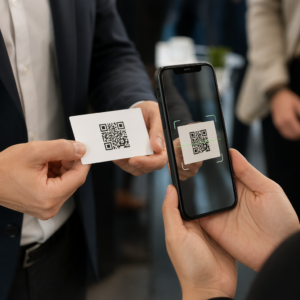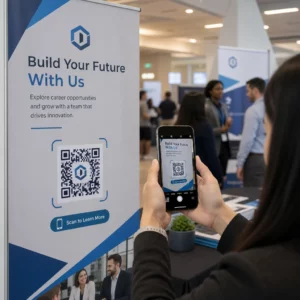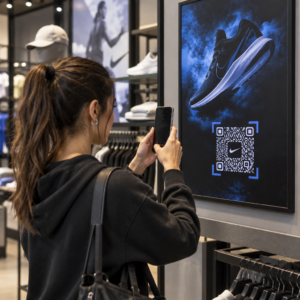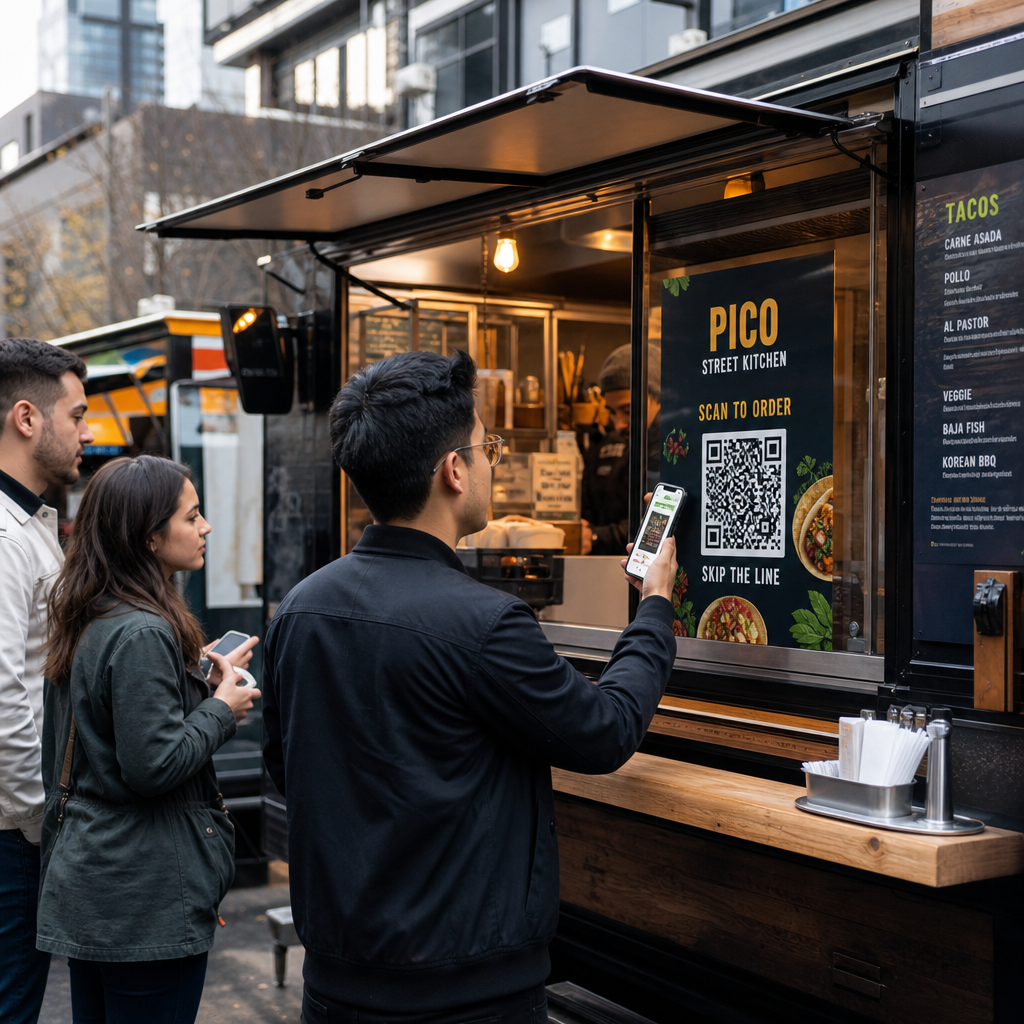
Is your food truck line moving as fast as it should? Long queues, undecided customers, and slow payment handling drive people away before they ever reach your window. This guide explains how QR codes can speed up service, reduce friction, and keep customers coming back.
Why QR Codes Make Sense for Food Trucks
Food trucks operate under constraints that traditional restaurants don’t face. You have limited counter space, no host stand, and often a single staff member juggling orders, prep, and payment simultaneously. Every second spent explaining a menu item or making change is a second the line grows longer.
The U.S. food truck industry generates roughly $2.4–2.8 billion in annual revenue, which means even small gains in throughput translate directly into more income per service window. QR codes address the most common bottlenecks: customers who don’t know what they want when they reach the front, payment delays, and the recurring cost of reprinting menus whenever your offerings change.
Contactless payments are now mainstream. According to Visa, contactless transactions grew from less than 1% of U.S. face-to-face transactions in 2017 to over 60% by Q2 fiscal 2025. Your customers already expect to tap or scan to pay – giving them a QR-based option removes friction rather than adding it.
How to Use a QR Code Menu at Your Food Truck
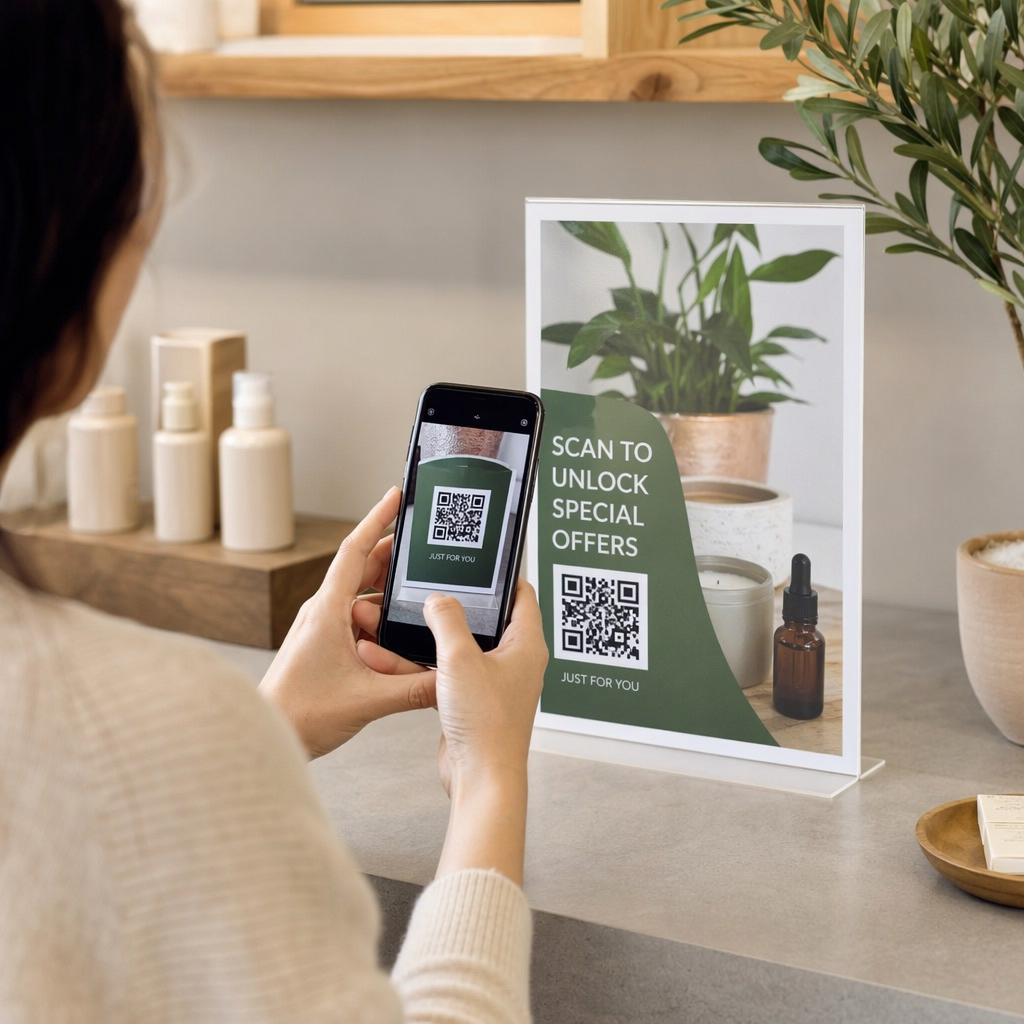
A QR code menu works by linking a printed code to a digital version of your menu that customers open on their own smartphones. Instead of printing and laminating paper menus, or relying on a chalkboard sign that’s hard to read from the back of the line, you place a QR code on your truck, on signage, or on a small table tent – and customers browse on their phones while they wait.
This solves a specific food truck problem: customers who are undecided when they reach the window slow down every person behind them. When people can browse your menu before they step in line, they arrive at the counter ready to order.
Pageloot’s Генератор QR-кодов для меню lets you link your QR code to either a PDF menu or a mobile-optimized landing page. A landing page generally offers a better experience – customers can see item descriptions, photos, and prices in a format designed for a phone screen. You can include allergen information, daily specials, and sold-out notices without printing anything new. As Pageloot’s menu generator notes, QR code menus are useful whether your business is a food truck or a fast-dining café, allowing customers to decide what to order before reaching checkout.
Key advantages of a digital menu for food trucks:
- Update prices, items, or specials in real time without reprinting
- Display your full menu in a format that’s readable on any smartphone
- Let customers decide what to order while they wait in line, not after they reach the window
- Eliminate reprinting costs when your menu changes seasonally or daily
Create Your Food Truck Menu QR Code Ready to let customers browse your menu before they reach the window? Use the Генератор QR-кодов для меню to build a mobile-ready digital menu in minutes.
Setting Up QR Code Ordering for Your Truck
QR code ordering takes the menu one step further: instead of just browsing, customers can submit their order directly from their phone. This is especially useful for food trucks that serve events, parks, or fixed locations where customers can wait nearby rather than standing in a single-file queue.
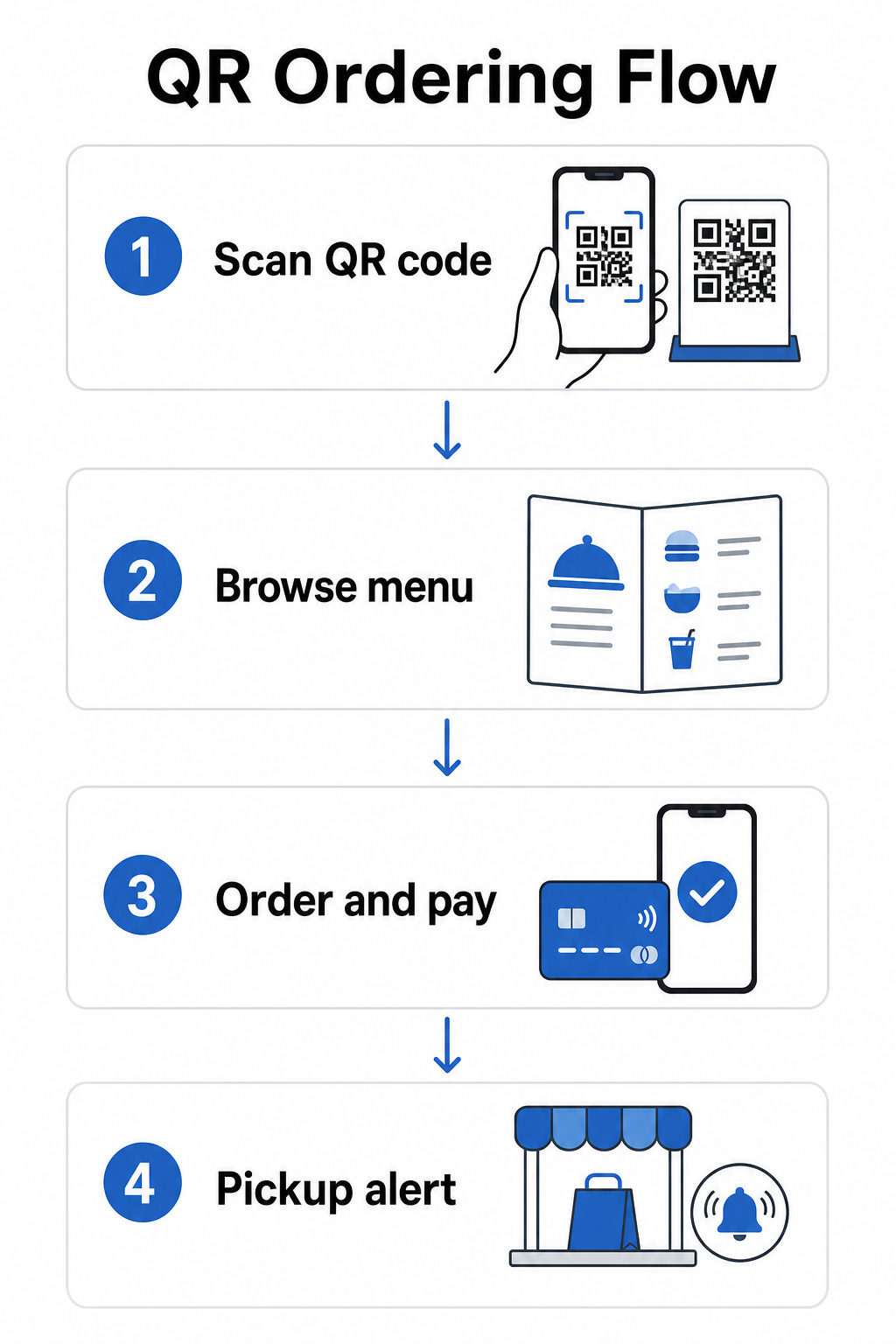
A Система заказа QR-кода requires a few components working together:
- A mobile-optimized digital menu with item descriptions and customization options
- A QR code that customers scan to access the menu and order form
- A payment gateway integration so customers can pay at the same time they order
- A way for orders to reach your kitchen – either a screen inside the truck or a text notification system
One operational benefit worth highlighting: enabling online ordering with pickup alerts means customers don’t have to stand in line at all. They place their order, receive a notification when it’s ready, and come to the window only to collect. This reduces crowding and walk-away risk during peak hours.
When configuring your ordering setup, choose динамические QR-коды over static ones. A dynamic QR code points to a short redirect URL that you can update at any time – so if you change your ordering platform, update your menu, or move to a new location, you update the destination without replacing the physical codes on your truck. The генератор динамических QR-кодов from Pageloot handles this from a single dashboard and is the practical choice for any operator whose menu or setup will evolve over time.
Accepting Payments via QR Code
QR code payments let customers complete a transaction by scanning a code and paying through their preferred mobile wallet or payment app – no card terminal required, no cash handling, no change-making delays. For a food truck operator, this can meaningfully shorten the time each customer spends at your window.
The setup is straightforward. You generate a payment QR code linked to your PayPal, Stripe, or other payment provider, print it or display it at your window, and customers scan to pay. Pageloot’s Генератор QR-кодов PayPal walks through the process: generate your PayPal.me link, paste it into the generator, customize the design with your branding, and download the code for printing or display.
For a broader overview of how QR code payments work across different platforms, Pageloot’s payment QR guide covers the key options and setup steps. If you want more context on why food service businesses are adopting this approach, the QR code payments benefits for restaurants page explains how faster checkouts and lower processing friction translate into operational gains.
The National Restaurant Association reported in 2024 that 85% of restaurants now offer contactless payment options, and 92% of owners report positive feedback from customers. Food trucks that still rely on cash-only or card-swipe-only setups are increasingly out of step with what customers expect.
Using Dynamic QR Codes to Keep Everything Current
One of the most practical advantages of QR codes for a food truck is the ability to update your content without touching the printed code. If you’re using a static QR code – one that permanently encodes a single URL – any change to your menu, ordering link, or payment page means reprinting and redistributing new codes.
Dynamic QR codes solve this. The code itself encodes a short redirect URL that never changes. What you control is where that redirect sends the customer. Update your menu, switch payment platforms, or promote a seasonal special – the physical code on your truck stays exactly the same.
Dynamic codes also give you analytics. You can track how many customers scanned your menu code, when scans peak (useful for staffing and prep decisions), what devices people are using, and which locations or events generate the most engagement. Dynamic QR codes track metrics such as time of scans, geographical location, device type, and scan frequency, giving you real-time data to inform decisions. This is covered in more depth on Pageloot’s QR code tracking page.
Track Every Scan From Your Truck Использовать Генератора динамических QR-кодов to create editable, trackable codes for your menu, ordering, and payment links – all manageable from a single dashboard.
Marketing and Customer Retention with QR Codes
QR codes aren’t limited to menus and payments. Food trucks that operate at regular spots, farmers markets, or events can use them to build customer relationships between visits.
Practical QR code marketing ideas for food trucks:
- Отзывы Google: Place a QR-код для отзывов Google at your window or on your packaging. Customers who had a great experience can leave a review in seconds, which builds your local search visibility over time.
- Coupons and promotions: Используйте Coupon QR code to offer a discount on a return visit, promote a new item, or reward loyal customers. Link the code to a landing page showing your current deals.
- Social media and schedule updates: A Ссылка QR-код can direct customers to your Instagram, a sign-up form, or your upcoming location schedule – keeping them connected after they leave.
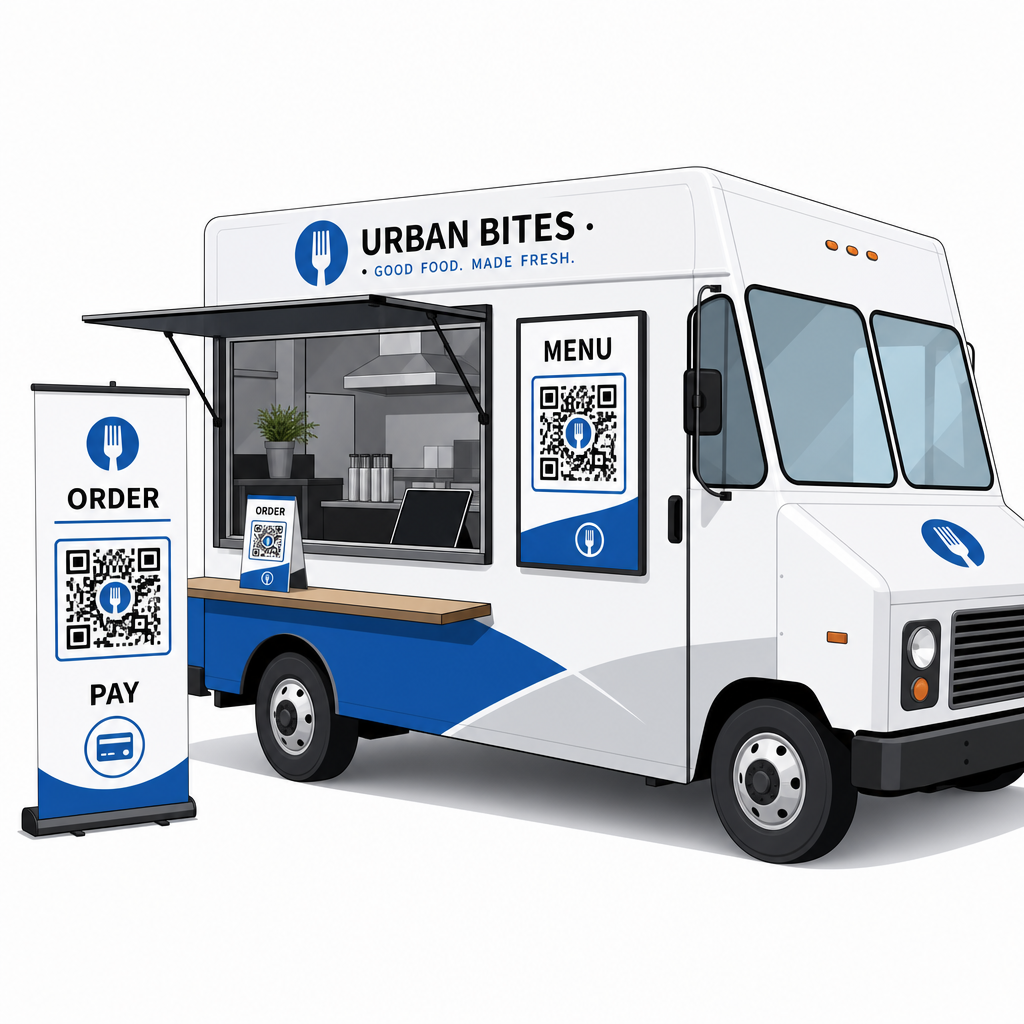
QR code signage is particularly well-suited to food truck exteriors and event displays. A code placed at eye level on the side of your truck, on a branded banner, or on a small table tent near the order window is easy to scan and requires no staff involvement. Before you print, it’s worth reviewing QR code placement best practices и рекомендациям по читаемости to get sizing, contrast, and surface choices right the first time. Pageloot recommends a minimum contrast ratio of 4:1, dark patterns on light backgrounds, and a size of at least 2 × 2 cm for close-range scanning – all of which matter when your codes will be read outdoors in varying light conditions.
What to Consider Before You Roll Out QR Codes
QR codes work well for food trucks, but a few practical factors will determine whether your rollout goes smoothly.
Подключение: Your QR code ordering or payment system depends on customers having a reliable mobile data connection. At a busy outdoor event or street location, this is usually fine. In a basement food hall or a venue with poor cell coverage, test connectivity before your first service there.
Not every customer will scan: Research from the National Restaurant Association found that while 73% of Gen Z adults were interested in accessing menus via QR code, that figure dropped to 46% for baby boomers. Food trucks are a different context from sit-down restaurants – customers are already on their phones and waiting in line – but it’s still worth having a visible board or a verbal rundown of your key items as a fallback so no one feels excluded.
Безопасность: Place QR codes in locations where they can’t easily be covered or replaced. Your own branded signage and truck exterior are low-risk environments, but it’s good practice to check that your codes are intact at the start of each service. Federal consumer guidance notes that scammers sometimes place fraudulent codes over legitimate ones, so displaying codes in consistent, branded formats makes them easier for customers to trust.
Mobile-friendly destination: The page your QR code opens must load quickly and display correctly on a phone screen. A page that takes more than a few seconds to load, or one that requires pinch-zooming to read, will cause customers to abandon it before ordering. Pageloot’s guide to mobile QR code landing pages covers what to optimize before you go live.
Getting Started: What You Need
If you’re ready to implement QR codes at your food truck, here’s a summary of what the setup involves:
| What you need | Why it matters |
|---|---|
| A digital menu (PDF or landing page) | The destination customers will browse on their phones |
| A QR code generator | Creates the scannable code linked to your menu or payment page |
| Динамические QR-коды | Lets you update content without reprinting physical codes |
| A payment link (PayPal, Stripe, etc.) | Enables contactless payment via QR scan |
| Strategic code placement | Ensures customers can actually find and scan the code |
| Analytics access | Shows what’s working and when customers engage most |
Pageloot’s platform covers all of these from a single dashboard. You can create menu QR codes, payment QR codes, and marketing codes – all dynamic and trackable – and update any of them without touching the physical materials on your truck. The restaurant and hospitality page shows how similar businesses have approached this, and the broader industry solutions page covers other food service contexts worth exploring.
QR codes won’t replace good food or fast prep work – but they remove the operational friction that slows down your line and keeps customers from returning. Start with a menu QR code to let customers browse while they wait, add a payment code to speed up checkout, and layer in marketing codes as you grow more comfortable with the system.
Build Your Food Truck QR Code Setup Create a branded, editable menu QR code in minutes with the Генератор QR-кодов для меню – no technical knowledge required, and you can update your menu anytime without reprinting.
Часто задаваемые вопросы
No. Any modern smartphone can scan a QR code using the built-in camera app – no separate download is needed. The camera detects the code automatically and prompts the user to open the linked page in their browser.
If you’re using a dynamic QR code, you simply update the destination in your QR code management dashboard – the printed code continues to work and now points to your updated menu. Static QR codes permanently encode a single URL, so any change to the destination requires printing a new code entirely.
You can link a single code to a combined menu-and-ordering page that includes payment functionality, or use separate codes for different purposes such as menu browsing, payment, and Google reviews. Using separate dynamic QR codes gives you cleaner analytics on how customers engage with each touchpoint individually.