Are your taproom staff spending too much time answering the same questions about your beers? Between rotating tap lists, ABV details, food pairings, and seasonal releases, keeping customers informed without overwhelming your team is a real operational challenge. This guide covers how breweries are using QR codes to solve that problem – from digital tap lists to customer feedback tools.
Why Taprooms Are Turning to QR Codes
Taprooms and brewpubs represent 73% of all U.S. craft brewing businesses, yet account for only 15% of total craft beer volume. That structure puts enormous weight on the direct-to-consumer experience, and industry guidance increasingly points to doubling down on taproom experiences as the path forward for craft brewers.
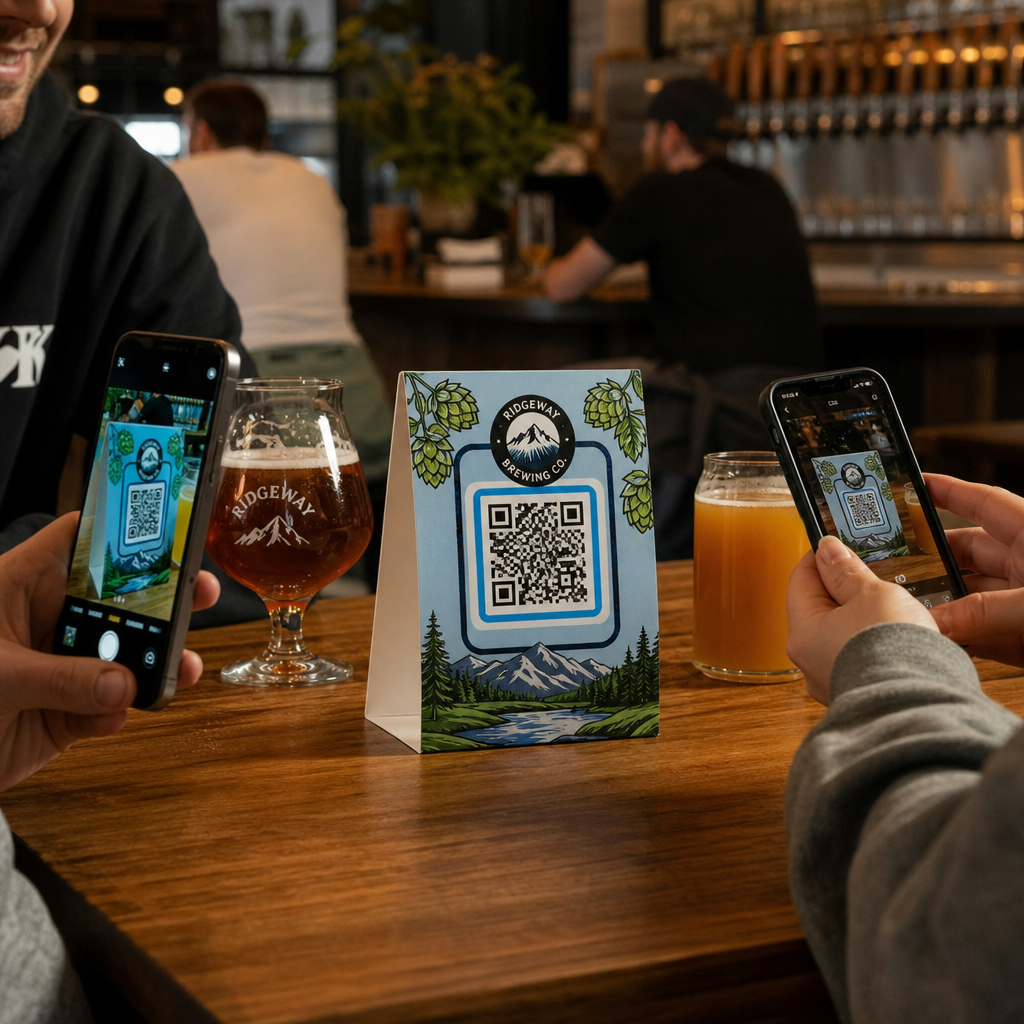
QR codes fit naturally into that strategy. A single scannable code on a table can replace a stack of laminated menus, give customers instant access to tasting notes and beer details, and invite them to follow your brewery on social media – all without requiring staff to step away from the bar.
For businesses in hospitality, QR codes offer a low-cost way to connect physical spaces with digital content. Breweries are a particularly good fit because the information customers want – ABV, IBUs, style descriptions, flight options – changes regularly and benefits from being updated without reprinting.
The Digital Tap List: Your Most Practical Use Case
The most immediate application is replacing or supplementing your printed tap list with a digital version customers can access by scanning a code at the bar, on table tents, or at the entrance.
A menü QR-kódot lets you build a digital tap list that shows beer names, styles, ABV, IBU, tasting notes, and pricing by pour size. Brewery menus often include sample pours and flights as well, so you can structure your digital menu to reflect all available options without the formatting constraints of a chalkboard or paper card.
The key operational advantage is that you can update the menu without touching the physical QR code. When a keg kicks and a new seasonal replaces it, you update the digital destination – the printed code on the table stays the same. This matters in a setting where the tap list can change daily or weekly.
Create a Digital Tap List for Your Brewery Ready to build a menu your customers can access with one scan? Use the Menü QR kód generátor to upload your tap list as a PDF or build an interactive mobile menu – and update it any time without reprinting.
What to Include on a Brewery’s Digital Menu
A well-structured digital tap list helps customers make decisions faster and reduces back-and-forth with staff. Consider organizing it around the following elements:
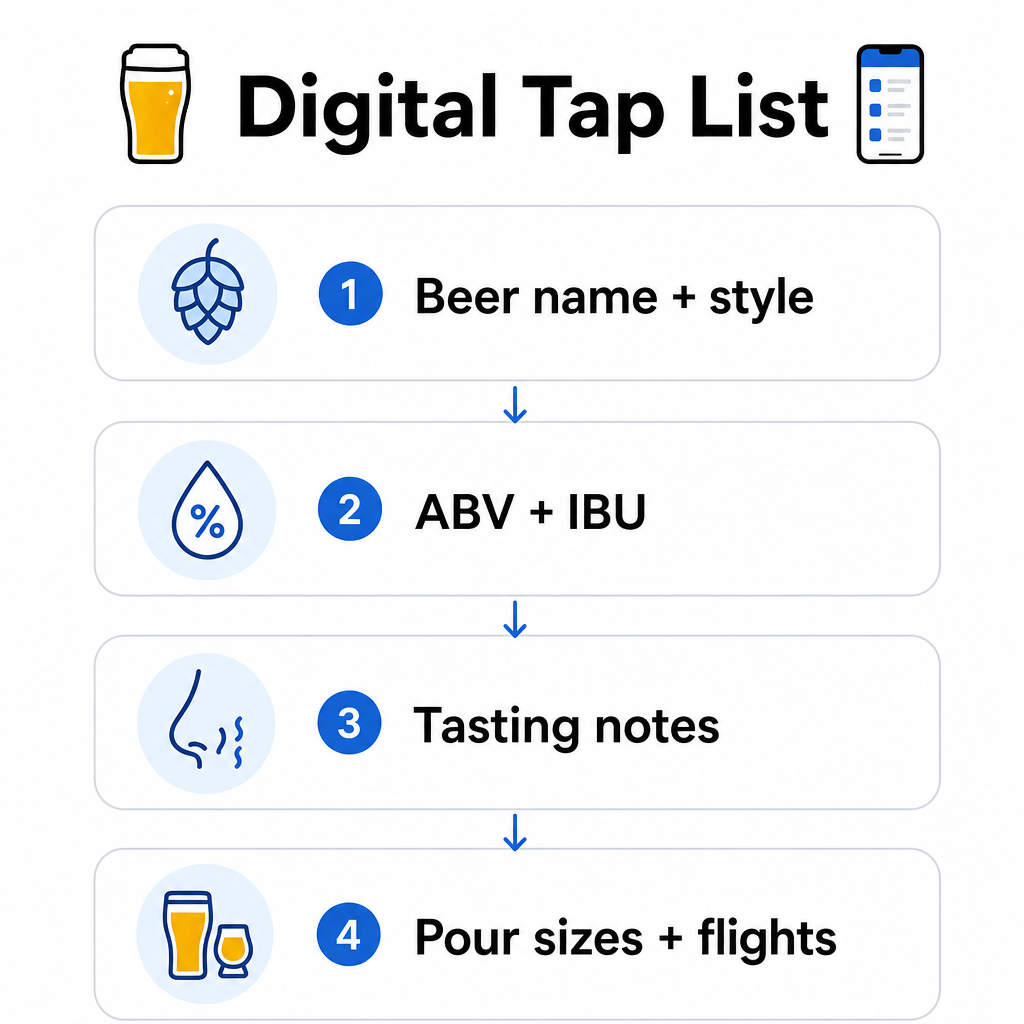
- Beer name and style – e.g., West Coast IPA, Hazy Double IPA, Dry Irish Stout
- ABV and IBU – helps customers gauge strength and bitterness at a glance
- Tasting notes or flavor descriptors – “citrus forward with a dry finish” is more useful than just “IPA”
- Available pour sizes and prices – if you offer a 5 oz, 10 oz, and pint, each size should have its own price listed
- Flight and sample options – clearly show how flights are structured and priced
- Seasonal or limited releases – call these out so customers know what’s new
If your brewery also serves food, the same QR code can link to a full food and drink menu. For guests with dietary restrictions or allergen concerns, a digital format makes it easier to include detailed ingredient information. Note that TTB allergen labeling for alcohol labels remains voluntary under current regulations, but proactively sharing this information via your digital menu is a sound practice for customer trust.
Using PDF QR Codes for Beer Menus and Collateral
If you already have a designed tap list in PDF format, you can generate a QR code that links directly to that file. Customers scan and the PDF opens on their phone – no app required.
This approach works well for several brewery-specific scenarios:
- Seasonal menu cards you redesign quarterly
- Beer education sheets for tap takeovers or events
- Printed collateral for brewery tours that you want to extend digitally
- Tasting guides structured around flights
PDF QR kódok are especially practical because you can swap out the linked PDF without changing the printed code. If you print a run of table tents for a seasonal event and the menu changes mid-run, you update the PDF rather than reprinting the codes. The broader applications of PDF QR codes for businesses cover additional ways to apply this approach across marketing and operations.
Collecting Google Reviews While Customers Are Still Engaged
The best moment to ask for a review is right after a positive experience – which in a taproom means while someone is finishing a great pint, not three days later when they’ve forgotten the beer names.
A Google Értékelés QR-kódot placed on your table, coaster, or receipt takes customers directly to your Google Business review page with a single scan. Adding a short prompt like “Enjoyed your visit? Tell others” makes the ask feel natural rather than pushy.
More reviews help your brewery rank in local search results and build credibility with new visitors who are deciding where to spend an afternoon. It’s a low-effort touchpoint with real downstream impact on foot traffic.
Beyond the Menu: Other Taproom QR Code Applications
QR codes can serve several other functions across your taproom operations.
Social media and newsletter sign-ups – A link QR-kódot on table tents or your bar top can direct visitors to your Instagram, Facebook page, or an email signup form. Guests who had a good time are receptive to staying connected, so give them an easy way to do it while the experience is still fresh.
Event and release announcements – Link a QR code to a landing page with upcoming events, beer release dates, or taproom hour changes. Because dynamic QR codes can be updated after printing, you can use the same physical code to promote different upcoming events over time without reprinting anything.
Beer education and brewery story – Some breweries use a QR code to share the story behind a beer – the yeast strain, the hop variety, the inspiration for the recipe. This kind of content deepens the taproom experience without requiring staff to deliver a full explanation with every pour. It works especially well for limited or collaboration releases where the backstory is part of the appeal.
Contactless payments – QR-based payment options can speed up the checkout process at busy taprooms. Customers scan, review their tab, and pay – reducing back-and-forth at the bar during peak hours. The benefits of QR code payments in restaurant settings apply directly to taproom operations as well.
Connect Every Taproom Touchpoint to Digital Content Használja a QR Kód Generátor to create branded, trackable codes for your tap list, social media, events, and more – all managed from a single dashboard.
Dynamic vs. Static QR Codes: What Breweries Should Know
There are two types of QR codes: statikus és dinamikus. Understanding the difference helps you choose the right tool for each application.
| Funkció | Statikus QR-kód | Dinamikus QR-kód |
|---|---|---|
| Destination URL | Fixed at creation | Can be updated anytime |
| Analitika | Nincs | Scans, locations, device types, times |
| Legjobb: | One-time or permanent links | Tap lists, events, rotating content |
| Reprinting required after update? | Igen | Nem |
For most brewery applications – especially tap lists and event promotions – dynamic QR codes are the right choice. The tap list changes. Events come and go. Seasonal menus rotate. A dynamic code lets you update the destination without discarding your printed materials, which matters when you’ve invested in custom-printed table tents or coasters.
Dynamic codes also give you analytics: how many times a code was scanned, from which location, on which devices, and at what times. That data tells you whether guests are actually engaging with your digital menu or ignoring it – which helps you decide where to place codes and how to design them for better visibility. For a full breakdown of what dynamic codes track and why it matters, see milyen adatokat gyűjtenek a dinamikus QR-kódok.
Designing QR Codes for a Taproom Environment
Taprooms present specific physical conditions you need to account for: ambient lighting that can range from bright to dimly lit, surfaces that include wood, chalkboard, and glass, and guests who may be scanning from an arm’s reach away at a bar stool.
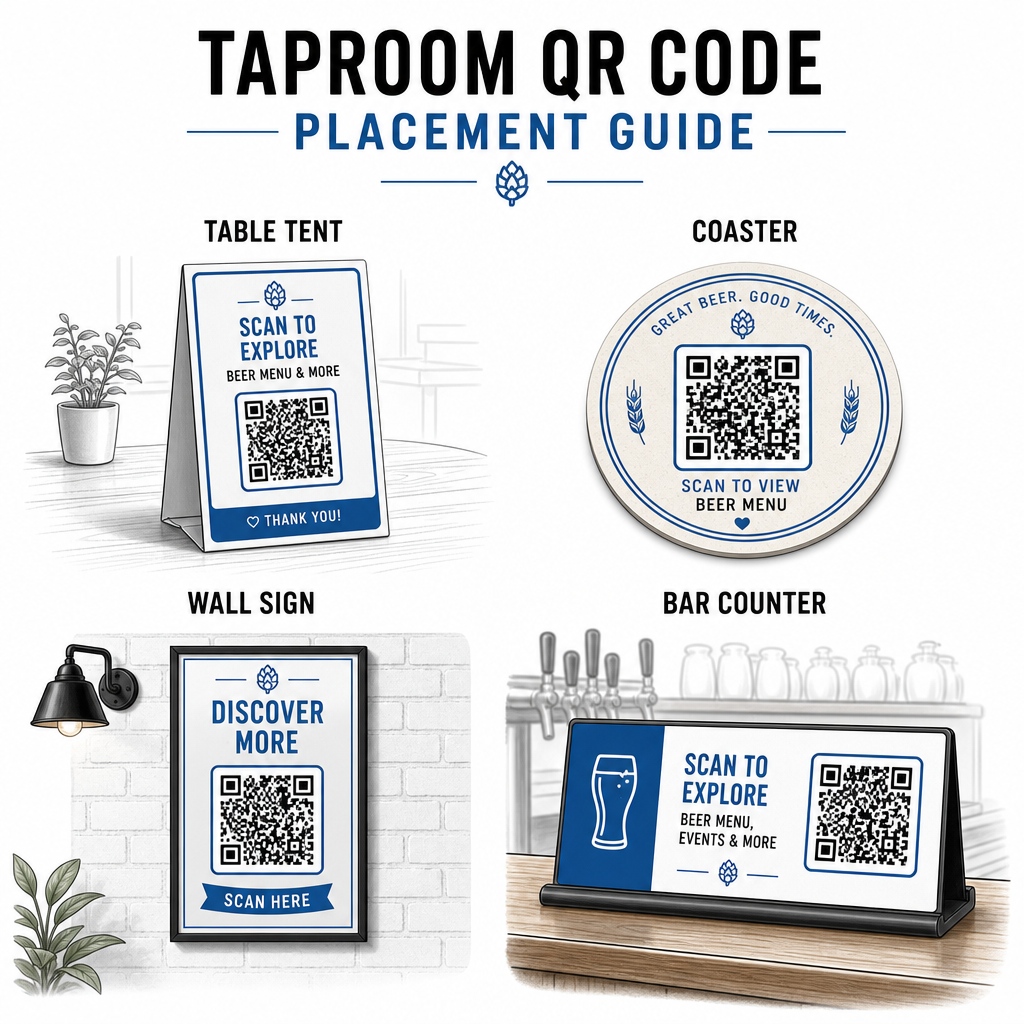
A few practical guidelines drawn from a QR-kód olvashatóságára vonatkozó legjobb gyakorlatokat:
- Méret – Use a minimum of 2 × 2 cm (about 0.8 × 0.8 inches) for close-range scanning. For codes placed on walls or chalkboards where guests scan from further away, apply the 10:1 rule: the code width should be at least one-tenth of the expected scanning distance.
- Kontraszt – Maintain strong contrast between the code pattern and its background. A dark pattern on a light background is standard. Avoid placing codes directly on dark wood without a white background field behind them.
- Quiet zone – Leave a clear margin around the code – roughly 0.25 inches – so the scanner can find and read the code without surrounding elements interfering.
- Surface – Avoid curved or textured surfaces like bottles. Table tents, coasters, printed menus, and wall signs are the best placements. Using QR codes on table tents covers placement specifics in more detail.
- File format – Download your codes in SVG, EPS, or PDF format for high-quality printing. Raster formats like JPG degrade at larger print sizes and can become unreadable.
If you add your brewery logo to the code – which helps with brand recognition – use error correction level Q or H, and keep the logo to no more than 30% of the code area to avoid interfering with scannability.
Honest Limitations to Plan Around
QR codes are useful, but they work best as a supplement to your taproom experience rather than a full replacement for every analog touchpoint.
Research consistently shows that a significant share of diners still prefer physical menus. Survey data indicates that 67% of diners prefer having both digital and traditional menu options rather than one or the other. Keeping some printed or chalkboard menus available alongside QR codes aligns with most guests’ preferences and avoids alienating those who find QR-only setups frustrating.
There are also accessibility considerations worth addressing directly:
- Guests without smartphones, or with older devices that struggle to scan, need an alternative option available
- Menus delivered as image-only PDFs can be inaccessible to guests using screen readers – structured text or HTML menus are more inclusive
- Weak Wi-Fi in older taproom buildings can slow menu load times, frustrating guests – ensure your in-house network can handle the demand before removing physical menus entirely
Addressing these issues upfront – keeping a backup paper menu available, ensuring your digital content loads quickly, and testing your codes in the actual lighting conditions of your taproom – keeps QR codes a convenience rather than a friction point for your guests.
Tracking What’s Working
One of the underused advantages of dynamic QR codes in a taproom is the analytics layer. If you place codes at the bar, on tables, and near the entrance, you can see which locations generate the most scans. If you run a seasonal promotion and link it through a QR code, you can measure how many people actually engaged with it.
Over time, this data helps you make better placement decisions, understand which content resonates with guests, and measure whether your digital engagement is growing alongside foot traffic. It also helps you identify dead zones – locations where codes are placed but rarely scanned – so you can adjust accordingly.
This kind of measurement is especially relevant for taprooms that rely heavily on repeat visits and word-of-mouth. For a broader look at how QR codes serve the hospitality industry, including tracking and engagement strategies, the hospitality resource covers the full picture.
Running an efficient taproom means giving guests the information they want quickly while keeping your staff focused on what they do best. QR codes handle the information layer – tap lists, beer details, event announcements, and review prompts – without adding operational complexity. Start with a dynamic menu QR code on your tables, add a Google review prompt, and use scan analytics to refine placement and content from there.
Get Started with Taproom QR Codes Create your first QR code in minutes with the Pageloot QR Kód Generátor – customize it with your brewery’s branding, link it to your tap list or any digital destination, and update it any time without reprinting.
Gyakran Ismételt Kérdések
Yes, if you use a dynamic QR code. Dynamic codes use a redirect URL managed by the platform, so you can update the destination content – such as a new tap list PDF or a live menu page – at any time without generating a new code or replacing the physical code on your tables or coasters.
Keep a physical or chalkboard menu available as a backup. Survey data shows that 67% of diners prefer having both digital and traditional menu options, so a hybrid approach serves the broadest range of guests. QR codes work best as a supplement to, not a replacement for, analog alternatives.
With dynamic QR codes, you get access to scan analytics – including total scans, scan times, device types, and location data. Place different codes in different locations (bar, tables, entrance) to compare engagement by area, and use that data to optimize placement and design over time.