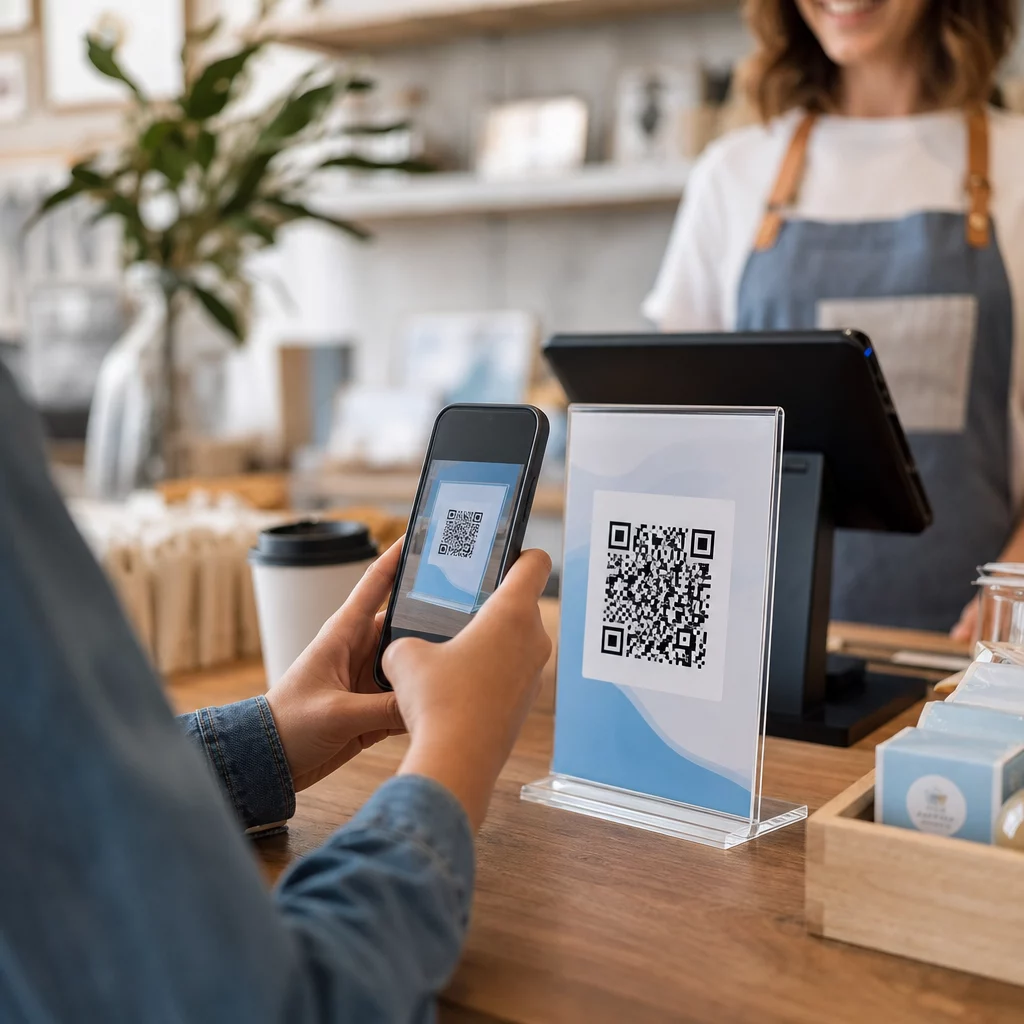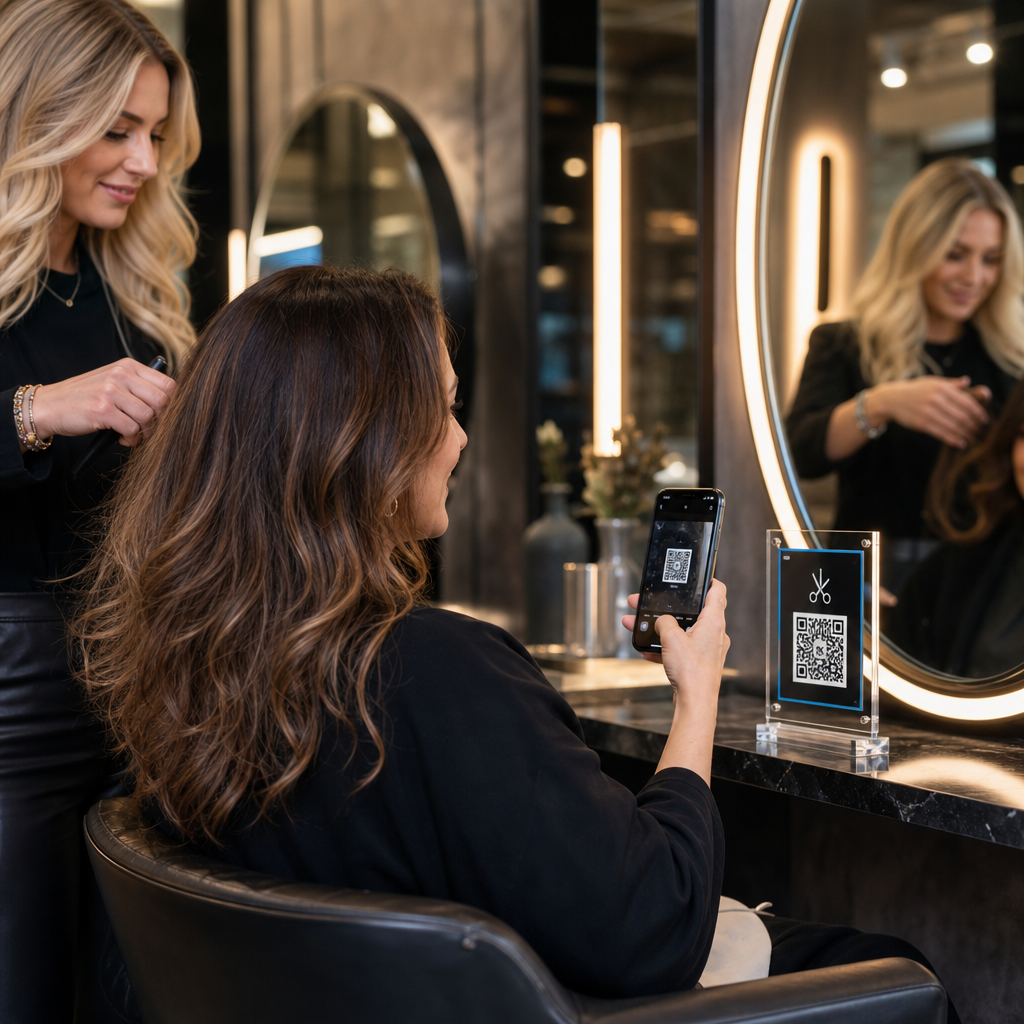
Are manual appointments, front-desk payment bottlenecks, and constant phone interruptions slowing down your salon workflow? Handling administrative tasks during client visits frustrates waiting guests and pulls your stylists away from revenue-generating services. Placing strategic QR codes across your salon allows clients to book appointments, view treatment menus, submit Google reviews, and make contactless payments directly from their smartphones.
Key Client Touchpoints for QR Codes in Your Salon
Converting downtime in styling chairs into active digital engagement helps streamline daily operations. You can implement scannable touchpoints across several core salon operations:
- Streamline online booking and rebooking: Allow clients to schedule their next hair coloring or trim session directly from the styling chair using a लिंक क्यूआर कोड जनरेटर.
- Display digital service menus: Provide updated treatment lists and transparent pricing without reprinting paper inserts by setting up a मेनू क्यूआर कोड जनरेटर.
- Collect instant client reviews: Boost local search ranking and online reputation by directing clients to a Google समीक्षा QR कोड जनरेटर link before they leave the chair.
- Accept contactless payments and tips: Speed up checkout times at the reception counter using dedicated payment QR codes या ए पेपाल क्यूआर कोड जनरेटर.
- Share guest Wi-Fi access: Eliminate manual password inquiries in waiting areas by letting guests automatically connect to Wi-Fi via QR code.
- Expand social media engagement: Direct salon visitors to styling portfolios, tutorials, and reels created with an instagram QR code generator.
Upgrade Your Salon’s Digital Client Experience Ready to streamline bookings, payments, and client reviews with customizable codes? Use the क्यूआर कोड जनरेटर to build branded dynamic codes for your salon stations today.
Optimal Placement Areas for Salon QR Codes
Strategic placement ensures high visibility without creating visual clutter across your salon interior. Positioning digital displays where clients naturally rest their eyes encourages immediate interaction during idle moments.
| Placement Area | Primary Action | Recommended Material |
|---|---|---|
| Styling Mirrors & Stations | Rebooking appointments & reviewing services | Mirror decals or acrylic frame displays |
| Reception Counter | Payment processing & review requests | Compact counter signs or table tents |
| Storefront Window / Door | After-hours booking & browsing service menus | Weatherproof vinyl stickers |
| Retail Product Shelves | Product tutorials & ingredient guides | Shelf talkers or bottle tags |
| Appointment Cards | Following social media & direct rebooking | High-quality cardstock print |
For comprehensive guidelines on layout strategies across physical commercial spaces, review our guide to QR code placement in marketing.
Technical Standards for Reliable Code Scanning
A code that fails to scan creates friction and undermines client trust. Following established printing and technical guidelines ensures smartphone cameras capture your codes instantly under salon lighting.
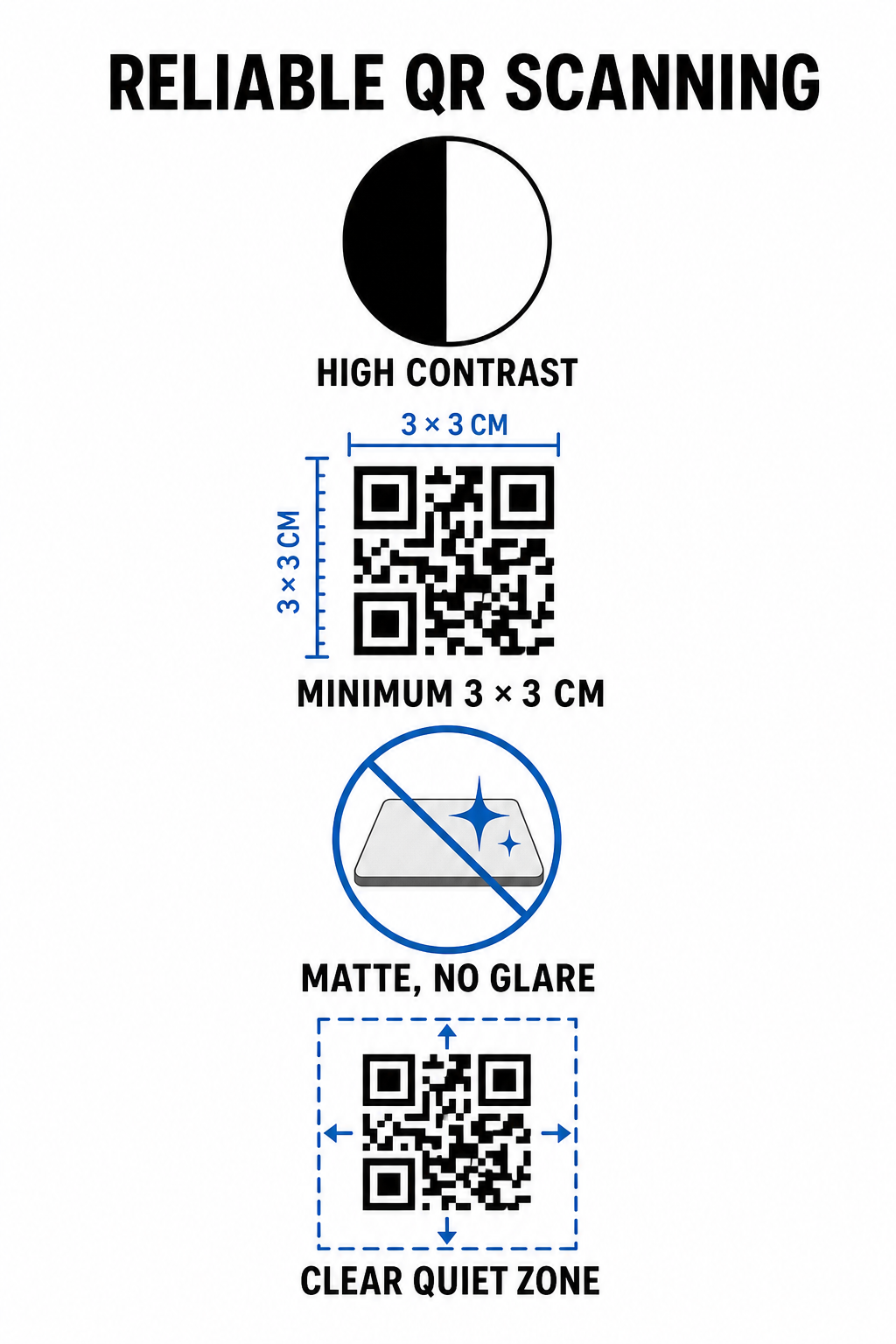
- Maintain high color contrast: Apply dark foreground patterns on light backgrounds. Black on white offers an optimal 21:1 contrast ratio, while smaller codes require at least a 4.5:1 ratio to ensure camera sensors detect the code pattern immediately.
- Calculate appropriate print dimensions: Follow a 10:1 scanning distance-to-size ratio, making the code width one-tenth of the expected distance. For close-range mirror stickers and counter displays, print codes at a minimum size of 1.2 x 1.2 inches (3 x 3 cm).
- Apply a non-reflective matte finish: Select matte cardstock, vinyl, or non-glare laminates instead of glossy paper. Glossy finishes reflect bright overhead salon lighting into smartphone lenses, causing scan failures.
- Preserve the quiet zone margin: Maintain a blank, unprinted border around all four sides of the code pattern. This quiet zone must measure at least four times the width of a single module square.
- Export in high-resolution print formats: Save final graphics as vector files like SVG or PDF, or export PNG files at 300 DPI to prevent pixelation during physical printing.
How Dynamic QR Codes Flexibly Scale Salon Operations
Static QR codes hardcode destination URLs directly into the printed matrix, meaning any web link change requires reprinting physical displays. In contrast, dynamic QR codes route through a short redirect link, enabling salon managers to update encoded destinations at any time through a central management platform.
Managing a growing service business involves frequent menu adjustments, promotional shifts, and software updates. Dynamic codes allow you to change destination links without replacing mirror decals or counter signage.
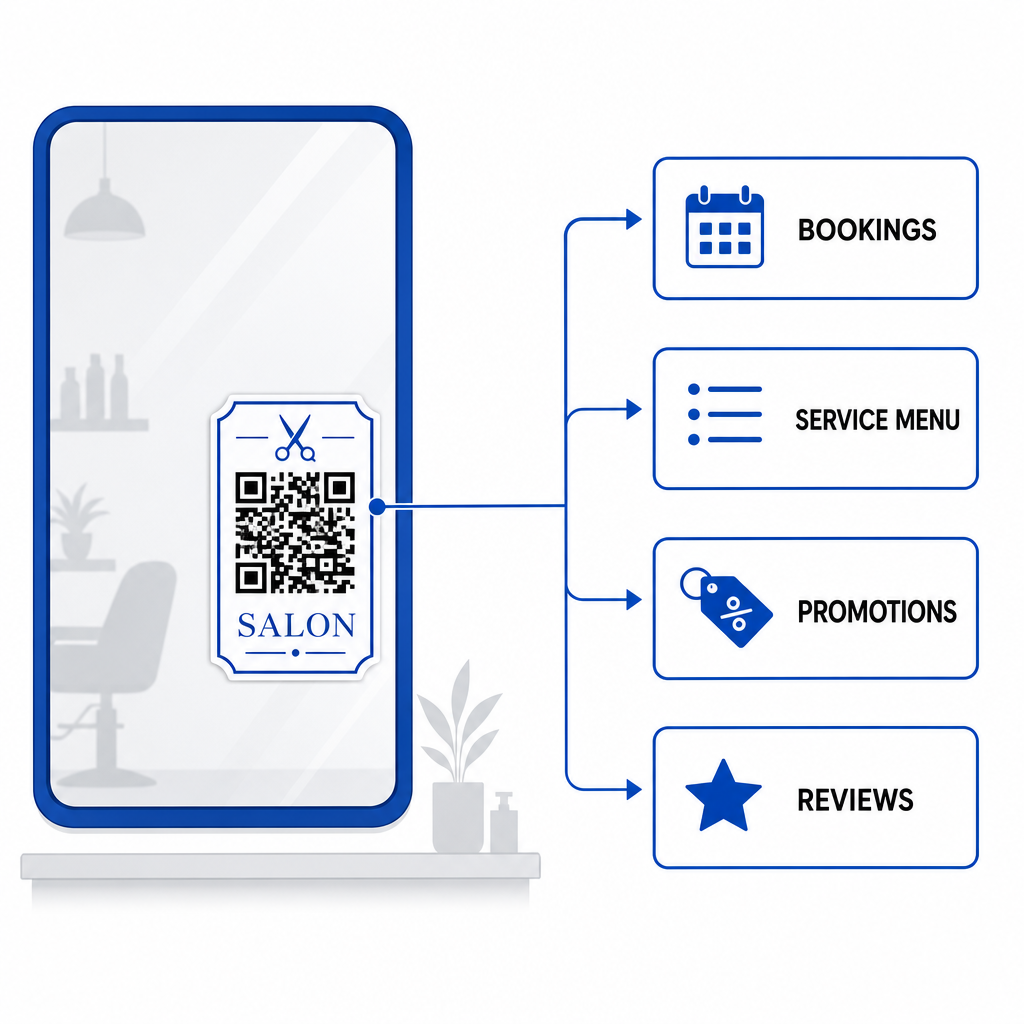
Additionally, dynamic codes capture valuable scan analytics, such as scan frequencies, peak engagement times, and user device types. Monitoring these metrics helps managers identify high-performing styling stations and refine promotional layouts across broader small business operations.
Streamlining Your Salon Workflows
Integrating digital QR codes across key physical touchpoints reduces administrative burdens on your front desk while offering clients a convenient, modern salon experience. By prioritizing strategic code placement, high color contrast, and proper print dimensions, you remove friction from booking, payments, and feedback collection.
Audit your existing salon layout today to identify high-dwell areas where scannable touchpoints provide immediate value. Start creating custom dynamic codes using Pageloot tools to build trackable physical signage that elevates client satisfaction and operational efficiency.
अक्सर पूछे जाने वाले प्रश्न
For close-up scanning from a salon chair (about 1 to 2 feet away), the QR code should be at least 1.2 x 1.2 inches (3 x 3 cm). Always maintain a quiet zone margin of at least four times the module width around the code pattern.
Yes, if you use a dynamic QR code. Dynamic codes allow you to edit the destination URL anytime in your dashboard without reprinting your stickers, signs, or appointment cards.
QR codes remove manual searching by opening your Google review form directly upon scanning. Placing them near styling mirrors or counter displays prompts satisfied clients to rate your services before leaving.