> 블로그 > How to Accept Retail Payments with QR Codes
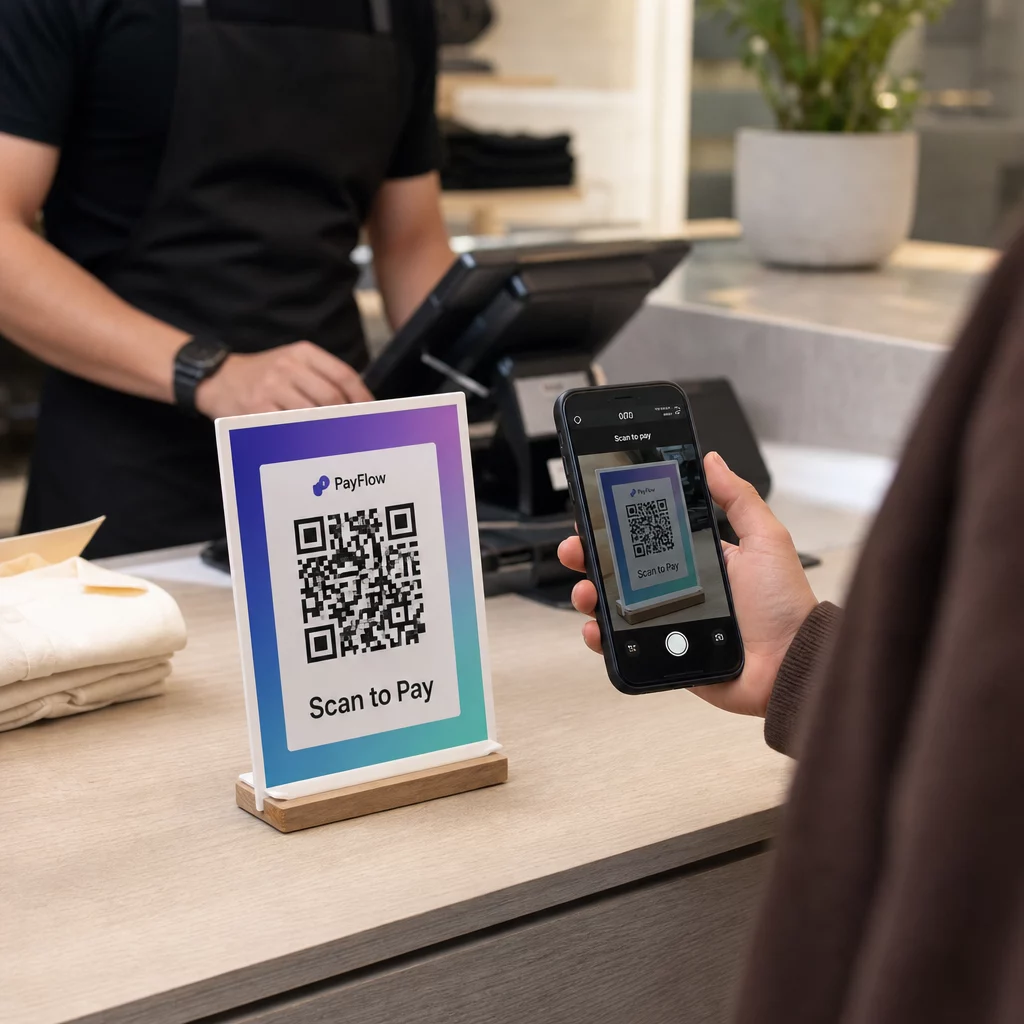
Customer scans QR payment

How to Accept Retail Payments with QR Codes

Learn how to set up and accept QR code payments in your retail store. This guide covers payment modes, hardware needs, placement tips, and security practices.
Updated on 6월 10, 2026
목차

Are you losing customers at checkout because your payment process is too slow or complicated? Long queues and clunky terminals frustrate shoppers and cost you sales. This guide walks you through exactly how to set up and accept QR code payments in your retail store – covering the technology, setup steps, placement, and security practices.

What QR Code Payments Are and How They Work

payment QR code is a scannable code that links a customer’s smartphone directly to your checkout page or payment portal. Instead of swiping a card or counting cash, the customer points their camera at the code, confirms the amount, and completes the transaction through their preferred payment app.

There are two modes of QR payment in retail:

  • Merchant-presented mode (MPM): You display a QR code at the point of sale – on a screen, printed sign, or receipt. The customer scans it with their phone to open a payment page and complete the purchase.
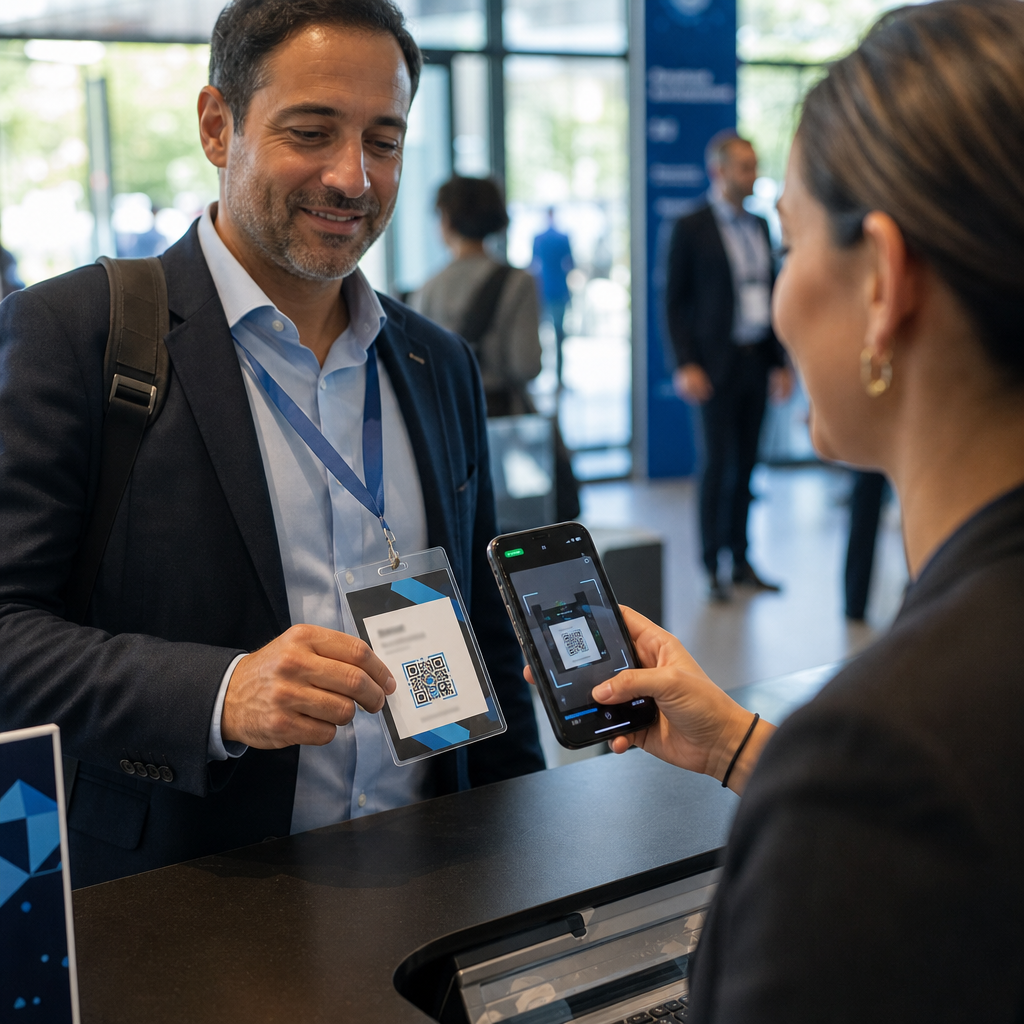
  • Consumer-presented mode (CPM): The customer generates a QR code in their payment app (such as PayPal or Venmo), and a staff member or scanner reads it at the register.

Most U.S. retail setups use the merchant-presented approach because it requires no special hardware on the customer side – any smartphone with a camera works.

Once a customer scans, the flow typically goes: scan the code → land on the checkout or payment page → enter or confirm payment details → transaction completes. The payment provider (PayPal, Stripe, Square, or another processor) handles the financial processing from there.

QR codes used for payments come in two technical types:

  • 정적 QR 코드 store a fixed URL or payment link. They’re free to generate but cannot be updated without reprinting, and they provide no scan analytics.
  • 동적 QR 코드 store a short link that redirects to a destination you can update at any time. They can expire after a single transaction, track scan data, and be deactivated instantly if compromised – making them the better choice for most retail payment applications.

For a deeper look at how payment QR codes work in practice, including supported payment methods like mobile wallets, bank apps, and cryptocurrency, see Pageloot’s dedicated payments guide.

What You Need Before Getting Started

Setting up QR code payments does not require a major hardware investment. The practical requirements are:

  • A payment account with a provider that supports QR-based checkout (PayPal, Square, Stripe, Venmo Business, or a similar processor)
  • A device capable of displaying or printing your QR code – a phone, tablet, POS screen, or printed sign all work
  • A QR code generator to create your payment code
  • A mobile-friendly checkout page that customers land on after scanning

If you already accept digital payments through any mainstream processor, you likely have most of what you need. The QR code simply becomes the entry point to your existing checkout flow.

Start Accepting QR Payments Today Create a branded, trackable payment QR code in minutes using the Pageloot QR 코드 생성기. No coding required – just paste your checkout link and customize.

How to Set Up a Payment QR Code Step by Step

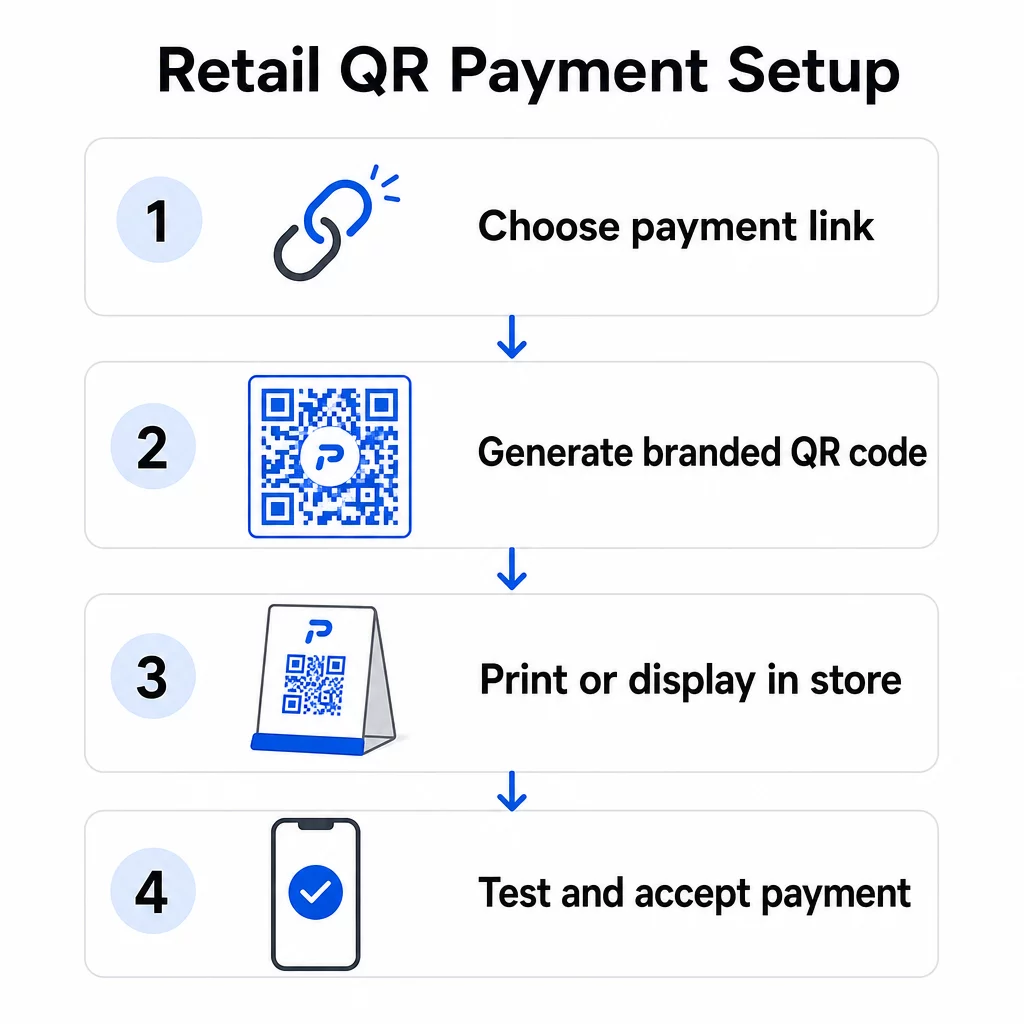
The basic setup process follows a straightforward sequence:

QR 결제 설정 단계
  • 열기 Pageloot QR 코드 생성기 or your payment provider’s dashboard
  • Copy your checkout page URL or payment link (your PayPal.me link, Square payment page, Stripe checkout URL, etc.)
  • Paste the link into the generator and select your QR code type
  • Customize the design – add your logo, adjust colors to match your branding, and select a frame with a clear call to action like “Scan to Pay”
  • Download the finished code in a print-ready format (SVG, PDF, or PNG)
  • Test the code on both iOS and Android devices before deploying it in-store

For PayPal specifically, the PayPal QR 코드 생성기 lets you generate a branded code directly from your PayPal.me link. Customers scan it, enter the payment amount, and the transaction routes securely through PayPal without either party needing to share account details manually.

The entire process typically takes under an hour for a basic setup. Dynamic QR codes add a few minutes to configure but are worth it for the flexibility and tracking they provide.

Connecting QR Codes to Your Payment System

Your QR code is only as useful as the checkout flow it points to. When linking your code to a payment system, you have a few integration options:

  • Direct link: Paste your payment provider’s hosted checkout URL into the generator. The QR code opens that page in the customer’s browser. This is the simplest approach and keeps card data off your systems entirely.
  • API integration: Connect your QR code platform to your POS or payment processor via API for automated, transaction-specific code generation. Platforms like Square, Shopify, and Stripe support this natively.
  • Provider-generated codes: Some POS systems (Square, Clover, Toast) generate QR codes directly from their dashboards, which you can then print or display on a screen.

A single QR code can support multiple payment methods simultaneously. Customers scanning the same code can choose from digital wallets (Apple Pay, Google Pay, Samsung Pay), PayPal, credit cards, or other options – depending on what your payment page supports. This flexibility reduces friction and avoids excluding customers based on their preferred payment method.

If your business serves Chinese-speaking customers, Alipay and WeChat Pay QR code integration follows a similar setup process but requires separate merchant accounts with those providers and compliance with relevant AML and KYC regulations.

Where to Display QR Codes in Your Store

Placement directly affects how often customers actually use your QR payment option. Strategic placement at key retail touchpoints makes the difference between a code that gets ignored and one that streamlines your checkout.

At the point of sale: Display your payment QR code prominently on the counter, register screen, or a printed stand. Position it so customers can easily point their phone camera at it without awkward angles. Include a clear instruction such as “Scan to Pay” so customers know what to do.

On printed receipts: Adding a QR code to receipts enables customers to pay their bill from their own device – a model Square uses with its “Scan to Pay” feature. This frees up staff during busy periods and reduces queue buildup.

On shelf labels and price tags: QR codes on price tags let customers pay for items directly at the shelf, reducing time spent at a register for straightforward purchases.

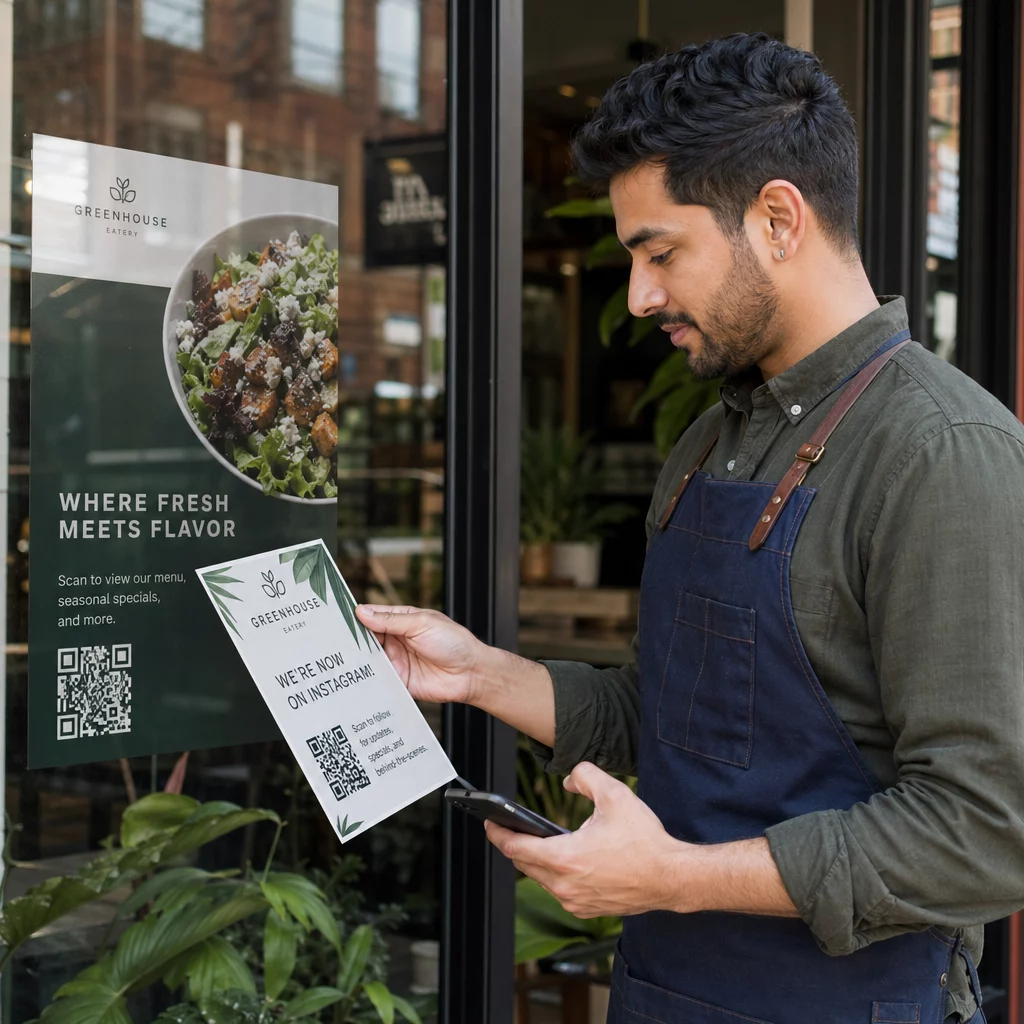
On in-store signage and posters: Larger QR codes on posters or window displays can promote specific payment options, loyalty program enrollment, or contactless checkout for customers who want to pay before reaching a staffed counter.

For printed codes, follow these guidelines to ensure reliable scanning:

  • Minimum size of 2 × 2 cm (0.8 × 0.8 in) for close-range scans; increase to at least 5 × 5 cm for codes scanned from 50 cm or more away
  • Dark foreground on a light background – avoid inverted designs or red/orange foregrounds, which many camera apps struggle to read
  • Clear quiet zone (white margin) of at least four modules around the code on all sides
  • Test on multiple devices and under different lighting conditions before deploying

Each displayed QR code should have visible context explaining what it does and how to use it. Customers are more likely to scan when they see a simple instruction rather than a code with no explanation.

For a full breakdown of placement strategies by store area, the retail QR code solutions page covers practical examples across signage, receipts, packaging, and more.

Business Benefits of QR Code Payments

Lower Costs and Simpler Operations

QR code payments typically carry lower transaction fees than traditional card processing. Fees can run as low as 1% per transaction, compared to the 2–3% range common with credit card networks. For a business processing $10,000 per month, that difference adds up to hundreds of dollars in annual savings.

Beyond transaction fees, QR payments reduce the need for dedicated payment hardware. A printed QR code or a tablet displaying a code replaces the need for a standalone card terminal at every checkout point. Reduced cash handling also lowers security risks and saves staff time at the end of each shift.

Digital receipts triggered by QR scans further simplify operations – customers receive purchase records directly to their email, while you reduce paper use and manual record-keeping.

Customer Experience Improvements

QR payments address several common checkout frustrations. Customers do not need to carry physical cards or remember account details. A single scan from their preferred digital wallet completes the transaction in seconds. This speed is especially noticeable during peak hours when traditional checkout queues build up quickly.

The contactless nature of QR payments also meets ongoing customer preferences for hygiene and convenience. No physical contact with shared hardware is required, and the payment is authorized through the customer’s own device using their existing security settings (fingerprint, face ID, or PIN).

QR codes at checkout also open the door to loyalty program integration. Instead of managing separate loyalty cards, customers can earn points, redeem rewards, and access exclusive offers through the same scan that completes their payment – with purchase histories updated automatically.

Analytics and Customer Insights

Dynamic QR codes do more than facilitate payments – they generate data. Every scan records the time, location, and device type, giving you a real-time view of customer behavior. Pageloot’s analytics dashboard lets you track peak scan times, monitor which payment touchpoints get the most use, and identify patterns that inform inventory and promotion decisions.

This data also supports A/B testing. You can run two versions of a promotional QR code in different store areas and compare conversion rates to understand which placement or offer performs better.

Track Your QR Payment Performance 사용하다 Pageloot의 동적 QR 코드 to monitor scan volume, device data, and engagement in real time – all from one dashboard.

Security Requirements for Retail QR Payments

Security is not optional when accepting payments. Several layers of protection apply to QR-based retail transactions.

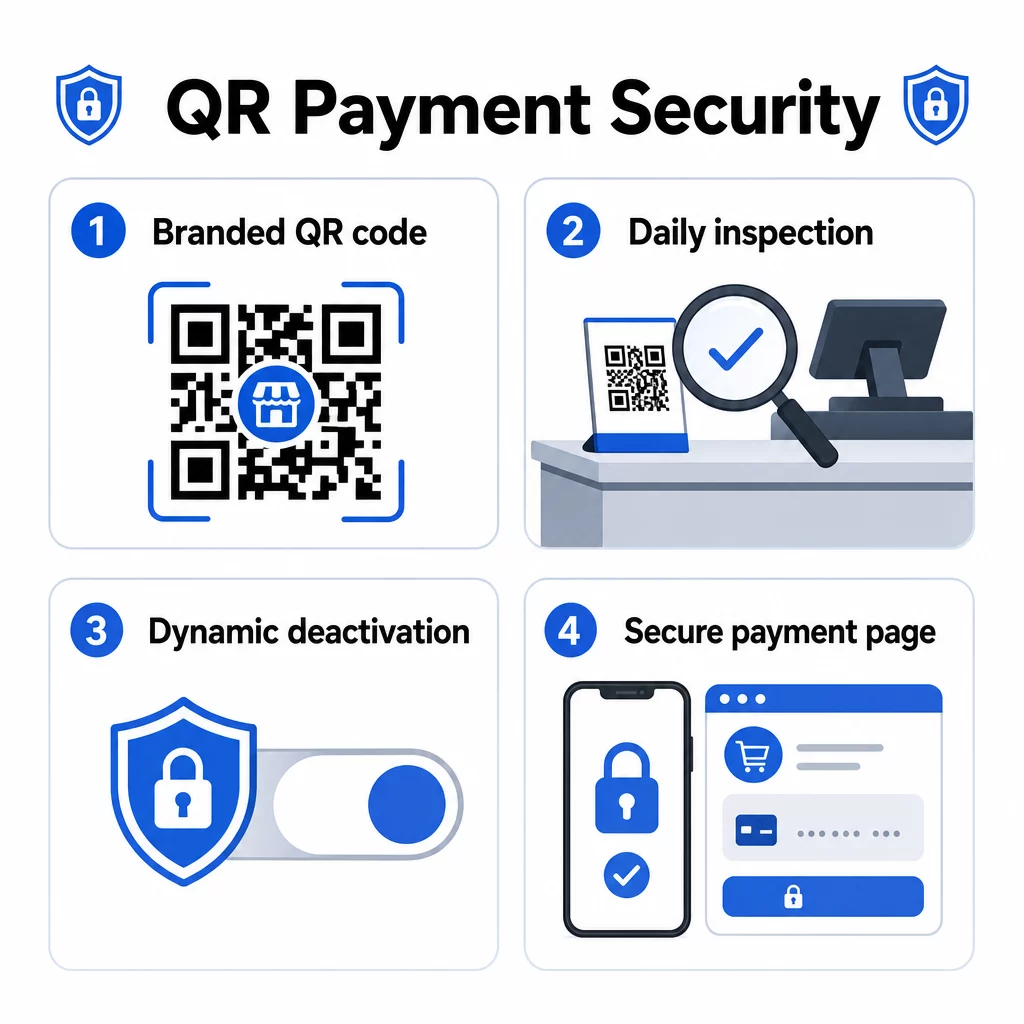
QR 결제 보안

PCI DSS Compliance

U.S. retailers accepting card payments via QR codes must comply with the Payment Card Industry Data Security Standard (PCI DSS). Your specific obligations depend on your merchant level and how your payment flow is structured. Retailers who redirect customers to a third-party hosted payment page typically qualify for a simplified Self-Assessment Questionnaire (SAQ A), since card data never touches their systems directly.

Review your processing contract carefully to understand which PCI DSS responsibilities belong to you versus your payment provider. For a detailed breakdown, the QR code payments PCI DSS compliance guide covers requirements by merchant level and explains how dynamic QR codes support compliance through audit trails and real-time controls.

Fraud Prevention and Physical Security

QR codes used in physical retail are vulnerable to a specific type of fraud: attackers can place a sticker with a malicious QR code over your legitimate one, redirecting customer payments to a fraudulent site. This risk is real – documented cases include fake QR codes placed on public payment terminals in multiple U.S. cities.

Practical defenses include:

  • Inspecting all displayed QR codes at the start of each business day as part of your opening checklist
  • Using branded QR codes with your logo and colors so customers can visually verify authenticity before scanning
  • Using dynamic QR codes that can be deactivated instantly if tampering is detected
  • Training staff to recognize signs of QR code overlay or replacement

For a comprehensive look at QR code payment risks and how to mitigate them, including phishing attack patterns and mitigation checklists, see Pageloot’s dedicated security guide.

Transaction-Level Security

Dynamic QR codes add security at the transaction level. Each code can be configured to expire after a single use or after a set time window, preventing reuse or replay attacks. Payment apps on the customer side add another layer through biometric authentication (fingerprint or face recognition) and multi-factor verification before authorizing any transaction.

The combination of encrypted payment links, tokenized transaction data, and device-level authentication makes QR payments significantly more resistant to fraud than magnetic stripe cards, which can be skimmed without the cardholder’s knowledge.

For more on QR 코드 결제가 보안 및 속도를 향상시키는 방법 compared to traditional methods, including a technical breakdown of encryption and tokenization, see the full comparison guide.

Accessibility and Inclusive Design

Not every customer scans QR codes with the same ease. Designing your QR payment setup for accessibility broadens who can use it and avoids excluding customers with visual or physical limitations.

Key practices from QR code payment accessibility guidelines include:

  • Printing codes at a minimum of 2 × 2 inches (5 × 5 cm) for reliable scanning
  • Mounting wall-displayed codes between 15 and 48 inches from the floor to accommodate wheelchair users
  • Using high-contrast design (dark module on white background) for visibility in varying lighting conditions
  • Providing step-by-step scanning instructions in plain language next to every code (“Scan → Review → Confirm”)
  • Offering multilingual instructions where your customer base includes non-English speakers
  • Maintaining traditional payment options (cash, card terminals) alongside QR codes so all customers have a viable path to checkout

Accessibility is also practical: clear instructions increase scan rates across all customer segments, not just those with accessibility needs.

Customizing QR Codes for Retail

Branded QR codes do two things plain black-and-white codes cannot: they build trust, and they make tampering visible. When customers see your logo and brand colors inside the QR code, they have a visual reference point for authenticity. A code that lacks your branding is immediately suspicious.

Pageloot’s QR code generator supports logo uploads up to 1MB, custom color schemes, and professionally designed frame templates with built-in calls to action. These options let you align payment codes with your broader brand identity without requiring design expertise.

Dynamic QR codes extend this flexibility beyond aesthetics. Because the destination URL is stored server-side rather than encoded in the physical code, you can:

  • Update payment destinations if you switch processors
  • Adjust promotional offers linked to seasonal campaigns without reprinting
  • Run A/B tests on different checkout flows or offer messages
  • Deactivate a compromised code and replace it instantly

For retailers running loyalty programs, referral campaigns, or seasonal promotions, this adaptability translates directly to lower operational overhead and faster campaign execution.

자주 묻는 질문

Do I need special hardware to accept QR code payments in my store?

No dedicated hardware is required. You can display a payment QR code on a printed sign, a tablet screen, or a receipt. Customers scan it using their smartphone camera – no app download needed on their end. The only requirement on your side is a payment account with a provider that supports QR-based checkout, such as PayPal, Square, or Stripe.

What is the difference between a static and a dynamic payment QR code?

A static QR code contains a fixed payment link that cannot be changed after printing. If your payment details change, you need to reprint the code. A dynamic QR code stores a redirect URL that you can update at any time without touching the physical code. Dynamic codes also provide scan analytics, can expire after a single use, and can be deactivated immediately if compromised – making them the recommended choice for retail payment use.

How do I protect my store’s QR codes from being tampered with or replaced?

Use branded QR codes that include your logo and colors so customers can spot unauthorized replacements. Inspect all displayed codes at the start of each business day for stickers or overlays. Use dynamic QR codes so you can deactivate any compromised code instantly. Train staff to check for signs of tampering and to report anything suspicious. For a full checklist, see the guide on QR code risks in payments and how to mitigate them.

작성자 정보

시임 코스타비는 페이지루트의 콘텐츠 책임자입니다. 그는 페이지루트의 혁신적인 QR 코드 생성 서비스에 대한 글을 쓰고 있습니다. 5년 이상 QR 코드 분야에서 쌓아온 깊이 있는 전문 지식을 바탕으로, 시임은 이 분야의 전문가로 인정받고 있습니다. 그는 QR 기술을 활용하여 디지털 상호작용을 간소화하고 향상시키는 데 크게 기여하고 있습니다.

범주
에 대해 자세히 알아보기
배송 라벨 인쇄
배송 라벨 바코드

온라인으로 QR 코드를 생성해야하는 경우 QR 코드 만들기 무료로 여기!
Pageloot는 #1 Go-To 솔루션 QR 코드를 만들고 스캔합니다.

BL-0202

20,000개 이상의 브랜드로부터 신뢰를 받아 더 많은 매출, 리뷰, 팔로워를 확보했습니다.

클라이언트 로고
최고 브랜드의 신뢰
5 중 4.8 평가

4.86 / 5 별점

휴고 로랑
휴고 로랑
레스토랑 주인
가장 쉽고 안정적인 QR 코드 생성기. PDF 파일을 즉시 업로드할 수 있습니다. 이제 레스토랑 메뉴가 디지털화되었습니다.
루카스 얀센
루카스 얀센
부동산 개발사
이것은 훌륭한 도구이며 QR 코드를 사용하면 원하는 곳으로 이동할 수 있습니다. 우리는 위치 QR 코드만 사용하지만 유용한 기능이 너무 많습니다.
엠마 모레티
엠마 모레티
소매 제품
사용하기 쉽고 빠릅니다. 그것은 훌륭하게 작동하고 완벽한 이미지를 생성하므로 직원들이 내 vCard를 다운로드할 수 있습니다.
휴고 로랑
휴고 로랑
레스토랑 주인
가장 쉽고 안정적인 QR 코드 생성기. PDF 파일을 즉시 업로드할 수 있습니다. 이제 레스토랑 메뉴가 디지털화되었습니다.
루카스 얀센
루카스 얀센
부동산 개발사
이것은 훌륭한 도구이며 QR 코드를 사용하면 원하는 곳으로 이동할 수 있습니다. 우리는 위치 QR 코드만 사용하지만 유용한 기능이 너무 많습니다.
엠마 모레티
엠마 모레티
소매 제품
사용하기 쉽고 빠릅니다. 그것은 훌륭하게 작동하고 완벽한 이미지를 생성하므로 직원들이 내 vCard를 다운로드할 수 있습니다.
더 많은 QR 코드보기
무엇이든 디지털 경험으로 전환하세요 3분 이내에.

14일 무료 체험.

신용카드는 필요 없습니다.

첫 구매 시 30% 할인

코드를 사용하세요:

MP3 파일 공유

PDF QR 코드를 생성하려면 가입하세요

필요한 모든 것을 업로드하고 표시합니다.

  • 오디오 파일
  • 팟캐스트
  • 음악

가입 시 14일 무료 체험.
체험 기간 후 QR 코드 만료.

오디오 mp3 QR 코드를 생성하려면 가입하세요

프레임으로 더 많은 스캔 확보

QR 코드에 더 많은 프레임을 추가하려면 가입하세요

클릭 유도 문안 프레임은 고객이 QR 코드와 쉽게 상호 작용할 수 있도록 도와줍니다. 사용해 보세요!

가입 시 14일 무료 체험.
체험 기간 후 QR 코드 만료.

QR 코드에 더 많은 프레임을 추가하려면 가입하세요

도형으로 더 많은 스타일 추가

더 많은 도형을 만들려면 가입하세요

QR 코드는 정사각형일 필요가 없습니다. 브랜드 이미지에 맞게 전환해 보세요.

가입 시 14일 무료 체험.
체험 기간 후 QR 코드 만료.

더 많은 도형을 만들려면 가입하세요

QR 코드에 로고 추가

QR 코드에 로고를 추가하려면 가입하세요

로고와 브랜드를 추가하여 QR 코드를 돋보이게 만드세요.

가입 시 14일 무료 체험.
체험 기간 후 QR 코드 만료.

QR 코드에 로고를 추가하려면 가입하세요

스마트 앱 스토어 리디렉션

앱 스토어 QR 코드를 생성하려면 가입하세요

스마트 앱 스토어 QR 코드에 앱 링크를 추가하세요. 사용자는 장치에 따라 리디렉션됩니다.

가입 시 14일 무료 체험.
체험 기간 후 QR 코드 만료.

앱 스토어 QR 코드를 생성하려면 가입하세요

QR 코드에 이미지 업로드

이미지 QR 코드를 생성하려면 가입하세요

이미지를 쉽게 공유하세요. 몇 초 안에 동적으로 이미지를 변경하십시오.

가입 시 14일 무료 체험.
체험 기간 후 QR 코드 만료.

이미지 QR 코드를 생성하려면 가입하세요

PDF 파일 공유

PDF QR 코드를 생성하려면 가입하세요

필요한 모든 것을 업로드하고 표시합니다.

  • 메뉴 및 가격표
  • 명령
  • 모든 문서

가입 시 14일 무료 체험.
체험 기간 후 QR 코드 만료.

PDF QR 코드를 생성하려면 가입하세요

인쇄 없이 나중에 편집

다시 인쇄하지 않고 QR 코드를 편집하려면 가입하세요

동적 QR 코드를 사용하면 새 QR 코드를 인쇄하지 않고도 QR 코드의 내용을 변경할 수 있습니다.

가입 시 14일 무료 체험.
체험 기간 후 QR 코드 만료.

다시 인쇄하지 않고 QR 코드를 편집하려면 가입하세요

언제? 어디서? QR 코드 스캔 추적

QR 코드를 추적하려면 가입하세요

어떤 QR 코드가 가장 많이 스캔되고 무엇이 고객을 가장 흥분시키는지 알아보십시오.

가입 시 14일 무료 체험.
체험 기간 후 QR 코드 만료.

QR 코드를 추적하려면 가입하세요

인쇄 준비 파일 제공

PDF 및 SVG와 같은 벡터 QR 코드를 생성하려면 가입하세요.

.EPS, .PDF, .SVG

HD 해상도로 QR 코드를 다운로드하고 싶으신가요? 인쇄할 준비가 된 벡터 또는 픽셀 형식을 가져옵니다.

가입 시 14일 무료 체험.
체험 기간 후 QR 코드 만료.

PDF 및 SVG와 같은 벡터 QR 코드를 생성하려면 가입하세요.

기다리세요. 귀하의 QR 코드는 로드 중... 로드 중...

나만의 것으로 만들기

나중을 위해 QR 코드를 저장하려면 가입하세요.

다양한 색상, 로고 및 클릭 유도문안 프레임으로 멋진 QR 코드를 만들어 더 많은 스캔을 받으세요.

가입 시 14일 무료 체험.
체험 기간 후 QR 코드 만료.

나중을 위해 QR 코드를 저장하려면 가입하세요.