ホーム > ブログ > QRコードキャンペーンのSMART目標設定
QRキャンペーン計画

QRコードキャンペーンのSMART目標設定

Learn how to apply the SMART framework to your QR code marketing. Define specific targets, track scan metrics, and align QR codes with your marketing
Updated on 6月 10, 2026
目次

Are your QR code campaigns producing results, or are you just generating codes and hoping they perform? Without a structured goal-setting approach, most campaigns stay vague, making it impossible to measure progress or justify investment. This guide explains how to apply the SMART framework to QR code marketing so every campaign has a clear direction, trackable metrics, and a defined timeline.

What SMART Goals Mean for QR Code Campaigns

SMART is an acronym for goals that are Specific, Measurable, Achievable, Relevant, and Time-bound. First defined in a 1981 management article by George T. Doran, the framework has since become a standard in marketing planning because it forces abstract intentions into concrete objectives.

Applied to QR code campaigns, SMART goal-setting closes the gap between “we want more engagement” and “we want 500 product page visits from QR codes on retail packaging within 60 days.” The difference matters because the second version tells you what to build, where to place it, and when to evaluate it.

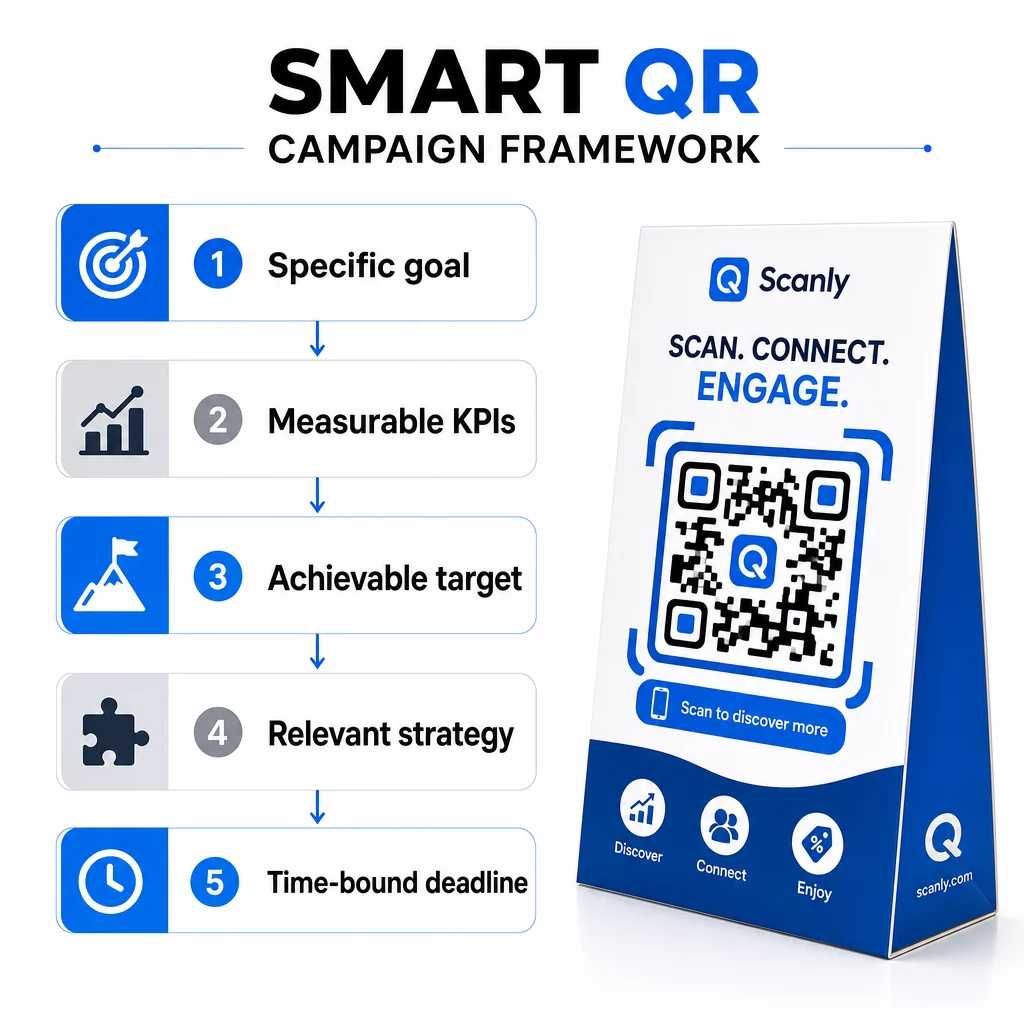
SMART QR framework

Here is what each component contributes to a QR campaign:

  • Specific – Defines the exact outcome, audience, and placement
  • Measurable – Establishes KPIs you can track, such as total scans, unique scans, or conversions
  • Achievable – Aligns targets with your budget, team capacity, and technical resources
  • Relevant – Connects the campaign to a broader business or marketing objective
  • Time-bound – Sets a deadline for evaluation and optimization

The sections below break down each element and show how to apply it in practice.

How to Set Specific Goals for QR Code Campaigns

Specificity answers two questions: what do you want to happen, and why does it matter? Without this clarity, it is difficult to decide where to place your codes, what content they should link to, or which type of QR code to use.

Compare these two objectives:

  • Vague: “Boost customer engagement”
  • Specific: “Increase app downloads by 20% over the next quarter by placing QR codes on product packaging that link directly to our app store listing”

The second version tells you the desired outcome (app downloads), the target (20%), the placement (product packaging), and the destination (app store). Each of those decisions flows naturally from the goal.

Your specific goal also determines the right type of QR code. Choosing the right QR code for your campaign depends on your objective – a URL QR code works well for driving website traffic, while a vCard QR code suits networking scenarios, and a coupon code on a storefront window can attract new customers with a discount offer.

ダイナミックQRコード are especially useful when your goal involves ongoing campaigns, because you can update the destination without reprinting your materials. This flexibility keeps your specific objectives achievable even when details change mid-campaign.

How to Create Measurable QR Code Objectives

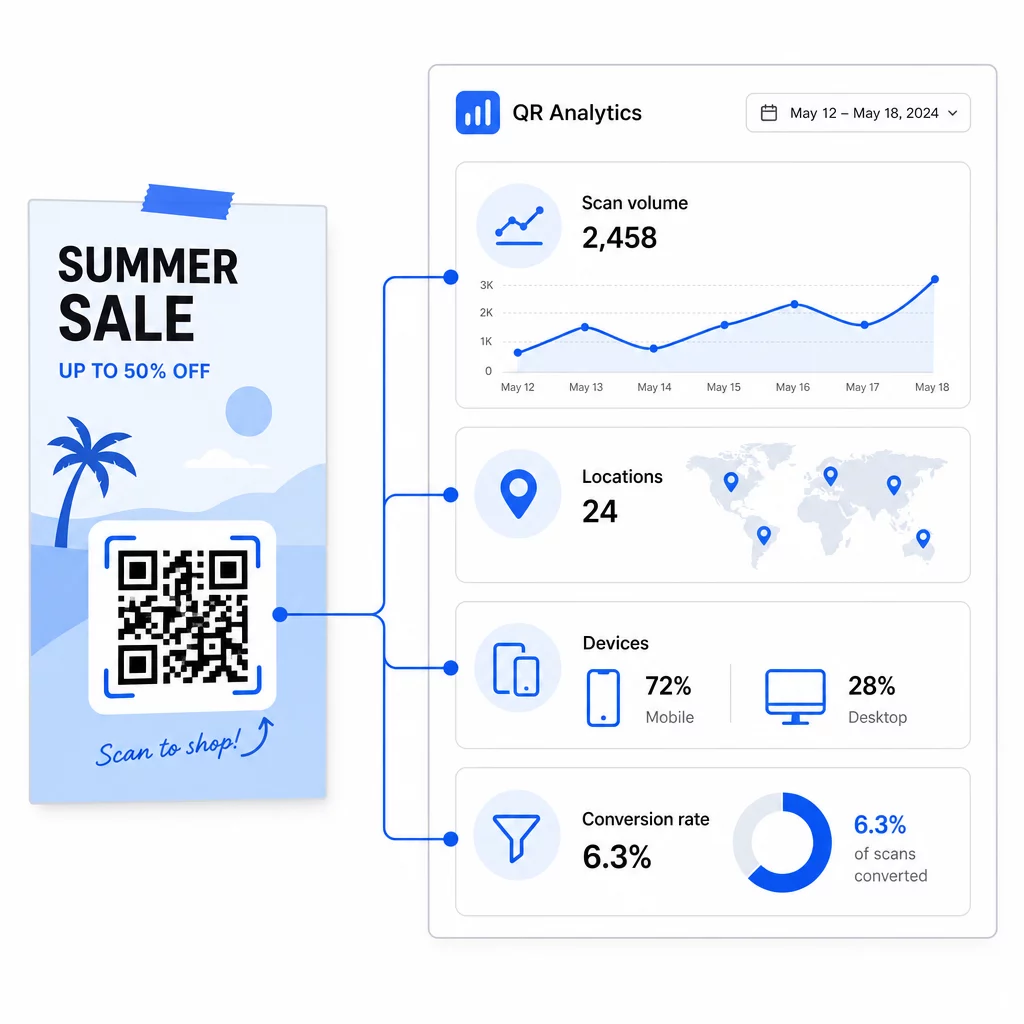
A measurable objective has defined indicators you can check at any point during the campaign. For QR code campaigns, the core metrics include:

  • Total scans – Overall interaction volume with your code
  • Unique scans – How many distinct users engaged, as opposed to repeat scans from the same device
  • Scan location – Geographic data that reveals which placements or regions drive the most engagement
  • Device type – Whether users are on iOS, Android, or desktop, which informs landing page optimization
  • Time and date of scan – Identifies when your audience is most active so you can align campaign timing accordingly
  • Conversion rate – The percentage of scanners who complete the desired action, such as filling out a form, making a purchase, or downloading an app
  • Post-scan behavior – Bounce rate, time on page, and click-through rates that indicate content quality after the scan

Conversion rate is particularly telling. If your QR code receives 400 scans and 120 people complete the desired action, you have a 30% conversion rate. That figure goes beyond reach to show actual campaign impact.

Adding UTM parameters to your QR code destination URLs lets you bring this data into Google Analytics, where you can connect QR-driven traffic to specific campaigns, compare placements, and analyze post-scan behavior in detail.

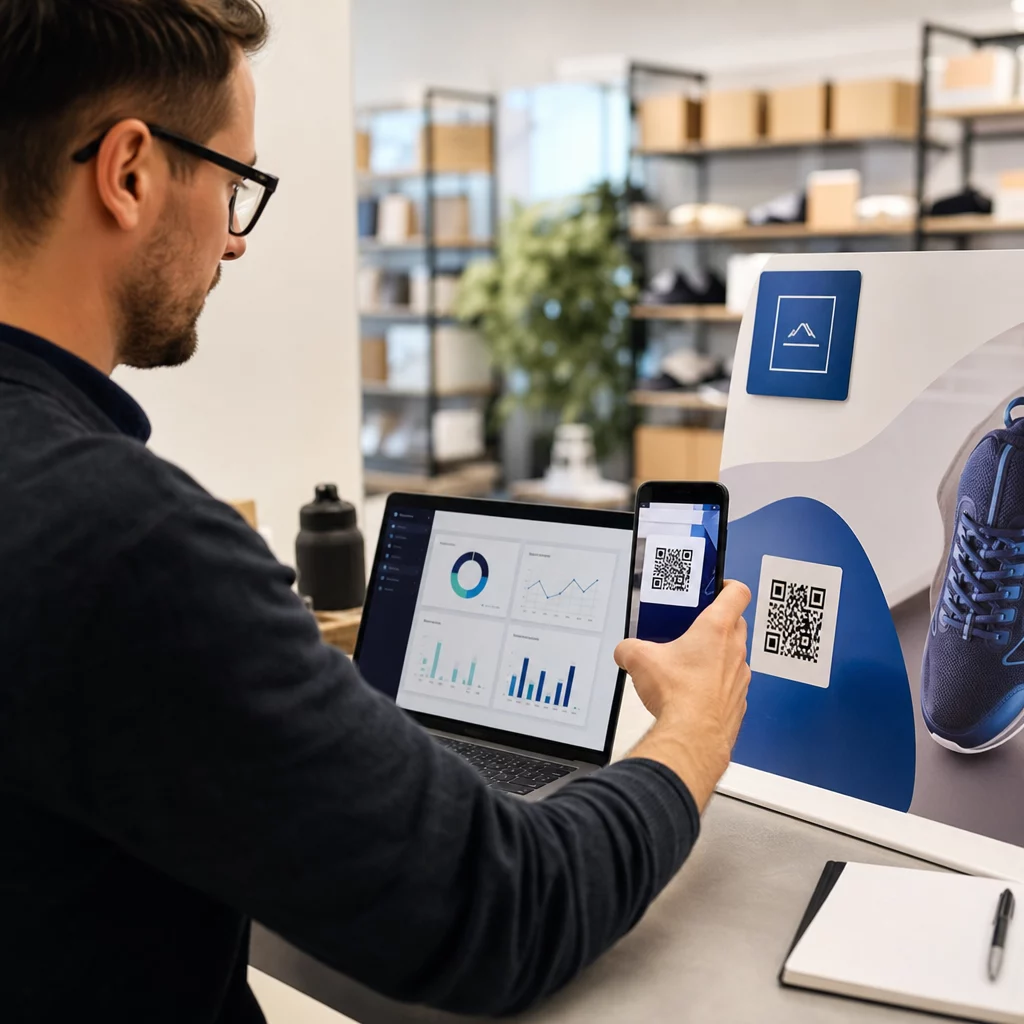
すべてのスキャンをリアルタイムで追跡 Pagelootの QRコード分析ダッシュボード monitors total scans, locations, device types, and engagement trends so you always know how your campaign is performing.

How to Set Achievable Targets

Ambitious goals are useful. Unrealistic ones damage credibility and waste resources. Achievable targets are grounded in what your team, budget, and tools can actually support.

Budget directly affects campaign scope. If resources are limited, concentrate on high-impact placements rather than distributing QR codes across too many surfaces. A single well-placed code on a business card or retail shelf may outperform a dozen poorly positioned ones.

Team capacity shapes how complex your campaign can be. ダイナミックQRコード require ongoing management – updating destinations, monitoring analytics, and adjusting content – while static codes are simpler to maintain once deployed. If your team is new to QR campaigns, starting with one or two dynamic codes and scaling up as confidence grows is a practical approach.

Technical capabilities determine which features you can use effectively. CRM integrations, automated follow-up workflows, and advanced segmentation are powerful tools, but they require setup time and platform compatibility. Build targets around what your stack can actually deliver.

Industry benchmarks can anchor your expectations, but because standardized QR code conversion rates vary widely by industry, placement, and audience, the most reliable benchmark is your own past performance. If you are running your first campaign, a soft launch with limited distribution helps you establish a baseline before scaling.

How to Align QR Code Goals with Your Marketing Strategy

A QR code campaign that operates in isolation tends to underperform. When your campaign goals connect to a broader marketing objective – whether that is lead generation, customer retention, or brand awareness – every scan contributes to something larger.

Branding consistency matters whenever QR codes bridge offline and online experiences. If a luxury retailer places codes on product packaging, the landing page those codes point to should reflect the same premium aesthetic. A disconnect between the physical touchpoint and the digital destination erodes trust and reduces conversions.

Audience alignment shapes where and how you deploy codes. A social media QR code placed on event materials may resonate strongly with a younger audience, while a vCard QR code on a business card suits professional networking contexts. Understanding your audience’s habits helps you match the code type and placement to their expectations.

Content strategy alignment ensures QR codes support your editorial and campaign goals. If your focus for a quarter is thought leadership, QR codes on conference materials that link to whitepapers or research reports reinforce that positioning. If you are running a promotional period, codes linking to exclusive discount offers complement the campaign theme.

Customer journey mapping helps identify the right moment for QR code placement. A QR code in a post-purchase email that links to a satisfaction survey catches customers when the experience is fresh. One on an event badge connects attendees to session resources at exactly the right time. Understanding how QR codes fit into your overall marketing approach is what separates a strategic campaign from a code that just exists on a flyer.

How to Make QR Code Goals Time-Bound

A deadline creates urgency and defines when you will evaluate whether your goals were met. Without one, campaigns drift indefinitely with no clear point to assess performance.

Structured launch phases reduce risk. A soft launch with limited QR code distribution lets you test placement, content, and technical setup before full deployment. This is particularly valuable for dynamic QR codes, where early analytics can inform adjustments before you scale.

Evaluation intervals should match the campaign type. A short promotional campaign might need daily scan monitoring. A brand awareness effort can be reviewed weekly or monthly. Event-based campaigns often require real-time tracking so you can address issues as they arise.

Optimization windows need to be built into your timeline explicitly. If scan rates are lower than expected after two weeks, you need enough time remaining to test alternative placements, update the destination URL, or revise your call-to-action. Dynamic QR codes make these adjustments possible without reprinting, which is a meaningful advantage when time is limited.

Performance milestones help you maintain momentum on longer campaigns. Setting checkpoints at 25%, 50%, and 75% of your timeline creates natural opportunities to compare actual performance against your measurable targets and course-correct before the end date.

Tracking Performance with QR Code Analytics

Analytics are what make SMART goals operational. Without tracking, you cannot confirm whether your specific targets were met, assess whether your benchmarks were achievable, or know when to optimize.

QRコード追跡ツール capture scan volume, unique users, geographic location, device type, and time of scan – all of which connect directly to the measurable component of your goals. Time-based data is especially useful for refining campaign timing. If analytics show that scans cluster around lunch hours or specific days of the week, you can align promotional content changes or campaign launches to match those patterns.

QR分析ダッシュボード

Post-scan behavior metrics – bounce rate, pages per session, and conversion actions – reveal what happens after the scan. A high scan count with a high bounce rate suggests the landing page is not delivering on what the QR code promised. That is actionable information.

ultimate guide to QR code analytics dashboards covers how to set up tracking parameters, configure UTM tags, and read performance data in Google Analytics 4. For campaigns across multiple placements or regions, tracking QR codes by geographic area lets you compare scan volumes and conversion rates by city or region and reallocate budget toward the highest-performing locations.

Pageloot’s analytics dashboard tracks all of this in real time and separates performance data by individual QR code, making it straightforward to compare placements, identify weak points, and calculate ROI by tying scan data to specific business outcomes.

Start Tracking Your QR Campaigns Create trackable dynamic QR codes and access real-time scan data with the Pageloot QRコードジェネレータ. Free 14-day trial, no credit card required.

Using Dynamic QR Codes to Stay Aligned with Your Goals

One practical challenge with time-bound campaigns is that circumstances change. A landing page underperforms, a promotional offer expires, or an event is rescheduled. With static QR codes, any of these changes require reprinting.

Dynamic QR codes solve this by pointing to a short redirect URL that you control. You can update the destination, swap out an offer, or redirect to a new page at any point – without touching the printed code. This supports the achievable aspect of SMART goals by removing the friction that typically makes mid-campaign adjustments costly.

Dynamic codes also enable A/B testing, where you test one variable at a time – destination URL, call-to-action, or landing page design – and measure which version drives better conversions. Over time, this iterative process improves campaign performance and builds a clearer picture of what works for your specific audience.

For a structured overview of when to use static versus dynamic codes, the static vs. dynamic QR code comparison covers the key trade-offs in terms of cost, flexibility, and tracking capability.

Calculating ROI for QR Code Campaigns

Connecting analytics to business outcomes is the final step in making your SMART goals pay off. ROI calculation starts with establishing cost baselines – design, printing, platform fees, and staff hours – and then identifying the revenue or value generated from QR code interactions.

When you can tie scans to specific actions, the calculation becomes straightforward. If a QR code on product packaging drives warranty registrations, you can quantify the reduction in customer service calls. If a code at a trade show populates your CRM with qualified leads, you can compare the cost per lead against other acquisition channels.

Attribution windows matter here. Some users scan a code but convert days or weeks later. Tracking periods need to account for this delay to avoid undervaluing the campaign. Monitoring both immediate conversions and longer-term customer lifetime value gives a more complete picture.

Regular ROI reporting keeps stakeholders informed and justifies continued investment. Monthly updates that connect scan volumes, conversion rates, and revenue attribution back to the original SMART objectives demonstrate campaign value clearly and identify opportunities for improvement in the next cycle. Setting SMART goals is what separates a QR code strategy from a QR code experiment. By defining specific outcomes, establishing measurable KPIs, building realistic targets, connecting campaigns to broader marketing objectives, and setting clear deadlines, you give every scan a purpose. Pair that structure with dynamic QR codes and real-time analytics, and you have the tools to act on what your data tells you – not just report on it after the fact. The 中小企業向けQRコードマーケティングチェックリスト is a practical next step if you want a structured framework for putting these principles into action.

よくある質問

How do I make sure my QR code campaign goals align with my overall marketing strategy?

Start by identifying the broader marketing objective your campaign should support – whether that is lead generation, brand awareness, or customer retention. Then work backward to define a QR code goal that contributes directly to that objective. For example, if your quarterly priority is acquiring new email subscribers, a SMART QR code goal might be “generate 200 new email opt-ins from QR codes on event materials within 30 days.” Consistency in branding and content between your physical materials and your digital destination also reinforces alignment at every touchpoint.

What metrics should I track to evaluate QR code campaign performance?

The most important metrics depend on your campaign goal, but core KPIs include total scans, unique scans, scan location, device type, and time of scan. Beyond those, post-scan behavior metrics – such as conversion rate, bounce rate, and time on page – reveal whether your landing page is delivering on what the QR code promised. Adding UTM parameters to your destination URLs brings all of this data into Google Analytics, where you can analyze it alongside your other channel performance.

How do dynamic QR codes help with SMART goal campaigns?

Dynamic QR codes allow you to update the destination URL without reprinting your materials, which is critical for time-bound campaigns where conditions change. If a landing page underperforms or a promotion expires mid-campaign, you can redirect to updated content immediately. Dynamic codes also support A/B testing by letting you compare destination variants and measure which drives better conversions. Combined with built-in analytics, they give you the flexibility and data needed to stay on track with measurable, achievable goals throughout the campaign lifecycle.

著者について

Siim KostabiはPagelootのコンテンツリードです。Pagelootの革新的なQRコード生成サービスについて執筆しています。5年以上にわたるQRコードに関する深い専門知識を持つSiimは、この分野の専門家です。QRテクノロジーを活用してデジタルインタラクションを簡素化・拡張する上で、大きな進歩を遂げています。.

カテゴリー
について詳しくはこちら
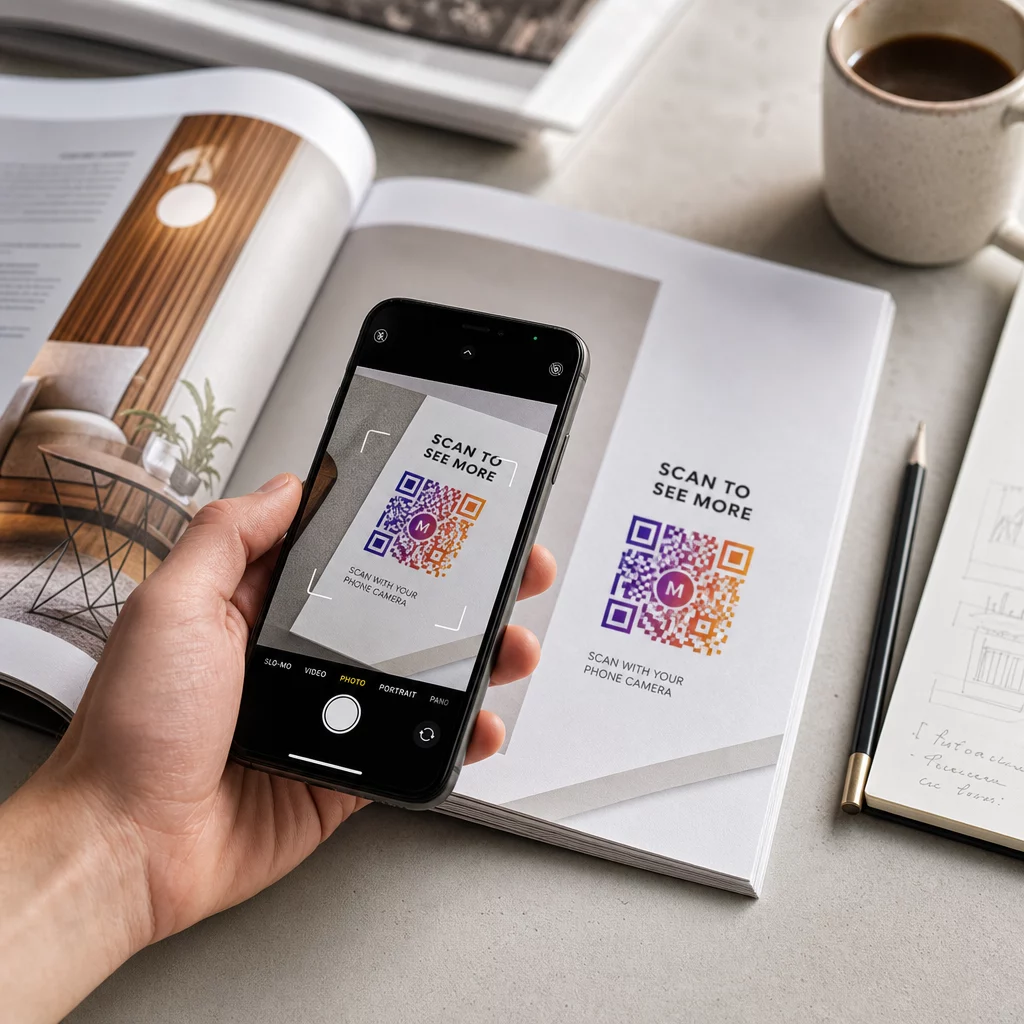
印刷されたQRコードのスキャン
QRコード サイズガイド
QR table tent
QRコードの テーブルテント
✅ QRコードの#1ソリューション

オンラインでQRコードを作成する必要がある場合は QRコードを作る ここで無料で
ページルートは #1のGo-Toソリューション でQRコードを作成してスキャンすることができます。

BL-0114

売上、レビュー、フォロワーを増やすために 20,000 を超えるブランドから信頼されています。

クライアントのロゴ
トップブランドから信頼される
5 のうち 4.8 と評価しました

4.86 / 5つ星評価

ユーゴ・ローラン
ユーゴ・ローラン
レストランオーナー
最も簡単で信頼性の高いQRコードジェネレータです。PDFファイルを即座にアップロードできます。レストランのメニューがデジタル化されました。
ルーカス・ジャンセン
ルーカス・ジャンセン
不動産開発業者
これは優れたツールで、QRコードでちょうど欲しいところに連れて行ってくれます。私たちは位置情報のQRコードしか使っていませんが、とても便利な機能がたくさんあります。
エマ・モレッティ
エマ・モレッティ
小売製品
使いやすいし、早い。素晴らしい機能で、完璧な画像を作成してくれるので、社員は私のvCardをダウンロードすることができます。
ユーゴ・ローラン
ユーゴ・ローラン
レストランオーナー
最も簡単で信頼性の高いQRコードジェネレータです。PDFファイルを即座にアップロードできます。レストランのメニューがデジタル化されました。
ルーカス・ジャンセン
ルーカス・ジャンセン
不動産開発業者
これは優れたツールで、QRコードでちょうど欲しいところに連れて行ってくれます。私たちは位置情報のQRコードしか使っていませんが、とても便利な機能がたくさんあります。
エマ・モレッティ
エマ・モレッティ
小売製品
使いやすいし、早い。素晴らしい機能で、完璧な画像を作成してくれるので、社員は私のvCardをダウンロードすることができます。
QRコードをもっと見る
顧客がQRコードをスキャン
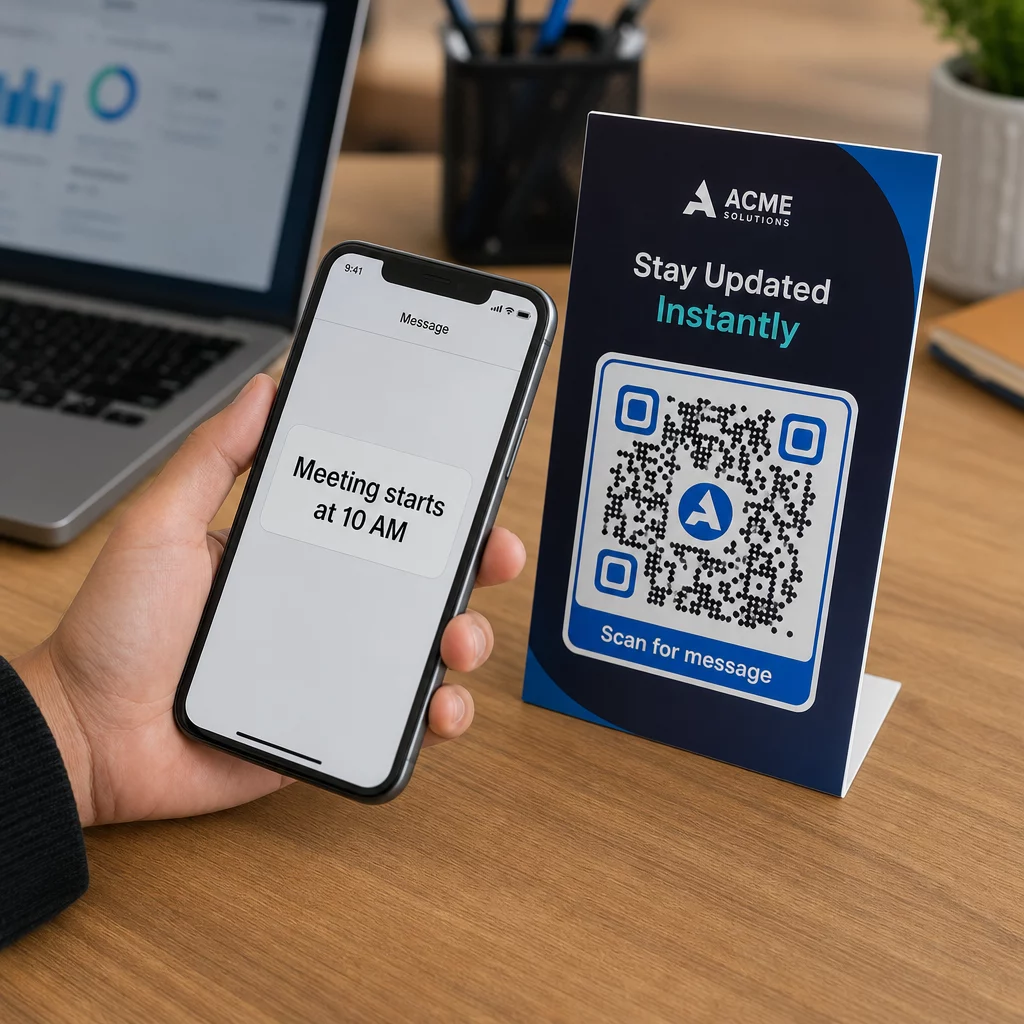
のQRコード インスタントメッセージング
テーブルのQRをスキャンするゲスト
のQRコードを作る 注文システム
あらゆるものをデジタル体験に変えよう 3分以内に。

14日間の無料トライアル。

クレジットカードは必要ありません。

初回購入で30%オフ

次のコードを使用してください:

MP3ファイルを共有

PDF QRコードを作成するにはサインアップしてください

必要なものをすべてアップロードして表示する。

  • オーディオファイル
  • ポッドキャスト
  • 音楽

サインアップで14日間無料トライアル。.
トライアル終了後、QRコードは期限切れになります。.

オーディオmp3 QRコードを作成するにはサインアップしてください

フレームでより多くのスキャンを獲得

QRコードにフレームを追加するにはサインアップしてください

コールトゥアクションフレームは、お客様が簡単にQRコードと対話できるようにします。ぜひお試しください。

サインアップで14日間無料トライアル。.
トライアル終了後、QRコードは期限切れになります。.

QRコードにフレームを追加するにはサインアップしてください

シェイプでスタイルを追加

より多くの図形を作成するにはサインアップしてください

QRコードは四角いものである必要はありません。あなたのブランドのイメージに合わせて変えてみてください。

サインアップで14日間無料トライアル。.
トライアル終了後、QRコードは期限切れになります。.

より多くの図形を作成するにはサインアップしてください

QRコードにロゴを追加

QRコードにロゴを追加するにはサインアップしてください

QRコードにロゴやブランドを入れることで、目立たせることができます。

サインアップで14日間無料トライアル。.
トライアル終了後、QRコードは期限切れになります。.

QRコードにロゴを追加するにはサインアップしてください

スマートなApp Storeリダイレクト

アプリストアのQRコードを作成するにはサインアップしてください

スマートなApp StoreのQRコードに、あなたのアプリのリンクを追加します。ユーザーは、デバイスに応じてリダイレクトされます。

サインアップで14日間無料トライアル。.
トライアル終了後、QRコードは期限切れになります。.

アプリストアのQRコードを作成するにはサインアップしてください

QRコードに画像をアップロード

画像QRコードを作成するにはサインアップしてください

画像を簡単に共有できます。どんな画像も、数秒でダイナミックに変化します。

サインアップで14日間無料トライアル。.
トライアル終了後、QRコードは期限切れになります。.

画像QRコードを作成するにはサインアップしてください

PDFファイルを共有

PDF QRコードを作成するにはサインアップしてください

必要なものをすべてアップロードして表示する。

  • メニュー&プライスリスト
  • 指示
  • 任意の書類

サインアップで14日間無料トライアル。.
トライアル終了後、QRコードは期限切れになります。.

PDF QRコードを作成するにはサインアップしてください

印刷せずに後で編集

再度印刷せずにQRコードを編集するにはサインアップしてください

ダイナミックQRコードは、新たにQRコードを印刷することなく、QRコードの内容を変更することができます。

サインアップで14日間無料トライアル。.
トライアル終了後、QRコードは期限切れになります。.

再度印刷せずにQRコードを編集するにはサインアップしてください

いつ?どこで?QRコードのスキャンを追跡

QRコードを追跡するにはサインアップしてください

どのQRコードが最も多くスキャンされ、何が最も顧客を喜ばせているのかを知ることができます。

サインアップで14日間無料トライアル。.
トライアル終了後、QRコードは期限切れになります。.

QRコードを追跡するにはサインアップしてください

印刷可能なファイルが利用可能

PDFやSVGのようなベクターQRコードを作成するにはサインアップしてください

.eps、.pdf、.svg

QRコードをHD解像度でダウンロードしたいですか?すぐに印刷できるベクターまたはピクセル形式を入手しましょう。

サインアップで14日間無料トライアル。.
トライアル終了後、QRコードは期限切れになります。.

PDFやSVGのようなベクターQRコードを作成するにはサインアップしてください

しばらくお待ちください。あなたのQRコードは ロード... ロード...

あなただけのものに

サインアップしてQRコードを後で保存してください

異なる色、ロゴ、コールトゥアクションフレームで素晴らしいQRコードを作成することで、より多くのスキャンを得ることができます。

サインアップで14日間無料トライアル。.
トライアル終了後、QRコードは期限切れになります。.

サインアップしてQRコードを後で保存してください