Apakah kampanye kode QR Anda menghasilkan, atau Anda hanya membuat kode dan berharap kode tersebut berfungsi? Tanpa pendekatan penetapan tujuan yang terstruktur, sebagian besar kampanye tetap tidak jelas, sehingga tidak mungkin untuk mengukur kemajuan atau membenarkan investasi. Panduan ini menjelaskan cara menerapkan kerangka kerja SMART pada pemasaran kode QR sehingga setiap kampanye memiliki arah yang jelas, metrik yang dapat dilacak, dan garis waktu yang ditentukan.
Apa Arti Tujuan SMART untuk Kampanye Kode QR
SMART adalah akronim untuk tujuan yang Spesifik, Terukur, Dapat Dicapai, Relevan, dan Terikat Waktu. Pertama kali didefinisikan dalam artikel manajemen tahun 1981 oleh George T. Doran, kerangka kerja ini sejak itu menjadi standar dalam perencanaan pemasaran karena memaksa niat abstrak menjadi tujuan konkret.
Diterapkan pada kampanye kode QR, penetapan tujuan SMART menjembatani kesenjangan antara “kami ingin lebih banyak keterlibatan” dan “kami ingin 500 kunjungan halaman produk dari kode QR pada kemasan ritel dalam 60 hari.” Perbedaan itu penting karena versi kedua memberi tahu Anda apa yang harus dibangun, di mana menempatkannya, dan kapan mengevaluasinya.
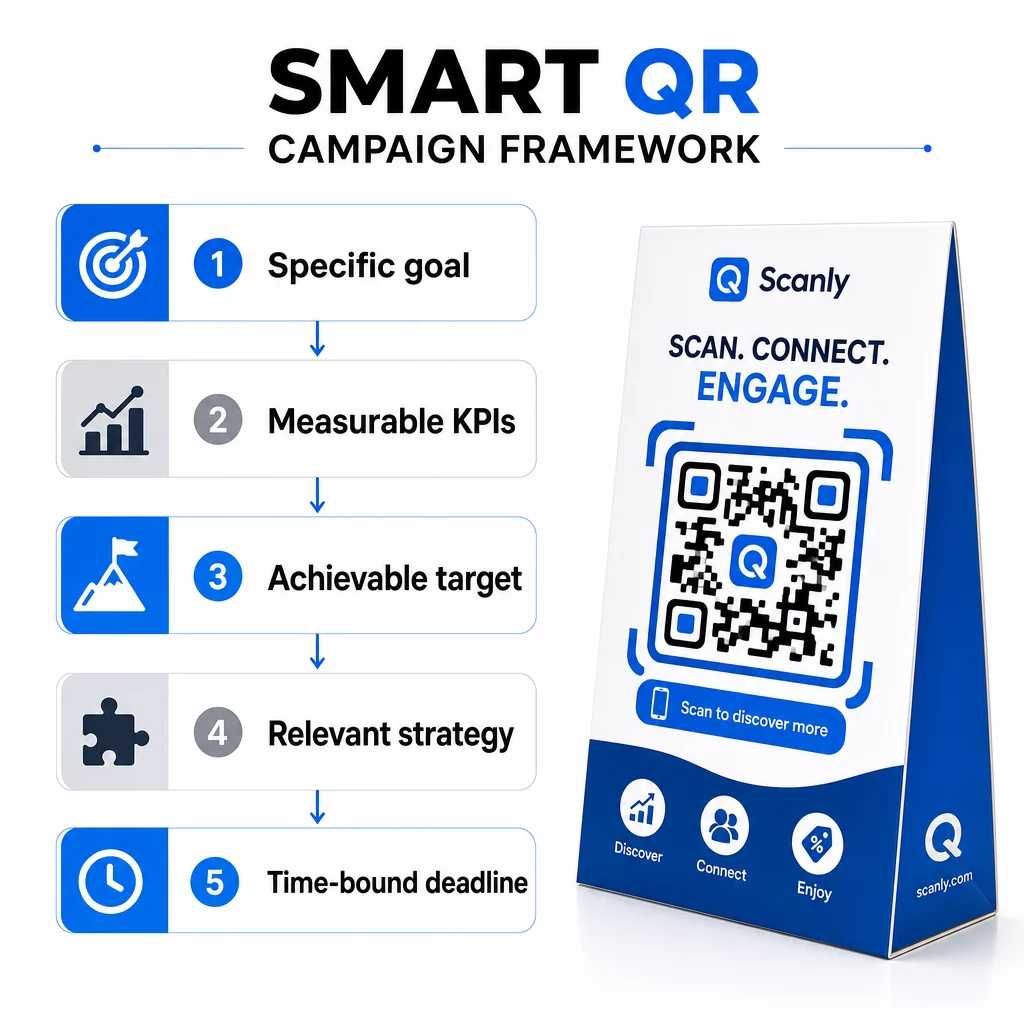
Berikut adalah kontribusi setiap komponen untuk kampanye QR:
- Spesifik – Mendefinisikan hasil, audiens, dan penempatan yang tepat
- Terukur – Menetapkan KPI yang dapat Anda lacak, seperti total pemindaian, pemindaian unik, atau konversi
- Dapat Dicapai – Menyelaraskan target dengan anggaran, kapasitas tim, dan sumber daya teknis Anda
- Relevan – Menghubungkan kampanye dengan tujuan bisnis atau pemasaran yang lebih luas
- Terikat Waktu – Menetapkan tenggat waktu untuk evaluasi dan optimasi
Bagian-bagian di bawah ini menguraikan setiap elemen dan menunjukkan cara menerapkannya dalam praktik.
Cara Menetapkan Tujuan Spesifik untuk Kampanye Kode QR
Spesifisitas menjawab dua pertanyaan: apa yang ingin Anda capai, dan mengapa itu penting? Tanpa kejelasan ini, sulit untuk memutuskan di mana menempatkan kode Anda, konten apa yang harus ditautkan, atau jenis kode QR mana yang akan digunakan.
Bandingkan dua tujuan ini:
- Samar: “Meningkatkan keterlibatan pelanggan”
- Spesifik: “Meningkatkan unduhan aplikasi sebesar 20% selama kuartal berikutnya dengan menempatkan kode QR pada kemasan produk yang tertaut langsung ke daftar toko aplikasi kami”
Versi kedua memberi tahu Anda hasil yang diinginkan (unduhan aplikasi), target (20%), penempatan (kemasan produk), dan tujuan (toko aplikasi). Setiap keputusan tersebut mengalir secara alami dari tujuan.
Tujuan spesifik Anda juga menentukan jenis kode QR yang tepat. Memilih kode QR yang tepat untuk kampanye Anda bergantung pada tujuan Anda – kode QR URL berfungsi dengan baik untuk mengarahkan lalu lintas situs web, sementara kode QR vCard cocok untuk skenario jaringan, dan kode kupon di jendela toko dapat menarik pelanggan baru dengan penawaran diskon.
Kode QR dinamis sangat berguna ketika tujuan Anda melibatkan kampanye yang sedang berlangsung, karena Anda dapat memperbarui tujuan tanpa mencetak ulang materi Anda. Fleksibilitas ini menjaga tujuan spesifik Anda tetap dapat dicapai bahkan ketika detail berubah di tengah kampanye.
Cara Membuat Sasaran Kode QR yang Terukur
Sasaran yang terukur memiliki indikator yang jelas yang dapat Anda periksa kapan saja selama kampanye. Untuk kampanye kode QR, metrik intinya meliputi:
- TOTAL PEMINDAIAN – Volume interaksi keseluruhan dengan kode Anda
- Pemindaian unik – Berapa banyak pengguna unik yang terlibat, berbeda dengan pemindaian berulang dari perangkat yang sama
- Lokasi pemindaian – Data geografis yang mengungkapkan penempatan atau wilayah mana yang mendorong keterlibatan terbanyak
- Jenis perangkat – Apakah pengguna menggunakan iOS, Android, atau desktop, yang menginformasikan optimasi halaman arahan
- Waktu dan tanggal pemindaian – Mengidentifikasi kapan audiens Anda paling aktif sehingga Anda dapat menyesuaikan waktu kampanye
- Tingkat konversi – Persentase pemindai yang menyelesaikan tindakan yang diinginkan, seperti mengisi formulir, melakukan pembelian, atau mengunduh aplikasi
- Perilaku pasca-pemindaian – Rasio pentalan (bounce rate), waktu di halaman, dan rasio klik-tayang (click-through rates) yang menunjukkan kualitas konten setelah pemindaian
Tingkat konversi sangatlah penting. Jika kode QR Anda menerima 400 pemindaian dan 120 orang menyelesaikan tindakan yang diinginkan, Anda memiliki tingkat konversi 30%. Angka tersebut melampaui jangkauan untuk menunjukkan dampak kampanye yang sebenarnya.
Menambahkan Parameter UTM ke URL tujuan kode QR Anda memungkinkan Anda membawa data ini ke Google Analytics, di mana Anda dapat menghubungkan lalu lintas yang didorong oleh QR ke kampanye tertentu, membandingkan penempatan, dan menganalisis perilaku pasca-pemindaian secara rinci.
Lacak Setiap Pemindaian secara Waktu Nyata Pageloot dasbor analitik kode QR memantau total pemindaian, lokasi, jenis perangkat, dan tren keterlibatan sehingga Anda selalu tahu bagaimana kinerja kampanye Anda.
Cara Menetapkan Target yang Dapat Dicapai
Tujuan yang ambisius itu berguna. Tujuan yang tidak realistis merusak kredibilitas dan membuang-buang sumber daya. Target yang dapat dicapai didasarkan pada apa yang benar-benar dapat didukung oleh tim, anggaran, dan alat Anda.
Anggaran secara langsung memengaruhi cakupan kampanye. Jika sumber daya terbatas, fokuskan pada penempatan berdampak tinggi daripada mendistribusikan kode QR di terlalu banyak permukaan. Satu kode yang ditempatkan dengan baik pada kartu nama atau rak ritel mungkin mengungguli selusin kode yang posisinya buruk.
Kapasitas tim membentuk seberapa kompleks kampanye Anda. Kode QR dinamis membutuhkan manajemen berkelanjutan – memperbarui tujuan, memantau analitik, dan menyesuaikan konten – sementara kode statis lebih mudah dipelihara setelah diterapkan. Jika tim Anda baru dalam kampanye QR, memulai dengan satu atau dua kode dinamis dan meningkatkannya seiring bertambahnya kepercayaan adalah pendekatan yang praktis.
Kemampuan teknis menentukan fitur mana yang dapat Anda gunakan secara efektif. Integrasi CRM, alur kerja tindak lanjut otomatis, dan segmentasi lanjutan adalah alat yang ampuh, tetapi memerlukan waktu penyiapan dan kompatibilitas platform. Bangun target berdasarkan apa yang sebenarnya dapat diberikan oleh tumpukan teknologi Anda.
Tolok ukur industri dapat menjadi patokan ekspektasi Anda, tetapi karena tingkat konversi kode QR standar sangat bervariasi berdasarkan industri, penempatan, dan audiens, tolok ukur yang paling dapat diandalkan adalah kinerja Anda di masa lalu. Jika Anda menjalankan kampanye pertama Anda, peluncuran lunak dengan distribusi terbatas membantu Anda menetapkan dasar sebelum melakukan penskalaan.
Cara Menyelaraskan Tujuan Kode QR dengan Strategi Pemasaran Anda
Kampanye kode QR yang beroperasi secara terpisah cenderung berkinerja buruk. Ketika tujuan kampanye Anda terhubung dengan tujuan pemasaran yang lebih luas – baik itu perolehan prospek, retensi pelanggan, atau kesadaran merek – setiap pemindaian berkontribusi pada sesuatu yang lebih besar.
Konsistensi merek penting setiap kali kode QR menjembatani pengalaman offline dan online. Jika pengecer mewah menempatkan kode pada kemasan produk, halaman arahan yang dituju oleh kode tersebut harus mencerminkan estetika premium yang sama. Ketidaksesuaian antara titik sentuh fisik dan tujuan digital mengikis kepercayaan dan mengurangi konversi.
Penyelarasan audiens membentuk di mana dan bagaimana Anda menyebarkan kode. Kode QR media sosial yang ditempatkan pada materi acara mungkin sangat beresonansi dengan audiens yang lebih muda, sementara kode QR vCard pada kartu nama cocok untuk konteks jaringan profesional. Memahami kebiasaan audiens Anda membantu Anda mencocokkan jenis dan penempatan kode dengan ekspektasi mereka.
Penyelarasan strategi konten memastikan kode QR mendukung tujuan editorial dan kampanye Anda. Jika fokus Anda untuk satu kuartal adalah kepemimpinan pemikiran, kode QR pada materi konferensi yang menautkan ke whitepaper atau laporan penelitian memperkuat posisi tersebut. Jika Anda menjalankan periode promosi, kode yang menautkan ke penawaran diskon eksklusif melengkapi tema kampanye.
Pemetaan perjalanan pelanggan membantu mengidentifikasi momen yang tepat untuk penempatan kode QR. Kode QR dalam email pasca-pembelian yang terhubung ke survei kepuasan menangkap pelanggan saat pengalaman masih segar. Kode QR pada lencana acara menghubungkan peserta ke sumber daya sesi pada waktu yang tepat. Memahami bagaimana kode QR sesuai dengan pendekatan pemasaran Anda secara keseluruhan adalah yang membedakan kampanye strategis dari kode yang hanya ada di selebaran.
Cara Membuat Sasaran Kode QR Terikat Waktu
Batas waktu menciptakan urgensi dan menentukan kapan Anda akan mengevaluasi apakah sasaran Anda tercapai. Tanpa batas waktu, kampanye akan berjalan tanpa batas waktu tanpa titik yang jelas untuk menilai kinerja.
Fase peluncuran terstruktur mengurangi risiko. Peluncuran awal dengan distribusi kode QR terbatas memungkinkan Anda menguji penempatan, konten, dan pengaturan teknis sebelum penerapan penuh. Ini sangat berharga untuk kode QR dinamis, di mana analitik awal dapat menginformasikan penyesuaian sebelum Anda melakukan penskalaan.
Interval evaluasi harus sesuai dengan jenis kampanye. Kampanye promosi singkat mungkin memerlukan pemantauan pemindaian harian. Upaya kesadaran merek dapat ditinjau setiap minggu atau bulan. Kampanye berbasis acara seringkali memerlukan pelacakan waktu nyata sehingga Anda dapat mengatasi masalah saat muncul.
Jendela optimasi perlu dibangun ke dalam linimasa Anda secara eksplisit. Jika tingkat pemindaian lebih rendah dari yang diharapkan setelah dua minggu, Anda memerlukan cukup waktu tersisa untuk menguji penempatan alternatif, memperbarui URL tujuan, atau merevisi ajakan bertindak Anda. Kode QR dinamis memungkinkan penyesuaian ini tanpa mencetak ulang, yang merupakan keuntungan berarti ketika waktu terbatas.
Tonggak kinerja membantu Anda mempertahankan momentum pada kampanye yang lebih panjang. Menetapkan titik pemeriksaan pada 25%, 50%, dan 75% dari linimasa Anda menciptakan peluang alami untuk membandingkan kinerja aktual dengan target terukur Anda dan melakukan koreksi sebelum tanggal akhir.
Melacak Kinerja dengan Analitik Kode QR
Analitik adalah yang membuat sasaran SMART dapat dioperasikan. Tanpa pelacakan, Anda tidak dapat mengonfirmasi apakah target spesifik Anda tercapai, menilai apakah tolok ukur Anda dapat dicapai, atau mengetahui kapan harus mengoptimalkan.
Alat pelacak kode QR menangkap volume pemindaian, pengguna unik, lokasi geografis, jenis perangkat, dan waktu pemindaian – yang semuanya terhubung langsung ke komponen terukur dari sasaran Anda. Data berbasis waktu sangat berguna untuk menyempurnakan waktu kampanye. Jika analitik menunjukkan bahwa pemindaian mengelompok di sekitar jam makan siang atau hari-hari tertentu dalam seminggu, Anda dapat menyelaraskan perubahan konten promosi atau peluncuran kampanye agar sesuai dengan pola tersebut.
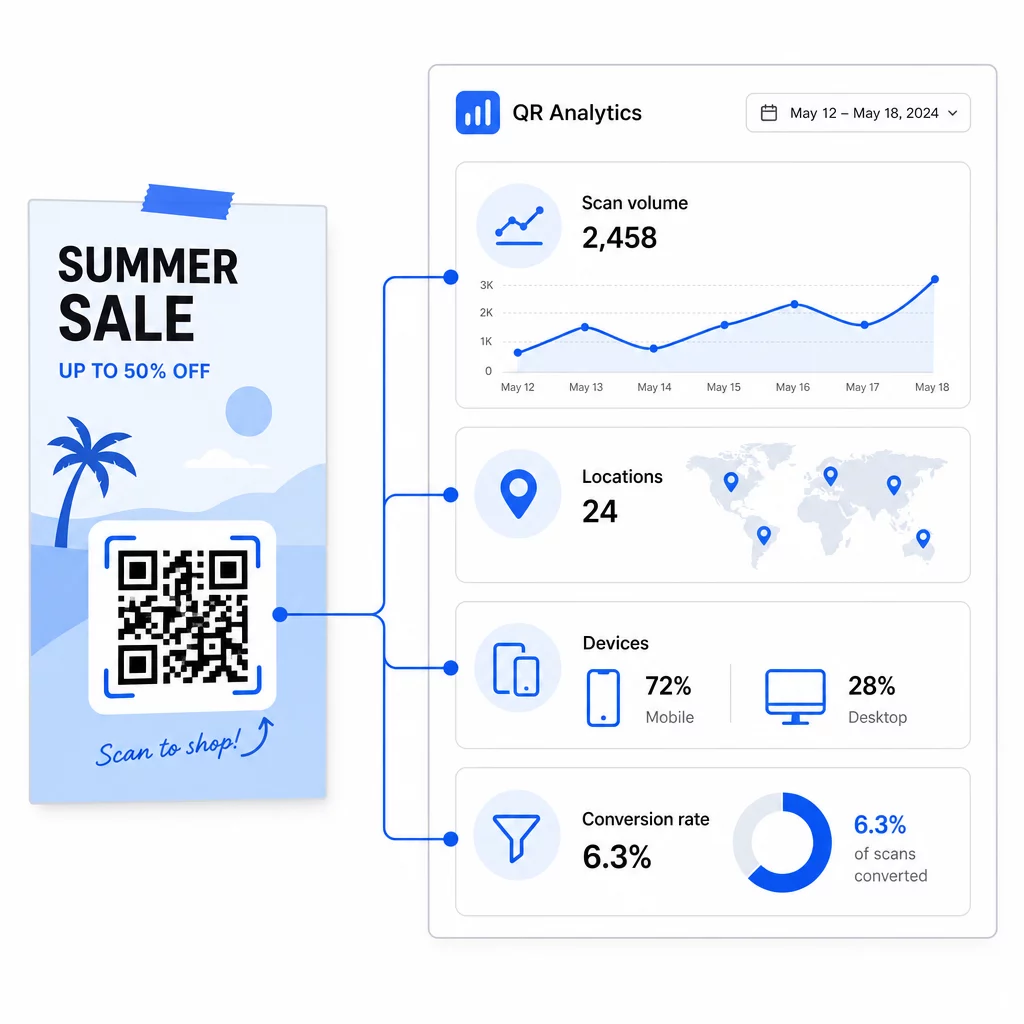
Metrik perilaku pasca-pemindaian – rasio pentalan, halaman per sesi, dan tindakan konversi – mengungkapkan apa yang terjadi setelah pemindaian. Jumlah pemindaian yang tinggi dengan rasio pentalan yang tinggi menunjukkan bahwa halaman arahan tidak memenuhi apa yang dijanjikan kode QR. Itu adalah informasi yang dapat ditindaklanjuti.
Itu panduan lengkap dasbor analitik kode QR mencakup cara mengatur parameter pelacakan, mengonfigurasi tag UTM, dan membaca data kinerja di Google Analytics 4. Untuk kampanye di berbagai penempatan atau wilayah, melacak kode QR berdasarkan area geografis memungkinkan Anda membandingkan volume pemindaian dan tingkat konversi berdasarkan kota atau wilayah serta mengalokasikan kembali anggaran ke lokasi dengan kinerja terbaik.
Dasbor analitik Pageloot melacak semua ini secara real-time dan memisahkan data kinerja berdasarkan kode QR individual, sehingga memudahkan perbandingan penempatan, identifikasi titik lemah, dan perhitungan ROI dengan mengaitkan data pemindaian ke hasil bisnis tertentu.
Mulai Lacak Kampanye QR Anda Buat kode QR dinamis yang dapat dilacak dan akses data pemindaian real-time dengan Pembuat Kode QR Pageloot. Uji coba gratis 14 hari, tidak perlu kartu kredit.
Menggunakan Kode QR Dinamis untuk Tetap Selaras dengan Tujuan Anda
Salah satu tantangan praktis dengan kampanye yang terikat waktu adalah bahwa keadaan berubah. Halaman arahan berkinerja buruk, penawaran promosi kedaluwarsa, atau acara dijadwal ulang. Dengan kode QR statis, setiap perubahan ini memerlukan pencetakan ulang.
Kode QR dinamis mengatasi hal ini dengan mengarahkan ke URL pengalihan singkat yang Anda kendalikan. Anda dapat memperbarui tujuan, menukar penawaran, atau mengalihkan ke halaman baru kapan saja – tanpa menyentuh kode yang dicetak. Ini mendukung aspek yang dapat dicapai dari tujuan SMART dengan menghilangkan gesekan yang biasanya membuat penyesuaian di tengah kampanye menjadi mahal.
Kode dinamis juga memungkinkan Pengujian A/B, di mana Anda menguji satu variabel pada satu waktu – URL tujuan, ajakan bertindak, atau desain halaman arahan – dan mengukur versi mana yang menghasilkan konversi lebih baik. Seiring waktu, proses berulang ini meningkatkan kinerja kampanye dan membangun gambaran yang lebih jelas tentang apa yang berhasil untuk audiens spesifik Anda.
Untuk gambaran umum terstruktur tentang kapan harus menggunakan kode statis versus dinamis, kode QR statis vs. dinamis mencakup pertukaran utama dalam hal biaya, fleksibilitas, dan kemampuan pelacakan.
Menghitung ROI untuk Kampanye Kode QR
Menghubungkan analitik dengan hasil bisnis adalah langkah terakhir dalam membuat tujuan SMART Anda membuahkan hasil. Perhitungan ROI dimulai dengan menetapkan dasar biaya – desain, pencetakan, biaya platform, dan jam kerja staf – dan kemudian mengidentifikasi pendapatan atau nilai yang dihasilkan dari interaksi kode QR.
Ketika Anda dapat mengaitkan pemindaian dengan tindakan tertentu, perhitungannya menjadi mudah. Jika kode QR pada kemasan produk mendorong pendaftaran garansi, Anda dapat mengukur pengurangan panggilan layanan pelanggan. Jika kode di pameran dagang mengisi CRM Anda dengan prospek yang berkualitas, Anda dapat membandingkan biaya per prospek dengan saluran akuisisi lainnya.
Jendela atribusi penting di sini. Beberapa pengguna memindai kode tetapi melakukan konversi beberapa hari atau minggu kemudian. Periode pelacakan perlu memperhitungkan penundaan ini untuk menghindari penilaian rendah terhadap kampanye. Memantau konversi langsung dan nilai seumur hidup pelanggan jangka panjang memberikan gambaran yang lebih lengkap.
Pelaporan ROI rutin membuat pemangku kepentingan tetap terinformasi dan membenarkan investasi berkelanjutan. Pembaruan bulanan yang menghubungkan volume pemindaian, tingkat konversi, dan atribusi pendapatan kembali ke tujuan SMART asli menunjukkan nilai kampanye dengan jelas dan mengidentifikasi peluang untuk perbaikan dalam siklus berikutnya. Menetapkan tujuan SMART adalah yang memisahkan strategi kode QR dari eksperimen kode QR. Dengan mendefinisikan hasil spesifik, menetapkan KPI yang terukur, membangun target yang realistis, menghubungkan kampanye dengan tujuan pemasaran yang lebih luas, dan menetapkan tenggat waktu yang jelas, Anda memberikan tujuan pada setiap pemindaian. Pasangkan struktur itu dengan kode QR dinamis dan analitik waktu nyata, dan Anda memiliki alat untuk bertindak berdasarkan apa yang data Anda katakan – bukan hanya melaporkannya setelah fakta. The Daftar periksa pemasaran kode QR untuk usaha kecil adalah langkah praktis berikutnya jika Anda menginginkan kerangka kerja terstruktur untuk menerapkan prinsip-prinsip ini.
Pertanyaan yang sering diajukan
Mulailah dengan mengidentifikasi tujuan pemasaran yang lebih luas yang harus didukung oleh kampanye Anda – apakah itu pembuatan prospek, kesadaran merek, atau retensi pelanggan. Kemudian bekerja mundur untuk mendefinisikan tujuan kode QR yang berkontribusi langsung pada tujuan tersebut. Misalnya, jika prioritas triwulanan Anda adalah memperoleh pelanggan email baru, tujuan kode QR SMART mungkin adalah “menghasilkan 200 pendaftaran email baru dari kode QR pada materi acara dalam 30 hari.” Konsistensi dalam branding dan konten antara materi fisik Anda dan tujuan digital Anda juga memperkuat keselarasan di setiap titik sentuh.
Metrik terpenting bergantung pada tujuan kampanye Anda, tetapi KPI inti meliputi total pemindaian, pemindaian unik, lokasi pemindaian, jenis perangkat, dan waktu pemindaian. Selain itu, metrik perilaku pasca-pemindaian – seperti tingkat konversi, tingkat pentalan, dan waktu di halaman – mengungkapkan apakah halaman arahan Anda memenuhi apa yang dijanjikan kode QR. Menambahkan parameter UTM ke URL tujuan Anda membawa semua data ini ke Google Analytics, di mana Anda dapat menganalisisnya bersama dengan kinerja saluran Anda yang lain.
Kode QR dinamis memungkinkan Anda memperbarui URL tujuan tanpa mencetak ulang materi Anda, yang sangat penting untuk kampanye berbatas waktu di mana kondisi dapat berubah. Jika halaman arahan berkinerja buruk atau promosi berakhir di tengah kampanye, Anda dapat segera mengarahkan ulang ke konten yang diperbarui. Kode dinamis juga mendukung pengujian A/B dengan memungkinkan Anda membandingkan varian tujuan dan mengukur mana yang menghasilkan konversi lebih baik. Dikombinasikan dengan analitik bawaan, kode-kode ini memberi Anda fleksibilitas dan data yang diperlukan untuk tetap berada di jalur dengan tujuan yang terukur dan dapat dicapai sepanjang siklus kampanye.