Kas teie QR-koodi kampaaniad annavad tulemusi või genereerite lihtsalt koode ja loodate, et need toimivad? Ilma struktureeritud eesmärkide seadmise lähenemisviisita jäävad enamik kampaaniaid ebamääraseks, muutes edusammude mõõtmise või investeeringu õigustamise võimatuks. See juhend selgitab, kuidas rakendada SMART-raamistikku QR-koodi turundusele, et igal kampaanial oleks selge suund, jälgitavad mõõdikud ja määratletud ajakava.
Mida tähendavad SMART-eesmärgid QR-koodi kampaaniate jaoks
SMART on akronüüm eesmärkidele, mis on Spetsiifilised, Mõõdetavad, Saavutatavad, Asjakohased ja Ajaliselt piiritletud. Esmakordselt määratletud George T. Dorani 1981. aasta juhtimisartiklis, on raamistikust saanud turundusplaneerimise standard, kuna see sunnib abstraktseid kavatsusi konkreetseteks eesmärkideks.
QR-koodi kampaaniatele rakendatuna sulgeb SMART-eesmärkide seadmine lõhe “me tahame rohkem kaasatust” ja “me tahame 500 tootelehe külastust QR-koodidelt jaemüügipakenditel 60 päeva jooksul” vahel. Erinevus on oluline, sest teine versioon ütleb teile, mida ehitada, kuhu see paigutada ja millal seda hinnata.
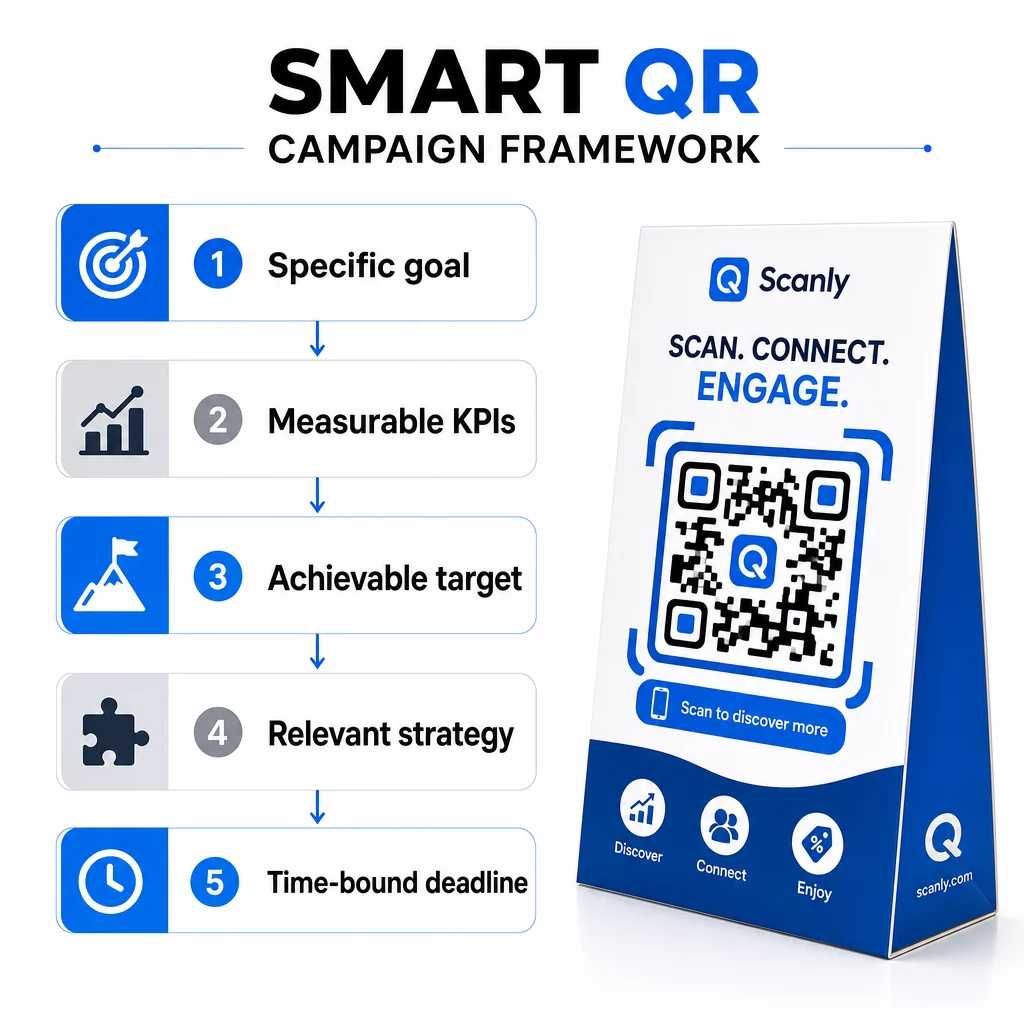
Siin on, mida iga komponent QR-kampaaniale annab:
- Spetsiifiline – Määratleb täpse tulemuse, sihtrühma ja paigutuse
- Mõõdetav – Kehtestab KPI-d, mida saate jälgida, näiteks skannimiste koguarv, unikaalsed skannimised või konversioonid
- Saavutatav – Joondab eesmärgid teie eelarve, meeskonna võimekuse ja tehniliste ressurssidega
- Asjakohane – Ühendab kampaania laiema äri- või turunduseesmärgiga
- Ajaliselt piiritletud – Määrab hindamise ja optimeerimise tähtaja
Alljärgnevad jaotised jaotavad iga elemendi ja näitavad, kuidas seda praktikas rakendada.
Kuidas seada QR-koodi kampaaniatele spetsiifilisi eesmärke
Spetsiifilisus vastab kahele küsimusele: mida sa tahad, et juhtuks, ja miks see on oluline? Ilma selle selguseta on raske otsustada, kuhu oma koodid paigutada, millisele sisule need peaksid linkima või millist tüüpi QR-koodi kasutada.
Võrdle neid kahte eesmärki:
- Ebamäärane: “Suurendada klientide kaasamist”
- Spetsiifiline: “Suurendada rakenduse allalaadimisi 20% võrra järgmise kvartali jooksul, paigutades toote pakendile QR-koodid, mis lingivad otse meie rakenduste poe kirjele”
Teine versioon ütleb teile soovitud tulemuse (rakenduse allalaadimised), sihtmärgi (20%), paigutuse (toote pakend) ja sihtkoha (rakenduste pood). Kõik need otsused tulenevad loomulikult eesmärgist.
Teie spetsiifiline eesmärk määrab ka õige QR-koodi tüübi. Õige QR-koodi valimine oma kampaania jaoks sõltub teie eesmärgist – URL-i QR-kood sobib hästi veebisaidi liikluse suunamiseks, samas kui vCard QR-kood sobib võrgustike loomise stsenaariumideks ja kupongikood poeaknal võib meelitada uusi kliente sooduspakkumisega.
Dünaamilised QR-koodid on eriti kasulikud, kui teie eesmärk hõlmab käimasolevaid kampaaniaid, sest saate sihtkohta värskendada ilma oma materjale uuesti printimata. See paindlikkus hoiab teie spetsiifilised eesmärgid saavutatavatena isegi siis, kui üksikasjad kampaania keskel muutuvad.
Kuidas luua mõõdetavaid QR-koodi eesmärke
Mõõdetaval eesmärgil on määratletud indikaatorid, mida saate kampaania mis tahes punktis kontrollida. QR-koodi kampaaniate puhul hõlmavad põhimõõdikud järgmist:
- SKANEERINGUID KOKKU – Koodiga suhtluse üldine maht
- Unikaalsed skaneerimised – Kui palju erinevaid kasutajaid suhtles, vastandina korduvatele skaneeringutele samast seadmest
- Skaneerimise asukoht – Geograafilised andmed, mis näitavad, millised paigutused või piirkonnad kõige rohkem kaasatust tekitavad
- Seadme tüüp – Kas kasutajad on iOS-is, Androidis või lauaarvutis, mis annab teavet sihtlehe optimeerimise kohta
- Skaneerimise aeg ja kuupäev – Määrab, millal teie sihtrühm on kõige aktiivsem, et saaksite kampaania ajastust vastavalt kohandada
- Konversioonimäär – Skaneerijate protsent, kes sooritavad soovitud tegevuse, näiteks vormi täitmise, ostu sooritamise või rakenduse allalaadimise
- Skannimisjärgne käitumine – Põrkemäär, lehel veedetud aeg ja klikkimise määrad, mis näitavad sisu kvaliteeti pärast skaneerimist
Konversioonimäär on eriti kõnekas. Kui teie QR-kood saab 400 skaneeringut ja 120 inimest sooritavad soovitud tegevuse, on teie konversioonimäär 30%. See näitaja ulatub kaugemale haardest, et näidata tegelikku kampaania mõju.
Lisades UTM-parameetrid teie QR-koodi siht-URL-idele võimaldab teil need andmed Google Analyticsi tuua, kus saate ühendada QR-koodist tuleneva liikluse konkreetsete kampaaniatega, võrrelda paigutusi ja analüüsida skaneerimisjärgset käitumist üksikasjalikult.
Jälgi iga skaneeringut reaalajas Pagelooti QR-koodi analüüsi armatuurlaud jälgib skaneeringute koguarvu, asukohti, seadmetüüpe ja kaasatuse trende, et teaksite alati, kuidas teie kampaania toimib.
Kuidas seada saavutatavaid eesmärke
Ambitsioonikad eesmärgid on kasulikud. Ebareaalsed kahjustavad usaldusväärsust ja raiskavad ressursse. Saavutatavad eesmärgid põhinevad sellel, mida teie meeskond, eelarve ja tööriistad tegelikult toetada suudavad.
Eelarve mõjutab otseselt kampaania ulatust. Kui ressursid on piiratud, keskenduge suure mõjuga paigutustele, mitte QR-koodide jaotamisele liiga paljudele pindadele. Üks hästi paigutatud kood visiitkaardil või poeriiulil võib olla tõhusam kui tosin halvasti paigutatud koodi.
Meeskonna võimekus kujundab, kui keeruline teie kampaania saab olla. Dünaamilised QR-koodid nõuavad pidevat haldamist – sihtkohtade uuendamist, analüütika jälgimist ja sisu kohandamist – samas kui staatilisi koode on pärast juurutamist lihtsam hooldada. Kui teie meeskond on QR-kampaaniatega uus, on praktiline lähenemine alustada ühe või kahe dünaamilise koodiga ja laiendada tegevust enesekindluse kasvades.
Tehnilised võimalused määravad, milliseid funktsioone saate tõhusalt kasutada. CRM-i integratsioonid, automatiseeritud järeltegevuse töövoogud ja täiustatud segmenteerimine on võimsad tööriistad, kuid need nõuavad seadistamisaega ja platvormi ühilduvust. Seadke eesmärgid selle järgi, mida teie süsteem tegelikult pakkuda suudab.
Tööstusharu võrdlusalused võivad teie ootusi ankurdada, kuid kuna standardiseeritud QR-koodi konversioonimäärad varieeruvad suuresti tööstusharu, paigutuse ja sihtrühma lõikes, on kõige usaldusväärsem võrdlusalus teie enda varasemad tulemused. Kui käivitate oma esimest kampaaniat, aitab piiratud levikuga pehme käivitamine teil enne laiendamist baasjoone luua.
Kuidas viia QR-koodi eesmärgid vastavusse oma turundusstrateegiaga
Eraldi toimiv QR-koodi kampaania kipub alatoimima. Kui teie kampaania eesmärgid on seotud laiema turunduseesmärgiga – olgu selleks siis müügivihjete genereerimine, klientide hoidmine või bränditeadlikkus – panustab iga skaneering millessegi suuremasse.
Brändi järjepidevus on oluline alati, kui QR-koodid ühendavad võrguühenduseta ja võrgukogemusi. Kui luksuskaupade jaemüüja paigutab koodid toote pakendile, peaks sihtleht, kuhu need koodid viitavad, peegeldama sama esmaklassilist esteetikat. Füüsilise puutepunkti ja digitaalse sihtkoha vaheline lahknevus õõnestab usaldust ja vähendab konversioone.
Sihtrühma vastavus kujundab, kus ja kuidas te koode kasutate. Sotsiaalmeedia QR-kood sündmuse materjalidel võib noorema publikuga tugevalt resoneerida, samas kui visiitkaardil olev vCard QR-kood sobib professionaalsetesse võrgustike loomise kontekstidesse. Oma sihtrühma harjumuste mõistmine aitab teil sobitada koodi tüübi ja paigutuse nende ootustega.
Sisustrateegia vastavus tagab, et QR-koodid toetavad teie toimetuslikke ja kampaania eesmärke. Kui teie kvartali fookus on mõttejuhtimine, siis konverentsimaterjalidel olevad QR-koodid, mis viitavad valgetele raamatutele või uurimisaruannetele, tugevdavad seda positsiooni. Kui teil on käimas sooduskampaania, täiendavad eksklusiivsetele sooduspakkumistele viitavad koodid kampaania teemat.
Klienditeekonna kaardistamine aitab tuvastada õige hetke QR-koodi paigutamiseks. Ostujärgses e-kirjas olev QR-kood, mis viib rahulolu-uuringule, püüab kliente kinni siis, kui kogemus on värske. Üritusmärgil olev kood ühendab osalejad sessiooni ressurssidega täpselt õigel ajal. Mõistmine, kuidas QR-koodid sobivad teie üldisesse turundusstrateegiasse on see, mis eristab strateegilist kampaaniat lihtsalt flaieril olevast koodist.
Kuidas muuta QR-koodi eesmärgid ajaliselt piiritletuks
Tähtaeg loob kiireloomulisuse ja määrab, millal te hindate, kas teie eesmärgid on täidetud. Ilma selleta kulgevad kampaaniad määramatult, ilma selge punktita tulemuslikkuse hindamiseks.
Struktureeritud käivitamisfaasid vähendavad riski. Piiratud QR-koodi levitamisega pehme käivitamine võimaldab teil testida paigutust, sisu ja tehnilist seadistust enne täielikku kasutuselevõttu. See on eriti väärtuslik dünaamiliste QR-koodide puhul, kus varajane analüüs võib anda teavet kohanduste kohta enne mastaapimist.
Hindamisintervallid peaksid vastama kampaania tüübile. Lühike reklaamikampaania võib vajada igapäevast skaneerimise jälgimist. Bränditeadlikkuse suurendamise pingutust saab üle vaadata iganädalaselt või igakuiselt. Sündmustepõhised kampaaniad nõuavad sageli reaalajas jälgimist, et saaksite probleeme lahendada nende tekkimisel.
Optimeerimisaknad tuleb oma ajakavasse selgesõnaliselt sisse ehitada. Kui skaneerimismäärad on kahe nädala pärast oodatust madalamad, vajate piisavalt aega, et testida alternatiivseid paigutusi, värskendada siht-URL-i või muuta oma üleskutset tegevusele. Dünaamilised QR-koodid võimaldavad neid kohandusi teha ilma uuesti printimata, mis on oluline eelis, kui aeg on piiratud.
Tulemuslikkuse verstapostid aitavad teil säilitada hoogu pikemate kampaaniate puhul. Kontrollpunktide seadmine 25%, 50% ja 75% teie ajakavast loob loomulikud võimalused võrrelda tegelikku tulemuslikkust teie mõõdetavate eesmärkidega ja teha parandusi enne lõppkuupäeva.
Jõudluse jälgimine QR-koodi analüütikaga
Analüütika on see, mis muudab SMART-eesmärgid toimivaks. Ilma jälgimiseta ei saa te kinnitada, kas teie konkreetsed eesmärgid täideti, hinnata, kas teie võrdlusalused olid saavutatavad, ega teada, millal optimeerida.
QR-koodi jälgimise tööriistad jäädvustavad skaneerimismahu, unikaalsed kasutajad, geograafilise asukoha, seadme tüübi ja skaneerimise aja – kõik need on otseselt seotud teie eesmärkide mõõdetava komponendiga. Ajapõhised andmed on eriti kasulikud kampaania ajastuse täpsustamiseks. Kui analüütika näitab, et skaneerimised koondusid lõunatundide või kindlate nädalapäevade ümber, saate reklaamisisu muudatusi või kampaania käivitamisi nende mustritega vastavusse viia.

Skaneerimisjärgse käitumise mõõdikud – põrkemäär, leheküljed seansi kohta ja konversioonitoimingud – näitavad, mis juhtub pärast skaneerimist. Suur skaneerimiste arv koos kõrge põrkemääraga viitab sellele, et sihtleht ei täida seda, mida QR-kood lubas. See on tegutsemist võimaldav teave.
See ülim juhend QR-koodi analüüsi armatuurlaudadele hõlmab, kuidas seadistada jälgimisparameetreid, konfigureerida UTM-silte ja lugeda jõudlusandmeid Google Analytics 4-s. Mitme paigutuse või piirkonna kampaaniate puhul, QR-koodide jälgimine geograafilise piirkonna järgi võimaldab võrrelda skaneerimismahtusid ja konversioonimäärasid linna või piirkonna järgi ning suunata eelarve ümber kõige paremini toimivatele asukohtadele.
Pagelooti analüüsi armatuurlaud jälgib kõike seda reaalajas ja eraldab jõudlusandmed iga QR-koodi kohta, muutes paigutuste võrdlemise, nõrkade kohtade tuvastamise ja ROI arvutamise lihtsaks, sidudes skaneerimisandmed konkreetsete äritulemustega.
Alustage oma QR-kampaaniate jälgimist Looge jälgitavaid dünaamilisi QR-koode ja pääsete juurde reaalajas skaneerimisandmetele koos Pageloot QR-koodi generaator. Tasuta 14-päevane prooviperiood, krediitkaarti pole vaja.
Dünaamiliste QR-koodide kasutamine oma eesmärkidega kooskõlas püsimiseks
Üks praktiline väljakutse ajaliselt piiratud kampaaniate puhul on see, et asjaolud muutuvad. Maandumisleht toimib halvasti, sooduspakkumine aegub või üritus lükatakse edasi. Staatiliste QR-koodide puhul nõuab iga selline muudatus uuesti printimist.
Dünaamilised QR-koodid lahendavad selle, suunates lühikesele ümbersuunamise URL-ile, mida te kontrollite. Saate sihtkohta värskendada, pakkumist vahetada või uuele lehele ümber suunata igal ajal – ilma trükitud koodi puudutamata. See toetab SMART-eesmärkide saavutatavat aspekti, eemaldades hõõrdumise, mis tavaliselt muudab kampaania keskel tehtavad kohandused kulukaks.
Dünaamilised koodid võimaldavad ka A/B testimine, kus testite korraga ühte muutujat – siht-URL-i, kutset tegevusele või maandumislehe disaini – ja mõõdate, milline versioon toob paremaid konversioone. Aja jooksul parandab see iteratiivne protsess kampaania jõudlust ja loob selgema pildi sellest, mis teie konkreetse sihtrühma jaoks töötab.
Struktureeritud ülevaate saamiseks selle kohta, millal kasutada staatilisi versus dünaamilisi koode, staatiliste vs. dünaamiliste QR-koodide võrdlus hõlmab peamisi kompromisse kulude, paindlikkuse ja jälgimisvõimaluste osas.
ROI arvutamine QR-koodi kampaaniate jaoks
Analüütika ühendamine äritulemustega on viimane samm, et teie SMART-eesmärgid end ära tasuksid. ROI arvutamine algab kulude algtasemete – disain, printimine, platvormitasud ja töötundide – kindlaksmääramisest ning seejärel QR-koodi interaktsioonidest saadud tulu või väärtuse tuvastamisest.
Kui saate siduda skaneeringud konkreetsete tegevustega, muutub arvutus lihtsaks. Kui toote pakendil olev QR-kood suunab garantiiregistreerimisi, saate kvantifitseerida klienditeeninduse kõnede vähenemist. Kui messil olev kood täidab teie CRM-i kvalifitseeritud müügivihjetega, saate võrrelda müügivihje maksumust teiste hankekanalitega.
Omistamisaknad on siin olulised. Mõned kasutajad skaneerivad koodi, kuid konverteerivad päevi või nädalaid hiljem. Jälgimisperioodid peavad selle viivitusega arvestama, et vältida kampaania alahindamist. Nii koheste konversioonide kui ka pikemaajalise kliendi eluea väärtuse jälgimine annab täielikuma pildi.
Regulaarne ROI aruandlus hoiab sidusrühmi kursis ja õigustab jätkuvaid investeeringuid. Igakuised uuendused, mis seostavad skaneerimismahud, konversioonimäärad ja tulu omistamise algsete SMART-eesmärkidega, demonstreerivad kampaania väärtust selgelt ja tuvastavad järgmises tsüklis parendusvõimalusi. SMART-eesmärkide seadmine eristab QR-koodi strateegia QR-koodi eksperimendist. Määratledes konkreetsed tulemused, kehtestades mõõdetavad KPI-d, luues realistlikud sihtmärgid, ühendades kampaaniad laiemate turunduseesmärkidega ja seades selged tähtajad, annate igale skaneeringule eesmärgi. Siduge see struktuur dünaamiliste QR-koodide ja reaalajas analüütikaga ning teil on tööriistad, et tegutseda vastavalt sellele, mida teie andmed teile ütlevad – mitte ainult sellest tagantjärele aru anda. See QR-koodi turunduse kontrollnimekiri väikeettevõtetele on praktiline järgmine samm, kui soovite struktureeritud raamistikku nende põhimõtete elluviimiseks.
Korduma kippuvad küsimused
Alustage laiemate turunduseesmärkide tuvastamisest, mida teie kampaania peaks toetama – olgu selleks siis müügivihjete genereerimine, bränditeadlikkus või klientide hoidmine. Seejärel töötage tagurpidi, et määratleda QR-koodi eesmärk, mis panustab otseselt sellesse eesmärki. Näiteks kui teie kvartali prioriteet on uute e-posti tellijate hankimine, võib SMART QR-koodi eesmärk olla “genereerida 30 päeva jooksul ürituse materjalidel olevatest QR-koodidest 200 uut e-posti liitumist”. Brändingu ja sisu järjepidevus teie füüsiliste materjalide ja digitaalse sihtkoha vahel tugevdab samuti ühtlust igas kokkupuutepunktis.
Kõige olulisemad mõõdikud sõltuvad teie kampaania eesmärgist, kuid põhilised KPI-d hõlmavad skannimiste koguarvu, unikaalseid skannimisi, skannimise asukohta, seadme tüüpi ja skannimise aega. Lisaks neile näitavad skannimisjärgse käitumise mõõdikud – nagu konversioonimäär, põrkemäär ja lehel veedetud aeg – kas teie sihtleht täidab seda, mida QR-kood lubas. UTM-parameetrite lisamine teie siht-URL-idele toob kõik need andmed Google Analyticsi, kus saate neid analüüsida koos oma teiste kanali tulemustega.
Dünaamilised QR-koodid võimaldavad teil uuendada siht-URL-i ilma oma materjale uuesti printimata, mis on kriitilise tähtsusega ajaliselt piiratud kampaaniate puhul, kus tingimused muutuvad. Kui sihtleht ei toimi ootuspäraselt või kampaania keskel aegub pakkumine, saate koheselt suunata uuendatud sisule. Dünaamilised koodid toetavad ka A/B testimist, võimaldades teil võrrelda sihtkoha variante ja mõõta, milline neist toob paremaid konversioone. Koos sisseehitatud analüütikaga annavad need teile vajaliku paindlikkuse ja andmed, et püsida mõõdetavate ja saavutatavate eesmärkidega kursis kogu kampaania elutsükli vältel.