Apakah beralih ke kode QR benar-benar mengurangi jejak lingkungan pemasaran Anda, ataukah itu hanya greenwashing terselubung? Produksi cetak membawa biaya sumber daya yang nyata – kertas, tinta, energi, dan transportasi – dan pencetakan ulang yang tidak perlu memperparah dampak tersebut. Artikel ini menguraikan bagaimana kode QR dapat mendukung kampanye yang benar-benar lebih hijau, dari mana penghematan nyata berasal, dan apa yang perlu dipertimbangkan sebelum beralih.
Bagaimana Bahan Cetak Mendorong Limbah Pemasaran
Sebelum mengevaluasi kode QR sebagai solusi, ada baiknya memahami masalahnya. Materi pemasaran cetak – brosur, menu, sisipan produk, pamflet acara, dan papan nama – membutuhkan kertas, tinta, dan energi untuk diproduksi, ditambah logistik untuk didistribusikan, dan penanganan limbah setelah dibuang.
Industri kertas tidak secara seragam berbahaya. American Forest & Paper Association melaporkan bahwa pabrik pulp dan kertas AS mengurangi gabungan emisi Lingkup 1 dan 2 sebesar 36% antara tahun 2005 dan 2022, dan bahwa lebih dari 1 miliar pohon ditanam kembali di AS setiap tahun. Namun, WWF dan organisasi lingkungan lainnya menunjuk rantai pasokan pulp dan kertas global sebagai pendorong deforestasi yang berkelanjutan di wilayah dengan perlindungan lahan yang lebih lemah. Berbagai sumber keberlanjutan sepakat pada satu hal: mengurangi volume kertas yang Anda cetak sejak awal adalah langkah yang paling efektif.
Di situlah kode QR menciptakan nilai langsung. Mereka tidak menghilangkan pencetakan sepenuhnya, tetapi secara dramatis mengurangi kebutuhan untuk mencetak ulang – salah satu sumber terbesar limbah yang dapat dihindari dalam pemasaran.
Kasus Lingkungan untuk Kode QR Dinamis
Manfaat lingkungan dari kode QR tidak melekat pada teknologi itu sendiri – itu tergantung pada bagaimana Anda menggunakannya. Kode QR statis yang dicetak pada pamflet yang menjadi usang dan harus dibuang serta dicetak ulang menawarkan manfaat keberlanjutan yang terbatas. Keuntungan yang berarti berasal dari kode QR dinamis, yang memisahkan kode fisik dari konten yang disampaikannya.
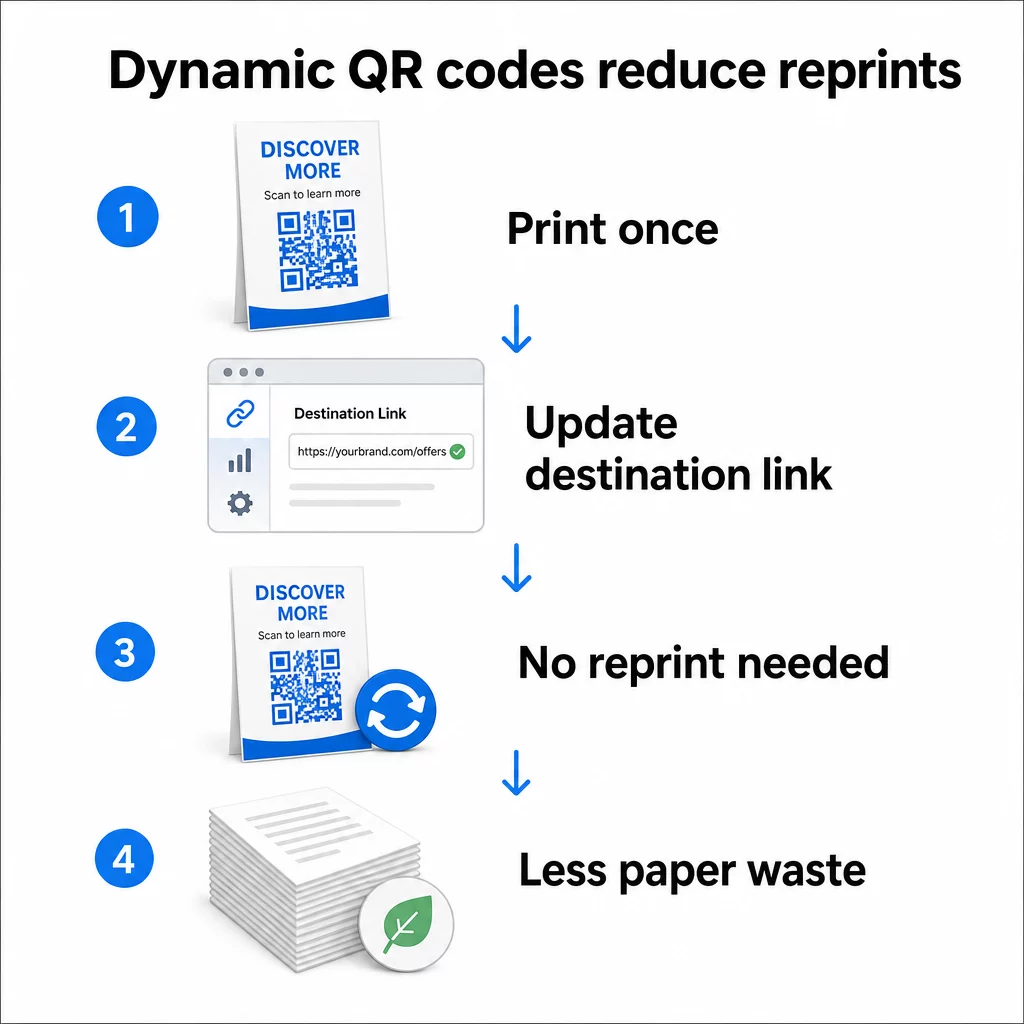
Dengan kode QR dinamis, kode yang dicetak mengarah ke tautan pengalihan. Ketika Anda perlu memperbarui tujuan – mengubah harga menu, memperbarui jadwal acara, atau menyegarkan promosi – Anda mengubah tautan di dasbor Anda. Materi cetak tetap beredar. Tidak ada yang berakhir di tempat pembuangan sampah.
Kemampuan tunggal ini mengatasi sumber limbah cetak paling umum dalam pemasaran: informasi yang berubah lebih cepat daripada materi tempat informasi itu dicetak.
Contoh dunia nyata menggambarkan skala dampak potensial:
- Patagonia mengganti instruksi perawatan cetak dan sisipan produk dengan kode QR pada kemasan mereka, menghemat sekitar 100.000 pon kertas setiap tahun, sementara pelanggan tetap memiliki akses penuh ke informasi produk.
- Marriott Aruba mengganti menu cetak dengan kode QR, menghemat sekitar $150,000 dalam biaya pencetakan – angka yang mencerminkan penghematan material dan pengurangan siklus pencetakan ulang.
- Tata Power di India mengintegrasikan kode QR ke dalam faktur listrik untuk memungkinkan pembayaran digital, mengurangi limbah kertas dan mengurangi kebutuhan akan infrastruktur pembayaran fisik.
Ini bukan efisiensi hipotetis. Ini mewakili keputusan yang didokumentasikan oleh organisasi nyata untuk mengurangi jejak material mereka menggunakan kode QR.
Kurangi Cetak Ulang, Bukan Hanya Kertas Ingin memperbarui konten pemasaran Anda tanpa membuang satu pun cetakan? The Generator QR Code Dinamis memungkinkan Anda mengubah tujuan kapan saja – tidak perlu mencetak ulang.
Di Mana Kode QR Menggantikan Materi Fisik
Kode QR dapat menggantikan materi cetak di berbagai konteks pemasaran dan operasional. Semakin sering suatu konten berubah, semakin besar manfaat keberlanjutan dari menautkannya secara dinamis daripada mencetaknya ulang.
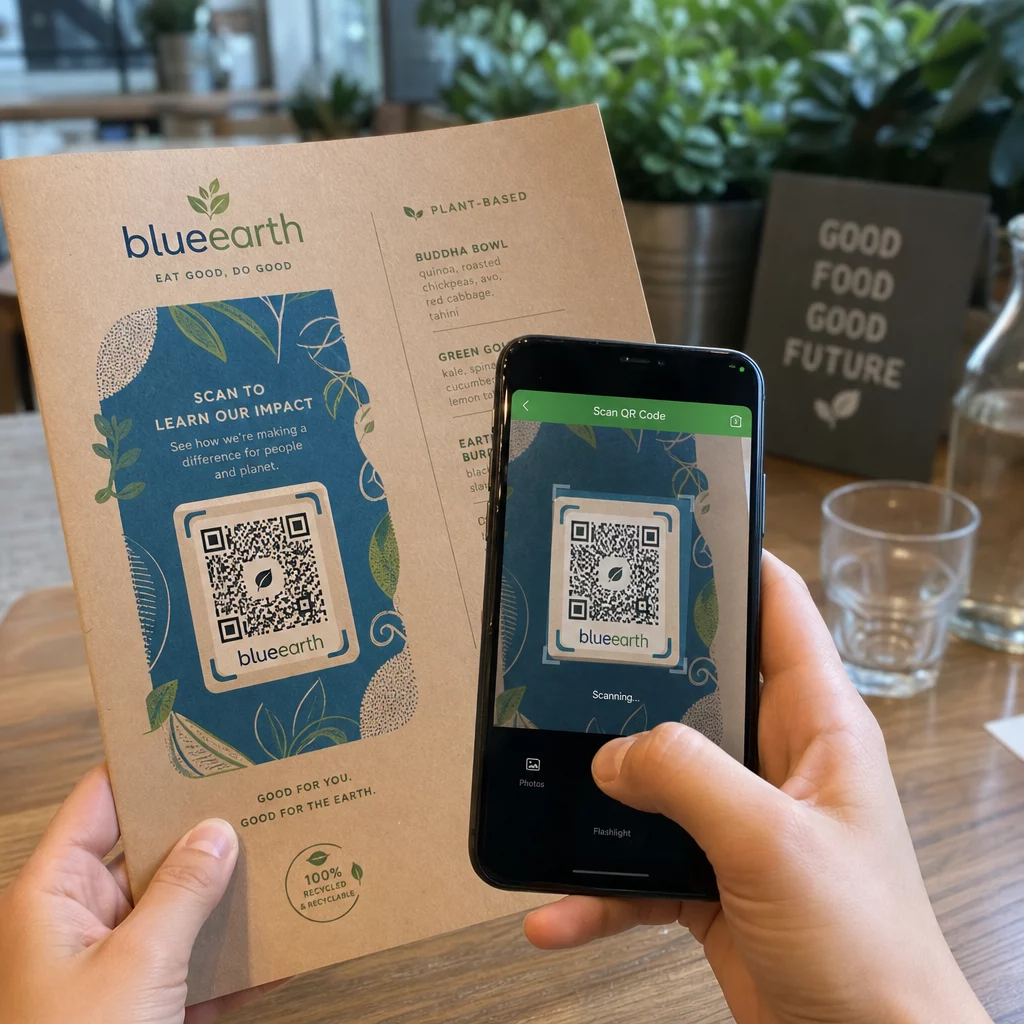
Aplikasi umum meliputi:
- Menu restoran – Penawaran harian, perubahan harga, dan item musiman dapat diperbarui secara instan tanpa mencetak ulang menu fisik
- Kemasan produk – Instruksi, informasi garansi, dan pengungkapan keberlanjutan dapat ditautkan ke halaman digital alih-alih sisipan cetak; a Kode QR PDF memudahkan untuk berbagi dokumentasi lengkap tanpa menyertakan salinan cetak
- Materi acara – Jadwal, biografi pembicara, dan peta lokasi dapat diakses secara digital, mengurangi volume program acara cetak
- Kartu nama – Kode QR yang menautkan ke profil digital atau vCard menghilangkan kebutuhan untuk mencetak ulang saat detail kontak berubah
- Label dan kemasan produk – Merek seperti Hala Tree Coffee telah menggunakan kode QR pada kemasan kompos untuk berbagi cerita asal dan sertifikasi, sepenuhnya menggantikan sisipan cetak
Itu merek yang menggunakan pencetakan kode QR berkelanjutan berbagi strategi umum: mereka menggunakan bahan ramah lingkungan untuk komponen cetak fisik dan mengandalkan kode QR dinamis untuk menangani konten apa pun yang mungkin perlu diperbarui.
Bagaimana Kode QR Mendukung Pemasaran Keberlanjutan yang Transparan
Selain mengurangi limbah, kode QR memberikan merek saluran praktis untuk mengomunikasikan komitmen lingkungan mereka. Ruang kemasan terbatas, tetapi kode QR dapat menautkan ke:
- Halaman transparansi rantai pasokan
- Pembaruan program penyeimbangan karbon
- Instruksi program daur ulang dan pengembalian
- Laporan dampak lingkungan
Pendekatan ini beresonansi dengan konsumen yang menginginkan detail spesifik daripada klaim hijau umum. Ini juga memungkinkan informasi tersebut tetap terkini – pembaruan proyek penyeimbangan karbon atau mitra daur ulang baru dapat segera tercermin dalam apa yang dilihat pelanggan saat mereka memindai, tanpa perlu pencetakan ulang.
Bagi bisnis yang ingin menghubungkan pemasaran fisik mereka dengan penceritaan digital, ini adalah salah satu contoh paling jelas dari bagaimana kode QR menghubungkan pemasaran cetak dan digital dengan cara yang menambah nilai nyata.
Kode QR Statis vs. Dinamis: Mana Pilihan yang Lebih Ramah Lingkungan?
Tidak semua kode QR menawarkan manfaat lingkungan yang sama. Memahami perbedaannya penting sebelum Anda berkomitmen pada suatu strategi.
| Aspek | Kode QR Dinamis | Kode QR Statis |
|---|---|---|
| Pembaruan konten | Ubah tujuan kapan saja tanpa pencetakan ulang | Tetap saat dibuat; memerlukan pencetakan ulang untuk mengubah |
| Limbah pencetakan ulang | Minimal – bahan tetap digunakan lebih lama | Lebih tinggi – kode usang memerlukan pencetakan baru |
| ANALITIK | Pelacakan pemindaian penuh, lokasi, data perangkat | Tidak Ada |
| Biaya jangka panjang | Lebih rendah karena berkurangnya pencetakan ulang | Lebih tinggi untuk konten yang sering berubah |
| 9. Terbaik untuk | Kampanye, menu, kemasan, acara | Informasi permanen seperti kredensial Wi-Fi |
Untuk sebagian besar kasus penggunaan pemasaran yang berfokus pada keberlanjutan, kode QR dinamis adalah pilihan yang lebih kuat. Kode statis masih berfungsi untuk informasi yang benar-benar permanen – akses Wi-Fi, URL situs web tetap, atau halaman kontak yang stabil – di mana pencetakan ulang tidak akan pernah diperlukan. Untuk rincian lengkap tentang pertukaran, lihat perbandingan kode QR statis vs. dinamis.
Keputusan harus didasarkan pada seberapa sering konten yang mendasarinya berubah. Jika jawabannya adalah “secara teratur,” dinamis adalah pilihan yang berkelanjutan. Jika jawabannya adalah “tidak pernah,” statis berfungsi dengan baik.
Mengukur Dampak Kampanye Kode QR Anda
Salah satu manfaat keberlanjutan kode QR yang kurang dihargai adalah bahwa mereka menghilangkan kebutuhan akan alat umpan balik cetak. Survei, kartu tanggapan, dan metode pelacakan audiens yang sebelumnya memerlukan kertas dapat diganti dengan analitik pemindaian.
Kode QR dinamis menyediakan data real-time tentang volume pemindaian, lokasi geografis, jenis perangkat, dan waktu keterlibatan. Ini mendukung keputusan kampanye yang lebih baik – membantu Anda memahami materi cetak mana yang benar-benar mendorong keterlibatan dan mana yang dapat dikurangi atau dihilangkan. Mengurangi cetakan yang berkinerja buruk itu sendiri adalah strategi pengurangan limbah.
Anda dapat menggunakan Kode QR di media cetak untuk melacak ROI offline dengan presisi yang sama dengan kampanye digital, dan mengalokasikan kembali sumber daya dari materi yang tidak menghasilkan konversi.
Hal yang Perlu Diingat
Kode QR bukanlah pengganti lengkap untuk semua materi cetak, dan manfaat lingkungannya bergantung pada implementasi yang cermat. Beberapa pertimbangan praktis:
- Cetakan fisik masih penting – Memilih kertas daur ulang atau bersertifikat FSC dan tinta ramah lingkungan untuk materi yang dicetak akan melipatgandakan manfaat penggunaan kode QR dinamis
- Penempatan memengaruhi umur panjang – Kode QR yang ditempatkan pada kemasan tahan lama atau tanda yang dapat digunakan kembali memiliki masa pakai yang lebih lama daripada yang ada pada selebaran sekali pakai; rancang untuk masa pakai material selama mungkin
- Kode dinamis memerlukan platform – Tidak seperti kode statis, kode QR dinamis mengarah ke URL pengalihan yang di-hosting, jadi Anda memerlukan platform yang andal untuk menjaganya tetap aktif dan terbaru
- Relevansi konten memperpanjang masa pakai material – Kemampuan untuk memperbarui tujuan kode QR berarti materi cetak dari enam bulan lalu masih dapat mengarahkan pelanggan ke penawaran Anda saat ini; ini adalah salah satu cara paling langsung kode QR mengurangi limbah
Pertanyaan yang sering diajukan
Kode QR mengurangi limbah kertas terutama dengan menghilangkan kebutuhan untuk mencetak ulang materi ketika konten berubah. Kode QR dinamis memungkinkan Anda memperbarui URL tujuan tanpa menyentuh materi cetak, yang secara langsung memperpanjang masa pakai materi fisik dan mengurangi frekuensi pencetakan. Manfaatnya nyata tetapi sebanding dengan seberapa sering konten Anda akan memerlukan pencetakan ulang.
Kode QR statis mengkodekan tujuan tetap yang tidak dapat diubah setelah dicetak. Jika konten yang ditunjuknya berubah, Anda perlu mencetak ulang. Kode QR dinamis menggunakan tautan pengalihan yang dapat Anda perbarui kapan saja dari dasbor – sehingga cetakan fisik tetap berlaku meskipun konten di baliknya berubah. Untuk setiap kasus penggunaan di mana informasi berkembang seiring waktu, kode dinamis adalah pilihan yang lebih ramah lingkungan.
Ya. Kode QR pada kemasan atau bahan cetakan dapat langsung terhubung ke laporan keberlanjutan, instruksi daur ulang, halaman transparansi rantai pasokan, atau detail program pengembalian. Karena tujuan dapat diperbarui dengan kode dinamis, informasi tersebut selalu dapat mencerminkan komitmen Anda saat ini daripada apa yang akurat pada saat dicetak – menjadikannya alat yang kredibel untuk komunikasi keberlanjutan yang transparan.