Apakah materi pemasaran cetak Anda menjadi usang begitu keluar dari percetakan? Mencetak ulang menghabiskan uang, membuang-buang kertas, dan merusak klaim keberlanjutan apa pun yang Anda buat. Panduan ini menjelaskan bagaimana menggabungkan praktik pencetakan ramah lingkungan dengan kode QR dinamis memungkinkan merek mengurangi limbah material, tetap relevan, dan mengkomunikasikan kredensial lingkungan mereka dengan jujur.
Apa yang Membuat Pencetakan Kode QR “Berkelanjutan”
Pencetakan kode QR berkelanjutan bukanlah satu teknik tunggal – ini adalah kombinasi pilihan material, metode produksi, dan strategi kode yang mengurangi jejak lingkungan dari komunikasi cetak.
Kedua sisi bekerja sama. Bahan ramah lingkungan mengurangi dampak dari proses pencetakan fisik: kertas bersertifikat FSC atau daur ulang, tinta berbasis nabati atau air, dan substrat yang dapat didaur ulang semuanya mengurangi konsumsi sumber daya dan limbah. Kode QR dinamis mengurangi dampak siklus hidup konten: karena URL tujuan dapat diperbarui setelah pencetakan, Anda tidak perlu mencetak ulang label atau kemasan hanya karena detail produk, sertifikasi, atau halaman kampanye berubah.
Bersama-sama, pilihan-pilihan ini mengatasi dua sumber terbesar limbah cetak – produksi berlebih dan keusangan.
Kurangi Limbah Pencetakan Ulang dari Kampanye Anda Dengan Generator QR Code Dinamis, Anda dapat memperbarui konten yang tertaut kapan saja tanpa menyentuh materi cetak – menjaga kemasan tetap relevan dan mengurangi limbah.
Mengapa Kode QR Dinamis Mengurangi Limbah
Kode QR statis mengkodekan tujuan tetap langsung ke dalam polanya. Ubah URL, dan kode tersebut tidak berguna – Anda harus mencetak ulang. Sebuah kode QR dinamis sebaliknya mengkodekan tautan pengalihan singkat. Pengalihan itu dapat diarahkan ke mana saja kapan saja, bahkan setelah kode dicetak dan didistribusikan.
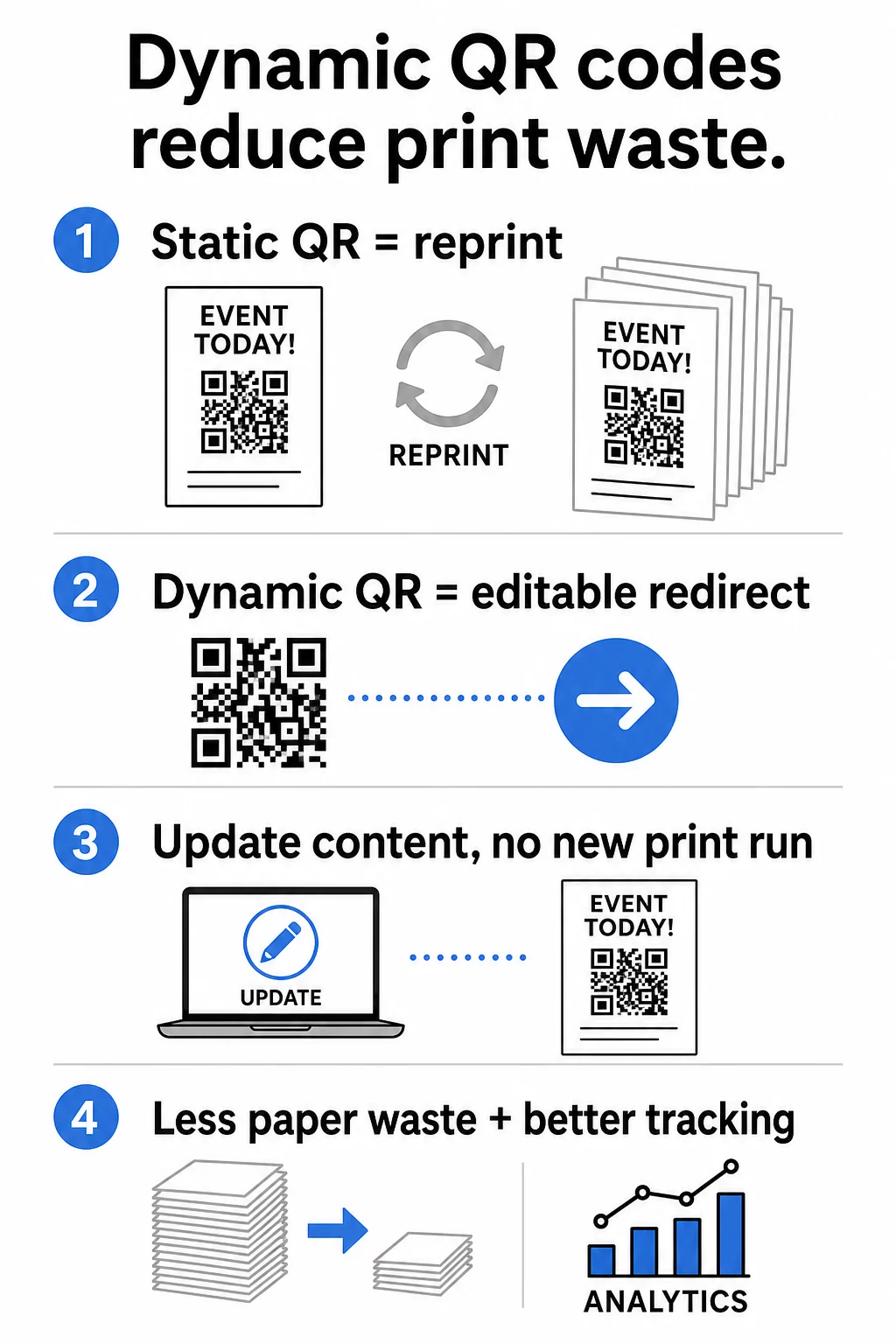
Perbedaan ini penting untuk keberlanjutan dalam tiga cara konkret:
- Masa pakai material lebih lama. Kemasan, label, dan materi cetak tetap akurat bahkan ketika konten yang tertaut berubah – baik itu sertifikasi baru, promosi musiman, atau instruksi daur ulang yang diperbarui.
- Jumlah cetakan yang lebih kecil. Karena Anda tidak terpaku pada tujuan tetap, Anda dapat mencetak sesuai permintaan daripada memproduksi dalam jumlah besar untuk mengamortisasi biaya perubahan di masa mendatang.
- Lebih sedikit bahan yang usang. Bahan cetakan yang ketinggalan zaman adalah sumber signifikan limbah kertas. Ketika informasi berada di tujuan daripada di kode, bahan tidak menjadi usang hanya karena situs web atau halaman produk Anda berubah.
Kode dinamis juga menyediakan analitik pemindaian – melacak kapan, di mana, dan di perangkat apa pemindaian terjadi – sehingga Anda dapat mengukur keterlibatan dan menyempurnakan strategi konten Anda tanpa bahan cetakan tambahan. Pelajari lebih lanjut tentang bagaimana melacak pemindaian kode QR dan analitik bekerja dalam praktik.
Contoh Dunia Nyata: Merek yang Menggunakan Pencetakan Kode QR Berkelanjutan
Majalah Lampoon: Kertas Bersertifikat FSC dan Tinta Berbasis Nabati
Ketika Majalah Lampoon merilis edisi khusus yang berfokus pada isu lingkungan, mereka menyelaraskan proses produksi mereka dengan pesan editorial mereka. Cetakan tersebut menggunakan kertas bersertifikat FSC, tinta berbasis nabati, dan metode pencetakan netral karbon.
Kode QR dinamis yang ditempatkan di seluruh halaman majalah menghubungkan pembaca ke pembaruan langsung tentang proyek-proyek penyeimbangan karbon – upaya reboisasi, investasi energi terbarukan, dan pencapaian keberlanjutan. Karena kode-kode tersebut dinamis, tim editorial dapat memperbarui konten ini secara real time seiring kemajuan proyek, memperpanjang kegunaan edisi cetak tanpa satu pun cetakan tambahan. Kampanye ini menghasilkan keterlibatan media sosial yang terukur karena pembaca membagikan hasil pemindaian dan menyoroti transparansi majalah.
Kopi Hala Tree: Kemasan Kompos dengan Transparansi Rantai Pasok
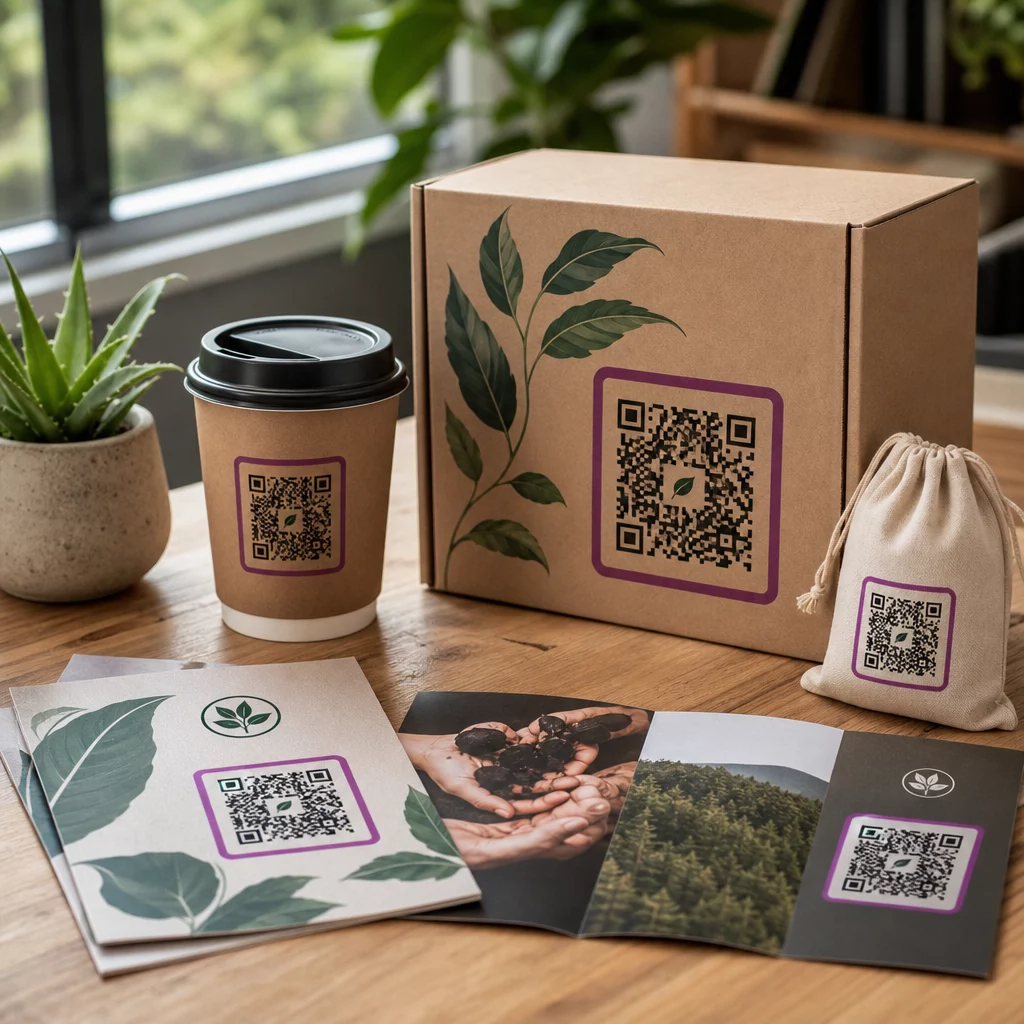
Kopi Hala Tree mendesain ulang kemasannya menggunakan kantong kompos 100% yang terbuat dari bahan nabati yang sepenuhnya terurai di fasilitas pengomposan komersial dalam waktu 90 hari. Kode QR dicetak menggunakan tinta biodegradable – dipilih secara khusus untuk menjaga kemampuan pemindaian saat kemasan terurai.
Setiap kode menghubungkan pelanggan ke informasi rinci tentang asal kopi, sertifikasi, dan metode pemrosesan. Menggunakan platform QR dinamis, Hala Tree dapat memperbarui konten tersebut secara instan ketika sertifikasi baru diperoleh atau ketika inisiatif keberlanjutan seperti upaya konservasi air diluncurkan – tanpa memproduksi bahan cetakan tambahan. Pendekatan ini mengurangi limbah sekaligus memperkuat transparansi rantai pasok.
The R Collective dan Levi’s: Kode QR untuk Mode Sirkular
Merek fesyen berkelanjutan The R Collective bermitra dengan Levi’s dalam Denim yang Ditata Ulang proyek – koleksi terbatas pakaian denim daur ulang yang terbuat dari kain deadstock. Setiap pakaian dilengkapi dengan label tenun tahan lama yang tertanam dengan kode QR yang dirancang untuk bertahan dari pencucian berulang.
Memindai kode tersebut memberikan instruksi daur ulang, tips perawatan, dan perbandingan penghematan lingkungan dibandingkan produksi denim konvensional kepada pelanggan. Kode-kode tersebut juga menghubungkan pengguna ke program pengembalian untuk pakaian yang sudah usang. Data kampanye menunjukkan bahwa pelanggan memindai kode tak lama setelah pembelian dan kembali menggunakannya untuk panduan perawatan – perilaku yang secara terukur memperpanjang masa pakai pakaian dengan mendorong pemeliharaan yang tepat.
Proyek ini menggambarkan bagaimana kode QR pada kemasan dan label produk dapat berfungsi sebagai alat keterlibatan jangka panjang daripada tag informasi sekali pakai.
Cara Menerapkan Pencetakan Kode QR Berkelanjutan
Pilih Bahan dan Metode Produksi Ramah Lingkungan
Pemilihan bahan adalah dasar dari pencetakan berkelanjutan. Pilihan utama meliputi:
- Kertas bersertifikat FSC atau daur ulang. Sertifikasi FSC dan SFI mengonfirmasi bahwa kertas berasal dari hutan yang dikelola secara bertanggung jawab, mengurangi permintaan pulp murni dan mendukung ekosistem hutan.
- Tinta berbasis nabati atau berbasis air. Tinta berbasis kedelai dan biji rami berasal dari sumber daya terbarukan dan menghasilkan emisi senyawa organik volatil (VOC) yang lebih rendah daripada alternatif berbasis minyak bumi. Tinta berbasis air menghilangkan pelarut hampir seluruhnya, mengurangi limbah berbahaya.
- Substrat yang dapat didaur ulang atau dikomposkan. Solusi mono-material – mencetak kode QR langsung ke kardus yang dapat didaur ulang daripada menggunakan label terpisah – menyederhanakan aliran daur ulang.
- Pencetakan digital untuk tiras pendek. Pencetakan digital memungkinkan cetak sesuai permintaan dan tiras pendek, mengurangi limbah persiapan dan menghindari kelebihan produksi. Ini sangat efektif untuk kode QR pada produk di mana efisiensi material sangat penting.
- Mitra produksi bersertifikat. Bekerja dengan pencetak yang bersertifikat FSC, ISO 14001, atau standar Green Seal memastikan bahwa sumber, tinta, dan proses produksi memenuhi kriteria keberlanjutan yang ditetapkan.
Rancang Kode QR yang Mencetak Secara Efisien
Desain yang baik mengurangi konsumsi tinta dan meningkatkan kemampuan pindai – keduanya penting untuk keberlanjutan.
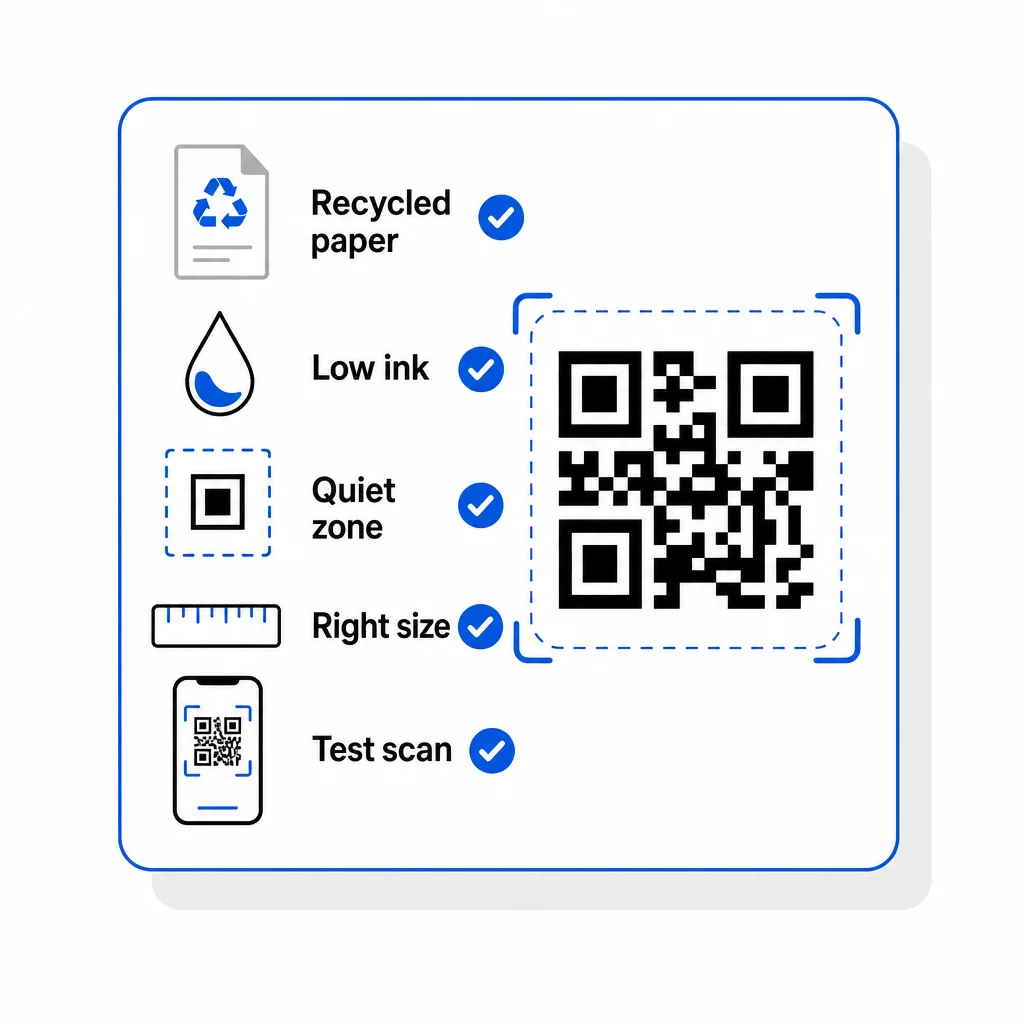
- Gunakan modul gelap pada latar belakang terang. Hitam di atas putih adalah kombinasi warna paling andal untuk pemindaian. Ini juga menggunakan lebih sedikit tinta daripada area padat besar berwarna gelap, terutama saat diterapkan di seluruh proses pencetakan. Untuk panduan lebih lanjut, lihat praktik terbaik untuk keterbacaan kode QR.
- Pertahankan warna-warna tanah untuk keselarasan merek. Jika Anda ingin menandakan kesadaran lingkungan secara visual, warna-warna alami dapat berfungsi – asalkan kontras tetap memadai. Selalu uji cetakan percobaan sebelum produksi penuh.
- Sesuaikan ukuran kode dengan bahan. Minimal 0,8 inci (sekitar 2 cm) persegi dapat diandalkan untuk pemindaian jarak dekat. Untuk kemasan yang dilihat dari jarak yang lebih jauh, terapkan aturan 10:1: jarak pemindaian dalam sentimeter tidak boleh lebih dari sepuluh kali lebar kode. Lihat selengkapnya panduan ukuran kode QR untuk berbagai bahan cetak.
- Pertahankan zona tenang. Sisakan batas yang jelas dan tidak tercetak setidaknya selebar empat modul di semua sisi kode. Tanpa itu, pemindai mungkin gagal mendeteksi batas kode.
- Gunakan format vektor untuk file cetak. Kirim file ke pencetak Anda dalam format SVG, EPS, atau PDF resolusi tinggi untuk menghindari pikselasi dan menjaga ketajaman tepi pada ukuran berapa pun.
- Tambahkan logo Anda. SEBUAH Kode QR dengan logo Anda meningkatkan pengenalan dan tingkat pemindaian – cukup jaga agar logo sekitar 30% dari area kode dan gunakan koreksi kesalahan tinggi untuk menjaga keandalan.
Untuk melihat lebih dalam bagaimana metode pencetakan memengaruhi kemampuan pindai, lihat bagaimana teknik pencetakan memengaruhi kemampuan pindai kode QR.
Buat Konten yang Memperkuat Pesan Keberlanjutan Anda
Konten yang terhubung dari kode QR Anda adalah tempat komunikasi keberlanjutan terjadi. Pilihan yang efektif meliputi:
- Halaman transparansi rantai pasokan. Detail asal, sertifikasi, dan metode pemrosesan memberikan informasi yang dibutuhkan konsumen yang sadar lingkungan untuk membuat keputusan pembelian yang percaya diri.
- Petunjuk perawatan dan pembuangan. Pedoman daur ulang, informasi komposabilitas, dan detail program pengembalian memperpanjang masa pakai produk dan mendukung tujuan ekonomi sirkular.
- Data jejak karbon. Kalkulator interaktif atau halaman perbandingan yang menunjukkan penghematan lingkungan dibandingkan alternatif konvensional menempatkan kredensial keberlanjutan Anda dalam istilah yang konkret dan dapat diverifikasi.
- Pembaruan sertifikasi langsung. Karena kode dinamis memungkinkan Anda memperbarui tujuan yang terhubung, Anda dapat mencerminkan sertifikasi yang baru diperoleh atau inisiatif keberlanjutan yang berkembang tanpa mencetak ulang satu label pun.
Analitik dari platform QR Anda dapat menunjukkan jenis konten mana yang paling banyak menarik perhatian, memungkinkan Anda menyempurnakan penceritaan keberlanjutan Anda berdasarkan perilaku pelanggan yang sebenarnya.
Mulai Lacak Kampanye Keberlanjutan Anda Itu Pembuat Kode QR Pageloot memungkinkan Anda membuat kode dinamis bermerek dan memantau kinerja pemindaian dari satu dasbor – tidak perlu mencetak ulang saat konten Anda berubah.
Catatan tentang Klaim dan Kepatuhan Keberlanjutan
Jika kode QR Anda tertaut ke atau menampilkan klaim lingkungan – “dapat dikomposkan,” “konten daur ulang,” “netral karbon” – klaim tersebut harus akurat dan didukung bukti. Panduan Hijau FTC berlaku untuk klaim pemasaran lingkungan yang dibuat melalui saluran apa pun, termasuk kemasan, label, dan bahan cetakan, baik dinyatakan secara eksplisit maupun tersirat melalui desain.
Persyaratan praktis utama:
- Bersikaplah spesifik. Klaim yang samar seperti “ramah lingkungan” atau “hijau” kemungkinan besar tidak dapat dibuktikan sepenuhnya. Tentukan aspek apa yang berkelanjutan dan mengapa.
- Dukung klaim dengan bukti. FTC mensyaratkan “bukti ilmiah yang kompeten dan andal” untuk klaim lingkungan.
- Jelaskan apa yang dimaksud dengan klaim tersebut. Harus jelas apakah klaim keberlanjutan mengacu pada produk, kemasannya, atau proses produksinya.
- Jangan melebih-lebihkan sertifikasi. Segel dan sertifikasi pihak ketiga harus ditampilkan secara akurat dan tanpa menyiratkan dukungan yang lebih luas daripada yang sebenarnya dicakup oleh sertifikasi tersebut.
Kode QR dinamis dapat mendukung kepatuhan dengan menautkan ke dokumentasi terperinci dan terkini – catatan sertifikasi, hasil audit pihak ketiga, atau penjelasan metodologi – yang tidak praktis untuk dicetak pada label.
Daftar Periksa Praktis untuk Kampanye Cetak Kode QR Berkelanjutan
Sebelum dicetak, konfirmasikan masing-masing hal berikut:
- Kertas bersertifikat FSC, berbahan daur ulang, atau substrat berkelanjutan terverifikasi lainnya
- Tinta berbahan dasar nabati, berbahan dasar air, atau alternatif rendah VOC lainnya
- Kode QR bersifat dinamis untuk memungkinkan pembaruan konten di masa mendatang tanpa mencetak ulang
- Ukuran kode memenuhi minimum untuk jarak pemindaian yang dimaksudkan (0,8 inci / 2 cm untuk jarak dekat)
- Zona tenang setidaknya empat modul dipertahankan di semua sisi
- Kontras tinggi dipertahankan (kode gelap pada latar belakang terang)
- File disediakan untuk printer dalam format vektor (SVG, EPS, atau PDF resolusi tinggi)
- Klaim keberlanjutan yang ditautkan dari kode QR bersifat spesifik, akurat, dan terbukti
- Kode diuji pada beberapa perangkat (iOS dan Android) sebelum produksi penuh
Untuk panduan lebih lanjut tentang penempatan kode secara efektif di berbagai materi pemasaran, lihat Panduan penempatan kode QR untuk pemasaran.
Pertanyaan yang sering diajukan
Kode QR Dinamis mengkodekan URL pengalihan singkat daripada tujuan tetap. Pengalihan itu dapat diperbarui kapan saja – bahkan setelah kode dicetak – sehingga materi fisik tetap akurat dan berguna tanpa mencetak ulang. Ini berarti Anda dapat memperbarui sertifikasi, halaman produk, atau konten kampanye tanpa membuang dan mencetak ulang label, kemasan, atau materi pemasaran.
Pilihan dengan dampak tertinggi adalah kertas bersertifikat FSC atau daur ulang, tinta berbasis nabati atau berbasis air (yang mengurangi emisi VOC dan limbah berbahaya), dan substrat yang dapat didaur ulang atau dikomposkan. Menggabungkan ini dengan metode pencetakan digital atau tiras pendek mengurangi baik kelebihan produksi maupun limbah material di seluruh siklus hidup cetak.
Ya – dan ini adalah salah satu kasus penggunaan terkuat. Kode QR dapat menautkan ke halaman transparansi rantai pasokan, dokumentasi sertifikasi pihak ketiga, instruksi perawatan dan daur ulang, serta data keberlanjutan waktu nyata yang tidak praktis untuk dicetak pada label. Karena kode dinamis dapat diperbarui, konten yang tertaut dapat mencerminkan sertifikasi atau inisiatif baru saat berkembang, menjaga komunikasi tetap terkini tanpa perlu mencetak ulang.