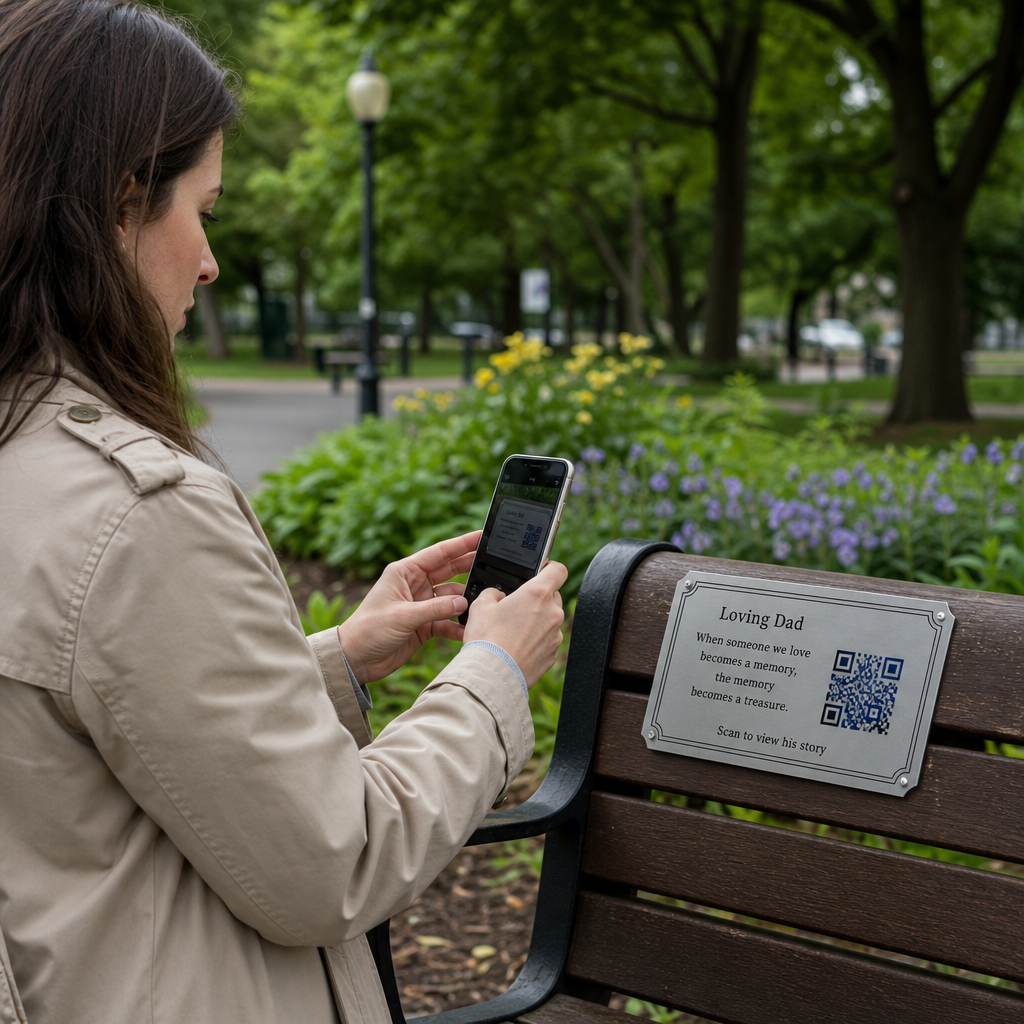
How can park managers share detailed local stories when physical bench plaques have limited space? Standard engraved plaques fit only a few lines of text, leaving rich histories and personal tributes untold. Adding QR codes to park bench plaques connects physical resting spots to digital content, giving visitors instant access to local history and memorial stories.
Why QR Codes Are Placed on Park Benches
Park benches have long served as places for rest, reflection, and appreciation of public spaces. By adding QR codes to bench plaques, local municipalities and community organizers turn simple seating into interactive digital touchpoints. Scannable bench plaques give visitors immediate access to stories, park updates, and multimedia content directly on their mobile devices.
Preserving Memorial Stories
Memorial benches honor family members, local figures, or community leaders. Standard engraved plaques usually fit only a name, birth and death years, and a brief inscription. Placing a QR code on the plaque allows loved ones and visitors to scan and open a dedicated online memorial page.
Through a PDF QR-kod generator, organizers can upload biography documents or memorial programs. Alternatively, using an bild QR-kod generator lets families display historic photo galleries, preserving personal histories for future generations.
Sharing Local History and Culture
Public parks are often situated on historical grounds or along heritage trails. Installing QR codes on park benches allows cities to create self-guided historical tours without cluttering natural environments with large physical signboards.
When visitors pause to rest, they can scan the code to access historical overviews, archived photographs, or location-based audio narratives. Similar to digital initiatives found in museum QR code programs, bench codes transport park guests into the area’s rich past. For deeper storytelling experiences, park boards can leverage AR QR code technology to showcase 360-degree historical reconstructions or interactive landscape maps.
Supporting Community Engagement
Municipalities use bench QR codes to connect with residents and collect operational feedback. Benches positioned near playgrounds, sports fields, or event stages serve as natural communication hubs. A quick scan allows visitors to engage with local initiatives through several practical channels:
- Viewing community calendars featuring upcoming park events and concerts.
- Watching video walking tours generated through a YouTube QR-kodgenerator.
- Submitting maintenance feedback to report damaged park equipment or fallen branches.
- Reading local environmental guides detailing native plant and wildlife species.
Update Park Content Without Replacing Physical Plaques Want to share local history and keep memorial content dynamic over time? Use the Länk QR-kodgenerator to create customizable, trackable codes for your community benches today.
Best Practices for Outdoor Bench Plaque Design
Outdoor physical assets face constant exposure to changing weather, sunlight, and potential physical wear. Designing bench plaques requires careful technical planning to ensure the QR code remains readable for years.
Choosing Durable Materials and Anti-Glare Finishes
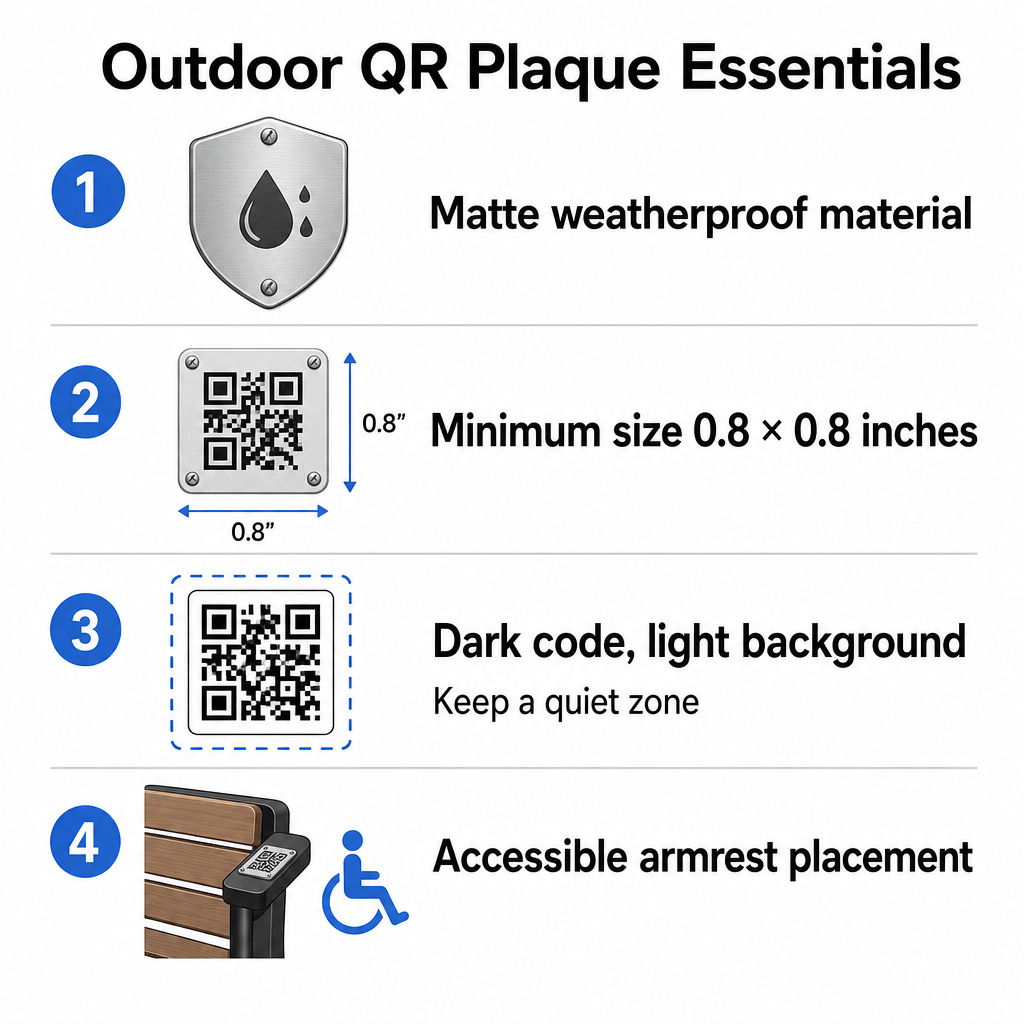
Direct sunlight creates harsh reflections that prevent phone cameras from decoding QR patterns effectively. Plaques made from polished metal or high-gloss acrylic often fail in bright outdoor conditions. Select non-reflective materials such as etched anodized aluminum, engraved matte brass, or UV-resistant outdoor vinyl. Applying a matte clear coat reduces surface glare and protects the print against fading from weather exposure.
To understand how material selection affects camera scanning, review our detailed guide on 15. hur trycktekniker påverkar QR-kodens skanningsbarhet.
Sizing, Contrast, and Margin Guidelines
To ensure smooth scanning across different smartphone camera models, follow these physical formatting standards:
- Minimum physical size: Print QR codes at least 0.8 × 0.8 inches (2 × 2 cm) for close-range scanning.
- Scanning distance ratio: Apply the 10:1 ratio rule, matching code size to roughly one-tenth of the expected scanning distance.
- Color contrast: Use dark codes on light backgrounds, such as black patterns on silver or white metal plates.
- Quiet zone border: Maintain an unprinted margin around the QR code that is at least four modules wide to isolate it from plaque borders.
For further formatting rules, explore our comprehensive breakdown of bästa praxis för läsbarhet av QR-koder.
Accessibility and Inclusive Placement Rules
When mounting QR code plaques onto park benches, position them where they are accessible to everyone, including visitors using wheelchairs or mobility aids. Mounting the plaque on the armrest or top rail of the bench keeps it reachable and easy to scan without requiring awkward bending.
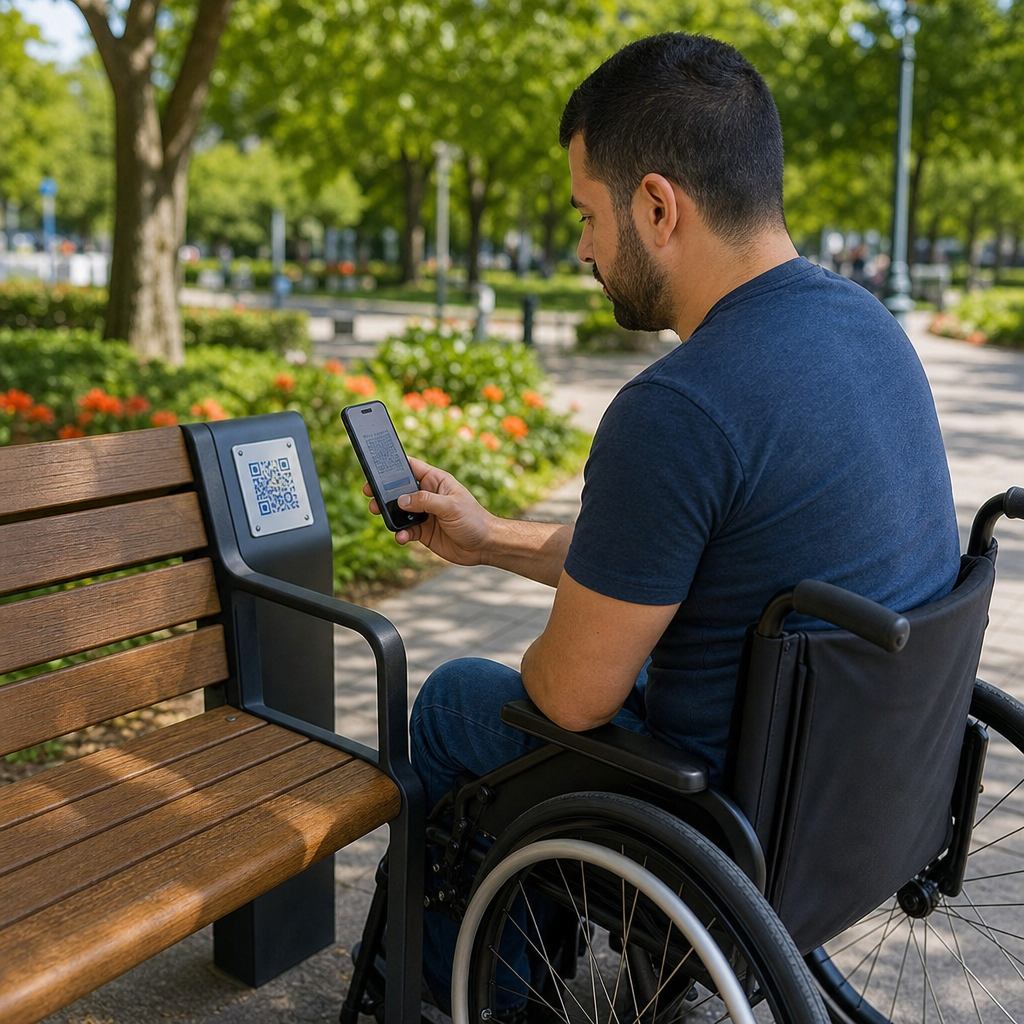
Digital accessibility matters just as much as physical placement. Under Section 508 guidelines and WCAG standards, digital content linked from public signage must be accessible to all users. A QR code should never be the only way to access information. Always include text adjacent to the code, such as a shortened web address, so visitors can access the webpage manually if needed. For additional positioning strategies, see our guide on QR code placement best practices.
Why Dynamic QR Codes Are Essential for Public Benches
When installing permanent plaques on outdoor furniture, reprinting physical hardware to fix a broken link or update historical information is costly and time-consuming. Dynamic QR codes solve this issue by separating the physical printed pattern from the destination web link.
| Funktion | Statiska QR-koder | Dynamiska QR-koder |
|---|---|---|
| Destination Link | Permanently hardcoded into pattern | Editable anytime via online dashboard |
| Plaque Replacement | Required whenever content URL changes | Never required when links change |
| Skanningsanalys | Ej tillgänglig | Tracks total scans, locations, and devices |
| Datatäthet | Increases with longer URLs (harder to scan) | Stays short and clean (easier to scan) |
Using dynamic codes allows park managers to maintain active digital touchpoints. If a memorial page hosted on a city domain moves to a new web address, administrators can redirect the dynamic QR code in seconds without unbolting the plaque from the bench.
Furthermore, built-in management tools allow municipalities to evaluate community engagement. By reviewing QR code tracking metrics, staff can see which park locations receive the most visitor interaction, helping guide future cultural and historical investments.
Building Connected Public Spaces
Integrating QR codes into park bench plaques gives municipalities and community organizers a durable, space-efficient way to share local heritage, celebrate community members, and engage park visitors. By choosing weatherproof matte materials, maintaining strong visual contrast, and utilizing dynamic links, your organization can connect physical public spaces with meaningful digital stories for years to come. Start designing your park bench campaign today using Pageloot’s suite of customization and management tools.
Vanliga frågor
When scanned with a smartphone camera, the QR code automatically opens a mobile landing page displaying digital content associated with that bench. Depending on the project, this can include memorial biographies, historical photo archives, audio guides, or park event calendars.
Dynamic QR codes allow administrators to update the linked digital content or change web URLs at any time without replacing the physical plaque. They also provide scan analytics, helping park staff monitor engagement and verify that linked pages remain functional.
Choose high-contrast designs, such as dark codes on light backgrounds, and use matte or non-reflective finishes like etched aluminum or UV-safe coated vinyl. Ensure the physical code is printed at least 0.8 × 0.8 inches (2 × 2 cm) with a clear border (quiet zone) around the pattern.