ホーム > ブログ > QRコードがEコマースの配送をどのように改善するか
Printerless QR return

QRコードがEコマースの配送をどのように改善するか

Learn how QR codes improve e-commerce deliveries by enabling real-time tracking, automated notifications, and printerless returns to reduce support requests.
Updated on 6月 10, 2026
目次

Are your customers constantly asking “Where is my order?” while your support team drowns in tracking requests? Delivery communication gaps cost you time, money, and customer trust. This guide explains how QR codes solve those problems at every stage of the delivery process – from shipping labels to returns to post-purchase engagement.

What Delivery Problems Do QR Codes Actually Solve?

Before exploring the solutions, it helps to understand the specific breakdowns that QR codes address.

Lack of real-time tracking is one of the most common frustrations in e-commerce logistics. Traditional 1D barcodes store minimal data and require precise alignment to scan. When damaged, they can block updates entirely. Research shows that 88% of consumers consider real-time delivery tracking critical for a positive experience, yet many businesses still rely on systems that can’t provide it. Without live visibility, customers feel left in the dark – and their anxiety shows up directly in your support queue.

Poor notification systems compound the problem. When communication between warehouses, couriers, and customers is inconsistent, shoppers are left with vague delivery windows that can span several hours. They don’t know when to be home, whether to contact support, or whether their order is even moving. IKEA addressed a version of this problem by sending QR codes via email or SMS after customers register returns, allowing staff to process them without manual follow-ups.

Last-mile delivery failures represent the highest-risk stage of the journey. Incorrect addresses, missed delivery attempts, and missing proof of delivery can turn a smooth process into a frustrating ordeal – and one that directly affects repurchase decisions.

Difficult returns are a final pain point that grows each year. In 2024, the average U.S. e-commerce return rate reached 20.4%, representing approximately $362 billion in online returns. Processing a return can cost three to four times the refund amount alone when you factor in shipping, labor, fees, and lost customer value. When the returns process is unclear or printer-dependent, it adds friction that discourages both returns and repurchases.

How QR Codes Enable Real-Time Tracking and Automated Notifications

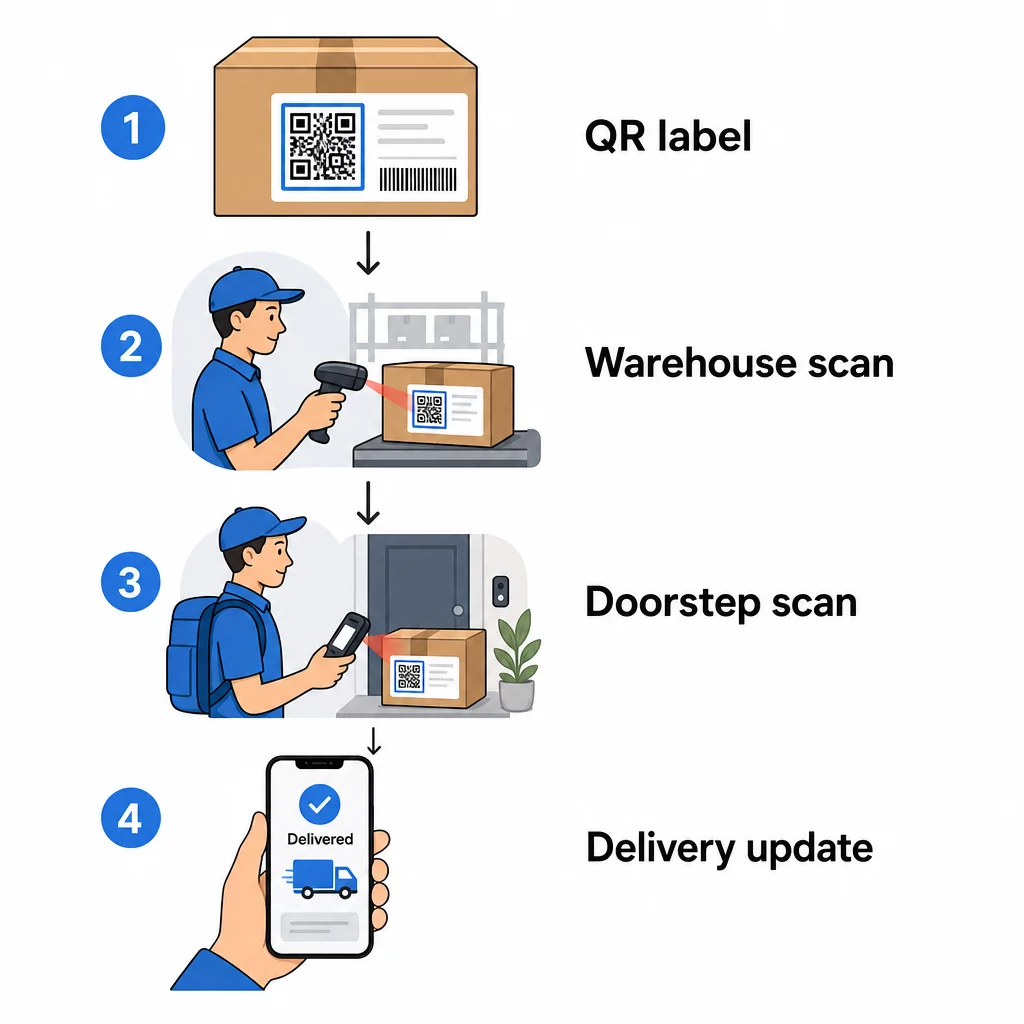
QR codes solve the tracking gap by turning shipping labels into dynamic data sources. Unlike traditional barcodes, QR codes carry detailed tracking information that updates at every scan point – warehouse intake, sorting facility, out for delivery, and final handoff. This creates a direct, real-time link between customers, couriers, and your logistics system.

QR delivery tracking flow

Self-Service Tracking for Customers

When you print a QR code on a shipping label or include one in a confirmation email, customers can scan it to access a live tracking page showing their package’s current location and status. This self-service model significantly reduces “Where is my order?” support tickets because customers get the answer themselves, instantly.

ダイナミックQRコード make this even more powerful. Because the destination URL can be updated without reprinting the label, customers always see current information – whether the package is in transit, delayed, or delivered. You don’t need to reissue labels if a route changes or a delay occurs.

Keep Every Scan Current Without Reprinting を使用しています。 ダイナミックQRコードジェネレーター to create shipping label codes that you can update anytime – so customers always see accurate delivery status with a single scan.

Scan-Triggered Updates for Couriers and Warehouse Staff

For logistics teams, QR codes automate the data entry that slows down manual workflows. When a courier or warehouse worker scans a QR code on a shipping label, the system logs a timestamped update – picked, packed, shipped, received – without any manual input. A final scan before loading updates the order status to “shipped” automatically.

This also applies at scale. The European Pallet Association (EPAL) added QR codes to its 650 million pallets, enabling real-time tracking and unique identification for each unit. That level of precision reduces bottlenecks and improves delivery accuracy across high-volume operations.

Automated Delivery Alerts

When integrated into tracking systems, each QR scan can trigger automated customer notifications. When a courier scans the code at your customer’s doorstep, the system records GPS and timestamp data and instantly updates the order status to “Delivered” in the customer’s account. This confirms delivery, resolves disputes, and reduces support inquiries without requiring manual intervention.

Research supports how much this matters: 83% of buyers expect updates throughout their order’s journey, and nearly four in ten shoppers say frequent tracking updates directly reduce their post-purchase anxiety. Automating those updates through QR scans means you meet those expectations without adding workload to your team.

QR Code Applications Across the Delivery Lifecycle

Reducing Support Ticket Volume

QR codes placed on shipping confirmations and package labels give customers instant access to a real-time tracking portal. Because ダイナミックQRコード update automatically, the link on a printed label remains useful even when delivery routes change or delays occur. For e-commerce businesses, this translates directly into fewer support tickets and faster resolution for the inquiries that do come in.

Improving Last-Mile Delivery Accuracy

When delivery drivers scan a QR code on a shipping label, they instantly access recipient details, delivery instructions, and route updates. QR codes also provide seamless proof of delivery by capturing GPS coordinates and a timestamp the moment the code is scanned at the customer’s location. This creates clear documentation for resolving disputes.

An additional practical advantage: QR codes include built-in error correction. Even if up to 30% of the code is physically damaged – from moisture, abrasion, or handling – the code remains scannable. That resilience matters in real-world freight and last-mile environments. You can read more about this capability in the guide to how QR codes improve freight tracking.

Simplifying Returns with Printerless QR Labels

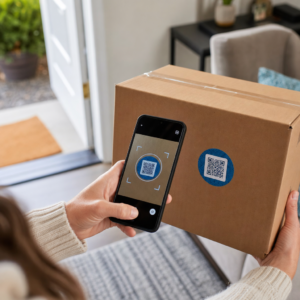
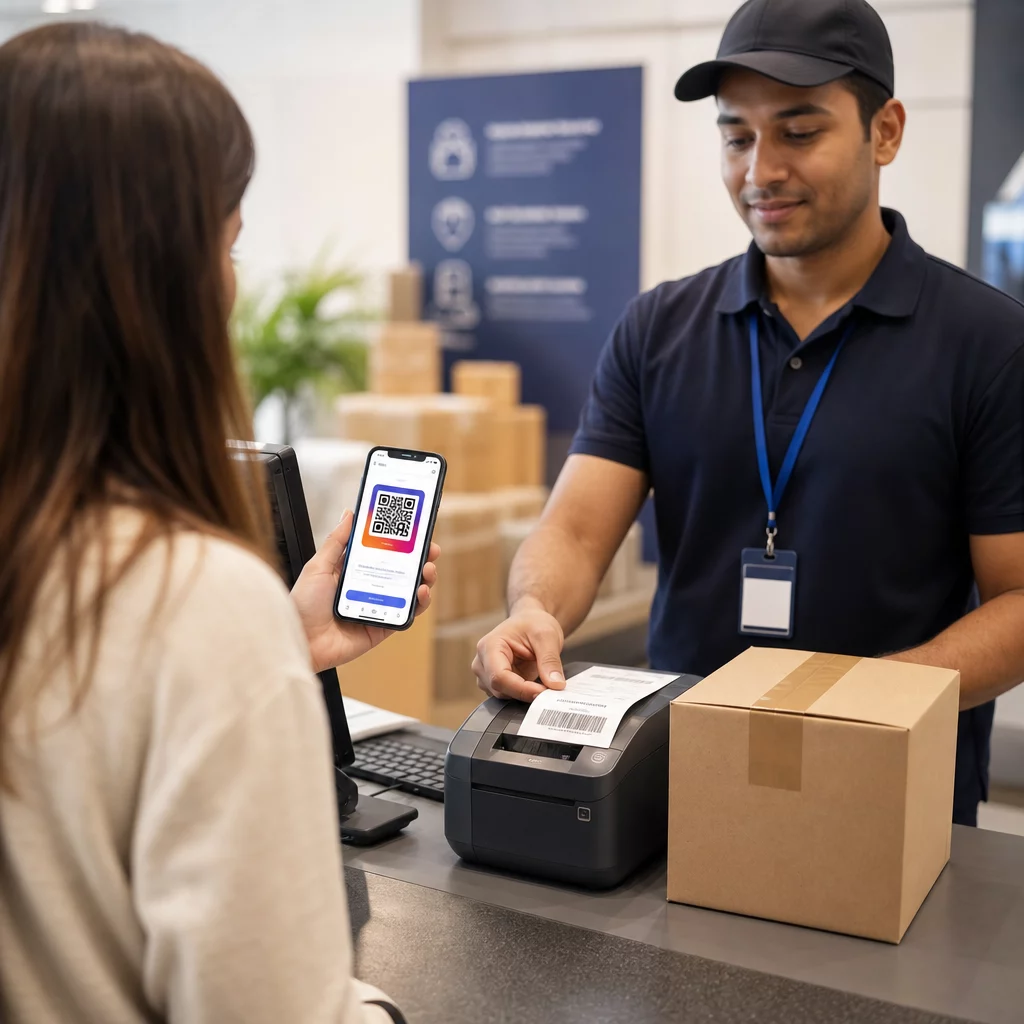
Returns are where QR codes may have their biggest operational impact. Instead of requiring customers to print labels, businesses can send a QR code by email or SMS that the customer presents at a drop-off point like USPS or a local carrier location. The carrier scans the code and generates the physical label on-site.

This “printerless return” approach reduces friction at every step. Customers don’t need a printer, don’t need to manually enter return addresses, and can initiate returns from their phones. Data shows that 96% of customers are more likely to repurchase from brands that make returns easy, and 30% of customers who use paperless returns ship on the same day they initiate the process.

を使って QRコードジェネレーター linked to a pre-filled return portal, you can also automate inventory updates the moment a return is initiated – removing the manual reconciliation that drives up reverse logistics costs.

Post-Delivery Customer Engagement

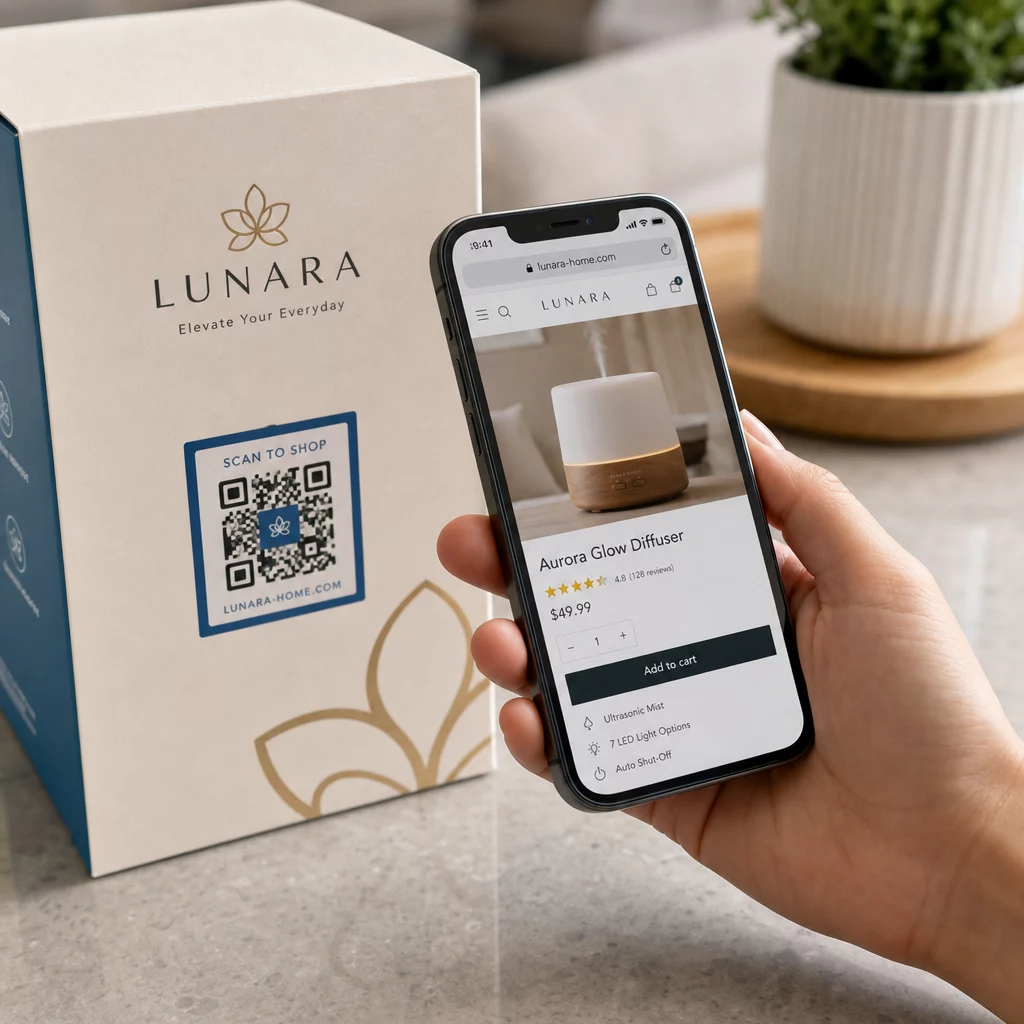
Delivery doesn’t have to end the customer relationship. A QR code inside the box or printed on the packaging can direct customers to product tutorials, setup guides, care instructions, or review forms. This reduces post-purchase confusion, cuts down on support requests for common questions, and opens a channel for ongoing engagement.

You can also use these packaging QR codes to share exclusive coupons or reorder links. A coupon QR code linked directly from the package insert is a straightforward way to drive repeat purchases without any additional outreach. For ideas on extending this approach, 製品ラベル用QRコード covers implementation across packaging touchpoints.

How to Implement QR Codes in Your Delivery Operations

Map Your Key Touchpoints First

Start by identifying every point in your delivery workflow where information needs to move – shipping labels, return labels, packing slips, and product packaging. Each of these is a potential QR code placement. Shipping labels are scanned multiple times by warehouse staff, couriers, and customers, making them the highest-value location. Return labels benefit most from the printerless approach. Product packaging is best suited for post-delivery engagement content.

For a detailed walkthrough of how QR codes fit into the picking, packing, and shipping sequence, the guide to how QR codes streamline order fulfillment covers each stage with practical specifics.

Design QR Codes for Physical Durability

Logistics QR codes get handled roughly. When designing codes for shipping labels, ensure they meet minimum size requirements – at least 0.8 inches square – and maintain a high contrast ratio between the dark code and a light background. Use thermal-transfer or UV-resistant label materials that can withstand moisture and temperature changes during transit. Adding a brief instruction like “Scan to track your order” removes any ambiguity for customers who may be unfamiliar with the process.

If you’re transitioning from traditional barcodes, the guide to 配送ラベルのバーコード explains the differences between 1D and 2D formats and helps you understand what to replace.

Use Dynamic QR Codes for Flexibility

Static QR codes encode a fixed destination that cannot be changed after printing. For delivery applications, this creates problems whenever a tracking URL changes, delivery instructions are updated, or a return portal is modified. ダイナミックQRコード solve this by encoding a short redirect URL that you can update at any time from a central dashboard – without reprinting a single label.

This flexibility is particularly valuable for businesses with high label volumes. You print once, and retain the ability to redirect customers to current, accurate information indefinitely.

Update Delivery Information Without Touching a PrinterダイナミックQRコードジェネレーター lets you edit the destination URL on any printed label. Trusted by over 20,000 companies across 110 countries – start with a free 14-day trial, no credit card required.

Track Performance with Scan Analytics

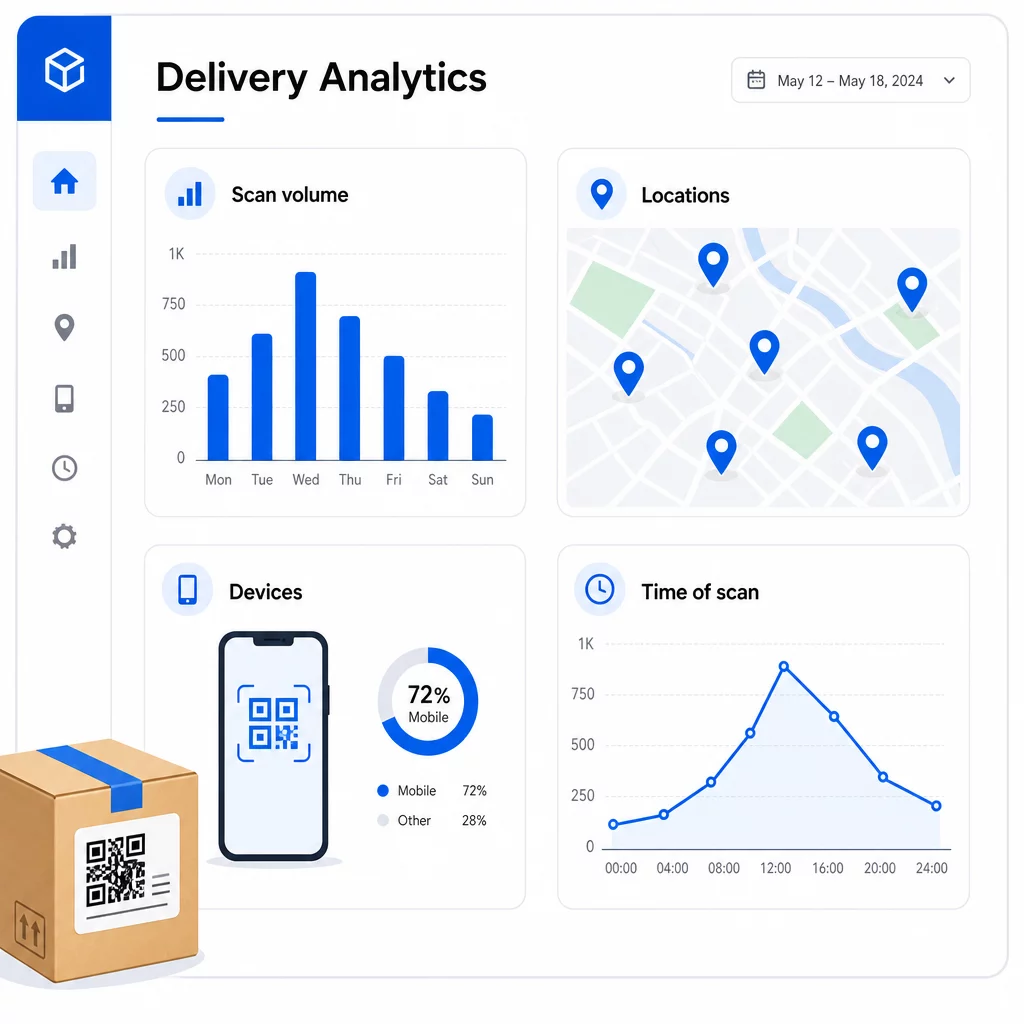
Once your codes are deployed, scan analytics tell you how and where they’re being used. Metrics like scan volume, geographic location, device type, and time of scan help you identify where customers are engaging most – and where they’re not. If QR codes on post-delivery packaging show low scan rates, that’s a signal to adjust placement or add a clearer call-to-action.

QRスキャン分析

For e-commerce businesses running multiple SKUs or delivery regions, QRコードトラッキング lets you compare performance across campaigns and optimize your logistics communication based on real data rather than assumptions. You can explore how brands have applied this data in case studies on QR codes transforming e-commerce.

よくある質問

How do QR codes improve delivery accuracy in e-commerce?

QR codes on shipping labels give couriers instant access to recipient details, delivery instructions, and route updates with a single scan. At the moment of delivery, scanning the code logs GPS coordinates and a timestamp, creating verifiable proof of delivery and updating the order status automatically. This eliminates manual data entry errors and provides clear documentation for resolving delivery disputes.

What is the advantage of dynamic QR codes over static ones for logistics?

Static QR codes encode a fixed destination that cannot be changed after printing. Dynamic QR codes point to a redirect URL that you can update at any time from a central dashboard. For delivery operations, this means you can update tracking links, delivery instructions, or return portals without reprinting any labels. Dynamic codes also support scan analytics – including scan volume, location, device type, and timing – which static codes cannot provide.

How do QR codes make the returns process easier for customers?

QR codes enable printerless returns. Instead of printing a label at home, customers receive a QR code by email or SMS and present it at a carrier drop-off location, where the physical label is generated automatically. This removes the printer requirement entirely, reduces friction in the returns process, and speeds up package drop-off. Businesses benefit from automated inventory updates when a return is initiated through the linked return portal.

著者について

Siim KostabiはPagelootのコンテンツリードです。Pagelootの革新的なQRコード生成サービスについて執筆しています。5年以上にわたるQRコードに関する深い専門知識を持つSiimは、この分野の専門家です。QRテクノロジーを活用してデジタルインタラクションを簡素化・拡張する上で、大きな進歩を遂げています。.

カテゴリー
について詳しくはこちら
Scanning QR code sticker
QRコードの ラベルとステッカー
✅ QRコードの#1ソリューション

オンラインでQRコードを作成する必要がある場合は QRコードを作る ここで無料で
ページルートは #1のGo-Toソリューション でQRコードを作成してスキャンすることができます。

売上、レビュー、フォロワーを増やすために 20,000 を超えるブランドから信頼されています。

クライアントのロゴ
トップブランドから信頼される
5 のうち 4.8 と評価しました

4.86 / 5つ星評価

ユーゴ・ローラン
ユーゴ・ローラン
レストランオーナー
最も簡単で信頼性の高いQRコードジェネレータです。PDFファイルを即座にアップロードできます。レストランのメニューがデジタル化されました。
ルーカス・ジャンセン
ルーカス・ジャンセン
不動産開発業者
これは優れたツールで、QRコードでちょうど欲しいところに連れて行ってくれます。私たちは位置情報のQRコードしか使っていませんが、とても便利な機能がたくさんあります。
エマ・モレッティ
エマ・モレッティ
小売製品
使いやすいし、早い。素晴らしい機能で、完璧な画像を作成してくれるので、社員は私のvCardをダウンロードすることができます。
ユーゴ・ローラン
ユーゴ・ローラン
レストランオーナー
最も簡単で信頼性の高いQRコードジェネレータです。PDFファイルを即座にアップロードできます。レストランのメニューがデジタル化されました。
ルーカス・ジャンセン
ルーカス・ジャンセン
不動産開発業者
これは優れたツールで、QRコードでちょうど欲しいところに連れて行ってくれます。私たちは位置情報のQRコードしか使っていませんが、とても便利な機能がたくさんあります。
エマ・モレッティ
エマ・モレッティ
小売製品
使いやすいし、早い。素晴らしい機能で、完璧な画像を作成してくれるので、社員は私のvCardをダウンロードすることができます。
QRコードをもっと見る
アプリのQRコードをスキャンする
どのように アプリをダウンロードする
Canva QRを作成するデザイナー
QRコード カンバ
あらゆるものをデジタル体験に変えよう 3分以内に。

14日間の無料トライアル。

クレジットカードは必要ありません。

初回購入で30%オフ

次のコードを使用してください:

MP3ファイルを共有

PDF QRコードを作成するにはサインアップしてください

必要なものをすべてアップロードして表示する。

  • オーディオファイル
  • ポッドキャスト
  • 音楽

サインアップで14日間無料トライアル。.
トライアル終了後、QRコードは期限切れになります。.

オーディオmp3 QRコードを作成するにはサインアップしてください

フレームでより多くのスキャンを獲得

QRコードにフレームを追加するにはサインアップしてください

コールトゥアクションフレームは、お客様が簡単にQRコードと対話できるようにします。ぜひお試しください。

サインアップで14日間無料トライアル。.
トライアル終了後、QRコードは期限切れになります。.

QRコードにフレームを追加するにはサインアップしてください

シェイプでスタイルを追加

より多くの図形を作成するにはサインアップしてください

QRコードは四角いものである必要はありません。あなたのブランドのイメージに合わせて変えてみてください。

サインアップで14日間無料トライアル。.
トライアル終了後、QRコードは期限切れになります。.

より多くの図形を作成するにはサインアップしてください

QRコードにロゴを追加

QRコードにロゴを追加するにはサインアップしてください

QRコードにロゴやブランドを入れることで、目立たせることができます。

サインアップで14日間無料トライアル。.
トライアル終了後、QRコードは期限切れになります。.

QRコードにロゴを追加するにはサインアップしてください

スマートなApp Storeリダイレクト

アプリストアのQRコードを作成するにはサインアップしてください

スマートなApp StoreのQRコードに、あなたのアプリのリンクを追加します。ユーザーは、デバイスに応じてリダイレクトされます。

サインアップで14日間無料トライアル。.
トライアル終了後、QRコードは期限切れになります。.

アプリストアのQRコードを作成するにはサインアップしてください

QRコードに画像をアップロード

画像QRコードを作成するにはサインアップしてください

画像を簡単に共有できます。どんな画像も、数秒でダイナミックに変化します。

サインアップで14日間無料トライアル。.
トライアル終了後、QRコードは期限切れになります。.

画像QRコードを作成するにはサインアップしてください

PDFファイルを共有

PDF QRコードを作成するにはサインアップしてください

必要なものをすべてアップロードして表示する。

  • メニュー&プライスリスト
  • 指示
  • 任意の書類

サインアップで14日間無料トライアル。.
トライアル終了後、QRコードは期限切れになります。.

PDF QRコードを作成するにはサインアップしてください

印刷せずに後で編集

再度印刷せずにQRコードを編集するにはサインアップしてください

ダイナミックQRコードは、新たにQRコードを印刷することなく、QRコードの内容を変更することができます。

サインアップで14日間無料トライアル。.
トライアル終了後、QRコードは期限切れになります。.

再度印刷せずにQRコードを編集するにはサインアップしてください

いつ?どこで?QRコードのスキャンを追跡

QRコードを追跡するにはサインアップしてください

どのQRコードが最も多くスキャンされ、何が最も顧客を喜ばせているのかを知ることができます。

サインアップで14日間無料トライアル。.
トライアル終了後、QRコードは期限切れになります。.

QRコードを追跡するにはサインアップしてください

印刷可能なファイルが利用可能

PDFやSVGのようなベクターQRコードを作成するにはサインアップしてください

.eps、.pdf、.svg

QRコードをHD解像度でダウンロードしたいですか?すぐに印刷できるベクターまたはピクセル形式を入手しましょう。

サインアップで14日間無料トライアル。.
トライアル終了後、QRコードは期限切れになります。.

PDFやSVGのようなベクターQRコードを作成するにはサインアップしてください

しばらくお待ちください。あなたのQRコードは ロード... ロード...

あなただけのものに

サインアップしてQRコードを後で保存してください

異なる色、ロゴ、コールトゥアクションフレームで素晴らしいQRコードを作成することで、より多くのスキャンを得ることができます。

サインアップで14日間無料トライアル。.
トライアル終了後、QRコードは期限切れになります。.

サインアップしてQRコードを後で保存してください