Apakah Anda kesulitan mengubah titik sentuh fisik – tag, kemasan, iklan cetak – menjadi interaksi pelanggan yang bermakna? Dalam mode, di mana penceritaan merek dan kepercayaan konsumen adalah segalanya, kesenjangan antara offline dan online itu mahal. Panduan ini menjelaskan bagaimana kode QR menjembatani kesenjangan tersebut, dengan kasus penggunaan praktis yang mencakup otentikasi produk, transparansi rantai pasokan, keterlibatan di toko, dan pengalaman pasca-pembelian.
Mengapa Merek Fashion Mengadopsi Kode QR
Industri fashion bergerak cepat. Merek yang terhubung dengan pelanggan di setiap titik sentuh – pada pakaian, pada tag, pada tas belanja – menonjol dari mereka yang hanya mengandalkan digital. Kode QR memungkinkan koneksi tersebut tanpa memerlukan perubahan infrastruktur besar.
Lebih dari 94 juta konsumen AS diperkirakan akan menggunakan pemindai QR smartphone pada tahun 2024, dengan angka tersebut diproyeksikan mencapai 102,6 juta pada tahun 2026. Survei GS1 U.S. Consumer Pulse menemukan bahwa 79% konsumen lebih cenderung membeli produk yang menyertakan kode yang dapat dipindai yang memberikan wawasan produk yang lebih dalam. Bagi merek fashion, statistik tersebut mewakili tautan langsung antara tag atau label dan penjualan yang selesai.
Selain jangkauan, kode QR memiliki tujuan kreatif. Pemasaran fashion pada dasarnya adalah tentang penceritaan – mengomunikasikan identitas, keahlian, dan nilai-nilai merek. Kode QR pada hangtag atau label perawatan memberi Anda saluran untuk menceritakan kisah itu sesuai permintaan, tepat pada saat pelanggan memegang produk Anda.
Apa yang Bisa Dilakukan Merek Fashion dengan Kode QR
Jangkauan aplikasinya lebih luas dari yang disadari sebagian besar merek. Berikut adalah kasus penggunaan yang paling efektif.
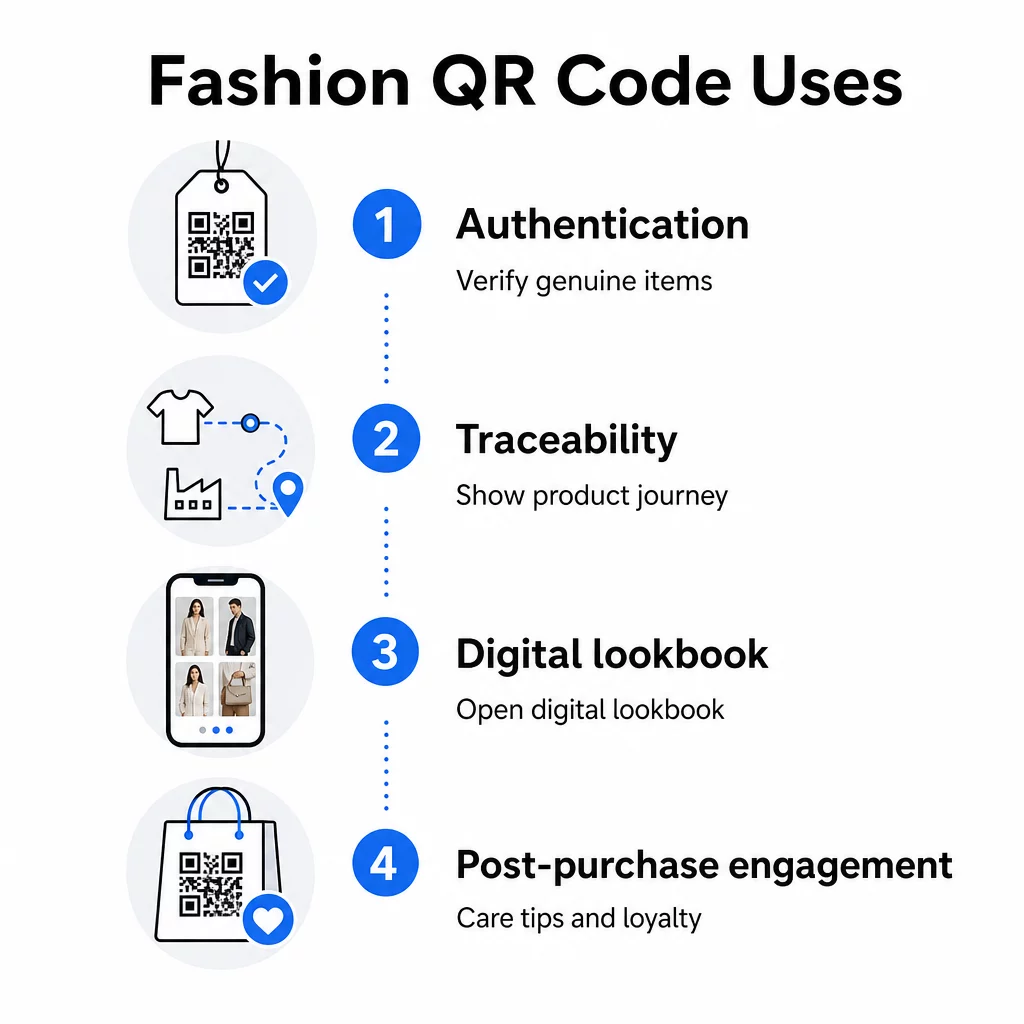
Otentikasi Produk dan Anti-Pemalsuan
Barang palsu adalah masalah yang terus-menerus dalam fashion, terutama untuk merek premium dan mewah. Kode QR, ketika dipasangkan dengan backend data yang terkontrol, memberi pelanggan cara untuk memverifikasi bahwa apa yang mereka pegang adalah asli.
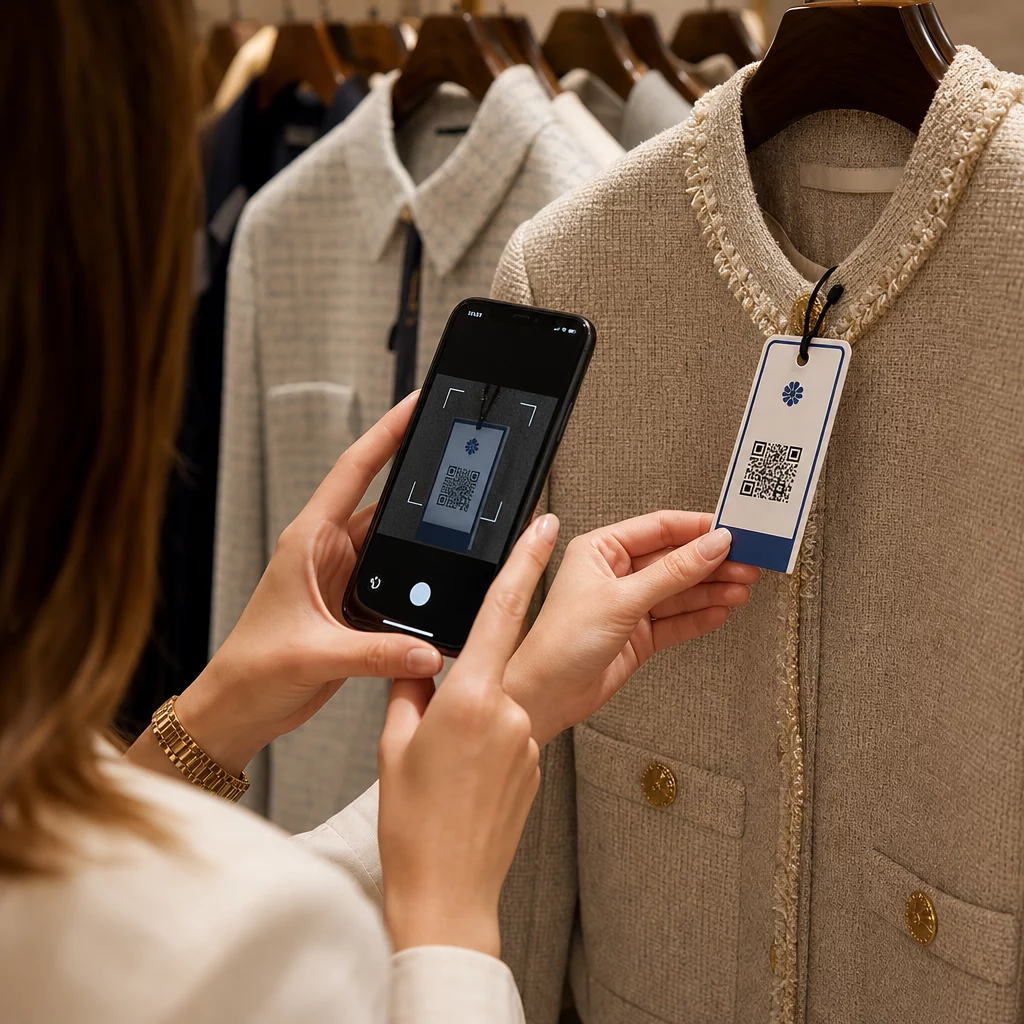
Ralph Lauren menempatkan kode QR pada tag pakaian sehingga setiap pemindaian mengonfirmasi keaslian dan menampilkan informasi tentang desain, bahan, dan keahlian. Diesel telah menyematkan ID digital berkemampuan QR ke dalam pakaian khusus untuk memerangi pemalsuan. Kuncinya adalah otentikasi hanya berfungsi ketika setiap kode unik atau terikat pada batch tertentu – kode QR itu sendiri hanyalah titik akses.
Transparansi dan Ketertelusuran Rantai Pasokan
Ketertelusuran berarti memberikan kemampuan kepada pelanggan dan mitra untuk memverifikasi perjalanan produk dari bahan mentah melalui manufaktur hingga rak toko. Kode QR pada pakaian dapat menampilkan negara asal, lokasi pabrik, sertifikasi, data produksi, instruksi perawatan, dan panduan akhir masa pakai – semuanya dari satu pemindaian.
Patagonia menggunakan kode QR pada produknya sehingga pelanggan dapat mengakses informasi bahan dan detail inisiatif lingkungan. Gabriela Hearst melangkah lebih jauh dengan ID digital bertenaga kode QR yang membagikan data siklus hidup penuh dan keberlanjutan untuk setiap pakaian. Semakin banyak, merek memasangkan pendekatan ini dengan GS1 Digital Link standar, yang mengkodekan URL yang dapat dibaca web bersama dengan pengidentifikasi produk standar dalam satu kode QR. Ini berarti satu simbol pada kemasan dapat melayani konten yang menghadap konsumen dan sistem rantai pasokan ritel secara bersamaan.
Untuk melihat lebih dalam bagaimana ini bekerja pada produk fisik, lihat panduan Pageloot untuk kode QR pada kemasan produk.
Penceritaan Merek dan Pengalaman Digital
Kode QR pada lengan atau hangtag dapat membuka video, lookbook, dokumenter di balik layar, atau pengalaman augmented reality. Maisie Schloss menghubungkan pakaian dengan seni 3D dan konten AR melalui elemen yang dapat dipindai. Bacardi menambahkan kode QR ke merchandise musik edisi terbatas agar penggemar dapat membuka konten artis eksklusif dari pakaian itu sendiri.
Kasus penggunaan ini selaras langsung dengan apa yang diminati pembeli mode: konteks, narasi, dan eksklusivitas. Produk menjadi titik masuk ke pengalaman yang lebih luas daripada objek yang berdiri sendiri.
Keterlibatan Pasca-Pembelian
Hubungan dengan pelanggan tidak berakhir di kasir. Kode QR pada kemasan atau label perawatan dapat mengarahkan pembeli ke panduan gaya, video perawatan pencucian, program loyalitas, atau permintaan ulasan. Ini menjaga merek tetap hadir setelah penjualan dan menciptakan peluang untuk mendorong pembelian berulang atau berbagi di media sosial.
Jika merek Anda memiliki aplikasi khusus, kode QR pada kemasan adalah salah satu cara paling langsung untuk mendorong unduhan. Kode QR pada label pakaian juga dapat menautkan langsung ke daftar toko aplikasi Anda, dengan fitur pengalihan cerdas yang secara otomatis mengirim pengguna iOS ke App Store dan pengguna Android ke Google Play.
Media Sosial dan Pembangunan Komunitas
Kode QR URL sederhana yang mengarah ke Instagram, TikTok, atau halaman komunitas merek Anda mengubah setiap produk menjadi alat akuisisi pengikut. Tempatkan ini pada label bagian dalam, tas belanja, atau slip pengepakan untuk memberikan pelanggan jalur tanpa hambatan ke kehadiran sosial Anda segera setelah membuka kemasan.
Lacak Apa yang Dipindai Pelanggan Anda Menggunakan Generator QR Code Dinamis untuk membuat kode yang dapat dilacak untuk setiap titik sentuh – hangtag, kemasan, iklan cetak – dan melihat dengan tepat di mana keterlibatan tertinggi dari satu dasbor.
Kampanye Pemasaran dan Iklan Cetak
Merek fesyen terus berinvestasi besar-besaran dalam cetakan: sisipan katalog, iklan luar ruang, pajangan di toko, lookbook musiman. Kode QR membuat semua itu terukur. Kode pada iklan cetak dapat menautkan ke halaman arahan kampanye, lookbook yang dapat dibeli, atau promosi waktu terbatas. Karena kode QR dinamis memungkinkan Anda memperbarui tujuan tanpa mencetak ulang, Anda dapat mengubah konten yang ditautkan saat kampanye berakhir atau koleksi baru diluncurkan.
Mengumpulkan Umpan Balik Pelanggan
Kode QR pada kemasan atau struk dapat mengarah ke survei singkat atau halaman ulasan. Ini memberi Anda umpan balik terstruktur yang terkait langsung dengan pembelian, daripada mengandalkan pelanggan untuk mencari saluran ulasan sendiri. Dikombinasikan dengan analitik pemindaian, Anda juga dapat melihat produk atau lokasi mana yang menghasilkan aktivitas umpan balik terbanyak.
Tempat Meletakkan Kode QR pada Produk Fesyen
Penempatan memengaruhi apakah kode akan dipindai sama sekali. Pedoman untuk kode QR pada pakaian jelas: letakkan kode pada permukaan yang rata, tidak terhalang, jauh dari jahitan, lipatan, dan area yang meregang saat pemakaian normal.
Penempatan umum untuk fesyen meliputi:
- Hangtag dan label perawatan – lokasi paling praktis untuk otentikasi, ketertelusuran, dan konten pasca-pembelian
- Label dada atau punggung bagian dalam – cocok untuk penceritaan merek, unduhan aplikasi, dan program loyalitas
- Panel pakaian luar – berfungsi untuk kode QR promosi atau khusus acara di mana visibilitas adalah prioritas
- Kemasan dan tas belanja – ideal untuk keterlibatan pasca-pembelian, ulasan, dan tautan media sosial
- Iklan cetak dan lookbook – mengubah pengeluaran pemasaran offline menjadi lalu lintas digital yang dapat dilacak
Untuk rincian lengkap prinsip penempatan di berbagai materi pemasaran, Panduan penempatan kode QR mencakup penempatan setinggi mata, jenis permukaan yang harus dihindari, dan rasio ukuran-ke-jarak.
Persyaratan Teknis untuk Kode QR Fashion
Kode QR yang tidak dapat dipindai dengan andal lebih banyak merugikan daripada menguntungkan. Sebelum berkomitmen untuk produksi, ada beberapa faktor teknis yang perlu diverifikasi.
Ukuran
Untuk aplikasi kain dan garmen, ukuran minimum yang andal adalah 0,8 inci (20 mm) pada tekstil halus. Pada kain yang lebih kasar atau bertekstur, perbesar sebesar 25–50%. Pada hangtag dan label perawatan, hindari mencetak kode lebih kecil dari 2 cm × 2 cm. Aturan yang berguna: tambahkan sekitar 1 cm ke ukuran kode untuk setiap 10 cm jarak pemindaian yang diharapkan. Untuk panduan lebih rinci berdasarkan bahan, panduan ukuran kode QR mencakup kertas, karton, dan kain secara khusus.
Warna dan Kontras
Kode gelap pada latar belakang terang dapat dipindai dengan andal. Hitam di atas putih tetap menjadi kombinasi yang paling dapat diandalkan, tetapi warna merek dapat berfungsi jika kontras dipertahankan – targetkan rasio kontras minimal 3:1 sebagai dasar, dan lebih tinggi untuk ukuran cetak kecil. Hindari menempatkan kode pada pola yang ramai, permukaan reflektif, atau latar belakang gradien. panduan kontras warna kode QR menyediakan tabel perbandingan kombinasi warna dan hasil pemindaiannya.
Kualitas Cetak dan Format File
Gunakan format vektor (SVG atau PDF) saat mengirim file untuk dicetak, dan minta output resolusi tinggi. Kode yang buram atau berpiksel gagal dipindai. Untuk panduan khusus label, panduan kode QR label produk membahas format file, ukuran, dan rekomendasi teks CTA.
Zona Tenang
Setiap kode QR memerlukan margin ruang kosong yang jelas di sekelilingnya – setidaknya empat modul lebar di semua sisi. Menempatkan kode terlalu dekat dengan teks, elemen desain, atau tepi label adalah salah satu alasan paling umum kode gagal di lapangan.
Pengujian Sebelum Produksi
Cetak sampel dalam ukuran produksi dan ujilah di berbagai perangkat dalam kondisi pencahayaan yang realistis. Langkah ini tidak dapat ditawar sebelum berkomitmen untuk produksi penuh. Khusus untuk label pakaian, verifikasi juga bahwa kode tetap dapat dipindai setelah dicuci. praktik terbaik keterbacaan kode QR menyediakan daftar periksa pengujian lengkap.
Menggunakan Kode QR Dinamis untuk Kampanye Mode
Kode QR statis mengkodekan tujuan tetap yang tidak dapat diubah. Untuk merek fesyen yang menjalankan koleksi musiman, kampanye bergilir, atau promosi berbatas waktu, itu adalah batasan yang signifikan – Anda perlu mencetak ulang tag atau materi setiap kali konten yang ditautkan berubah.
Kode QR dinamis mengatasi ini dengan mengarahkan ke URL pengalihan yang Anda kontrol. Kode yang dicetak tetap sama; hanya tujuannya yang berubah. Ini berarti hangtag yang dicetak untuk koleksi musim semi dapat diperbarui untuk menautkan ke kampanye musim gugur tanpa mencetak ulang satu label pun.
Selain fleksibilitas, kode dinamis menyediakan analitik pemindaian: volume, waktu pemindaian, lokasi geografis, jenis perangkat, dan sistem operasi. Bagi pemasar fesyen yang menjalankan kampanye multi-saluran, data ini memungkinkan Anda membandingkan kinerja di berbagai penempatan – kemasan versus iklan cetak versus pajangan di toko – dan menyesuaikannya.
Perbarui Tautan Kampanye Tanpa Mencetak Ulang Itu Generator QR Code Dinamis memungkinkan Anda mengubah tujuan kapan saja, melacak pemindaian secara real time, dan menjaga kode Anda berfungsi di setiap koleksi dan musim.
Mendesain Kode QR yang Sesuai dengan Merek Anda
Kode QR tidak harus terlihat generik. Menambahkan logo Anda ke tengah kode, menggunakan warna yang konsisten dengan merek, dan menerapkan bingkai khusus dengan ajakan bertindak (“Pindai untuk memverifikasi,” “Jelajahi koleksi”) semuanya meningkatkan pengenalan merek dan tingkat pemindaian. Penelitian menunjukkan bahwa kode berwarna khusus dengan kontras tinggi dapat meningkatkan keterlibatan dibandingkan dengan kode hitam-putih biasa.
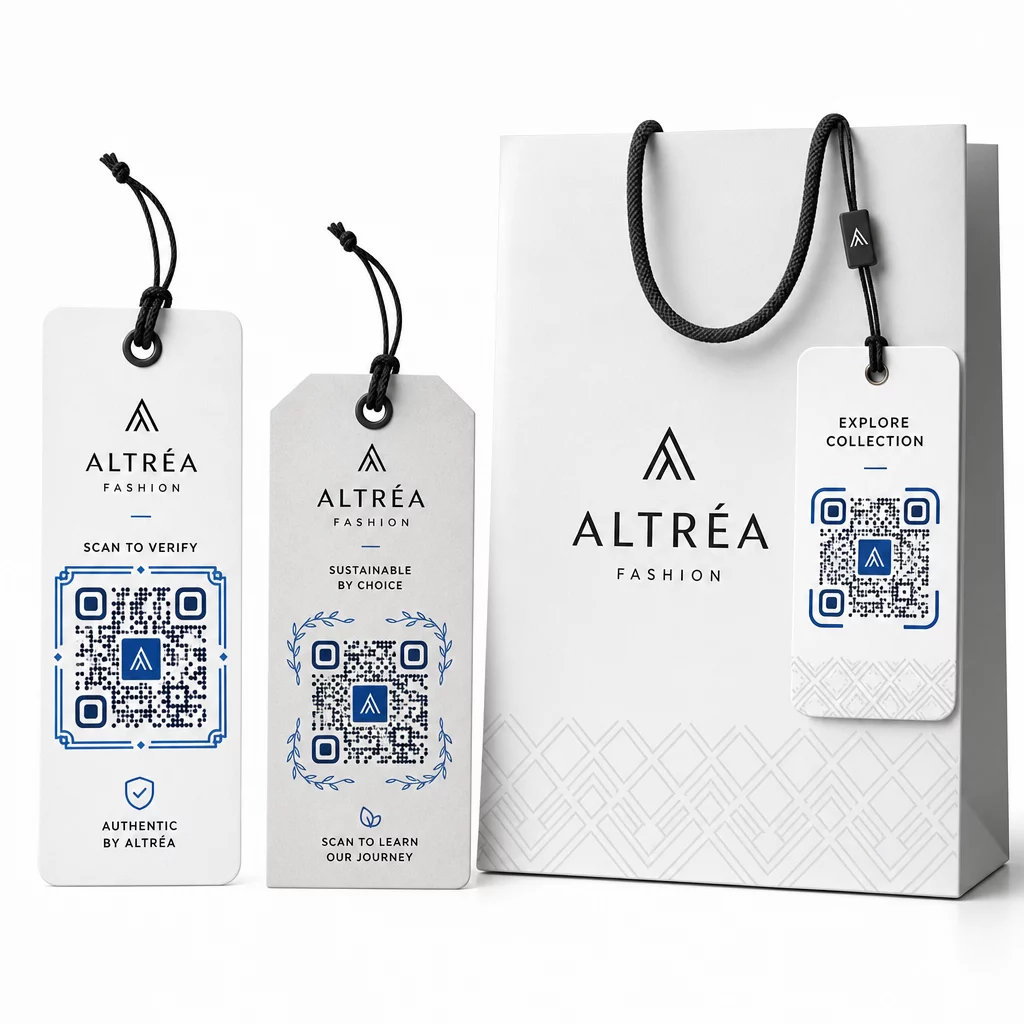
Saat menambahkan logo, gunakan tingkat koreksi kesalahan yang lebih tinggi (Q atau H) agar kode tetap dapat dipindai meskipun sebagian polanya terhalang. Jaga agar logo tidak lebih dari 30% dari total area kode, dan selalu uji kemampuan pindai setelah penyesuaian desain apa pun.
Untuk konten berbasis gambar seperti lookbook atau foto di balik layar, Generator QR Code Gambar memungkinkan Anda menautkan langsung ke galeri. Untuk PDF yang dapat dibagikan seperti laporan keberlanjutan atau panduan perawatan, Ubah PDF ke QR Code menangani unggahan dan hosting secara langsung.
Mengukur Apa yang Berhasil
Nilai kampanye kode QR bergantung pada pengetahuan tentang apa yang terjadi setelah pemindaian. Volume pemindaian memberi tahu Anda jangkauan; dikombinasikan dengan data geografis dan jenis perangkat, Anda dapat memahami pasar dan segmen pelanggan mana yang paling terlibat. Data waktu pemindaian membantu Anda mengidentifikasi jendela keterlibatan puncak.
Untuk kampanye yang berjalan di berbagai penempatan – hangtag, kemasan, iklan cetak, pajangan di toko – gunakan kode dinamis yang berbeda untuk setiap titik sentuh. Dengan cara ini, analitik Anda menunjukkan penempatan mana yang menghasilkan pemindaian terbanyak, dan Anda dapat mengalokasikan pengeluaran cetak di masa mendatang sesuai dengan itu.
Itu Generator Kode QR Tautan adalah titik awal yang mudah untuk kampanye berbasis URL, sementara generator dinamis menambahkan pelacakan penuh dan kemampuan untuk memperbarui tujuan setelah dicetak.
Pertanyaan yang sering diajukan
Ya, jika dicetak dengan benar. Kode QR pada label tenun atau cetak dengan tinta kontras tinggi dan tahan lama tetap dapat dipindai setelah pencucian berulang. Faktor-faktor kuncinya adalah kualitas cetak, pilihan bahan, dan penempatan jauh dari area yang meregang atau berubah bentuk. Selalu uji sampel cetak sebelum produksi penuh.
Kode QR statis mengkodekan URL tetap yang tidak dapat diubah setelah dicetak. Kode QR dinamis mengarah ke pengalihan yang Anda kendalikan, sehingga Anda dapat memperbarui tujuan – halaman koleksi baru, laporan keberlanjutan yang diperbarui, promosi musiman – tanpa mencetak ulang label atau hangtag. Kode dinamis juga menyediakan analitik pemindaian termasuk volume, lokasi, dan data perangkat.
Lokasi paling praktis adalah hangtag, label perawatan, dan label dada bagian dalam atau punggung, di mana kainnya rata dan kecil kemungkinannya untuk meregang atau berkerut. Untuk kasus penggunaan yang berfokus pada visibilitas seperti barang dagangan acara atau pakaian promosi, panel dada atau punggung berfungsi dengan baik. Hindari jahitan, manset, dan area dengan tekstur berat yang dapat mendistorsi kode.