itthon > Blog > Hogyan követik nyomon a QR-kódok a készletet valós időben
Worker scanning inventory

Hogyan követik nyomon a QR-kódok a készletet valós időben

Learn how QR codes enable real-time inventory tracking to eliminate manual errors. This guide covers setup, dynamic labels, and automated warehouse tasks.
Updated on június 10, 2026
Tartalomjegyzék

Is your team still counting stock by hand or updating spreadsheets after every shipment? Manual inventory tracking is one of the leading causes of inaccurate stock data, and the ripple effects – missed orders, overstocking, and wasted time – add up fast. This guide explains how QR codes enable real-time inventory tracking, and how to set up a system that keeps your warehouse data accurate without expensive hardware.

Why Manual Inventory Tracking Falls Short

Nearly half of small businesses either skip inventory tracking entirely or rely on outdated manual methods. The core problem is straightforward: manual data entry is error-prone by nature. Missed details, incorrect counts, and inconsistent naming conventions create stock discrepancies that only get worse over time.

QR codes solve this by replacing manual entries with a scan-based system. Each scan instantly updates a central database, so your stock levels, storage locations, and movement history reflect what’s actually happening on the floor – not what someone recorded hours ago.

Compared to traditional 1D barcodes, QR codes hold significantly more data. While a standard barcode typically stores 20–85 characters, a QR code can hold over 7,000. That means a single label can encode a product name, SKU, batch number, supplier, storage location, and expiration date all at once – and the code remains readable even if up to 30% of it is physically damaged.

For a side-by-side look at how the two formats compare for warehouse use, see the barcode vs QR code comparison guide.

How Real-Time QR Inventory Tracking Works

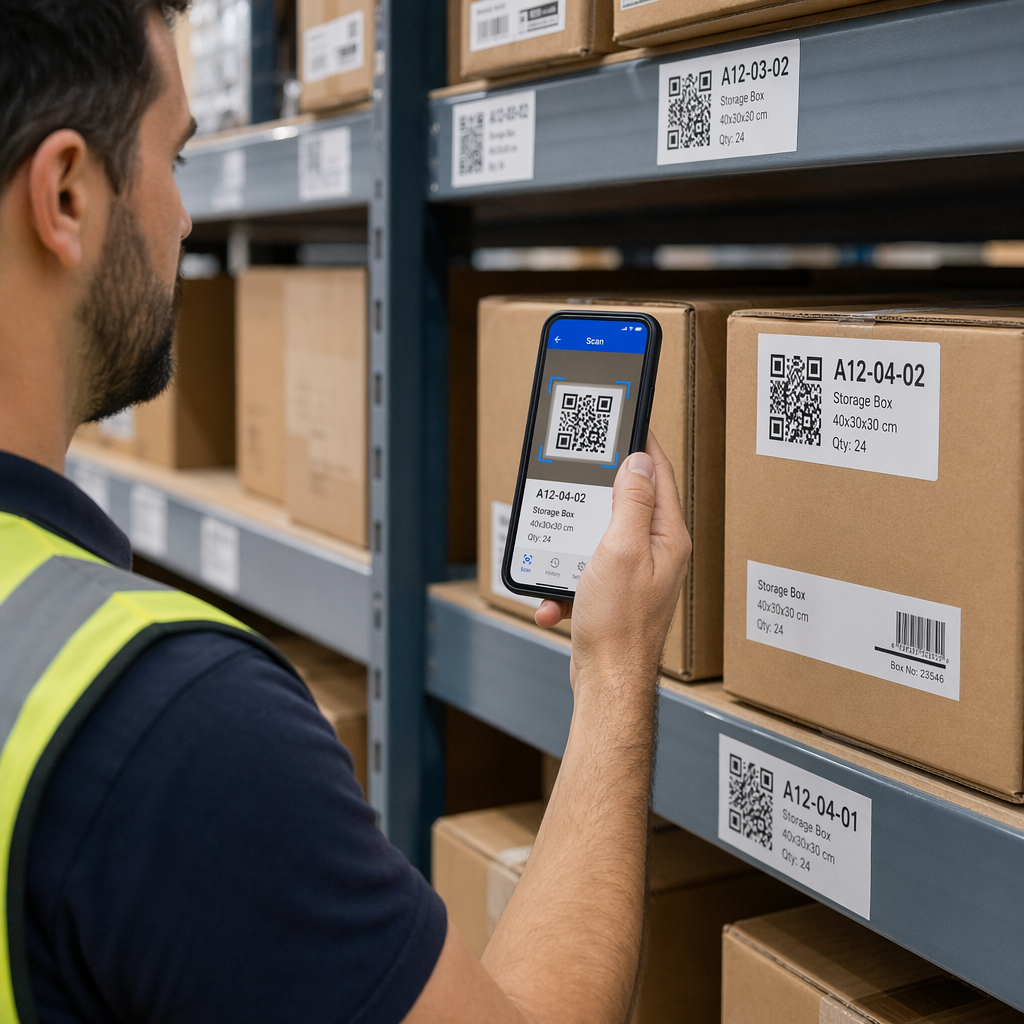
When a worker scans a QR code label on a product or shelf location, that scan triggers an instant update in your inventory management system. Stock levels adjust automatically, movement history is logged with a timestamp, and managers see the change reflected in their dashboard in real time.

This flow depends on three components working together:

  • A QR code generator that creates unique, data-rich codes for each item or location
  • Durable labels affixed consistently to products, bins, shelves, or pallets
  • Inventory software connected to your QR platform via API or direct integration

Once this infrastructure is in place, everyday warehouse tasks – receiving shipments, fulfilling orders, running cycle counts – all become scan-based operations that update your database automatically.

Start Tracking Inventory in Real Time Használja a Pageloot QR Kód Generátor to create unique, data-rich inventory labels and connect them to your management system today.

Setting Up Your QR Inventory System

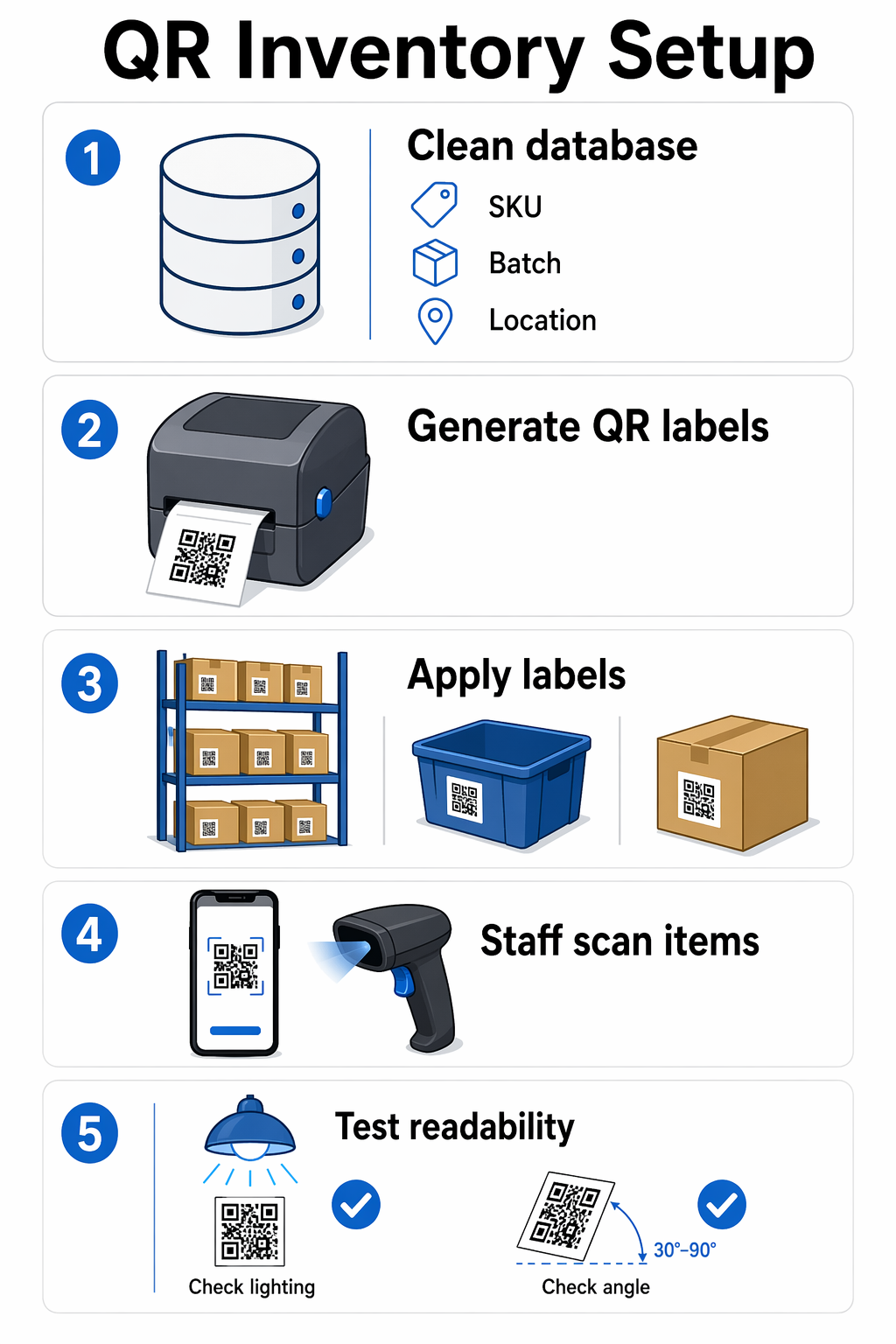
Step 1: Audit and Prepare Your Inventory Data

Before generating a single label, clean up your existing records. Fix duplicate SKUs, standardize product naming, and decide which data points each QR code will represent – such as product name, SKU, lot number, quantity, and storage location. Building a system on messy data produces messy results.

QR inventory setup

Also define your warehouse “address system” at this stage. Assign logical identifiers to aisles, shelves, and bins (for example, A1-S3-B2 for Aisle 1, Shelf 3, Bin 2) so that location QR codes link unambiguously to a specific physical spot.

Step 2: Generate Unique QR Codes

Use a reliable QR code generator to create a distinct code for each item, batch, or storage location. Each code should encode a unique identifier – such as a SKU or location address – that links back to the corresponding record in your inventory database.

For detailed guidance on this step, the QR codes for product inventory guide walks through the full process, from inputting product details to downloading print-ready labels.

Before printing in bulk, test a sample batch. Scan each code with a smartphone or dedicated scanner to confirm it reads correctly and pulls the expected data.

If you also need traditional barcodes for supplier compatibility or retail point-of-sale, the barcode generator guide covers format selection and print specifications.

Step 3: Print and Place Labels Consistently

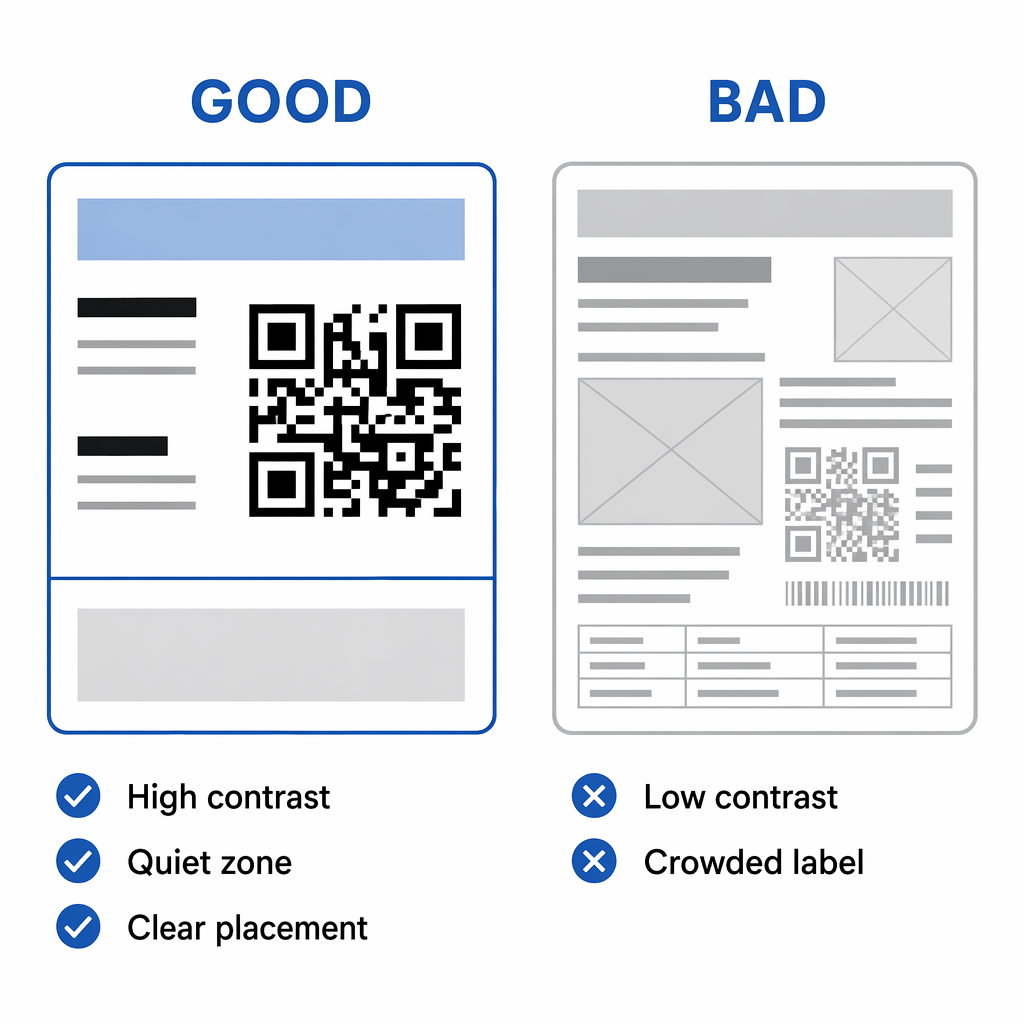
Print QR codes at sufficient size and resolution – labels intended for standard warehouse scanners should be at least 1 × 1 inch, printed at a minimum of 300 DPI with high contrast (black on white is most reliable). Always maintain a clear quiet zone around the code.

Placement consistency matters as much as print quality. Affix labels to the same position on every item – for example, the upper-left corner of each box. For shelves and bins, place labels at eye level where they won’t be obscured by product. In harsh environments (cold storage, outdoor areas, high-traffic zones), use laminated or industrial-grade adhesive vinyl to prevent wear.

A color-coding system can layer on additional utility: blue for finished goods, green for raw materials, yellow for storage areas. Staff can identify what they’re scanning at a glance without reading every label.

Step 4: Integrate with Your Inventory Software

Connect your QR code platform to your inventory management system using API connections or standard data formats like CSV. Once integrated, each scan automatically pushes updates – quantity changes, location moves, receipt confirmations – directly into your database.

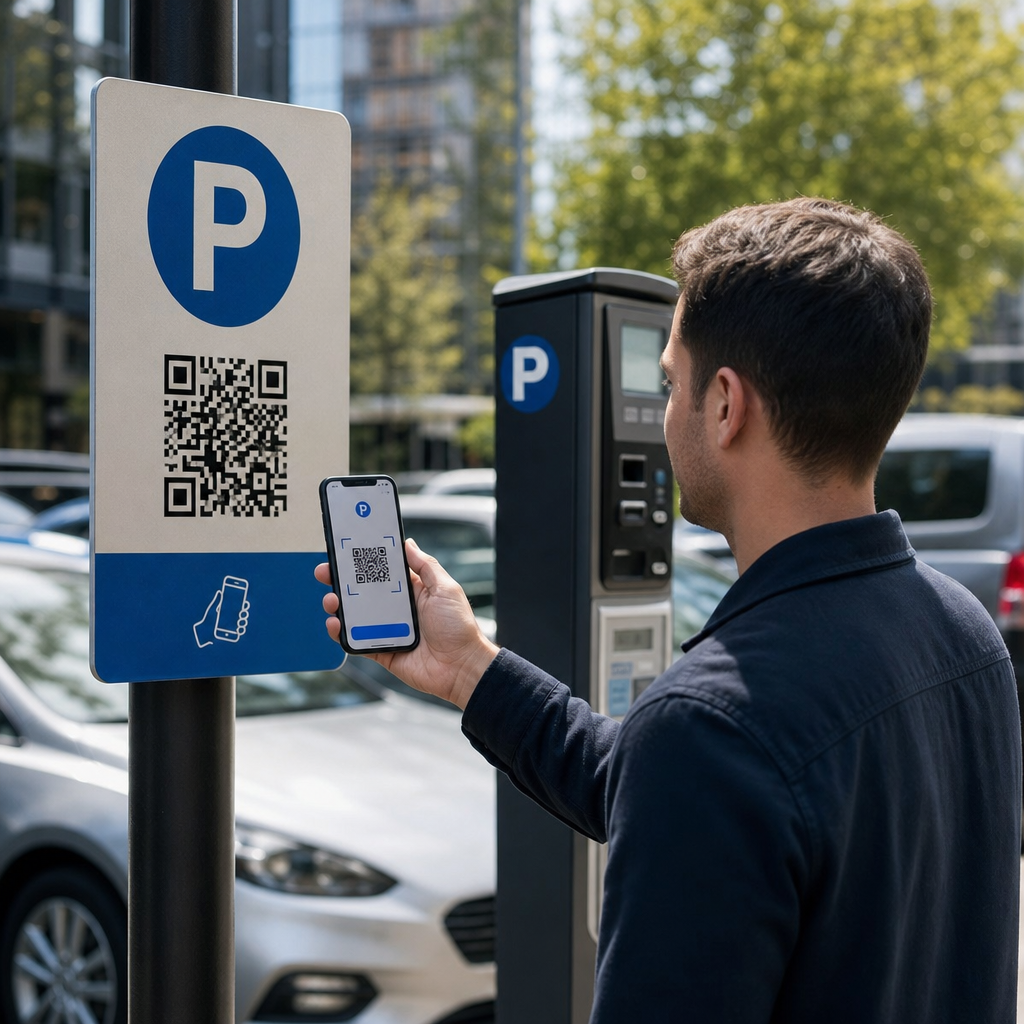
Most modern inventory platforms support 2D barcode input natively, so the technical barrier is low. Workers only need a smartphone; no proprietary scanning hardware required. The Pageloot QR-kód olvasó works directly from a browser, and the vonalkód olvasó handles traditional formats when needed alongside QR.

Configure reorder alerts at this stage as well. When a scanned item’s quantity falls below a defined threshold, the system notifies the relevant team member automatically – removing the need for manual stock checks to trigger purchasing.

Step 5: Start with a Pilot Zone

Rather than labeling your entire facility at once, start with a single zone or your fastest-moving product category. Test scanning accuracy, confirm the software integration is updating records correctly, and gather feedback from the staff doing the scanning. Then expand across the rest of the warehouse once the workflow is validated.

Using Dynamic QR Codes for Ongoing Accuracy

Static QR codes store fixed data – once printed, that data cannot change. Dinamikus QR-kódok work differently: they store a short redirect URL that points to editable content in your inventory platform. This means you can update stock levels, pricing, storage locations, or product details without reprinting the physical label.

For inventory tracking, this has practical implications:

  • Correct a data error by editing the linked record – no reprint needed
  • Update a product’s storage location after a warehouse reorganization
  • Refresh pricing or batch information across hundreds of items simultaneously
  • Marketing or product teams can update product descriptions without touching warehouse operations

Dynamic codes also unlock analytics. Every scan is logged with a timestamp, device type, and location, giving you a data trail of product movement. You can identify peak activity periods, flag workflow bottlenecks, and see which areas of your warehouse are generating the most scan traffic.

Inventory analytics dashboard

For a detailed comparison of when to use each format, see statikus vs dinamikus QR-kódok.

To understand how scan data is captured and what metrics to monitor, the QR code tracking guide covers the fundamentals in detail.

Update Inventory Data Without Reprinting Pageloot’s dynamic QR codes let you edit linked content anytime from a central dashboard. Try the Dynamic QR Code Generator free for 14 days.

QR Code Workflows for Common Inventory Tasks

Once your system is running, QR codes streamline the most repetitive warehouse tasks:

  • Receiving shipments: Staff scan QR codes on incoming goods to log arrival time, quantity, batch number, and supplier details instantly. Stock levels update before the item reaches the shelf.
  • Stock picking and order fulfillment: Workers scan product QR codes during picking to confirm item selection and automatically decrement inventory counts. For a closer look at how this integrates with fulfillment, see how QR codes streamline order fulfillment.
  • Cycle counting: During inventory audits, scanning a QR code displays the current system count on-screen. Staff compare it against the physical count and flag discrepancies immediately, rather than reconciling at month-end.
  • Shipment tracking: QR codes on outbound packages update in real time as items move through the shipping process, giving internal teams visibility from dispatch through delivery.
  • Supply chain traceability: QR codes integrated with a WMS or ERP system create a complete audit trail for every product – useful for quality control, recalls, and compliance. The QR codes for supply chain tracking guide covers this in depth.

Advanced Features Worth Knowing

Branding and Visual Organization

QR codes don’t need to be generic black squares. Adding your company logo, brand colors, or category-specific design elements makes codes easier to trust and faster to identify. Pageloot’s generator supports logo placement, color customization, and design templates – useful for customer-facing products or multi-location operations where visual differentiation helps staff work faster.

Analytics and Trend Identification

Scan analytics go beyond basic counts. Time-stamped data shows peak warehouse activity, geographic scan distribution reveals whether storage placement is efficient, and per-item scan frequency highlights which products move fastest. If a product shows a significant scan spike during specific months, you can adjust procurement schedules before a stockout occurs.

Real-time dashboards present this data in charts and graphs, making it accessible for daily operational decisions rather than just end-of-month reporting.

Security and Access Control

Role-based permissions let you define what each team member can do when they scan a QR code. Warehouse staff may only update stock levels, while managers can access analytics and edit QR content. Administrators control code creation and user permissions.

Additional controls – password protection, time-based access restrictions, and location-based rules (limiting scans to approved IP addresses or physical zones) – are especially valuable for high-value inventory or regulated industries. Every interaction is logged in an audit trail, creating a transparent record of who accessed what and when.

Industry Applications

Gyártás

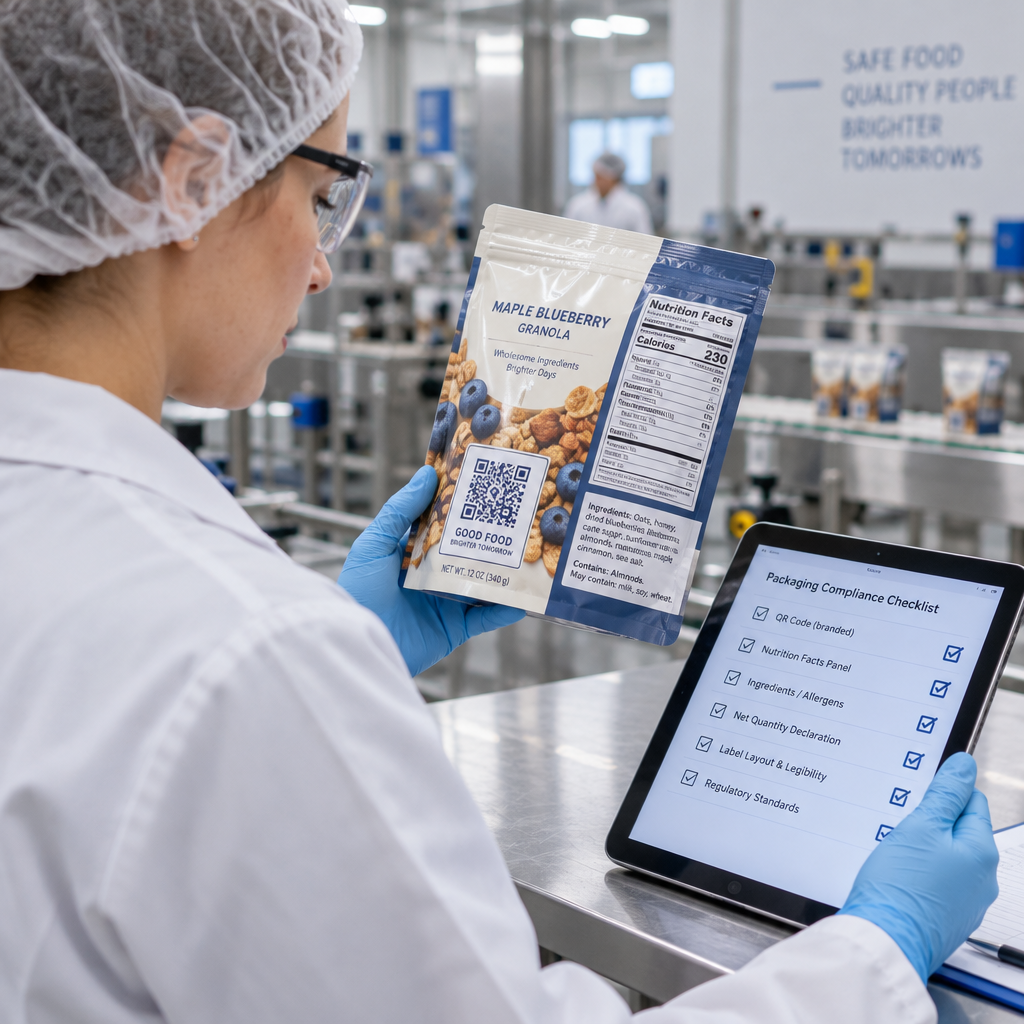
In manufacturing environments, QR codes follow components from raw material intake through finished product. Each scan logs production date, batch number, quality control status, and storage location. If a defect is identified, the QR data trail allows manufacturers to isolate affected units precisely – reducing the scope and cost of recalls.

QR codes also support just-in-time production by giving suppliers real-time visibility into consumption rates, enabling dynamic adjustments to delivery schedules.

For a broader view of how QR codes support tracking across the full product lifecycle, see QR codes for product lifecycle tracking.

Retail and Multi-Location Operations

Retailers use QR codes to sync inventory across warehouses, distribution centers, and storefronts. When stock levels update in real time across all locations, overselling becomes far less likely and customer satisfaction improves.

Warehouse navigation also benefits: location QR codes on shelves help workers find items faster in large facilities, while product codes provide instant access to handling instructions, expiration dates, and shipping destinations.

Putting It Into Practice

QR codes are one of the most cost-effective tools available for real-time inventory accuracy. They require no proprietary hardware, integrate with most modern inventory platforms, and scale from a single stockroom to a multi-site distribution network.

The practical starting point is straightforward: clean your existing inventory data, generate unique QR codes for your products and storage locations, print durable labels, connect your QR platform to your inventory software, and run a pilot in one zone before expanding.

For ongoing accuracy, dynamic QR codes eliminate the need to reprint labels when data changes, and scan analytics give you the visibility to make proactive decisions about stocking, layout, and fulfillment.

Build Your QR Inventory System Today Create and manage inventory QR codes from one dashboard with the Pageloot QR Kód Generátor – free to start, no credit card required.

Gyakran Ismételt Kérdések

What is the difference between static and dynamic QR codes for inventory tracking?

Static QR codes contain fixed data that cannot be changed after printing. Dynamic QR codes store a redirect URL, which means the linked information – stock levels, storage locations, product details – can be updated at any time without reprinting the label. For inventory systems where data changes regularly, dynamic QR codes are the practical choice because they eliminate reprinting costs and reduce the risk of labels becoming outdated.

Do I need specialized scanning hardware to run a QR inventory system?

No. Most modern smartphones can scan QR codes using their built-in camera or a browser-based tool like the Pageloot QR code scanner. This eliminates the need for expensive dedicated scanners, which is one reason QR-based inventory tracking is accessible for small businesses. Dedicated barcode scanners can still be used when higher throughput is needed in busy warehouse environments.

How do I connect QR codes to my inventory management software?

Most modern inventory platforms support 2D barcode input and API connections. You configure your QR code generator to encode item identifiers or URLs that map to records in your database. When a QR code is scanned, the linked identifier triggers an update in your inventory system – adjusting stock levels, logging movement, or pulling up item details. The Pageloot platform supports API connections and standard data formats like CSV to make this integration straightforward.

A szerzőről

Siim Kostabi a Pageloot tartalomfelelőse. Innovatív QR-kód generátor szolgáltatásainkról ír. Siim több mint fél évtizedes mélyreható szakértelemmel rendelkezik a QR-kódok terén, így a terület szakértője. Jelentős lépéseket tesz a QR-technológia kihasználásában a digitális interakciók egyszerűsítése és fokozása érdekében.

Kategória
Tudj meg többet

Ha online kell QR-kódokat létrehoznia, megteheti Készítsen QR-kódot itt ingyen!
A Pageloot az #1 Go-To megoldás QR-kódok létrehozásához és beolvasásához.

BL-0215

Több mint 20 000 márka bízik benne, hogy több értékesítést, véleményt és követőt szerezzen.

Ügyfél logók
Legjobb márkák bíznak benne
Értékelve 4.8 a 5-ből

4,86 / 5 csillagos értékelés

Hugo Laurent
Hugo Laurent
Étterem tulajdonosa
A valaha volt legegyszerűbb és legmegbízhatóbb QR kód generátor. A PDF fájlok azonnal feltölthetők. Éttermeink étlapjaink immár digitálisak.
Lucas Jansen
Lucas Jansen
Ingatlanfejlesztő
Ez egy kiváló eszköz, és a QR-kódok oda visznek, ahová akarod. Csak a hely QR-kódját használjuk, de nagyon sok hasznos funkció van.
Emma Moretti
Emma Moretti
Kiskereskedelmi termékek
Könnyen használható és gyors. Kiválóan működik, és tökéletes képeket hoz létre, így az alkalmazottak letölthetik a vCard-omat.
Hugo Laurent
Hugo Laurent
Étterem tulajdonosa
A valaha volt legegyszerűbb és legmegbízhatóbb QR kód generátor. A PDF fájlok azonnal feltölthetők. Éttermeink étlapjaink immár digitálisak.
Lucas Jansen
Lucas Jansen
Ingatlanfejlesztő
Ez egy kiváló eszköz, és a QR-kódok oda visznek, ahová akarod. Csak a hely QR-kódját használjuk, de nagyon sok hasznos funkció van.
Emma Moretti
Emma Moretti
Kiskereskedelmi termékek
Könnyen használható és gyors. Kiválóan működik, és tökéletes képeket hoz létre, így az alkalmazottak letölthetik a vCard-omat.
További QR kódok
Shopper scans electronics QR
QR kódok A fogyasztói elektronika
Válts bármit digitális élménnyé kevesebb mint 3 perc alatt.

Ingyenes 14 napos próbaidőszak.

Nincs szükség hitelkártyára.

30% kedvezményt kap az első vásárlásból

Használja a kódot:

Ossza meg MP3 fájljait

Regisztráljon PDF QR-kódok létrehozásához

Töltsön fel és jelenítsen meg mindent, amire szüksége van:

  • Hangfájlok
  • Podcastok
  • Zene

14 napos ingyenes próba regisztrációval.
A QR kódok a próbaidő után lejárnak.

regisztráljon audio mp3 QR-kód létrehozásához

Több beolvasás keretekkel

Regisztráljon, hogy további kereteket adhasson QR-kódjaihoz

A cselekvésre ösztönző keretek segítségével ügyfelei könnyen kezelhetik a QR-kódot. Próbáld ki őket!

14 napos ingyenes próba regisztrációval.
A QR kódok a próbaidő után lejárnak.

Regisztráljon, hogy további kereteket adhasson QR-kódjaihoz

Adjon több stílust formákkal

Regisztráljon további alakzatok létrehozásához

A QR-kódoknak nem kell négyzet alakúnak lenniük. Próbálja meg feljebb állítani, hogy illeszkedjen a márkájához.

14 napos ingyenes próba regisztrációval.
A QR kódok a próbaidő után lejárnak.

Regisztráljon további alakzatok létrehozásához

Adjon logót QR kódjához

Regisztráljon, hogy hozzáadja logóját a QR-kódokhoz

Tedd kiemelkedik QR-kódod logójával és márkájával.

14 napos ingyenes próba regisztrációval.
A QR kódok a próbaidő után lejárnak.

Regisztráljon, hogy hozzáadja logóját a QR-kódokhoz

Intelligens App Store átirányítások

Regisztráljon az alkalmazásbolt QR-kódjának létrehozásához

Adja hozzá alkalmazáshivatkozásait intelligens App Store QR-kódunkhoz. A felhasználókat az eszközük alapján irányítják át.

14 napos ingyenes próba regisztrációval.
A QR kódok a próbaidő után lejárnak.

Regisztráljon az alkalmazásbolt QR-kódjának létrehozásához

Töltsön fel képet egy QR kódra

Regisztráljon kép QR-kódok létrehozásához

Ossza meg egyszerűen képeit. Bármelyik kép dinamikus módosítása másodperceken belül.

14 napos ingyenes próba regisztrációval.
A QR kódok a próbaidő után lejárnak.

Regisztráljon kép QR-kódok létrehozásához

Ossza meg PDF fájljait

Regisztráljon PDF QR-kódok létrehozásához

Töltsön fel és jelenítsen meg mindent, amire szüksége van:

  • Menük és árlisták
  • Utasítás
  • Bármely dokumentum

14 napos ingyenes próba regisztrációval.
A QR kódok a próbaidő után lejárnak.

Regisztráljon PDF QR-kódok létrehozásához

Későbbi szerkesztés nyomtatás nélkül

Regisztráljon, és szerkesztheti QR-kódjait újbóli nyomtatás nélkül

A dinamikus QR-kódok segítségével anélkül módosíthatja QR-kódja tartalmát, hogy újakat kellene nyomtatnia.

14 napos ingyenes próba regisztrációval.
A QR kódok a próbaidő után lejárnak.

Regisztráljon, és szerkesztheti QR-kódjait újbóli nyomtatás nélkül

Mikor? Hol? Kövesse nyomon QR kód beolvasásait

Regisztráljon QR-kódjai nyomon követéséhez

Fedezze fel, hogy melyik QR-kódja kapja meg a legtöbb beolvasást, és mi izgatja leginkább ügyfeleit.

14 napos ingyenes próba regisztrációval.
A QR kódok a próbaidő után lejárnak.

Regisztráljon QR-kódjai nyomon követéséhez

Nyomtatásra kész fájlok elérhetők

Regisztráljon vektoros QR-kódok, például PDF és SVG létrehozásához

.EPS, .PDF, .SVG

HD felbontásban szeretné letölteni QR-kódjait? Szerezzen be olyan vektor- vagy pixelformátumokat, amelyek készen állnak a nyomtatásra.

14 napos ingyenes próba regisztrációval.
A QR kódok a próbaidő után lejárnak.

Regisztráljon vektoros QR-kódok, például PDF és SVG létrehozásához

Kérlek várj. Az Ön QR-kódja Betöltés... Betöltés...

Tegye egyedivé

Regisztráljon, hogy elmentse QR-kódját későbbre

Több szkennelést kaphat, ha fantasztikus QR-kódokat hoz létre különböző színekkel, logókkal és cselekvésre ösztönző keretekkel.

14 napos ingyenes próba regisztrációval.
A QR kódok a próbaidő után lejárnak.

Regisztráljon, hogy elmentse QR-kódját későbbre