Looking for QR code campaign ideas that actually moved the needle? The gap between a forgettable code stuck on a flyer and a campaign that drives millions of app installs often comes down to strategy – not the technology itself. This article breaks down real campaigns from major brands, what made them work, and how you can apply the same thinking to your own ads.
Why QR Codes Perform Better Than Traditional Ad Formats
Before diving into specific campaigns, it helps to understand why QR codes consistently outperform other ad formats. QR codes in print and out-of-home advertising deliver an average 37% click-through rate – substantially higher than the 2–5% typical of digital display ads. That gap exists because a QR scan is an active, high-intent behavior: the person who pulls out their phone and scans is already engaged, not passively scrolling past a banner.
That engagement is also measurable in ways traditional media never was. Every scan logs a timestamp, location, and device type. When you combine that with UTM parameters and real-time analytics dashboards, a billboard or product package becomes a traceable conversion point. Research shows 68% of consumers have used a QR code at least once in the past year, with Gen Z (83%) and Millennials (81%) leading adoption – making QR placements viable across mass-reach formats like TV, packaging, and out-of-home.
One important distinction shapes every campaign below: динамични QR кодове versus static ones. Static codes lock you into a single destination. Dynamic codes use a short redirect URL that can be updated at any time – even after printing – and they provide scan-level analytics that static codes simply cannot. For any real advertising campaign, динамични QR кодове are the practical choice.
Track Every Scan from Every Placement Want to know which ad format – poster, package, or TV spot – drives the most engagement? Use the Генератор на динамични QR кодове to create trackable codes with a full analytics dashboard, so you can optimize your campaign in real time.
Campaign Examples Worth Studying
Coinbase’s Bouncing QR Code Super Bowl Ad
In 2022, Coinbase aired a 60-second Super Bowl commercial that was nothing but a bouncing QR code on a black screen – no voiceover, no celebrities, no product demo. It was a direct reference to the screensaver era, and it worked brilliantly as a cultural hook.
The results were immediate: over 20 million hits on the landing page in just one minute after the ad ran, crashing Coinbase’s servers. The app climbed to the second most downloaded app in the U.S. Apple App Store. The landing page offered $15 for new signups, giving viewers an instant, tangible reason to scan.
Why it worked:
- The unexpected creative format generated curiosity and social buzz before the game even ended
- The incentive ($15 signup bonus) gave high-intent viewers a clear reason to act immediately
- The simplicity of the execution meant the QR code was the ad, removing any distraction from the call to action
Takeaway: Pairing a QR code with a time-sensitive monetary incentive – especially during a high-attention media moment – can drive extraordinary scan volume. The landing page experience needs to be fast, mobile-optimized, and immediately rewarding.
Burger King’s Multi-Format QR Strategy
Burger King deployed QR codes across three distinct formats, each with a different mechanic:
During the COVID-19 pandemic, three TV commercials featured a floating QR code that viewers could scan to receive a coupon for a free Whopper with purchase via the Burger King app. The promotion was intentionally limited to 10,000 Whoppers, which created scarcity and allowed BK to track which specific TV spots drove the strongest response.
In a separate mail-in campaign, QR codes on direct mail materials offered a free Whopper with every app download and mobile order. This generated thousands of app downloads, increased app usage, grew mobile coupon opt-ins, and provided consumer data that strengthened audience insights.
During the MTV VMAs, Burger King embedded QR codes into the broadcast that viewers could scan using the BK app to unlock an augmented reality experience featuring their mascot, plus offers including a free Whopper with a $1 purchase and a chance to win a year of free Whoppers and VMA tickets.
Why it worked:
- Each format used QR codes for a different objective: TV spots measured channel performance, direct mail drove app installs, and the VMAs created interactive entertainment
- The Whopper incentive is universally understood and immediately valuable to the target audience
- Limiting supply (10,000 Whoppers) turned a promotional code into a gamified experience
Takeaway: QR codes can serve different strategic goals within the same brand. Assign separate dynamic codes to each placement so you can attribute performance to each format independently. This is a best practice for any print or out-of-home campaign.
Heinz’s Packaging QR Campaigns
Heinz ran several QR code campaigns on ketchup bottles and soup cans across different years, each with a distinct mechanic:
На “Guess What We Just Planted” sweepstakes directed bottle-scanners to a mobile landing page with eco-themed trivia for a chance to win 57 eco-friendly prizes – including an eco-vacation to Costa Rica and a hybrid car. For every scan, Heinz pledged to plant a tree in partnership with The Nature Conservancy. After one month, the campaign generated 57,000 QR scans (and 57,000 trees planted) alongside a reported 30% increase in ketchup sales.
На “Get Well Soup” campaign placed QR codes on soup cans in the UK, enabling consumers to scan and send personalized digital “Get Well Soon” cards. The result: more than 500,000 QR scans in two months and a 12% increase in Heinz soup sales during the campaign.
A Veterans Day promotion let restaurant customers scan ketchup bottle codes to send a personalized thank-you note to veterans. For each thank-you sent and each Facebook like, Heinz pledged to donate 57 cents to the Wounded Warrior Project, up to $200,000.
Heinz also provides an important cautionary example: a German contest campaign ran between 2012 and 2014, but after the promotion ended, Heinz allowed the QR code’s destination domain to expire. The URL was taken over by a third party and redirected to inappropriate content – generating significant negative press.
Why the successful campaigns worked:
- Each campaign connected scanning to a meaningful action (planting a tree, sending a card, supporting veterans) rather than just offering a discount
- Purpose-driven mechanics created earned media and social sharing beyond the initial scan
- Packaging placements reach consumers at a high-intent moment – they already have the product in their hands
Takeaway: QR codes on product packaging are one of the highest-intent placements available. Use динамични QR кодове so that when a promotion ends, you control exactly where the code redirects – never let a destination URL lapse on printed materials.
Taco Bell’s Bowl Championship Series Campaign
Taco Bell printed QR codes on taco boxes and drink cups between December and early February, linking to video previews of upcoming Bowl Championship Series games. Fans who scanned gained access to exclusive ESPN content, including behind-the-scenes footage and player interviews.
The campaign generated more than 225,000 scans, and by offering time-sensitive, sports-relevant content, Taco Bell transformed packaging into interactive media during peak football season.
Why it worked:
- The content was genuinely valuable to the target audience at a specific cultural moment
- Packaging is a captive placement – customers are already holding the cup or box
- Exclusivity (content only accessible via scan) gave fans a reason to engage rather than just look up the same content online
Takeaway: Tying QR code content to a cultural moment your audience already cares about – sports seasons, holidays, major events – significantly raises the perceived value of scanning.
Max Fashion’s In-Store Gamification
Max Fashion, with nearly 650 stores across 19 countries, had strong foot traffic but lagging digital engagement. To close that gap, they launched a “Spin the Wheel” campaign during busy shopping periods. Branded QR codes in-store prompted customers to scan, download the Max Fashion app, and spin a wheel to win prizes like 10% discounts or free delivery.
To measure performance precisely, Max Fashion created 15,000 dynamic QR codes – one per employee – to attribute app installs and revenue to individual codes. The results:
- 92% increase in app downloads
- 85% jump in orders tied to QR code engagement
- 10% drop in customer acquisition costs
- 15% of total app installs came directly from QR code scans
For existing app users, deep-linking sent them straight to the campaign content without requiring a re-download.
Why it worked:
- Gamification (spinning a wheel) made scanning feel like entertainment, not a marketing prompt
- The prize structure – discounts and free delivery – aligned directly with what shoppers already wanted
- Unique codes per employee created accountability and granular attribution data
Takeaway: Gamified incentives lower the psychological barrier to scanning. The coupon QR code approach works especially well in retail environments where customers are already in a purchasing mindset.
McDonald’s Loyalty and Sweepstakes Campaigns
McDonald’s has used QR codes across multiple campaign types with consistently strong results.
A franchisee ran a QR-enabled daily lottery with codes placed at sponsor events, in advertising, on packaging, flyers, and posters. Over six months: 8,600 customers participated more than 33,500 times (an average of 3.7 participations per customer), 16,800 prizes were distributed, more than 10,500 prizes were redeemed in restaurants, and an additional 21,000 restaurant visits were generated by app users redeeming coupons and collecting loyalty points.
McDonald’s UK’s “Winning Sips” digital experience offered customers the chance to win prizes by scanning a QR code on their drink cup – driving engagement from nearly 75% of the total UK loyalty user base during the quarter.
In Singapore, McDonald’s placed QR codes on fries packaging for a “Scan-to-Win” instant game, resulting in a 20% jump in mobile app downloads.
Why it worked:
- The daily lottery mechanic drove repeat visits rather than one-time interactions
- Packaging placements catch customers at the point of consumption, when brand sentiment is positive
- Connecting QR scans to the loyalty program created a measurable feedback loop between scanning and repeat purchase behavior
Takeaway: QR codes are powerful loyalty tools when the scan initiates an ongoing relationship – not just a one-time redemption. Linking codes to a loyalty program or repeat-play mechanic compounds their value over time.
Adidas Sneaker Launch Activations
Adidas has used QR codes in two notably different ways:
For the Pulseboost HD running shoes, Adidas printed a QR code on the shoe tongue that linked to a Spotify playlist tailored to the scanner’s geographic location – a small but memorable product detail that reinforced the shoe’s running-focused identity.
For a Smart Claw arcade activation at a sneaker launch, users received unique QR tokens to play an arcade-style claw machine game. The one-day activation generated 649 interactions with long queues, real-time audience data collection, and measurable engagement – demonstrating how QR codes can anchor a physical experiential event.
A Snapchat campaign sold Air Jordan III Tinker sneakers exclusively via a QR code released during the NBA All-Star Game. The sneakers achieved 100% sell-through of the available inventory in 23 minutes.
Why it worked:
- Each activation used QR codes to create exclusivity – content, experiences, or products only accessible via scan
- The Spotify integration added genuine product value rather than just redirecting to a sales page
- Scarcity (limited inventory, one-day events) made the QR code feel like a key rather than a marketing tool
Takeaway: When scanning unlocks something genuinely exclusive – not just a landing page – conversion rates climb sharply. Consider what your audience would find valuable enough to pull out their phone for.
Capri Sun Sweepstakes Campaign
Capri Sun ran a QR code-driven sweepstakes where consumers scanned packaging for a chance to win a gaming prize. The campaign generated more than 579,000 landing page views and over 28,000 subscription entries, ranking among the top three QR code campaigns across all Kraft Heinz brands by performance.
Why it worked:
- The prize (gaming-related) was directly relevant to Capri Sun’s core demographic
- The entry mechanic (scan to enter) had minimal friction – one scan, one entry
- Subscription entries extended the campaign’s value beyond the initial interaction
Takeaway: Audience-matched prizes dramatically improve conversion rates. A QR code linked to a sweepstakes landing page is most effective when the prize feels tailored to the people most likely to be holding the product.
What These Campaigns Have in Common
Looking across all these examples, a few patterns emerge consistently:
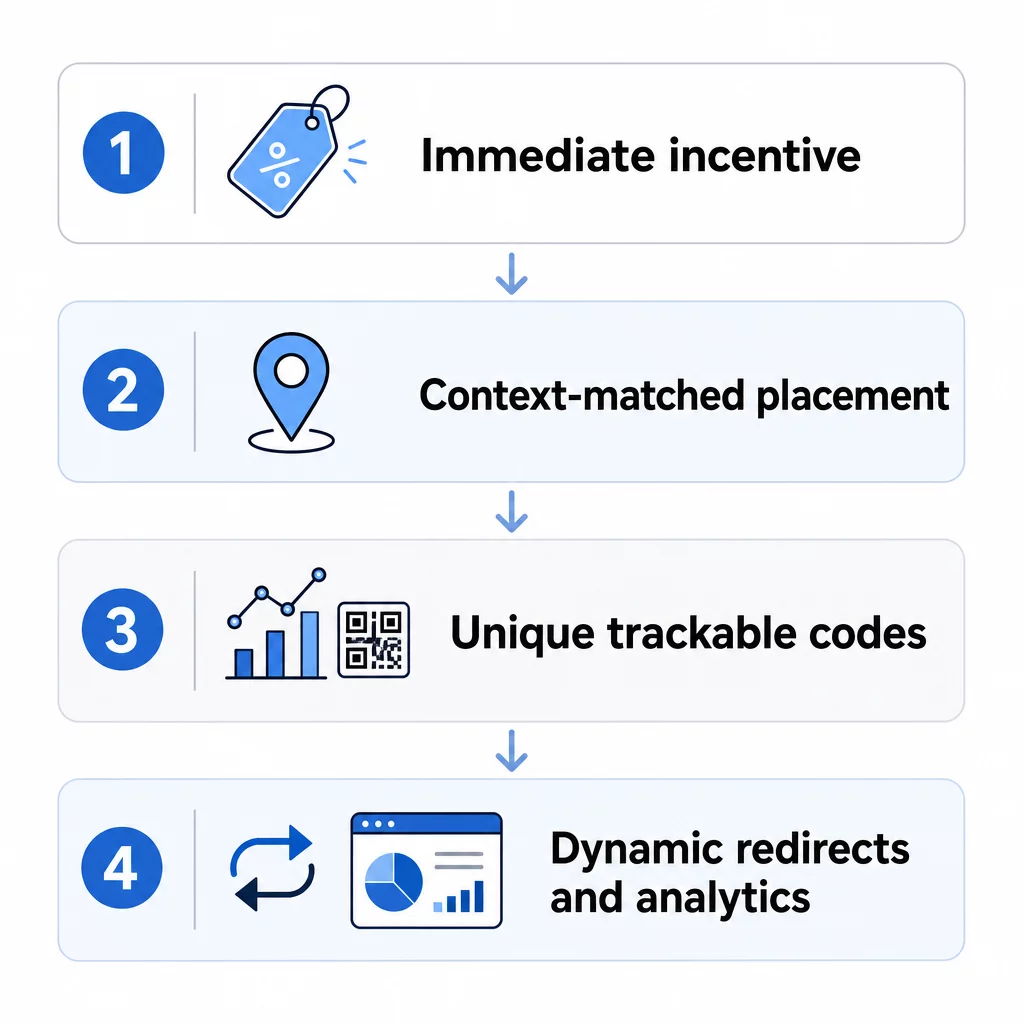
- The incentive is immediate and specific. Vague promises (“learn more”) underperform compared to tangible offers (free product, exclusive content, contest entry, discount).
- The placement matches the audience’s context. Packaging scans happen at the moment of consumption. Event activations happen during peak excitement. TV spots work when paired with a reason to act right now.
- Each placement has its own trackable code. Brands that measured performance precisely – like Max Fashion’s 15,000 per-employee codes – were able to attribute results and optimize.
- Dynamic codes were the foundation. The ability to update destinations, run analytics, and avoid expired links is not optional for any multi-week campaign.
For placement best practices across formats – billboards, print, packaging, and digital screens – the guide to QR code placement in marketing covers sizing, eye-level rules, and how to structure calls to action for each format.
Key Strategies for Your Own QR Code Ad Campaign
Pair every code with a clear call to action
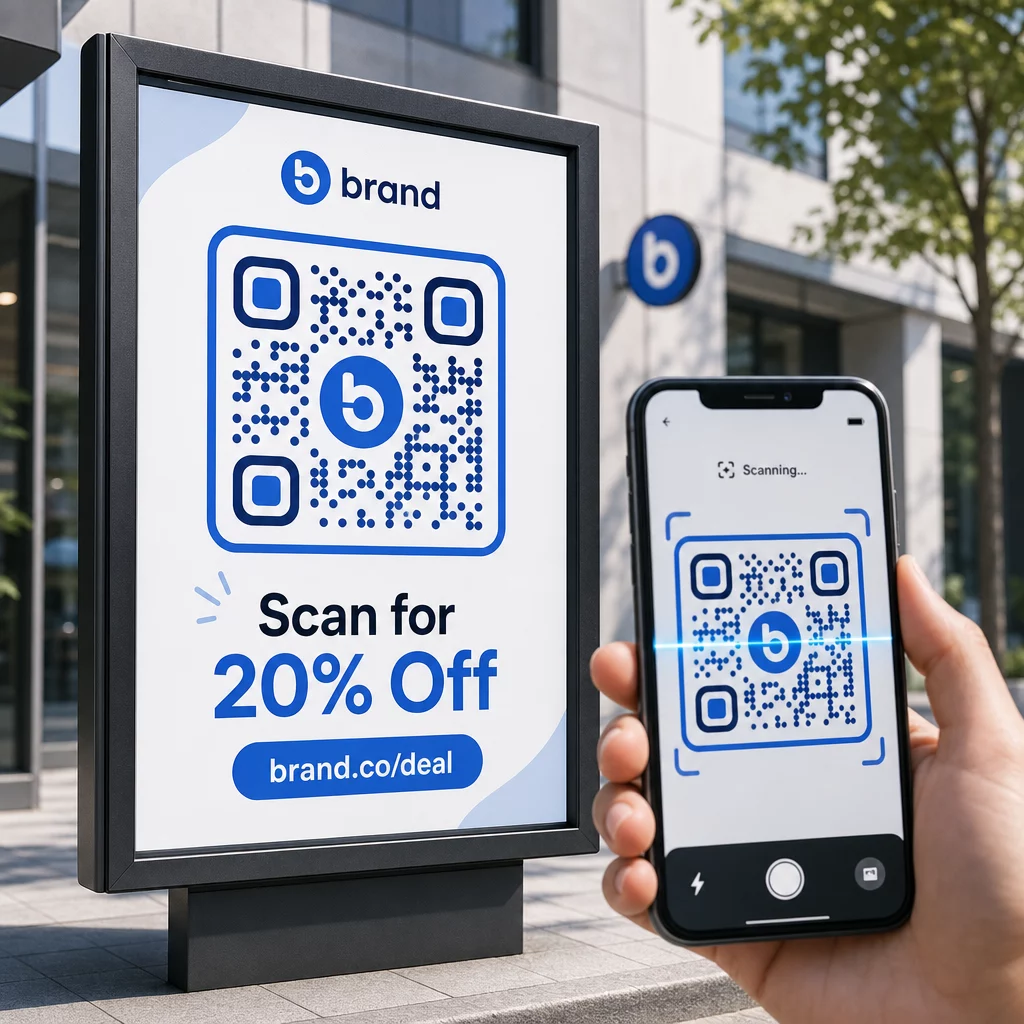
The QR code alone is not enough. “Scan for 20% Off,” “Scan to Enter,” or “Scan to Watch” outperform a bare code with no context. The CTA should state the benefit, not just the action. For billboard and large-format placements, include a short URL as a backup for users who struggle to scan at distance.
Design codes that reflect your brand
Generic black-and-white codes blend into the background. Branded QR codes with logos can boost scan rates by 50–200% compared to unbranded versions. The генератор на QR кодове с лого lets you incorporate brand colors, custom pixel patterns, and center logos while maintaining scannability. See real-world branded QR code examples for design inspiration.
Use separate codes for each placement
Placing the same code on packaging, an in-store poster, and a print ad tells you nothing about which placement drove results. Assign unique dynamic codes to each format and track them independently. This is one of the most underused practices in QR advertising, and one of the most valuable for optimizing campaign performance.
Choose the right QR type for your campaign goal
Not every campaign needs the same code type. A sweepstakes entry, an app download, a social media follow, and a coupon redemption all benefit from different configurations. The guide to choosing the right QR code for your campaign walks through dynamic versus static, and how to match code type to campaign objective. For social media campaigns specifically, QR code best practices for social platforms covers design and CTA considerations.
Build Your Campaign Codes in One Place Create branded, trackable QR codes for every ad placement – packaging, posters, print, TV, and more – using the Генератор на QR кодове на PageLoot. Update destinations, monitor scan data, and manage all your codes from a single dashboard.
Често задавани въпроси
Use a dynamic QR code whenever your campaign runs for more than a few days, involves multiple placements, or may need its destination updated after printing. Dynamic codes let you change the linked URL at any time without reprinting materials, and they provide scan-level analytics – including time, location, and device type – that static codes cannot offer. For advertising campaigns of any scale, dynamic codes are the practical standard.
Dynamic QR codes track total scan counts, unique scans, timestamps, geographic locations, device types (iOS vs. Android), and browser preferences. When combined with UTM parameters, this data integrates with tools like Google Analytics, giving you a complete picture of how users move from a physical ad to a digital conversion. This allows you to attribute performance to specific placements, time windows, and audience segments.
Place the code at eye level (roughly 3.5–5.5 feet from the ground), size it relative to viewing distance (a common rule is one inch of code width per ten inches of scanning distance), and always include a specific CTA that states the benefit of scanning. Use a branded, high-contrast design to make the code visually distinct. For large-format placements, download your code as an SVG file to avoid pixelation, and test scanning under varied lighting conditions before the campaign launches.