Da li spori odlasci i rastuće naknade za obradu smanjuju profitne marže vašeg restorana? Svaki dodatni minut koji sto stoji prazan košta prihoda, a svako nepotrebno putovanje konobara smanjuje efikasnost osoblja. Plaćanja QR kodom direktno rešavaju oba problema – ubrzavaju iskustvo na kraju obroka dok smanjuju operativno trenje koje frustrira i goste i osoblje.
Izazovi plaćanja sa kojima se restorani danas suočavaju
Pre nego što istražimo rešenja, korisno je razumeti gde tačno tradicionalni sistemi plaćanja zakazuju.
Spor odlazak i smanjena rotacija stolova
Tipičan proces plaćanja je pravi gubitak vremena. Konobari se kreću tamo-amo – donose račune, vraćaju se sa čitačima kartica i finalizuju plaćanja – sve dok udarni sati za ručavanje prolaze. Tradicionalna obrada plaćanja obično traje 10–15 minuta po stolu, što se brzo nagomilava tokom užurbanog servisa.
Deljenje računa pogoršava stvari. Grupa od osam gostiju koja traži odvojene račune znači da osoblje troši dragoceno vreme ručno izračunavajući i obrađujući više plaćanja. Ova kašnjenja ograničavaju broj gostiju koje možete poslužiti tokom udarnih sati i direktno smanjuju prihod.
Higijenski problemi sa zajedničkim uređajima za plaćanje
Čitači kartica, olovke i gotovina se više puta razmenjuju tokom smene, često bez dezinfekcije između upotreba. Čak i nakon što su se ublažile restrikcije iz doba pandemije, mnogi gosti ostaju oprezni u vezi sa zajedničkim površinama. Opcije plaćanja koje minimiziraju fizički kontakt bolje se uklapaju u ta očekivanja – a tradicionalne metode to ne čine.
Visoke naknade za obradu i odložena poravnanja
Plaćanja karticama dolaze sa naknadama za obradu koje smanjuju već tanke profitne marže. Kartične mreže uzimaju deo svake transakcije, a ti troškovi se značajno akumuliraju tokom godine. Pored toga, kašnjenja u poravnanju znače da plaćanja mogu potrajati danima da stignu na vaš račun – u suštini dajući procesorima beskamatni zajam dok vi pokrivate hitne troškove poput plata i troškova dobavljača.
Kako plaćanja QR kodom rešavaju ove probleme
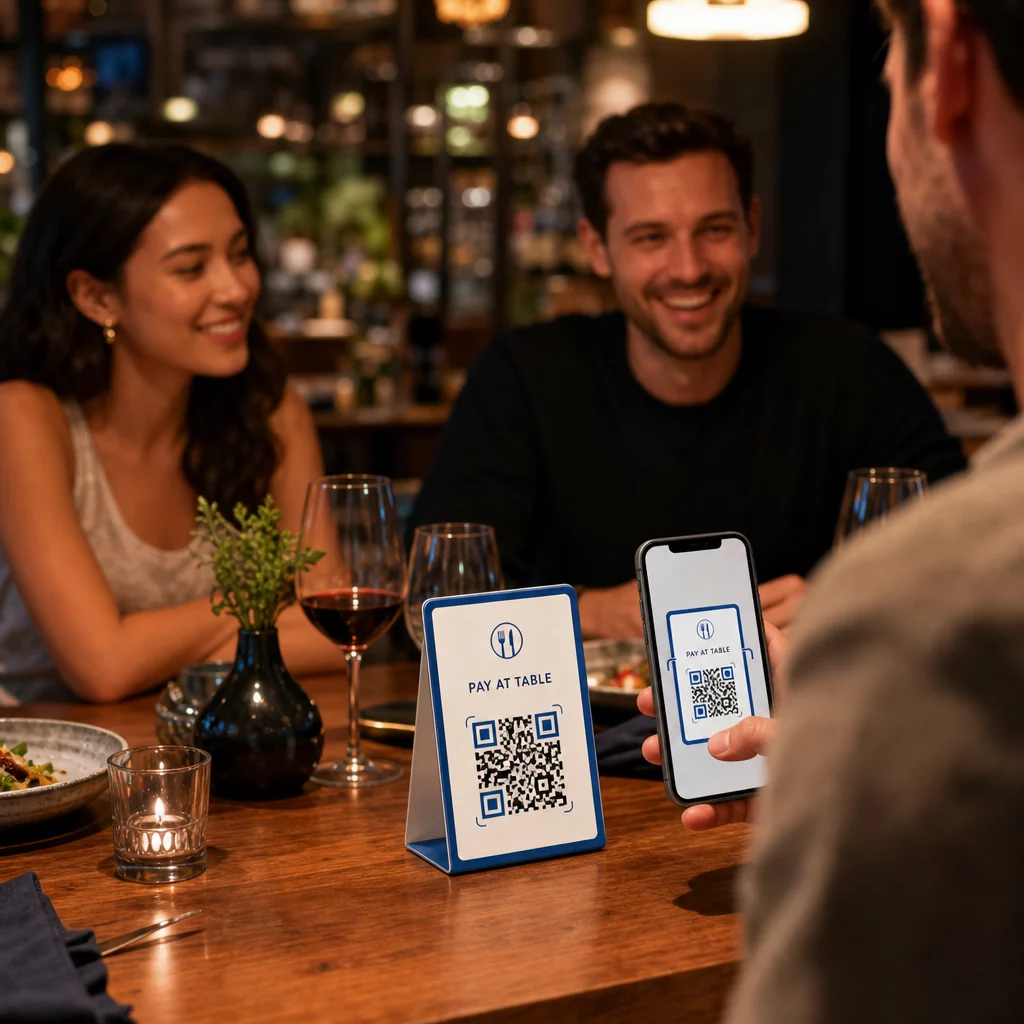
Plaćanja QR kodom omogućavaju gostima da obave celokupan proces naplate sa svog pametnog telefona – skeniranjem koda za stolom, pregledom detaljnog računa, podelom troškova ako je potrebno i plaćanjem – sve bez čekanja na konobara. Ono što je nekada trajalo 10–15 minuta sada se može desiti za manje od minuta. Ta promena ima merljive posledice na rotaciju stolova, opterećenje osoblja i novčani tok.
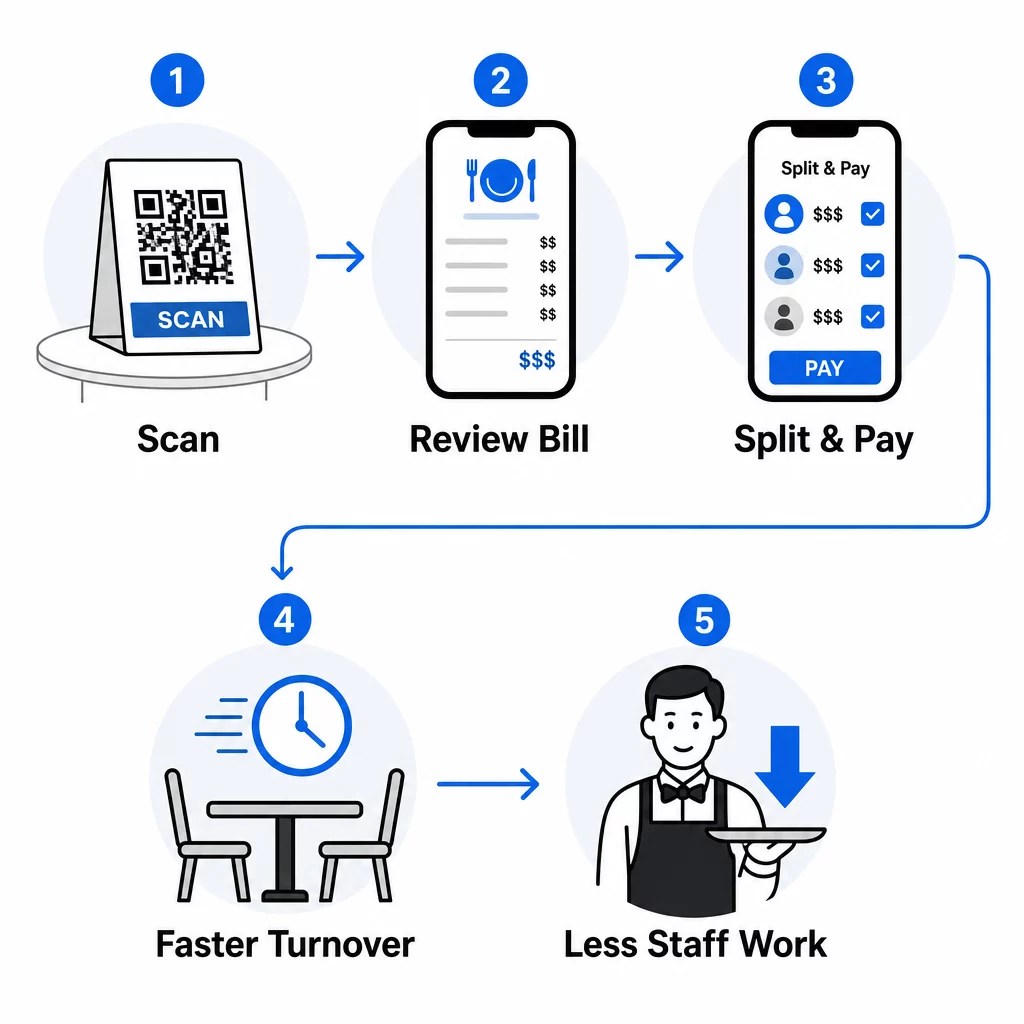
Brža rotacija stolova
Kada gosti mogu da plate čim su spremni, odlaze ranije. Restorani koji koriste plaćanja QR kodom izveštavaju da gosti napuštaju stolove 4 do preko 15 minuta ranije nego kada plaćaju konobaru direktno karticom. Ta ušteda vremena oslobađa stolove za nove goste, što je posebno dragoceno tokom užurbanog petka ili subote.
Jedan vlasnik restorana je izvestio da su nakon uvođenja naručivanja putem QR koda, troškovi rada pali za 15% i da je 56% narudžbina stiglo putem QR kanala. Posebno istraživanje restorana koji koriste platformu za QR naručivanje pokazalo je povećanje broja računa za 4% i povećanje proseka računa za 3% – što sugeriše da brzina i pogodnost mogu povećati prihod, kao i efikasnost.
Pojednostavite tok plaćanja u vašem restoranu Želite da podesite plaćanja QR kodom koja se besprekorno uklapaju sa vašim postojećim menijem i brendiranjem? Istražite rešenja QR koda napravljena za restorane da vidite kako Pageloot pomaže ugostiteljskim objektima da povežu fizičke stolove sa digitalnim iskustvima naplate.
Smanjeno opterećenje osoblja
Uz QR plaćanja, konobari troše znatno manje vremena trčeći napred-nazad do terminala da podele račune ili preuzmu karticu. To vreme se vraća u korisničku uslugu – odgovaranje na pitanja, dopunjavanje pića i upravljanje većim brojem stolova bez osećaja preopterećenosti. Restorani koji smanje vreme obrade plaćanja oslobađaju osoblje da opsluži više gostiju tokom iste smene bez povećanja broja zaposlenih.
Тхе Систем наручивања КР кодова pristup ovo dodatno proširuje: kada gosti mogu da pregledaju, naruče i plate jednim skeniranjem, ceo ciklus transakcije se dramatično skraćuje.
Beskontaktna i higijenska naplata
Budući da se cela transakcija odvija na ličnom uređaju korisnika, QR plaćanja eliminišu deljene čitače kartica, olovke i štampane račune. Gosti koriste poznate aplikacije – bilo mobilni novčanik, PayPal ili svoju bankarsku aplikaciju – za dovršavanje plaćanja, što takođe povećava njihovo poverenje u sigurnost transakcije.
Niži troškovi i brža poravnanja
Restorani više ne moraju da ulažu u čitače kartica ili redovno preštampavaju menije kada pređu na digitalno. Naknade za transakcije su često niže jer QR plaćanja mogu zaobići tradicionalne kartične mreže. Mnogi sistemi QR plaćanja takođe nude trenutna ili istog dana poravnanja, što stabilizuje novčani tok i olakšava pokrivanje dnevnih operativnih troškova bez čekanja danima da se sredstva proknjiže.
Restorani srednje veličine mogu uštedeti oko $5.000 godišnje prelaskom sa papirnih na digitalne menije samo – pre nego što se uzmu u obzir smanjeni troškovi terminala ili niže naknade za obradu.
Ključne prednosti za poslovanje restorana
Poboljšano korisničko iskustvo
Za goste, plaćanja QR kodom su o brzini i kontroli. Umesto da dozivaju konobara ili čekaju čitač kartica, gosti plaćaju svoj račun kada su spremni. Beskontaktna priroda uklanja zajedničke dodirne tačke, a podela računa postaje jednostavna – svaka osoba skenira isti kod, bira svoje stavke i plaća svoj deo bez ikakvog ručnog izračunavanja od strane osoblja.
Prema studiji iz 2021. godine, 37% gostiju je preferiralo restorane koji nude digitalne menije putem QR kodova u odnosu na tradicionalne papirne menije – preferencija koja je samo rasla kako su beskontaktna iskustva postala standardna očekivanja, a ne noviteti.
Bolja operativna efikasnost
Automatizacijom naplate, QR sistemi oslobađaju vaš tim da se fokusira na gostoprimstvo. Konobari se bave gostima umesto da prenose čitače kartica, a kuhinja dobija jasnije, brže signale o statusu stola. Tokom špica, ova efikasnost pravi razliku između glatkog i haotičnog poslovanja.
Platforme poput Pageloot-a omogućavaju restoranima da integrišu QR kodove za plaćanje direktno u svoje digitalne menije, tako da iskustvo naručivanja i plaćanja teče iz jednog skeniranja. Za detaljniji uvid u Bezbednost plaćanja QR kodom i brzina obrade, osnovna tehnologija koristi enkripciju i tokenizaciju kako bi transakcije bile sigurne kao tradicionalna plaćanja karticama.
Analitika za informisane odluke
Jedna potcenjena prednost QR plaćanja su podaci o transakcijama koje automatski generišu. Restorani dobijaju uvid u realnom vremenu u špiceve obroka, najprodavanija jela, prosečne iznose računa i demografske trendove – bez ručnog praćenja ili nagađanja.
Ovi podaci podržavaju pametnije odluke: ako se određeno predjelo dosledno rasproda petkom uveče, menadžeri mogu prilagoditi zalihe i osoblje u skladu sa tim. Takođe omogućava personalizovani marketing i programe lojalnosti, budući da navike naručivanja i učestalost poseta mogu da posluže kao osnova za ciljane promocije ili popuste na omiljena jela.
Pageloot platforma uključuje analitiku skeniranja pored upravljanja QR kodovima, dajući restoranima centralizovan pregled kako korisnici interaguju sa menijima, kodovima za plaćanje i promotivnim materijalima. Možete istražiti ceo spektar Tipovi QR kodova pogodni za restoranske menije da biste razumeli koji formati najbolje funkcionišu za različite delove iskustva obedovanja.
Postavljanje QR kod plaćanja u vašem restoranu
Zašto dinamički QR kodovi najbolje funkcionišu
Динамички КР кодови su praktičniji od statičkih za restoransko okruženje. Statički kodovi zaključavaju fiksni URL ili destinaciju; dinamički kodovi se mogu ažurirati u realnom vremenu bez ponovnog štampanja. To znači da možete promeniti povezani meni, ažurirati tok plaćanja ili zameniti sezonsku promociju bez zamene fizičkih materijala na svakom stolu.
Dinamički kodovi takođe podržavaju više opcija plaćanja – kreditne i debitne kartice, digitalne novčanike poput Apple Pay-a i Google Pay-a, i platforme kao što je PayPal – tako da gosti plaćaju kako god im odgovara. Možete koristiti PayPal QR kod generator da brzo podesite link za plaćanje, ili koristiti širi generator QR kodova za upravljanje svim kodovima vašeg restorana sa jedne kontrolne table.
Za uputstva o najboljih praksi za pristupačnost plaćanja QR kodom – uključujući veličinu, kontrast, visinu postavljanja i alternativne opcije plaćanja – resursi Pageloot-a pokrivaju praktične detalje koji osiguravaju da ih svi gosti mogu udobno koristiti.
Postavljanje za maksimalan uticaj
Gde postavljate svoje QR kodove je važno. Najefikasnija mesta za postavljanje uključuju:
- Površine stolova – jasno označeno, tako da gosti mogu skenirati bez pitanja osoblja
- Stoni šatori ili stalci – vidljivo od trenutka kada gosti sednu
- Ulaz i čekaonice – korisno za promotivne kodove ili prijave za lojalnost
- Ambalaža za poneti – proširuje angažovanje sa QR kodovima izvan trpezarije
Za menije konkretno, QR kod za jelovnik: generator omogućava restoranima da postave PDF ili naprave interaktivni digitalni meni, zatim generišu brendirani kod spreman za štampanje na bilo kojoj površini.
Učiniti QR kodove delom vašeg brenda
Običan crno-beli QR kod funkcioniše, ali brendirani gradi poverenje. Dodavanje vašeg logotipa, boja brenda i jasnog okvira sa pozivom na akciju govori gostima da skeniraju zvanični kod restorana, umesto nečeg nepoznatog. Pageloot alati za prilagođavanje omogućavaju vam da uskladite dizajn QR koda sa vašim postojećim vizuelnim identitetom – dosledno na menijima, stalcima za stolove i promotivnim materijalima.
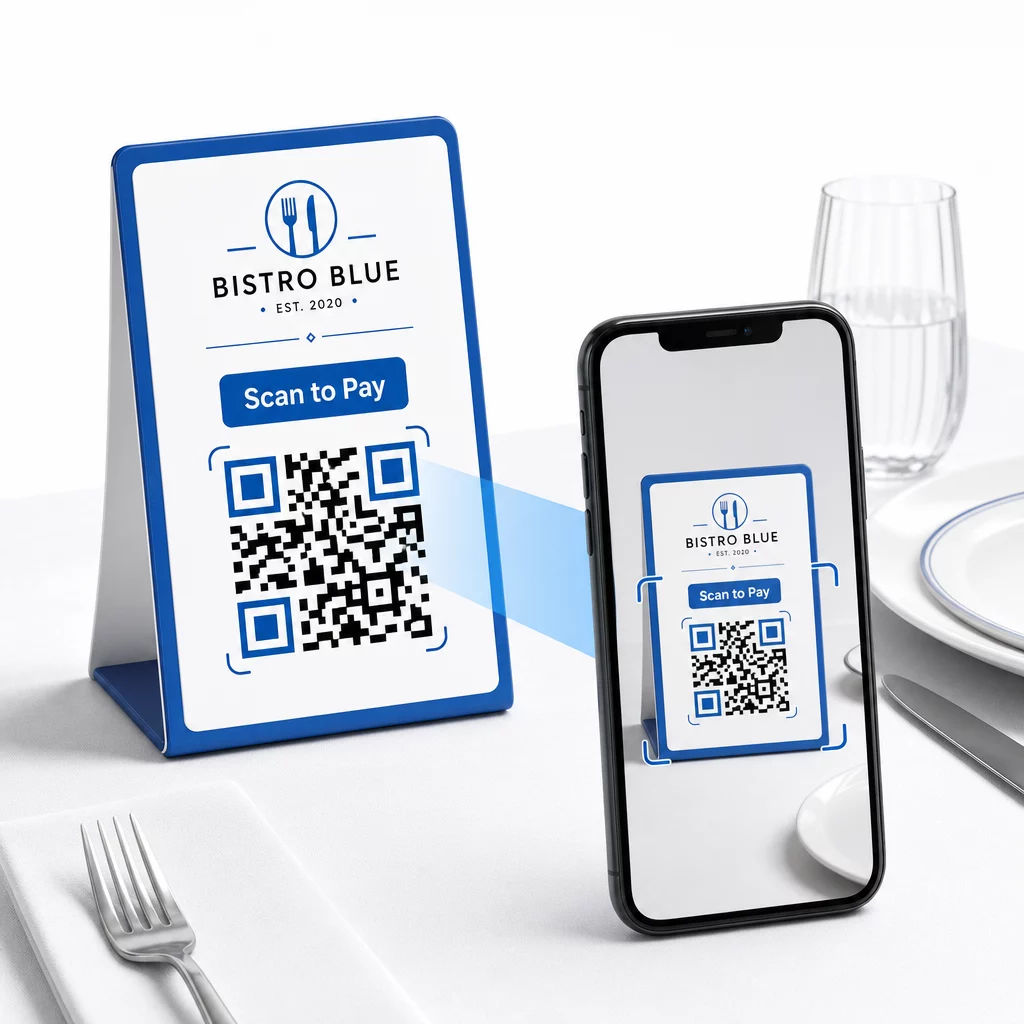
Za širi pogled na to kako QR kodovi preoblikuju iskustvo plaćanja u različitim industrijama, ili kako restorani konkretno imaju koristi od celokupnog ekosistema QR kodova, ti resursi nude praktičan kontekst za planiranje vašeg uvođenja.
Često postavljana pitanja
Plaćanja QR kodom uklanjaju potrebu za stalnim kretanjem između konobara i stolova prilikom naplate. Gosti skeniraju, pregledaju svoj račun i plaćaju sa svog uređaja – skraćujući tipičan proces plaćanja od 10–15 minuta na manje od jednog minuta. Ta ušteda vremena brže oslobađa stolove, omogućava konobarima da se fokusiraju na gostoprimstvo umesto na logistiku plaćanja, i omogućava restoranu da primi više grupa tokom špica.
Da, na nekoliko načina. Restorani eliminišu ili smanjuju oslanjanje na čitače kartica i štampane menije, smanjujući troškove opreme i štampanja. Digitalni meniji se mogu ažurirati trenutno bez ponovnog štampanja – značajna ušteda tokom vremena. Naknade za transakcije su često niže jer QR plaćanja mogu zaobići tradicionalne kartične mreže, a brža poravnanja poboljšavaju novčani tok u poređenju sa višednevnim kašnjenjima obrade.
QR sistemi plaćanja automatski beleže detalje transakcija koji otkrivaju obrasce – udarno vreme za obroke, najprodavanija jela, prosečne iznose računa i koliko često pojedinačni kupci posećuju. Menadžeri mogu koristiti ove podatke za prilagođavanje osoblja, unapređenje naručivanja zaliha i kreiranje ciljanih promocija ili programa lojalnosti. Platforme poput Pageloot-a takođe pružaju analitiku skeniranja kako bi restorani mogli pratiti angažman preko menija i kodova za plaćanje sa jedne kontrolne table.