Vet du hvilke fysiske steder som faktisk driver QR-kodeskanningene dine – og hvilke som er dødv vekt? Uten data på lokasjonsnivå gjetter du. Denne guiden forklarer hvordan AI-drevet analyse måler QR-kodeengasjement etter geografi, og hvordan du kan bruke denne innsikten til å forbedre kampanjeytelsen.
Hvorfor lokasjonsdata er viktig for QR-kodekampanjer
QR-koder vises på plakater, emballasje, skilting, menyer og arrangementsmateriell. Hver plassering eksisterer i et annet fysisk miljø med et annet publikum. Uten data på lokasjonsnivå kan du se at en kampanje fikk 500 skanninger – men du kan ikke si om disse kom fra butikkvinduet ditt, transittannonsen din eller en messebod.
Lokasjonssporing svarer på det spørsmålet. Den forteller deg hvilke plasseringer som fungerer, når de genererer mest aktivitet, og hvordan engasjementet varierer på tvers av regioner eller steder. Denne informasjonen fører direkte til smartere beslutninger om hvor koder skal plasseres, hvilket innhold som skal vises, og når kampanjer skal kjøres.
Ifølge eMarketer-prognoser var amerikanske smarttelefonbrukere som skanner QR-koder forventet å vokse fra 83,4 millioner i 2022 til 99,5 millioner innen 2025 – noe som gjør nøyaktig sporing stadig viktigere etter hvert som publikum vokser.
Hvordan QR-kode lokasjonssporing fungerer
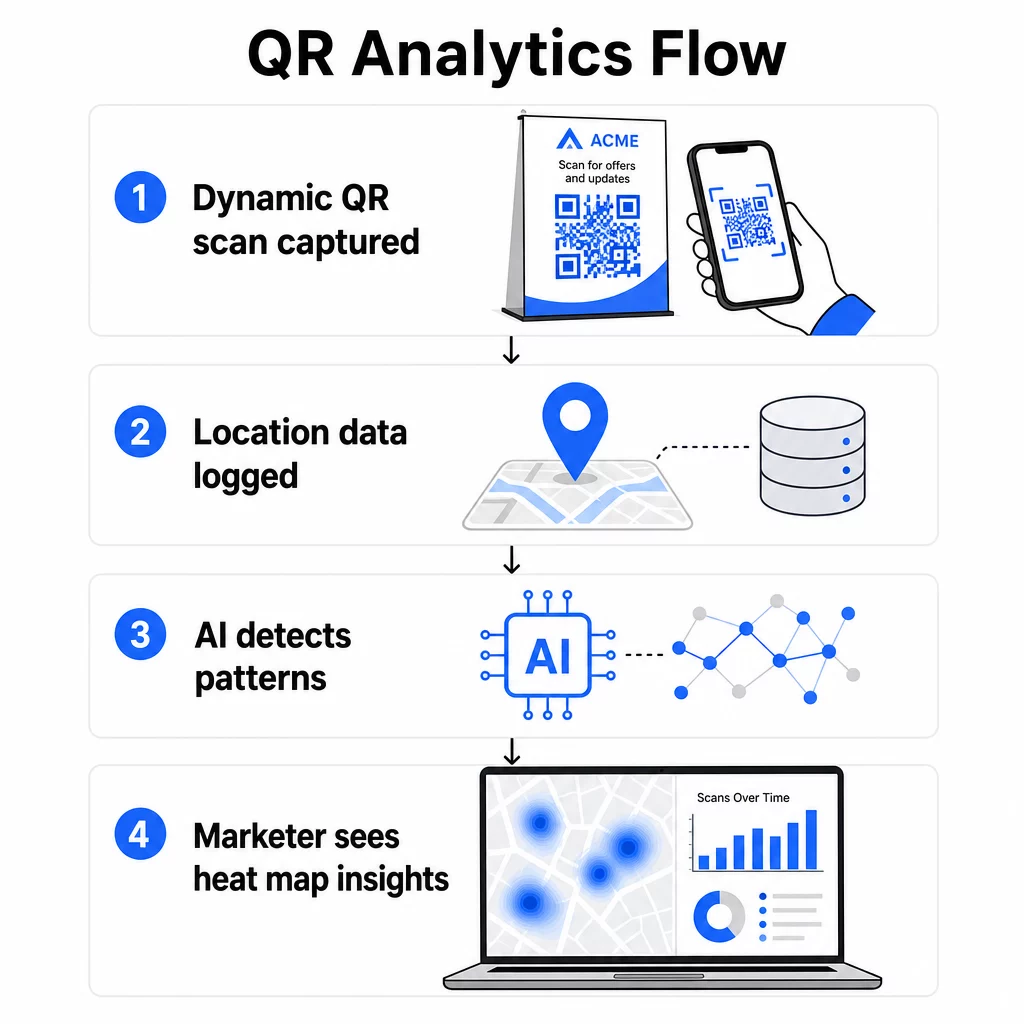
Lokasjonssporing er kun mulig med dynamiske QR-koder. I motsetning til statiske koder, som koder en fast destinasjon og ikke registrerer noe, ruter dynamiske QR-koder hver skanning gjennom en mellomliggende sporingsserver. Denne serveren logger data om skannehendelsen – inkludert tid, enhetstype og lokasjon – før den omdirigerer brukeren til den endelige destinasjons-URL-en.
Du kan lære mer om den fulle mekanikken i guiden til hvordan QR-kodesporing og analyse fungerer.
Det er to primære metoder plattformer bruker for å bestemme hvor en skanning fant sted:
IP-basert lokasjonssporing løser en by og et land fra IP-adressen til nettverket skanneenheten er koblet til. Denne tilnærmingen fungerer automatisk uten å kreve brukerens samtykke og er effektiv for analyse på regionalt nivå. Nøyaktigheten er imidlertid begrenset – typisk rundt 50–70% på bynivå – og inkonsekvenser kan oppstå når en enhet er koblet til et mobilnettverk registrert i en annen region.
GPS-basert lokasjonssporing samler inn de nøyaktige koordinatene til skanneenheten. Denne metoden er langt mer presis, nøyaktig innenfor noen få meter, men den krever at brukeren eksplisitt gir lokasjonstillatelse via en nettleserforespørsel. Det er det riktige valget for kampanjer der presise plasseringsdata er viktig, for eksempel sporing av store arenaer eller geofenced-kampanjer.
For de fleste kampanjer gir IP-basert sporing tilstrekkelig regional innsikt. GPS-basert sporing er forbeholdt bruksområder der nøyaktige koordinater er nødvendig – og der du har en klar samtykkemekanisme på plass.
Start sporing av skanninger etter sted Trenger du å vite hvor kampanjene dine genererer engasjement? Bruk Dynamisk QR-kode generator for å lage sporingskoder og se skannedata etter land, by og plassering – alt fra ett dashbord.
Hvilke data fanges opp ved hver skanning
Hver skanning av en dynamisk QR-kode genererer et sett med datapunkter. Samlet bygger disse et detaljert bilde av engasjement som går langt utover et enkelt antall skanninger. Nøkkelmålingene som spores inkluderer:
- Geografisk plassering – land, region og by avledet fra IP-adresse, eller nøyaktige GPS-koordinater når samtykke er gitt
- Tidsstempel – nøyaktig dato og klokkeslett, noe som muliggjør analyse av toppengasjementsperioder på tvers av dager og timer
- Enhetstype og operativsystem – iOS vs. Android, mobil vs. stasjonær, spesifikke enhetsmodeller og nettlesertype
- Nettverkstype – mobilnett vs. Wi-Fi, som kan indikere om brukere er stasjonære eller i bevegelse
- Skanningsfrekvens – totale skanninger vs. unike skanninger, som skiller gjentatt engasjement fra førstegangsinteraksjoner
Etter-skanningsatferd – økter, fluktfrekvens, tid på side, konverteringer – kan også spores når QR-koder kombineres med UTM-parametere for Google Analytics. Dette lukker sløyfen mellom en fysisk skanning og hva som skjer på landingssiden din.
Hvordan AI behandler stedsdata til innsikt
Rå skannedata blir handlingsdyktige gjennom AI-drevet analyse. I stedet for å kreve at markedsførere manuelt sorterer gjennom skannelogger, behandler AI-modeller store volumer av stedsrelaterte data automatisk og avdekker mønstre som ellers ville vært vanskelige å oppdage.
Geografiske varmekart
Varmekart oversetter skannevolum til visuelle representasjoner av engasjementstetthet på tvers av lokasjoner. Områder med høy aktivitet er umiddelbart synlige, noe som gjør det enkelt å identifisere hvilke plasseringer som presterer bedre enn andre. En forhandler med QR-koder på tvers av flere butikksteder kan for eksempel se med et øyekast om flaggskipbutikken presterer bedre enn regionale butikker – eller om en spesifikk plassering i butikken konsekvent genererer flere skanninger enn andre.
Du kan utforske denne tilnærmingen mer detaljert i guiden til sporing av QR-kodeengasjement med varmekart.
Tidsmessig mønstergjenkjenning
AI identifiserer når skanninger klynger seg etter tid på dagen, ukedag eller sesongperiode. En kaffebar kan oppdage at morgenskanninger hovedsakelig kommer fra faste kunder, mens ettermiddagsskanninger tiltrekker seg nye besøkende. Et museum kan finne at QR-koder ved inngangspunkter blir mye brukt de første 30 minuttene etter åpning. Disse mønstrene informerer direkte om når man skal kjøre tidsfølsomme kampanjer og hvordan man skal bemanne lokasjoner i perioder med høyt engasjement.
Prediktiv modellering
AI-modeller trent på historiske skannedata kan forutsi fremtidige engasjementstrender etter lokasjon. Dette muliggjør proaktive kampanjejusteringer – å flytte budsjett mot høytytende lokasjoner før en sesongtopp, eller identifisere steder der engasjementet er nedadgående før det påvirker de totale kampanjeresultatene.
Sammenligning på tvers av lokasjoner
Når en kampanje strekker seg over flere fysiske lokasjoner, muliggjør AI direkte ytelsessammenligning på tvers av steder. Markedsførere kan identifisere hvilke regioner, butikkformater eller plasseringstyper som konsekvent presterer bedre enn andre og replikere disse forholdene andre steder.
AI-drevet analyse vs. tradisjonelle metoder
Den praktiske forskjellen mellom AI-drevet sporing og eldre manuelle metoder blir tydelig når du sammenligner dem side om side.
| FUNKSJON | AI-drevet analyse | Tradisjonelle metoder |
|---|---|---|
| Hastighet for datainnsamling | Sanntidsbehandling | Manuell inntasting med timer eller dager forsinkelse |
| Stednøyaktighet | GPS- og IP-kartlegging | Generelle estimater eller manuell logging |
| Mønstergjenkjenning | Automatisk trend- og avviksdeteksjon | Manuell analyse som krever betydelig tid |
| Prediktive evner | Prognoser fra historiske data | Begrenset til å rapportere tidligere hendelser |
| Tverrstedanalyse | Sanntidssammenligning på tvers av steder | Krever separate systemer per sted |
| Brukerreisekartlegging | Sporer hele veien fra skanning til konvertering | Fragmentert med manglende berøringspunkter |
Tradisjonelle metoder – grunnleggende skannetellere, manuelle undersøkelser, regnearklogger – er tidkrevende og gir begrenset innsikt. AI-drevne plattformer behandler tusenvis av datapunkt automatisk, og leverer et fyldigere bilde uten manuelt arbeid.
Sette opp stedsbaserte QR-kodekampanjer
Grunnlaget for enhver stedsbasert kampanje er en dynamisk QR-kode. Pageloot sin QR-kodegenerator lar deg lage koder med tilpasset merkevarebygging – din logo, merkevarefarger og designmaler – samtidig som den muliggjør full analyse-sporing fra det øyeblikket du distribuerer dem.
Når de er opprettet, kan dynamiske QR-koder få sin destinasjons-URL oppdatert når som helst uten å måtte trykke opp materialer på nytt. Dette er spesielt verdifullt for kampanjer som utvikler seg over tid, slik at du kan endre en sesongbasert kampanje, teste en ny landingsside, eller omdirigere trafikk til oppdatert innhold uten å erstatte fysisk skilting.
De analysepanel gir en sentralisert oversikt over alle skannedata: totale skanninger over tid, geografiske fordelinger etter land og by, distribusjon av enhetstyper, og sammenligninger på plasseringsnivå. Filtre etter datoområde, sted eller kampanjetype lar deg dykke ned i dataene som er viktigst for en gitt beslutning.
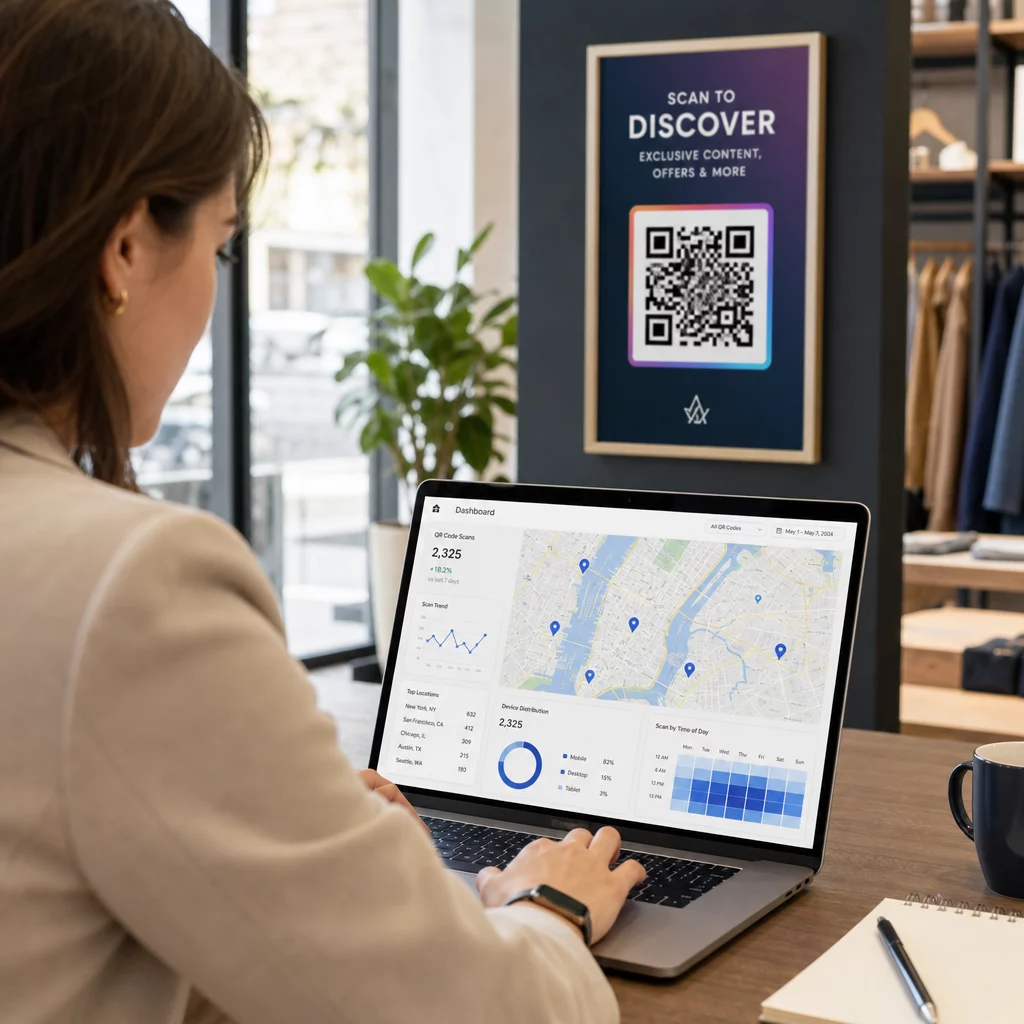
For mer om konfigurering av dashbordet ditt og innstilling av sporingsparametere, se guiden til QR-kode analysedashbord.
Praktiske anvendelser etter bransje
Stedsbevisst QR-kodesporing har konkrete anvendelser på tvers av en rekke bransjer:
- Detaljhandel – Identifiser hvilke plasseringer i butikken (inngang, prøverom, kasse) som genererer flest skanninger og bruk disse dataene til å tidsbestemme kampanjer eller justere bemanning. Stedspesifikke koder kan levere forskjellige tilbud basert på hvor i butikken en kunde skanner.
- Arrangementer og konferanser – Spor bruk av inngangspunkter, overvåk folkemengdens bevegelse på tvers av sesjonsrom, og samle inn oppmøtedata uten manuelle innsjekkingsprosesser.
- Helsevesen – Plasser QR-koder ved avdelingsinnganger for å spore pasientflyt og identifisere flaskehalser i anleggsnavigasjonen.
- Gjestfrihet – Overvåk hvilke bord, steder eller gjestekontaktpunkter som genererer mest digitalt engasjement, og bruk deretter disse dataene til å optimalisere menyplasseringer eller kampanjemateriell.
- utdanning – Bruk campusomfattende QR-koder for navigasjon, ressurstilgang og oppmøtesporing, der stedsdata avslører hvilke områder som ser mest engasjement.
For bedrifter med flere lokasjoner kan AI-drevet analyse på tvers av alle steder avsløre mønstre som ikke ville vært synlige når man ser på en enkelt lokasjon isolert.
Personvern og overholdelse
Stedsdata – spesielt presise GPS-koordinater – er klassifisert som sensitiv personlig informasjon under amerikanske delstatslover om personvern, inkludert CCPA og Virginia Consumer Data Protection Act. Disse lovene krever tydelig informasjon om hvilke data som samles inn, hvordan de brukes, og hvordan brukere kan velge bort.
Praktiske samsvarstiltak inkluderer:
- Bruk av IP-basert sporing som standard, noe som ikke krever samtykke
- Innhenting av eksplisitt nettlesertillatelse før innsamling av GPS-koordinater
- Anonymisering av innsamlede data slik at de ikke kan kobles tilbake til individuelle brukere
- Anvendelse av dataminimering – kun innsamling av det som er nødvendig for kampanjemålet
- Angivelse av datalagringsgrenser og sletting av detaljerte stedsdata etter en definert periode
Pageloot anonymiserer skannedata som standard, med detaljert stedsinformasjon samlet kun gjennom eksplisitte samtykkeforespørsler. Plattformen er i tråd med GDPR- og CCPA-samsvarsrammeverk, og justerer automatisk datainnsamlingspraksis basert på gjeldende regionale krav.
For en detaljert gjennomgang av samsvarsimplementering, se veiledningen om sikring av GDPR-samsvar i QR-kodeanalyse.
Beste praksis for plassering av QR-koder
Selv den beste analysen kan ikke kompensere for dårlig fysisk plassering. Hvor du plasserer en QR-kode bestemmer hvilke stedsdata du samler inn og hvor mange skanninger du faktisk genererer.
- Plasser koder i øyehøyde nær naturlige stoppunkter – heisbanker, kasser, menyholdere og informasjonskiosker
- Tilpass kodestørrelsen: minst 1 × 1 tomme for skanning på nært hold, 4 × 4 tommer eller større for skanning på avstand
- Unngå plasseringer med harde skygger, direkte sollys eller dårlig omgivelseslys
- Inkluder alltid en tydelig oppfordring til handling (“Skann for dagens meny”, “Skann for å sjekke tilgjengelighet”) slik at brukerne forstår hvorfor de skal skanne
- For kampanjer med flere steder, tildel separate sporingsparametere til hver plassering slik at analysen din kan skille ytelse etter sted
Dynamiske koder gjør det enkelt å kjøre A/B-tester på tvers av plasseringer uten å måtte trykke på nytt. Hvis videoinnhold fungerer bedre ett sted og en PDF fungerer bedre et annet, kan du oppdatere hver kodes destinasjon uavhengig basert på hva dataene viser.
Se hvilke plasseringer som driver reelt engasjement Bruk Pageloot’s analysefunksjonene for å sammenligne skanneytelse på tvers av alle steder, enhetstyper og tidsperioder – og justere kampanjer basert på hva dataene faktisk viser.
Bruke stedsbasert innsikt for markedsføringsautomatisering
Sanntids stedsdata åpner døren for automatiserte, kontekstbevisste kampanjer. AI kan oppdage steder med høyt engasjement og utløse målrettet innhold for disse områdene. En geofence-kampanje kan for eksempel vise forskjellig landingssideinnhold avhengig av nøyaktig hvor en skanning skjer – en museumsbesøkende som skanner nær en utstilling, mottar informasjon spesifikk for den utstillingen, ikke museets hjemmeside.
Stedsdata integreres også med e-post- og CRM-plattformer, noe som muliggjør publikumssegmentering basert på skanneatferd og geografi. Brukere som skanner på et bestemt butikksted, kan legges til en relevant oppfølgingssekvens, mens brukere i forskjellige regioner kan motta innhold tilpasset deres marked.
Forhandlere kan bruke prognoser for skannevolum for å forutse travle perioder og justere bemanning eller varelager deretter. Over tid gjør kombinasjonen av historiske stedsdata og prediktiv modellering kampanjer stadig mer effektive – ved å identifisere hvor ressursene skal fokuseres før neste kampanjeperiode starter.
For mer om hvordan AI-funksjoner gjelder for QR-kampanjer generelt, se artikkelen om Slik gjør KI QR-kode kampanjer mer effektive.
Hva dette betyr for kampanjene dine
Stedsbasert QR-kodesporing forvandler vage skannetall til spesifikk, handlingsbar intelligens. Du kan identifisere hvilke steder som driver høyest engasjement, når publikum er mest aktivt på hvert sted, og hvordan du skal tildele kampanjeressurser deretter. Dynamiske QR-koder gjør denne sporingen mulig uten å måtte trykke materialer på nytt, mens AI-drevet analyse avdekker mønstre som manuelle metoder rett og slett ikke kan oppdage i stor skala.
Neste trinn er å opprette dynamiske QR-koder med sporing aktivert og distribuere dem på tvers av dine lokasjoner. Etter hvert som skannedata akkumuleres, vil de geografiske og tidsmessige mønstrene som dukker opp, gi deg et målbart grunnlag for hver fremtidig plassering og kampanjebeslutning.
Utforsk Pageloots fulle utvalg av funksjoner for å se hvordan QR-kodeopprettelse, analyse og kampanjeadministrasjon fungerer sammen i én enkelt plattform.
Ofte stilte spørsmål
IP-basert sporing bestemmer skannestedet ved å løse opp by og land fra skanneenhetens nettverks-IP-adresse. Det fungerer automatisk uten brukerens samtykke og er egnet for regional analyse, selv om nøyaktigheten vanligvis er rundt 50–70 % på bynivå. GPS-basert sporing samler inn presise koordinater fra enheten og er nøyaktig innenfor noen få meter, men det krever at brukeren eksplisitt gir stedstillatelse. IP-basert sporing passer for de fleste kampanjer; GPS-basert sporing er best for bruksområder som krever nøyaktige plasseringsdata, for eksempel geofencing eller publikumsanalyse for store arenaer.
Ja. Statiske QR-koder koder en fast destinasjon og støtter ingen sporing. Dynamiske QR-koder ruter hver skanning gjennom en sporingsserver som logger sted, enhetstype, tidsstempel og andre data før brukeren omdirigeres. Uten en dynamisk kode blir ingen skannedata registrert. Du kan opprette og administrere dynamiske QR-koder med innebygd analyse ved hjelp av Pageloots dynamiske QR-kodegenerator.
I USA behandles presis geolokalisering som sensitiv personlig informasjon under lover inkludert CCPA og Virginia Consumer Data Protection Act. Bedrifter må gi tydelig informasjon om hvilke data som samles inn, tilby mekanismer for å melde seg av, og håndtere data sikkert. IP-basert sporing krever vanligvis ikke samtykke; GPS-basert sporing gjør det. Beste praksis inkluderer anonymisering av innsamlede data, minimering av det du samler inn til det som er nødvendig, setting av grenser for datalagring, og bruk av en plattform som støtter GDPR- og CCPA-samsvarsrammeverk. Se hele veiledningen om GDPR-samsvar i QR-kodeanalyse for implementeringsdetaljer.