Campaniile tale cu coduri QR generează scanări, dar nu și rezultate semnificative? Fără un design inteligent, personalizare și urmărire, codurile QR devin oportunități ratate. Această pagină explică cum AI transformă marketingul cu coduri QR într-un canal măsurabil și de înaltă performanță.
Ce schimbă de fapt AI la codurile QR
Codurile QR tradiționale sunt statice: un singur design, o singură destinație, fără date. AI le schimbă pe toate trei. Permite coduri care își adaptează destinația în funcție de context, designuri care se aliniază cu identitatea mărcii fără a sacrifica scanabilitatea și analize care dezvăluie nu doar câți oameni au scanat, ci și când, unde și ce au făcut mai departe.
Rezultatul practic este semnificativ. Codurile QR optimizate cu AI ating rate de scanare cu 25–40% mai mari comparativ cu designurile standard, iar precizia scanării s-a îmbunătățit cu 25% datorită procesării imaginilor bazate pe AI care compensează distorsiunile, iluminarea slabă și suprafețele deteriorate.
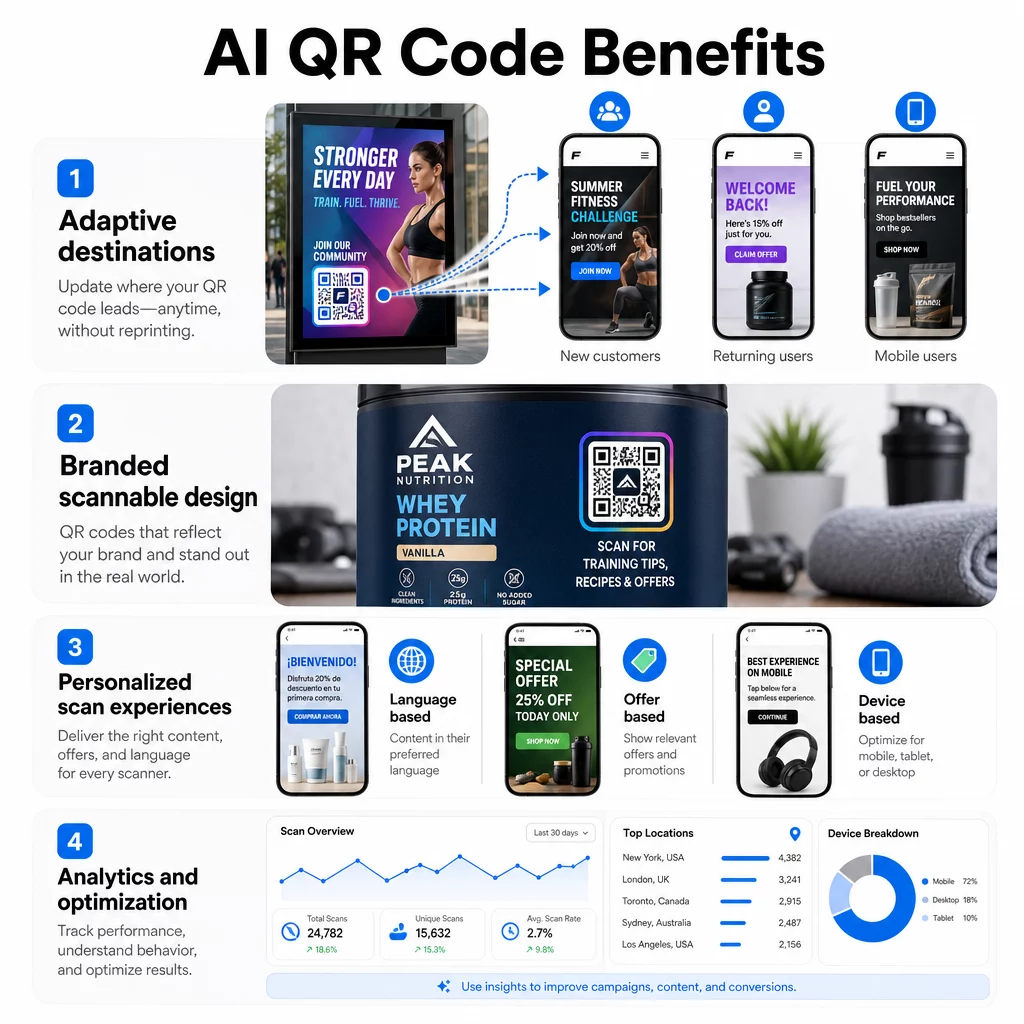
Iată cum funcționează fiecare capacitate în practică.
Coduri QR dinamice care se adaptează la context
A cod QR dinamic codifică un link scurt de redirecționare în loc de o destinație fixă. Această redirecționare poate fi actualizată oricând fără a schimba sau a retipări codul fizic. AI extinde acest lucru și mai mult, permițând destinației să se schimbe pe baza semnalelor contextuale: locația utilizatorului, tipul dispozitivului, ora din zi, setările de limbă sau interacțiunile anterioare.
Luați în considerare un restaurant care folosește un singur cod QR pe fiecare masă. Dimineața, acesta direcționează către un meniu de mic dejun, la prânz afișează specialitățile zilnice, iar la cină evidențiază preparatele și asocierile de vinuri recomandate. Același cod tipărit, actualizat automat, fără a fi necesară retipărirea.
Acest tip de adaptare în timp real face codurile QR mult mai relevante pentru persoana care le scanează. Iar relevanța stimulează implicarea – afacerile care utilizează personalizarea bazată pe AI raportează în mod constant creșteri ale conversiilor comparativ cu abordările generice.
Creați coduri QR care se actualizează fără retipărire Folosește Generator cod QR dinamic pentru a construi coduri pe care le puteți actualiza, urmări și optimiza dintr-un singur tablou de bord.
Design și branding de coduri QR asistate de AI
Codurile QR standard sunt funcționale, dar generice vizual. Instrumentele de design bazate pe AI rezolvă acest lucru prin integrarea culorilor mărcii, a logo-urilor și a elementelor vizuale în modelul codului în sine, ajustând automat contrastul, dimensiunea elementelor și plasarea pentru a menține codul scanabil în mod fiabil.
Pageloot Șabloane de coduri QR vă permit să porniți de la un design profesional și să-l personalizați pentru a se potrivi identității mărcii dvs. în fiecare campanie. Pentru cele mai bune rezultate, mențineți un raport de contrast minim de 4:1 între modelul de date al codului și fundalul său – 4.5:1 este standardul preferat. Păstrați logo-ul sau imaginea la cel mult 30% din suprafața codului și testați întotdeauna pe mai multe dispozitive înainte de implementare.
Puteți, de asemenea, să asociați coduri proiectate cu AI cu Rame pentru coduri QR care includ un apel la acțiune, ceea ce oferă oamenilor un motiv să scaneze și crește semnificativ ratele de interacțiune. Codurile QR bine concepute, de marcă, nu doar arată mai bine – ele întăresc încrederea și semnalează că de cealaltă parte se află ceva ce merită scanat.
Află mai multe despre crearea de coduri QR elegante, cu rate mari de clic, folosind AI pentru o abordare pas cu pas a combinării designului și scanabilității.
Personalizare la Scară
Valoarea fundamentală a AI în marketingul cu coduri QR este capacitatea sa de a oferi experiențe individualizate unui public larg fără efort manual. Fiecare scanare conține date contextuale – tipul dispozitivului, locația, ora – pe care AI le poate folosi pentru a direcționa utilizatorii către conținut adaptat situației lor.
Aplicațiile practice includ:
- Redirecționarea utilizatorilor către o locație de magazin din apropiere pe baza geografiei scanării
- Servirea conținutului în limba locală a utilizatorului, detectată din setările dispozitivului
- Afișarea de oferte diferite vizitatorilor noi față de cei care revin
- Ajustarea aspectului paginilor de destinație pe baza tipului de dispozitiv iOS versus Android
Această abordare reflectă ceea ce arată cercetările mai ample despre Personalizare AI: organizațiile care o utilizează înregistrează de obicei creșteri de 15–25% ale ratelor de conversie comparativ cu mesajele generice, și randamente ale cheltuielilor de marketing care depășesc cu mult campaniile nepersonalizate.
Pentru o analiză mai aprofundată a modului de colectare și acționare pe baza datelor de scanare primare, consultați Coduri QR pentru personalizare bazată pe date.
O considerație importantă: consumatorii se implică mai ușor în personalizare atunci când practicile de date sunt transparente. Plasați o notificare scurtă lângă codul QR sau pe pagina de destinație, explicând ce date sunt colectate și cum sunt utilizate. Acest lucru este, de asemenea, cerut de GDPR și CCPA pe piețele aplicabile.
Analize care Transformă Scanările în Decizii
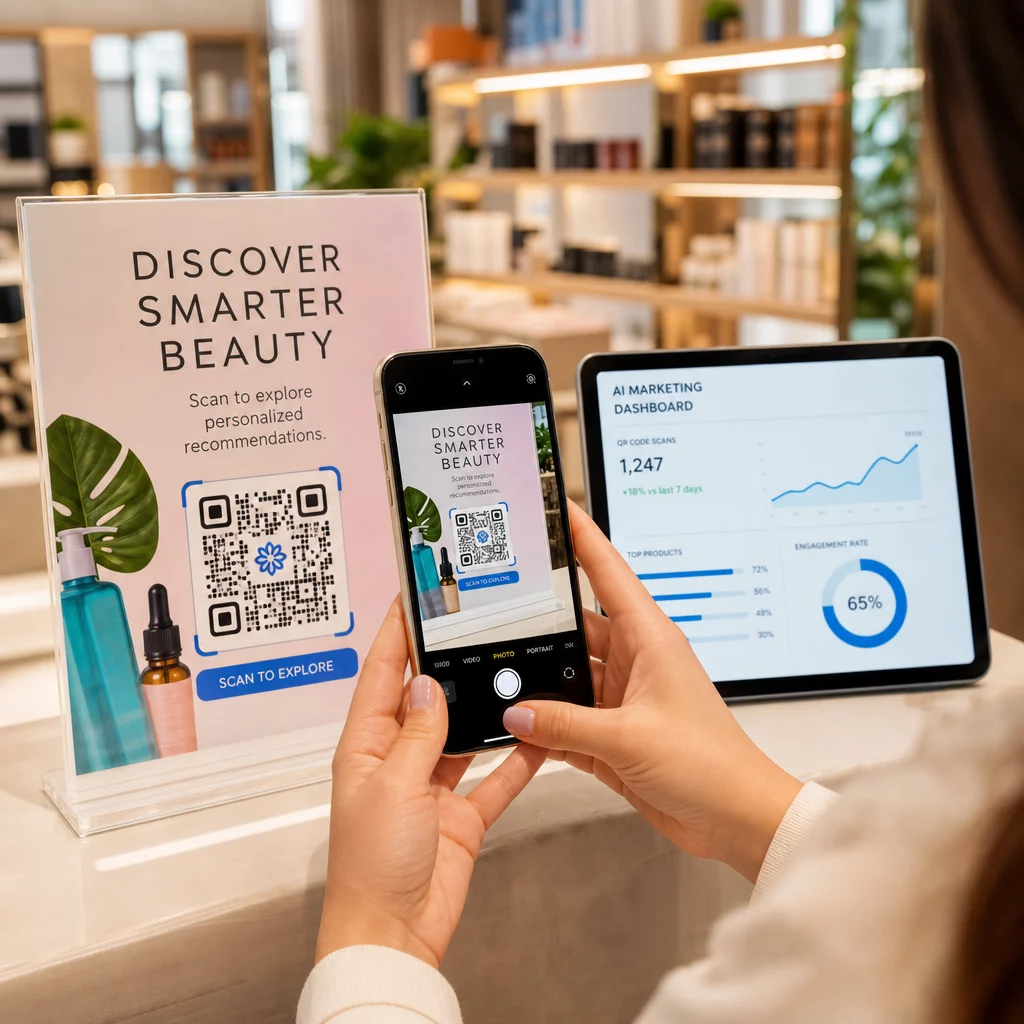
Fiecare scanare a unui cod QR dinamic generează date. Întrebarea este dacă platforma dvs transformă acele date în ceva acționabil. Tabloul de bord analitic Pageloot captează:
- Număr total și unic de scanări în timp
- Defalcare geografică pe țară, oraș și regiune
- Tip de dispozitiv (iOS, Android, desktop)
- Modele de oră și dată care arată când angajamentul atinge vârful
- Performanța plasării comparând fluturași, ambalaje, semnalizare și alte suprafețe
Aceste date transformă campaniile cu coduri QR din “setare și uitare” în campanii optimizate continuu. O afacere de retail care descoperă că majoritatea scanărilor au loc pe dispozitive Android poate prioritiza optimizarea aplicației Android. Un brand care observă vârfuri de scanare în apropierea anumitor locații poate intensifica plasarea acolo.
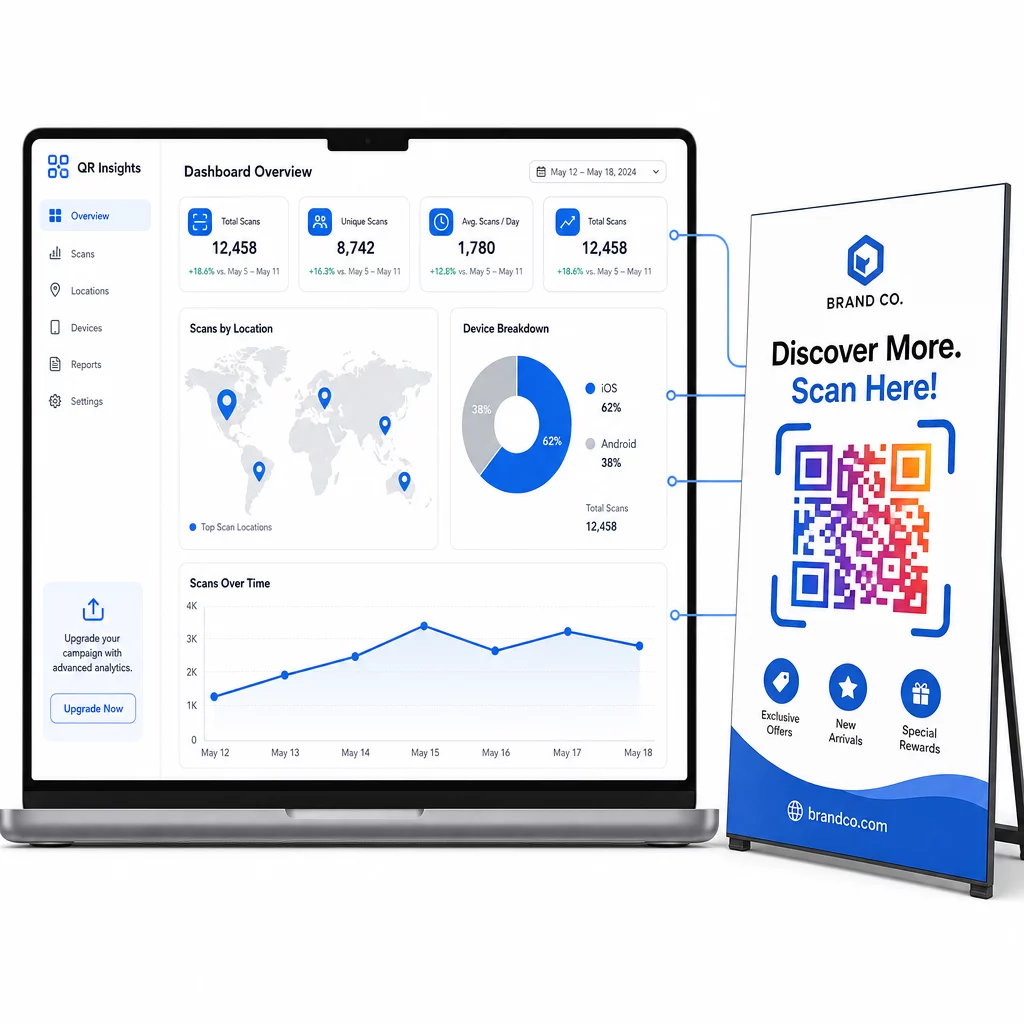
Adăugarea parametrilor UTM la URL-ul codificat în codul dvs. QR extinde acest lucru și mai mult, alimentând traficul atribuit scanărilor direct în Google Analytics, unde puteți conecta scanările la conversii, venituri și comportament ulterior.
Vedeți unde și când sunt scanate codurile dvs. Pageloot Analytics oferă date de scanare în timp real pe locații, dispozitive și plasări, astfel încât să puteți optimiza fiecare element al campaniei.
Pentru o prezentare completă a configurării și interpretării acestor metrici, consultați ghidul pentru tablourile de bord de analiză a codurilor QR și ghidul pentru urmărirea codurilor QR.
Testare A/B și Optimizare Continuă
Analiza AI creează fundamentul pentru testarea structurată. În loc să ghiciți ce design de cod QR, plasare sau apel la acțiune funcționează cel mai bine, puteți rula teste controlate și lăsa datele să decidă.
Codurile QR dinamice sunt deosebit de potrivite pentru testarea A/B, deoarece puteți actualiza destinația fără a retipări. Testați o variabilă la un moment dat – stilul de design, textul CTA, aspectul paginii de destinație sau stimulul de scanare – și măsurați impactul asupra ratelor de scanare și a conversiilor post-scanare.
De exemplu, un brand de cosmetice care a testat un design de cod QR personalizat versus o versiune standard alb-negru a constatat că versiunea personalizată a generat cu 40% mai multe scanări și timpi de sesiune mai lungi, ducând la o implementare la nivel național. Acest tip de perspectivă este posibil doar atunci când ai analize fiabile care alimentează un proces iterativ.
Cel ghid pentru testarea A/B a campaniilor cu coduri QR acoperă cum să structurezi aceste teste, ce variabile să prioritizezi și cum să interpretezi rezultatele.
Aplicații practice în diverse industrii
Codurile QR îmbunătățite cu AI câștigă teren în industriile în care conectarea punctelor de contact fizice la experiențe digitale creează valoare măsurabilă:
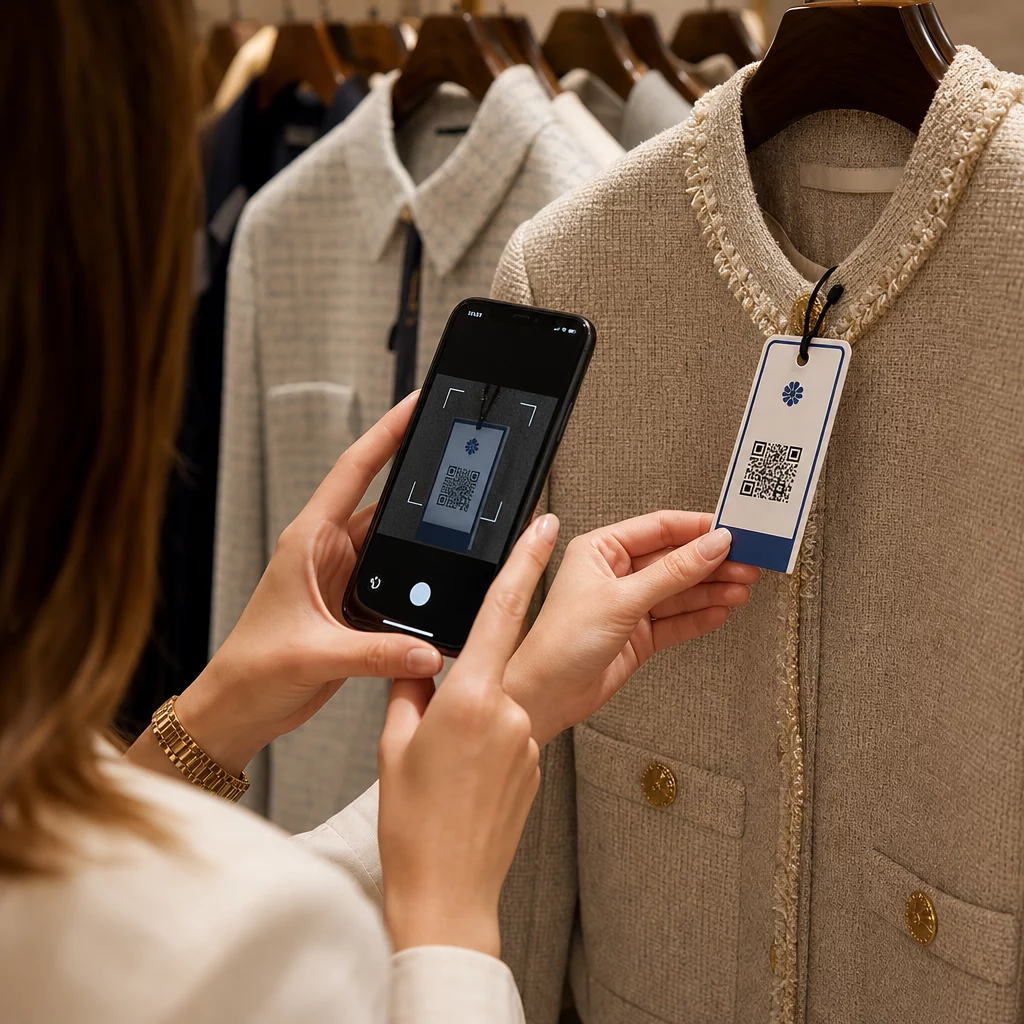
- Retail: Prețuri dinamice, recomandări personalizate de produse și integrarea programelor de loialitate declanșate printr-o singură scanare
- Restaurante și cafenele: Meniuri care se actualizează în timp real fără a fi retipărite, cu analize de scanare care arată perioadele de vârf de implicare
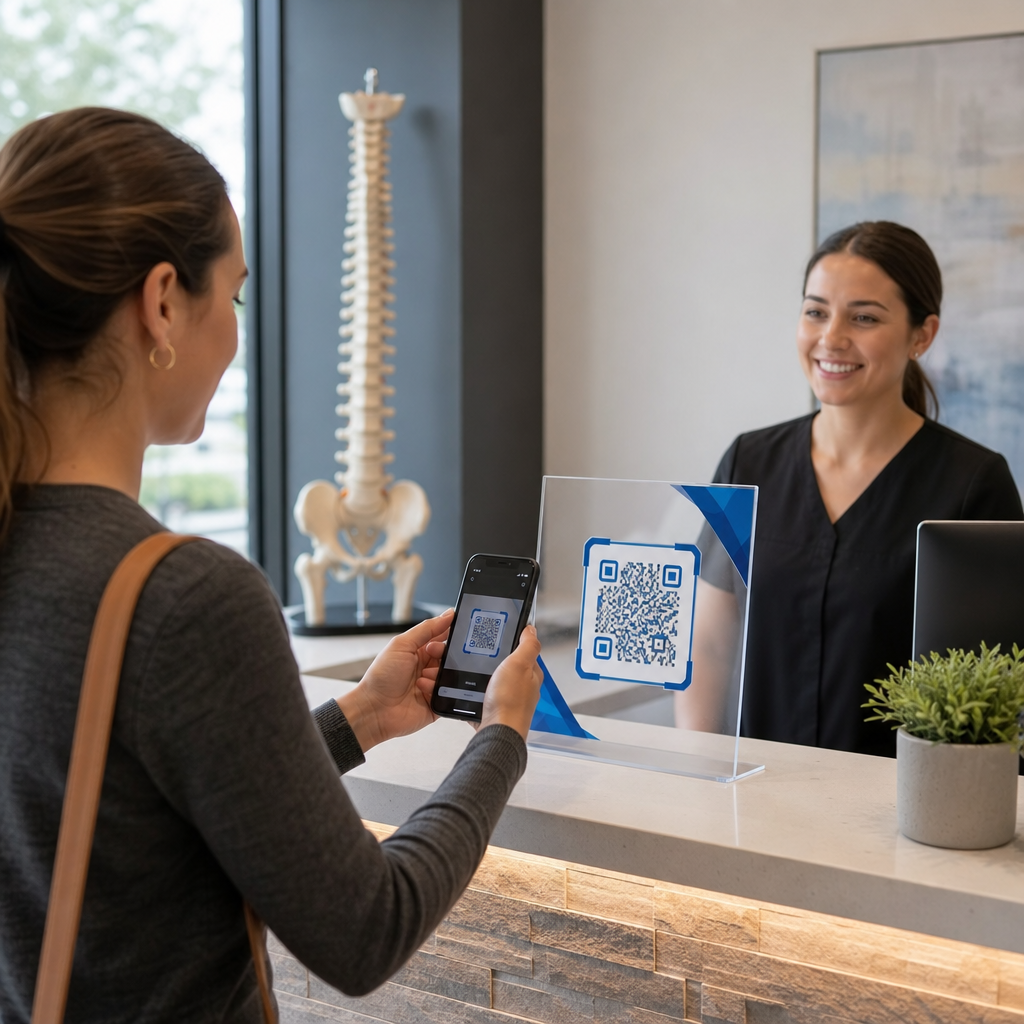
- Sănătate: Acces instantaneu la manuale de dispozitive, instrucțiuni pentru pacienți și comunicare cu echipa de îngrijire prin coduri QR pe camere sau echipamente
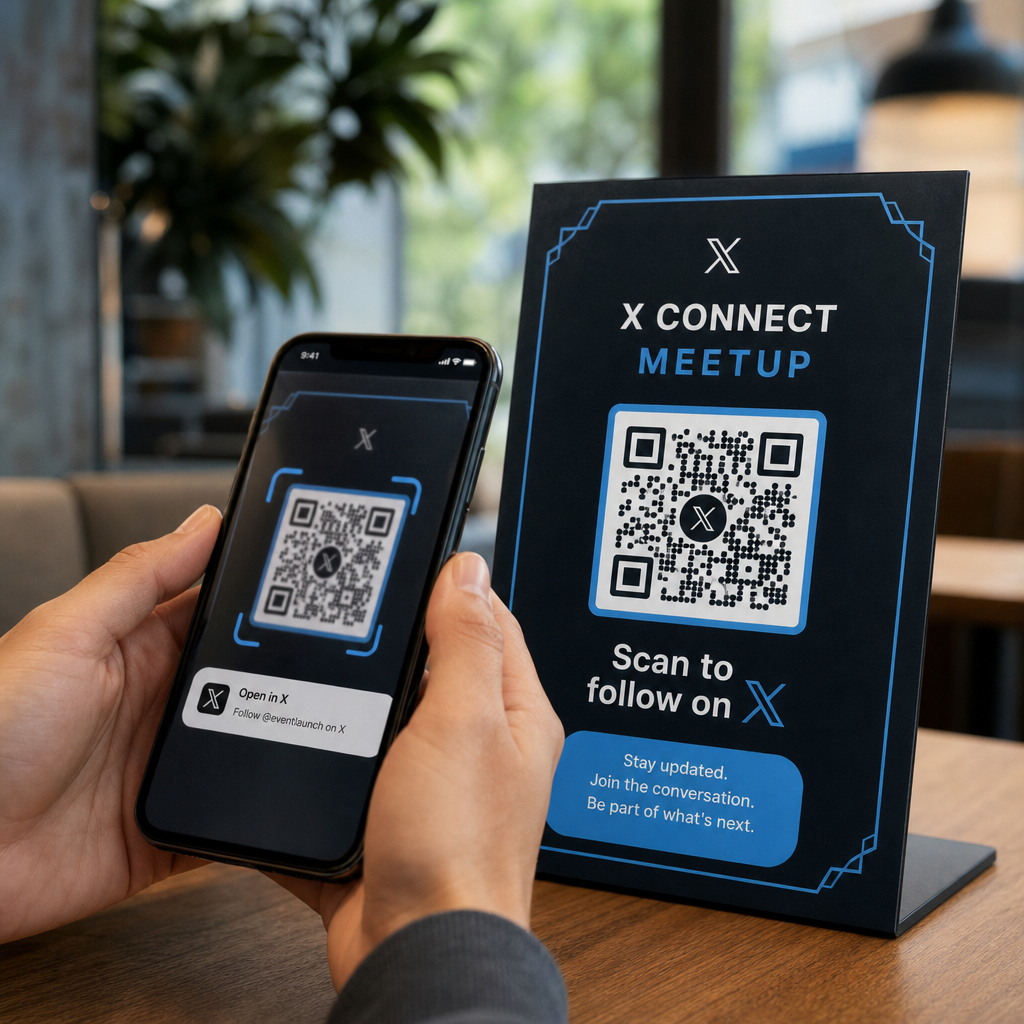
- Evenimente: Check-in-uri simplificate, combinate cu analize bazate pe locație care dezvăluie tiparele de mișcare ale mulțimilor
- Agenții de marketing: Rapoarte de scanare pentru clienți, campanii etichetate UTM și instrumente de gestionare QR white-label care demonstrează clar ROI-ul
Cu 99,5 milioane de utilizatori de smartphone-uri din SUA proiectați să scaneze coduri QR până în 2025, infrastructura pentru implicarea bazată pe QR este deja existentă. Avantajul competitiv constă acum în cât de inteligent sunt construite, personalizate și măsurate aceste coduri.
Automatizare și Scală
Pentru echipele care gestionează mai multe campanii sau clienți, crearea și actualizarea manuală a codurilor QR individuale devine un blocaj. Automatizarea asistată de AI rezolvă acest lucru prin conectarea generării de coduri QR la surse de date și fluxuri de lucru. Platformele care acceptă integrarea API sau instrumente precum Zapier pot declanșa crearea de coduri QR, actualizări de destinație și raportare automat, pe baza evenimentelor campaniei.
Capacitățile de automatizare ale Pageloot permit echipelor să mențină o identitate vizuală consistentă pe sute de coduri, să aplice șabloane de design la scară largă și să actualizeze destinațiile fără a atinge fiecare cod individual. Ghidul pentru automatizarea personalizării codurilor QR prezintă în detaliu procesul de configurare.
Pentru agențiile care gestionează campanii QR pentru mai mulți clienți, platforma Pageloot Agency adaugă permisiuni bazate pe roluri, rapoarte partajabile pentru clienți cu date de scanare în timp real și opțiuni white-label, astfel încât brandul tău – nu cel al Pageloot – este ceea ce văd clienții.
Integrări cu Tehnologii Emergente
Următorul val de capabilități ale codurilor QR implică integrarea cu realitatea augmentată, IoT și blockchain. Branduri precum Nike folosesc coduri QR pentru a declanșa experiențe AR cu produse. Companiile de bunuri de lux încorporează coduri verificate prin blockchain pentru a confirma autenticitatea produselor. Producătorii de alimente utilizează coduri QR pentru a afișa date despre lanțul de aprovizionare, arătând consumatorilor călătoria de la origine la raft.
Inteligența artificială joacă și ea un rol aici – îmbunătățind detectarea fraudelor în fluxurile de plată QR, identificând modele de scanare suspecte care ar putea indica phishing și adaptând livrarea conținutului pe măsură ce aceste experiențe mai bogate devin mai accesibile. Explorează setul complet de funcționalități ale Pageloot pentru capabilități curente și emergente.
Întrebări frecvente
Un cod QR static codifică o destinație fixă direct în model. Acesta nu poate fi actualizat după imprimare și nu acceptă urmărirea scanărilor. Un cod QR dinamic codifică un link scurt de redirecționare care poate fi modificat oricând fără a reimprima codul fizic. Codurile dinamice înregistrează, de asemenea, evenimente de scanare, capturând date precum ora, locația și tipul dispozitivului pe care le puteți utiliza pentru a măsura și optimiza performanța campaniei.
Când cineva scanează un cod QR dinamic, platforma colectează semnale contextuale – tipul dispozitivului, locația, ora din zi și, în unele cazuri, istoricul interacțiunilor anterioare. AI-ul utilizează aceste semnale pentru a direcționa utilizatorul către conținut adaptat situației sale, cum ar fi o pagină de destinație specifică limbii, o ofertă bazată pe locație sau o recomandare de produs bazată pe comportamentul anterior. Acest lucru se întâmplă automat la nivel de redirecționare, deci nu este necesară segmentarea manuală pentru fiecare scanare.
Începeți cu scanări totale și scanări unice pentru a măsura acoperirea și implicarea repetată. Adăugați date geografice pentru a identifica plasamentele cu performanțe ridicate, tipul de dispozitiv pentru a optimiza experiența paginii de destinație și modelele orare pentru a înțelege ferestrele de implicare maximă. Conectați parametrii UTM la Google Analytics pentru a urmări ce se întâmplă după scanare – vizite pe pagină, conversii și veniturile atribuite fiecărui plasament de cod QR.