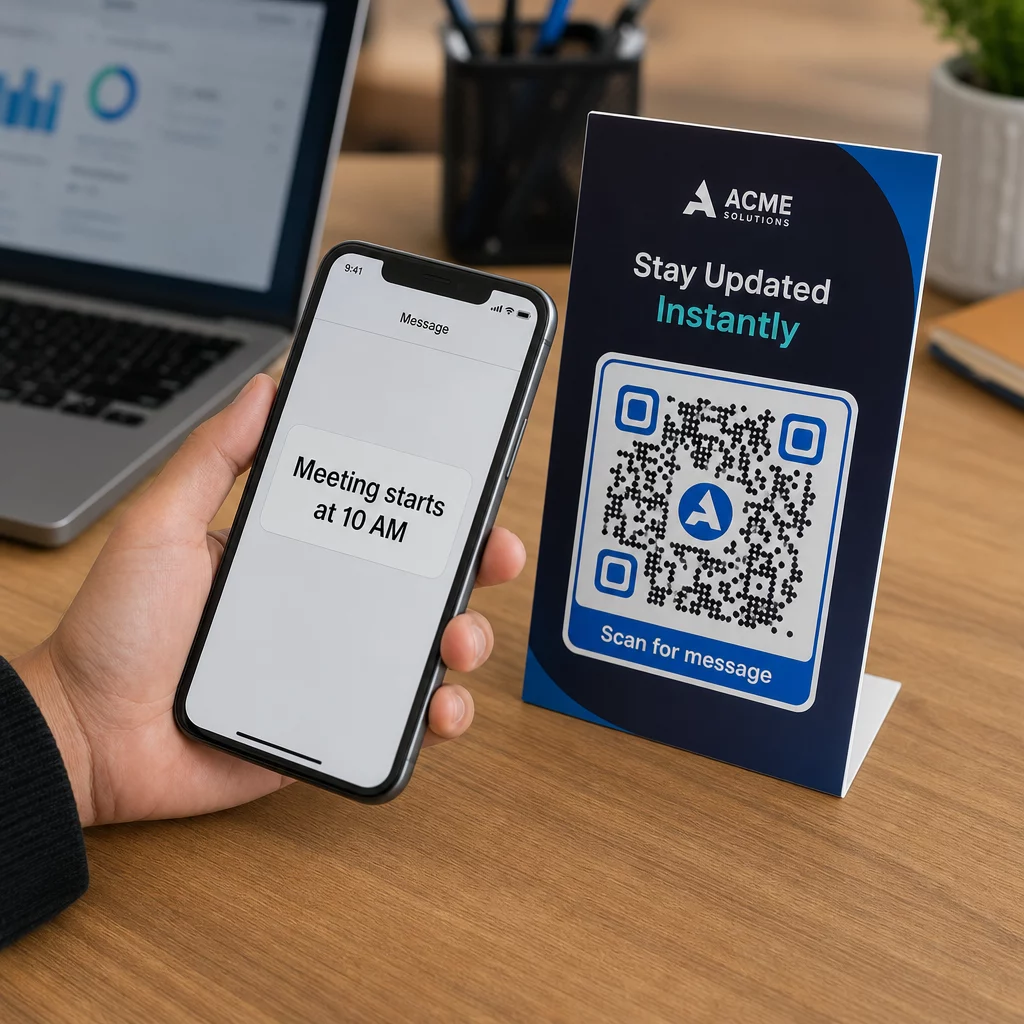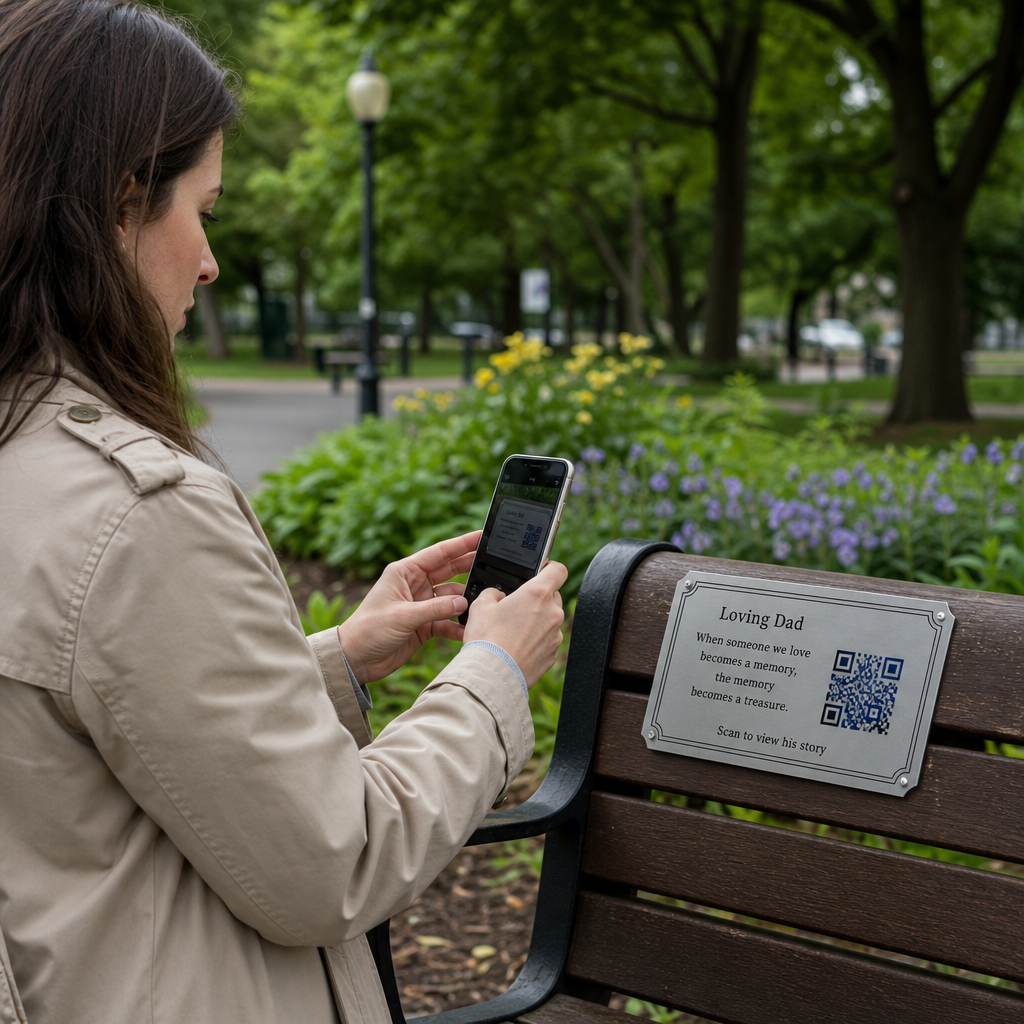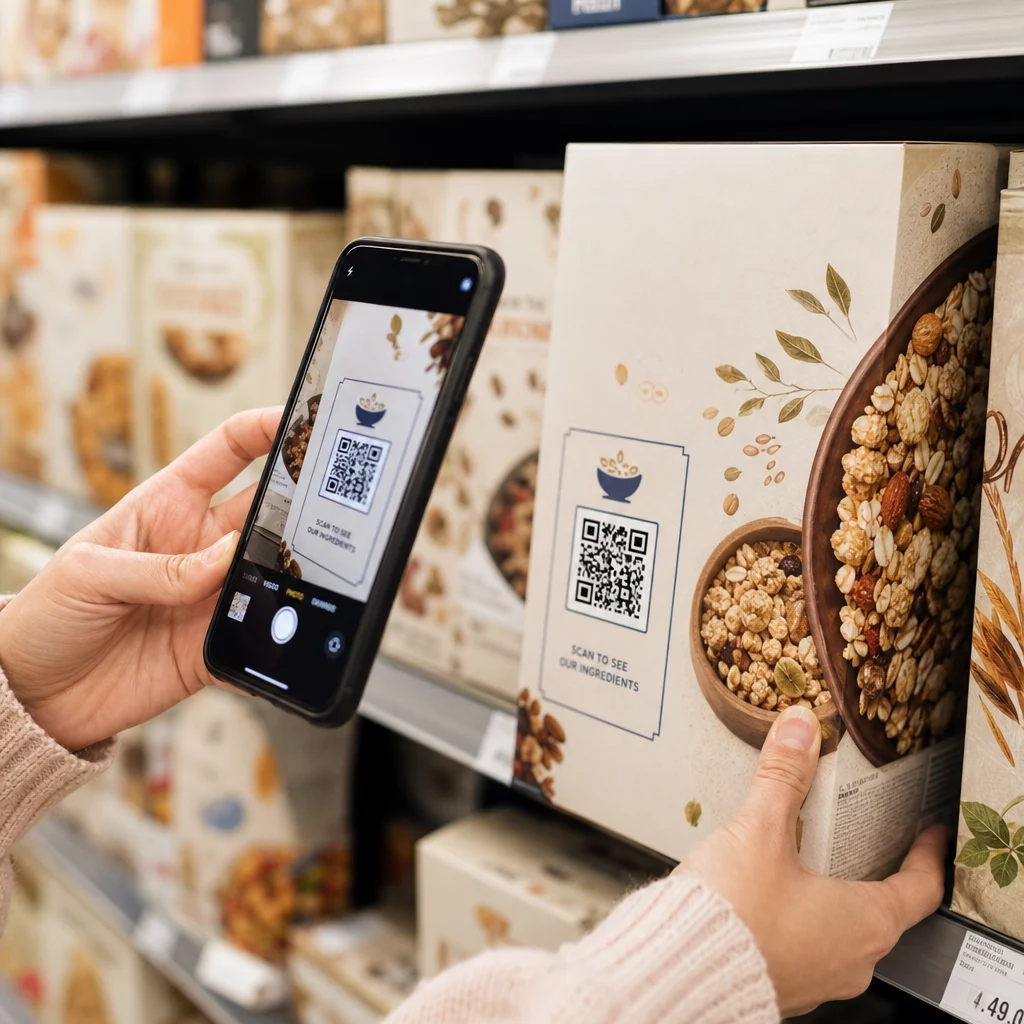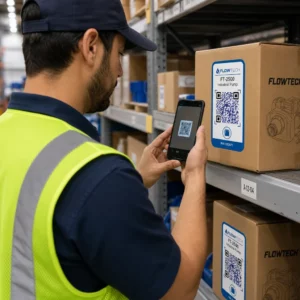
QR codes are scanned over a billion times a year worldwide. Every modern iPhone and Android phone reads them natively through the camera app — no special app needed. Creating one takes less than a minute.
This guide covers every method (online generators, Chrome, iPhone, Android, Canva, Google Sheets), every decision (static vs dynamic, which QR type, error correction levels), and every technical detail — including print specifications, sizing formulas, security risks, and the 8 most common failure modes.
Quick steps: create a QR code in 60 seconds
이동하다 pageloot.com/qr-code-generator — no signup needed for static codes.
Choose your QR type — URL is the most common. Paste your link.
Customize (optional) — add your logo, change colors, pick a frame.
다운로드 — SVG for print, PNG for digital. Scan it with your phone to verify.
That’s it for a free static QR code. If you need to edit the destination after printing, track scans, or upload files like PDFs — you need a 동적 QR 코드, which requires a plan. Plans start at $7/month billed annually, or grab a $197부터 평생 이용권 영구적인 액세스를 위해.
How QR codes actually work
Understanding the mechanics helps you make better decisions about sizing, customization, and which type to use. Skip this if you just need to make one — but bookmark it for when a code breaks and you need to diagnose why.
A QR code is a two-dimensional matrix of black and white squares called modules. Each module represents a single bit of data. A small QR code (Version 1, 21×21 modules) encodes about 17 characters. A large one (Version 40, 177×177 modules) can hold several thousand characters. There are 40 versions total — each adds 4 modules per side.
Not every module stores your data. The three large squares in the corners (finder patterns) tell the scanner where the code is and how it’s oriented. Alternating black-and-white strips (timing patterns) help calculate module size. Additional squares in larger codes (alignment patterns) correct for camera angle distortion. Format information stores the error correction level and masking pattern.
The actual data is encoded in one of four modes: numeric (0-9, most efficient), alphanumeric (0-9, A-Z, some symbols), byte (any ASCII character), or kanji. After encoding, the data goes through a Reed-Solomon error correction algorithm — the same math used in CDs, DVDs, and satellite communications — that generates redundant backup data. Both the original data and the redundancy are interleaved and spread across the code.
Error correction levels: L, M, Q, H
This is why QR codes still scan when they’re scratched, dirty, or have a logo covering the center:
| 수준 | Recovery | 가장 적합한 대상 | Tradeoff |
|---|---|---|---|
| L (Low) | ~7% | Clean environments, digital displays, maximum data capacity | Smallest code, least damage tolerance |
| M (Medium) | ~15% | General purpose — the most common default | Good balance of size and resilience |
| Q (Quartile) | ~25% | Printed materials in moderate-wear environments | Larger code, good damage tolerance |
| H (High) | ~30% | Codes with logos, outdoor use, factory floors, packaging | Largest code, maximum resilience |
When you add a logo to the center of a QR code, you’re physically covering modules — making them unreadable. A typical center logo covers 10-20% of the module area. At Level H (30% recovery), the code has enough redundancy to reconstruct the covered data. At Level M (15%), a logo may work in a lab but fail in the real world where scratches and fading pile on. Most generators (including Pageloot) automatically switch to Level H when you upload a logo.
QR codes vs barcodes
Traditional barcodes (UPC, EAN) are one-dimensional — they store data in a single line of varying-width bars, typically encoding 8-13 digits. QR codes are two-dimensional — they store data in a grid, encoding up to 4,296 alphanumeric characters. Barcodes require a laser scanner; QR codes work with any smartphone camera. For product identification at checkout, barcodes are fine. For anything involving consumer interaction — marketing, menus, contact sharing, file access — QR codes are the standard.
Static vs dynamic: the decision that changes everything
This is the single most important decision when creating a QR code. Get it wrong and you’ll either pay for something you don’t need — or end up reprinting materials because you can’t change a baked-in URL.
Static QR code — free, permanent
The destination URL is encoded directly into the QR pattern. Once created, it can 절대 변경할 수 없습니다. Doesn’t need a server, subscription, or intermediary. Works forever, even if the QR provider shuts down.
Dynamic QR code — editable, trackable
Contains a short redirect URL (like qr.pageloot.com/abc123) that points to the provider’s server. You can change the destination anytime without reprinting. The provider tracks every scan: location, device, time. Requires an active plan.
When to use static
Use static when the destination will never change: a business website URL, a Wi-Fi password, a fixed email address, contact details on a vCard, or a one-time event where you won’t need analytics. Static codes are free and independent — they work even if the generator disappears tomorrow.
When to use dynamic
Use dynamic when: you might need to change where the code points after printing, you want scan analytics (when, where, what device), you’re linking to files (PDF, image, audio) that might be updated, you’re running a time-limited campaign, or you’re managing codes for clients who need scan reports.
The provider lock-in reality
Dynamic QR codes have a catch most guides don’t mention: your codes are permanently tied to the provider’s servers. The redirect URL baked into the QR pattern can never be changed — it’s physically encoded in the printed code. If you switch providers, every printed material needs a new code. This means billing practices, refund policies, and long-term viability matter more than for most SaaS tools. A 평생 거래 eliminates this risk by guaranteeing permanent access at a fixed one-time price.
Method 1: Online QR code generator (most flexible)
Online generators are the most flexible — they support multiple QR types, customization, logo uploads, and (for dynamic codes) editing and tracking. Pageloot’s generator works on any device with no install.
Create a free static QR code
이동하다 pageloot.com/qr-code-generator — no account needed.
Select your QR code type. Default is URL — paste any web address. Other free types: Wi-Fi, plain text, email, SMS.
Customize. Add your logo, change colors, select a dot pattern, add a CTA frame (“Scan me”, “View menu”, custom text).
Test. Scan the preview with your phone. Test with a second phone — different cameras handle contrast differently.
Download. SVG for print (vector, scales infinitely). PNG for digital (web, email, social). Both free.
동적 QR 코드 생성
다음을 신청하세요 free 14-day trial — no credit card required.
Click “Create QR Code” — choose your type: URL, PDF upload, vCard, menu, multi-link, image gallery, audio, or others.
Enter your content. URL: paste link. PDF: upload directly. vCard: fill in contact fields. Menu: build visually or upload PDF.
Customize. Same options as static, plus UTM parameters for campaign tracking.
Save and download. Code is live and trackable. Change the destination anytime — the QR image stays the same.
Method 2: Create a QR code from Chrome
Chrome has a built-in QR generator — useful for quick, one-off static codes.
데스크탑
Right-click any page → “Create QR Code for this page” (or three-dot menu → Cast, Save, and Share → Create QR Code). Downloads as PNG with Chrome dinosaur logo in the center.
iPhone / Android
iPhone: Chrome → Share → Create a QR Code. Android: Chrome → three dots → Share → QR Code.
Method 3: Create a QR code on iPhone or Android
iPhone: No prominent native QR generator. Best option: open pageloot.com/qr-code-generator in Safari — works identically to desktop, no app needed.
Android: Chrome’s Share → QR Code flow works. Some Samsung devices include a QR creator in Quick Settings. For full features with dynamic codes, use Pageloot in any mobile browser.
Method 4: Canva, Adobe Express, or Google Sheets
캔바
Inside any design, click 앱 → search “QR Code” → paste URL → generate. Code drops into your design. Static only, no tracking. For branded dynamic codes, generate in Pageloot first and upload the SVG to Canva.
Adobe Express
Free QR generator, no account needed for basic codes. Paste URL, customize colors, download as PNG/JPEG/PDF. Static only.
Google Sheets (bulk generation)
For generating many codes at once (product labels, badges, tickets): enter =IMAGE("https://api.qrserver.com/v1/create-qr-code/?data="&ENCODEURL(A2)&"&size=200x200") where A2 is your URL. Drag down for an entire column. Static only, low resolution. For bulk dynamic codes, Pageloot supports CSV upload.
QR code types: which one do you need?
| QR type | What it does | 가장 적합한 대상 |
|---|---|---|
| URL | Opens a webpage | Websites, landing pages, online stores |
| Displays a PDF file | 레스토랑 메뉴, brochures, manuals | |
| vCard | Saves contact info to phone | Business cards, networking |
| 와이파이 | Connects to a network | Hotels, cafes, offices, 소매점 |
| 소셜 미디어 | Links to profiles | Social marketing, storefronts |
| 메뉴 | Displays a menu | Restaurants, cafes, bars |
| 이미지 갤러리 | Shows multiple images | 부동산, portfolios |
| Audio (MP3) | Plays audio files | Music promotion, audioguides |
| App link | Redirects to app store | App downloads, promotions |
| 이메일 | Pre-fills email | 고객 피드백 |
| 위치 | Opens map | Store locations, venues |
| Multi-link | Landing page with links | Link-in-bio, campaign hubs |
| 이벤트 | Adds to calendar | 이벤트 초대 |
| SMS | Pre-fills text message | Opt-in campaigns |
| Plain text | Displays text | Instructions, serial numbers |
Not sure? Start with URL — it’s the most versatile. For offline use cases (Wi-Fi, contacts), choose the specific type so the phone handles it natively.
How to customize your QR code (without breaking it)
Branded QR codes get up to 80% more scans than generic black-and-white squares. But every customization affects scannability.
Contrast is non-negotiable
Foreground (dots) must be darker than background. Minimum contrast ratio: 4:1. Dark blue or black on white is safest. Don’t invert (white on dark) — fails more often on reflective surfaces and with older phones.
Logo rules
Your logo can cover up to 30% of the center at error correction Level H. Generators switch to Level H automatically when you upload a logo. If scanning fails after adding a logo, it’s too large.
What to avoid
Gradients on dots. Pastel-on-pastel color pairs. Anything covering the three corner squares (finder patterns). Decorative borders that encroach on the quiet zone. Round shapes that crop the code boundary.
Print specifications: sizes, formats, and materials
This section prevents expensive reprints. Every QR code that “doesn’t work” in the real world failed because of a sizing, format, or material problem.
Minimum sizes by material
| 재료 | 최소 | 권장 | 왜 |
|---|---|---|---|
| 명함 | 1.5 × 1.5 cm | 2 × 2 cm | Close-range, controlled lighting |
| Flyer / A4 | 2 × 2 cm | 3 × 3 cm | Hand-held, easy phone positioning |
| Table tent | 3 × 3 cm | 4 × 4 cm | Angled surface, varying distance |
| Poster (indoor) | 5 × 5 cm | 8 × 8 cm | Scan distance 30-100 cm |
| Banner / signage | 10 × 10 cm | 15+ cm | Scan distance 1-3 meters |
| Billboard | 30 × 30 cm | 50+ cm | Scan distance 3-10+ meters |
| 제품 포장 | 1.5 × 1.5 cm | 2.5 × 2.5 cm | Small surface, close scan |
The 10× rule: a QR code scans from roughly 10× its width. 3 cm code → ~30 cm. 10 cm → ~1 meter. 50 cm billboard → ~5 meters.
File formats
SVG for print — always. Vector, scales infinitely. PNG for digital only. SVG opens directly in Illustrator and InDesign. Minimum PNG: 1000×1000px.
Quiet zone
Blank border around the code — at least 4 모듈 너비 on all sides. Without it, scanners can’t find the boundary. Don’t crop it out.
Problem materials
Glossy: glare under lighting — test in actual conditions, prefer matte. Curved: bottles, cups — size up 50%. Transparent: needs opaque background. Dark: needs white background patch. Textured: linen paper, embossed — size up or use smooth label area.
What breaks QR codes (and how to prevent it)
QR codes sustain up to 30% damage at Level H. But real-world failures happen constantly. Here are the 8 most common failure modes.
1. Too small for scanning distance
The #1 failure. A 2 cm code on a poster 2 meters away can’t be resolved by a phone camera. Use the 10× rule.
2. Insufficient contrast
Light gray on white. Yellow on cream. Scanners need minimum 4:1 contrast ratio.
3. URL changed or deleted
Static codes encode URLs permanently. If the URL breaks, the code leads to nothing. Dynamic codes let you redirect anytime.
4. Subscription expired
Dynamic codes route through the provider’s server. Subscription lapses = every printed code dies simultaneously. A 평생 거래 eliminates this risk.
5. Cropped quiet zone
Designer crops the blank border. Scanner can’t find the boundary. Keep 4 modules of space on all sides.
6. Too much data in a static code
More data = more modules = denser, harder-to-scan code. Use a URL shortener or dynamic code for long URLs.
7. Low-resolution for print
200×200px PNG stretched to poster size = blurry module edges. Always SVG for print.
8. Design over finder patterns
The three corner squares are essential for scanning. Don’t place anything over them.
QR code security: quishing and how to stay safe
“Quishing” (QR code phishing) became a mainstream cybersecurity concern in 2025. Attackers place counterfeit QR codes over legitimate ones — on parking meters, restaurant tables, flyers — to redirect scanners to malicious websites. The FBI and multiple national agencies issued public warnings in 2024-2025. Only 39% of consumers can reliably identify a malicious QR code.
If you’re scanning
Check for sticker overlays — physical overlays are the most common attack. Use your phone’s built-in camera (shows URL preview before opening). If the preview URL looks suspicious, don’t tap.
If you’re creating
사용하다 브랜드 QR 코드 with your logo and colors — harder to replicate convincingly. Include a CTA describing where the code leads (“Scan for our menu at restaurant-name.com”). For physical placements, consider tamper-evident materials.
Best practices for placement and scanning
Always include a call to action
“Scan for menu”, “Scan for 20% off”, “Scan to connect on Wi-Fi” — tell people what they get. Pageloot’s generator includes frame templates with customizable CTA text.
Place at natural phone height
Between waist and eye level, angled slightly toward the scanner. Ankle-level and above-head codes get fewer scans.
One code, one destination
Link directly to the specific page, form, or file. Don’t link to your homepage. Fewer taps after scan = higher completion.
Mobile-optimize the destination
100% of scans happen on mobile. Text readable without zooming, tappable buttons, loads in under 3 seconds.
Track with dynamic codes
Static tells you nothing. Dynamic shows scan counts, time, location, device. For any marketing use, dynamic codes are the minimum.
접근성
Always provide a short URL below the code in readable text. Use colorblind-safe colors (avoid red-green). Blue-on-white and black-on-yellow work for all common forms of color vision deficiency.
What nobody tells you: the real cost of a failed QR code
Most guides treat failures as minor inconveniences. In practice, a broken QR code on printed materials creates cascading costs.
The reprinting math: 500 business cards at $0.10 = $50. 1,000 brochures at $0.50 = $500. 5,000 product labels at $0.05 = $250. If the QR code fails — wrong URL, expired trial, cancelled subscription, bad contrast — the entire run is waste. The code costs $0-7/month. The materials cost 10-100× more.
The trial trap math: QR.io’s “free” trial deactivates codes after 7 days. If you printed 200 business cards ($60) and they die, reactivation is $35/month ($420/year). Year-one cost for “free”: $480. QRFY works the same with a ~$123 minimum reactivation.
결론: the QR generator is the cheapest component. Materials, design time, and distribution are the expensive parts. Spending $7/month (or $197 lifetime) on a reliable generator is the cheapest insurance against wasting hundreds in printed materials.
자주 묻는 질문
Static QR codes are free — Pageloot and several other generators let you create them without signup or payment. Dynamic QR codes (editable, trackable) require a paid plan, typically $7-35/month. Pageloot offers a lifetime deal from $197 for permanent dynamic code access.
Static QR codes never expire — the data is baked into the pattern permanently. Dynamic QR codes stay active as long as your subscription is active. If you cancel, the redirect stops working and printed codes go dead. Some generators deactivate dynamic codes after a 7-14 day trial without clear warning.
Only if it’s a dynamic QR code. Static codes encode the destination permanently — once printed, it can never be changed. Dynamic codes use a redirect through the provider’s server, so you can update the destination URL, swap a PDF, or redirect to a new page without reprinting anything.
Minimum 2×2 cm for business cards and hand-held materials. Use the 10× rule: a QR code can be scanned from roughly 10 times its width. A 3 cm code scans from ~30 cm. A 10 cm code scans from ~1 meter. For billboards, minimum 30×30 cm.
Yes — most generators support center logo placement covering up to 30% of the code area. The code’s error correction (Level H) compensates for the covered modules. If scanning fails after adding a logo, reduce the logo size.
Barcodes are one-dimensional (a line of bars encoding 8-13 digits, read by laser scanners). QR codes are two-dimensional (a grid encoding up to 4,296 characters, read by any smartphone camera). QR codes hold far more data and support URLs, files, contact info, and interactive content.
The most common causes: code is too small for the scanning distance, insufficient contrast between dots and background (minimum 4:1 ratio), the quiet zone (blank border) was cropped, the URL was deleted or changed (static codes), or the subscription expired (dynamic codes). Test with two different phones before printing.
SVG (vector format) — always. SVG scales to any size without pixelation. A QR code downloaded as SVG prints perfectly from a business card to a billboard. Use PNG only for digital (web, email, social). If you must use PNG for print, download at minimum 1000×1000px.
Generally yes, but QR phishing (“quishing”) is a growing concern. Attackers place fake QR stickers over legitimate ones to redirect to malicious sites. Use your phone’s built-in camera (it shows a URL preview before opening). Check for physical sticker overlays. Avoid scanning codes on parking meters and unsolicited mail without verifying.
Yes. Pageloot supports CSV upload for bulk dynamic code creation.